Bitwise 2025 Top 10 Predictions: Cryptocurrency IPO Boom Year, Over Five Crypto Unicorns to Go Public in the US

Original Authors: Matt Hougan, Ryan Rasmussen, Bitwise
Original Translation: Yuliya, PANews
2024 was a milestone year for the cryptocurrency market. Bitcoin surged to a new all-time high of $103,992 (up 141.72% year-to-date as of the time of writing), largely driven by the record-breaking launch of a U.S. Bitcoin spot ETF that attracted $335.6 billion in assets. Other major crypto assets also saw significant gains: Solana surged 127.71%, XRP surged 285.23%, and Ethereum surged 75.77%. Meanwhile, crypto-related stocks such as MicroStrategy and Coinbase skyrocketed by 525.39% and 97.57%, respectively.
The record-breaking prices were not the only noteworthy development. Cryptocurrency had a strong presence in the 2024 U.S. election, signaling a brighter regulatory outlook for crypto in the U.S. President-elect Trump expressed support for cryptocurrency during his campaign, pledging to establish a Bitcoin strategic reserve and restructure the SEC (an agency historically hostile to crypto). He also nominated Scott Bessent as Treasury Secretary, who had stated that "cryptocurrency represents freedom and the crypto economy will endure." Heading into 2024, Congress also notably leaned towards supporting cryptocurrency, with pro-crypto candidates winning key elections over opponents. Expectations are high for crypto-friendly legislation in the coming months.
With global stimulus policies from China and other major central banks, continued growth in institutional adoption, and rapid advancements in blockchain technology, the outlook for 2025 looks promising.
TL;DR
01: Bitcoin, Ethereum, and Solana will hit new all-time highs, with Bitcoin's price surpassing $200,000.
02: Bitcoin ETF inflows in 2025 will exceed those of 2024.
03: Coinbase will surpass JPMorgan as the world's most valuable brokerage, with its stock price breaking $700 per share.
04: 2025 will be the "Year of Crypto IPOs," with at least five crypto unicorn companies going public in the U.S.
05: AI-generated tokens will lead a larger-scale Meme coin craze than seen in 2024.
06: The number of countries holding Bitcoin will double.
07: Coinbase will join the S&P 500 Index, MicroStrategy will join the Nasdaq 100 Index, adding cryptocurrency exposure to (almost) every U.S. investor's portfolio.
08: The U.S. Department of Labor will relax guidance on cryptocurrency in 401(k) plans, leading to billions of dollars flowing into crypto assets.
09: With the anticipated stablecoin legislation in the U.S., the stablecoin asset size will double to $400 billion.
10: As Wall Street's acceptance of cryptocurrency deepens, the value of Real World Asset (RWA) tokenization will exceed $500 billion.
Additional Prediction: By 2029, Bitcoin will surpass the $18 trillion gold market, with a trading price exceeding $1 million per coin.
Prediction 1: Bitcoin, Ethereum, and Solana Will Reach All-Time Highs, Bitcoin Will Break $200,000
The crypto trio – Bitcoin, Ethereum, and Solana – outperformed all major asset classes in 2024, rising by 141.72%, 75.77%, and 127.71%, respectively. In comparison, the S&P 500 Index rose by 28.07%, gold by 27.65%, and bonds by 3.40%.
This momentum is expected to continue into 2025, with Bitcoin, Ethereum, and Solana all hitting new all-time highs. The specific price targets are as follows:
Bitcoin: $200,000
· Record-breaking ETF inflows driving Bitcoin to new highs in 2024
· This trend is expected to continue
· The April 2024 halving will reduce new supply
· Corporate and government demand additions
· If the U.S. government pursues the proposed establishment of a 1 million Bitcoin strategic reserve, the price could reach $500,000 or higher
Ethereum: $7,000
· Despite the 75.77% rise in 2024, Ethereum's appeal among investors has decreased
· The Narrative Shift Expected in 2025
· Driving factors include:
- Accelerated activity in Layer 2 blockchains (such as Base and Starknet)
- The launch of an Ethereum spot ETF attracting billions of dollars inflow
- Massive growth of stablecoins and tokenization projects on Ethereum
Solana: $750
· Strong recovery in 2024 driven by the Meme coin frenzy
· Momentum expected to continue strengthening
· The 2025 catalyst will be the migration of "serious" projects to the network
· Early examples already exist, such as the migration of the Render project
· This trend is expected to accelerate in the coming year
Catalysts
· Increase in institutional investment
· Continued corporate buying
· Approval of cryptocurrency businesses by investment banks
· US Strategic Bitcoin Reserve Plan
· Improved regulatory and political environment
· Bitcoin halving leading to supply tightening
· Layer-2 scaling solutions
· Macroeconomic tailwinds (rate cuts, Chinese stimulus policies)
· Increase in allocation ratios (3% becoming the new 1% standard)
Potential Headwinds
· Disappointing Washington policies
· Leverage liquidation risks
· Government sell-offs
· Failure of the Meme coin craze
· Rate cuts falling short of expectations
Prediction 2: In 2025, Bitcoin ETF Inflows Will Surpass 2024
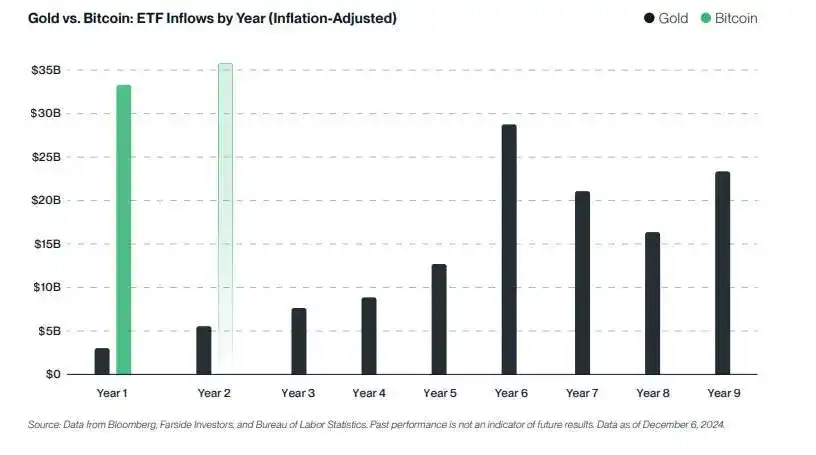
When the US Bitcoin spot ETF launched in January 2024, ETF experts predicted that the product group would attract $5 billion to $15 billion in inflows in its first year. In reality, it exceeded the upper end of the expected range within the first six months. Since launch, these record-breaking ETFs have attracted $33.6 billion in inflows. Inflows in 2025 are expected to surpass this figure. Three supporting reasons for this prediction:
1. The first year is typically the slowest for ETFs
· The best historical analogy for a Bitcoin ETF is the launch of the Gold ETF in 2004
· The gold ETF attracted $2.6 billion in funds in its inaugural year, which was exciting
· But in the following years (numbers adjusted for inflation):
Year 2: $5.5 billion
Year 3: $7.6 billion
Year 4: $8.7 billion
Year 5: $16.8 billion
Year 6: $28.9 billion
The key here is that having more funds flowing in the second year than in the first is in line with the gold ETF's growth pattern; a decrease in funds is actually unusual
2. Major Investment Banks Are Joining In
· The world's largest investment banks (including Morgan Stanley, Merrill Lynch, Bank of America, and Wells Fargo) have yet to unleash the power of their wealth management advisor teams
· These financial advisors currently have little to no access to these products
· This situation is expected to change in 2025
· The trillions of dollars these firms manage will start flowing into Bitcoin ETFs
3. Investors Are Gradually Increasing Allocation — 1% to 3% is the New Trend
Bitwise has observed a clear pattern over the past seven years as they've helped professional investors enter the cryptocurrency market:
· Most investors start with a small allocation and then gradually increase over time
· It's expected that investors buying Bitcoin ETFs in 2024 will mostly double down in 2025
Forecast 3: Coinbase Will Surpass Charles Schwab to Become the World's Most Valuable Brokerage Firm, with shares breaking $700 each
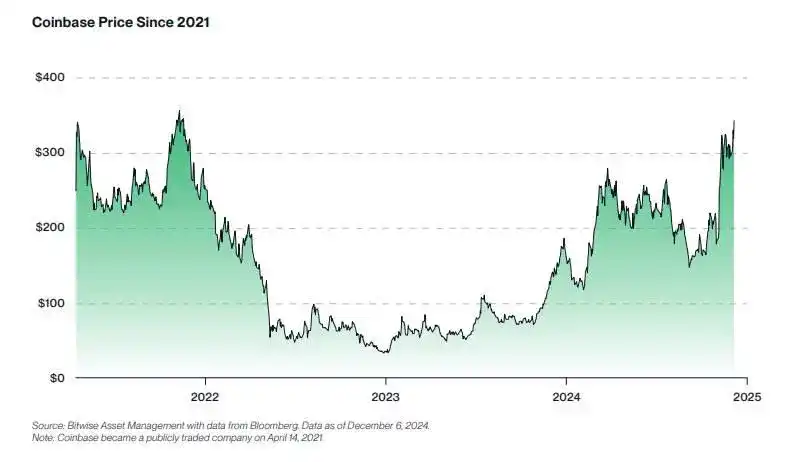
At the start of 2023, investors could buy Coinbase stock for $35. Today, it's trading at $344, nearly 10 times higher. Predictions indicate this price could continue to rise significantly.
Forecast: Coinbase stock will surpass $700 in 2025 (more than doubling from the current price). This will make Coinbase the world's most valuable brokerage firm, surpassing Charles Schwab.
The reason is: Coinbase is not just a brokerage.
Three main catalysts driving its growth:
1. Stablecoin Business
· Benefiting from an agreement with USDC issuer Circle, Coinbase's stablecoin business has thrived
· Year-to-date, stablecoin revenue has increased by $162 million (+31%)
· If the stablecoin's development trajectory continues as expected, this trend will persist
2. Base Network
· Last year, Coinbase launched the Ethereum-based Layer 2 network Base
· Currently leading in both transaction volume and total value locked among L2 networks
· Substantial revenue has come with the growth
· Base is now generating tens of millions of dollars in revenue each quarter
· With more developers, users, and capital entering the ecosystem, this revenue is expected to grow
3. Staking and Custody Services
· As of the third quarter, these two businesses have generated $589 million in revenue
· A $304 million increase compared to the same period last year (+106%)
· Both businesses are being driven by asset balances and net inflows of assets
· It is expected that both metrics will increase significantly by 2025
· The annual revenue of these business lines is expected to exceed $1 billion
Prediction 4: 2025 Will Be the "Cryptocurrency IPO Year," with at Least Five Cryptocurrency Unicorn Companies Going Public in the United States
Over the past few years, cryptocurrency IPOs have been relatively quiet. However, 2025 is expected to see a wave of cryptocurrency unicorn company IPOs.
Why now?
The current landscape of publicly listed cryptocurrency companies is significantly different from previous years:
· Cryptocurrency price surge
· Increasing Investor Demand
· Surging Institutional Adoption
· Mainstreaming of Blockchain Technology
· Favorable Macro Environment
· Most importantly, a Warming Political Environment
These factors have collectively created favorable conditions for industry giants to go public.
The Top Five Potential IPOs in 2025:
1. Circle
· Issuer of USDC (one of the largest stablecoins)
· Actively preparing for an IPO
· Strong position in the stablecoin market
· Expanding into new financial services areas
2. Figure
· Known for providing various financial services utilizing blockchain technology
· Offers mortgage, personal loan, and asset tokenization services
· Has been exploring IPO possibilities since 2023
· With Wall Street's increasing interest in tokenization, the timing may be right
3. Kraken
· One of the largest cryptocurrency exchanges in the U.S.
· Been considering an IPO since 2021
· Plans delayed due to market conditions
· May regain momentum for development in 2025
4. Anchorage Digital
· Provides digital asset infrastructure services
· Diverse client base, including investment advisers, asset managers, and venture capital firms
· Holds a federal banking charter
· Comprehensive crypto services may lead to a public listing
5. Chainalysis
· Market leader in blockchain compliance and intelligence services
· Unique service offering
· Strong growth trajectory
· Likely to enter the public market as the crypto industry increasingly emphasizes compliance requirements
Prediction 5: Tokenization by AI Agents Will Drive a Larger Meme Coin Craze Than 2024
It is expected that 2025 will see a larger meme coin craze than 2024, with tokens issued by AI agents leading this wave of excitement.
GOAT Case Study: The First Collision of AI and Meme Coins
A notable case stems from a16z's Marc Andreessen interacting with the AI-powered chatbot Truth Terminal. The AI agent promoted a niche Meme coin called GOAT, and what started as an experimental project eventually surpassed a $13 billion market cap, fully showcasing the huge potential of combining AI and Meme coins.
Clanker: Pioneering AI Token Issuance Platform
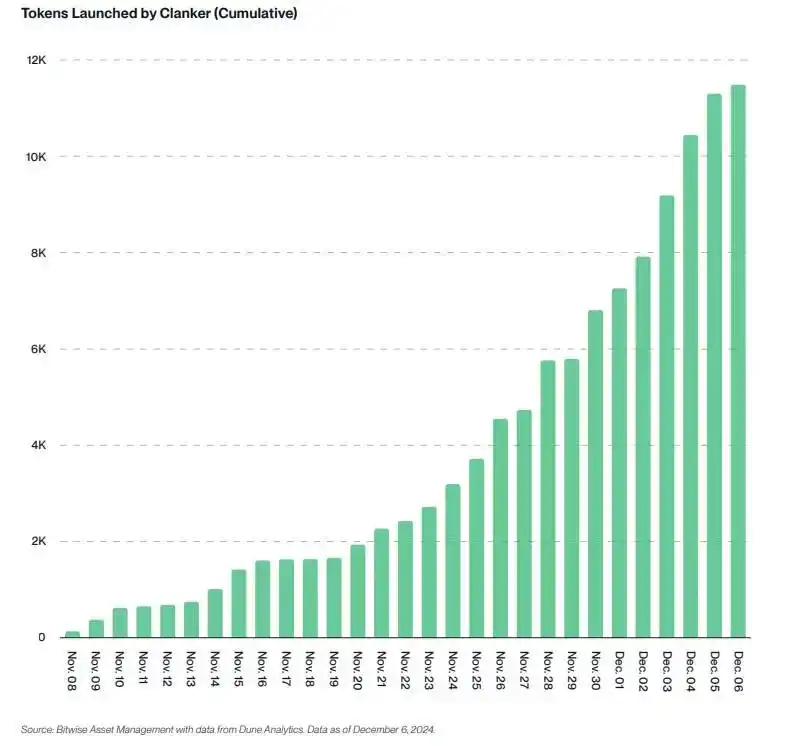
Clanker, as an innovative platform, achieved autonomous token deployment on Coinbase's Layer 2 scaling solution, Base.
Users simply tag Clanker on Farcaster, provide the token name and image, and the AI agent autonomously handles the token deployment.
Within just one month of its launch, Clanker issued over 11,000 tokens, generating over $10.3 million in fee revenue.
Future Outlook
AI-issued tokens are expected to drive a new wave of Meme coin frenzy in 2025. While these tokens may lack practical utility and most may ultimately go to zero, they represent the convergence of AI and cryptocurrency, two groundbreaking technologies. This innovative direction will continue to attract market attention.
Forecast 6: The Number of Countries Holding Bitcoin Will Double
Prospects for the US Strategic Reserve
The uncertainty remains on whether the US will establish a strategic Bitcoin reserve by 2025. While there are positive signals:
· Wyoming Republican Senator Cynthia Lummis proposed a bill suggesting the US purchase 1 million bitcoins within five years
· President-elect Trump has shown support for this proposal
· However, according to Polymarket's prediction, the likelihood is under 30%
Global Competitive Landscape
· The US's consideration of establishing a strategic Bitcoin reserve has already triggered chain reactions globally:
· Legislators from Poland to Brazil are proposing bills to establish a national Bitcoin strategic reserve
· Governments around the world are moving quickly to avoid missing out
Current Status and Future Outlook
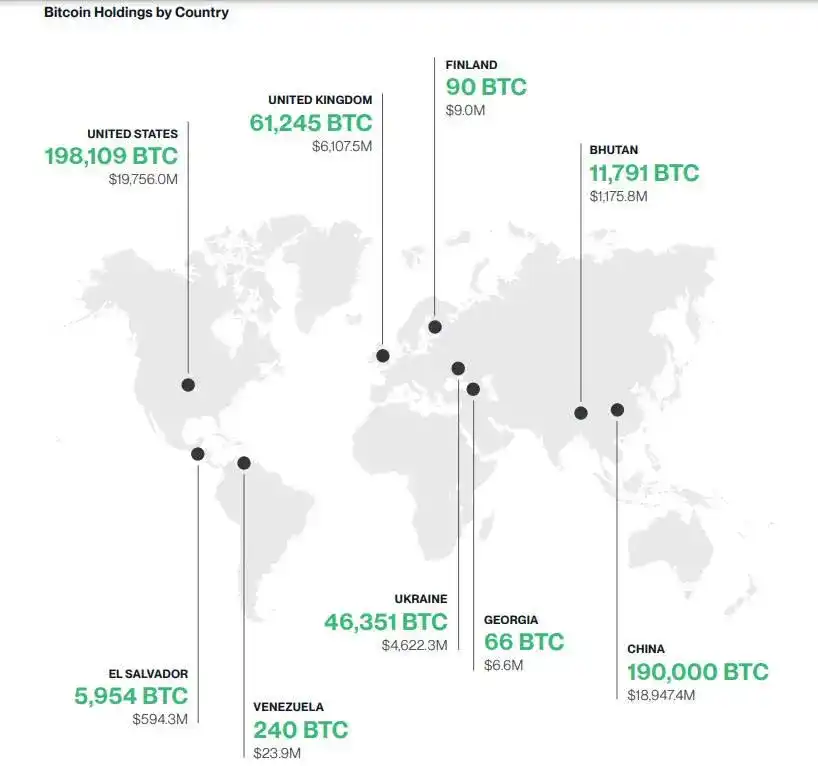
According to data from BitcoinTreasuries.net:
· Currently, nine countries globally hold Bitcoin, with the U.S. in the lead
· This number is expected to double by 2025
Prediction 7: Coinbase to Join S&P 500, MicroStrategy to Join Nasdaq 100
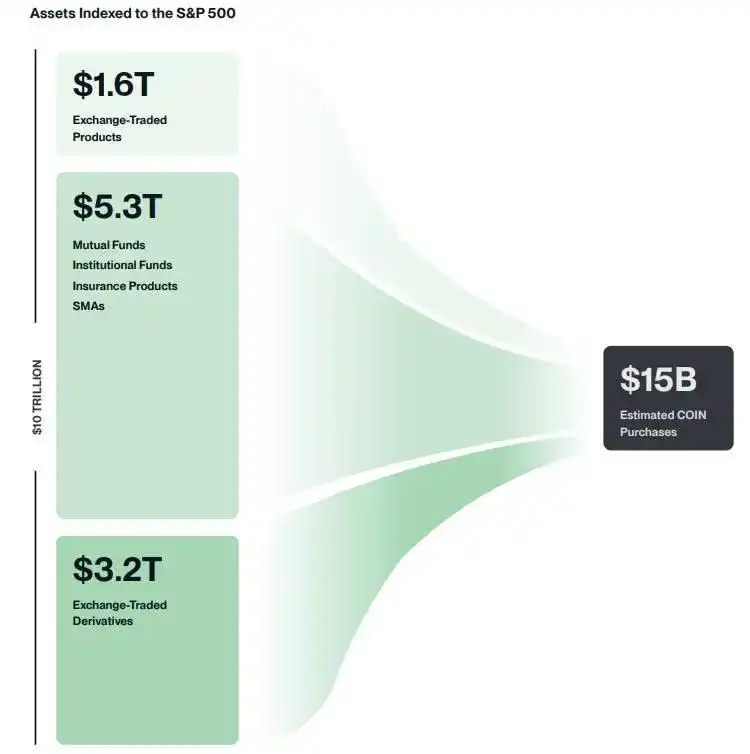
Both Coinbase and MicroStrategy, key publicly traded companies in the cryptocurrency space, will be included in mainstream stock indices, meaning nearly all U.S. investors' portfolios will have exposure to the cryptocurrency sector.
Market Status
· The average U.S. investor currently has no cryptocurrency exposure
· Cryptocurrency, as a nascent asset class, is either not well understood by many investors or actively avoided
· However, nearly every investor holds funds tracking the S&P 500 or Nasdaq 100
· Many investors hold funds tracking both indices simultaneously
Potential Impact
Once these two companies are included in the indices, it will have a significant market impact:
· Approximately $10 trillion in assets directly track the S&P 500 index
· Another $6 trillion in assets are benchmarked against this index
· Expected inflows into Coinbase after index inclusion:
- Index funds will need to buy around $15 billion worth of stock
- Benchmark funds could bring an additional $9 billion in buying demand
· While MicroStrategy's impact will be relatively smaller due to the Nasdaq 100's smaller tracking fund size, it will still be significant
Prediction 8: US Department of Labor to Ease Guidance on Cryptocurrency in 401(k) Plans
In March 2022, the US Department of Labor issued guidance warning 401(k) plan trustees of the significant risks associated with cryptocurrency investment options and announced an investigation project to protect plan participants from these risks.
With the arrival of the new administration in Washington, it is expected that the Department of Labor will relax this strict guidance. The importance of this policy change can be seen from the data:
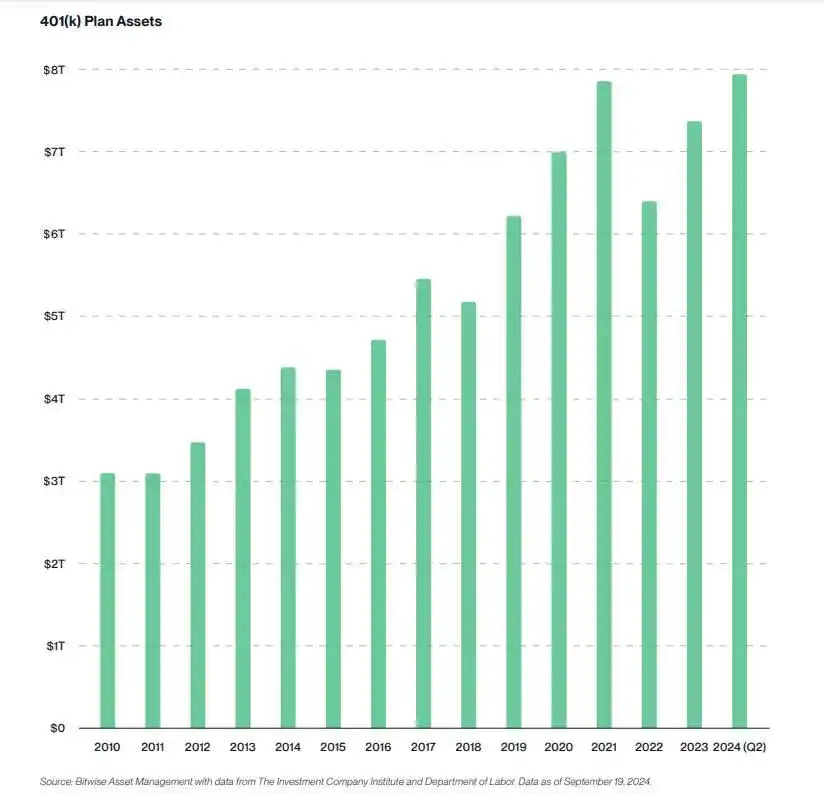
· US 401(k) plans currently manage $8 trillion in assets
· These funds continue to receive weekly inflows of new capital
· If the allocation of cryptocurrency reaches:
-1%: it would bring $800 billion in new capital to the cryptocurrency space
-3%: it would bring $2.4 trillion in new capital
Prediction 9: Stablecoin Assets to Double to $400 Billion, US to Pass Long-Awaited Stablecoin Legislation
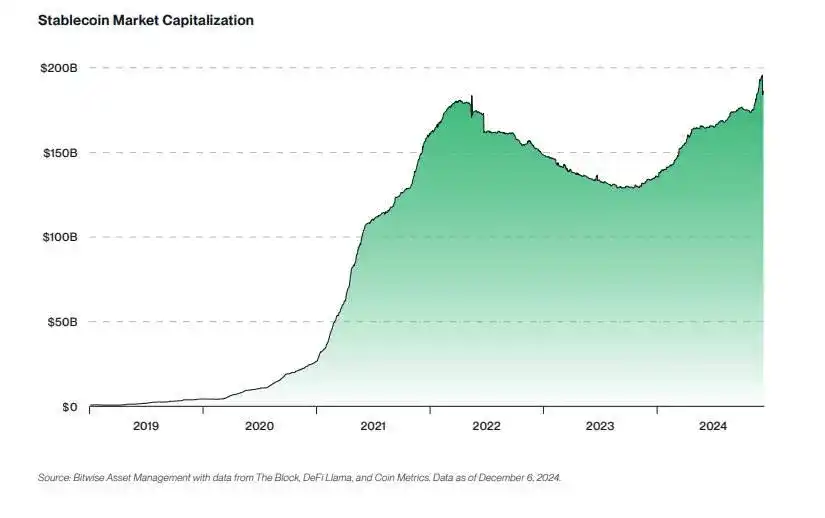
By 2025, the stablecoin market will experience a boom, with a market cap reaching $400 billion or higher. This growth will be driven by the following key factors:
Stablecoin Legislation
The most achievable goal for Washington's pro-cryptocurrency policy makers is comprehensive stablecoin legislation. This will address key questions, including who will regulate and what the appropriate reserve requirements should be. Clear regulations will stimulate significant interest from issuers, consumers, and businesses. Major traditional banks like JPMorgan Chase are expected to enter this space.
FinTech Integration
Stripe's $1.1 billion acquisition of the stablecoin platform Bridge highlighted stablecoins as the "superconductor for financial services" due to their speed, accessibility, and low cost. PayPal launched its own stablecoin (PYUSD) in 2023, and Robinhood recently announced plans to collaborate with multiple cryptocurrency firms to launch a global stablecoin network. As stablecoins integrate into popular fintech applications, the assets under stablecoin management and transaction volumes are set to significantly increase.
Global Trade and Remittances
By 2024, stablecoin transaction volume reached $8.3 trillion, approaching Visa's $9.9 trillion payment volume for the same period. Stablecoin giant Tether recently provided $45 million in financing for an oil transaction using its USDT stablecoin. As digital dollars continue to disrupt these massive markets, the demand for stablecoins will continue to grow.
Bull Market Growth
As the most prominent catalyst, the overall expansion of the cryptocurrency market will drive the growth of stablecoin assets under management. With the cryptocurrency market looking bullish in 2025, the stablecoin market will also grow accordingly.
Forecast 10: RWA Tokenization Scale to Exceed $500 Billion with Accelerated Wall Street Entry
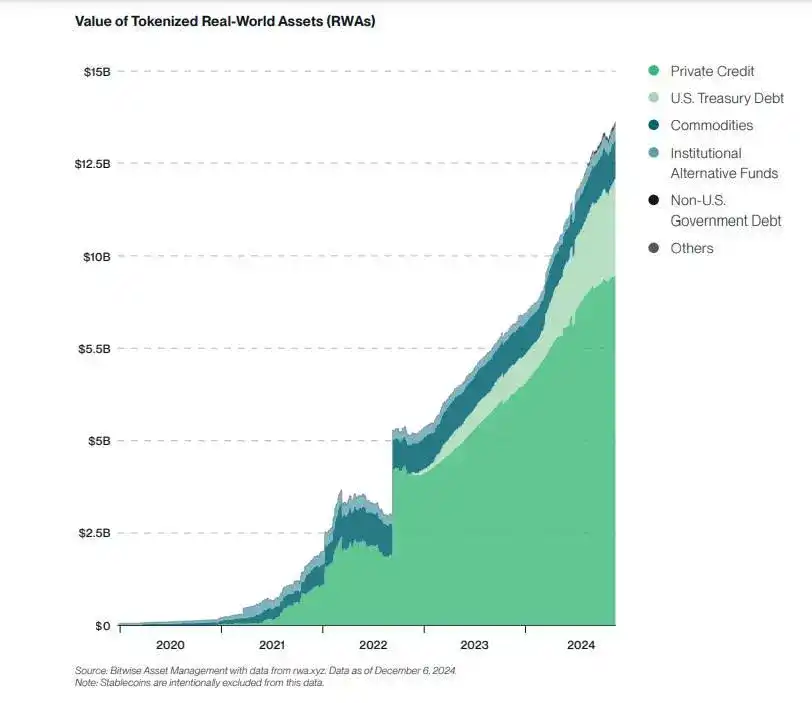
Three years ago, the cryptocurrency industry tokenized less than $20 billion in real-world assets (RWAs), including private credit, US debt, commodities, and equities. Today, this market size has reached $137 billion.
The reason behind such significant growth in tokenization is mainly because of its clear advantages: it can provide instant settlement, costs far lower than traditional securitization, and round-the-clock liquidity, while bringing transparency and accessibility to almost all asset classes.
BlackRock CEO Larry Fink, who was once a Bitcoin skeptic, has transformed into a staunch supporter of tokenization, stating that "security tokenization will be the next generation of the market." Coming from the head of the world's largest asset management firm, this statement holds great significance.
Wall Street is only just beginning to realize this, meaning a significant amount of institutional funds may soon flow into the tokenized RWA space.
By 2025, the tokenized RWA market size is projected to reach $500 billion and may see exponential growth from there.
Venture capital firm ParaFi recently predicted that by 2030, the tokenized RWA market size could grow to $20 trillion, while the Global Financial Markets Association forecasts it could reach $160 trillion.
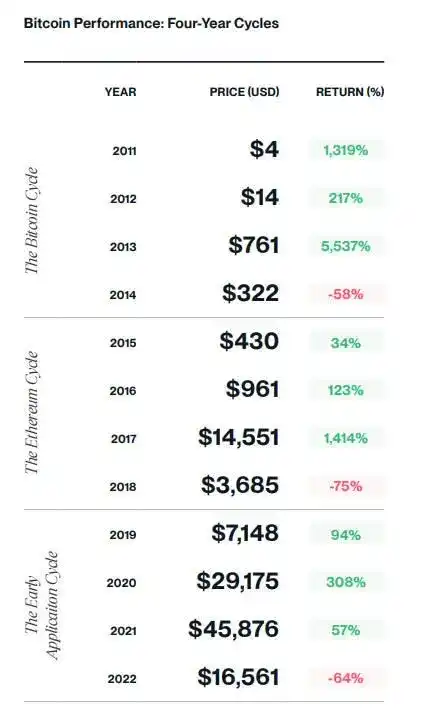
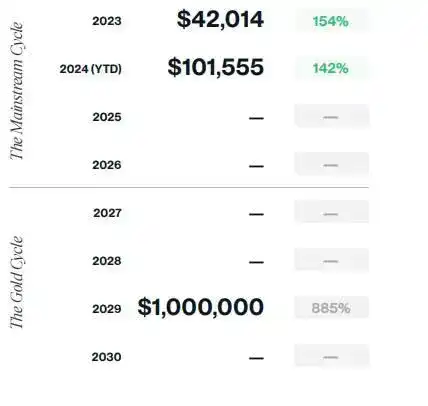
Additional Forecast: By 2029, Bitcoin Will Surpass the $18 Trillion Gold Market, with Price Exceeding $1 Million
While people tend to make one-year forecasts, from a longer-term perspective, Bitcoin's growth potential is even more remarkable.
It is expected that by 2029, Bitcoin's market cap will surpass that of the gold market. Based on the current market value of gold, this means the price of each Bitcoin will exceed $1 million.
The choice of 2029 is deliberate: Bitcoin has historically operated in four-year cycles. While this pattern may not necessarily continue, 2029 will mark the peak of the next cycle (also the 20th anniversary of Bitcoin's creation). Surpassing the gold market within 20 years of existence is undoubtedly a significant achievement, but Bitcoin is poised to achieve this goal.
It is worth noting that if the United States were to announce the purchase of 1 million bitcoins for strategic reserve purposes, the time for bitcoin to surpass $1 million could be significantly accelerated.
Welcome to join the official BlockBeats community:
Telegram Subscription Group: https://t.me/theblockbeats
Telegram Discussion Group: https://t.me/BlockBeats_App
Official Twitter Account: https://twitter.com/BlockBeatsAsia