Seraph Comprehensive Review: The Leader of the Web3 Metaverse Gaming Revolution
Original Article Title: "Seraph Comprehensive Review: Leader of the Web3 Game Inter-Generational Revolution"
Original Article Author: Deep Tide TechFlow
What stereotypes do you have about "Web3 Games" or "GameFi"?
Pay-to-Win, Farming, Lack of Fun, Rug Pull, or Ponzi Scheme?
With technological advancements and evolving user demands, blockchain games are undergoing a crucial inter-generational transformation. At this turning point, Seraph, as a prominent representative of the new generation of blockchain games, is redefining our understanding and expectations of Web3 games.
How do you define different "generations"?
The first-generation blockchain games, represented by Axie, were undeniably groundbreaking, driving the popularization of the "Play-to-Earn" model; however, these early projects also faced significant limitations such as insufficient gameplay, unsustainable economic models, complex onboarding processes, and limited scalability...
Facing these challenges, the new generation of blockchain games, represented by Seraph, has emerged.
They are not only addressing the predecessors' issues but also propelling the entire industry forward. Moreover, apart from the often overlooked market trends and spotlight, they are actually maintaining a quite impressive operational cadence and product delivery.
Among them, Seraph has its unique approach:
1· Immersive Gaming Experience: Seraph provides rich, mature, and polished looting-based game content and mid-to-late-game mechanics to ensure players can maintain their interest long-term.
2· Innovative Economic Model: Pay-to-Win is merely a bonus to the core game content, rather than a drastic overhaul of game mechanics; On-chain assets like NFTs naturally possess scarcity based on labor (specific to looting games).
3· User-Friendly: The ActPass companion app for login and asset management significantly lowers the entry barrier for Web3 games, enabling ordinary players to easily experience the fun of blockchain games.
4· Everything is Tradeable: All in-game and off-chain game assets can be freely traded among players, allowing different types of players to pursue their own enjoyment, achieving and promoting "play and trade to earn".
If you are not familiar with Seraph, the following article will be helpful to you: "Chain Game Needs Mavericks, Longevity for a Future: Seraph Gave Me the Legitimacy to Play Web3 Games".
However, in the following content, we will be more direct, thoroughly reviewing Seraph's development journey, discussing its achievements in game design, technical innovation, and community building. By analyzing Seraph's successful experience, we can not only glimpse the future of second-generation chain games but also gain insight into the development trends of the entire Web3 gaming industry.
Seraph's story is not only a history of a game project's growth but also a microcosm of the entire chain game industry's path to maturity.
Seraph Development Timeline
Seraph is a blockchain-based ARPG game that, through innovative gameplay mechanics and economic models, brings players an immersive Web3-style Diablo-like gaming experience.
However, a high-quality Web3 game, from concept to maturity, needs to go through different stages such as product validation, economic optimization, community building, and commercialization to ensure the product's sustainability and market competitiveness. Let's review Seraph's growth trajectory together:
Off-chain Phase: Polishing Game Quality and Finding the Audience
The on-chain part of Web3 games often attracts attention due to the wealth effect, but for games like Seraph, before injecting on-chain economics into the game, at least two questions need to be answered: - Is this game playable? - Who will play this game?
To find these two basic answers, Seraph conducted two rounds of testing to polish the game quality and find the audience.
· Validate Core Gameplay: Alpha Testing Phase (2023.4.11-4.17)
In early 2023, the chain game market began to show signs of recovery after a slump in 2022. User demand for high-quality chain games gradually increased, but the market's requirements for projects also became more stringent. In such a context, Seraph chose a conservative and prudent entry point—a closed testing strategy.
Strategic Deployment
Clearly, this stage did not introduce the on-chain asset component. The project's early focus was on three core objectives: First, validating the fun and playability of the game's core gameplay; second, testing the stability of the underlying technical architecture; and finally, collecting early user feedback on the game mechanics. This incremental approach enabled the game to be well prepared before its official market launch.
Data Results
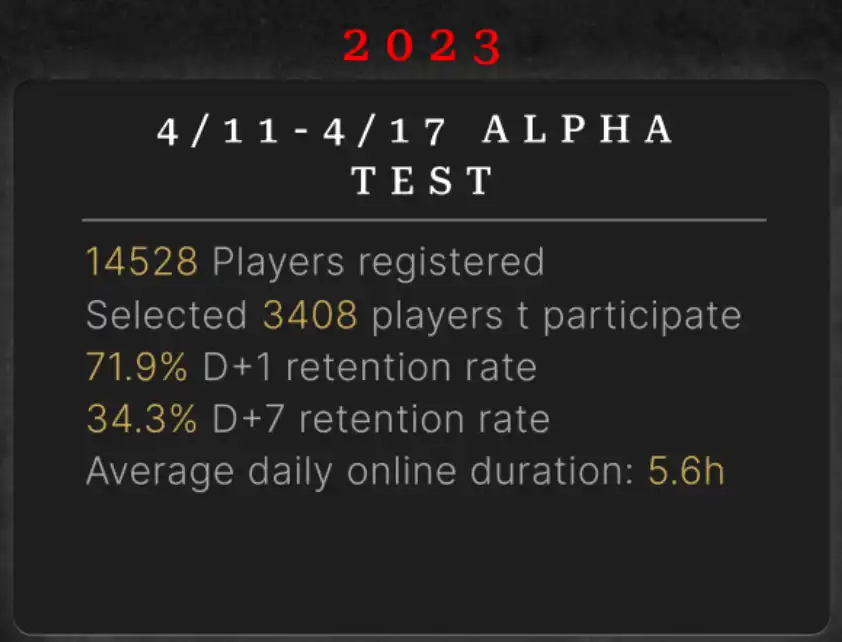
During the Alpha testing phase, the game attracted a total of 14,528 registered players, with a 71.9% next-day retention rate and an average online time of 5.6 hours, far exceeding the industry average and strongly validating the attractiveness of the core gameplay.
· Refinement for Sustainability: Beta Testing Phase (2023.7.4-7.17)
Addressing the feedback from the previous stage's game testing, Seraph initiated a new round of optimizations three months later.
Strategic Deployment
After validating the core gameplay, the entire game system underwent further refinement, while also starting to consider building the late-game gameplay and content to retain players through sustainability.
Notably, during this stage, the game also launched NFTs with early access qualifications, but the overall game content remained primarily off-chain. The NFTs functioned more like tickets for additional privileges, a means of fan economy management, and a moderate marketing tool, with the play-to-earn feature still disabled.
Data Results
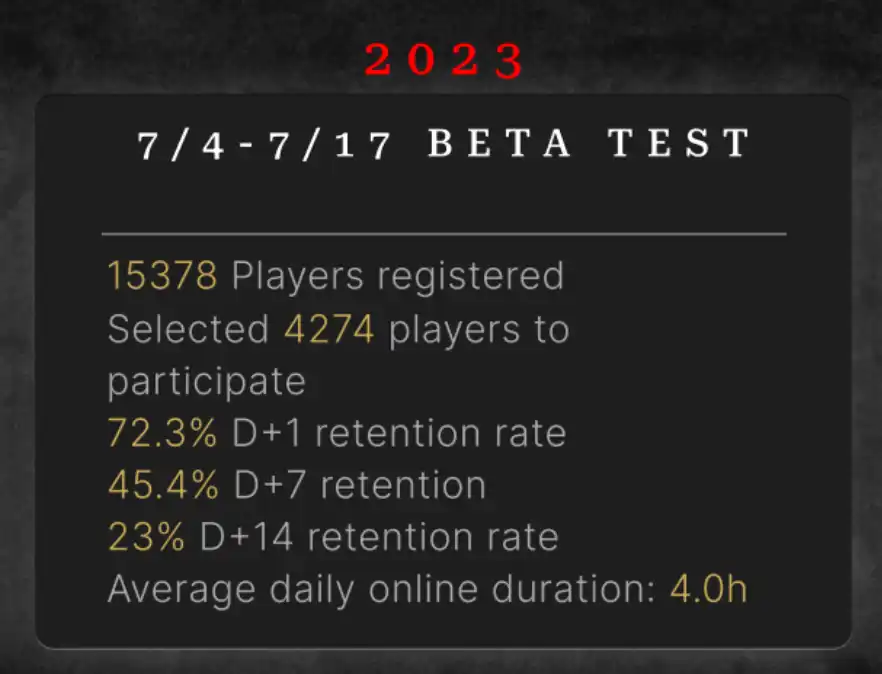
The Beta testing phase showed an encouraging growth trend. The number of registered players increased to 15,378, a 5.8% growth from the Alpha stage.
On-Chain Phase: Seeking Web3 Play-to-Earn Fit
Since Seraph's core gameplay is "loot grinding," transforming in-game off-chain loot into on-chain assets is a necessary step.
So the question became, how to make play-to-earn more reasonable?
Seraph continued to proceed cautiously, using three rounds of different tests to build this system.
· Genesis of Gold Farming: Chaos Legacy Test (2023.11.22-12.22)
This phase marks the beginning of integrating on-chain assets into the game and exploring their fit.
Strategic Deployment
The project conducted the sale of Genesis Unique NFTs in November, corresponding to various in-game equipment items with gold farming capabilities.
Simultaneously, enabling these equipment items to function under certain rules has been a long-standing topic in gold farming games. Seraph has built a set of on-chain economic systems and a market around the NFTs' consumption, production, use, and trade, actively testing them in this phase.
Starting from this test, players can participate in gold farming, and the game's revenue source has also shifted to various fees from NFT transactions.
Data Achievements
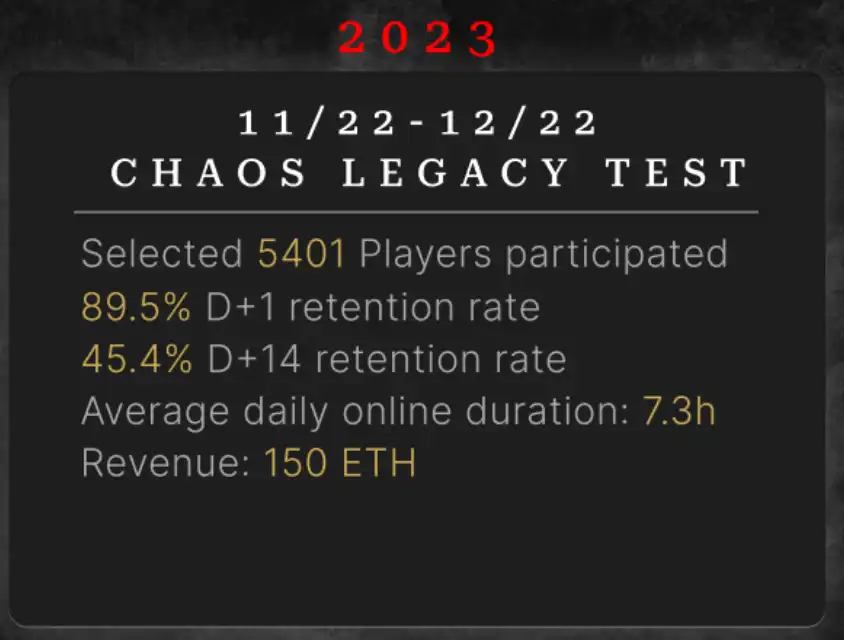
The data performance during the Chaos Legacy test was exhilarating. Open gold farming significantly increased its appeal, with a historic high next-day retention rate of 89.5%. The most groundbreaking achievement was the first-ever realization of 150 ETH in revenue.
· Commercial Exploration: Preseason Phase (2024.4.19-6.7)
At the beginning of 2024, the crypto market saw a comprehensive recovery, with new users swiftly joining. Seizing this opportunity, Seraph embarked on a full-scale commercialization journey. This phase marks a pivotal shift for the project from a product-centric approach to a market-centric one.
Strategic Deployment
The core strategy of the Preseason phase is to achieve commercial breakthroughs. The game has already started selling items in the store, becoming a significant channel for increasing fiat revenue.
Simultaneously, the game has begun to establish a complete revenue system, including NFT sales, tokenomics, and value-added services.
Data Achievements
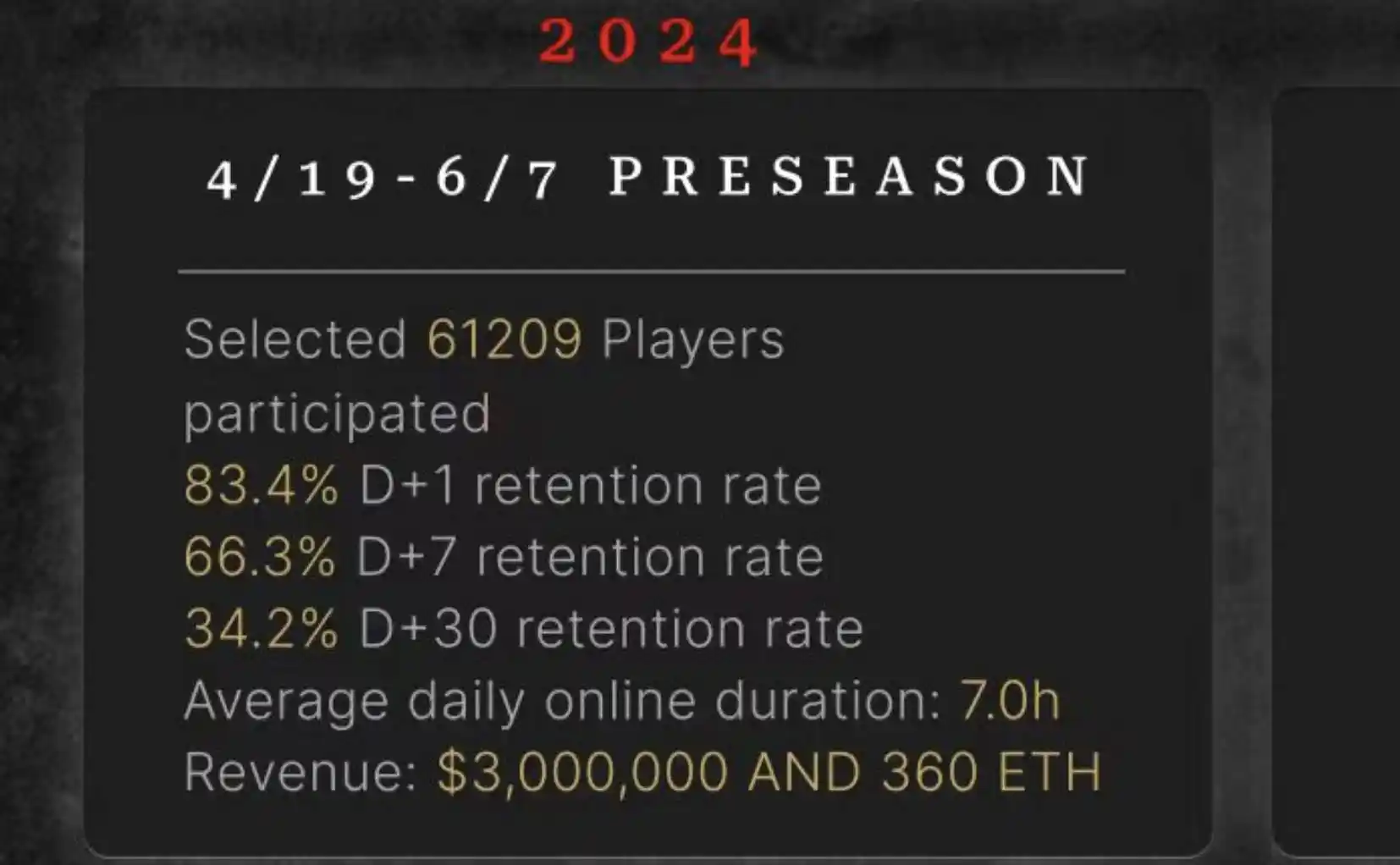
This phase has seen significant commercial success. The number of participating players has surged to 61,209 people; total revenue reached $3 million and 360 ETH, validating the viability of the business model.
· Full Commercialization, Going Global: Season0 (2024.8.22-9.25)
After the validation of gameplay and gold farming mode, Seraph officially launched Season0, seizing the market opportunity with its unique gaming experience and robust economic system.
Strategic Layout
The core strategy of Season0 is to achieve scalable growth and sustainable development. It focuses on three aspects: first, maintaining the freshness and competitiveness of the game through continuous product iteration and content updates; second, optimizing the token economic model to ensure long-term sustainability; and finally, strengthening global expansion to tap into international markets. Notably, a different "Play-and-Earn" mechanism, unlike the unsustainable model of previous blockchain games, was introduced to balance game fun and economic rewards.
Data Achievements
The Daily Active Users (DAU) exceeded 15,000, with a peak concurrent player count of over 7,500. At the same time, it achieved $1.8 million in fiat revenue and 120 ETH in crypto asset revenue.
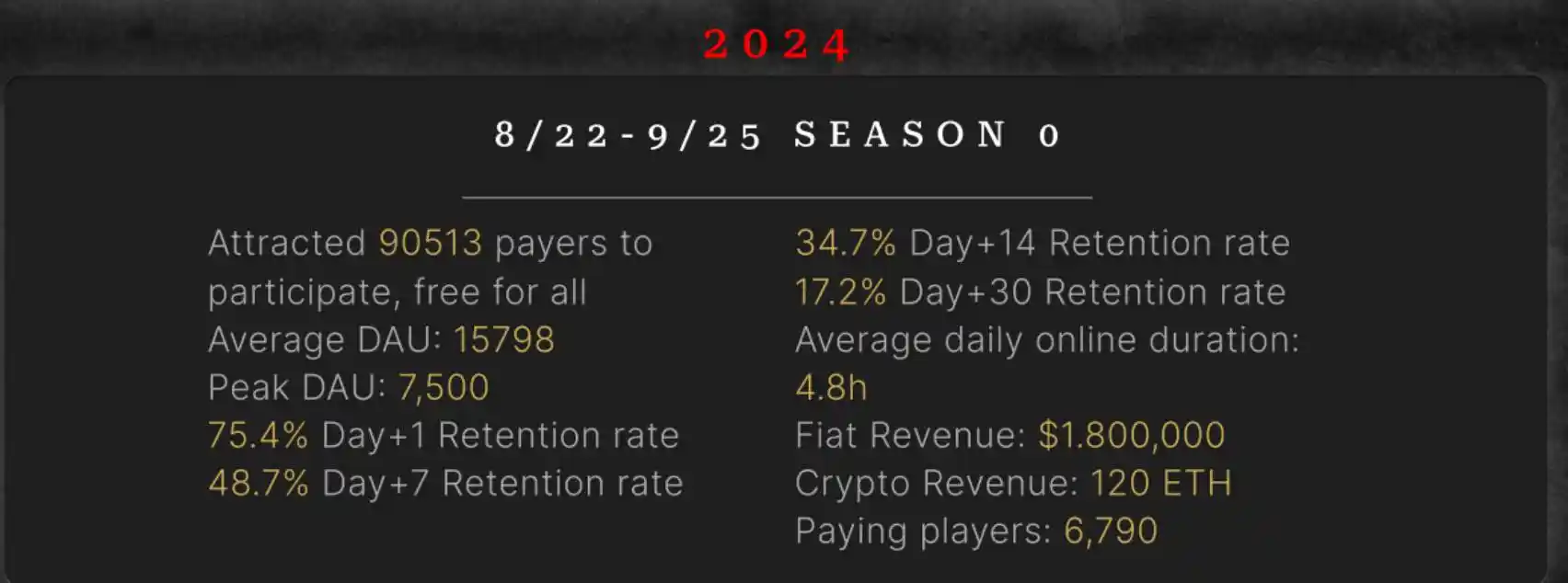
As the crypto market continues to heat up and the demand for differentiated games reaches its peak, Seraph, with its unique gaming experience and robust economic system, successfully seized the market opportunity.
Global Market: Player Data Based on Season0
From the above data, it is evident that Seraph has done well in product polishing and project operations. So, which group of players will these efforts ultimately attract? Will it continue the momentum of previous Web3 games, be more favored by Southeast Asian users who are enthusiastic about gold farming guilds, or capture more players from different regions?
Based on the latest user data from Season0, perhaps we can find the answer.
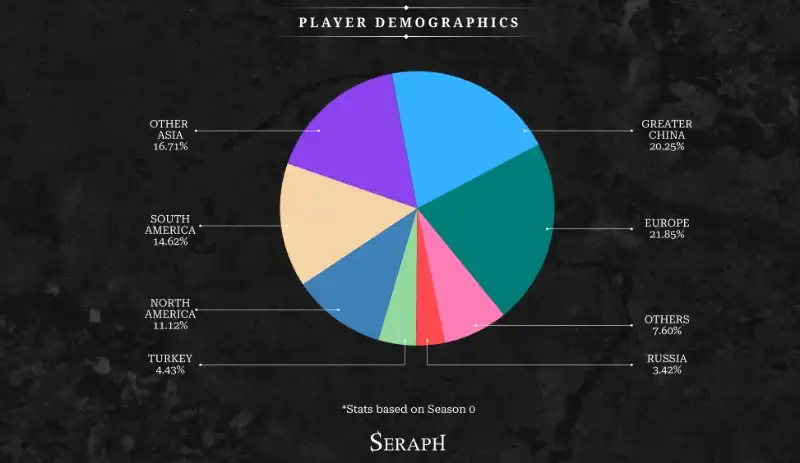
Looking at the user composition, users from Greater China and Europe are the most significant, each accounting for almost 20%; followed by player shares decreasing in size for other Asian regions, South America, North America, Turkey, Russia, and other regions.
1. Obviously, players from the Asian region dominate
The Greater China region (20.25%) and other Asian regions (16.71%) together account for 36.96% of the total, forming the largest user group of Seraph. This indicates that Seraph has a strong appeal in the Asian market, possibly benefiting from a good alignment of game content or marketing strategies with the preferences of Asian players.
2. Strong Presence in the European Market
· Europe holds the top position among individual regions with a share of 21.85%, showcasing Seraph's successful penetration into Western developed markets. This may reflect the effectiveness of the game's international design and localization strategy.
3. Potential Emerging in the American Market
· South America (14.62%) and North America (11.12%) together make up 25.74%, forming another important market segment.
· South America has a higher market share than North America, which is an interesting phenomenon that may reflect the game's strong growth in emerging markets.
4. Performance in Emerging Markets
· Turkey (4.43%) and Russia (3.42%) are listed separately, indicating the strategic significance of these markets for Seraph.
· Together, these two markets account for 7.85%, close to the size of the North American market, highlighting the importance of emerging markets.
From the gradually globalizing player base, what insights can we learn from the game Seraph?
· Localization Strategy: Considering the diversity of the user base, Seraph should continue to strengthen localization efforts in various regions, including language support, cultural adaptation, and localized marketing.
· Regionalized Content: Consider developing specific game content or activities for key markets (such as Greater China, Europe, and South America) to further enhance user engagement.
· Development in Emerging Markets: Prioritize the growth potential of emerging markets like Turkey and Russia, which may require tailored market expansion strategies.
Looking ahead, a globalized Web3 game should pay closer attention to regional user growth trends, promptly adjust resource allocation and market strategy. Seraph needs to maintain global consistency while placing more emphasis on regional characteristics to maximize the potential of each market.
What Is the Next Step?
In the current environment where the crypto market is rebounding overall, with bullish market expectations and a gradual increase in new users, the gaming track will still attract a significant portion of both new and existing traffic, providing an opportunity window for new products.
From the actions taken by Seraph as mentioned earlier, after several rounds of testing, the game has already built the basic gameplay, core features, NFTs, and on-chain infrastructure. It has also gained recognition from a portion of users.
Looking ahead, what other initiatives should Seraph pay attention to?
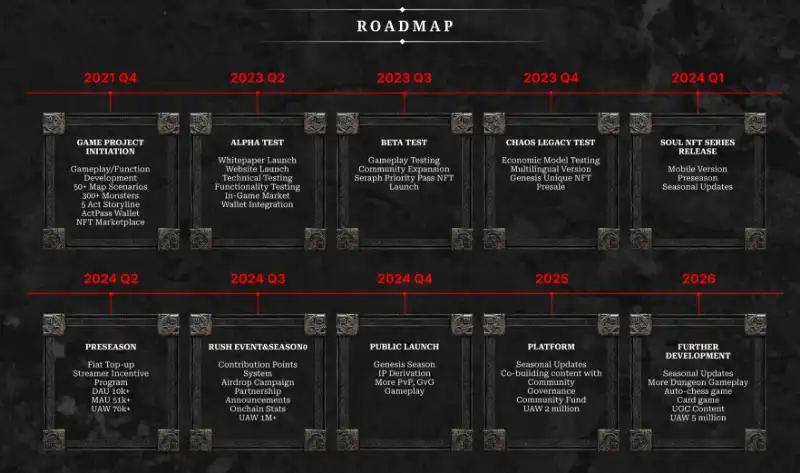
a) Rush Event & Season 0: Initiated User Acquisition Exploration
During the past Q3 phase, the game has launched a contribution points system to reward players for their time and performance in the game. At the same time, the game's Grace Feather Airdrop Plan has also been initiated, allowing users to complete tasks to receive "Starry Grace Feathers" and mint them as NFTs. These NFTs can be used for trading or future token airdrop rewards.
The team will also make important announcements and establish a more comprehensive on-chain data statistics system.
b) Genesis Season: Official Launch in Q4, Larger Scale, More Gameplay
Q4 of this year marks Seraph's official outreach to more players. After multiple rounds of testing, the game will officially launch the "Genesis Season" to attract players with more PvP gameplay and encourage them to further adjust their builds in the game. Additionally, the game will introduce Guild vs. Guild (GvG) gameplay to mobilize player enthusiasm on a larger scale.
Aside from gameplay, Seraph also has a keen awareness of the importance of IP. During this phase, it will also expand more IP derivatives based on its own dark fantasy style, including but not limited to cultural and creative products, animation, or NFTs.
c) Platformization Strategy: Not Just a Game, but an Ecosystem Co-built with the Community
Seraph plans to create a robust platform ecosystem. The core strategy includes collaborating with the community to co-develop game content. The Co-Building system, set to launch in 2025, will open up three types of permissions: map design, mission creation, and equipment appearance design. Community creators can earn revenue from their work and establish a comprehensive community fund. The team's goal is to achieve a milestone of 2 million independent active wallets in that year.
d) Future: Sustained Update Incentives
Although the crypto market changes rapidly, making it difficult to have a 3-5 year long-term plan like traditional businesses, Seraph still has a discernible path forward for category-specific projects like games.
Plans include launching seasonal updates, adding dungeon gameplay, introducing a mini-game system, establishing a social system, and heavily developing user-generated content. The team's ultimate goal is to reach an astounding 5 million independent active wallets.
e) Market Layout: Focusing on Southeast Asia, Expanding Influence through Exhibitions
At the recently concluded Binance Blockchain Week, Seraph attracted a large number of attendees to experience the game and enjoy an immersive interactive experience. The cosplayers' performances were also more in line with the preferences of young players.
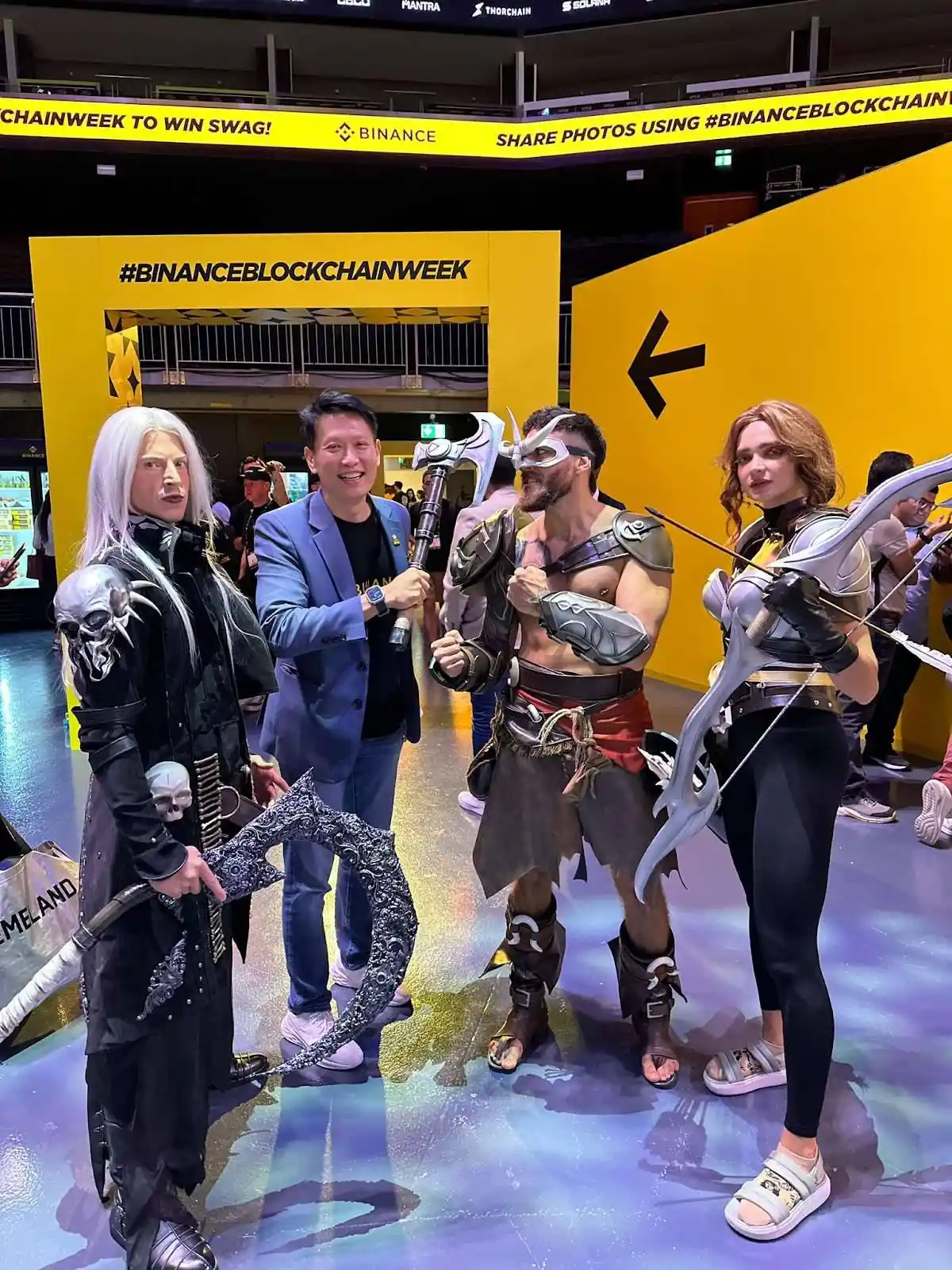
Building on this successful foundation, Seraph will further expand its influence at a series of exhibitions in Southeast Asia, including the recently held Thailand Blockchain Week, the ongoing Philippines YGG Play Summit, and the upcoming Taiwan Blockchain Week next month.
Evidently, these regions are also where Web3 gaming guilds are active. The combination of games, exhibitions, guilds, and players may become the regular customer acquisition and growth path for this game, Seraph.
Conclusion
As the ancient Chinese saying goes: a good start is half the battle.
Seraph has taken more than 3 years to demonstrate the growth trajectory that a Web3 game project should have, through four testing phases and one official season.
From the initial validation of the core gameplay, to the refinement of the economic model, and then the deepening of the social system, each step has been taken solidly and steadily. Especially in terms of global layout, the project's diverse user base has confirmed its success in product design and operational strategy.
In the Web3 gaming field, too many projects have fallen on the road from "0 to 1." The real challenge often lies in how to achieve the leap from "1 to 100." Seraph has chosen a gradual path, maintaining innovation while never neglecting the essence of the product and user experience. Perhaps this is why it has been able to stand firm in a competitive market and consistently gain recognition from gamers worldwide.
In the evolving field of Web3 gaming, what truly stands the test of time are projects that not only value short-term growth but also focus on long-term development.
Everything is yet to be seen; and are you ready to embark on this adventure together?
Official Website | X | Telegram | Discord
This article is a contribution and does not represent the views of BlockBeats
Welcome to join the official BlockBeats community:
Telegram Subscription Group: https://t.me/theblockbeats
Telegram Discussion Group: https://t.me/BlockBeats_App
Official Twitter Account: https://twitter.com/BlockBeatsAsia