Strategy Testing 02|OKX and AICoin Research Institute: Grid Strategy
OKX and AICoin, a high-quality data platform, have launched a series of classic strategy studies, aiming to help users better understand and learn different strategies through data measurement and strategy characteristics and other core dimension analysis, and try to avoid blind use.
Grid trading is a systematic trading strategy. Its core principle is to divide multiple grids within a preset price range and implement counter-trend operations - buy when prices fall and sell when prices rise. This strategy reduces emotional interference by maintaining a balance between long and short positions and automating transactions, and accumulates profits through frequent small transactions. It emphasizes flexible adjustment of parameters to adapt to market changes, focuses on risk control and fund management, and is particularly suitable for long-term operation in volatile markets. Although it performs well in sideways markets, it may miss big market trends in trending markets. The successful implementation of grid trading requires flexible application of these principles according to specific assets and market environments, while carefully controlling risks and avoiding excessive leverage.
Generally speaking, grid strategies are divided into two types: spot grids and contract grids. Among them, the contract grid is divided into three types: long mode, short mode, and neutral mode, each of which has its own suitable market conditions. (Note: the contract grid neutral mode is hereinafter referred to as "neutral contract grid")
The 02nd issue introduces the grid strategy, using 3 big data models to test [neutral contract grid & spot grid]:
Model 1: Neutral contract grid and spot grid under the 1h operation cycle of sideways fluctuation
Model 2: Neutral contract grid and spot grid under the 4h operation cycle of downward fluctuation
Model 3: Neutral contract grid and spot grid under the 1h operation cycle of upward fluctuation
Neutral contract grid and spot grid under the daily operation cycle
In this data test, the neutral contract grid operation standard is: the market price of the trading pair when the strategy is turned on is the center, the grid lower limit and upper limit are determined, and the pending orders are divided into above the market price and below the market price. When the price is above the market price, sell and open short every time the price breaks through a grid, and buy and close short every time the price falls below each grid, so as to obtain part of the profit from the price drop.
Contract grid neutral mode & spot grid strategy summary in one sentence: Focus on interval trading, under the premise of careful risk management and parameter optimization, it provides a rational trading method.

Pros and cons comparison
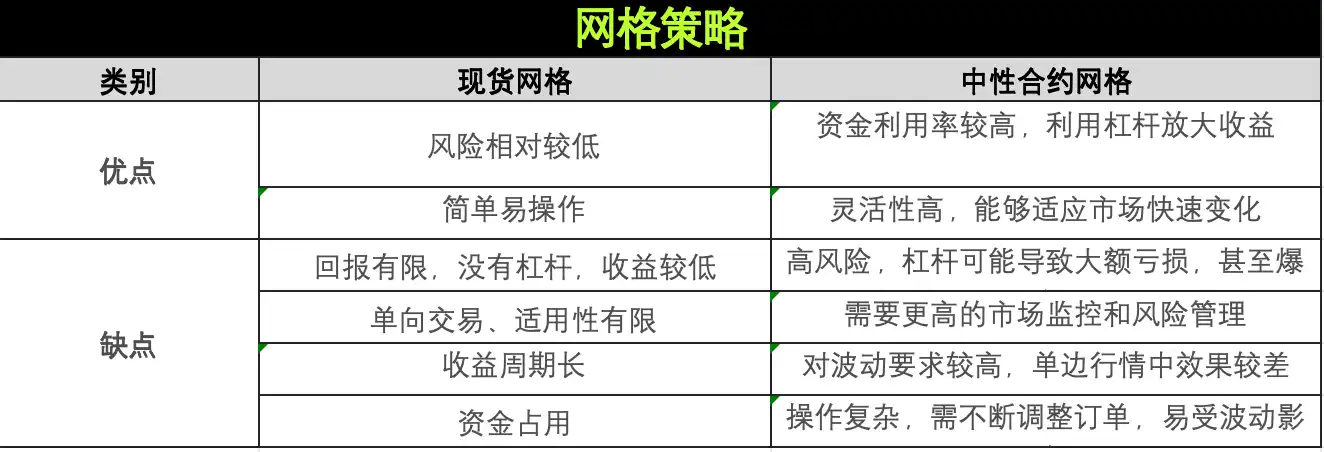
Overall, the sideways market reduces trend risk, and the two strategies can focus more on range trading. However, we need to be alert to the possibility of the market breaking through the current range of fluctuations, and we may need to adjust the grid parameters. Users can consider optimizing the grid spacing based on the observed price fluctuation range. Try to dynamically adjust the grid to adapt to possible changes in the fluctuation range.
In addition, there are obvious differences between the two in terms of operation and risk management. The neutral contract grid is suitable for two-way trading and highly leveraged contract markets, emphasizing the capture of opportunities in volatility and taking higher risks; while the spot grid is suitable for one-way trading and more stable spot markets, suitable for more conservative trading strategies. The core concepts of the two are similar, but in actual application, they need to be selected according to the risk tolerance of traders and market conditions.
Among them, the neutral contract grid trading strategy combines the advantages of grid trading and market neutral strategies, providing multiple advantages. It reduces systemic risk through long-short hedging, takes advantage of high-frequency small transactions and market fluctuations to make profits, and reduces directional risks at the same time. This strategy is highly flexible and adaptable. It can be automated and applied to a variety of assets, as well as providing liquidity to the market, but it is relatively complex to implement.
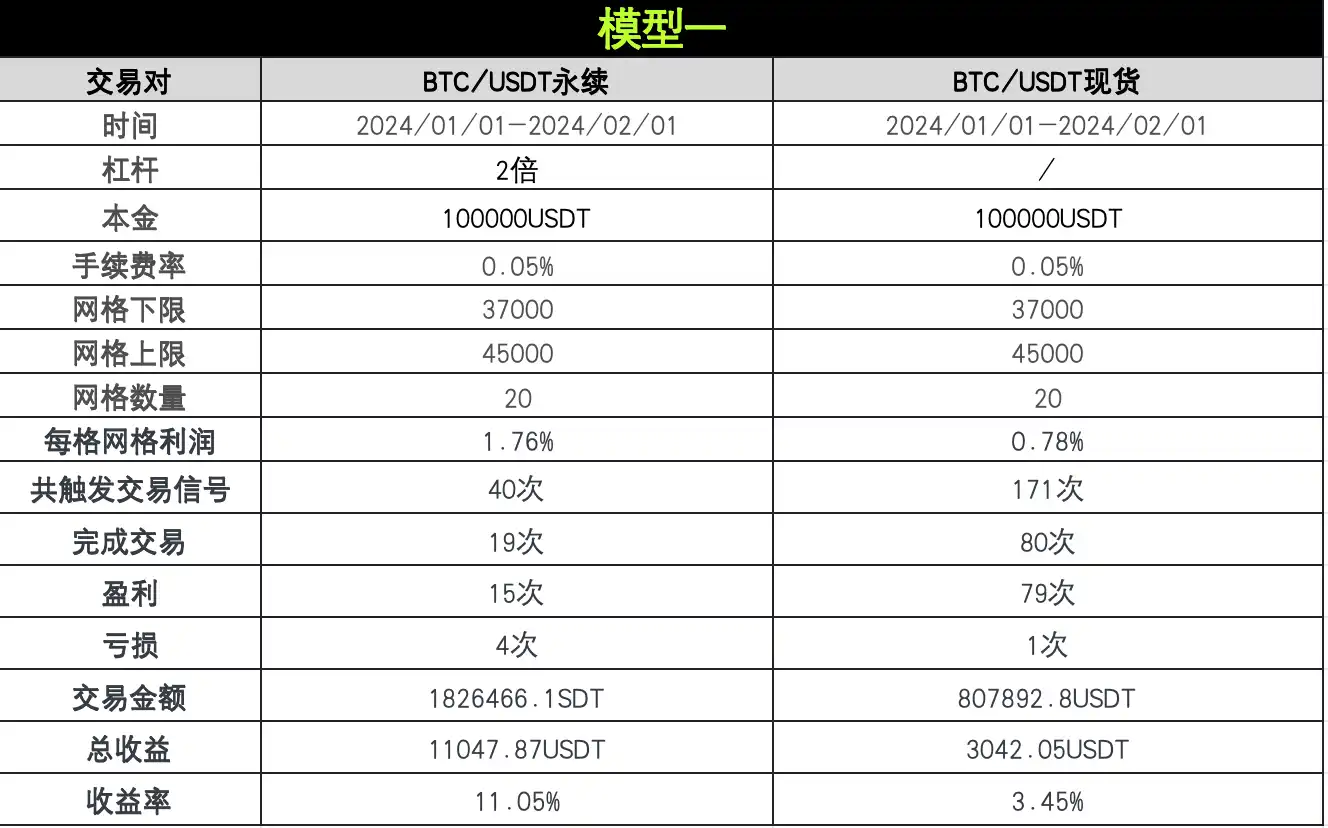
Model 1
The model is: neutral contract grid and spot grid under the 1h operation cycle of sideways fluctuations
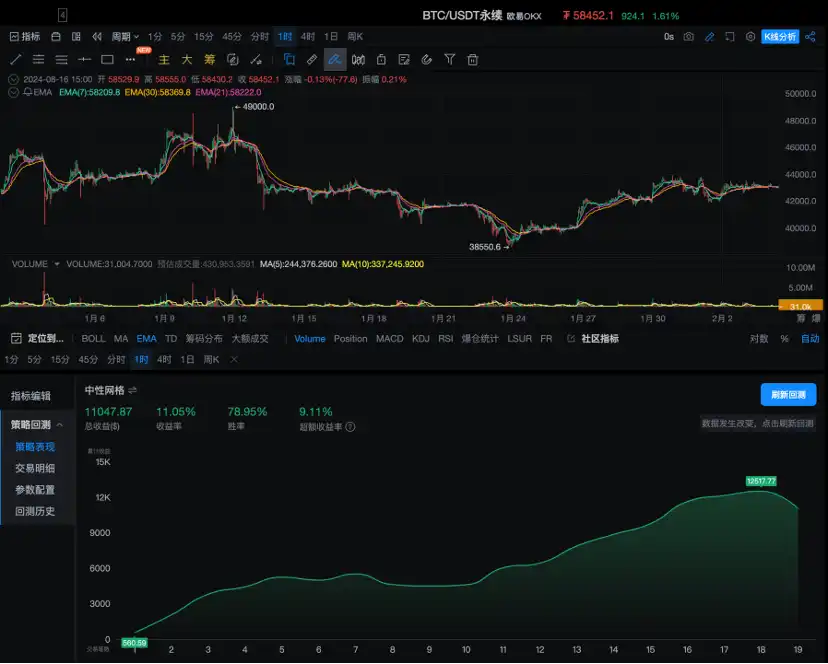
Image 1: Neutral contract grid under 1h of sideways fluctuations; Source: AICoin
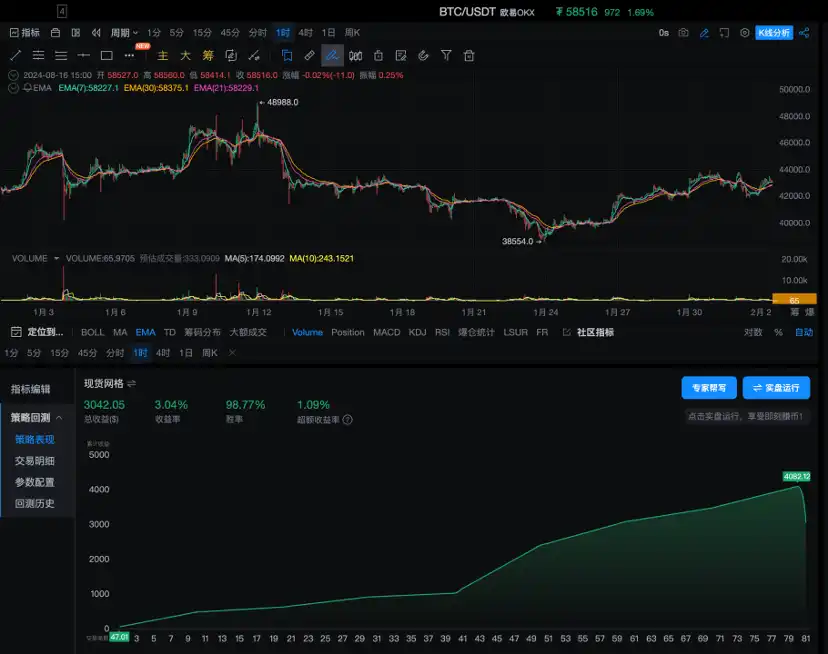
Image 2: Spot grid under 1h of sideways fluctuations; Source: AICoin
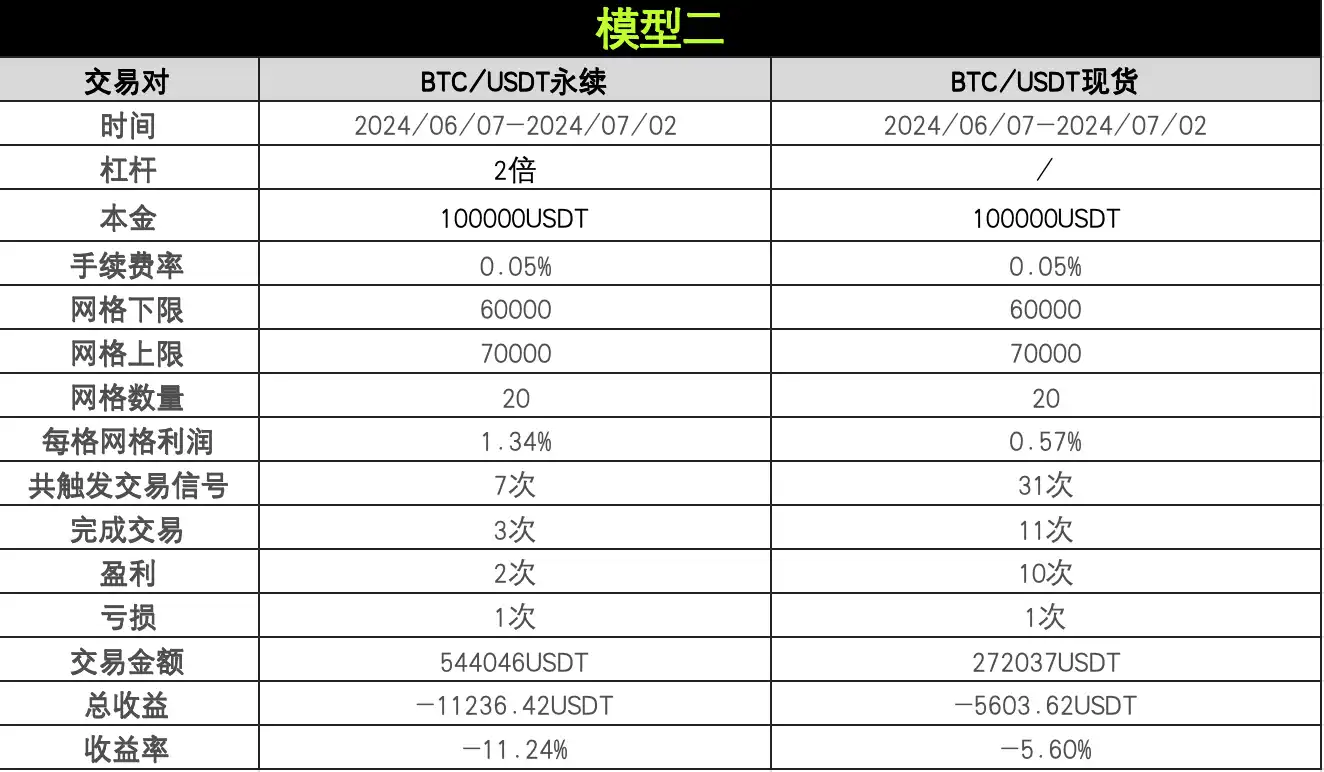
Model 2
The model is: oscillating downward for 4h Neutral contract grid and spot grid under the operation cycle
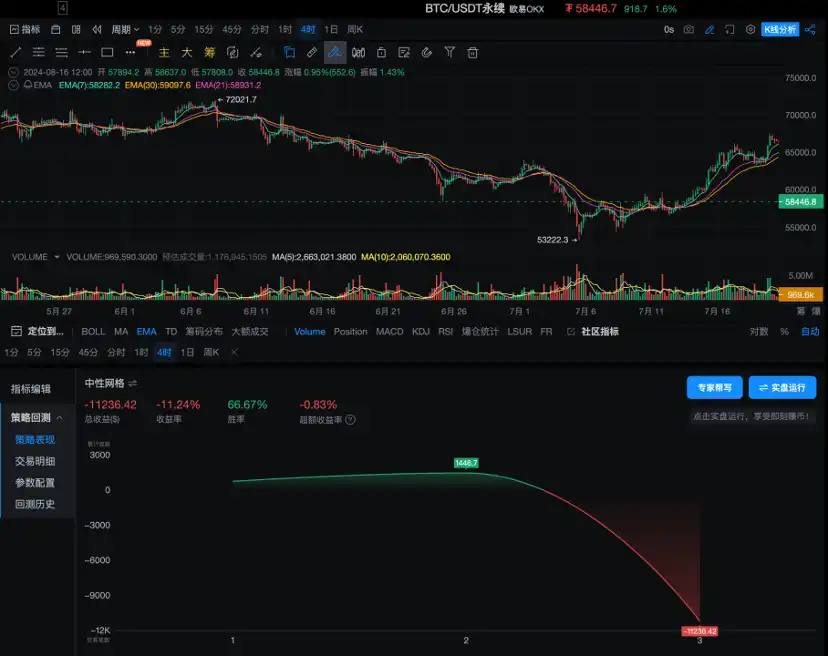
Image 3: Neutral contract grid under 4h shock downward; Source: AICoin
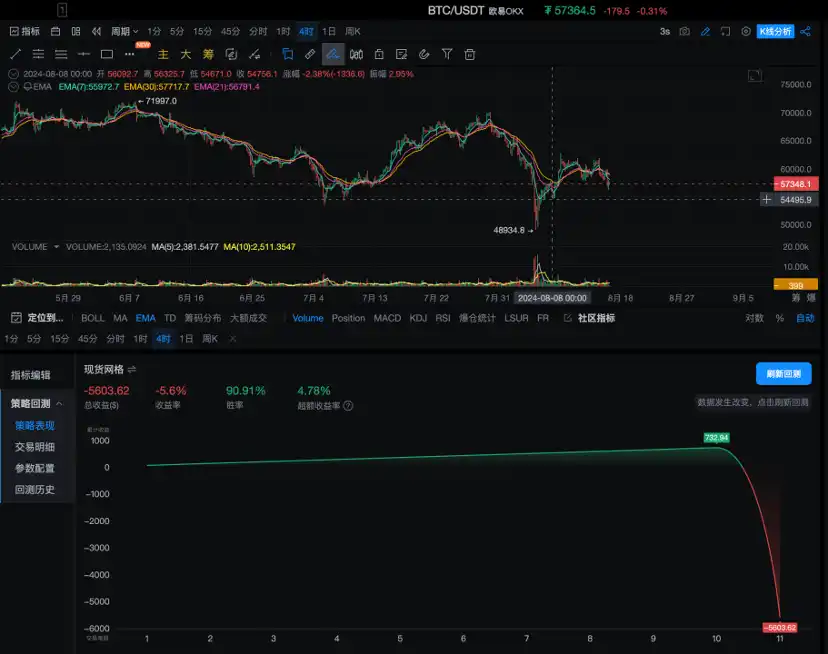
Image 4: Spot grid under 4h shock downward; Source: AICoin
Model Three
This model is: neutral contract grid and spot grid under the 1-day shock upward operation cycle
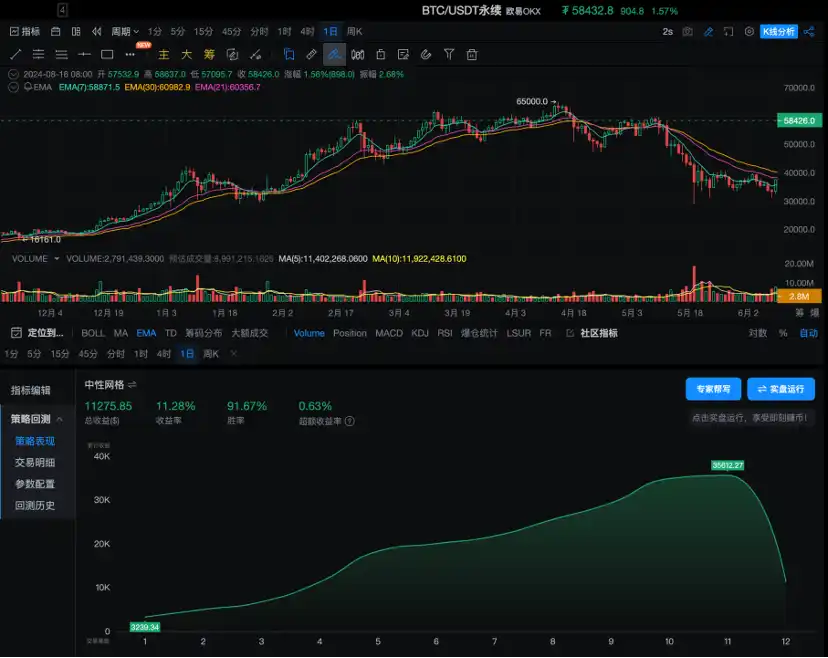
Image 5: Neutral contract grid under 1-day shock upward; Source: AICoin
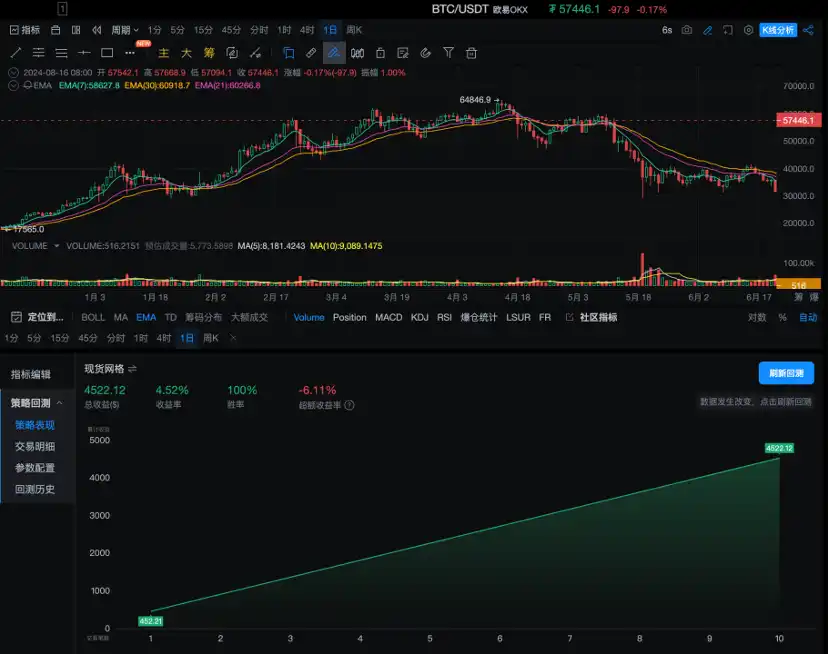
Image 6: Shock upward 1 Spot grid in the day; Source: AICoin
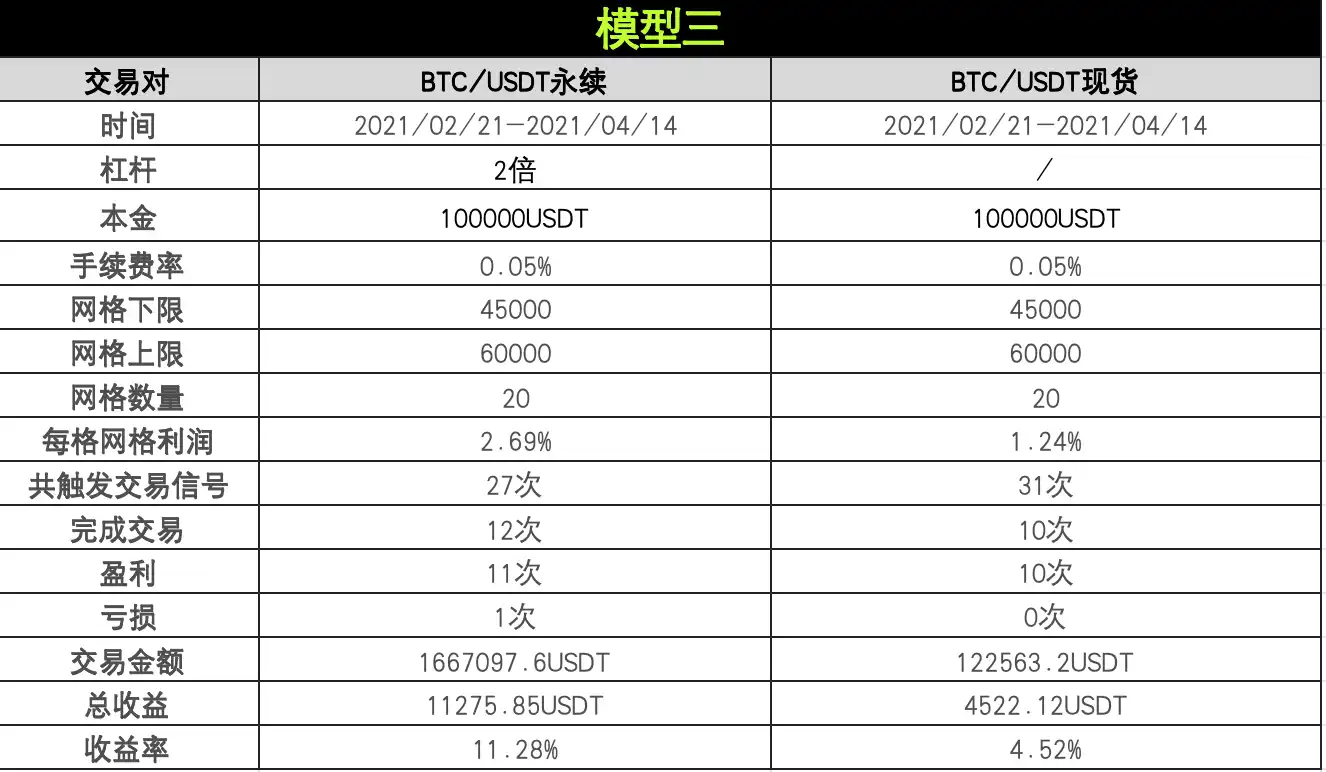
Analysis and summary
Grid strategies perform differently under different market conditions. Traders need to choose appropriate strategies based on market trends and weigh risks and benefits. In Models 1 and 3, the yield of the neutral contract grid is significantly higher than that of the spot grid, especially in the oscillating upward environment of Model 3, where the yield of the neutral contract grid is as high as 11.28%. In the oscillating downward environment of Model 2, both the neutral contract grid and the spot grid suffered losses, indicating that the neutral contract grid and the spot grid performed poorly in the falling market.
By observing the performance of the spot grid in Models 1, 2, and 3, we can know that in different market environments, the winning rate of the spot grid fluctuates greatly, and the performance of the spot grid is relatively unstable. Although the neutral contract grid has higher returns, it is also accompanied by higher risks because of the use of leverage. For example, in the volatile downward market of Model 2, leverage magnified the losses, while spot trading is relatively stable, but may result in losses in unfavorable market conditions.
Specifically:
1. Strategy performance
Contract grid strategies generally show higher return potential in different market environments, but may also face greater risks.
Spot grid strategies perform better in sideways and upward oscillating markets, but suffer losses in oscillating downward markets.
2. Risk and return
Neutral contract grid strategies achieve higher absolute returns through the use of leverage, but also bear higher risks. Although the spot grid strategy has a lower absolute return, its risk-adjusted return may be more attractive in some cases considering that leverage is not used.
3. Market adaptability
Neutral contract grid strategies perform relatively stably in different market environments. Spot grid strategies perform better in rising or sideways markets, but are prone to losses in falling markets.
4. Trading activity
Neutral contract grid strategies usually have higher trading frequency and transaction amount, which may help capture more market opportunities, but may also bring higher transaction costs.
5. Applicable investors
Neutral contract grid strategies may be more suitable for investors with higher risk tolerance and in-depth understanding of the market. Spot grid strategies may be more suitable for investors with lower risk tolerance and pursuit of stable returns.
6. Risk management
When using neutral contract grid strategies, more cautious risk management is required, including setting stop losses and monitoring leverage levels.
In short, the two strategies have their own advantages. The neutral contract grid strategy provides higher potential returns and better market adaptability, but the risks are also higher. Although the spot grid strategy has relatively low returns, it also has low risks and can still provide stable returns in certain market environments. Investors should choose appropriate strategies based on their own risk tolerance, investment goals and market judgment.
OKX&AICoin Grid Strategy
Currently, OKX strategy trading provides convenient and diverse strategy varieties, and its grid strategies mainly cover: spot grid, contract grid, and infinite grid. Whether it is the OKX spot grid strategy or the OKX contract grid strategy, its essence is an automated strategy that executes low-buy and high-sell in a specific price range. Users only need to set the highest and lowest prices in the range and determine the number of grids to be subdivided to start running the strategy; if necessary, you can also set the trigger conditions in advance, and when the market reaches the trigger conditions, the strategy will automatically start running. The strategy will calculate the low-buy and high-sell prices of each small grid, automatically place orders, and continuously buy low and sell high to earn profits from fluctuations as the market fluctuates.
However, there are 3 key differences between OKX contract grid strategy trading and spot grid strategy trading:
1) Contract grid strategy is traded in the contract market, while spot grid strategy is traded in the spot market
2) Contract grid strategy can use leverage, while spot grid strategy cannot use leverage
3) Contract grid strategy supports three trading strategies: bullish, bearish and neutral, while spot grid strategy only supports one-way trading.
Currently, OKX grid strategy supports two creation modes:
1) Manual creation: Set parameters and trigger conditions based on your own judgment of the range of the oscillating market. Currently, OKX spot grid strategy and contract grid strategy can set two trigger types: price trigger and RSI technical indicator trigger.
2) Intelligent creation: Directly use the grid strategy parameters recommended by the system intelligently.
How to access more strategy trading on OKX? Users can enter the "Strategy Trading" mode in the "Trading" section through the OKX APP or official website, and then click on the Strategy Square or Create Strategy to start the experience. In addition to creating strategies by yourself, the Strategy Square currently also provides "Quality Strategies" and "Quality Strategies with Strategy Leads", and users can copy strategies or follow strategies.
OKX strategy trading has multiple core advantages such as simple operation, low handling fees and security. In terms of operation, OKX provides intelligent parameters to help users set trading parameters more scientifically; and provides graphic and video tutorials to help users quickly get started and master them. In terms of handling fees, OKX has comprehensively upgraded the handling fee rate system, significantly reducing user transaction fees. In terms of security, OKX has a security team composed of top global experts, which can provide you with bank-level security protection.
In addition, AICoin also provides users with a variety of strategy trading, allowing users to understand the current market more quickly and intuitively. Users can find the "Strategy Square" option in the "Strategy" option on the left sidebar of the AICoin product. Click here and you can find the grid trading strategy in the "Featured Strategies" at the bottom of the interface.
At the same time, AICoin grid strategy supports manual creation and AI grid. Find the "AI Grid" below in the "Quotes" option on the left sidebar. In this interface, users can see the grid strategy recommended by AI for this trading pair and the manual creation option. In addition to the grid trading strategy, this series will also introduce several other trading strategies, including the all-currency DCA strategy. These trading strategies can be found in the "Strategy Square" on the left sidebar.
Disclaimer
This article is for reference only and represents only the author's views and does not represent the position of OKX. This article is not intended to provide (i) trading advice or trading recommendations; (ii) an offer or solicitation to buy, sell or hold digital assets; (iii) financial, accounting, legal or tax advice. We do not guarantee the accuracy, completeness or usefulness of such information. Holding digital assets (including stablecoins and NFTs) involves high risks and may fluctuate significantly. You should carefully consider whether trading or holding digital assets is suitable for you based on your financial situation. Please consult your legal/tax/trading professionals for your specific situation. Please be responsible for understanding and complying with local applicable laws and regulations.
Welcome to join the official BlockBeats community:
Telegram Subscription Group: https://t.me/theblockbeats
Telegram Discussion Group: https://t.me/BlockBeats_App
Official Twitter Account: https://twitter.com/BlockBeatsAsia
 Related Articles