Bankless: How to play with Solana NFT?

Original title: "An Intro to Solana NFTs"
Original author: William M. Peaster
Original translation: Lucy, BlockBeats
Editor's note:
William M. Peaster author wrote an article introducing the Solana NFT standard and ecosystem. He believes that when it comes to the largest NFT ecosystem in the crypto economy, Solana has joined the ranks of Ethereum and Bitcoin.
William M. Peaster pointed out that although Ethereum will still dominate the NFT field in the next few years, because Solana's NFT ecosystem seems to have reached escape velocity, it will also become deeper and broader over time. BlockBeats compiled the original text as follows:
A few months ago, I wrote an article about how the Ethereum, Bitcoin, and Solana NFT scenes will develop in 2024.
While I have written quite a few articles on the Ethereum NFT ecosystem and the Bitcoin ecosystem, I have not yet done an introductory introduction to the Solana NFT field.
So here is a quick beginner's guide that will walk you through the basics of Solana NFT standards, top collections, and how to get started.
About Solana
Introduction:Like Ethereum, Solana is a smart contract blockchain that facilitates general applications ranging from DeFi to NFT use cases. The fundamental difference between Ethereum and Solana lies in their design philosophies.
Monolithic:Ethereum takes a "modular" approach, balancing its decentralization, security, and scalability needs with external DA and L2 scaling solutions. In contrast, Solana uses a "monolithic" approach to handle all of its execution, data, and security needs. Both approaches require trade-offs, and Solana's main difference is how it optimizes speed within a single shared global state.
NFTs Are Ripe: Due to Solana’s architectural choices, the chain is designed to support 1,000 transactions per second (TPS). Additionally, Solana transactions have no “gas price” as the network has yet to introduce usage-based pricing, so each Solana transaction currently costs a flat rate of 0.000005 SOL. This speed and affordability has created fertile ground for the network’s emerging NFT scene.
Understanding the Solana NFT Standard
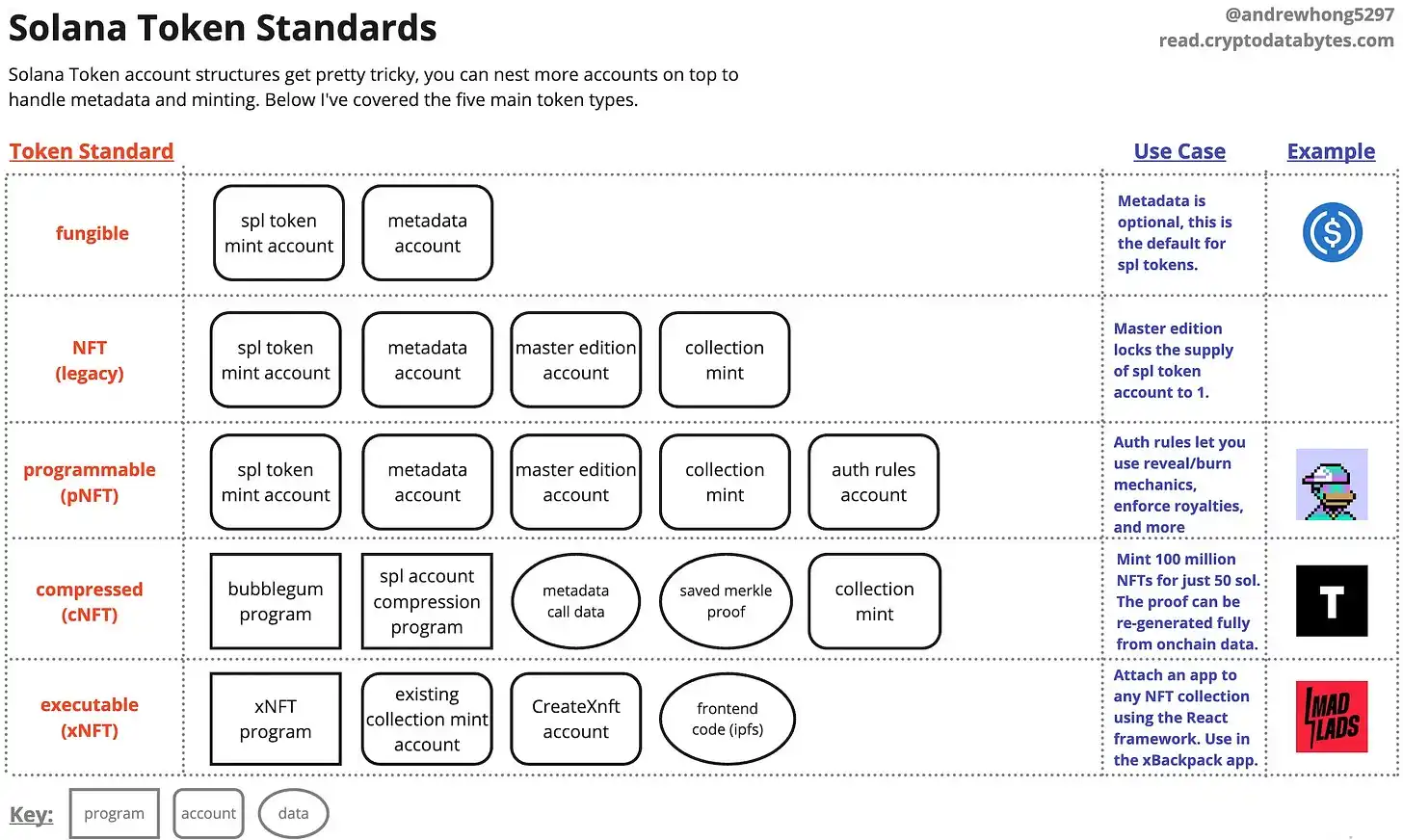
Just like Ethereum has the ERC-721 and ERC-1155 standards, and Bitcoin has ordinals, Solana has its own unique NFT standard. If you want to go deeper, I recommend Part 3 of Andrew Hong’s “Starter Guide to Solana Analytics” series, but here are the basics: • Legacy: Solana’s original NFT standard was developed by creator studio platform Metaplex and built as an extension of the Solana SPL standard, which is roughly similar to Ethereum’s alternative ERC-20 standard. As Claynosaurz has done.
• pNFT: Programmable NFT, also developed by the Metaplex team, is a token standard that introduces mandatory royalties, rules, etc. for Solana NFTs. Such as Solana Monkey Business.
• cNFT: Compressed NFTs leverage Solana’s state compression upgrade to efficiently compress large amounts of data into on-chain storage. This feature enables projects to save a lot of money on minting costs. For example, it currently costs 1 SOL to mint 2 million cNFTs. As in Tensorians. • xNFT: Executable NFTs are not a token standard in themselves, but do allow projects to attach applications to their collections. For example, the Backpack team uses the xNFT system to offer a Mad Lads staking program within the Backpack wallet.Solana NFT Ecosystem
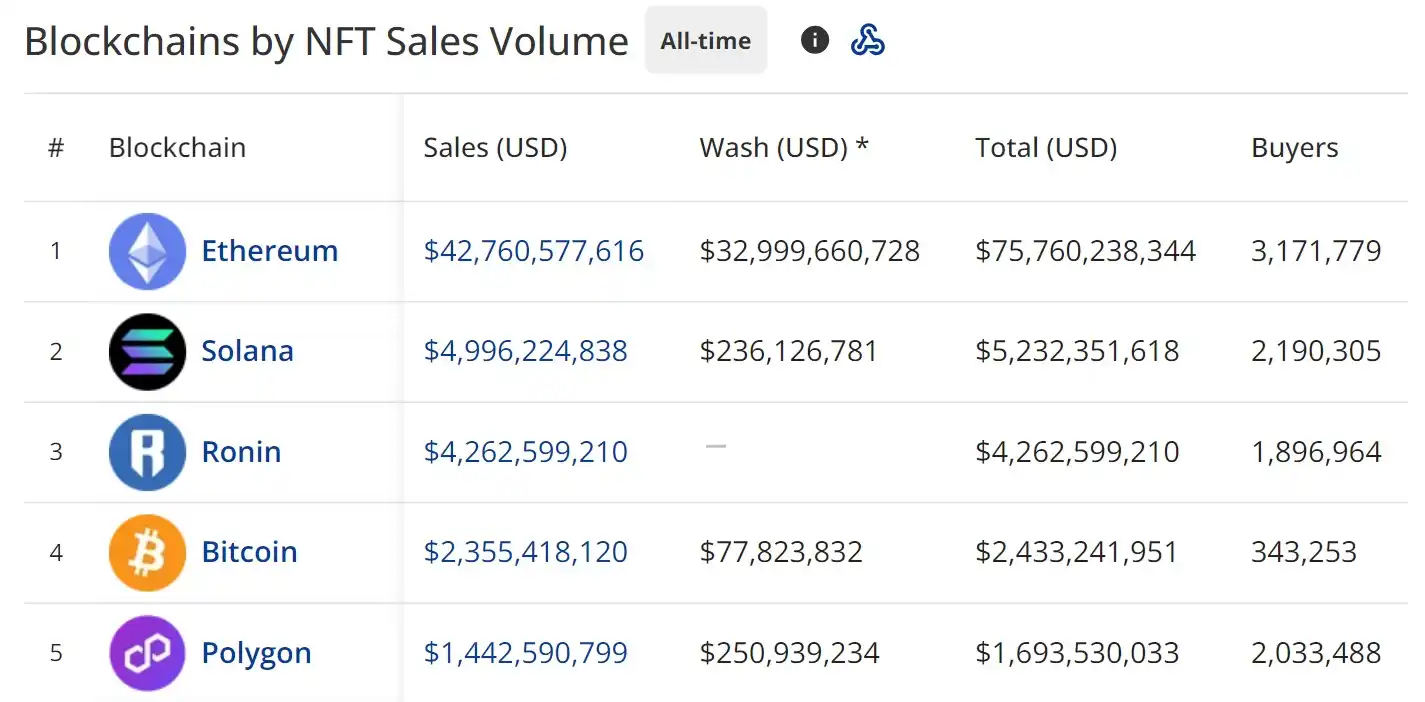
NFT Mainstream: Currently, over 192 million NFTs have been minted on Solana, placing it behind only Polygon and Ethereum in terms of total NFTs created to date.
Solana has also facilitated approximately $5 billion worth of NFT trading volume as of February 2024, making it the second most active NFT trading chain currently behind Ethereum.
Top Collectibles: While Solana does not currently have as many major NFT collectibles as Ethereum, it has its own giants.
The largest collection on the web today is Backpack’s Mad Lads project, which is trading at a floor price of around 206 SOL (~$22,000) and is currently the fourth largest NFT collection by market cap, behind CryptoPunks, Bored Apes, and Pudgy Penguins on Ethereum. In reaching this level, Mad Lads holders have now joined Pudgy Penguins and Bad Kids as targets for airdrops from new multi-chain projects on Cosmos.
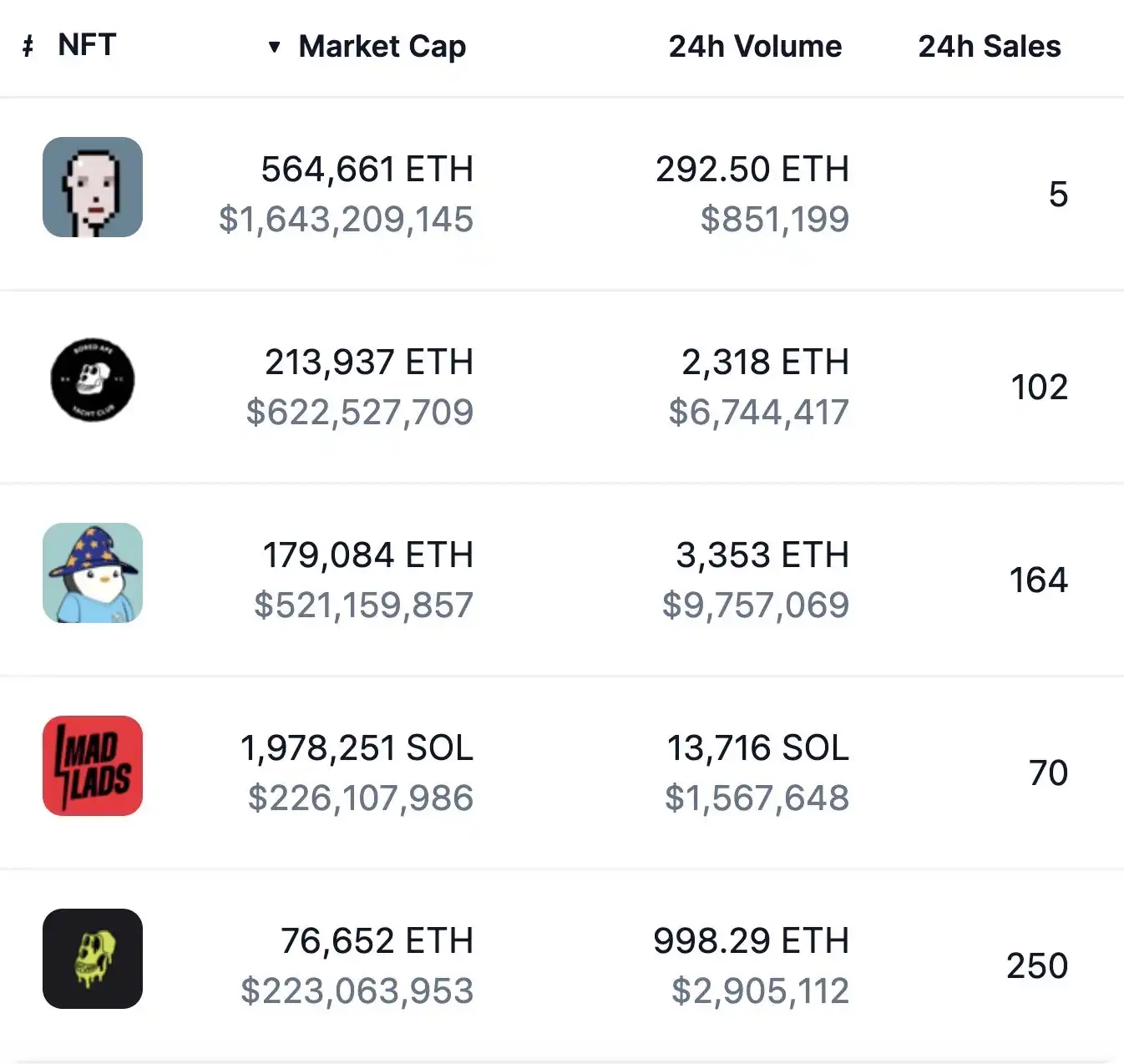
Other Top Series: While Mad Lads is out of many people's price range, there are many other series on Solana that are priced lower and are also gaining considerable traction. Some of the current standout series include:
• Tensorians (80.5 SOL floor)
• Claynosaurz(34.4 SOL floor)
• Degen Ape Academy(14.4 SOL floor)
• Saga Monkes(3.9 SOL floor)
• Froganas(3.7 SOL floor)

Getting Started with Solana NFTs

Collecting NFTs
You’ll need to set up a Solana wallet and get some SOL to buy Solana NFTs, just like you need ETH to buy Ethereum NFTs. The easiest way to get SOL is to buy it from the cryptocurrency exchange of your choice, such as Coinbase, and then transfer it to a personal wallet.
As for your choice of wallet, Phantom, Magic Eden Wallet, or Backpack are all good options. Both Phantom and Magic Eden offer multi-chain support like Ethereum and Polygon wallets, while Backpack is optimized for interactive xNFT experiences.
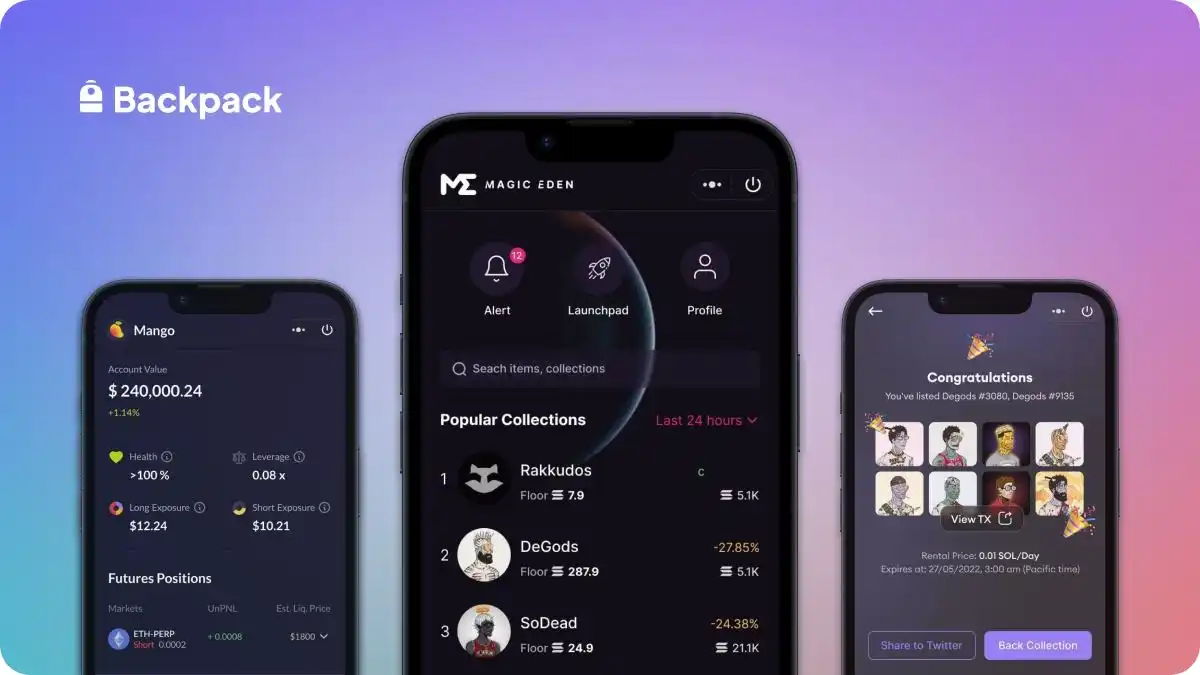
Once you have SOL, you can start minting directly from NFTs, for example on Metaplex and browsing Solana's NFT marketplaces. The most popular marketplaces today are Tensor and Magic Eden. Here, the buying experience will be similar to Ethereum: select the NFT you want, click the "Buy" option, and approve the transaction with your wallet to complete.
In addition, Solana offers free minting, which allows NFTs to be collected for free, except for transaction fees and any relevant platform fees. For example, an early popular platform is DRiP, which allows users to collect free limited edition works from their favorite creators every week.
Listing NFTs
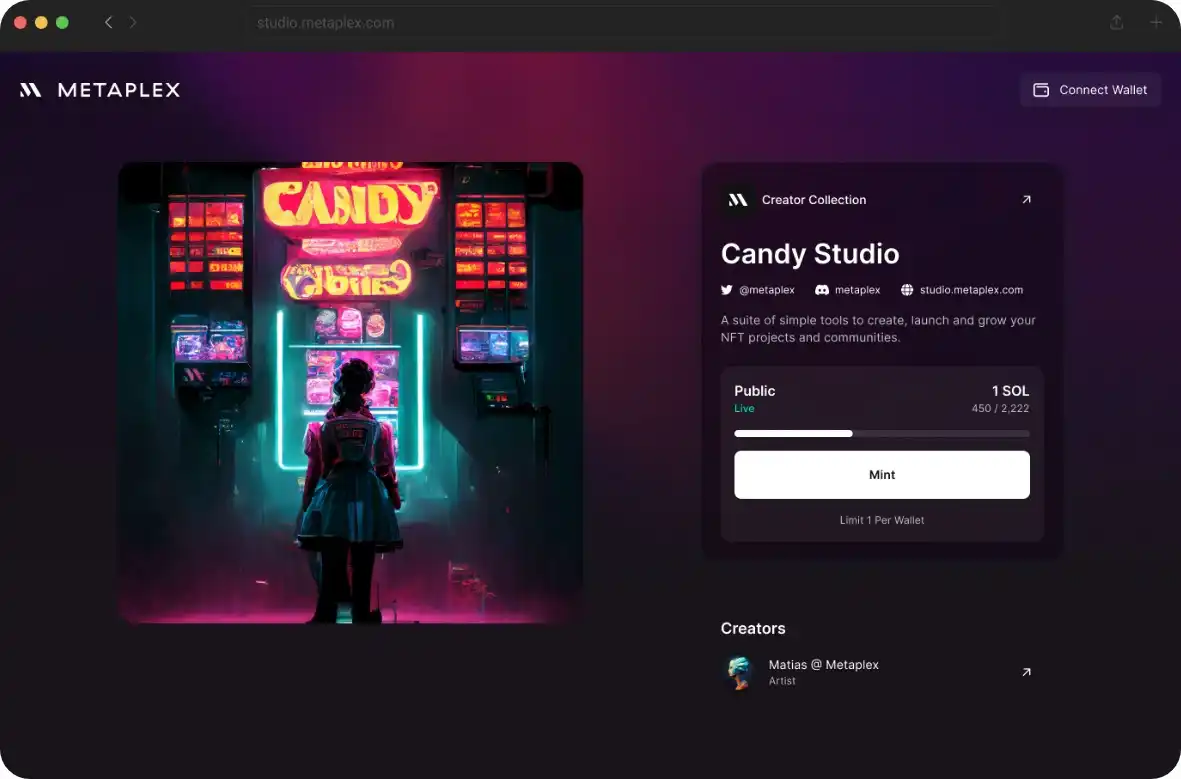
If you want to sell or continue to use your Solana NFTs, you can use Tensor or Magic Eden to list your NFT for sale. Again, the experience will be close to what you’re used to on the Ethereum marketplace. Select the NFT you want to sell, hit the “List” option, enter your desired selling parameters, and approve the transaction with your wallet.  Create NFTs If you’re interested in creating your own NFTs, consider checking out Metaplex Studio, which enables publishing 1/1s, open releases, and collections on Solana. Unlike Zora, Manifold, and Highlight on Ethereum, I personally haven’t tried Metaplex on the creator side, but it’s certainly the leading choice in the Solana NFT scene today.
Summary
Solana has joined the ranks of Ethereum and Bitcoin when it comes to the cryptoeconomy’s largest NFT ecosystems. To be sure, Ethereum’s NFT scene is deeper and broader, especially if you count L2, and has a more diverse and richer niche from conceptual art to real-world assets. However, Solana’s NFT ecosystem appears to have reached escape velocity, so it will also become deeper and broader over time.
So what happens next? In my opinion, the most likely scenario over the next few years is that Ethereum remains dominant in the NFT space, but all major currencies, including Bitcoin, Solana, and even Cosmos, experience significant growth in NFTs at the same time. That said, I think it’s worth trying all of these networks now to prepare for what’s to come!
「Original link」
Welcome to join the official BlockBeats community:
Telegram Subscription Group: https://t.me/theblockbeats
Telegram Discussion Group: https://t.me/BlockBeats_App
Official Twitter Account: https://twitter.com/BlockBeatsAsia