Interpreting Glif, led by Multicoin: What makes their 'liquidity leasing' with points and staking on FVM special?

On February 6th, Glif, a Filecoin ecosystem liquidity staking platform, completed a $4.5 million financing round with participation from Multicoin Capital and others.
Arthur Hayes, co-founder and former CEO of BitMEX, expressed his bullish view on Filecoin during his keynote speech at Toen2049 in Singapore. He stated that "in Europe, people are using SEAL to help reduce data costs, and SEAL is rewarded with FIL by storing this data on the Filecoin network."
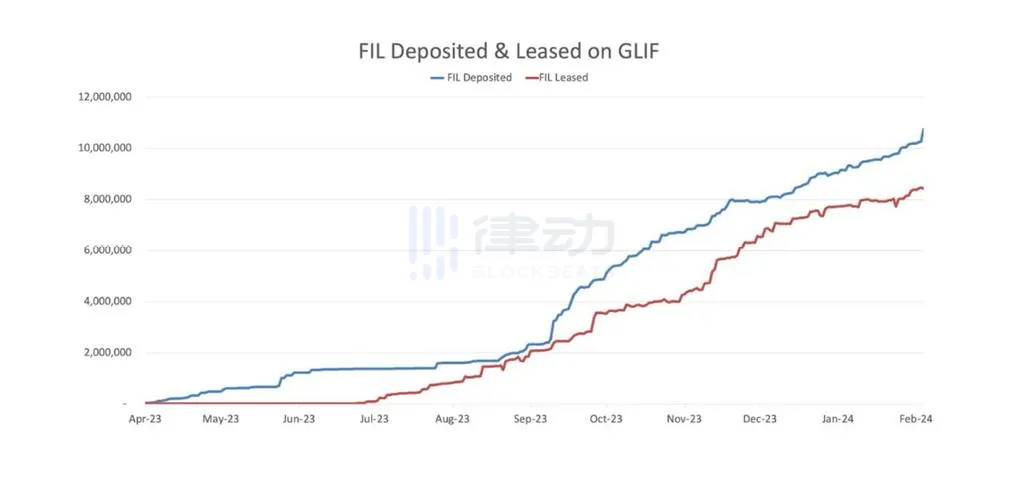
Due to this, the price of FIL token has been continuously rising since its low point in October last year. As a DeFi protocol on Filecoin, the borrowing and leasing amount of FIL on Glif has been steadily increasing, with approximately 10 million FIL tokens borrowed and 8 million FIL tokens leased at present.
除 Filecoin 生态利好因素外,Glif 的「流动性租赁」设施以具有收益的流动性质押代币 iFIL 为中心,为即将推出的积分计划奠定了基础,该计划将根据 Glif 用户的 iFIL 代币累积价值进行奖励,而积分可能暗示了潜在得代币空投。这笔资金将帮助 Glif 扩大该「流动性租赁」设施。
Translation:Aside from the positive factors in the Filecoin ecosystem, Glif's "liquidity leasing" facility, centered around the profitable liquidity collateral token iFIL, has laid the foundation for the upcoming rewards program. This program will reward Glif users based on the accumulated value of their iFIL tokens, and the rewards may imply potential token airdrops. This funding will help Glif expand its "liquidity leasing" facility.
Glif: Solution for Filecoin Staking Market
Glif is the basic DeFi primitive of Filecoin and the first liquidity leasing agreement in the cryptocurrency industry. Its liquidity leasing facility is built using the Filecoin Virtual Machine (FVM). Therefore, before interpreting Glif, let's briefly understand the Filecoin and FVM behind it.
Built on FVM
Filecoin is a decentralized data storage protocol, with Arweave being its biggest competitor in this field. Kyle Samani, founding partner of MultiCoin, sees Filecoin as a superset of Arweave due to its parameterization capabilities, offering more options and configurability for developers to customize storage parameters such as replication factor, unlike Arweave's single parameter. He believes that Filecoin and Arweave may coexist for a long time, but Filecoin, with its higher configurability, provides greater flexibility and potential use cases.
One notable difference is that, unlike Arweave which relies on protocol design to address data redundancy in storage, Filecoin uses economic incentives, specifically FIL token staking.
Whenever a miner provides storage space for a client, they need to use FIL as collateral. This collateral amount is used to seal storage blocks and keep the sealed storage blocks on the miner's device. This structure ensures that miners will store data for clients during the agreed-upon transaction period and will receive incentives in return. Incentives are distributed through PoSt (Proof of Space-time), and miners are rewarded by proving that they have stored the correct client data.
But in fact, only about 1% of the miner's rewards (or operating income) are liquid, which forces miners to borrow fiat currency or borrow FIL tokens from third parties to pay for operating income, upgrade hardware, pay maintenance costs, or attract/renew transactions. And because these are loan products, storage providers must go through KYC and strict audit processes to borrow FIL.
Related reading: "Interpreting Filecoin's Staking Economics: Staking Will Fill the Supply and Demand Gap of FIL in the Ecosystem".

On this basis, Filecoin launched a compatible EVM virtual machine on March 14th last year, which allows any developer to deploy smart contracts on the network. FVM introduces programmable payments for storage, retrieval, bandwidth, and computation, making Filecoin programmable. For more information on how FVM works, please refer to "In-depth analysis of Filecoin virtual machine: working principle, unlocked use cases and its importance".
Simply put, FVM allows for the creation of a trustless market, one that is built for FIL borrowers (miners) and lenders (who can be FIL holders). FVM brings FIL lending onto the chain, with retail FIL holders pledging their FIL, miners borrowing FIL from the pool, and FIL lending essentially allowing for cash to be obtained in advance through the accumulation of future rewards, making FIL mining more capital efficient.
And this solution is Glif.
Glif's Technical Architecture
The main difference between Glif and other CeFi/DeFi lending protocols is that SP (Service Provider) maintains control over its Miner Actors role. This is achieved through the "Agent architecture" of the protocol.
Agent is an intelligent contract located between SP and the infinite pool. By abstracting the ownership of SP from its lending pool, Agent can alleviate the "lock-in" suffered by other DeFi or CeFi collateral, lending, and leasing solutions.

Source: Glif Documentation
SP owns and operates their Agent smart contract, and interacts with the pool through the contract. Each SP deployed, owns, and controls their own Agent in the system, which is operated through GLIF CLI.
GLIF CLI maps human-readable names to account addresses. Whenever you pass an "address" parameter or flag to a command, you can use the human-readable version of the name. For example, if you have an account named "testing-account", you can send a transaction with "from testing-account". Additionally, GLIF CLI includes a wallet for writing transactions to Filecoin, which is based on the go-ethereum cryptographic key library. A single "wallet" can hold multiple independent "accounts", each with a human-readable name.
Agent smart contracts can be in one of three states: good standing, monitoring, or default. Currently, the Glif team manually moves the Agent from "good standing" to "monitoring" or "default" states to avoid potential dangerous automation errors. Once stable and secure enough, this process will be decentralized and automated.
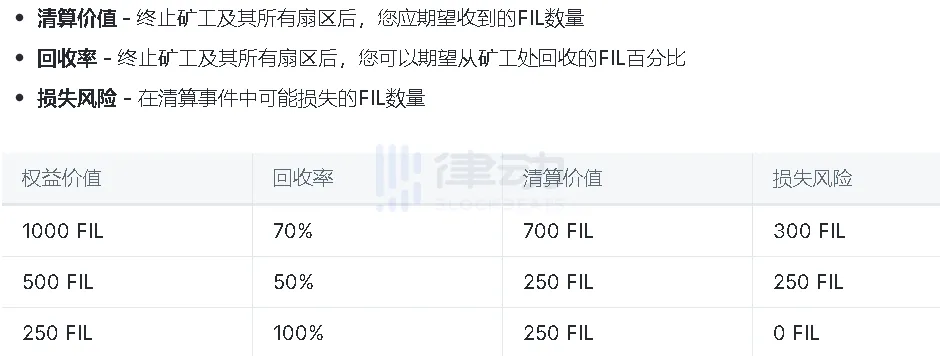
On the other hand, in order to borrow, the Agent needs equity. The more Filecoin miner roles promised to the Agent, the more equity it accumulates. The Agent accumulates borrowing power by pledging miner roles, and SP can remove Miners from its Agent at any time, as long as the remaining equity on their Agent is sufficient to collateralize the outstanding loan funds in the pool.
When an Agent wants to take action such as borrowing funds from a pool, it must first request credentials from ADO. ADO is an off-chain data aggregator that allows pools to securely receive any real-time and/or historical data about SPs at a very low cost. Each pool can receive its own unique data from ADO, allowing for maximum flexibility. ADO issues a signed credential to the Agent containing the latest data snapshot about the associated Agent and all associated miners. The Agent then brings this credential to the pool it wants to borrow from, and the pool uses it to decide whether to approve the operation.
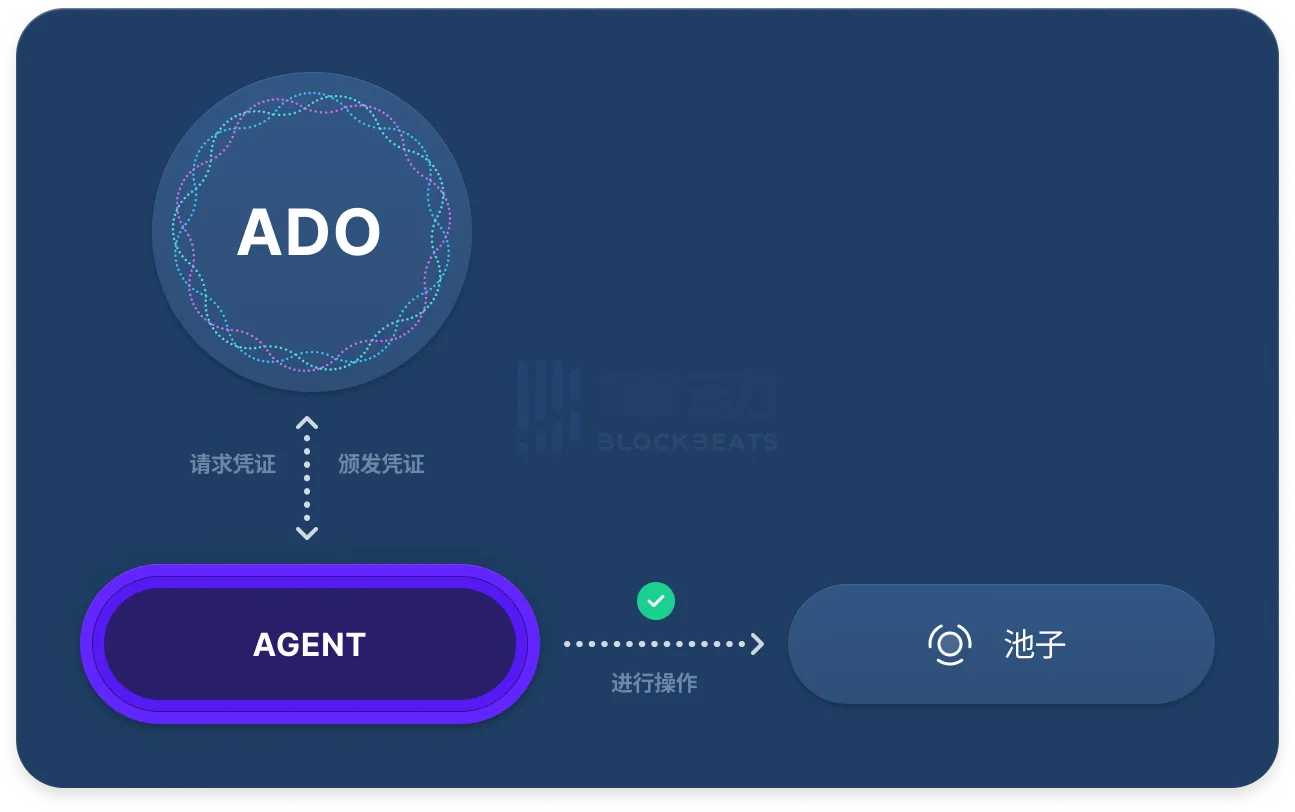
Source: Glif Documentation
无需许可的市场 Glif Pools
Permissionless Market Glif Pools
The "pool" mentioned in the previous section is simply a customized capital market deployed on the Filecoin network.
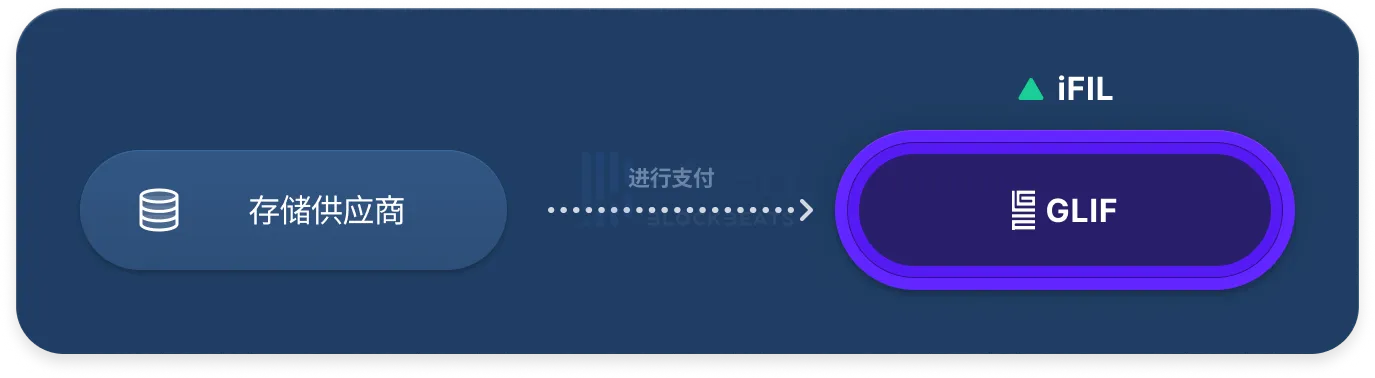
Currently, the main function of the Filecoin network is file storage, with SP (Storage Provider) representing its clients by pledging FIL as collateral. In order to provide storage, SPs must provide two forms of capital: hardware and financial capital (in the form of FIL).
From the perspective of financing, Multicoin Capital has long been optimistic about the Filecoin ecosystem.
Last April, MultiCoin expressed optimism about Filecoin on the Empire podcast. On February 6th of this year, MultiCoin led a $4.5 million investment in Glif, a Filecoin ecosystem liquidity staking platform.
The Glif team, led by Jon Schwartz and Peter Andersen, has been building foundational products in the Filecoin ecosystem since 2019. Prior to launching their liquidity leasing protocol, they built the first network wallet for Filecoin's mainnet, a multi-signature wallet distribution for Filecoin's SAFT token (which is still used by Protocol Labs and the Filecoin Foundation for managing payments), Filecoin's de facto RPC service (processing over 85 million requests per day), and several other key applications and tool networks for Filecoin.
One interesting and under-observed aspect of the Glif protocol is its ability to deploy multiple interoperable capital markets with its own custom assets and rules, although there is currently only one market. This feature opens the door for Glif to work with LP and SP in a customized way, and to horizontally expand to accommodate new use cases as Filecoin matures.
For example, Glif can deploy custom pools specifically designed to lower the entry barriers for new SPs joining the network, use SP's stored transaction flows as collateral for stablecoin-based pools, and/or deploy pools that store specific datasets or run specific computational programs for SP capital deployment.
Ultimately, we envision a Filecoin economy where there are many customized pools to incentivize niches or specific use cases in data storage, retrieval, and eventual computation. In this way, Glif's architecture is entirely unique and also able to scale with Filecoin and new use cases that emerge with the maturity of FVM.
Welcome to join the official BlockBeats community:
Telegram Subscription Group: https://t.me/theblockbeats
Telegram Discussion Group: https://t.me/BlockBeats_App
Official Twitter Account: https://twitter.com/BlockBeatsAsia

 Related Articles