Ten Thousand Words Analysis of Telegram Bot Track (Part 2): Panoramic View of Brokerages on the Chain
Original Title: "Analysis of Telegram Bot Race (Part 2): Full View of On-Chain Brokers"
Original Author: @ChingChaLong02
In the Telegram race analysis report in the previous article, we summarized the entire Telegram Bot race and provided an overview. This chapter will delve deeper into the project to understand the current development status of Telegram trading robots and predict their future trends. Given Banana Gun's position as the leader in the race (total trading volume), we hope to use a valuation model to verify the actual market value and coin price of the Banana Gun project.
Meanwhile, considering the recent active performance of the Solana ecosystem, we will also explore BonkBot as an emerging project that has attracted a large number of traders to participate in the meme coin trading frenzy on the Solana platform. We will also provide some future prospects for the overall Solana Telegram trading bot track.
In addition, given the recent craze for Bitcoin inscriptions, Telegram bots specializing in trading BRC-20 have emerged. This article also hopes to understand their models and development through this.
1. Unibot
Since the launch of Unibot's native token, the token price has risen from a low of $3.13 in May to a high of $200.45 in August, nearly a 100-fold increase. Within just two months of its release, it has generated over $6 million in revenue.
This significant financial performance and the rapid increase in token value have greatly increased people's interest in the Telegram bot field, triggering a widespread frenzy surrounding Telegram bots.
Users can easily submit on-chain token trading instructions on Uniswap through interactive conversations with Unibot. This includes functions such as token exchange, copy trading, limit orders, and private transactions.
In addition, Unibot also provides real-time Ethereum new token alert services, allowing users to easily add new tokens and quickly engage in sniper trading.
1.1 Historical Event K-Line Chart

The Unibot project launched a token buyback plan early on to maintain market liquidity stability. However, during the Unibot V2 migration period in July, the project team cancelled the token burning function as they found that this measure hindered liquidity growth. As a new strategy, the project team reissued the burned tokens and paired them with Unibot/Eth, adding them to Uniswap V2 to enhance liquidity depth.
At the end of the same month, Unibot launched UnibotX, which supports trading in the form of an order book and provides greater trading liquidity for a variety of tokens that are not listed on major exchanges.
Despite encountering a bear market with Telegram Bot in the later stage, the token price also plummeted. However, the project took advantage of the Friend.tech trend in September and successfully launched its keys trading function.
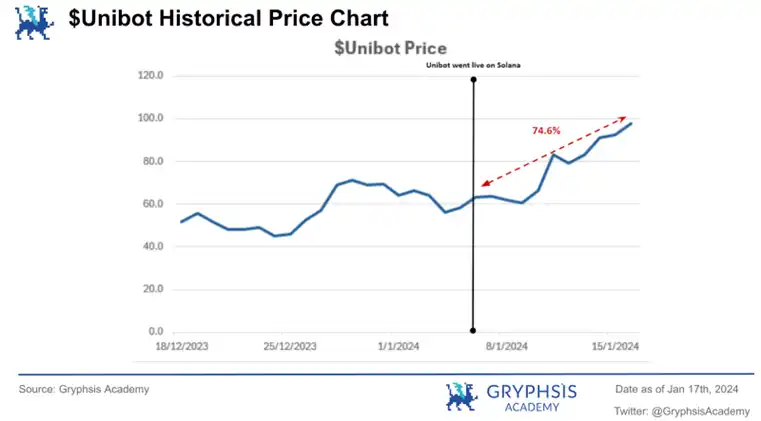
By January 2024, Unibot had successfully expanded to the Solana platform, capturing a large volume of transactions in response to the meme coin craze on Solana.
1.2 Economic Model
On May 17, 2023, the project achieved a fair launch of tokens. A total of 1 million tokens were issued, and all of these tokens have been fully circulated since the day of issuance.
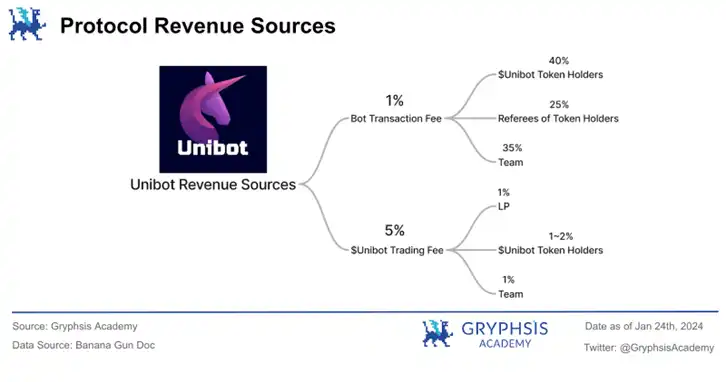
Currently, Unibot has two main sources of revenue, namely the robot trading fees (Bot Fee) and the transaction tax of the native token UNIBOT.
The former, Unibot charges a 1% transaction fee for each transaction, of which 40% is distributed to token holders; the latter refers to a 5% tax on all UNIBOT token transactions, with 1% of the transaction volume allocated to token holders, and token holders must have a balance of more than 50 UNIBOT to be eligible for income sharing rewards.
1.3 Future Outlook
(1) Over-reliance on token transaction taxes
From current data analysis, it can be seen that approximately 80% of Unibot's revenue comes from token transaction taxes. The project requires users to pay a 5% transaction tax each time they trade $UNIBOT, resulting in a cumulative transaction tax of 10% that users actually bear during the buying and selling process, becoming the main source of project revenue. However, this also implies a potential problem: the fees charged by the project for robot services may not be sufficient to maintain its basic income.
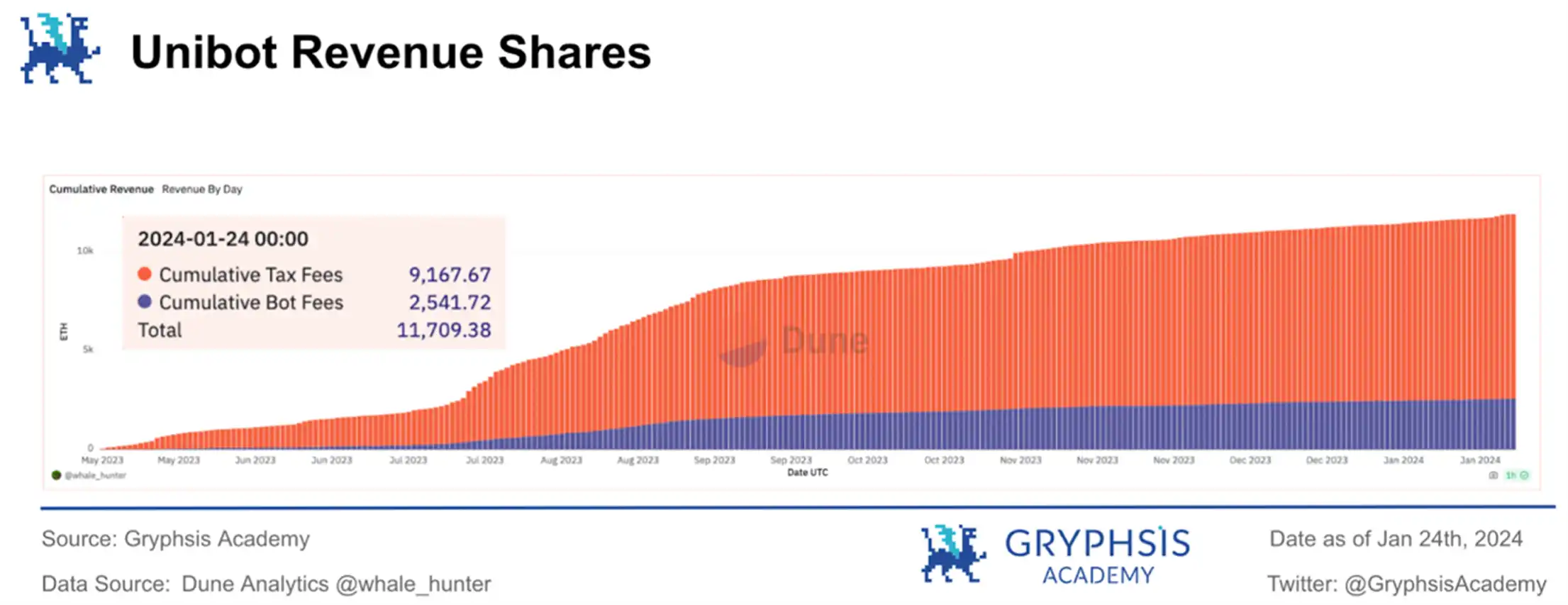
Using Banana Gun as an example, the project has already achieved stable revenue generated through robot services, surpassing transaction taxes and transitioning to a 0% token tax model. In the long run, Unibot faces the challenge of capturing more value through robot fees, as this is the core business of the project. Over-reliance on token transaction taxes as a source of revenue is not conducive to the project's long-term sustainable development.
(2)Unibot on Solana
Unibot recently announced the launch of a Telegram Bot on the Solana platform. Leveraging its advantage as a veteran project, the project has the following prominent features:
Cross-chain bridge with built-in ETH and SOL: Essentially merging the Unibot on Ethereum with the one on Solana, becoming the first Bot project to support both chains simultaneously.
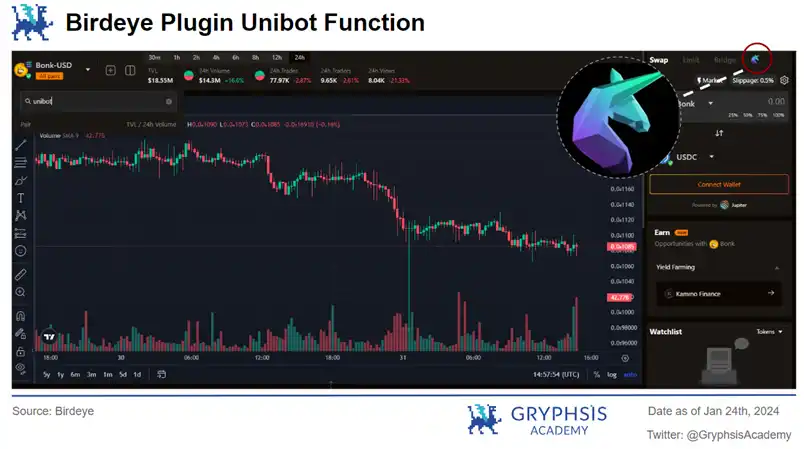
Collaborating with the transaction data aggregator platform Birdeye: the ability to seamlessly support all project transactions displayed on Birdeye, in my opinion, is the ultimate feature to enhance user experience and a crucial turning point for UniBot's success in the Solana market.
1.4 Protocol Presentation
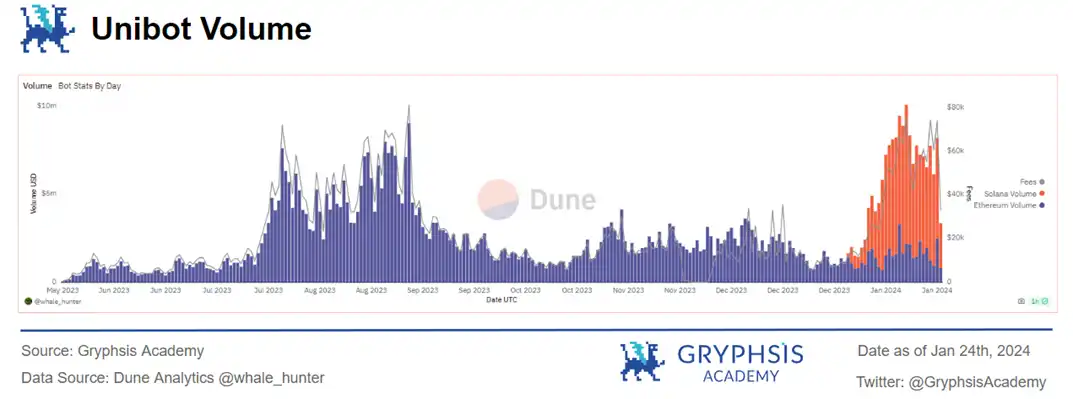
The transaction volume launched on Solana has performed significantly better than Ethereum within a week, even three times higher. In the long run, this is a development worth looking forward to.
2. Banana Gun
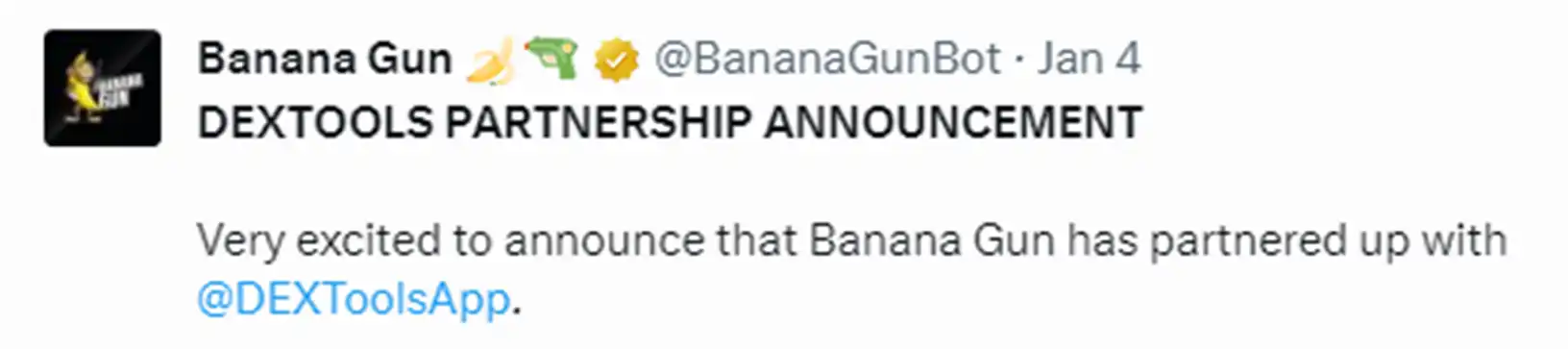
Banana Gun is one of the popular Telegram trading bots on the market. It provides two main services: trading and sniping. Through the trading function, users can safely purchase tokens that have been listed on the Ethereum blockchain. The sniping function allows users to be the first to purchase new tokens upon release. Banana Gun has recently expanded from supporting only Ethereum to also supporting Solana. Here are some detailed explanations of its functions:
First Bundle or Fail (FoF):
When targeting the first purchase (0 block) at the beginning of the transaction, at least 10 wallets need to participate to be effective. Not applicable to MEV or Deadblock releases.
FoF Backup:
If the FoF function is not triggered when MEV or Deadblock is released, the backup function will be purchased in the next available block and will use backup miner fees.
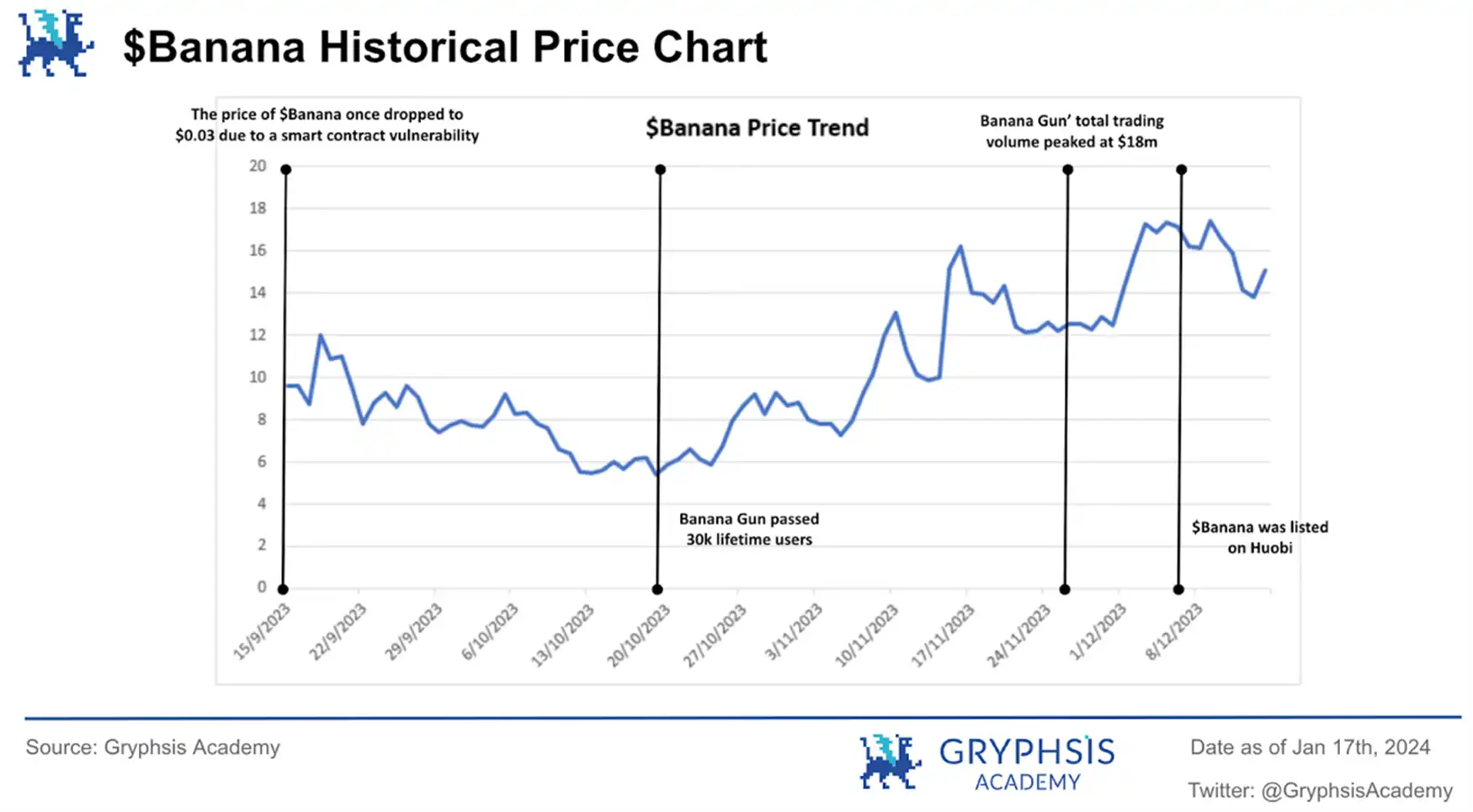
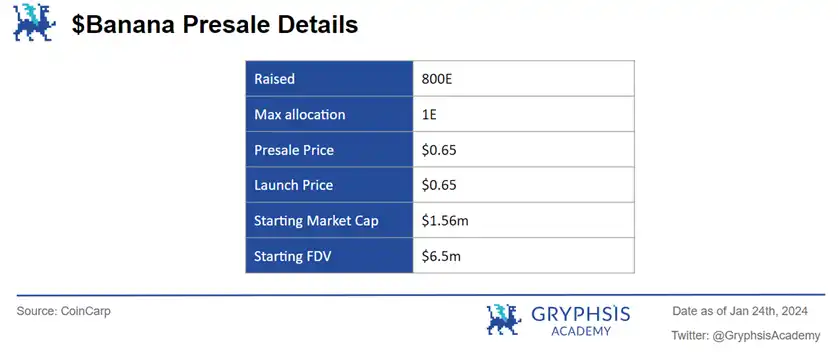
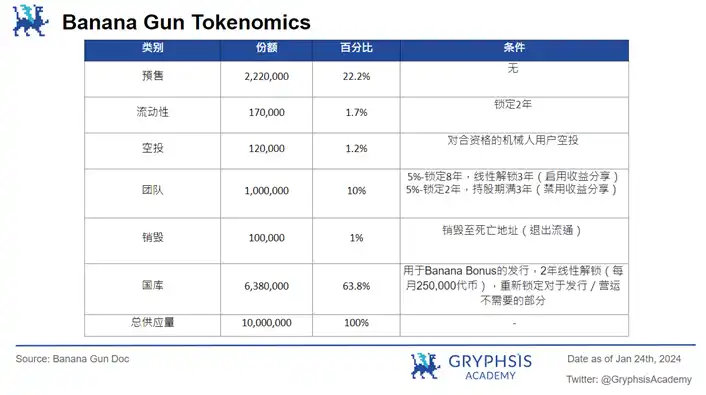
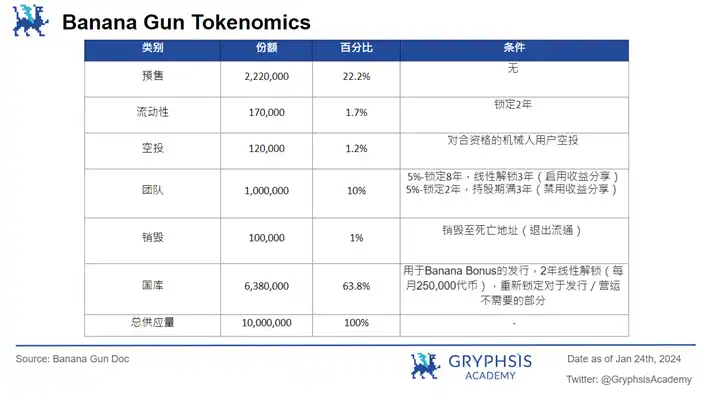
2.3 Protocol Revenue Sources / Token Use Cases
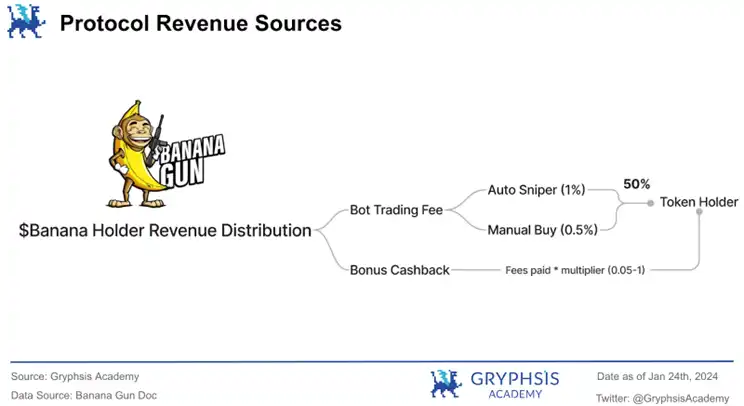
Using the robot service provided by Banana Gun will incur fees for transactions.
50% of all collected robot trading fees are distributed to token holders. This also provides passive income streams for holders and incentivizes the use of robots for trading.
额外现金回馈: Extra cashback:
The cashback amount is calculated using the following formula:
0% Token Tax Model:
Banana Gun recently announced a significant adjustment to its fee structure, shifting towards a 0% token tax model. This decision was influenced by various factors. Initially, the project used token taxes as a source of revenue during the bear market period when activity from its profitable robots was not as high. As the market conditions improved and robot revenue began to consistently exceed taxes, the project team reevaluated its approach.
However, considering that the main source of funds for token buybacks by the project party in the past came from token taxes, such buyback activities have been suspended by the project party at present. In the future, $BANANA token holders will play a more critical role as they will directly participate in deciding whether to continue adopting the token deflation strategy.
On the other hand, canceling token taxes is seen as a strategic move to enhance project attractiveness and efficiency. The advantages of this new model include increased trading volume due to no transaction fees, reduced slippage for traders, easier integration with centralized exchanges, and wider exposure of tokens. This wider exposure is expected to attract more users to use robots, creating a virtuous cycle of growth and participation.
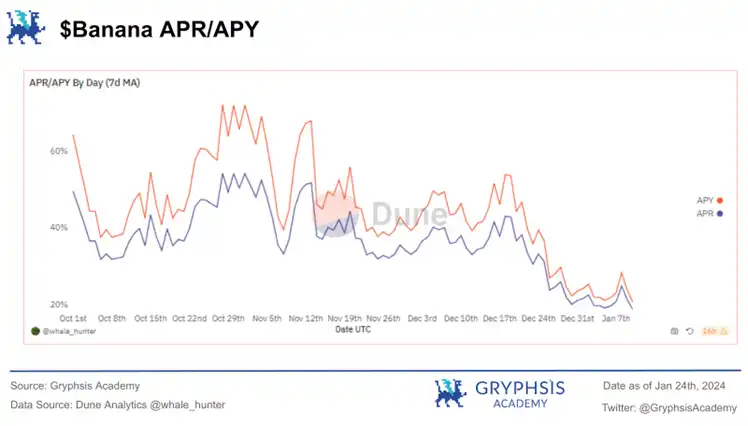
After announcing this new measure, the annualized yield for $BANANA holders has dropped to 21%, which is approximately one-third of the peak yield of 72%. However, a 21% annualized yield is still an attractive return for token holders. The cancellation of token taxes is expected to increase the trading volume of robots, which should in turn increase the transaction fees generated by robots.
This strategy is expected to provide stable and considerable annualized returns in the long term. This approach seems to strike a balance between the immediate reduction in returns and the prospect of sustained and healthy returns driven by increased robot activity and wider token adoption.
2.4 On-chain Data
Through in-depth analysis of the on-chain data of $BANANA, we can gain a detailed understanding of the distribution and liquidity transfer of the token, which is crucial for a comprehensive grasp of the overall health of the token.
On-chain data provides key indicators for evaluating the health of any cryptocurrency, including the distribution of token holders, trading frequency, and changes in liquidity trends.
Through these data, we can more accurately assess the market acceptance of tokens, the diversity of holders, and the stability of market liquidity, providing strong data support for investment decisions.
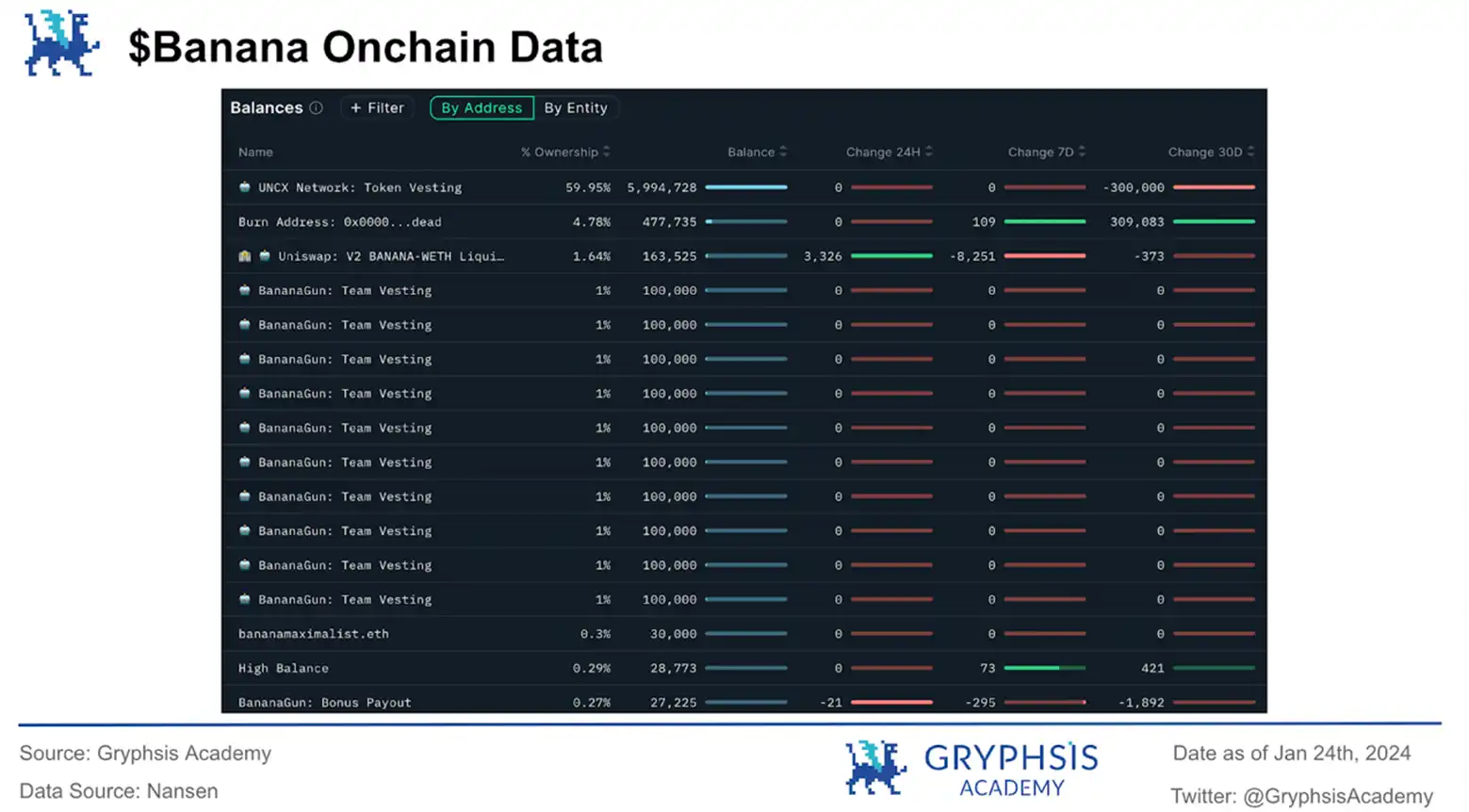
Except for the top ten address holders, data shows that, as mentioned in the token economy, nearly 60% of the tokens are locked in the UNCX Network, and 10% of the team tokens are also locked. Even though more than 70% of the liquidity is still locked up, it is necessary to pay attention to the linear unlocking time in the future.

The above figure shows the distribution of $BANANA tokens, and it can be seen that even the top ten holders each hold less than 1%, indicating that the token is not overly centralized or susceptible to malicious manipulation.
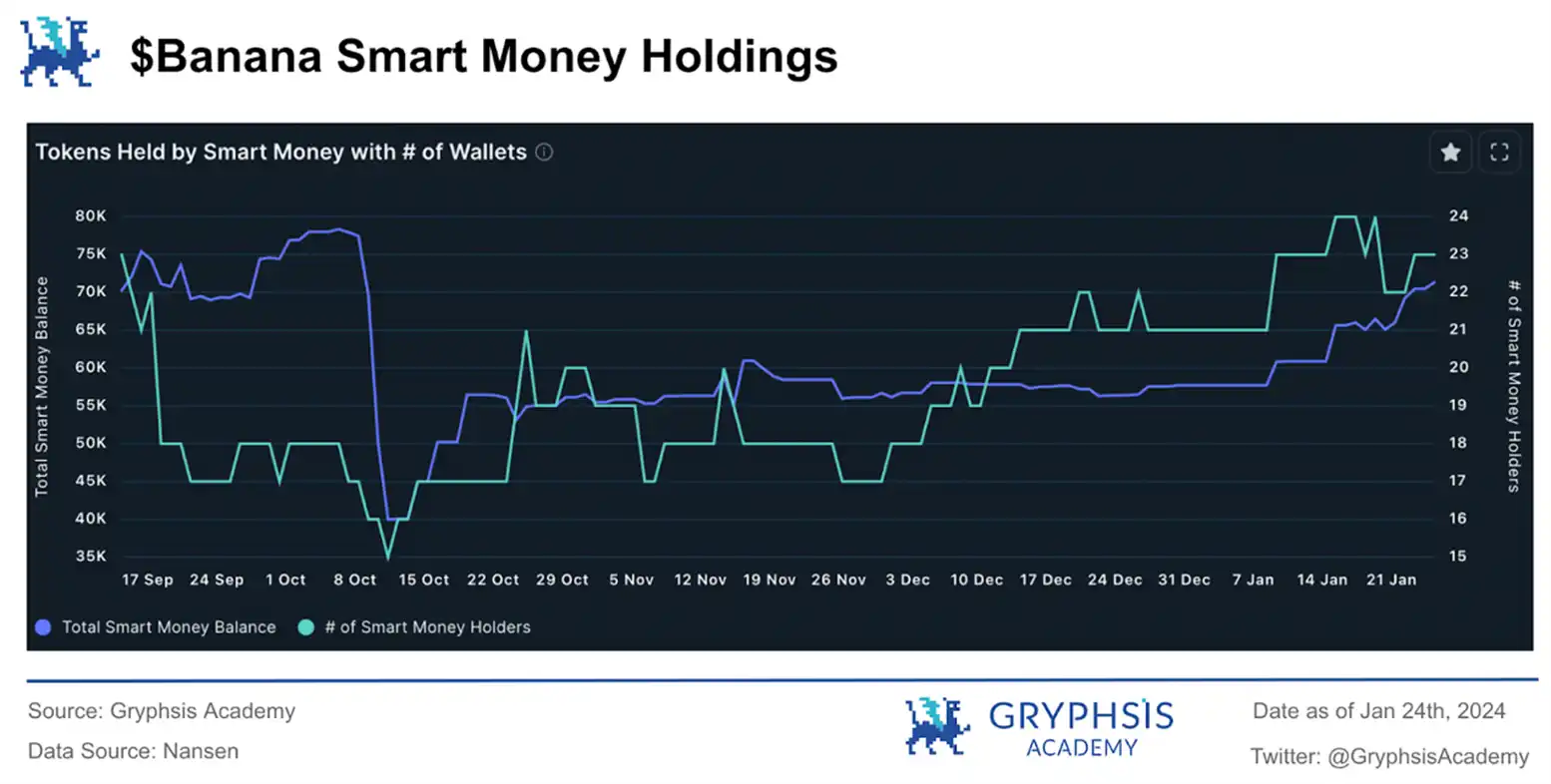
Since December, the number of addresses for Smart Money has continued to steadily increase, which has also led to an increase in Smart Money's total holdings from 56,143 to 71,327.
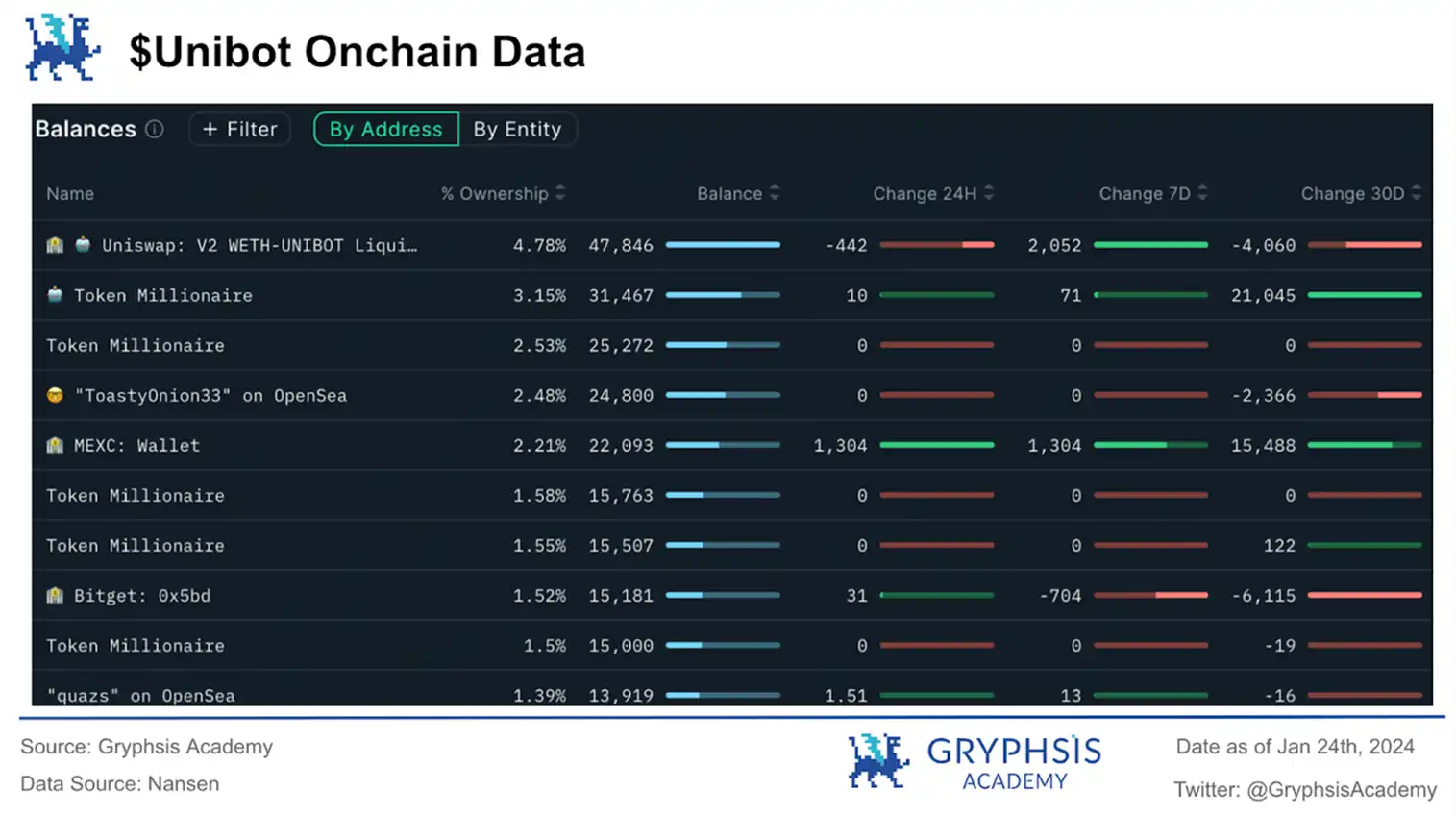
By comparison, the top ten holders of $UNIBOT hold a higher proportion, totaling nearly 20%.
In summary, the token distribution of $BANANA shows a certain degree of decentralization and healthiness, despite the existence of some locked tokens. The trend of "smart money" is also showing an upward trend.
2.5 Comparative Analysis
To more accurately estimate the fair price of $BANANA, we have used comparative analysis, selecting blockchain projects that are similar in scale and nature to $BANANA for comparison. The main evaluation indicators we focus on include Price-to-Sales and Price-to-Earnings ratios.
The selected projects include two categories: one is trading bot projects similar to $BANANA, such as Unibot and Maestro Bot; the other is decentralized exchange projects, including Uniswap, Sushiswap, and Pancakeswap.
Especially considering the relationship between trading bot projects and decentralized exchanges (the former being a replica of Uniswap), this increases the reliability of comparative analysis. Through such comparisons, we can more accurately evaluate the market value and investment potential of $BANANA.
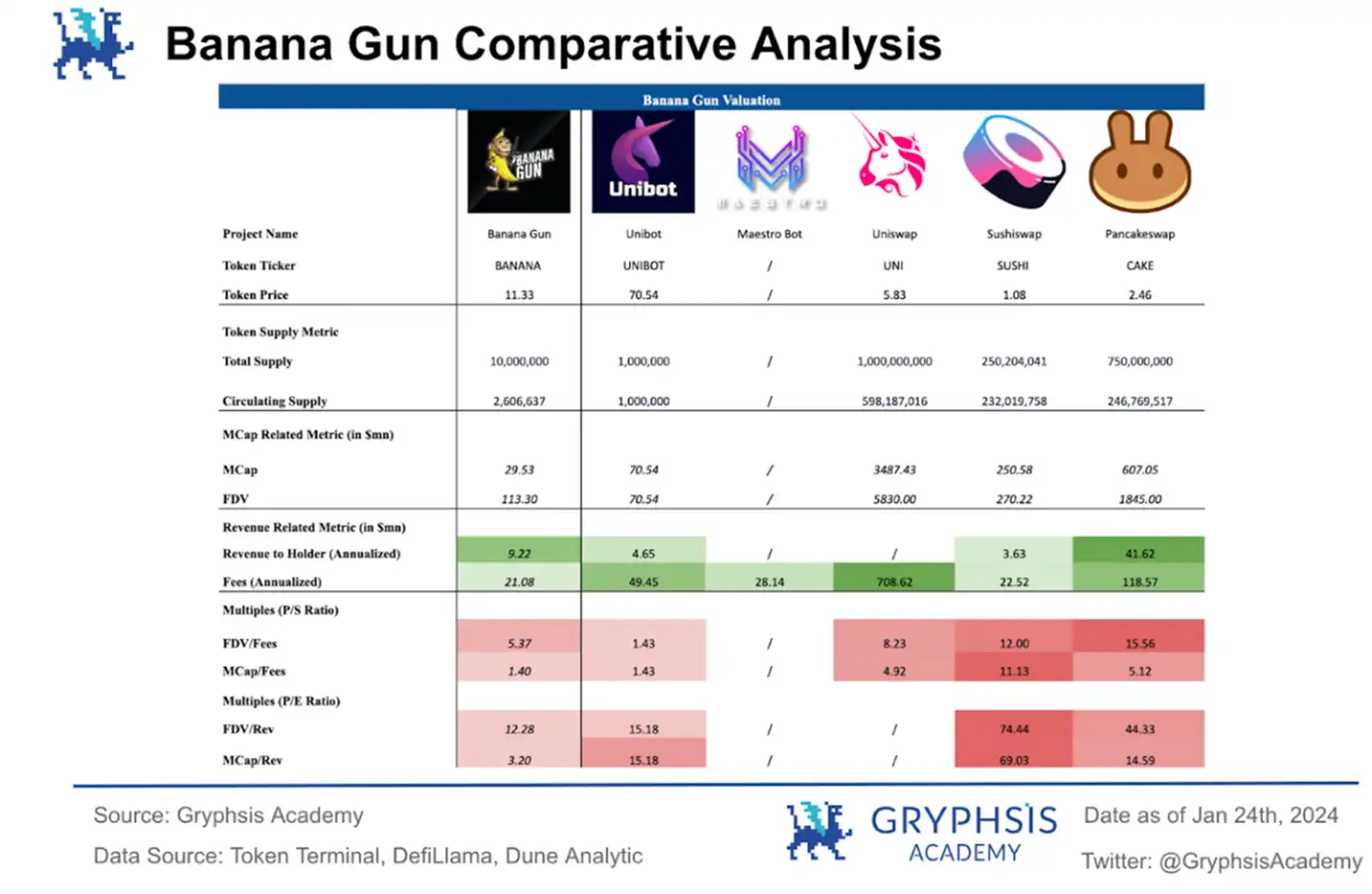
The above analysis shows the valuation of different projects based on Price-to-Earnings (P/E) and Price-to-Sales (P/S) ratios. As the operation time of the three trading bot projects has not yet reached one year, their costs and revenues have been annualized for comparison purposes.
In this case, Banana Gun's annualized total revenue reached $21.08 million, demonstrating its outstanding revenue-generating ability. It is worth noting that due to the project's mechanism providing relatively high income proportion for token holders, the annualized total income of its token holders also reached $9.22 million, which is outstanding compared to similar projects such as Unibot and Sushiswap.
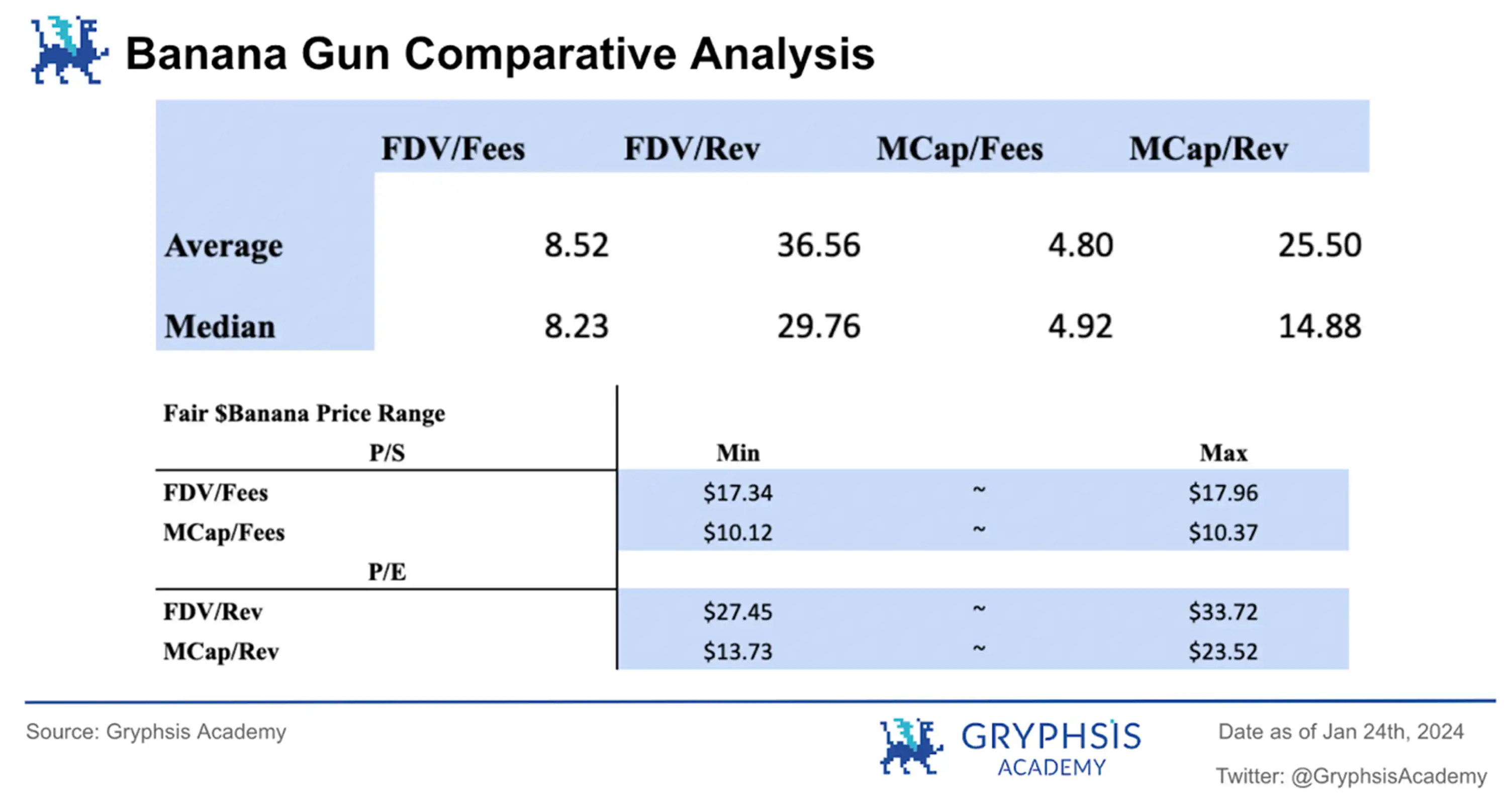
In addition, from the perspective of P/E ratio, Banana Gun has a lower ratio compared to the average of similar protocols, which suggests that its value may be underestimated by the market.
After valuation, the potential price range of $BANANA based on the market-to-sales ratio is calculated to be between $10.12 and $10.37. Meanwhile, based on the analysis of the price-to-earnings ratio, we estimate the potential price range of $BANANA to be between $13.73 and $23.52.
2.6 Future Outlook
(1) Launching Solana
Source: Banana Gun Twitter

Source: Dune Analytics @whale_hunter
Source: Banana Gun Twitter
3. BONKBot
3.1 Historical Event K-Line Chart
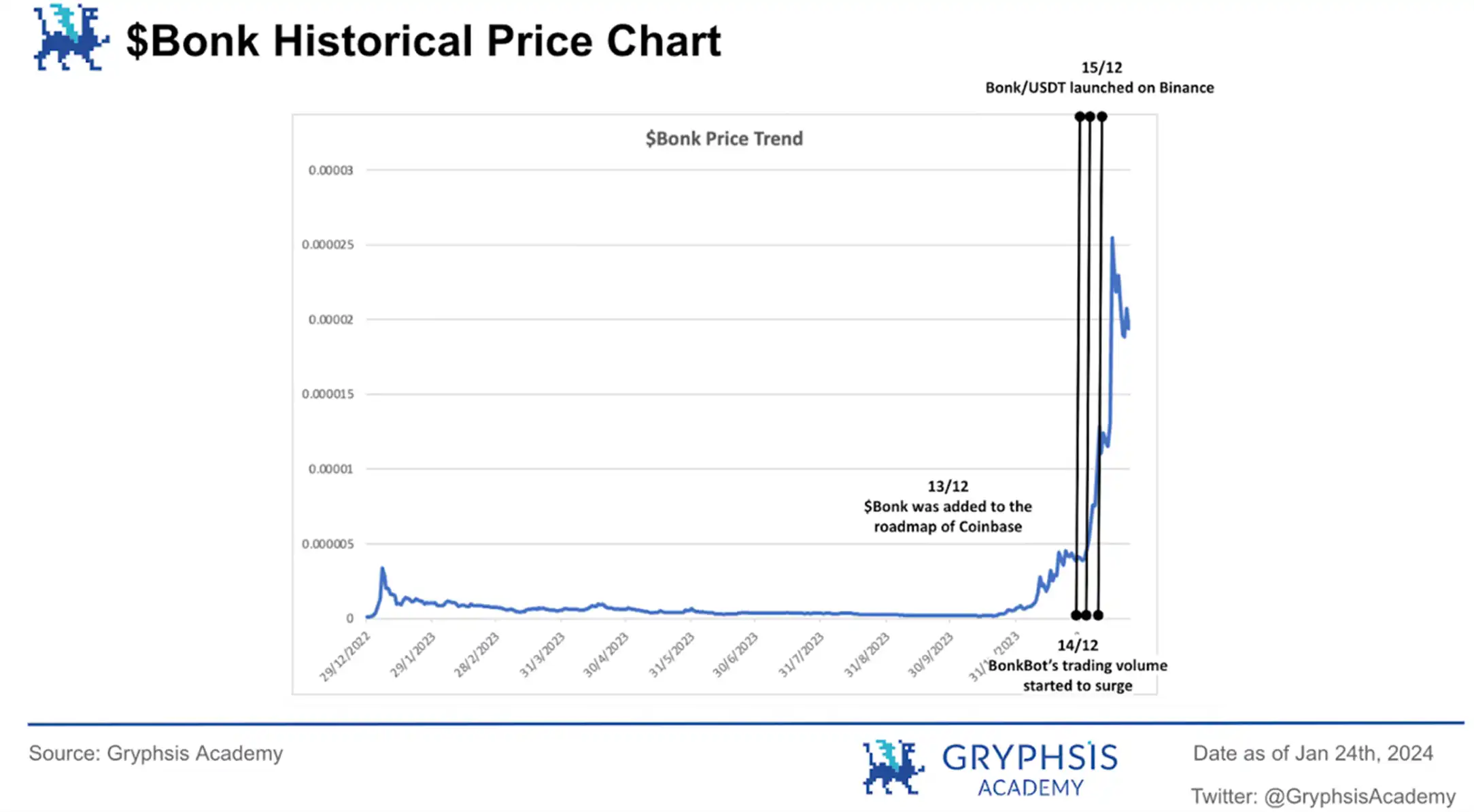
Taking BONKBot as an example, it chooses to use $Bonk as its primary token for the trading platform and adopts a mechanism that utilizes transaction fees for token buyback and burn. This not only enhances the utility of $Bonk but also provides support for its value. In this way, trading activities not only support the operation of BONKBot but also indirectly promote the healthy cycle of the $Bonk economic model.
3.2 Economic Model
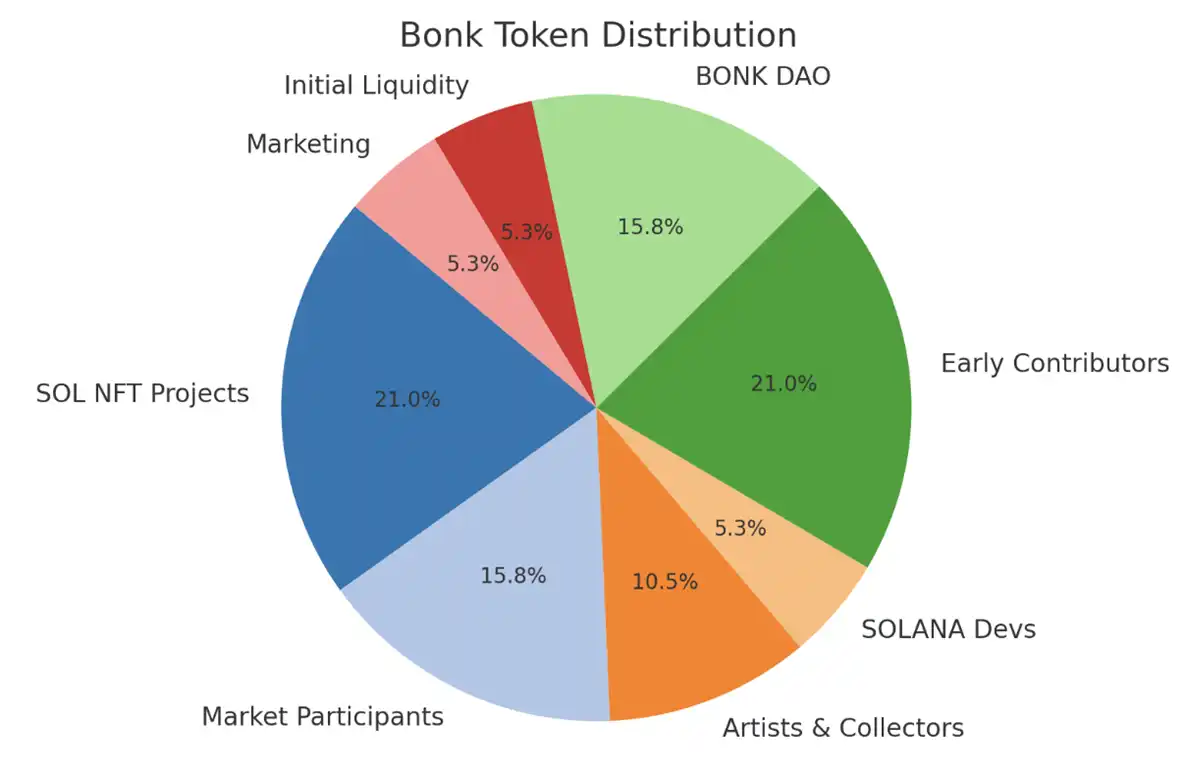
Source: Bonk Whitepaper
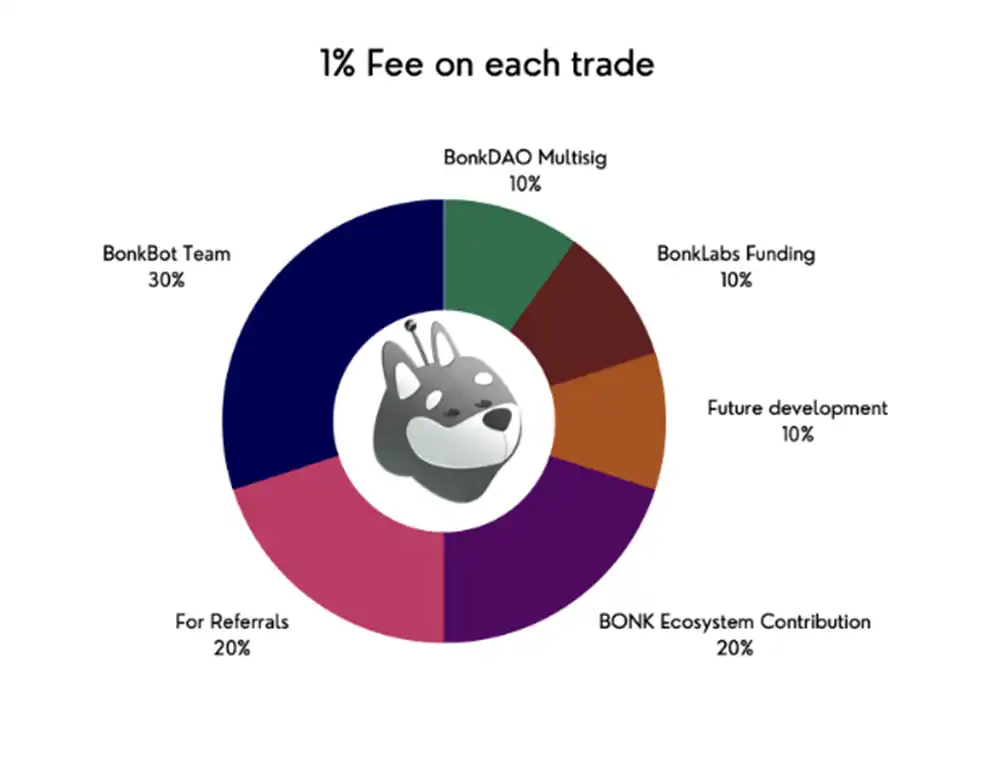
Source: BONKbot Documentation
· 30% belongs to the team behind BONKbot.
· 10% is used for immediate destruction of $BONK.
· 10% is used for paying infrastructure costs and future development.· 10% belongs to the BonkDAO multi-signature wallet.
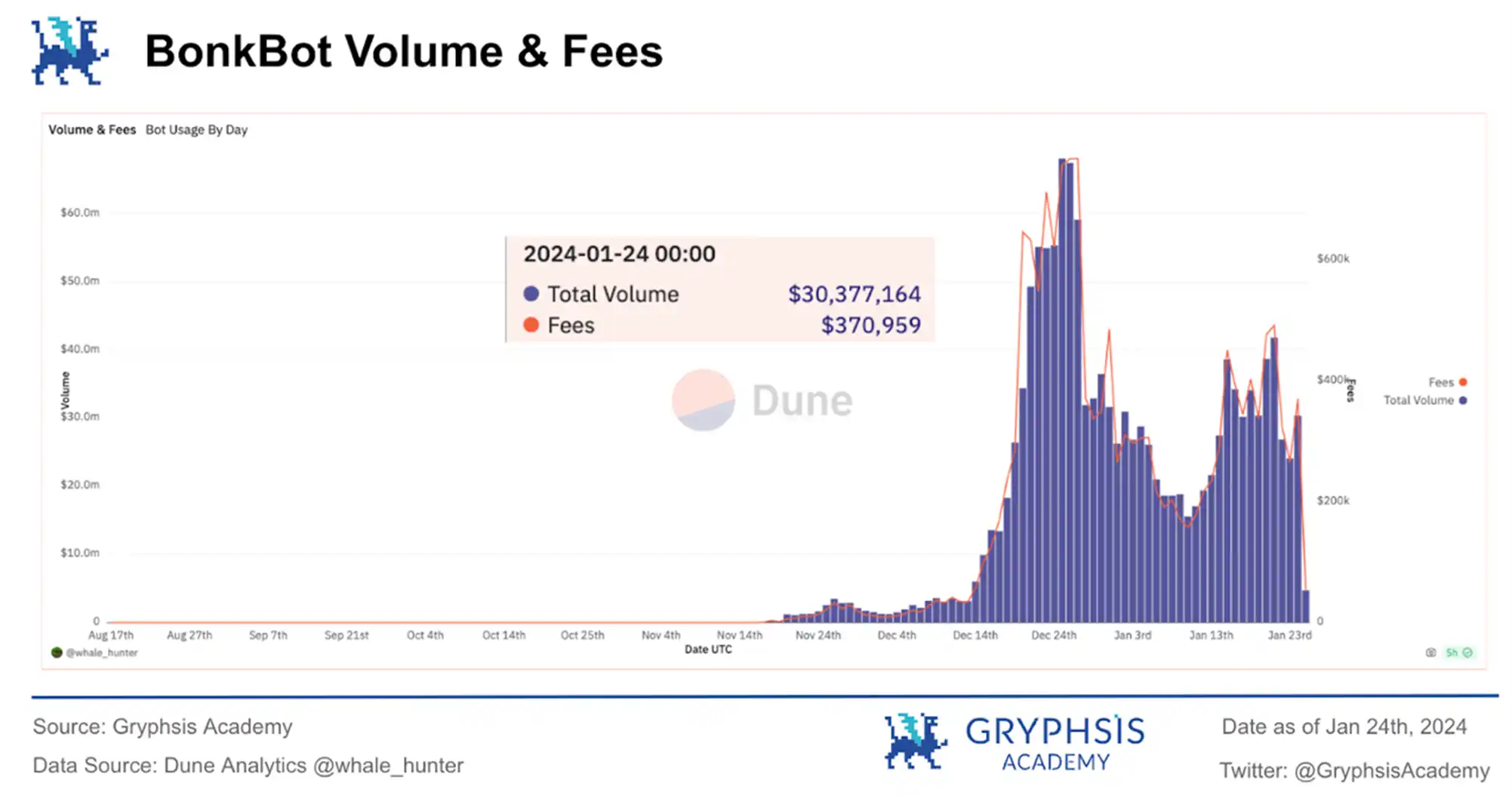
The trading volume and transaction revenue of the protocol also increased significantly with the hype of BONKBot on meme coins, with daily revenue reaching a high of $750K, but has recently declined.
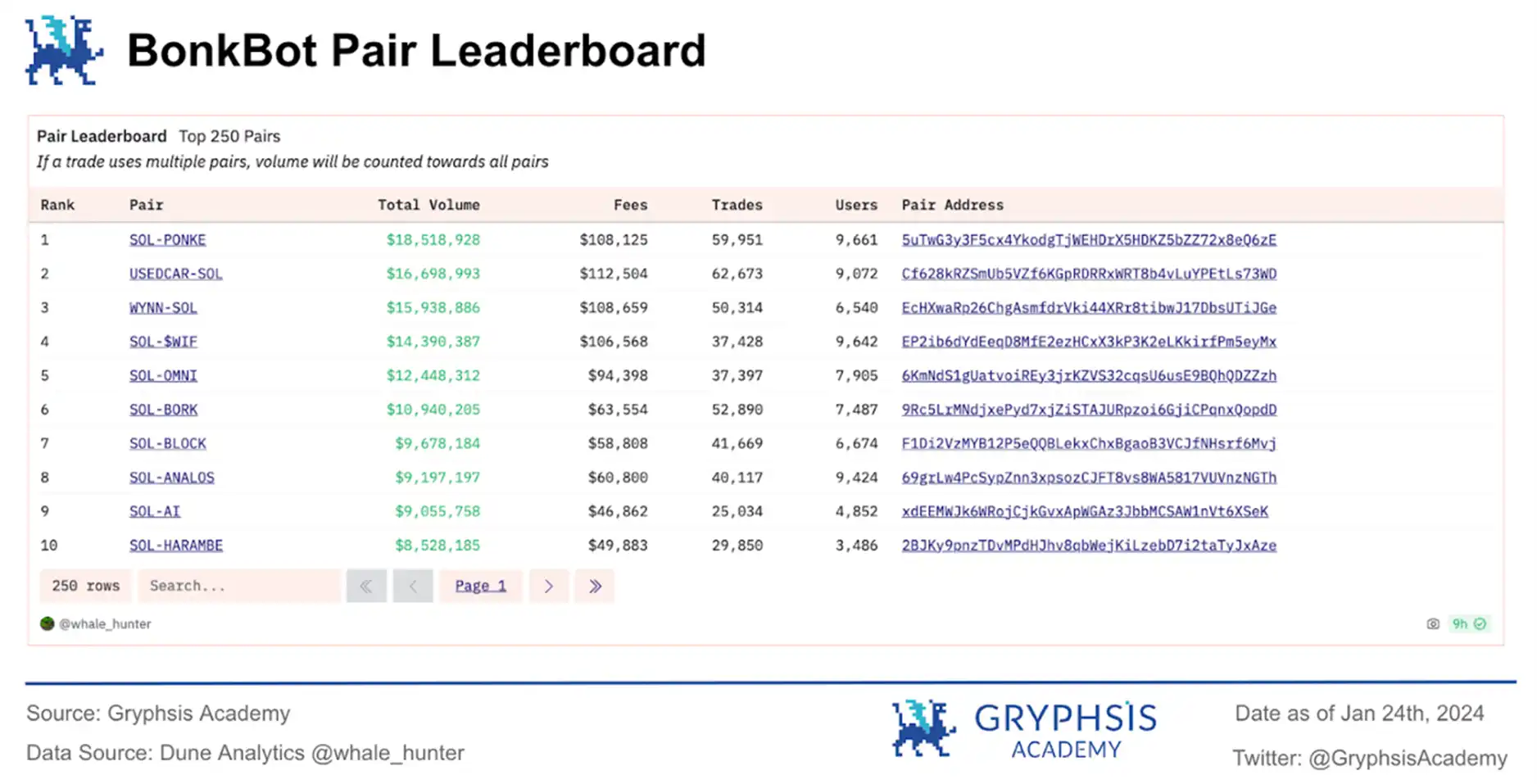
On BONKBot, the main trading pairs are SOL/PONKE, SOL/USEDCAR, SOL/OMNI, SOL/$WIF, and SOL/BORK. These are all types of meme coins.
(1) The craze of meme coins in the Solana ecosystem
A key moment in Solana's embrace of meme coins was when Yakovenko appeared at the Solana Breakpoint event wearing clothing representing "Silly Dragon" and expressing friendly greetings to the meme coin community. This gesture highlights Solana's welcoming attitude towards meme coins and promotes an environment for them to thrive.
Following this event, $Silly, as one of the leading meme coins on Solana, along with $Bonk, has gradually evolved into an important aspect of Solana's community culture. As long as this culture continues to exist, tools like BONKBot, which facilitate quick and easy acquisition of tokens, will remain highly valuable.
This is especially true for speculative traders who are attracted to high-risk, high-return meme coin exchanges. And the Solana market is not without some new meme coins such as $WIZ, PONKE, etc. BONKBot's usefulness in this situation perfectly matches the speculative and dynamic nature of the meme coin market within the Solana ecosystem.
(2) Drive DEX Raydium on Solana
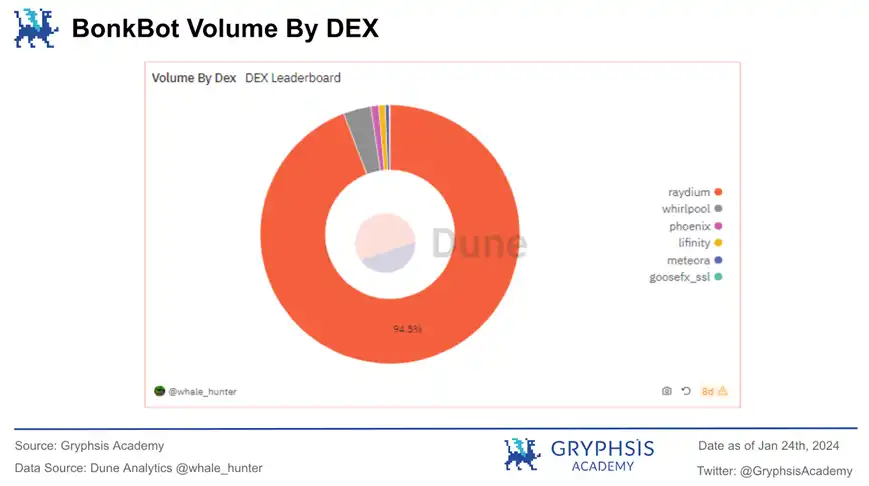
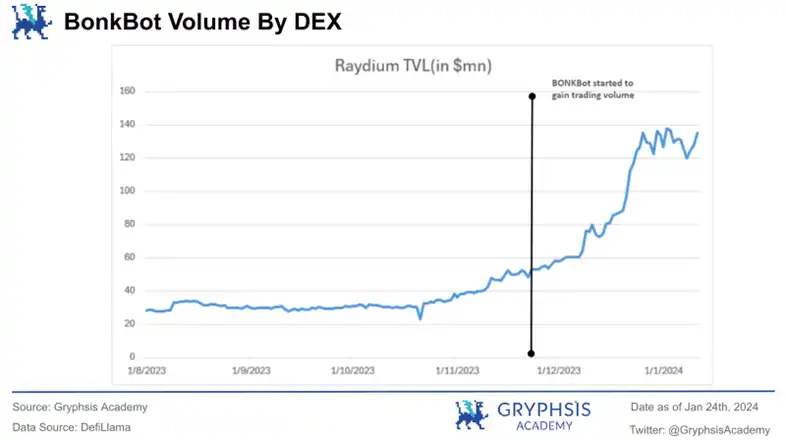
BONKBot has become a key catalyst for Raydium, as evidenced by the fact that approximately 95% of BONKBot transactions are conducted through Raydium's Swap feature.
This correlation is further evidenced by data showing that Raydium's lock-up volume has significantly increased with the growing trading volume of BONKBot, highlighting the core role that BONKBot plays in driving Raydium's activities.
In addition, any major updates to Raydium, such as the addition of trading pairs, will directly benefit the development and practicality of BONKBot. These enhanced features on the Raydium platform may expand BONKBot's trading capabilities and efficiency, further strengthening its importance in the ecosystem.
The mutually beneficial relationship between BONKBot and Raydium indicates that the growth and evolution of one will promote the development of the other, creating a mutually beneficial dynamic that supports both parties' growth and vitality in the Solana ecosystem.
4. SolTradingBot
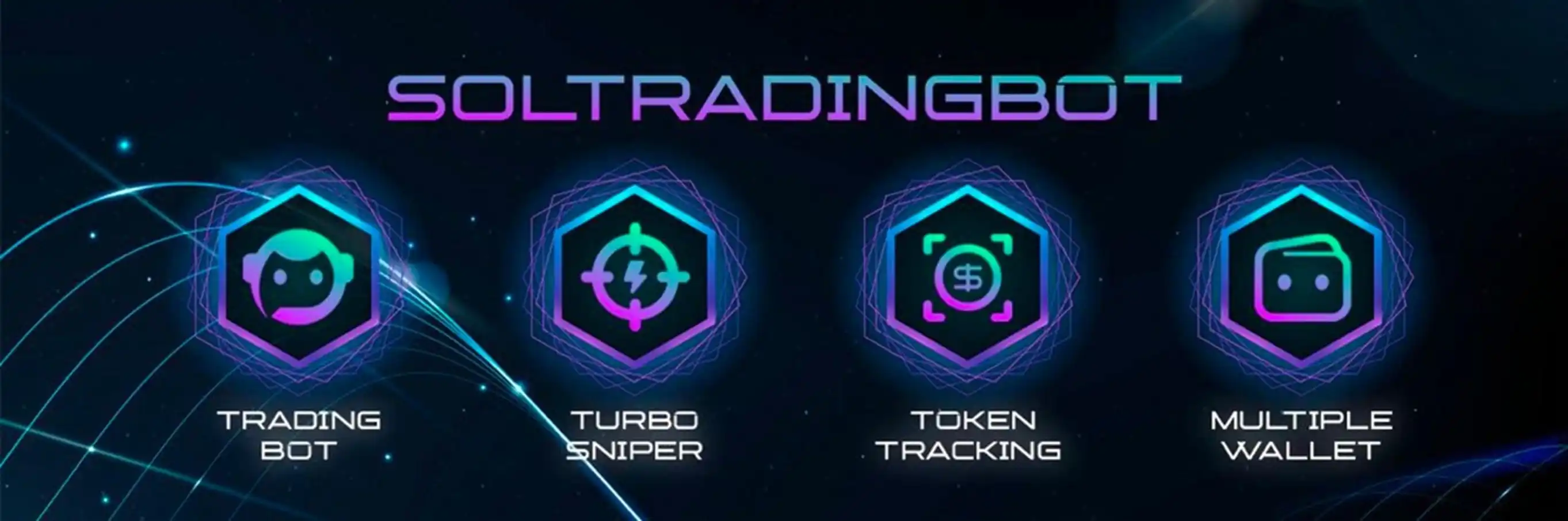
SolTradingBot is another copycat trading bot similar to BONKBot. It operates mainly through Telegram Bot and has some unique features, such as:
DEX Integration:
Integrated with major DEXs: SolTradingBot has integrated with Jupiter, Orca, and Raydium, which are the leading decentralized exchanges on Solana.
Enhanced liquidity access: Users can access the extensive liquidity pools of these DEXs to efficiently execute trades at optimal prices.
Token Diversity Opportunity: Provides a wide range of trading options from mature cryptocurrencies to emerging projects.
Multi-DEX strategy: enables users to leverage the unique advantages of each DEX platform and optimize trading.
4.1 Protocol Presentation
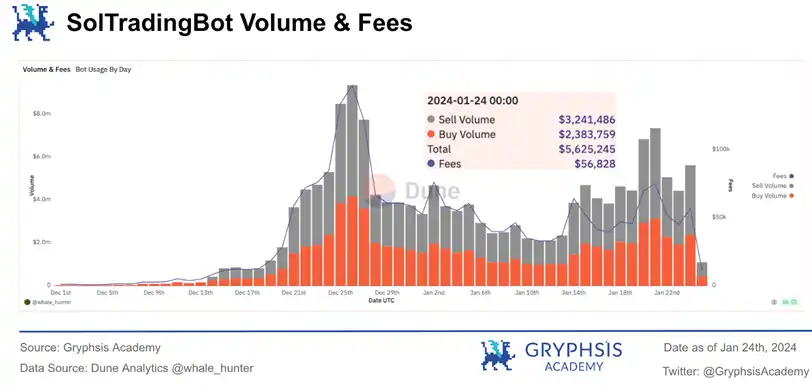
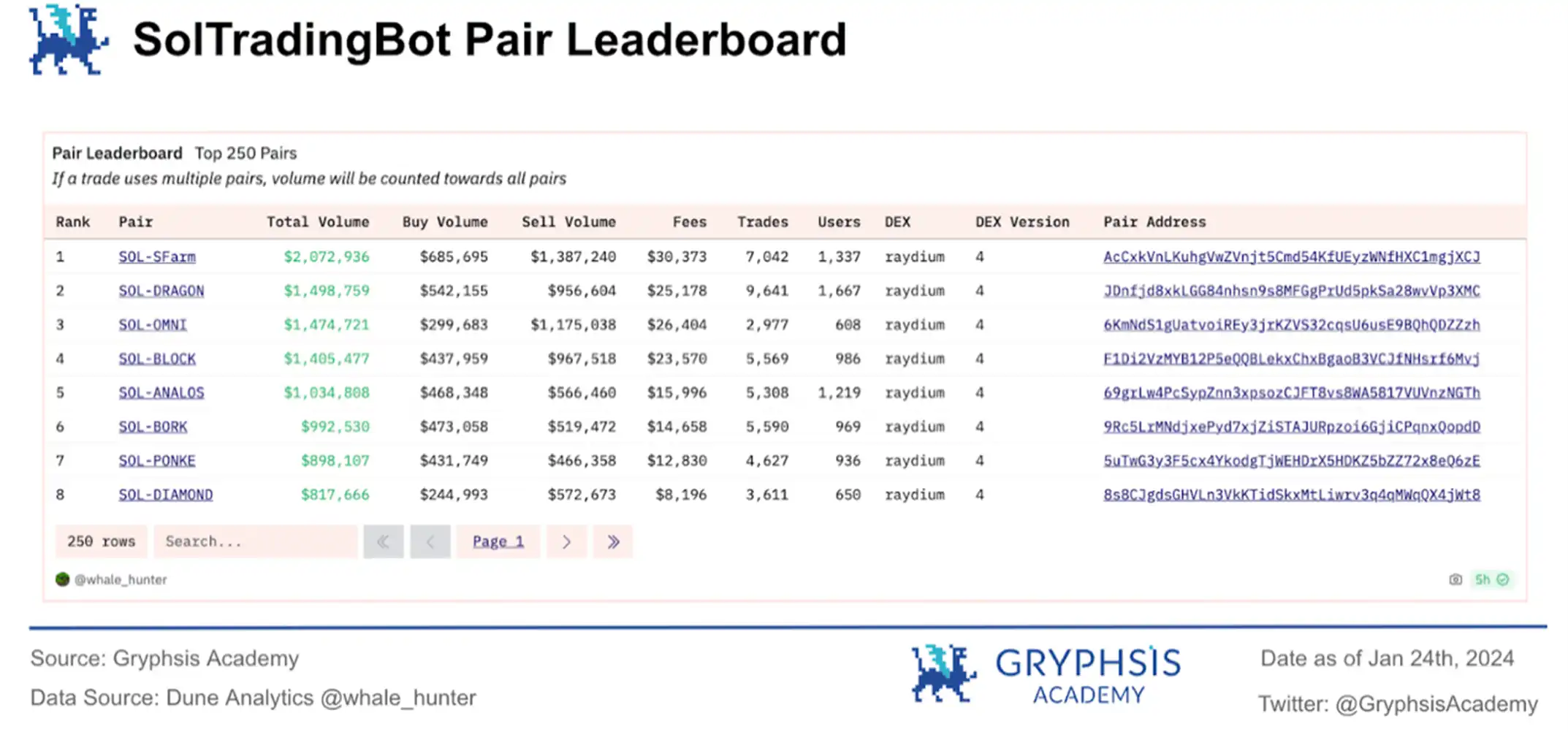
The tokens with the highest trading volume also include some popular meme coins, such as SOL/SFAR, SOL/OMNI, SOL/BORK, SOL/PONKE, etc.
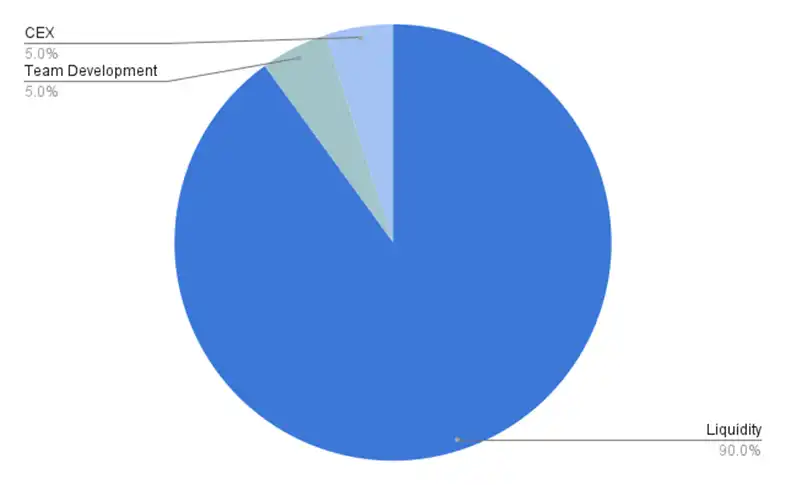
Data Source: SolTradingBot Doc
Currently, there is only very preliminary information about token distribution. Data shows that tokens are mainly allocated for liquidity funds.
4.3 Future Outlook
Although the functionality of SolTradingBot is not yet at its most complete state, the project team has developed a clear roadmap and plans to complete it at different stages in 2024. For a Telegram Bot project that already has a place in the market, continuing to improve user experience will undoubtedly help to capture a larger market share in the future.
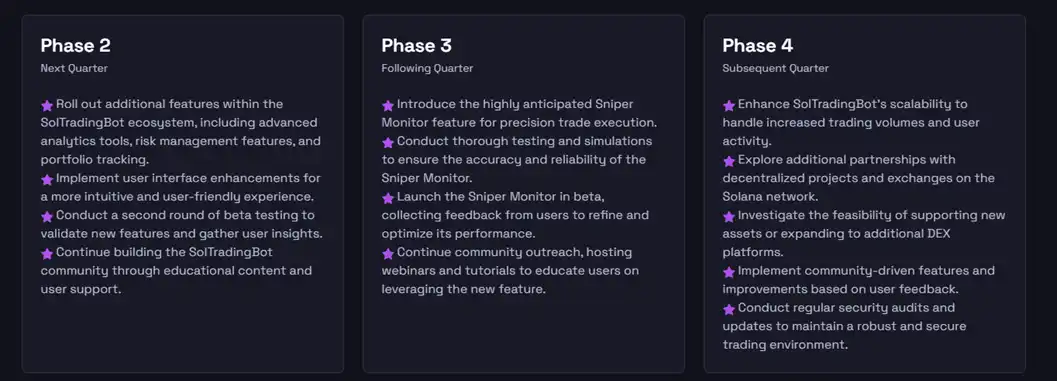
Source: SolTradingBot Website
Here are several milestones that are considered to be key:
5. BTCBot.pro

Challenge 3: Data Monitoring
Corresponding solution: Automatic IPO Sniper
Except for a few BRC20 tokens listed on centralized exchanges, most BRC20 token transactions require the use of trading markets such as OKX and Unisat. In the current BTC inscription field, although it is a fungible token (FT), the trading experience is very similar to a non-fungible token (NFT) due to the special mechanism. However, due to the uniqueness of the mechanism, the price and quantity of each order are different, and it is only possible to eat one order at a time, making it impossible to split the transaction in a timely manner.
Whether it's the Unisat or OKX trading market, buyers can only make a deal by consuming the limit-priced and limited orders of sellers. This has led to poor liquidity in the decentralized trading field of BRC20, making it impossible to place limit buy orders and introduce market makers. BTCBot.pro is trying to solve the liquidity problem in the BRC20 field.
BRC20 Sell Order Functionality
Before BRC20 tokens are listed on trading platforms such as OKX or Unisat for sale, they need to undergo a minting process. For example, if you want to sell 2000 $abcd (a certain BRC20 token), you need to first convert it into a token with a unique inscription, and then set a price for this token and list it on the trading platform for orders to be filled. Placing a limit sell order does not incur any transaction fees, and users only need to pay the gas fee for minting.
On BTCBot.pro, when users use the "limit sell" function, they can place orders on platforms such as Unisat and OKX without increasing any costs. By placing orders in two different places with the same inscription, this will increase the probability of the sell order being executed.
BRC20 Limit Order Function
This is the first time that the limit order function has been proposed in the BRC20 field. Its buy order function has the following four characteristics:
1. Zero Cost
When the price of a certain token falls within the user's set buy range, a transaction will be triggered. However, the BTC Gas Fee at the time of the order transaction will affect the overall price of the token.
For example, if the quantity of a certain token on a single sheet is 100, with each price being 1 US dollar, but the current transaction requires a gas fee of 9 US dollars, BTCBot.pro will automatically calculate the comprehensive cost as: (100+9) ÷100=1.09 USD. At this point, the transaction slippage is 9%.
If the user's slippage setting is 10%, the sell order will be automatically executed when triggered; if the user's setting is 5%, the execution will not be triggered, which can avoid the increase of the overall cost of purchasing tokens. The larger the amount of tokens in a single order, the smaller the trading slippage.
Here, the "slippage setting" referred to is unique to the BTC ecosystem, different from the slippage experienced by users using the AMM mechanism in platforms like Uniswap.
Due to the AMM mechanism, the size of the Liquidity Pool affects the slippage, while in the current BRC20 field, the BTC transaction Gas Fee affects the slippage. By setting the slippage, users can filter out the orders they truly need, effectively controlling the overall cost.
3. Handicap Management
BRC20 is currently not able to use limit orders on most trading platforms. This makes it difficult for market makers or project participants to manage the order book effectively, as they can only manage it using market orders.
This has greatly affected the activity and depth of trading. However, the limit order function can solve this problem, and the project party or market maker can manage the order book on BTCBot.
4. Automatic Matching
On BTCBot.pro, you can see the current amount and quantity of limit buy orders. Holders (sellers) can observe the order thickness and choose to sell at what price, while buyers can obtain lower cost chips by bidding (similar to Bid). On BTCBot.pro, buyers and sellers can automatically match trades.
经济模型 (Economic Model)
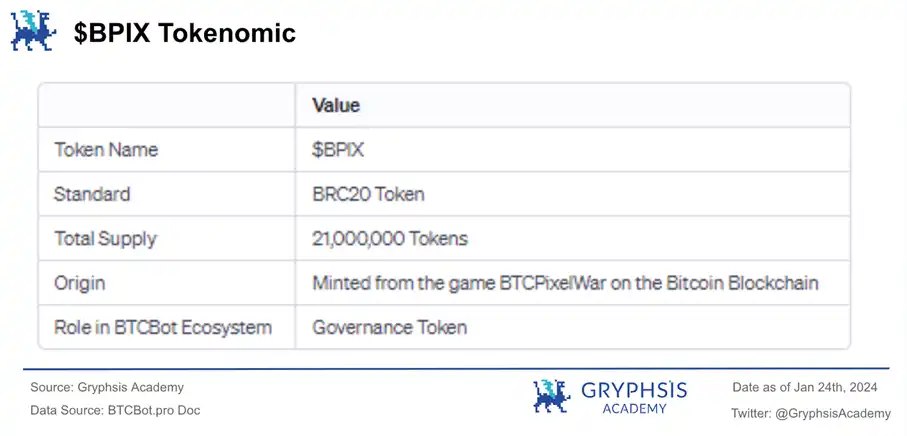
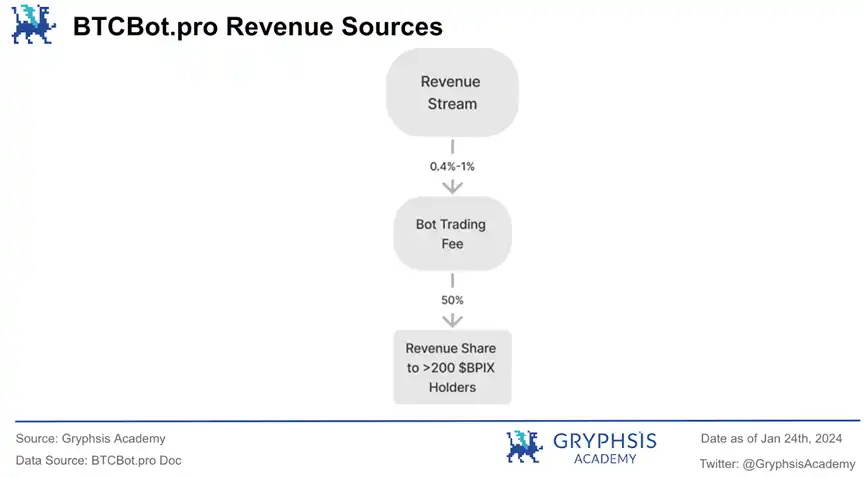

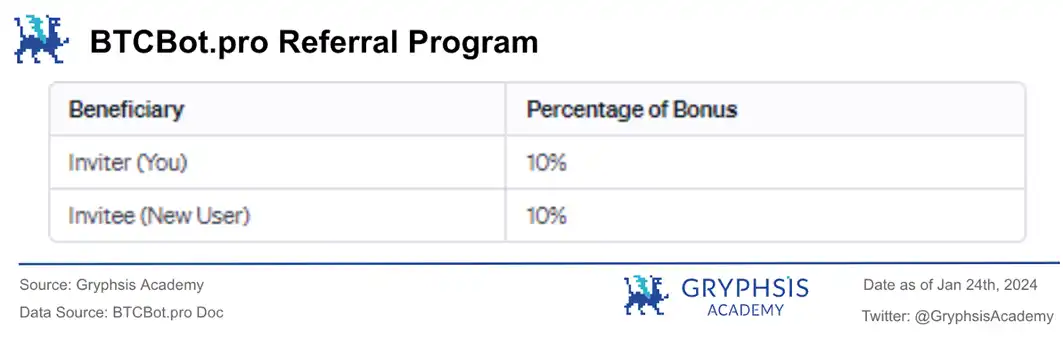
The main source of revenue for the project is transaction fees, which range from 0.4% to 1% depending on the level of rewards and discounts offered through the referral program.
· Class rewards can reduce up to 50% of the fees.
· The referral program allows the inviter to receive a 10% fee reduction when a new user uses their referral code.
· This represents a minimum of 60% fee reduction that can be obtained.
· 50% of the transaction fees will be distributed to holders of 200 or more $BPIX.
(1) The impact of Nakamoto's upgrade and Bitcoin halving
It is expected that the inscription market will continue to be popular before Bitcoin experiences the Nakamoto upgrade and the upcoming halving event. This provides huge growth opportunities for trading platforms such as BTCBot.pro, especially in attracting new users and increasing trading volume.
(2) Development of order book function
BTCBot.pro's roadmap indicates that its goal is to implement order book trading functionality in Telegram Bot. This initiative will not only facilitate user transactions, but also significantly increase liquidity in the BRC20 token space.
Source: Medium @Pontem Network
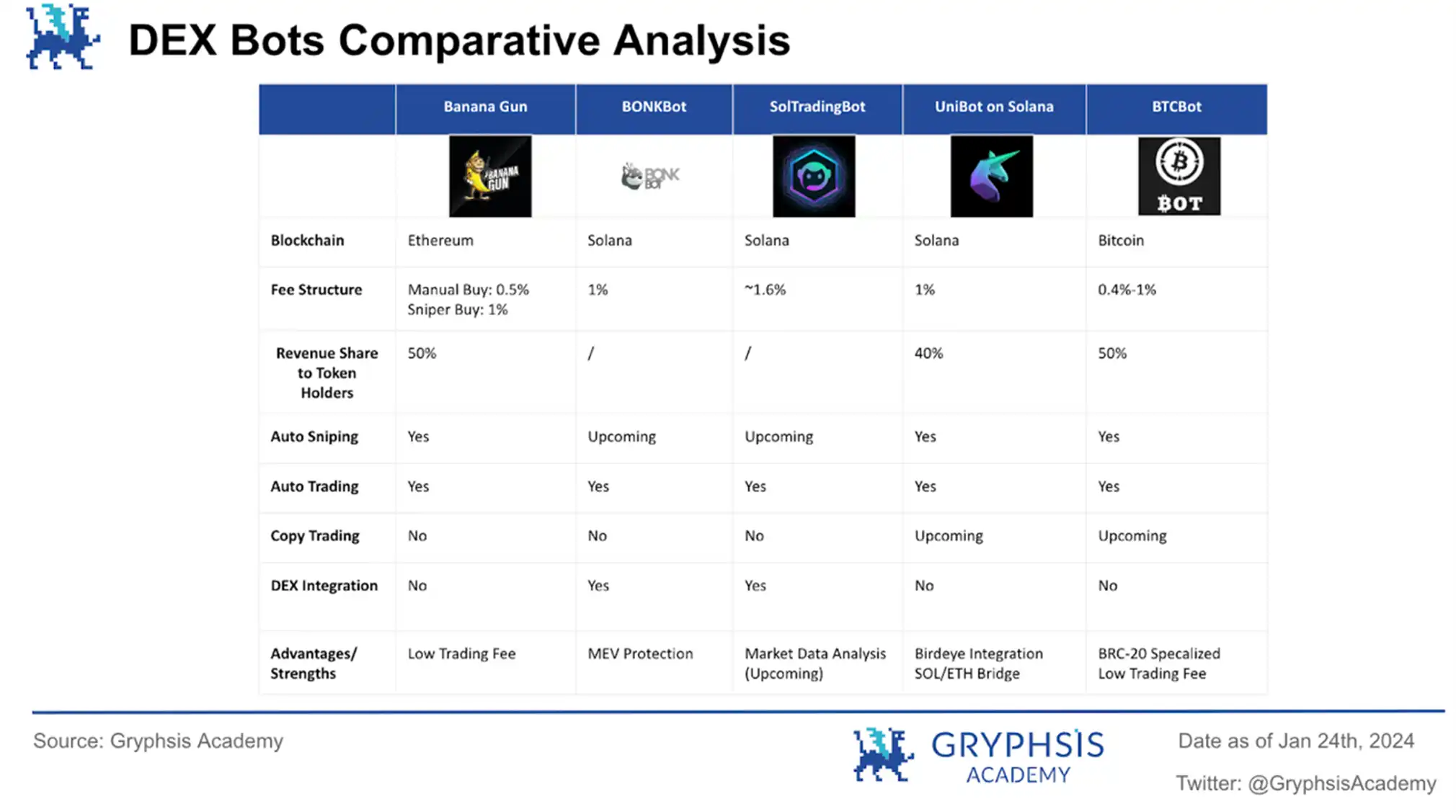
Therefore, by leveraging these advantages of Solana, it can attract a wider range of users, especially retail investors interested in high-frequency and hot-spot trading, further enhancing its market competitiveness and attractiveness.
6.3 Integration of Decentralized Exchanges
Original article link
Welcome to join the official BlockBeats community:
Telegram Subscription Group: https://t.me/theblockbeats
Telegram Discussion Group: https://t.me/BlockBeats_App
Official Twitter Account: https://twitter.com/BlockBeatsAsia