An article listing the 7 hottest projects in the current market.

Original Title: "Top 7 Hyped Projects You've Heard of, but Don't Really Know What They Do."
Original Author: Ignas
Translated by: Luccy, BlockBeats
Editor's Note:
Recently, many projects have released airdrops or have potential short-term expectations. Defi researcher Ignas provides detailed introductions to several popular projects, including the modular blockchain Dymension, the protocol Saga that automatically provides application-specific blockchains in a multi-dimensional universe, the elastic execution layer AltLayer on Ethereum, the first layer Berachain centered around DeFi and compatible with EVM, the Bitcoin ZK Rollup SatoshiVM, the parallel EVM narrative Monad, and the modular blockchain execution layer Fuel.
First of all, I apologize for the clickbait title.
However, the protocol I am introducing in this article does indeed appear frequently in my X source. However, it seems that few people really know what they are doing.
Therefore, if you are one of those who are waiting for token and airdrop launches on X while scrolling, but actually don't really know what they do, this article is written for you.
Eigenlayer will open for recharge on January 29th. What is your plan?
Although most people are waiting for deposit to open, you can deposit into some protocols without queuing in "Local ETH EigenPods" and mine EIGEN and Liquid Restaked Protocol tokens at once.
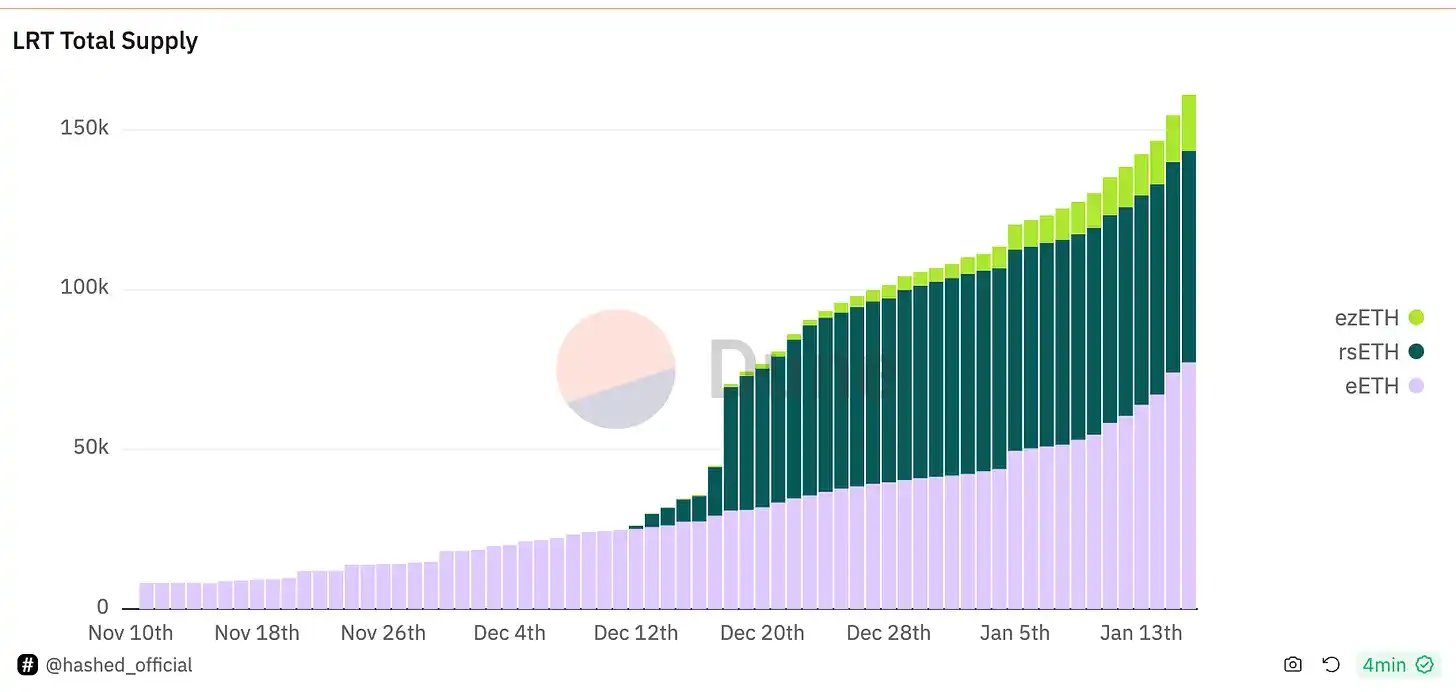
Three leading LRT protocols: EtherFI, Renzo, and KelpDAO.
In the field of LRT, there is fierce competition. Which protocol will win the LRT war? I'm not sure, but I'm betting on some protocols:
· EtherFi: Leading LRT with a deposit of $195 million. Using eETH in the partnered DeFi protocol can earn double points.
· Kelp DAO: Re-stake stETH or ETHx to earn Eigenlayer points and KelpDAO mileage. Although not recommended, you can consider depositing to participate in Kelp's airdrop.
· Renzo: Just announced a $3.2 million seed round led by Maven11 Capital with participation from OKX, Mantle, and other companies.
· Swell: Its LST (swETH) is supported by Eigenlayer, but Swell will soon launch rswETH LRT.
Dymension
Dymension's mission is to build the "RollApps Internet", consisting of RollApps (the second layer) and Dymension Hub (the first layer).
It looks like Cosmos $ATOM, right? But let's continue.
RollApps is a modular blockchain that is easy to deploy and can be integrated locally with Dymension Hub. Hub utilizes Cosmos' cross-chain communication protocol (IBC) to provide security, liquidity, and connectivity for these RollApps.
Similar to Cosmos, but Dymension enforces Cosmos Interchain Security on all RollApps and integrates Osmosis-style liquidity.
Another difference is data availability. RollApps can publish transaction data to external blockchains such as Celestia, Avail, NEAR, etc., and choose the best option according to their needs. This is also the reason why Dymension is airdropping to TIA stakers.
This unified experience simplifies the encrypted experience of depositing, gaming, withdrawing, and exchanging within a Hub (website).
You can check out the RollApps on the testnet here, as well as the IBC bridging and exchange taking place on their portal.
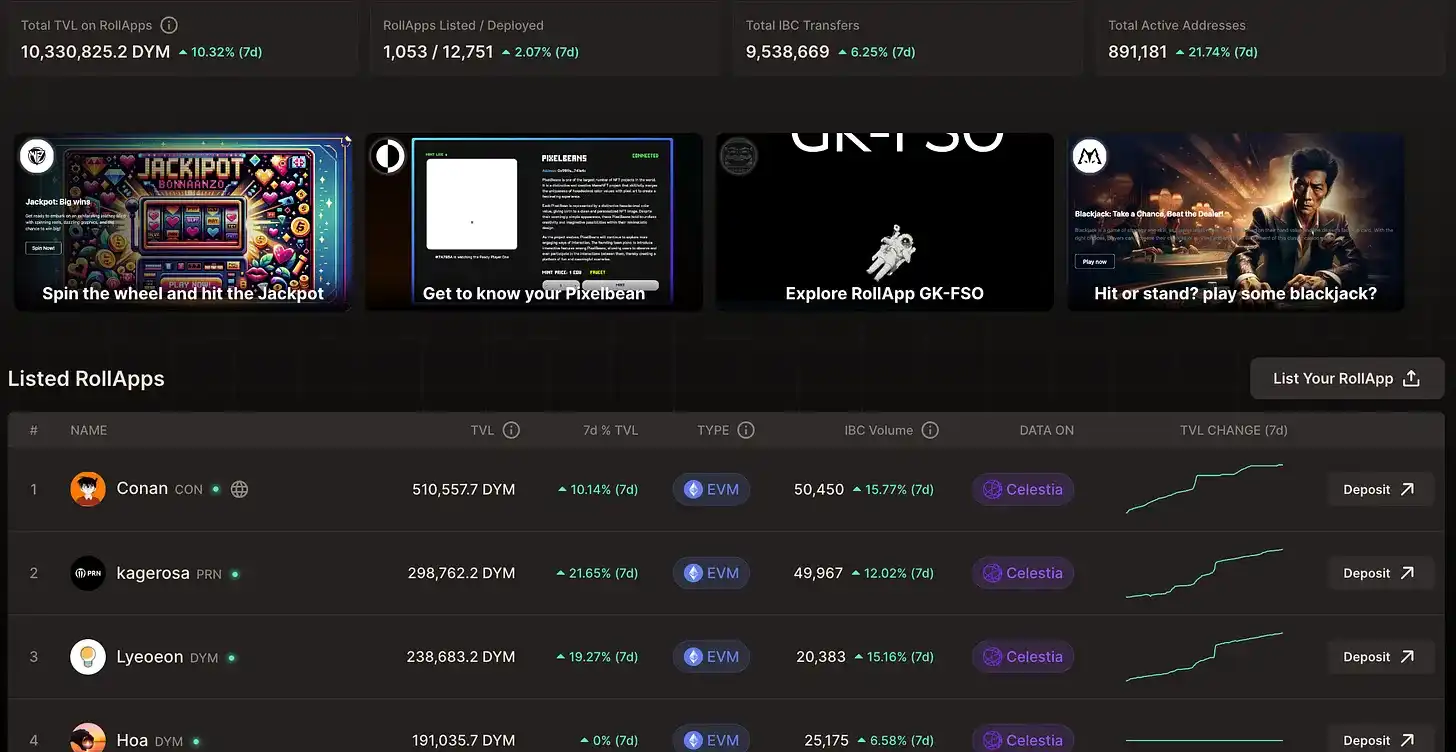
DYM is a staking token, and I believe it will become the primary liquidity provider on their Hub. 7% of the total supply will be airdropped, ensuring a stable injection of liquidity into the ecosystem.
Overall, Dymension does not seem to be particularly innovative in terms of technology, but it integrates the advantages of multiple ecosystems into one Hub. This in itself is a kind of innovation.
The ultimate success will depend on the unique RollApps.

Saga
I guess the main reason why Saga is so popular is due to airdrops. And I like airdrops!
Saga is another Rollup-as-a-Service (RaaS) project that allows anyone to easily launch a specific application chain (which they call Chainlet) like deploying a smart contract. Saga also uses Cosmos IBC to connect Saga Hub with Chainlets.
Starting a Chainlet is very easy. Should I start IGNAS?

And like Dymension, Saga also offers "Saga Shared Security", so Chainlets don't need to pay security fees with their own tokens (and increase supply).

Saga Document
Saga has more content, but this is basically what you need to know when conducting an airdrop. The team stated that they want to reward loyal users, so the snapshot deadline is October 2023. Stakers of Avax, Atom, Matic, and Celestia are eligible, so please check their blog posts for relevant information.
Overall, the competition in the RaaS industry is growing, and you can find more RaaS agreements below:
· Initia - "Interwoven Rollup Network"
AltLayer


Berachain
SatoshiVM

Monad
Monad has also built their own HotStuff consensus - MonadBFT, which includes Sybil resistance, 1-second PoS block time, and single-slot determinism (meaning transactions only need one confirmation to be finally confirmed).

And all of this while maintaining minimal hardware requirements (unlike Solana, which has higher requirements).
Monad was co-founded by former Jump Trading developers. They raised $19 million from Dragonfly Capital, Naval Ravikant, Cobie, Hasu, and others.
The testnet should be launched soon, so make sure to give it a try. You never know what airdrop standards they will apply.
Fuel Network
Fuel team believes that the era of standalone blockchain is gradually fading away. The future will be modular, where execution, data availability, and consensus will be decoupled.
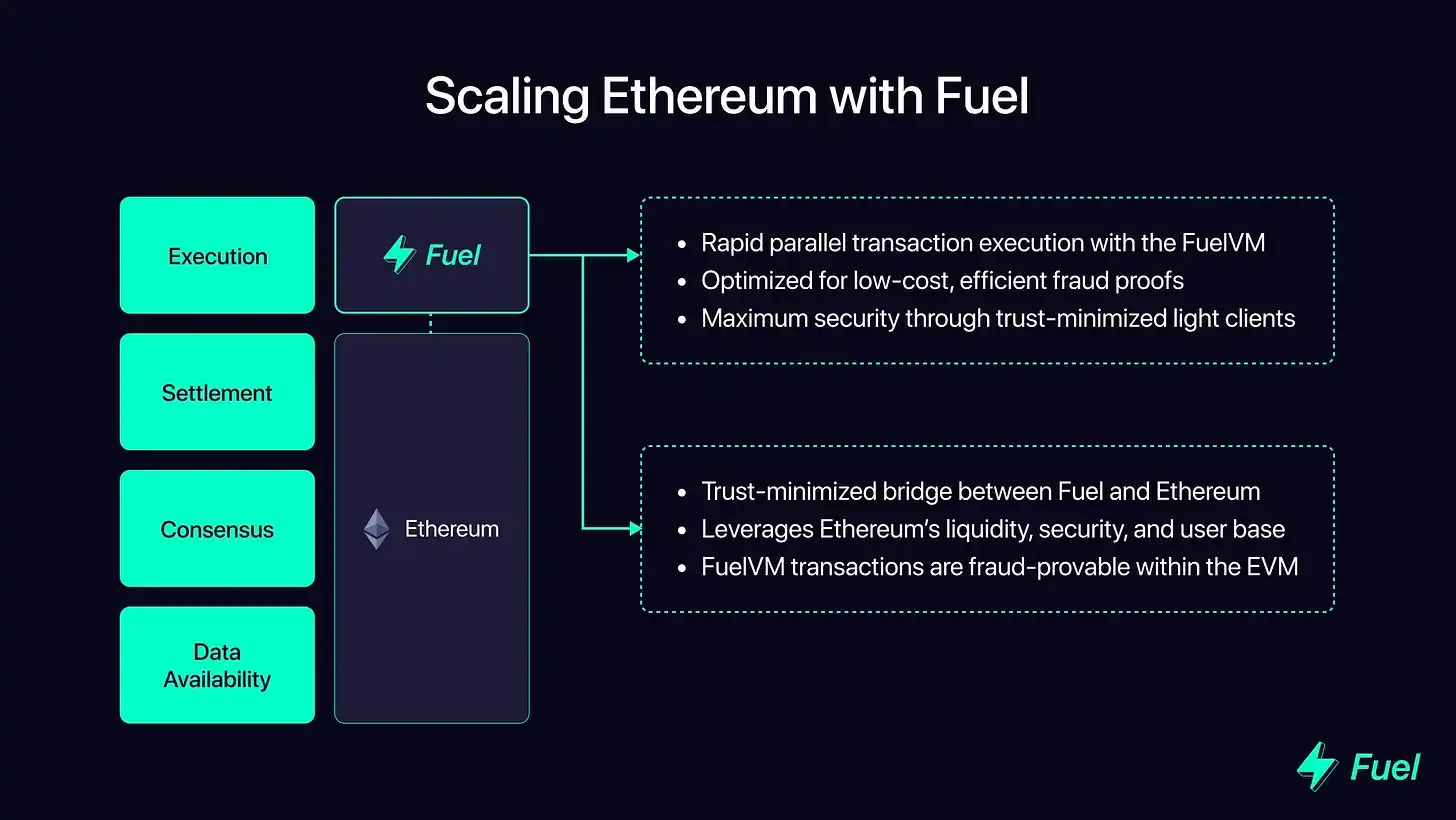
而 Fuel focuses on building the fastest execution layer in a modular blockchain stack.
How is it achieved? There are three innovations to achieve this goal.

· Parallel transaction execution: similar to the Monad model I introduced above.
· Fuel Virtual Machine (FuelVM): It is designed to be smarter and more efficient than traditional blockchain engines. By learning from past lessons, it allows developers to create and innovate more freely.
· Developer experience using Sway and Forc: They have their own language (Sway) and toolset (Forc) that make building on Fuel easier. This is a mix of Solidity and Rust.
Interestingly, as more and more chains/rollups turn to EVM and Solidity, Fuel remains committed to using its own virtual machine and programming language.
Regarding different languages, I am optimistic about it because it prevents low-cost copy-pasting of Ethereum forks. For this reason, I like Solana, Starknet, and will pay more attention to Fluid.
Oh, as for transactions per second (TPS), the team stated in Discord that it is 7,000 TPS per core (unoptimized) and 56,000 TPS for 8 cores (unoptimized). Regardless of what this means.
· Try the Beta Testnet Bridge here.
· Get Fuel testnet tokens here.
"Original article link"
Welcome to join the official BlockBeats community:
Telegram Subscription Group: https://t.me/theblockbeats
Telegram Discussion Group: https://t.me/BlockBeats_App
Official Twitter Account: https://twitter.com/BlockBeatsAsia

 Related Articles