Weekly Review | Bitcoin spot ETF's first-day trading volume is $4.6 billion; Cancun upgrade drives Ethereum ecosystem
BlockBeats will sort out the key industry news content of the week (1.08-1.14) in this article, and recommend in-depth articles to help readers better understand the market and learn about industry trends.
Review of important news this week
SEC officially approved 11 spot Bitcoin ETFs
On January 11, the U.S. Securities and Exchange Commission (SEC) approved 11 spot Bitcoin ETFs including VanEck, Bitwise, Fidelity, Franklin, Valkyrie, Hashdex, Ark Invest, Grayscale, BlackRock, WisdomTree and Invesco Galaxy. However, the chairman of the SEC said that the approval of ETFs was mainly affected by the ruling of the Grayscale case, and did not mean the recognition of Bitcoin and other cryptocurrencies classified as securities. GBTC, BlackRock, and iShares have already started trading as spot ETFs on January 11. Affected by the approval of the Bitcoin spot ETF by the US SEC, US blockchain concept stocks rose sharply before the market. The first-day trading volume of the Bitcoin spot ETF was about 4.6 billion US dollars.
Most KOLs believe that the approval of the Bitcoin spot ETF by the SEC is a major good news, which means that Bitcoin has officially become a legal and compliant cryptocurrency in the world, and they are bullish on Bitcoin in the long term. There is also a view that Bitcoin has become a strong backing asset of the US dollar, and Bitcoin has also become a financial tool for the United States to manipulate the US dollar, which is a damage to the decentralized nature of Bitcoin. Related reading: 《Going into history! Bitcoin spot ETF passed, opening a new chapter for the crypto industry》、"SEC Chairman's statement approving spot BTC ETF"、"Five key pieces of information that must be paid attention to about Bitcoin spot ETF"
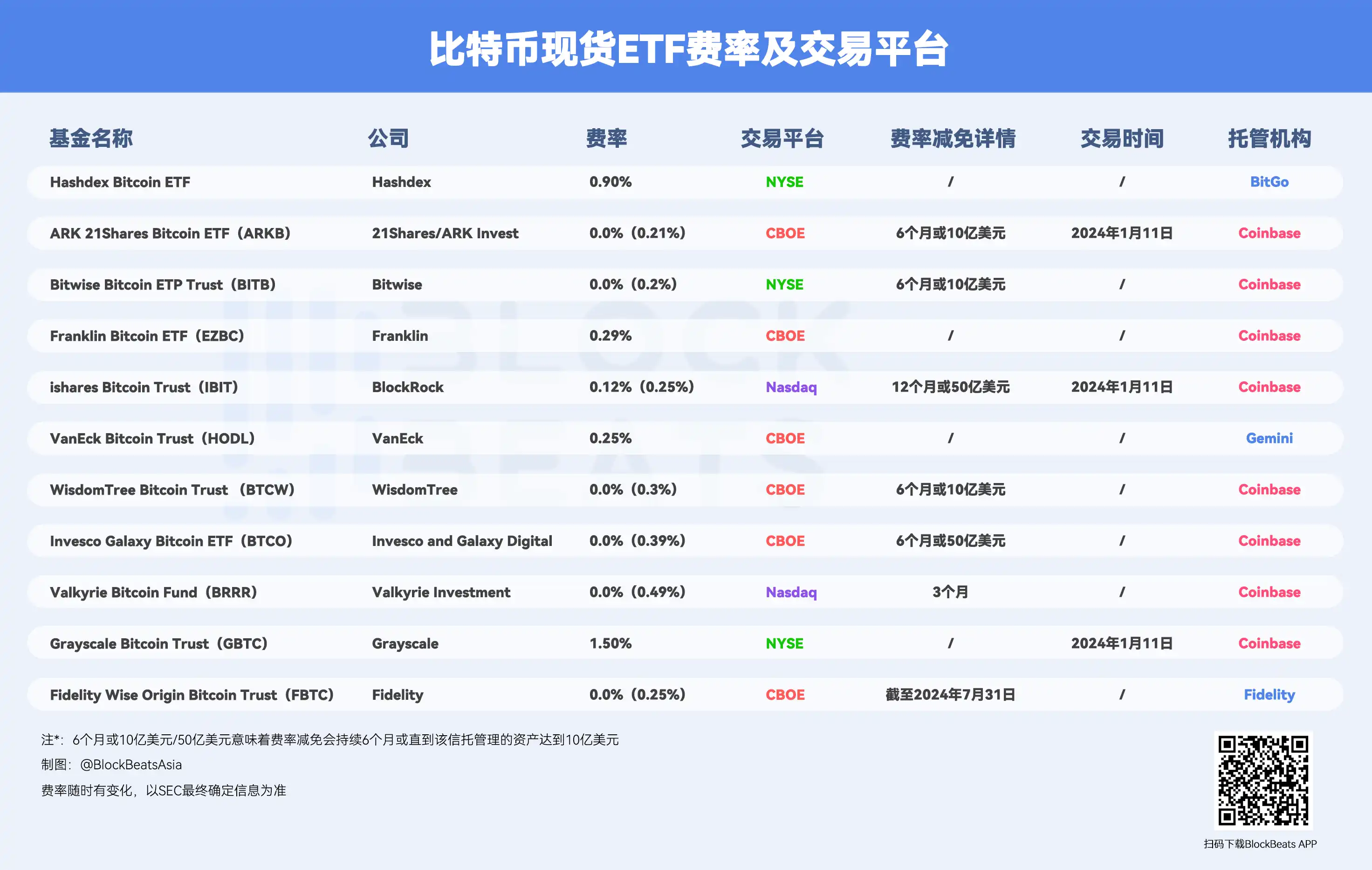
On the eve of Bitcoin spot ETF's passing, the SEC's official Twitter account was hacked because the associated phone number was illegally occupied and the account did not enable two-factor authentication
On January 10, SEC Chairman Gary Gensler confirmed that the U.S. SEC Twitter account was hacked, and the previously released Bitcoin spot ETF was approved as false news. The SEC's false news tweet was deleted a few minutes later. Twitter Safety released the "U.S. SEC official Twitter hack" incident because the U.S. SEC account was hacked. The hack was not due to any security loopholes in the Twitter system, but because an unconfirmed individual controlled the phone number associated with the U.S. SEC account through a third party. When the account was hacked, the account did not have two-factor authentication enabled. Related reading: "Fake news manipulates Bitcoin again, hackers' performance on Twitter reaches a climax"
BlackRock CEO: I see the value of launching an Ethereum ETF
On January 12, BlackRock CEO Fink said that he saw the value of launching an Ethereum ETF.
Affected by the positive impact of the Cancun upgrade, Ethereum and Layer2 networks have seen a general rise in prices
The Ethereum Foundation plans to launch the Cancun upgrade on the Goerli test network on January 17, Beijing time. If the Goerli test network upgrade goes smoothly, the Dencun upgrade will be activated on the Sepolia and Holesky test networks in the next few weeks. Influenced by this news, on January 11, Ethereum briefly fell below $2,600, and Ethereum Layer2 TVL also exceeded $22 billion, with a 7-day increase of 10.86%, led by METIS, which broke through $105 and rose 29.1% in 24 hours. Related reading: "MT Capital: Cancun upgrade injects new vitality into the Ethereum ecosystem", "Is it time to speculate on Ethereum? Sorting out the favorable factors and potential targets of the ETH ecosystem"
Orbiter Finance: Tokens will be launched this year and token economics and distribution plans will be gradually announced
On January 11, the cross-link bridge project Orbiter Finance posted a summary of 2023 on social media and put forward the project's outlook for 2024. Orbiter Finance said that in order to thank its loyal community, it confirmed that it will launch native tokens this year and will gradually announce token economics and distribution plans to ensure a fair process. The O-Points program will play a vital role in formulating airdrop rules.
Berachain public testnet is online, developers and users can receive test tokens to participate in the interaction
On January 11, Berachain public testnet "Artio" is now online, developers and users can use taps and receive testnet BERA tokens to interact with the network and its dApp applications. Users, developers and validators can participate in the testnet through Galxe's Quest platform. Berachain is a fully EVM-compatible L1, and users can provide liquidity to the network to earn BGT, delegate it to earn fees/bribes, or burn it into BERA. By contributing to on-chain liquidity, users can bootstrap its security and power their applications. Related reading: "How to participate in the new public chain Berachain test network (with tutorial)"
15 years ago, the first "Bitcoin" tweet appeared on Twitter
15 years ago on January 11, Hal Finney (@Halfin) posted the first tweet mentioning Bitcoin, "Running bitcoin". 15 years later on January 11, the Bitcoin spot ETF was officially approved by the US SEC for listing, allowing investors to trade on Nasdaq, NYSE, and Cboe.
Starknet v0.13 has been launched on the mainnet
On January 10, Starknet v0.13 was launched on the mainnet. The v0.13.0 upgrade can significantly reduce costs through more efficient transactions, and is also responsible for the technical preparation of paying fees with STRK, but this does not mean that STRK can now be used as Gas.
The domestic NFT project Tinfun "Tianfang" is very popular, and the project party ends the public sale early to avoid FOMO
The domestic NFT project Tinfun officially opened the public sale phase at 11 am on January 7. Each wallet can deposit a minimum of 0.1 ETH and a maximum of 0.2 ETH to participate in the public sale lottery to win the Tinfun NFT airdrop. The original plan was that the public sale phase would last 24 hours, but 3 hours in advance, a total of 25,000 ETH had participated in the public sale lottery, and the predetermined goal had been achieved. Tinfun ended the public sale early to avoid excessive FOMO. Related reading: "Public sale reaches 25,000 ETH, domestic NFT projects rise again?"
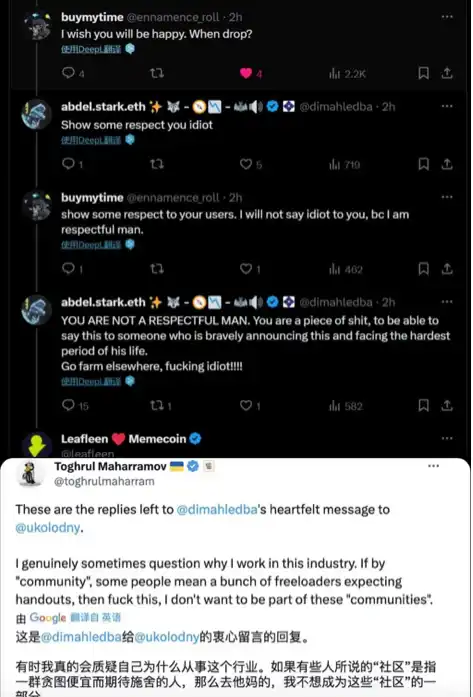
Scroll staff "fought" with users on X, and Starknet staff abdel.stark.eth was dissatisfied with users' questions about airdrops
This week, Scroll and Starknet escalated their arguments with users. Among them, Scroll staff continued to "fight" with users on X, calling users electronic beggars who expect charity. This caused ridicule and boycotts from the community; while Starknet staff abdel.stark.eth had an argument with community users when responding to their questions about referendums. Both of these verbal disputes were related to the community's airdrop expectations. This year, Starknet will issue tokens, and many studios and users have frequently interacted and have high expectations for airdrops.
Crypto KOL imayday.eth summarized the dispute as follows: The general problem of Starknet is that the former CEO respected by the community operation should have serious physical health problems, so he was in sadness and indignation, and the words he responded to the community were particularly fierce!
Just at that time, Scroll called the community electronic beggars. Starknet operators saw it and echoed it, claiming that the community should generate electricity for love like him.
Hot Articles of the Week
Go down in history! Bitcoin spot ETF passed, opening a new chapter for the crypto industry
At 4 a.m. on January 11, the U.S. Securities and Exchange Commission (SEC) simultaneously approved 11 spot Bitcoin ETFs, including: Grayscale, Bitcoin Trust, Bitwise Bitcoin ETF, Hashdex Bitcoin ETF, iShares Bitcoin Trust, Valkyrie Bitcoin Fund, ARK 21Shares Bitcoin ETF, Invesco Galaxy Bitcoin ETF, VanEck Bitcoin Trust, WisdomTree Bitcoin Fund, Fidelity Wise Origin Bitcoin Fund, Franklin Bitcoin ETF. This is a historic moment that deserves to be highlighted in the history of Bitcoin and even the entire crypto market. The spot Bitcoin ETF has finally been passed, and Bitcoin has opened a new page.
Full text of the SEC Chairman's statement approving spot BTC ETF
SEC Chairman Gary Gensler published a Bitcoin spot ETF approval statement on the SEC's official website. It stated that the SEC approved some Bitcoin spot ETFs. The committee evaluates any rule submissions of national securities exchanges based on whether they are consistent with the Exchange Act and its subordinate regulations, including whether the rules are intended to protect investors and the public interest. The committee is neutral in the evaluation process and does not express views on specific companies, investments, or assets that serve as the basis for exchange-traded products (ETPs).
How much money will the Bitcoin spot ETF bring in the long run if it is passed?
For short-term capital inflows, market views vary greatly. The shortest expected capital injection of 4 billion is expected to be a few days, and the longest is calculated in years. However, all parties agree on its long-term impact, with inflows of about 40 billion to 50 billion US dollars in three years. Most importantly, the passage of the Bitcoin spot ETF means the gradual opening of global allocation channels. With the gradual opening and acceptance of various countries, the future will be full of stars and seas.
The public sale reached 25,000 ETH. Are domestic NFT projects rising again?
On the weak Ethereum mainnet, the domestic NFT project Tinfun "Tianfang" has become the most dazzling star in the market and handed in an incredible report card. Tinfun opened the public sale stage on January 7. Each wallet can deposit a minimum of 0.1 ETH and a maximum of 0.2 ETH to participate in the public sale lottery to win the Tinfun NFT airdrop. In less than 24 hours, a total of 25,000 ETH have participated in the public sale lottery. Tinfun, which has already completed the predetermined goal, ended the public sale ahead of schedule to avoid excessive FOMO... The heat is too high. What kind of project is Tinfun? Why has it achieved such a huge success?
Secondary investment tips for the crypto market, asset allocation and opportunities in 2024
This podcast invited three senior Web3 investors, Lao Lu: the channel author of Lao Lu's Blockchain Notes TG; Mo Ke: ArkStream Capital investment research partner; Lawrence: Mint Ventures researcher, to talk about asset allocation and opportunities in 2024.
Viewpoint: BTC may enter a mid-term downward trend
In the early morning of January 11, the U.S. SEC announced the approval of 11 spot Bitcoin ETFs. At 7 a.m., Bitcoin briefly broke through $47,000; as of press time, the price fell back to $46,102. After the long-awaited Bitcoin spot ETF was launched this year, the market also showed different views on the current market trend. Some people believe that Bitcoin is about to start a big bull market, and some analysts say that after the recent good news, the market will undergo a new round of adjustments, or there will be a round of downward trend. Riyue Xiaochu, a KOL in the encryption field, expressed his views on X.
ETF good news landed ETH's strength began to show, which coins have the whales bought on the chain recently?
BlockBeats sorted out the buying and selling trends of whales on the Ethereum chain with a single swap transaction amount of more than $300,000 from January 1 to January 11, when the Bitcoin spot ETF was close to being approved. Let's take a look at which tokens the whales have bought/sold recently?
Is it time to speculate on Ethereum? Sort out the favorable factors and potential targets of the ETH ecosystem
On January 11, the US SEC announced the approval of 11 Bitcoin ETFs. This milestone event opened a new chapter in the crypto industry. The crypto market will usher in more funds, and as the "biggest boot" of the Bitcoin ecosystem lands, the market will turn its expectations to the ETH ecosystem. Today, ETH has risen by 7%. BlockBeats sorted out the favorable factors and key targets of the ETH ecosystem in the coming months.
Bitcoin ETFs got off to a strong start, but Wall Street wasn't unanimous
BlackRock's funds continued to excel on the first day of trading for Bitcoin ETFs. The new Bitcoin ETF performed well on its first day of trading, but Vanguard refused to join the carnival. The asset management giant said on Thursday that it would not offer new spot Bitcoin ETFs on its brokerage platform. The move highlights Vanguard's concerns about whether Bitcoin is suitable for many retail investors...
Can Bitcoin Layer2 take over from Inscriptions and become the next "explosive" narrative?
Inscriptions have been popular for some time. After the Meme and miners' carnival, the market began to look for new opportunities in the #BTC ecosystem. It seems that many people believe that the later outbreak point is Bitcoin Layer2. This article is divided into 3 parts:
1. Bitcoin Layer2 10 years ago;
2. Bitcoin Layer2 Development
3. Analysis of Several New Bitcoin Layer2s in the Market
Restaking is hot. What are the re-staking projects outside the Ethereum ecosystem?
Re-staking, derived from liquidity staking, maintains more security for Ethereum and seeks more returns for investment. Today, the track has gradually evolved from the Liquidity Staking Token (LST) to a nesting version - Liquidity Re-Staking Token (LRT). Recently, some LRT concept-related tokens have seen a good increase. In addition to Restake Finance ($RSTK), which has been doubling, there are also projects with low market value that have issued coins, such as KelpDAO, an LRT solution built on EigenLayer with rsETH.
Welcome to join the BlockBeats official community
Telegram subscription group: https://t.me/theblockbeats
Telegram communication group: https://t.me/theblockbeatsApp
Twitter official account: https://twitter.com/BlockBeatsAsia
Welcome to join the official BlockBeats community:
Telegram Subscription Group: https://t.me/theblockbeats
Telegram Discussion Group: https://t.me/BlockBeats_App
Official Twitter Account: https://twitter.com/BlockBeatsAsia

 Related Articles