Risk of re-staking: Beyond tempting returns, a fragile and brittle house of cards.
Original Title: "The Risks of Restaking: A House of Cards?"
Original Author: FRANCESCO
Original Translation: Deep Tide TechFlow
Re-staking is a new financial operation involving cryptocurrency, but it is not without risks. In this article, the author FRANCESCO will explore the concept of re-staking, how it works, and the potential risks it brings.

This is my third article on the re-staking series, which initially focused on EigenLayer and then delved into the re-staking financial sector.
Later on, we saw the emergence of some new participants in the staking field, such as Kelp DAO, Renzo, and $RSTK, which have attracted increasing attention.
Re-mortgaging seems to be positioned as one of the main narratives driving 2024. However, despite many discussions about how re-mortgaging works and its benefits, it is not all good news.
This article aims to take a step back and analyze staking from a higher level, highlighting its risks and answering the question: is it really worth it?
Let's first quickly introduce this topic.
What is re-pledging?
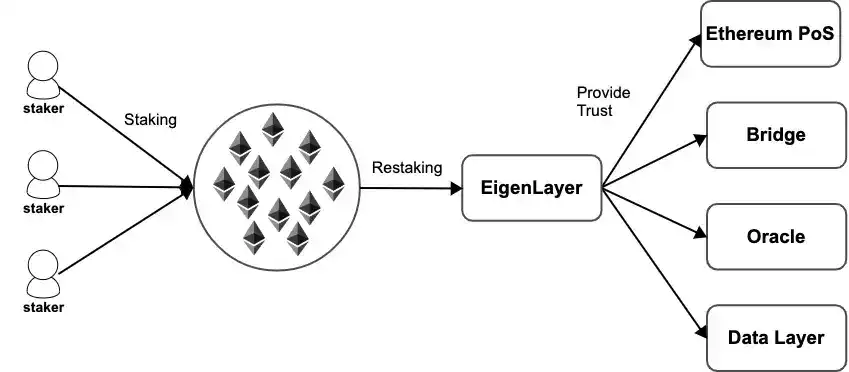
The Proof of Stake (PoS) mechanism in Ethereum is a decentralized trust system where participants ensure the security of the Ethereum network by committing their stake.
The concept of re-staking is that the same stake used to secure Ethereum's PoS can now be used to secure many other networks.
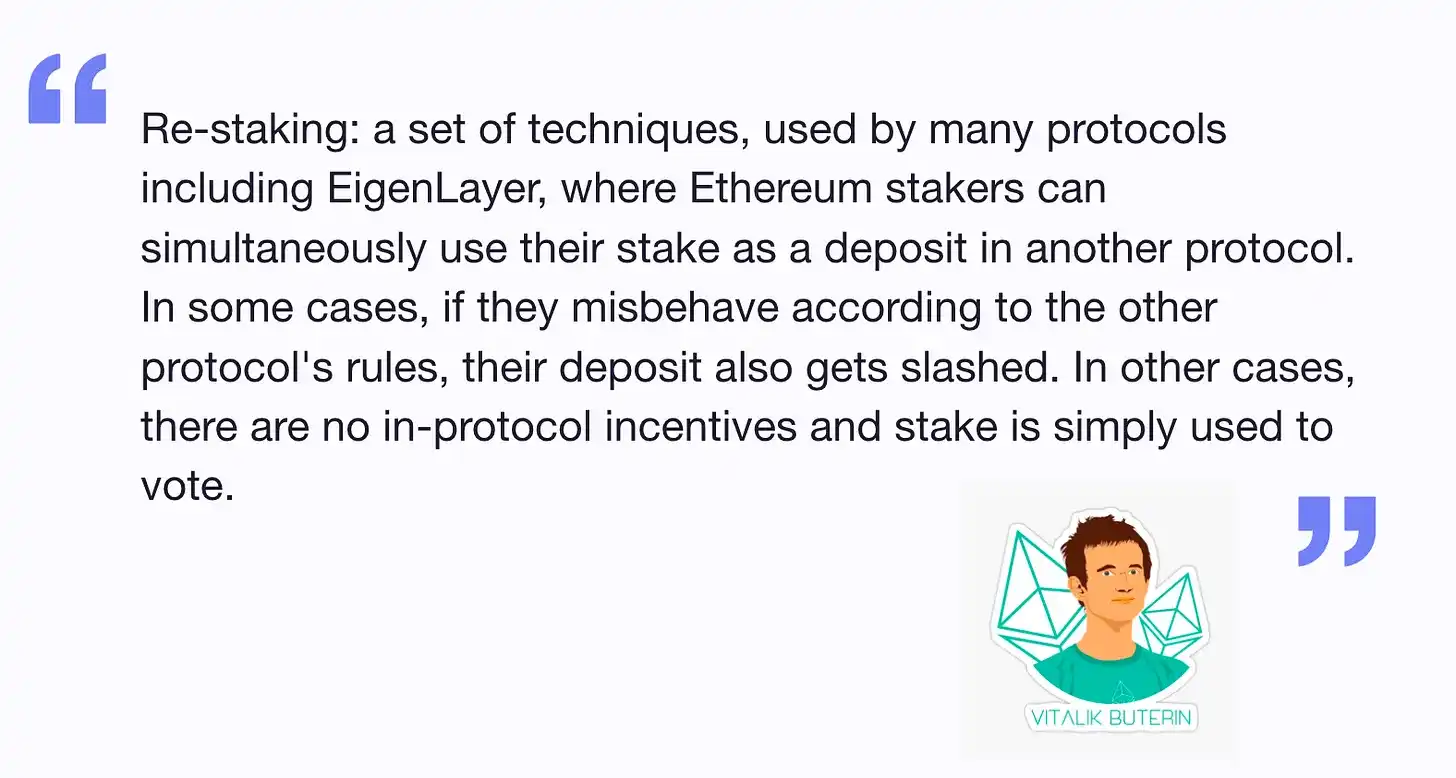
Further collateralization can be interpreted as programmable collateralization, where users choose to add any positive or negative incentive measures to ensure other infrastructure.
In practice, the re-stakers of EigenLayer provide economic trust (in the form of staked ETH), so anything objectively verifiable can be reduced.
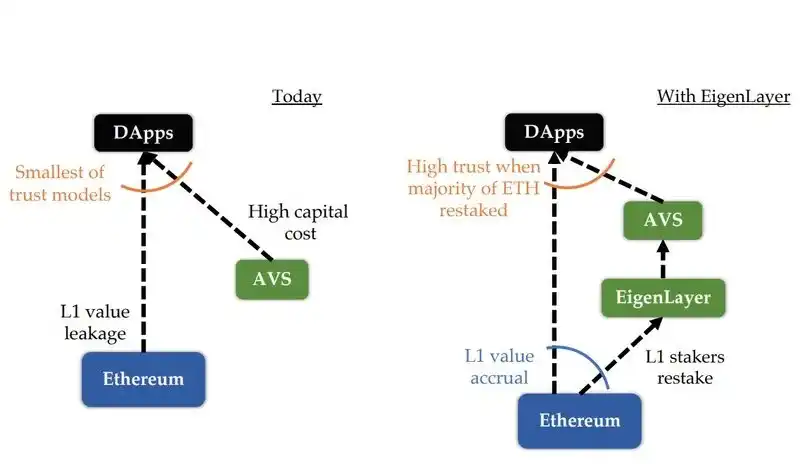
EigenLayer is "modularizing" the decentralized trust of Ethereum, so that Active Verification Services (AVS) can leverage the decentralized trust of Ethereum without the need to guide validator sets, effectively reducing the barriers to entry into the market.
Usually, such modules require Active Verification Services (AVS), which have their own distributed verification semantics for validation. Typically, these active verification services are either protected by their own native tokens or are essentially licensed.
Why do some people choose to re-stake?
In short, it is due to economic incentives and profits.
If the Ethereum staking yield hovers around 5% annually, staking again may provide an attractive additional return.
Currently, it is not possible to estimate these rewards as they will depend on the demand and supply dynamics on the Eigen Marketplace.
However, this will bring additional risks to stakeholders.
除了利用他们质押的ETH的固有风险外,当用户选择重新质押代币时,他们基本上是在委托EigenLayer合约在他们所保护的任何AVS出现错误、重复签名等情况时削减他们所持代币的权力。
Translation:Aside from the inherent risks of using their pledged ETH, when users choose to re-pledge tokens, they are essentially entrusting the EigenLayer contract to reduce their token holdings in the event of any errors, duplicate signatures, or other issues that may arise with any AVS they are protecting.
Therefore, adding re-collateralization adds an additional layer of risk, as the re-collateralizer may be reduced on ETH, the re-collateralization layer, or both.
Is it worth re-staking for additional earnings?
再质押的风险
translates to
Risks of Rehypothecation
For pledgers, re-pledging means that you can choose to join as many networks as possible and increase your earnings. This is why EigenLayer calls itself the "Airbnb of decentralized trust".
However, this is not all good news, as additional staking comes with significant risks:
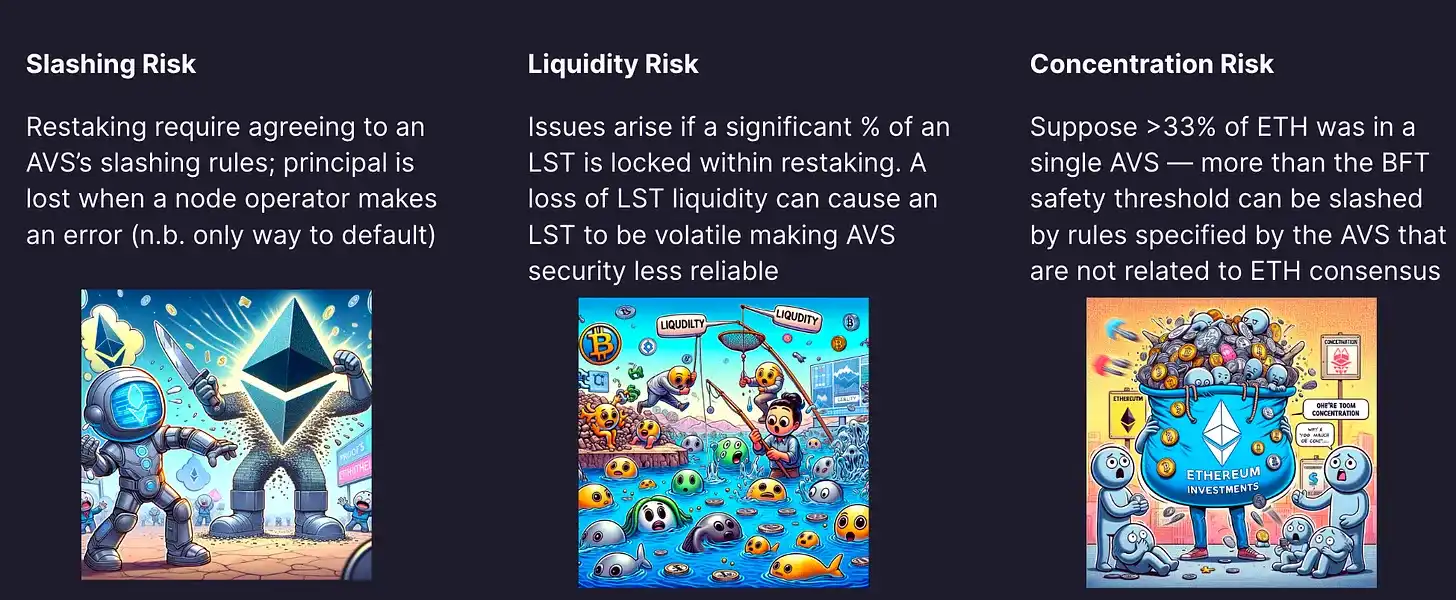
·ETH must be staked (or LST must be staked, so the tokens are not liquid).
·EigenLayer Smart Contract Risks
· Protocol-specific reduction conditions
·Liquidity risk
· Concentration risk
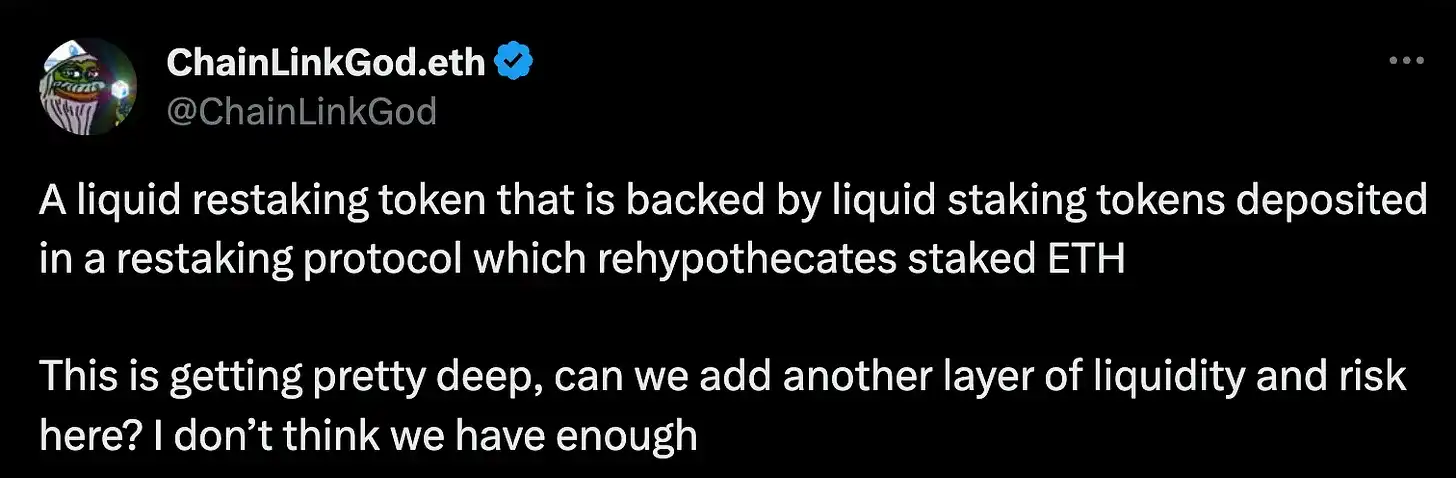
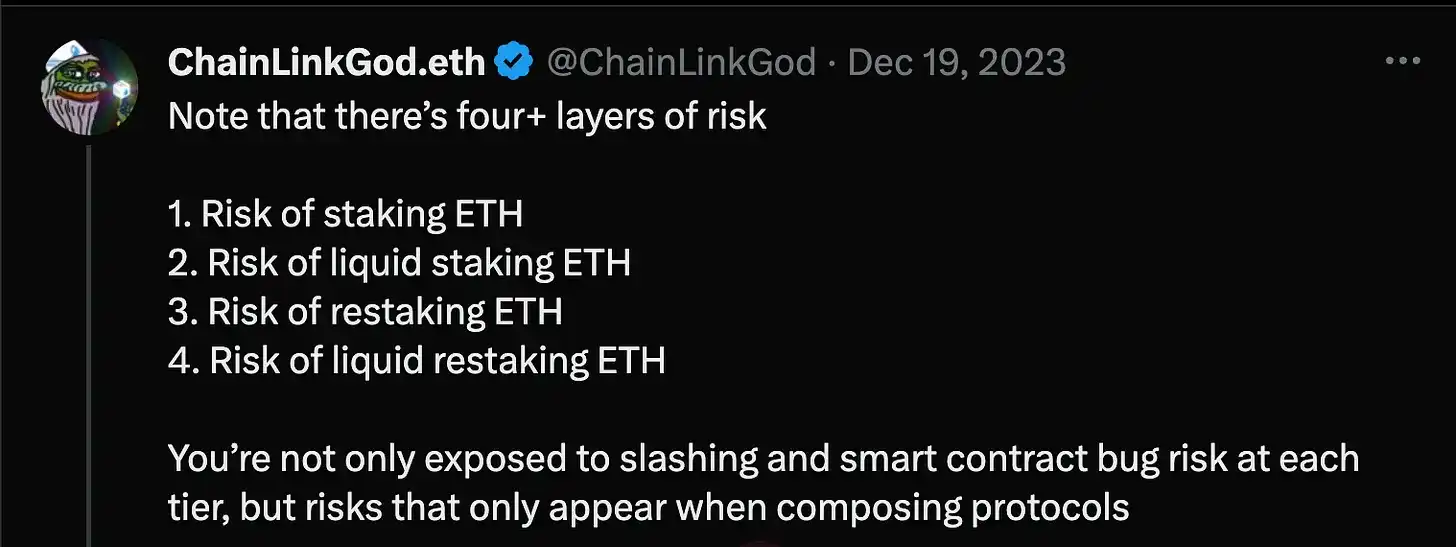
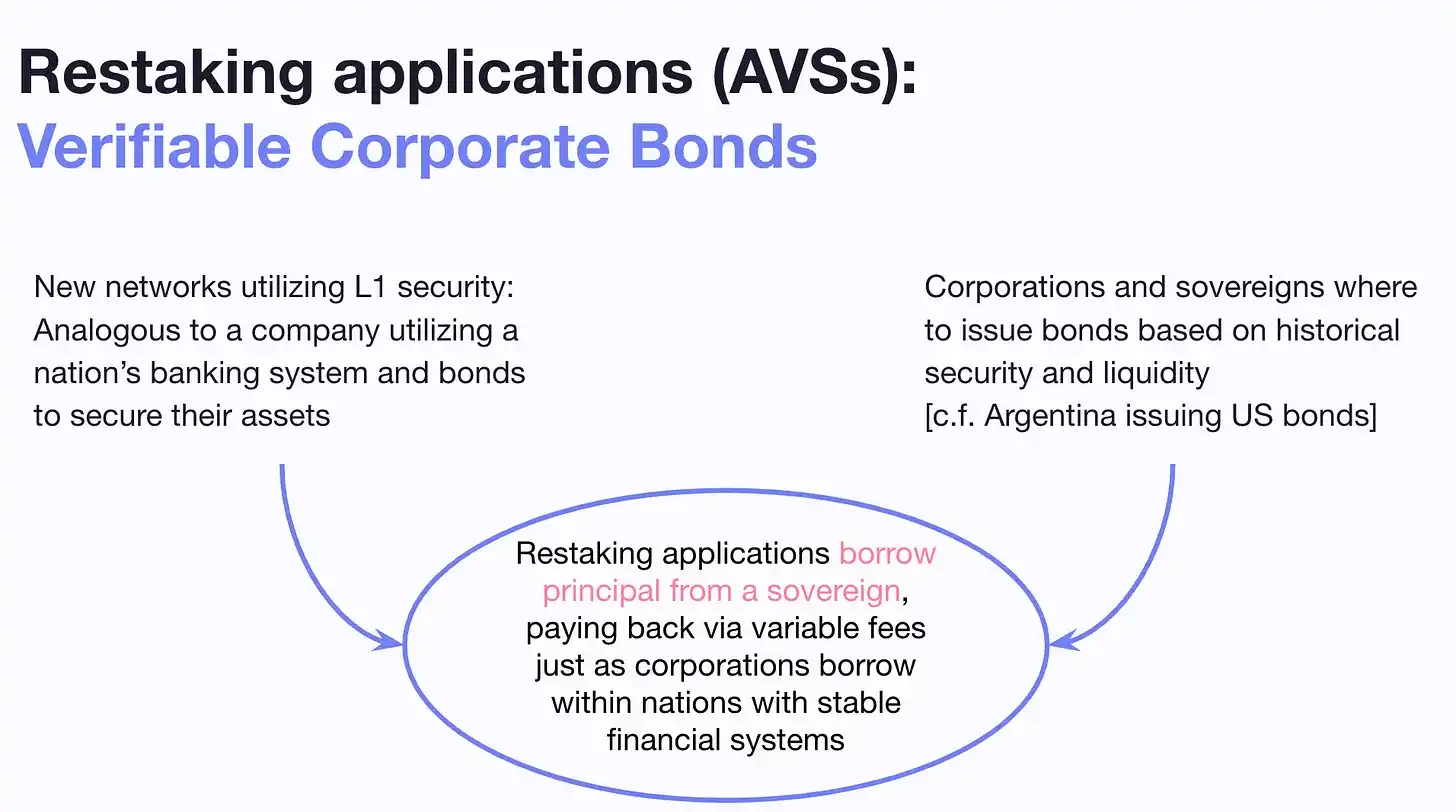
In an ideal scenario, each user should be able to evaluate and choose which AVS to re-stake with, without having to delegate this process to DAO.
This requires the joint efforts of AVS and EigenLayer to ensure that there is an ongoing plan to minimize these risks.
Original article link
Welcome to join the official BlockBeats community:
Telegram Subscription Group: https://t.me/theblockbeats
Telegram Discussion Group: https://t.me/BlockBeats_App
Official Twitter Account: https://twitter.com/BlockBeatsAsia