Enabling Ethereum for the future: The anticipated Ethereum roadmap for 2024.
Original Title: "Making Ethereum Future Proof: What to Expect from the Ethereum Roadmap in 2024"
Original Author: FRANCESCO
Translated by: Luccy, BlockBeats
Editor's Note:
On December 31st, Vitalik Buterin released an article updating the Ethereum roadmap, stating that as Ethereum's technical path continues to solidify, there will be relatively few changes. These include: 1. The Merge: the role of Single Slot Finality (SSF) in the PoS improvement after the merge is being consolidated; 2. The Surge: whether it is EIP-4844 or rollup itself, Surge (rollup extension) has made significant progress; 3. The Scourge: after a certain degree of redesign, the focus now is on combating economic centralization in PoS in two key areas: (i) MEV, (ii) general equity pool issues; 4. The Verge: significant progress has been made; 5. The Purge: "state expiry" has been reduced to reflect general consensus; 6. The Splurge: due to the cryptographic weaknesses in the existing structure, VDF has been reduced to reflect temporarily reduced focus.
In response, the Ethereum community has launched a heated discussion on the Ethereum roadmap. Cryptocurrency researcher FRANCESCO delves into the ERC and EIP he is concerned about and analyzes the advantages of each proposal. He believes that although Ethereum's development is usually considered slow and controlled to prioritize security, Ethereum has not remained stagnant, and the implementation of ERC-4337, EIP-4844, EIP-3074, and EIP-5003 has played a crucial role in this evolutionary journey. BlockBeats has translated the original article as follows:
On my Twitter timeline, I have never seen so much anti-Ethereum propaganda.
Every other day, there is a new Layer 1 being questioned as an "Ethereum killer", but Ethereum seems to be oblivious and still focused on its own development and improvement.
This commitment to progress is evident in the recently released 2024 Ethereum roadmap, which highlights key developments aimed at improving scalability and user experience.
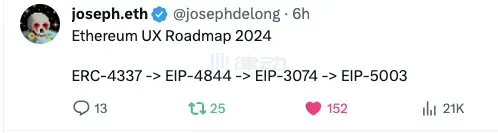
Among them, a date has been set for EIP-4844, which will make it easier for Layer 2 to publish data on Ethereum.
Despite the fierce competition, these new ERC and EIP are aimed at significantly improving the scalability and user experience of Ethereum.
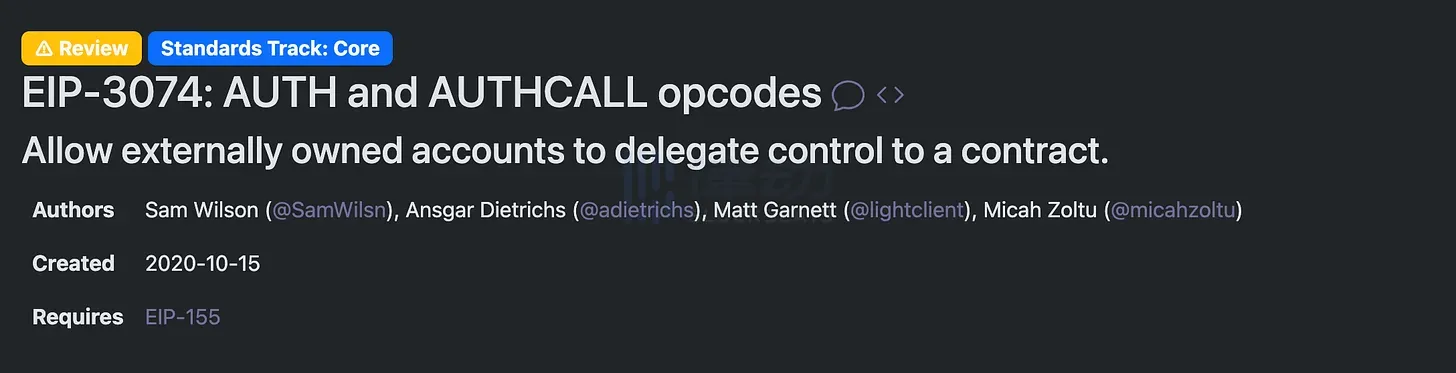
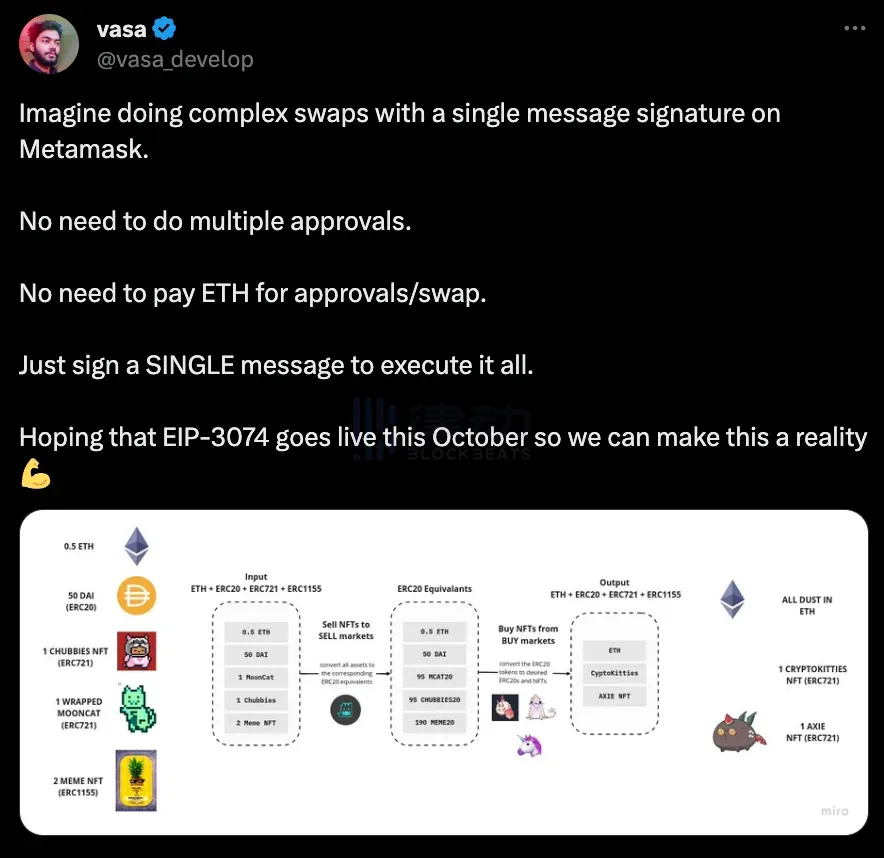
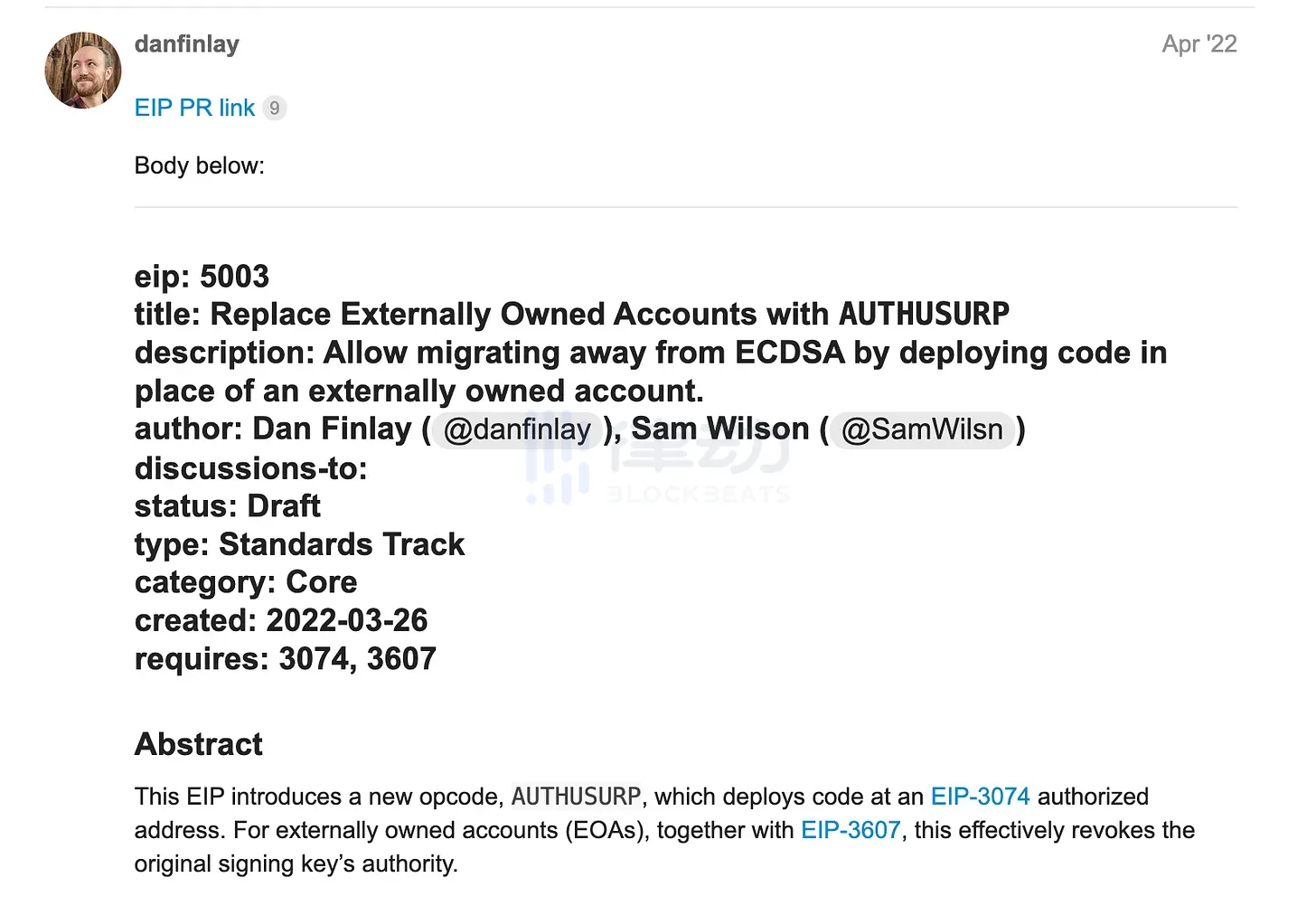
Let's delve into these exciting updates, including ERC-4337, EIP-4844, EIP-3074, and EIP-5003.
ERC-4337: Revolutionizing Smart Contract Wallets
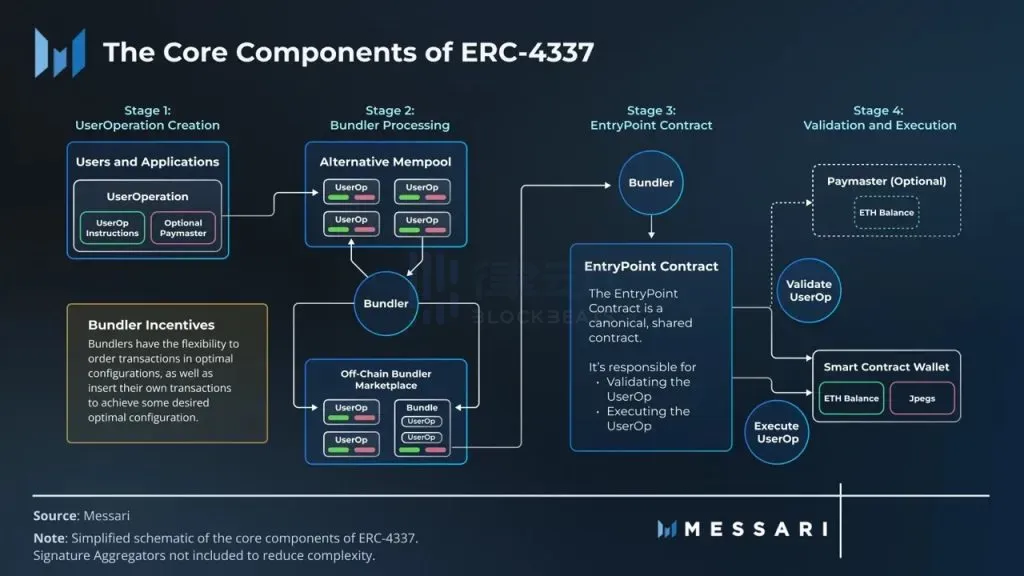
Introducing the ERC-4337 standard is a major leap forward in the evolution of smart contract wallets. This improvement introduces a brand new concept called "account abstraction".
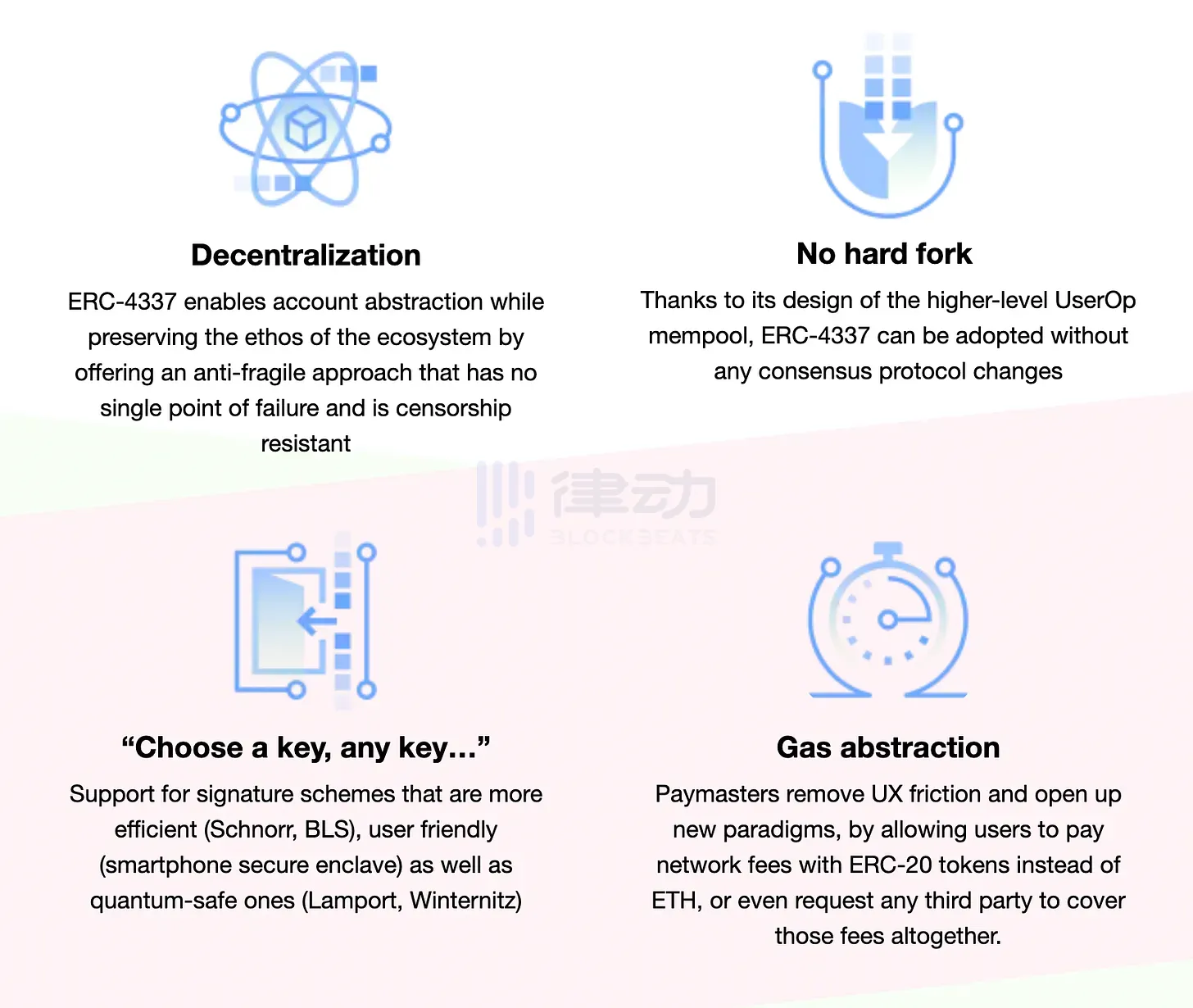
ERC-4337 is a proposal for account abstraction that completely avoids the need to make changes to the consensus layer protocol. Unlike adding new protocol functionality and changing underlying transaction types, this proposal introduces a higher-level pseudo-transaction object called UserOperation.
More information about ERC-4337 can be found at https://twitter.com/johnrising_/status/1629470535397539840.
Traditionally, Ethereum accounts are divided into externally owned accounts (EOAs) and smart contract accounts. However, EOAs operated by users often pose challenges in terms of usability and security. ERC-4337 blurs these boundaries, allowing users to interact with smart contracts more intuitively.
The way users interact with Ethereum needs to adapt to an increasingly complex landscape. We have witnessed the emergence of account abstraction-based solutions, such as Creso Wallet and Avocado Wallet.
The introduction of ERC-4337 will bring a series of improvements to wallet design while reducing complexity for end users.
In addition, ERC-4337 greatly enhances the end user experience and opens up new possibilities, such as gasless transactions, social login, and password recovery.
ERC-4337's main features include:
· Enhanced security: By integrating more complex logic into the wallet, users can set conditions for transactions, such as multi-factor authentication or daily spending limits.
· User-friendly: Simplifies interaction for non-technical users, making the Ethereum ecosystem more accessible.
· Token payment for Gas fees: Users may use tokens other than ETH to pay for transaction fees, adding an extra layer of convenience.
EIP-4844: Improving Layer 2 Efficiency
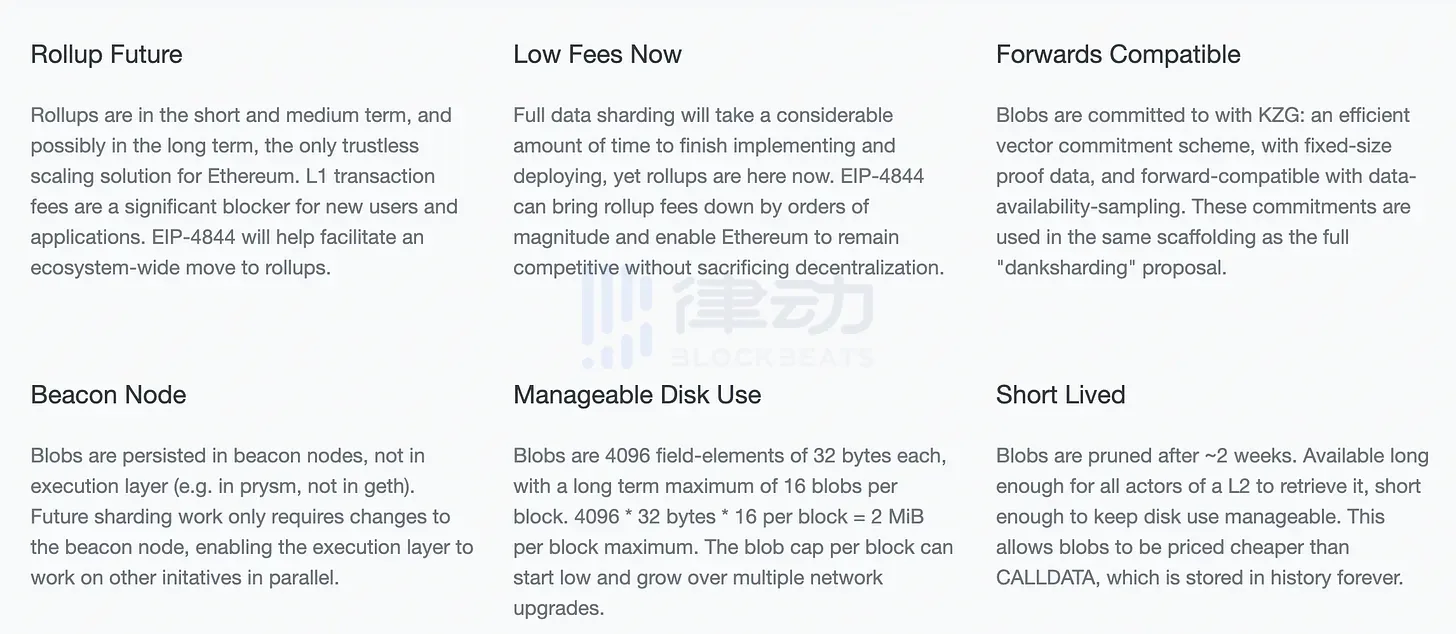
Why do we need EIP-4844: to provide a low-cost data publishing platform for Layer 2 solutions on Ethereum, and significantly reduce the overall transaction fees paid by users on Layer 2.
Question: Layer 2 is generating more and more data. If there is an inexpensive way to publish this data, it will immediately reduce the amount of transaction fees charged to users on the network.
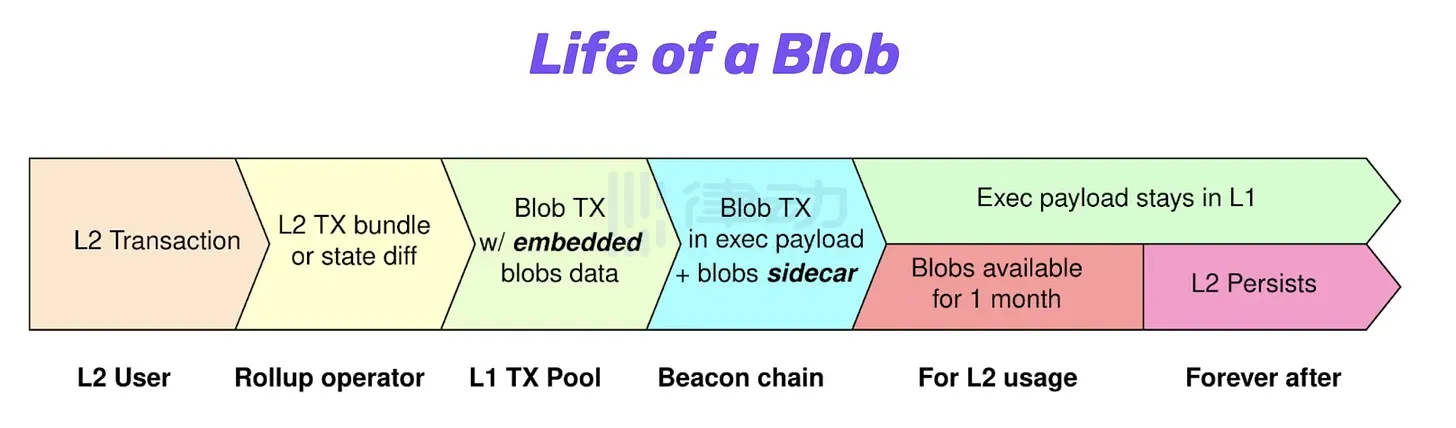
Solution: A new transaction format has been introduced that carries blob data. It contains a large amount of data that "cannot be accessed through EVM execution, but its promise can be accessed." Unlike embedding the complete content in the body, the content of the blob is spread separately as a "detour."
EIP-4844, commonly referred to as "proto-danksharding", is an important step in solving Ethereum's scalability issues. It introduces a new transaction type that allows for the existence of "shard blobs", which are temporary data that Layer 2 solutions (such as rollups) can use.
EIP-4844 introduces a new transaction type for Ethereum that accepts "blobs" data to be temporarily stored in beacon nodes.
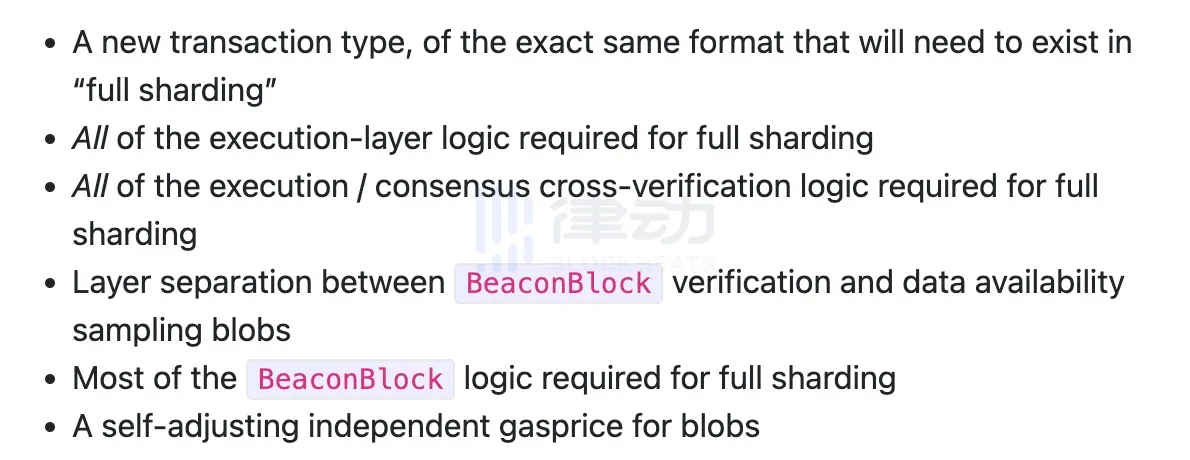
Unlike transactions executed on the Ethereum blockchain, shard blocks only contain "data blobs", which Layer 2 utilizes to create a more secure and scalable experience for its users.
The importance of EIP-4844 lies in its value, which will permeate to users, as we will all be able to enjoy lower Layer 2 fees.
Why will the cost of Layer 2 be lower?
EIP-4844 separates the cost of transaction computation and storage.
Layer 2 will submit "data blob" to Ethereum using different functions.
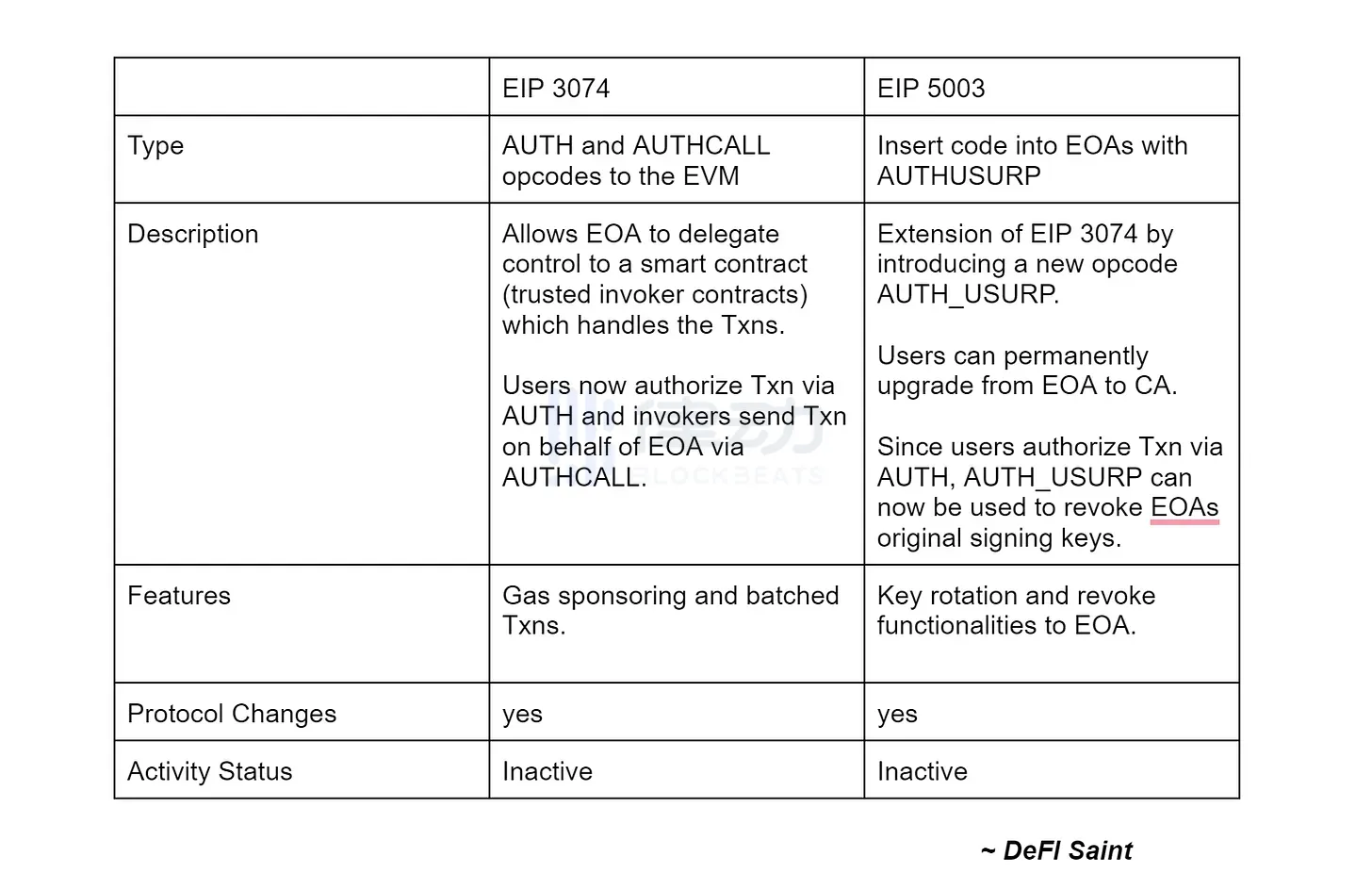
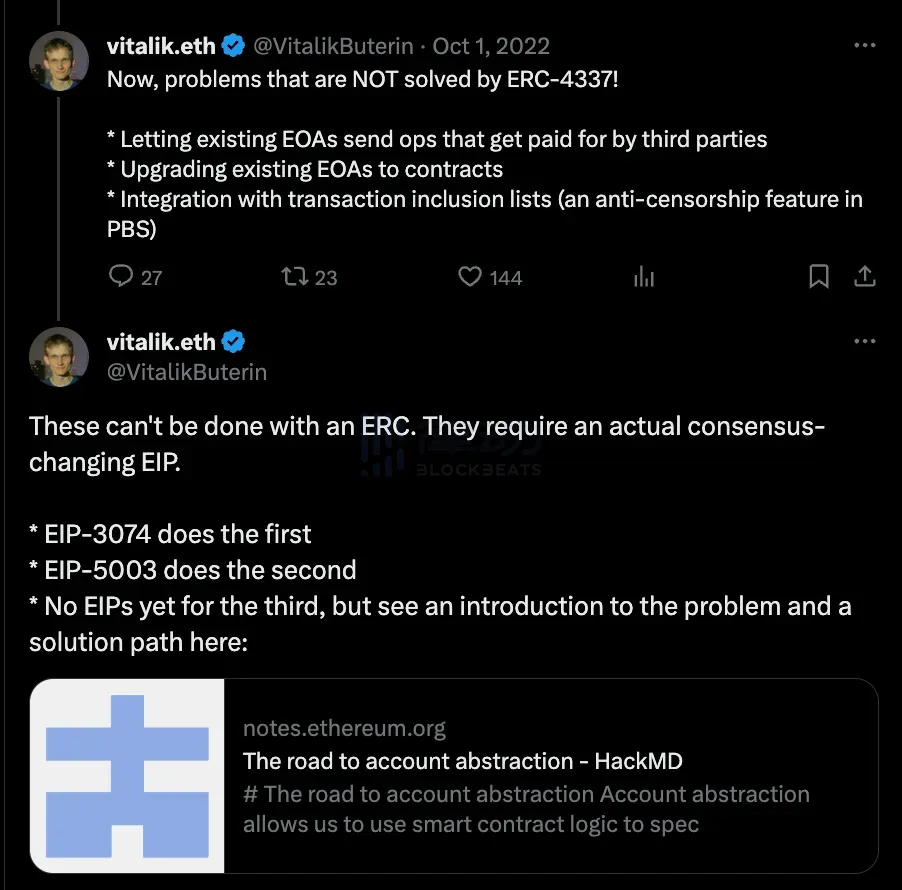
Despite its development being often considered slow and controlled with a priority on security, Ethereum has not remained stagnant. It is incorrect to solely observe and evaluate its technology based on its appearance at a specific moment in time, as it is constantly evolving and improving.
With continuous innovation and improvement, Ethereum will continue to strive for its position in the fierce competition.
The main purpose of this article is to inspire readers to view Ethereum as a constantly evolving and developing network, rather than a static one, and to actively work to counter emerging technologies and alternative solutions to ensure its future sustainability.
We will continue to monitor the implementation of EIP and the evolution of Ethereum within this year.
"Original article link"
Welcome to join the official BlockBeats community:
Telegram Subscription Group: https://t.me/theblockbeats
Telegram Discussion Group: https://t.me/BlockBeats_App
Official Twitter Account: https://twitter.com/BlockBeatsAsia

 Related Articles