Pinned to the top of Twitter by Solana founder, what is Tiny SPL, the new token standard using state compression?

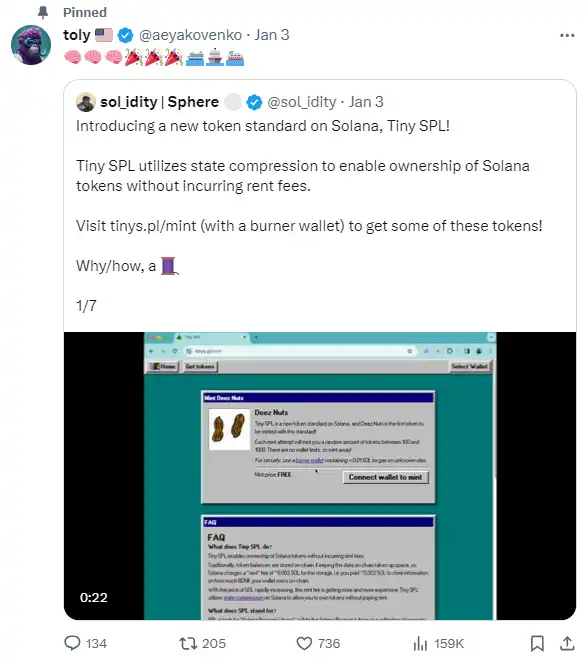
On January 3rd, Anatoly Yakovenko, co-founder of Solana, who had previously helped popularize Silly, shared a tweet on his social media account, bringing attention to a protocol called "Tiny SPL". According to the tweet, Tiny SPL is a new token standard protocol on Solana that introduces a "state compression" method, allowing users to hold tokens on Solana without paying storage rent.
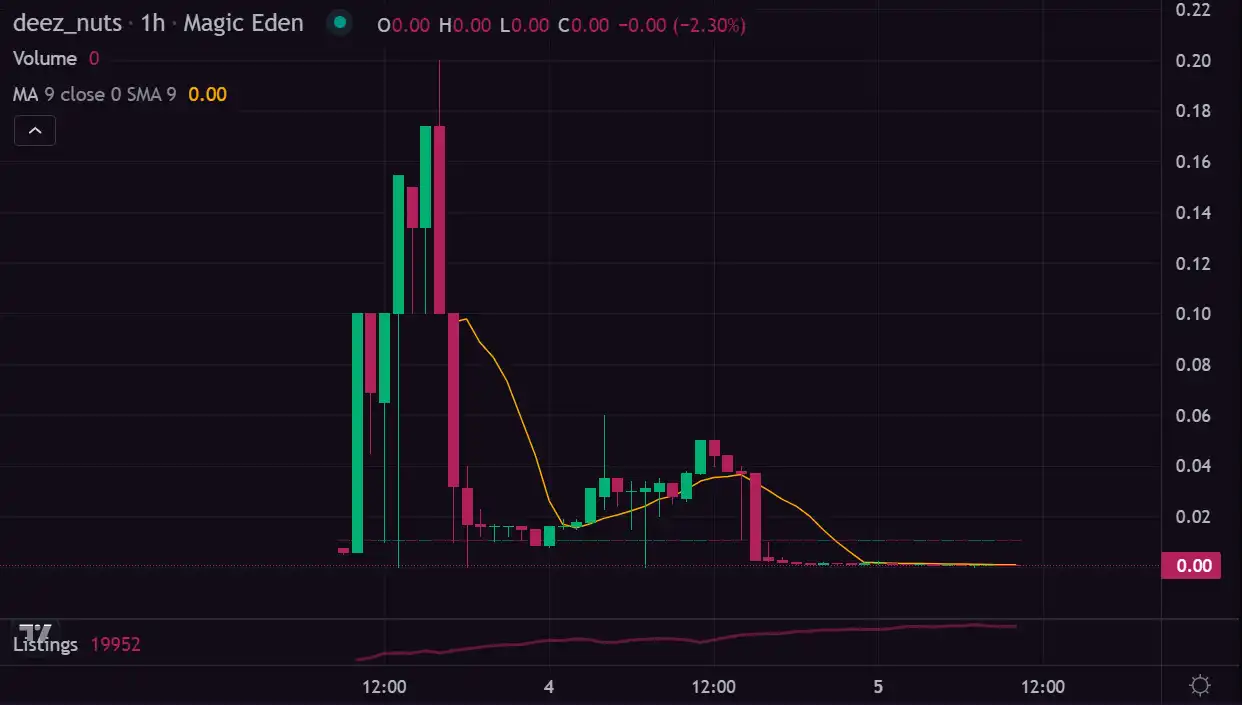
Based on Tiny SPL, the token asset is called "DN (Deez Nutz)". Initially, it can be minted for free. After being minted, some users traded DN on Magic Eden. However, the floor price of DN plummeted rapidly after breaking through 0.2 SOL and was 0.00089 SOL at the time of writing.
From the perspective of price changes, the market may not be very interested in Tiny SPL. However, Anatoly, co-founder of Solana, currently has a retweet about Tiny SPL pinned to his Twitter homepage. The technological innovation represented by Tiny SPL, "state compression," was also a hot topic in the Solana ecosystem in 2023. Therefore, Tiny SPL may have new developments in the future.
Tiny SPL, a smaller version of SPL
Rent in Solana Accounts
Before introducing the special features of Tiny SPL, it is necessary to introduce the concept of "Rent" in the Solana account model. Rent is different from transaction fees. Users pay rent to store data on the Solana blockchain, while transaction fees are paid to process instructions on the network.
Unlike Ethereum, Solana charges a fee for storing data on its network, which is called rent. Rent is charged periodically based on the balance of tokens stored in the account. If an account is unable to pay the rent, the system will delete the account to reduce storage costs for data that is no longer maintained. If the assets in the account exceed the minimum balance for two years' rent, the account is exempt from paying rent.
Although according to the official website, the rent is derived from the underlying hardware storage cost. Therefore, as technology advances and hardware costs decrease, rent is expected to decrease. However, rent is paid in SOL, and as SOL prices have risen recently, the actual rent paid by users will also increase. Asset management company VanEck mentioned in a valuation report on Solana that the storage cost of rent on Solana is 0.00000348 SOL per byte, and the wallet data size is 372 bytes. Each active wallet holder must retain 0.0026 SOL. Similarly, applications and token smart contracts must also maintain these storage costs. A program like Serum, which is about 340KB in size, needs to retain a balance of 2.4 SOL to avoid paying rent.
The token standard for Solana is SPL, and Tiny SPL aims to create a "smaller" version of the SPL token standard. Through state compression, users can own tokens without paying rent.
Attracting Helium Mobile to migrate to Solana with state compression method
State compression is a new method of storing data introduced by Solana in April 2023, which can significantly reduce the cost of on-chain storage. This technology relies on Merkle trees and can compress the verifiability of the data tree into a hash. The compression-friendly structure allows developers to store small amounts of data on-chain and update them directly in the Solana ledger, greatly reducing data storage costs while maintaining the security and decentralization of the Solana base layer.
Related reading: "MT Capital Research Report: The Eve of Solana's Comprehensive Ecosystem Outbreak."
The first application scenario of the state compression method is in NFT minting, which can reduce the cost of minting NFTs on Solana by 2,400-24,000 times. According to the Solana Foundation, as of April 5, 2023, the cost of minting 1 million uncompressed NFTs on Solana exceeds $250,000. However, the cost of minting NFTs using state compression is approximately $110.
Last month's popular DePIN project, Helium Mobile, minted nearly one million NFTs at a cost of only $113 when migrating to Solana. This also became a typical test instance for state compression methods. These NFTs can serve as Helium's network credentials to verify hotspots, and can also integrate the functions of the entire ecosystem, including token access control and hotspot owner access.
Related reading: "Detailed explanation of current popular DePIN projects: Honey, DIMO, and Helium (Mobile)".
Through the state compression feature, Solana can provide creators and brands with a way to offer a large number of NFTs to a wider audience without paying a large amount of costs. Now, Tiny SPL applies the state compression method to token assets, and compared with tokens that use the regular SPL standard, Tiny SPL tokens do not need to pay rent. In addition, Tiny SPL tokens will not be displayed in the user's wallet balance, but only visible in the NFT section.
Tiny SPL Interaction Process
In terms of user experience, the token management process of Tiny SPL is quite unique. Currently, the token asset "DN (Deez Nutz)" based on the protocol has been fully minted and interested readers can purchase it on the secondary market. Please note that DN does not have any actual value, and this part of the content is only intended to introduce the interaction process of Tiny SPL and cannot be used as investment advice.
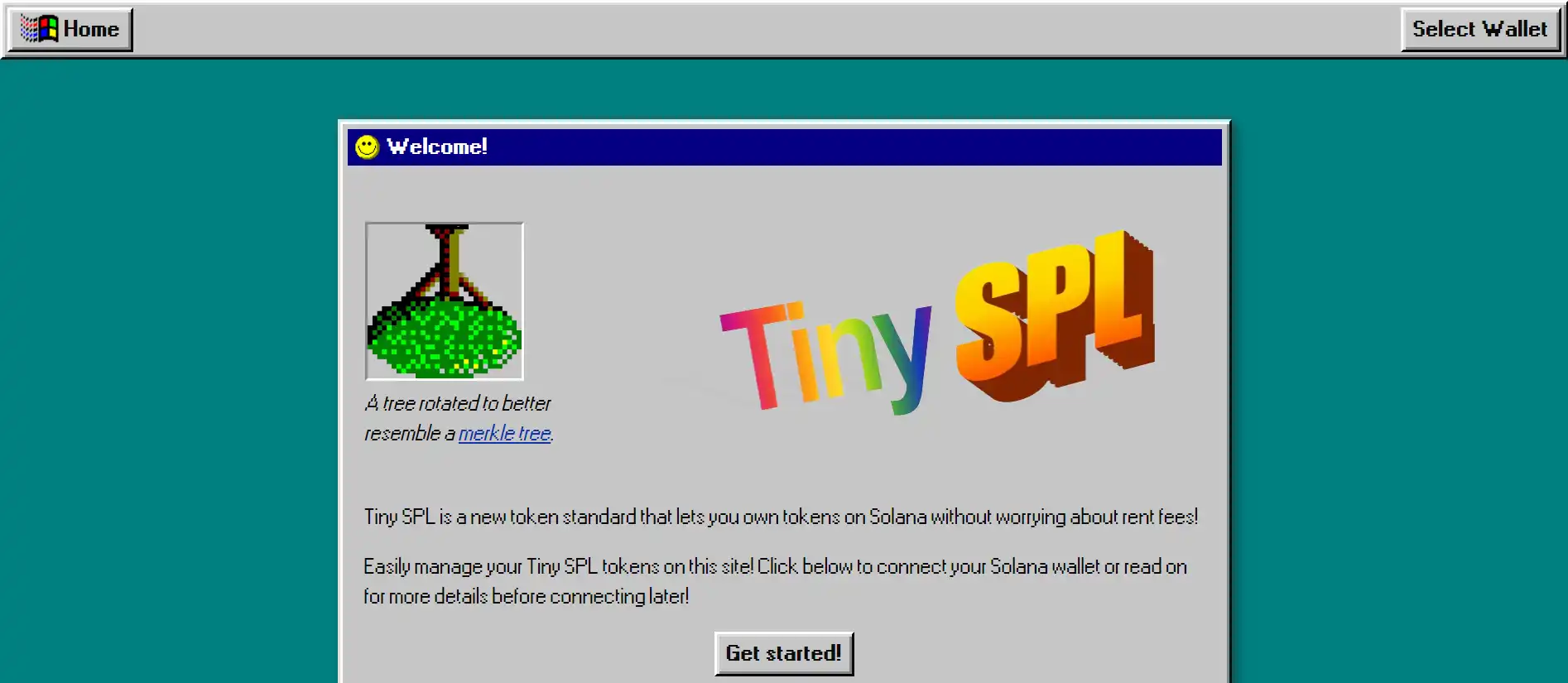
Enter the Tiny SPL official website https://tinys.pl/, click on the "Get started" link to connect your wallet. It is recommended to use a test wallet without large assets.
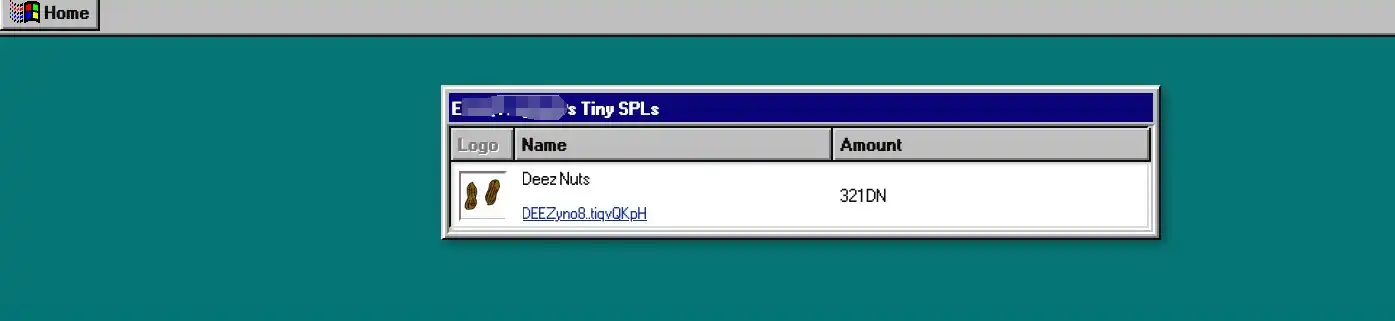
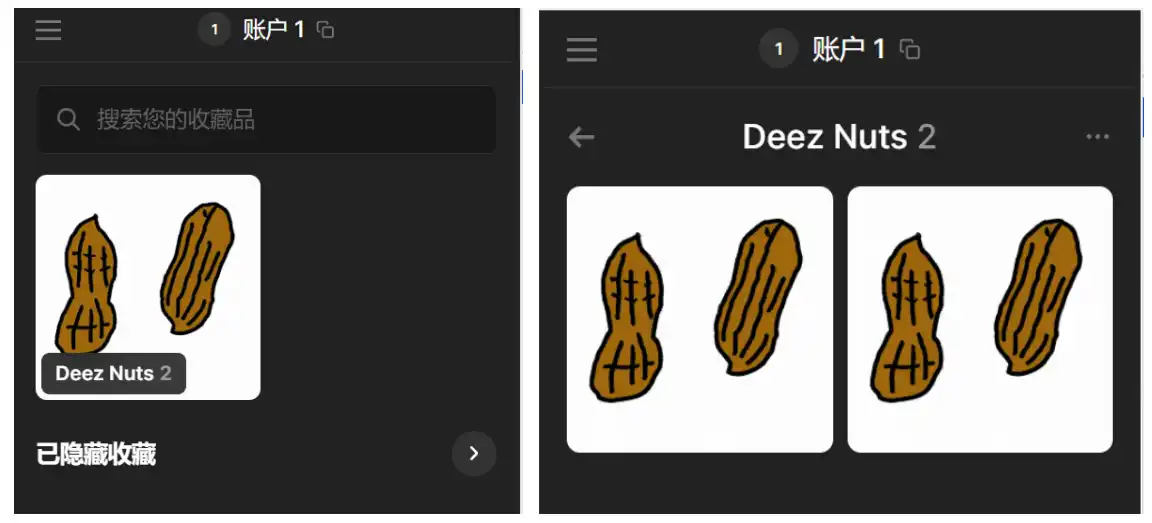
After connecting the wallet, the page will detect and display the amount of Neez Nutz owned (if any). The icon for Neez Nutz is two peanuts.
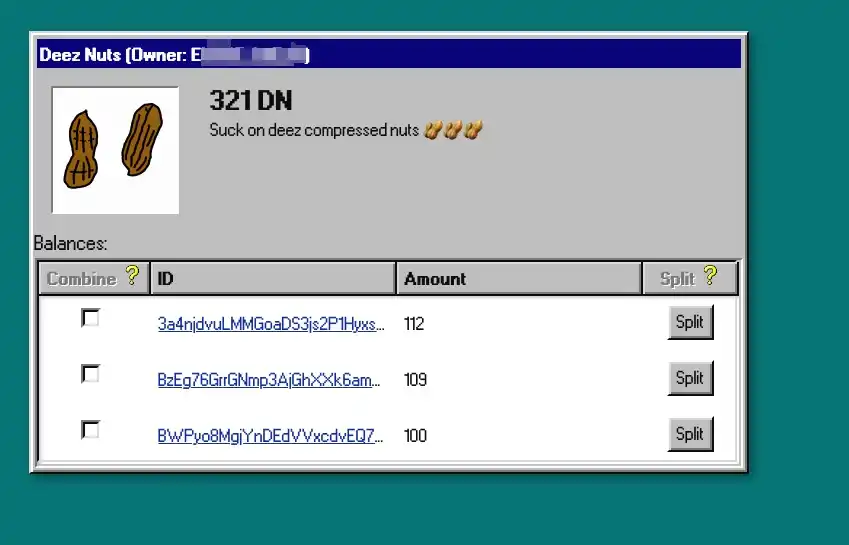
When trading token assets, it is necessary to determine the quantity of the assets being traded. In Tiny SPL, determining the trading quantity requires a "splitting" or "merging" process.
First, click on Neez Nutz to enter the token management interface. If you want to send 1 DN, you need to split 125 DN into 124 DN and 1 DN before transmission. Here, 312 DN has been split into 112 DN, 109 DN, and 100 DN.
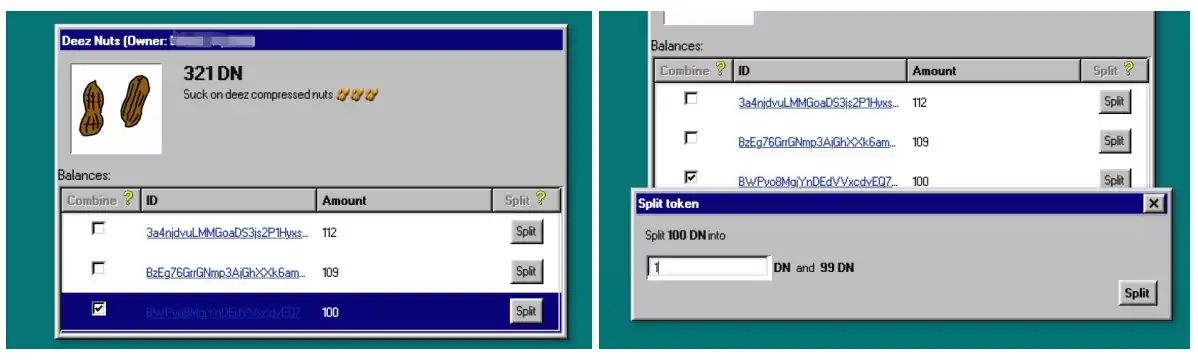
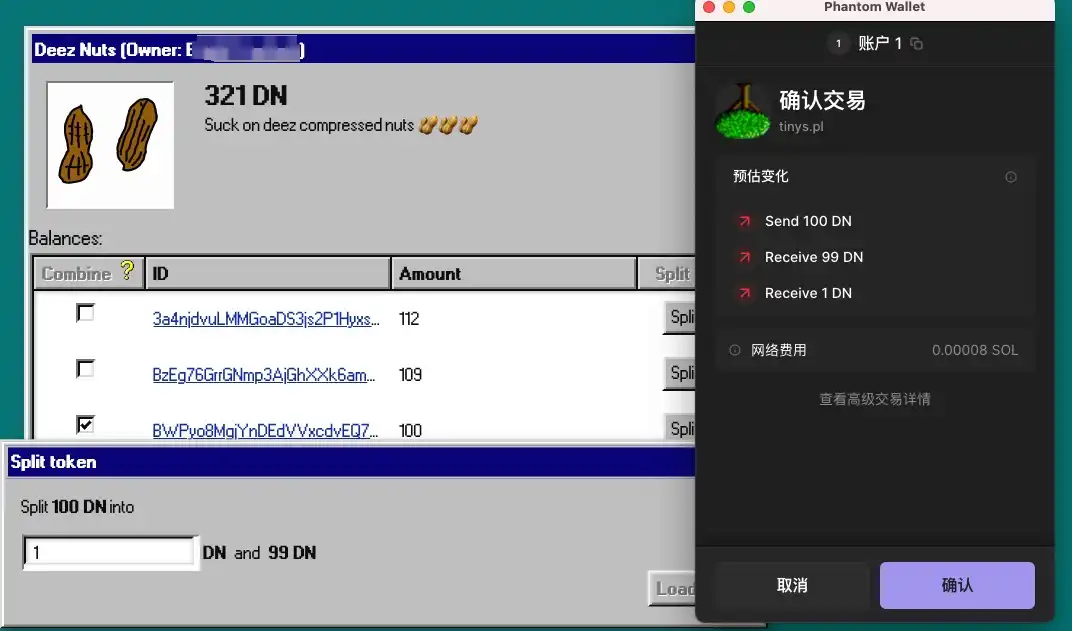
If you want to continue splitting, select the asset to be split, 100DN, and click "Split". Enter the quantity to be split on the pop-up page, and then click "Split" to confirm.
Confirm the signature on the wallet pop-up page. Here you can see that the operation performed on the wallet side is "send 100DN, receive 99DN and 1DN".
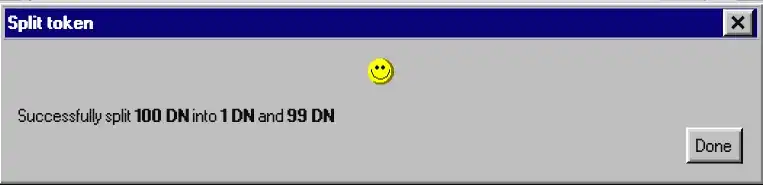
After confirmation, wait for the following page to be displayed, which indicates that the split is successful.
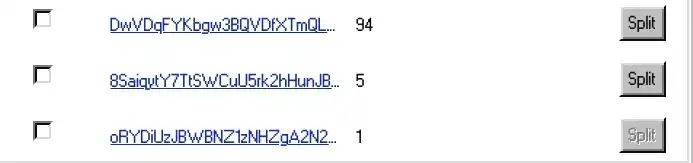
To merge Neez Nutz, select the DN you want to merge and click on the "Combine" button that pops up. The following steps are the same as the steps for splitting.
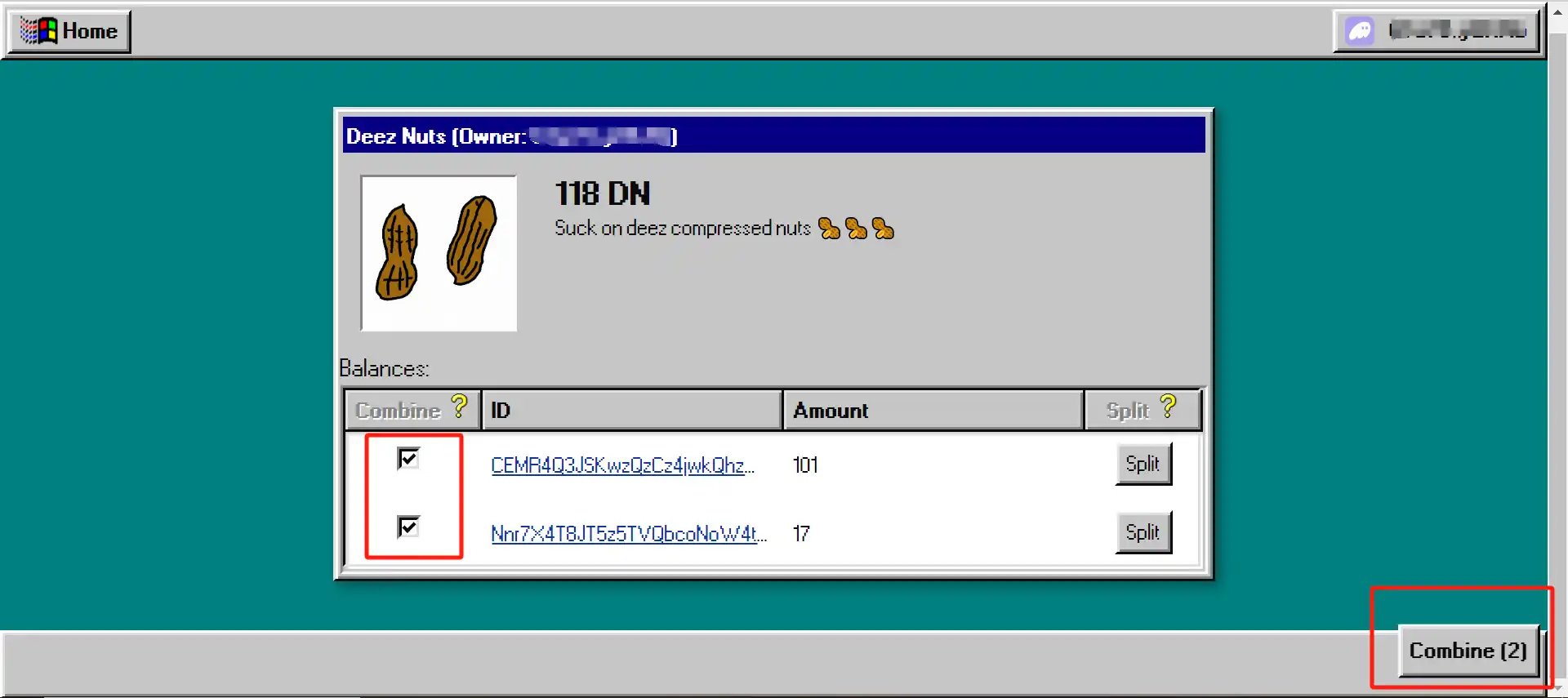
After successful splitting or merging, it will be reflected in the Neez Nutz assets displayed in the NFT column of the wallet. Here, the number 2 represents 2 DN (with different quantities). Then, users can trade Deez Nuts by trading NFTs.
Forwarded by Anatoly, worth following up
Welcome to join the official BlockBeats community:
Telegram Subscription Group: https://t.me/theblockbeats
Telegram Discussion Group: https://t.me/BlockBeats_App
Official Twitter Account: https://twitter.com/BlockBeatsAsia