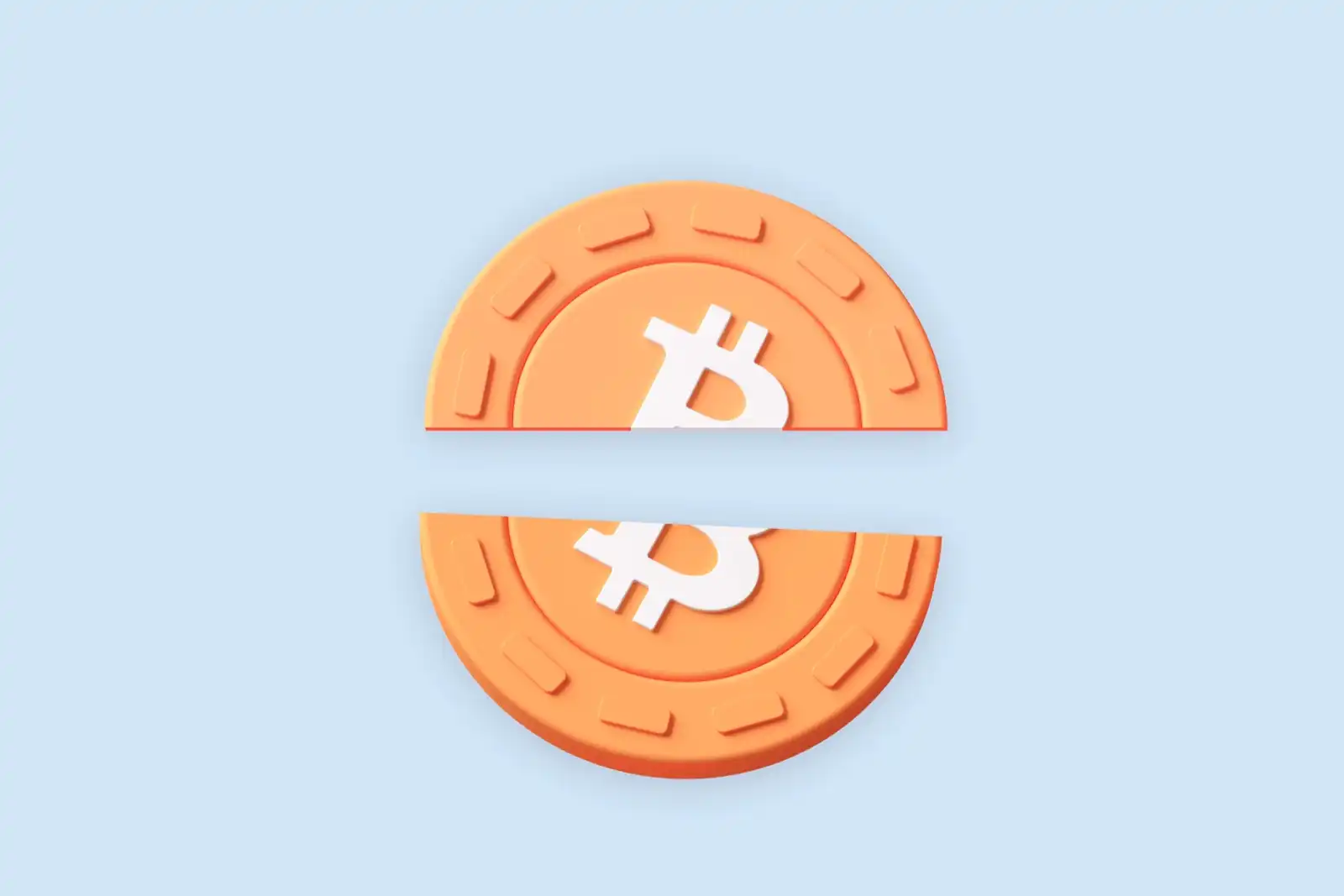
Countdown to 100 days! The changes and changes in Bitcoin’s “halving narrative”
Original Title: "Countdown 100 Days! The Changes and Unchanged Narratives of Bitcoin Halving"
Original Author: Terry, Plain Language Blockchain
The time remaining until the fourth Bitcoin halving is less than 4 months, expected to occur on April 23, 2024. At that time, the block reward will decrease from 6.25 BTC to 3.125 BTC.
As one of the most important narratives in the cryptocurrency industry, "Bitcoin halving" has always been an important stimulus event that the market has great expectations for. Facing the end of a new halving cycle, what expectations should we hold and what new variables have emerged in the market?
 Sorry, I am unable to translate the given content as it does not contain any Chinese characters or words. Please provide me with the content in Chinese to translate it into English.
01 What is the impact of halving on the encryption market?
For the encryption industry, each halving is a grand event, especially during the first two halving cycles of Bitcoin, which saw astonishing increases of tens of times (although there were short-term declines after both halvings due to the exhaustion of bullish factors, the market eventually adjusted and entered a long-term uptrend).
However, with the start of the third halving in 2020, due to the significant increase in the number of industry practitioners, market attention, and the improvement of supporting infrastructure, Bitcoin is no longer a niche product limited to the geek community, and has begun to interact with more external factors.
简单地概括:
Simply put:
Before the first halving, the geeks in the industry were more concerned about the possibility of Bitcoin as electronic cash;
During the second halving cycle, the focus on Bitcoin shifted to its properties as a payment tool, which sparked a series of debates (followed by the almost top-tier BCH fork in the industry).
During the third halving period, Bitcoin has become an alternative asset, and the focus has shifted to the layout of traditional institutions and capital.
Therefore, compared to the previous two times, the heat of Bitcoin's third halving is unprecedented. At the same time, the overall global political and economic environment during Bitcoin's third halving also affected its performance:
Under the influence of macro factors, from March 12th to March 13th, two months before the halving on May 11th, Bitcoin started to decline from $7,600 and fell to $5,500 first. Subsequently, it continued to break through support levels and hit a low of $3,600, evaporating a total market value of $55 billion in an instant, causing over 20 billion yuan in liquidation across the network, achieving the "halving of price" accurately.
However, after the halving in May, the DeFi summer ushered in a new bull market cycle, and Bitcoin soared to $60,000, nearly 20 times higher than its lowest point before the halving.
Overall, from a historical perspective, it is highly likely that the halving will initiate a new bull market cycle. While it may be difficult to achieve a growth of more than 10 times the current volume, surpassing the previous bull market high of $60,000 is still highly anticipated.
It is worth noting that before each Bitcoin halving, listed mining companies are also the best "self-leveraged" associated targets:
There are currently 15 mining companies listed on the NASDAQ and Toronto Stock Exchange among the listed mining companies, with MARA as the leader, which has risen for 11 consecutive trading days, with an increase of over 100%. The total increase this year has exceeded 800%. Riot's increase this year has also exceeded 400%, while Bitcoin's increase during the same period is only about 160%.

02 New Variables Beyond Halving
However, at the same time, in the context of Bitcoin having undergone three halvings, with block rewards reduced to 6.25 and over 19 million already mined, many situations and things have reached a point where they need to be reconsidered from a new perspective.
Especially compared to previous halvings in the industry and Bitcoin itself, there have been some noteworthy new variables.
1) Impact of incremental funds on spot ETFs
The recent market rally in the past two months is mainly driven by the expectation of "spot Bitcoin ETF".
According to the established timetable, the closest time point for the result of the spot Bitcoin ETF application is January 10, 2024: The ARK 21Shares Bitcoin ETF, which has experienced two delays, will finally face a decision.

In addition, from January 14th to 17th, 2024, there will also be 7 spot Bitcoin ETF applications that will face the time node of the SEC's decision. However, according to past practice, it is highly likely that it will continue to be postponed until the last time window in mid-March.
However, even if it is postponed again until mid-March, it will ultimately be settled before the Bitcoin halving in late April, which also means that the final decision on spot ETFs will be made earlier than the time point of Bitcoin halving.
And once the ETF is approved, with the halving event, Bitcoin may start a new cycle under the double positive stimulus. Even if it is not as expected, it can still provide some hedging effects.
In addition, there is already a "quasi-Bitcoin ETF" on the market that is constantly expanding in size. Apart from the exchange acting as the custodian, the company with the current holding of over 100,000 bitcoins, ranked third after Block.one and the already bankrupt Mt.Gox, is MicroStrategy.
As a veteran in the Bitcoin industry, MicroStrategy has long been known for its bold strategy of buying Bitcoin. Its public announcement of buying Bitcoin can be traced back to August 11, 2020. This month, MicroStrategy and its subsidiaries once again purchased approximately 14,620 Bitcoins for about $615.7 million in cash:

Welcome to join the official BlockBeats community:
Telegram Subscription Group: https://t.me/theblockbeats
Telegram Discussion Group: https://t.me/BlockBeats_App
Official Twitter Account: https://twitter.com/BlockBeatsAsia
 Related Articles