Bankless: Ethereum may undergo a final transformation towards a 'matryoshka' endgame.
Original Title: Ethereum's Endgame Transformation
Original Author: Bankless Guest Author Viktor Bunin
Translation: Sharon, BlockBeats
Editor's Note:
In the midst of the Bitcoin inscription wave and the lingering heat of the Solana token boom, Ethereum and its ecosystem have not performed as well. In an article published by Bankless on December 22, guest author Viktor Bunin discussed and predicted the future of Ethereum and L2.
He believes that on the one hand, the number of users on the Ethereum blockchain will decrease, and the relationship between Ethereum, its ecosystem, and end users may become like a matryoshka, making the Ethereum ecosystem no longer have a single overall narrative. On the other hand, the entire Rollup ecosystem will maintain Ethereum's most important social principles - decentralization, trusted neutrality, and permissionless access and innovation, while the Ethereum blockchain will become a solid cornerstone of the old guard, considered to exist and supported as a matter of course. BlockBeats has translated the original article as follows:
Recently, the Bitcoin and Solana communities on Twitter have been filled with excitement, driven by hype generated by fundamental improvements, increased fees, and rising token prices. However, the Ethereum community, as the center of adoption and innovation in cryptocurrency, sometimes appears more calm. This makes me wonder, is it just that the numbers (on Ethereum) haven't gone up?
I believe there is a deeper reason: the Ethereum blockchain is transitioning from B2C (execution) to B2B (settlement). This is a known technological outcome of the Ethereum endgame, but what does it mean for the Ethereum social layer and community? I haven't seen too much written about this, so I'll try to unpack this topic here.
In the long run, will the number of users on the Ethereum blockchain increase or decrease from today? I believe it will decrease. L2 has already consumed up to 20% of Ethereum's Gas, and I expect this proportion to continue to rise in the coming years, even though advances such as EIP-4844 and Full Danksharding have greatly reduced the cost of Rollups settling on Ethereum. A decrease in the final users of the Ethereum blockchain means that relatively fewer people will become part of the Ethereum community.
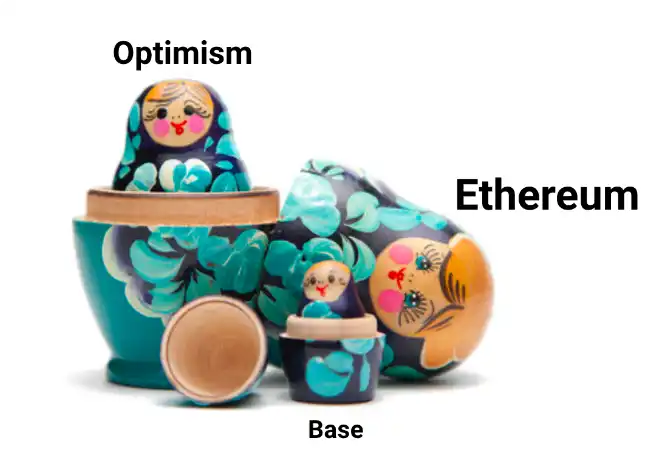
On the contrary, people's identities will become like nested dolls, primarily associated with user-facing components they interact with, such as networks like Base, Arbitrum One, or Polygon zkEVM. You can see this today on Twitter - the communities of the aforementioned L2s are rapidly growing, but they are primarily focused on their respective chains rather than the broader Ethereum ecosystem.
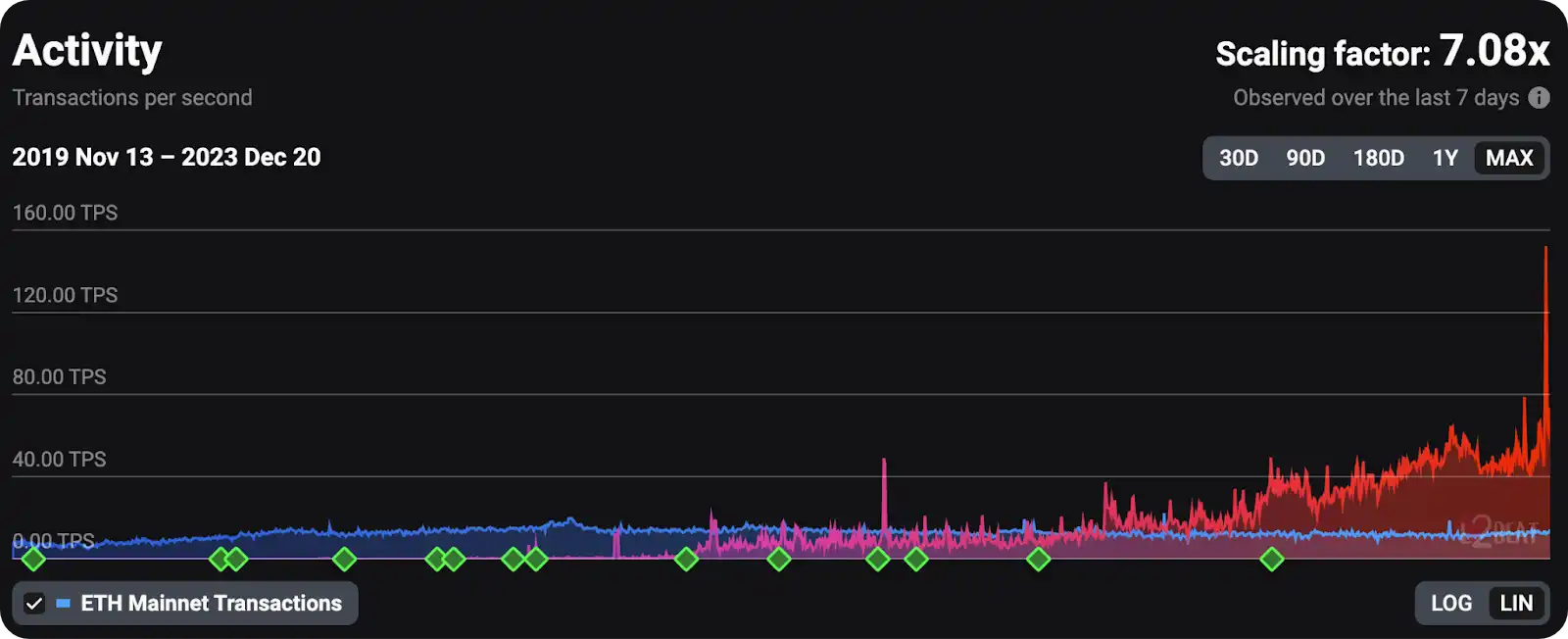
This reality makes it harder for people, especially critics, to understand Ethereum, because it is no longer a single chain and community, but an ecosystem composed of chains and communities. Ironically, this also makes it difficult for people to understand the Cosmos community for many years.
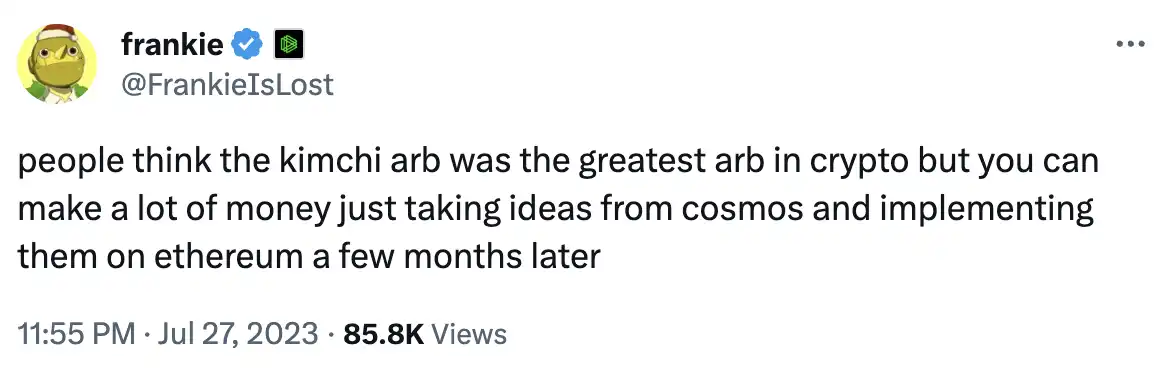
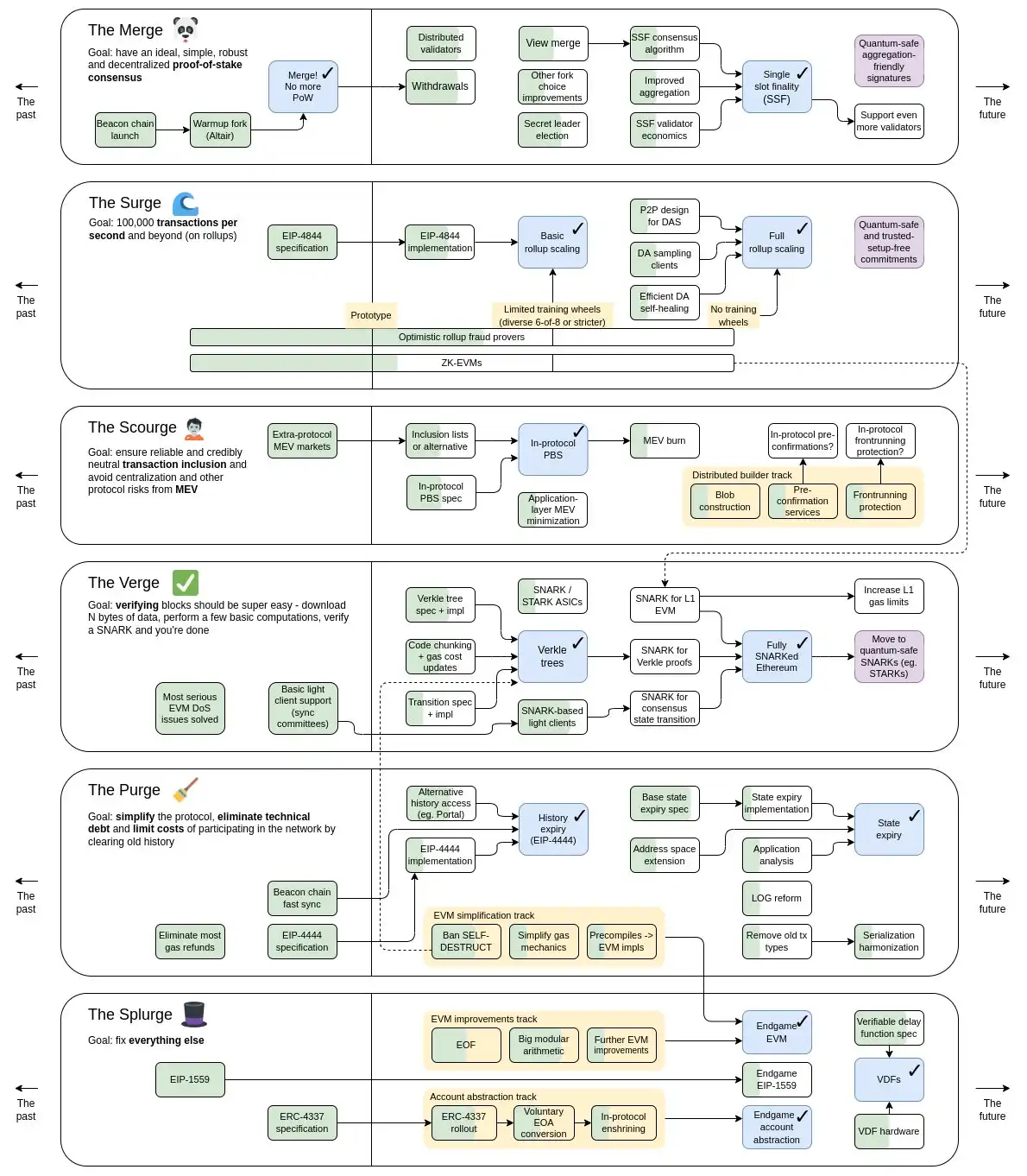
This transformation also means that, by definition, the Ethereum ecosystem no longer has a single overarching narrative. The diversity of community and perspectives is itself the narrative, which is different from what we typically see in the cryptocurrency ecosystem (such as Ethereum's transition to PoS, Solana's launch of Firedancer, and Bitcoin's adoption of the Lightning Network).
It can be certain that the Ethereum blockchain itself has realized a vision through core developers and EIP implementation, as described in Vitalik's updated roadmap. However, it is just one of many narratives in the Ethereum story, including Optimistic Rollups, zk-Rollups, shared sequences, privacy Rollups, data availability, identity, NFTs, use-case specific Rollups (such as gaming), and more.
This trend of community expansion will not only accelerate on Ethereum, but also on every general smart contract chain. After all, the cryptocurrency ecosystem is planning to attract 8 billion people. Because scale breaks intimacy, it is reasonable to assume that over time, there will not be just one Ethereum community, or one Solana community.
So, what should we do now? What does the successful completion of this transition mean for the Ethereum community? Here, I am looking for three indicators.
First and foremost, Ethereum's most important social principles are maintained throughout the entire Rollup ecosystem. These principles are decentralization, trust neutrality, and permissionless access and innovation. If end users are subject to censorship or assets are seized by the aggregated ecosystem, the trust neutrality of the Ethereum blockchain is not important to the end user.
Secondly, from the user's perspective, they should enjoy the same level of security when using Rollup as they do when trading on the Ethereum mainnet. From a tactical standpoint, this means that Rollups should inherit Ethereum's security, even if the Rollup sequencer is untrusted, they should not have the opportunity to steal user funds.
Finally, I believe that for Ethereum, the most important thing is that the Rollup ecosystem should use ETH as its primary currency. In addition to tactical considerations (Rollups require ETH for settlement with Ethereum, users already own and love ETH, ETH already has excellent monetary properties, etc.), the deep reason for cryptocurrency is to create the best form of currency in the world.
The Ethereum community cannot forget this goal. It is time to create a currency that is controlled by anyone but used by everyone. And we have a great opportunity to achieve this goal. This does not mean that every Rollup must execute these pillars perfectly. Some may require KYC thresholds, while others may use their own tokens as gas, and so on. But these metrics provide us with a sense of direction - whether the Rollup ecosystem is pushing the abstract concept of "Ethereum".
So, what does this mean for the Ethereum community?
This means that over time, you will hear less and less about the Ethereum blockchain itself, and more about the sub-communities within it. The Ethereum blockchain will become an established and supported cornerstone, assumed to exist and be supported, as we assume its existence and support through the trials and tribulations of cryptocurrency growth in the coming decades.
This type of dynamic will reflect the situation of web2, although the initial focus was on the Internet, but now we focus on online communities, while considering the Internet itself as a matter of course. In many ways, the ultimate goal of the Ethereum community is that everyone is a part of the Ethereum community, while no one primarily identifies themselves as a member of the Ethereum community.
Of course, the concept of L1 gradually fading into the background is not new. Anatoly Yakovenko, the founder of Solana, has long advocated for a greater focus on building things on top of blockchain, rather than focusing on the blockchain itself.

With the continuous growth and adoption of Solana, I am curious about how the Solana community will evolve over time. Due to its monolithic design, the community may become even more tightly knit, so its community diffusion may be different from what we see today on Ethereum. At the same time, all eyes are on the Ethereum community as it undergoes this fascinating transition towards greater diversity.
Welcome to join the official BlockBeats community:
Telegram Subscription Group: https://t.me/theblockbeats
Telegram Discussion Group: https://t.me/BlockBeats_App
Official Twitter Account: https://twitter.com/BlockBeatsAsia

 Related Articles