Multiple public chains are directly 'crashed', how long can the Inscription Carnival last?

Just past this weekend, the heat of Mingwen only increased and did not decrease.
Modular blockchain Celestia has also launched its first inscription project CIAS, but the community has found that the CIAS project may have copied the COSS inscription code. After CIAS officially opened minting, it received over 120,000 visits from more than 1 million people within an hour, and over 50% of transactions on Celestia's chain were related to CIAS. Subsequently, its team announced that RPC had encountered a malfunction, announced the suspension of minting, and stated that it would notify the recovery time 12 hours in advance.
This sudden pause in coin minting, known as "pulling the plug" by the community, has not diminished the market's interest in CIAS. Someone posted a video of scientists attacking CIAS in the community, and Celestia founder Mustafa shared the video, saying it was a problem they needed to solve.
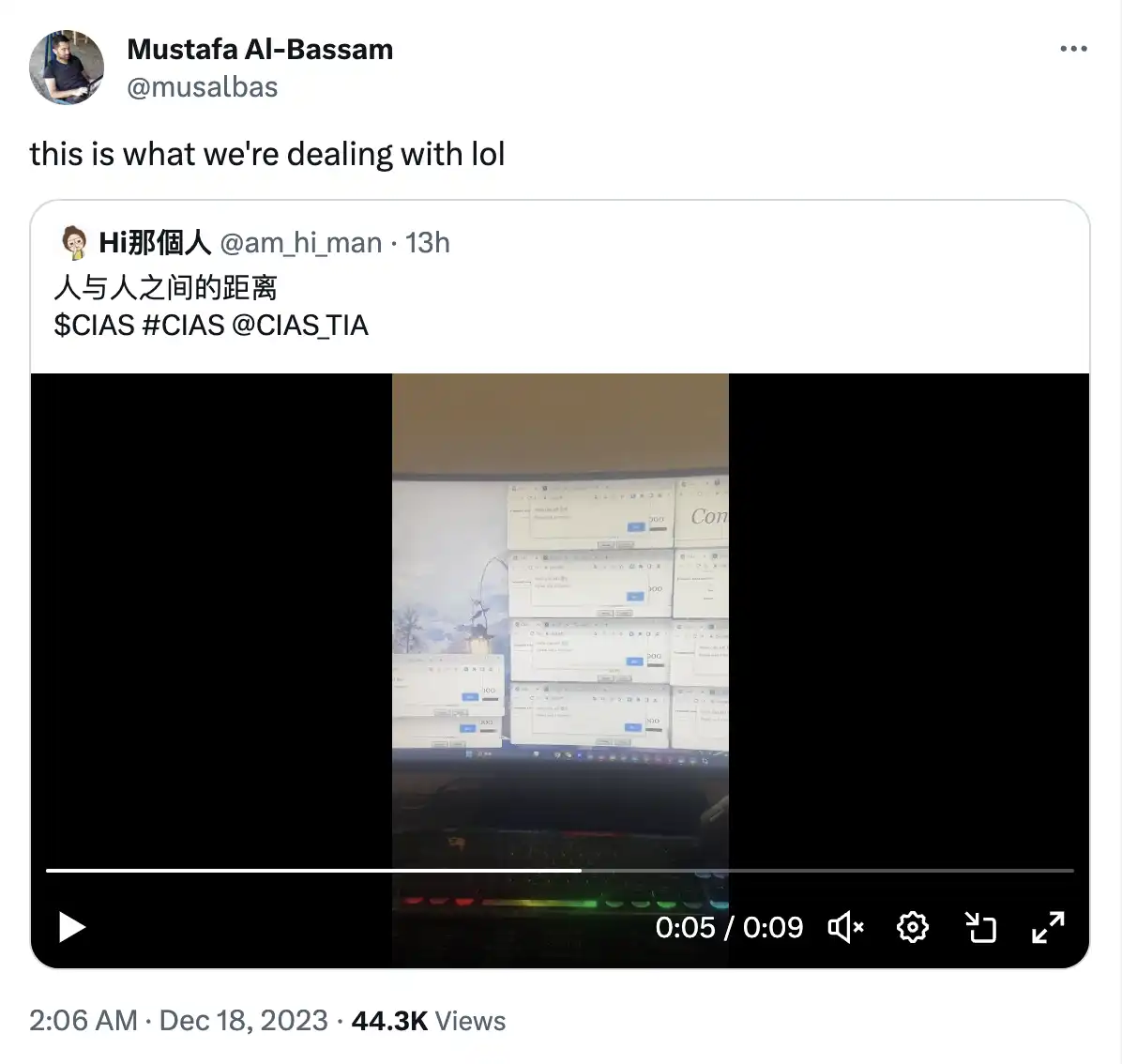
It is unknown whether CIAS is an official inscription project launched by Celestia, but it can be seen from CIAS that various public chains are also taking action in the face of inscriptions.
Stress Test "Inscription Version"
In fact, the development of the inscription has gone beyond Bitcoin and can even be said that inscriptions on different chains have become stress tests for the chain.
On December 8th, after the introduction of the Tonado protocol and the resulting surge in related activities, TON network experienced long delays in transaction processing. According to monitoring data from the blockchain status monitoring robot dTON, starting from December 5th, the Tonano team launched a glyph called TON20, which generated over 2 million transactions in just half an hour, increasing network usage by 61 times. This sudden surge in traffic also resulted in severe congestion on the TON network, with verification severely delayed even though network validators were still generating blocks.
As of the afternoon of December 7th, there are over 2.5 million transactions waiting to be processed, and the transaction processing speed of the TON blockchain has dropped to less than 1 transaction per second. This situation has forced the TON cryptocurrency wallets, Wallet and Tonkeeper, to suspend their services.
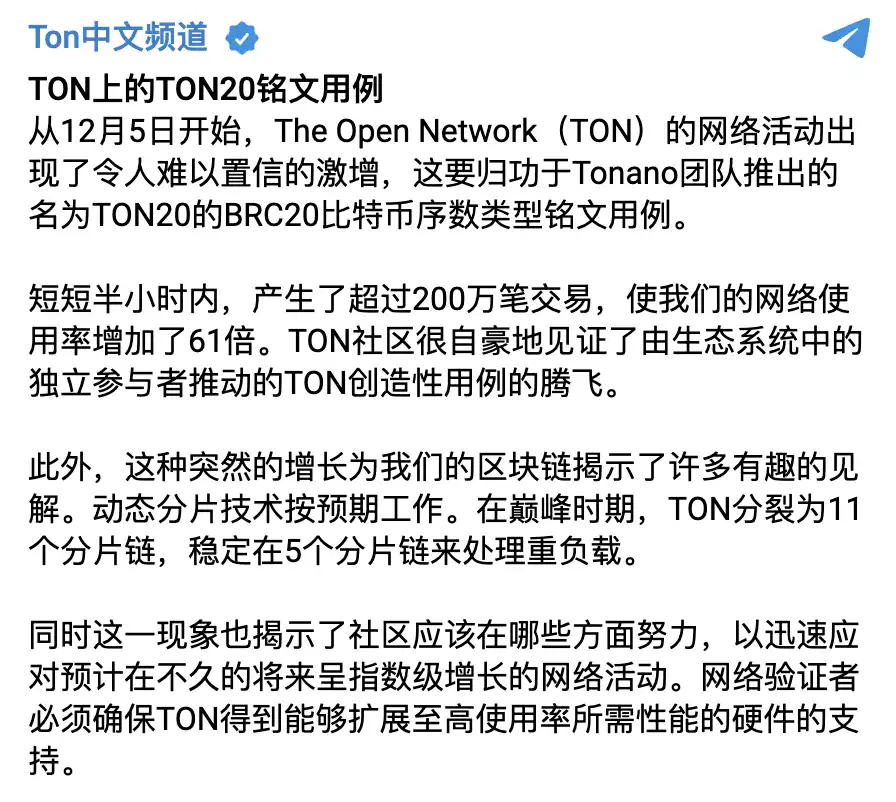
TON inscription causes network congestion; source: TON Chinese official channel
Meanwhile, another public chain Conflux has also undergone the same stress test. According to ConfluxScan data, influenced by the Mingwen activity craze, on December 15th, the daily transaction volume of Conflux reached 1.788 million, and the daily transaction volume of CFX reached 100,000, both hitting a new high for the year; the number of active accounts on that day reached 17,700. In addition, Conflux's daily transaction TPS exceeded 20 for the first time since early April 2021.
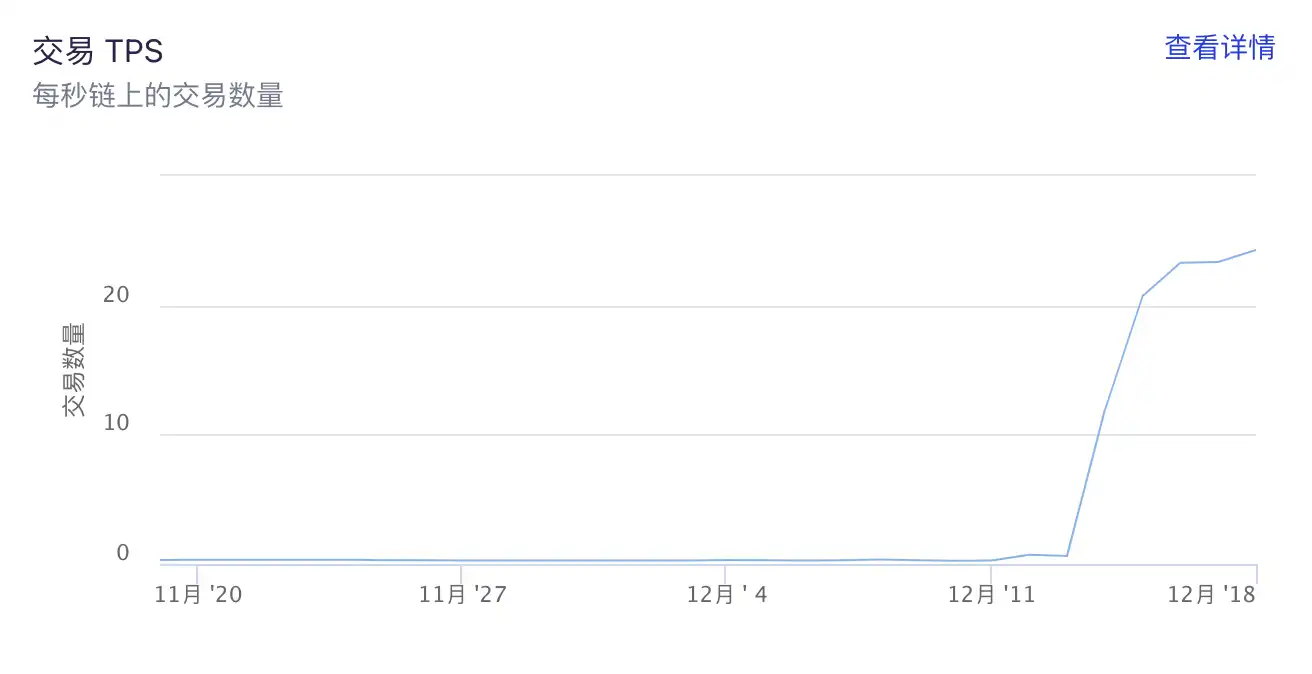
Conflux on-chain transaction TPS; Image source: ConfluxScan
And the inscription project on Avalanche indirectly assumes the role of a stress tester. On December 18th, the co-founder of the largest DEX Trader Joe on Avalanche, @cryptofishx, posted a tweet introducing the asc-20 standard inscription (Avascription) BEEG, stating that the inscription has no roadmap or practical use cases, and is only a social experiment.
It is reported that 37% of BEEG were minted within 2 hours and 15 minutes after its launch, with about 4,300 holders. @cryptofishx apologized for causing congestion on the Avalanche network and discussed solutions. According to Avascan data, the average gas fee on the Avalanche network during the minting process reached 5,110.30 nAVAX (approximately $4.41).
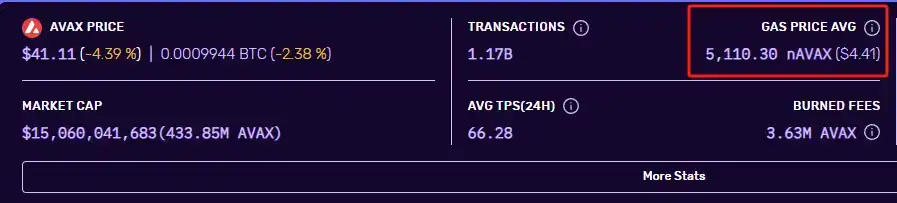
Avalanche network transaction fees; image source: Avascan
Aside from various public chains, Ethereum L2 has also shown its true colors in the Mingwen test.
On December 16th, Arbitrum announced that the Arbitrum One sequencer stopped running at 10:29 AM Eastern Time due to a significant increase in network traffic caused by the surge in users brought by the Stark protocol, resulting in network downtime.
According to Arbiscan data, on December 15th, the number of transactions on the Arbitrum chain surged to 4.39 million, setting a new historical high. At the same time, Ultrasound Money data shows that the Arbitrum L2 Sequencer Inbox contract destroyed the most ETH in the past 24 hours, reaching 795.7 ETH.
Following closely behind is another major Layer 2 solution, zkSync. On December 17th, during the minting of SYNC tokens, the zkSync network experienced a brief "outage" where blocks were not displayed on the blockchain explorer. The zkSync project manager later tweeted that despite reaching an unprecedented 150 TPS during the minting process, the network still fulfilled its duties.

The encryption researcher HaoTian believes that this is a good stress test experiment for zkSync, with a positive impact outweighing the negative. "In the long run, the Inscription incident did not send layer2 performance back to the prototype as rumored, but instead provided practical experience for further performance optimization of layer2."
Previously, it was a consensus that CEX was the main driver behind the increased market attention to inscriptions. However, now the community jokes that "a chain that has not issued inscriptions is not worthy of being in the industry", indicating that this force has shifted to public chains and L2. Compared to Bitcoin, the block space of new public chains and L2 is very abundant, and they are not afraid of network congestion, but rather afraid of inactive users and funds.
Crazy, how long can it last?
On December 12th, Binance co-founder He Yi stated during a Binance Chinese community AMA that the Binance Web3 wallet does not currently support inscriptions. This decision was based on previous considerations of the inscription market, which was believed to have similar properties to NFTs and would experience periodic popularity. However, the future development of the market remains uncertain, so Binance may not have invested enough in inscriptions. As a trading platform, Binance cannot decide on products based on personal preferences, and it is important to satisfy user needs. Currently, Binance is working hard to invest in related work and continuously iterate to meet user demands.
This has given Mingwen another space for imagination. With more and more Mingwen projects emerging, this track has become one of the most profitable fields today. However, the accompanying voice is "Mingwen has reached its peak", and everyone is waiting for the next price pump to profit and exit.
Many people can't help but ask, "How long can the madness of inscriptions last?"
If we look at it from the perspective of profit-taking, few of the early adopters of the inscription are still in the game. Previously, the crypto KOL, Riyue Xiaochu, wrote an article introducing a big player who earned millions of dollars from ORDI in May and made a huge leap in wealth by earning 36 million dollars from SATS after listing on Binance in July. However, such examples only serve as a myth of wealth creation in the community, and more people are just holding onto a few "turtle jelly" (the community's nickname for zeroed inscriptions) and moving on to the next inscription.
However, from an infrastructure perspective, the future of Inscriptions is still unknown. Inscription infrastructure and its tokens on Bitcoin, such as MultiBit and BitStable, are still under construction. Although the Inscription craze on various public chains has made this track hot again, a continuous stream of Inscription pioneers have entered the field, but without value discovery, a group of crypto users who are accustomed to DeFi from scratch realize that Inscriptions need more fuel to burn brighter.
Now the inscription has reached the final crazy stage of the past bull market, ignoring value and only looking at popularity. Perhaps what is important is not how long the inscription can survive, but whether you believe it can survive for a long time.
Welcome to join the official BlockBeats community:
Telegram Subscription Group: https://t.me/theblockbeats
Telegram Discussion Group: https://t.me/BlockBeats_App
Official Twitter Account: https://twitter.com/BlockBeatsAsia

 Related Articles