Under the impact of the Bitcoin ecosystem, the Lightning Network, which has been under development for 7 years, is "forced to transform".


In the encryption industry, "orthodoxy" is one of the most frequently used terms in recent years. Although this statement was first made by Ethereum and Vitalik (Vitalik wrote a blog post "Orthodoxy is the scarcest resource in the crypto ecosystem" in March 2021, explaining the concept of orthodoxy), the concept of orthodoxy is also present in the Bitcoin community. For most people, the "son of orthodoxy" in the Bitcoin community is the Lightning Network.
At present, with the rising trend of the concept of "Bitcoin ecology", various Bitcoin expansion plans such as sidechains and virtual machines have entered the vision of investors. However, the mainstream view of the market seems to still be focused on the "payment channel" stage of the Lightning Network. But with the continuous development of the Bitcoin ecosystem, the Lightning Network is facing "transformation pressure". This article summarizes the origin of the Lightning Network, its two main development entities, and explains the difficulties it currently faces and its future development direction.
The Email of Satoshi Nakamoto
When it comes to Bitcoin, the Lightning Network is definitely a key term that cannot be ignored.
In earlier years, the public had little understanding of Bitcoin and there were not as many Bitcoin evangelists, so the only way to obtain a clear answer was to directly ask Satoshi Nakamoto. In 2011, software developer Mike Hearn, who was a senior software engineer and technical lead at Google, also devoted a lot of energy to Bitcoin development. During his approximately five years of Bitcoin development, Mike Hearn had various conversations with Satoshi Nakamoto via email, and later published them on his blog as historically significant documents.
On March 7, 2011, Mike Hearn released BitCoinJ under the Apache 2 license on behalf of Google. BitCoinJ is an open-source Bitcoin client library built and implemented using Java to support the Bitcoin network protocol. He planned to complete the implementation of the full client mode in the next one or two months.
He sent an email to Satoshi Nakamoto asking, "I still don't fully understand why the sequence number is a property of the TX input rather than the TX itself?"

Regarding this, Satoshi Nakamoto's response was: "Intermediate transaction transactions do not need to be broadcast, only the final result will be recorded by the network. Before nLockTime, all parties and some witness nodes broadcast the highest sequence tx they saw." This is Satoshi Nakamoto's explanation of payment channels, and it is also the birth of the Lightning Network, which is the prototype of its legitimacy.
If we trace back further, Bitcoin 0.1 already included a code draft that allowed users to update a transaction before it was confirmed by the network. (source)
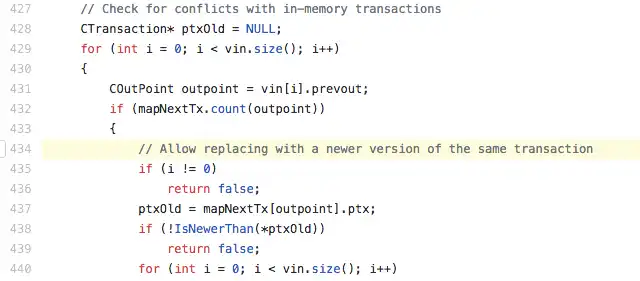
Bitcoin 0.1 payment channel draft. Source: GitHub
闪电网络话事人:Blockstream 和 Lightning Labs
translates to
Spokespersons of the Lightning Network: Blockstream and Lightning Labs
in English.
The design of payment channels and networks has undergone years of evolution, and since the release of the Bitcoin Lightning Network white paper in early 2015, its development has gradually become clear. Surprisingly, in the months following this, the expansion problem of Bitcoin and the controversy over the block size limit became a public dispute throughout the spring and summer of 2015.
In December 2015, Gregory Maxwell (one of the founders of Blockstream) proposed an expansion plan roadmap in a Bitcoin developer email, which included the Lightning Network as a key component. Most of the Bitcoin technology community supported the increase in Bitcoin system capacity and implemented it in the Bitcoin Core project. This sparked expectations for the Lightning Network. The subsequent debate over Bitcoin's scalability unexpectedly pushed the Lightning Network into the spotlight.
Bitcoin giant Blockstream
There seems to be a rumor in the community that Blockstream is the "man behind the scenes" of Bitcoin. This rumor is not unfounded.
On October 23, 2014, Blockstream, one of the most influential companies in the Lightning Network, was established by Adam Back, the inventor of hashcash, and a group of Bitcoin developers including Matt Corallo, Greg Maxwell, and Pieter Wuille. They released their sidechain whitepaper along with the establishment of Blockstream.
Since its inception, Blockstream has been a pioneer in developing the Lightning Network. As the founder of Blockstream, Adam Back's influence cannot be underestimated. In a foreign "cryptocurrency" influence ranking, Adam Back ranks fourth, with the top three being Andreas Antonopoulos (early Bitcoin evangelist), Vitalik Buterin (founder of Ethereum), and Nick Szabo (proposer of the concept of "smart contracts").

The following is the translation of the content you provided:
Ranking of the influence of "cryptocurrencies" abroad.
To explain why Adam Back has such a great influence, we have to go back to 1997. At that time, the Internet was just emerging, and email was considered the first application for people to communicate. However, a large amount of spam emails made people unbearable, and many people began to try to find a solution. Adam Back published an email titled "A partial hash collision based postage scheme", in which he introduced Hashcash, a mechanism that uses a technology called proof of work to prevent spam emails. Therefore, Adam Back is also often referred to as the "father of PoW".
And all of these, because Satoshi Nakamoto mentioned Adam Back's "Hashcash" in the Bitcoin whitepaper, became well-known and gradually established its strong position in the cryptocurrency industry.

Among the founding members and major contributors of Blockstream, there are also key members of the Bitcoin development team, such as Greg Maxwell and Pieter Wuille.
Greg Maxwell, a famous cryptographer and software engineer, has made important contributions to the privacy and scalability of Bitcoin. For example, he developed homomorphic key derivation used in BIP32, as well as trustless privacy protection technologies such as CoinJoin and blind proofs. Pieter Wuille has been a Bitcoin Core developer since May 2011. In 2012, Wuille released BIP 32, which added hierarchical deterministic wallets to Bitcoin, and also participated in the development of key technologies such as Segregated Witness (SegWit).
Although theoretically anyone can contribute code to the BTC Core project, only those with commit access can merge that code into the actual BTC protocol. Pieter Wuille was one of only five people at the time with commit access to the BTC code repository, and he has contributed the most code to the BTC project after Satoshi Nakamoto.
During the heated discussions in the Bitcoin community about scalability in 2015, a paper titled "A Fast and Scalable Payment Network with Bitcoin Duplex Micropayment Channels" was published by the Swiss Federal Institute of Technology in late 2015. The solution proposed in this paper heavily relied on time locks as a "countdown device" for channel validity, as well as a cryptographic technique called "invalid tree" to invalidate outdated channel transactions. This also became the technical prototype for the later Lightning Network. The two authors of this paper, Christian Decker and Roger Wattenhofer, later joined Blockstream.
Unexpectedly, in the following months and even throughout the spring and summer of 2015, the debate over Bitcoin's scalability issues and the block size limit evolved into a public dispute. On August 15, 2015, two early Bitcoin pioneers, Gavin Andresen and Mike Hearn, announced in their blog that their new version of BitcoinXT would implement the BIP-101 proposal, which did not require a vote from miners and would be activated directly. This day, later known as the "block size war outbreak day," during which Blockstream made a significant contribution to the promotion of the Lightning Network.
In December 2015, Gregory Maxwell (one of the founders of Blockstream) proposed an expansion roadmap in a Bitcoin developer email, which included a focus on the Lightning Network. Most of the Bitcoin technology community supported this increase in Bitcoin system capacity and implemented it in the Bitcoin Core project. This sparked everyone's expectations for the Lightning Network.
There are two completely different views on the controversy between the Bitcoin Core development team and Bitmain at that time.
On the one hand, supporters of Bitmain believe that the Bitcoin Core development team is a group of stubborn programmers who adhere to the original Bitcoin core and refuse to make necessary changes and adaptations. They believe that these developers are immersed in their own technical world, ignoring the true needs of Bitcoin development, and are hindering progress as "old guys". On the other hand, supporters of the Bitcoin Core development team believe that Bitmain is using its influence and information advantage in the industry to deliberately distort facts, mislead the public and miners.
Blockstream co-founder Adam Back, representing Bitcoin developers and mediators, came to Hong Kong to attend the Consensus conference. As one of the earliest blockchain development companies, Blockstream not only has personnel intersections with Bitcoin Core, but also sponsors their development work. Blockstream CEO Adam Back's signature led people to believe that developers agreed to the Hong Kong Consensus.

However, after the meeting, Bitcoin Core stated that all the developers who promised various changes at the meeting were programmers who did not have the authority to modify the Core source code. None of the five people who have the right to modify the Core source code attended, let alone signed.

However, at the end of 2016, this highly legitimate lightning network company team split up due to a dispute just one year after its establishment.
Later, Square's subsidiary Square Crypto was renamed Spiral and developed the Lightning Development Kit (LDK), which allows developers to integrate Lightning Network transactions into mobile devices and point-of-sale terminals. In addition, Square also launched the mobile payment solution Cash App, which integrates the Lightning Network.
Other notable investors and institutions in Lightning Labs include Digital Currency Group, Robinhood, Ripple's Xpring investment arm, former global co-founder Howard Morgan, Goldman Sachs Securities Division Head John Pfeffer (formerly of KKR), and Forbes 30 Under 30 member Jill Carlson, in addition to Jack Dorsey.
After the lightning network protocol and applications gradually became richer, such as the enhanced version of the BOLT protocol - OmniBOLT, payment platforms that support Bitcoin lightning network such as Cash APP and Strike, etc.
Although multiple teams have started developing the Lightning Network, the contributions of Blockstream and Lightning Labs are the most significant. Their role in the legitimate evolution of the Lightning Network cannot be ignored.
The Crossroads of Lightning Network
"The Lightning Network has been deceiving Bitcoin users of their time, energy, and money for 6 years," said Fiatjaf, founder of Nostr. It can be said that in the past two months, the debate about the Bitcoin Lightning Network has intensified. Recently, at least two developers have announced their withdrawal from work related to the Lightning Network."

Developers are constantly leaving
Meanwhile, Riard announced that he will stop participating in the development of the Lightning Network from now on, because this new replacement loop attack will put the Lightning Network in a very dangerous situation. However, from an optimistic perspective, this attack is highly complex and not easy to implement.

Two weeks after Antoine Riard announced his departure, Anton Kumaigorodski, the first developer of the mobile lightning wallet, also announced his resignation on Nostr on October 30th. Anton Kumaigorodski is the developer of the Bitcoin Lightning Wallet (BLW) and Simple Bitcoin Wallet (SBW). In addition, he developed the Scala IMMORTAN library, which allows for the construction of mobile-optimized applications on top of lightning network clients. Unlike many critics of the lightning network, he is fully aware of why LN remains a challenging technology. The three reasons for his departure are:
1. Serious development of the Lightning Network is both difficult and time-consuming. The entire Lightning Network protocol is too complex and getting worse. Only a very small number of well-known experts can develop it at a very slow pace. Philosophically, I believe that Bitcoin as a protocol should have a complexity barrier so that it does not exceed the point where outsiders cannot understand and trust it. I believe that the Lightning Network has passed this barrier.
2. After more than 6 years of struggle, the Lightning Network has surpassed a community mainly composed of ideological users, without obvious success or viewpoints. My opinion is that ultimately the Lightning Network is not the expectation of the entire market for Bitcoin. Apart from foolish payments, people should look for other directions instead of overly focusing on the Lightning Network.
3. The remaining Lightning Network demand is mainly absorbed by various hosting solutions. In terms of user experience, a truly non-custodial Lightning Network wallet is always worse than a custodial wallet. Historically, we have seen that most remaining users always choose convenience over control. This makes developing non-custodial Lightning Network solutions for end users feel like the most difficult and thankless task in the world.
Bitcoin researcher and developer Robin Linus gained significant attention after the publication of his "BitVM" paper, adding: "It's time to admit that we've oversold the Lightning Network to each other, perhaps as a form of post-traumatic stress disorder after the block size war. It's time to overcome it. The Lightning Network doesn't work for the masses."
River CEO and CTO Alexander Leishman also pointed out the user experience (UX) challenges of self-custody for consumers in the Lightning Network, "The Lightning Network is very suitable for custody-to-custody transfer. The Lightning Network brings huge user experience challenges to consumers' self-custody." He emphasized the difficulties that ordinary users face in managing their Lightning Network transactions.
In fact, during the early development stages of the Lightning Network, its potential scalability limitations were already apparent. This was also mentioned in the Lightning Network whitepaper, particularly regarding the potential lack of support for necessary soft forks in the future, which was seen as a potential constraint on the scalability of the Lightning Network.
Against this backdrop, what plans do Blockstream and Lightning Labs, the two main Lightning Network companies, have?
Pressure from Sidechains
除了闪电网络之外,Blockstream 近些年工作重点是侧链产品 Liquid Network。
Translation:In addition to the Lightning Network, Blockstream's main focus in recent years has been on the sidechain product Liquid Network.
In 2014, a paper titled "Enabling Blockchain Innovations with Pegged Sidechains" was published by Adam Back, Matt Corallo, Luke-Jr, and others. This paper introduced the concept of driving blockchain innovation through anchored sidechains for the first time.
On October 12, 2015, Blockstream announced the release of its Liquid sidechain prototype, which allows for the transfer of assets between the Liquid sidechain and the Bitcoin mainchain. On October 11, 2018, the production-ready implementation of the Liquid sidechain was officially launched, called the Liquid Network, with the aim of promoting interoperability between the Bitcoin mainchain and the Liquid sidechain to expand the functionality of Bitcoin.
There are more sidechains born from Adam Back's paper as a prototype besides Liquid, such as Drivechain.
In a 2015 blog post, Paul Sztorc, co-founder of LayerTwoLabs, further introduced the concept of Drivechain, proposing it as a way to avoid hard forks caused by consensus disagreements and prevent fragmentation of Bitcoin. Drivechain introduces an innovative way for Bitcoin to create and delete sidechains, as well as send and receive BTC on the so-called "second layer" - the sidechain. Bitcoin and Drivechain form a parent-child chain relationship, with Bitcoin as the parent and Drivechain as the child, so Drivechain itself does not issue native tokens. Instead, it relies entirely on BTC transferred from the Bitcoin network.
Drivechains rely on the concept of blind merge mining, allowing miners on the Bitcoin blockchain (parent) to mine on the Drivechain (child) without running a Drivechain full node, and miners are paid in BTC. Paul Sztorc proposed Bitcoin Improvement Proposals BIP 300 and 301 in 2017, allowing the creation of sidechains associated with the Bitcoin mainnet but independent, which can operate independently and have different rules and functions.
Adam Back expressed his appreciation for the sidechain form of Drivechain: "Salute to Paul Sztorc and his team for implementing and verifying the Drivechain design." He also thinks that Drivechains are cool and can be said to be more important or useful than Taproot. He also mentioned: "I think we will need a large P2P sidechain to allow the next billion users to benefit from the non-seizable and anti-censorship #bitcoin. Operation codes that support P2P sidechains, such as LayerTwoLabs for Drivechain, P2P Liquidium, and Rootstock."

The inventors of BitVM, Robin Linus, the founder of Nostr, Fiatjaf, and Anton Kumaigorodski, among other notable figures, have also expressed varying degrees of support for Drivechain while "letting go" of the Lightning Network as mentioned earlier.
Although receiving support from many Bitcoin OGs, there may still be a long way to go before being able to implement and scale on BIP proposals. "Optimistically, it may take one or two years, pessimistically, it may take three or four years," said Mike Yeung, investor and Asia Pacific regional manager of LayerTwoLabs, the development team behind Drivechain, to BlockBeats. Launching Drivechain is undoubtedly a daunting task, but LayerTwoLabs has some plans and strategies to accelerate the adoption of Drivechain technology.
In Mike Yeung's view, from a technical perspective, there are some security vulnerabilities in the Lightning Network. Secondly, the Lightning Network is not beneficial to miners, and in fact, the relationship between the Lightning Network and miners is not good. As for the possibility of the Lightning Network as a scaling tool, "I think it is actually impossible because it cannot implement smart contracts and can do very limited things. I don't think the Lightning Network will fail completely, but its prospects are not optimistic."
Since 2017, countless investors, including individual investors, family offices, and venture capitalists, have invested in the Lightning Network. They cannot afford to lose their investments," said Mike Yeung to BlockBeats. At the same time, some influential figures, including the former CEO of Twitter and the leadership of MicroStrategy, have closely linked their public image and PR strategy with the Lightning Network brand. Due to their previous public support and the nature of their companies, they find it difficult to retract their previous statements. This has led them to continue promoting the advantages of the Lightning Network, even though they recognize its limitations and that it may not be the ultimate solution to Bitcoin's scalability issues.
"If you have attended conferences on Bitcoin and Lightning Network, it is easy to notice the differences between the two communities."
Compared to Bitcoin Core, the Lightning Network places more emphasis on innovation, practicality, and a collaborative community spirit. This cultural difference reflects the diversity and complexity of the Bitcoin ecosystem, while also being a source of its charm and vitality.
Reference:
1. "THE HISTORY OF LIGHTNING: FROM BRAINSTORM TO BETA", Aaron Van Wirdum;
2. "The Past of Bitcoin Forks", BlockBeats;
3. "Why we may fail Lightning", Antoine Riard;
4. "The joyful journey of building Bitcoin", Antoine Riard;
5. "Lightning Labs Co-founder: Taproot Assets Can Bring "Bitcoin Renaissance"", BlockBeats;
Welcome to join the official BlockBeats community:
Telegram Subscription Group: https://t.me/theblockbeats
Telegram Discussion Group: https://t.me/BlockBeats_App
Official Twitter Account: https://twitter.com/BlockBeatsAsia

 Related Articles