Is public opinion about the inscription changing? KOLs shifted from "defending inscriptions" to "defending Bitcoin"

Table of Contents:
· Community calls for rational discussion, public opinion shifts to "defend Bitcoin"?
· Bitcoin Core releases version v26, other developers indirectly respond to controversy
· What is Bitcoin Core? How much power do developers have?
On December 6th, Bitcoin Core developer Luke Dashjr (@LukeDashjr) posted on social media that "Mingwen is using a vulnerability in Bitcoin Core to send spam to the blockchain" and "Mingwen will no longer exist after the vulnerability is fixed." Since then, there has been a lot of discussion within the cryptocurrency community, and the discussion surrounding this statement has continued to grow over the next two days. However, since last night, the direction of public opinion seems to have changed slightly.
Community calls for rational discussion, public opinion shifts to "defend Bitcoin"?
At first, many community KOLs started a wave of "defending inscription". From crypto analyst @thecryptoskanda to crypto KOL @11dizhu and other community members, all of them did not agree with Luke's point of view. At the same time, some members of the community have basically reached a rational consensus: acknowledging that Inscription is the soil for survival and development found in the Bitcoin Core vulnerability, but the fire of Inscription has already been ignited, and no one can or should stop the development of Inscription.
However, there are also many irrational voices that not only oppose Luke but even resort to personal attacks. Some people believe that Luke is not Satoshi Nakamoto and has "no knowledge", so he should not judge on his own; there are also those who directly attack Luke's Catholic identity.
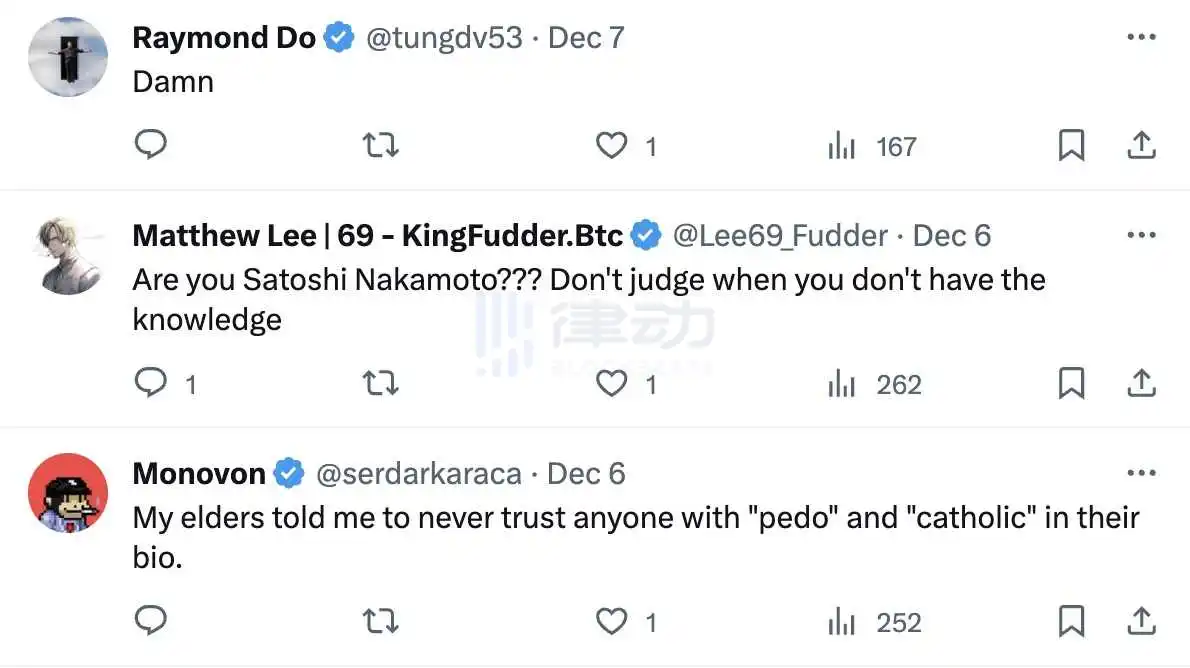
Regarding this, according to observations by BlockBeats, there are increasing calls within the community for rational discussion, and at the same time, there are also technical personnel analyzing core issues from a technical perspective.
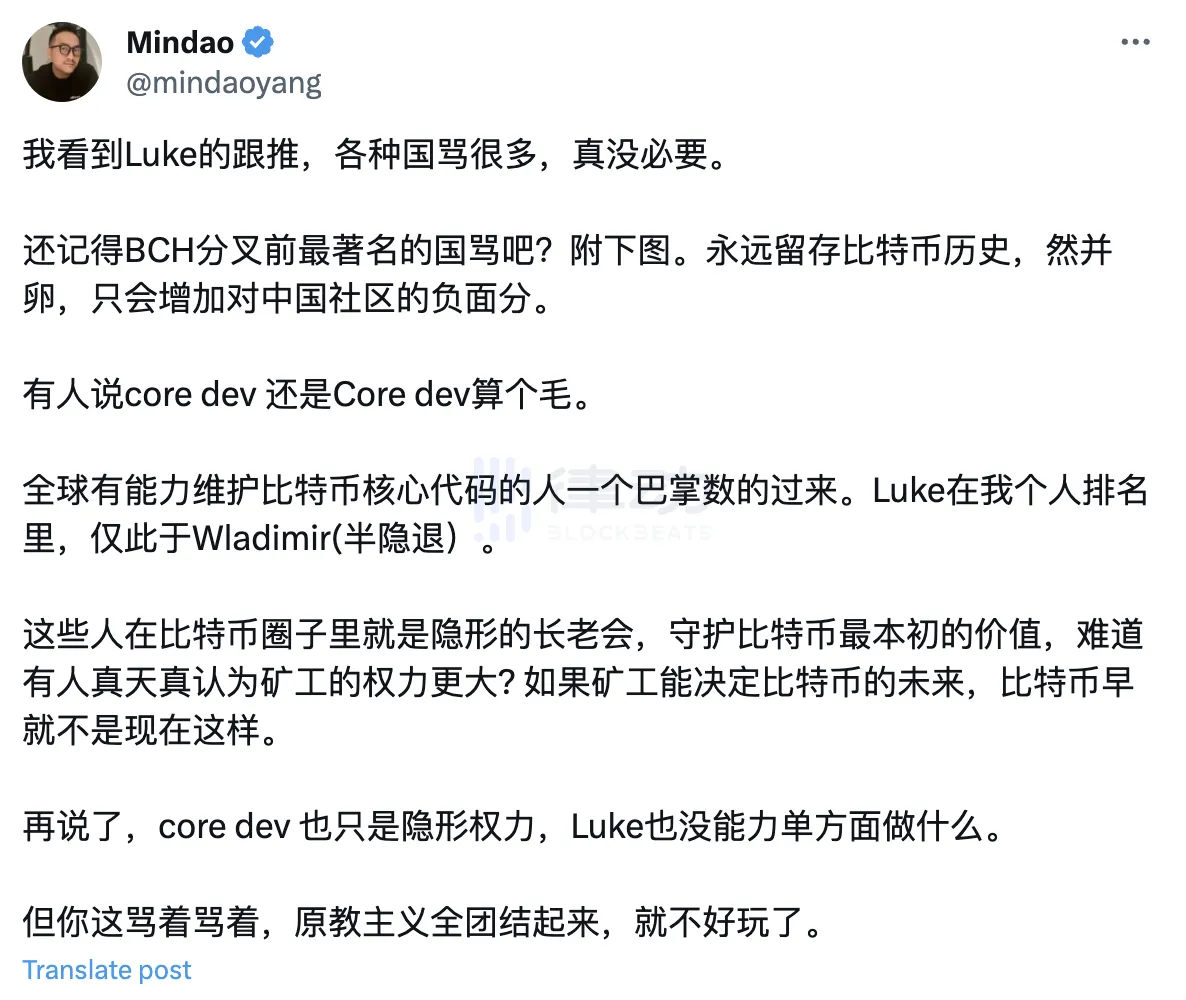
For example, dForce founder Mindao (@mindaoyang) posted on social media that the comments below Luke's post were "various curses" and "unnecessary". Luke, as a member of the "invisible elder council" in the Bitcoin community as a core code maintainer, has a status no lower than that of a miner. Mindao's move is intended to call on community members to express their own views on Luke's actions in a more rational and friendly manner.
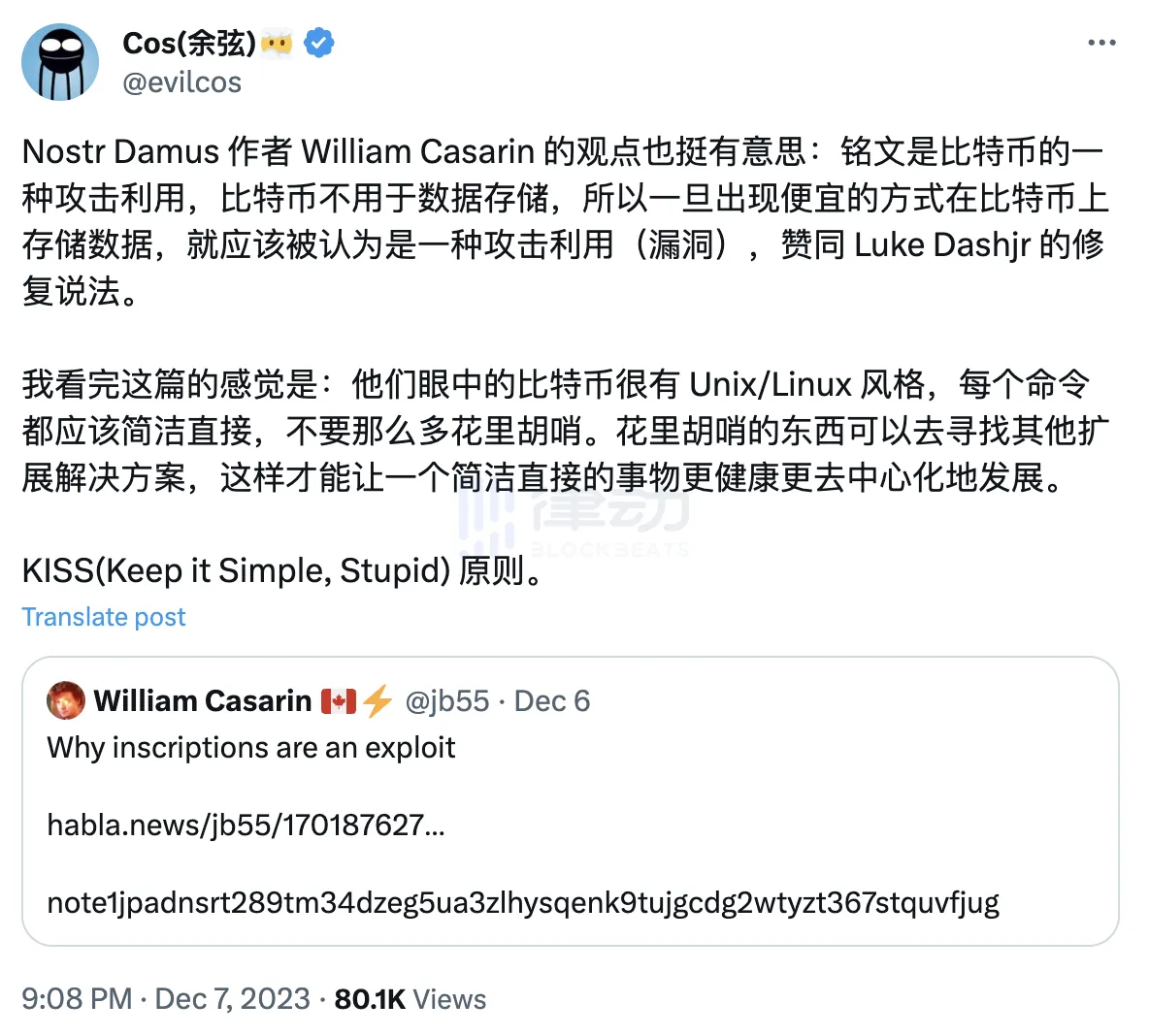
In addition, William Casarin, the core developer of the decentralized social protocol Nostr, published an article titled "Why Inscriptions are an exploit", which provides a detailed technical analysis of ordinal inscriptions and the history of combating data spam in Bitcoin.
In this article, William believes that the inscription is a "very bad data spam use" and that Bitcoin developers should focus on solutions. Ideological developers like Luke actually care about the health and decentralization of the network: "I'm glad to see it."
William explained in detail from a technical perspective - Inscriptions disguise data as Bitcoin script program data through OP_PUSH inside the OP_IF block, thus bypassing the data carrier size limit. The serial number does not use OP_RETURN and is not subject to data carrier size restrictions, so node operators and miners currently have limited control over the total size of the data they want to relay and include in blocks.
Interestingly, people seem to assign value to images stored on the Bitcoin blockchain and are willing to pay fees to have them included in a block.
However, most of the work of Bitcoin Core is focused on ensuring that the system continues to operate in a decentralized manner, to achieve its intended purpose, even if someone tries to abuse it by storing data, etc. Bitcoin Core has never encouraged (inscribed) this practice because it is not designed for storing images and data, but for moving digital currency in cyberspace.

Source: William CasarinArticle
Translation:
图源:William Casarin文章
(Note: This is a blockquote with a source and a link to an article.)
Regarding this, the founder of SlowMist Technology, Yu Xian (@evilcos), expressed his agreement on social media and believed that Bitcoin, as seen by Bitcoin Core developers like Luke, should adhere to the KISS principle, which means "keep it simple and straightforward, without too much fuss. Fussy things can be sought in other expansion solutions, so that a simple and straightforward thing can develop more healthily and in a more decentralized way."
Bitcoin Core releases version v26, other developers or indirectly respond to the controversy
Regarding the public opinion frenzy caused by Luke, BlockBeats observed that neither the Bitcoin Core project itself nor other Bitcoin Core developers have made a positive response in public. However, it is worth noting that on the evening of December 6th, Bitcoin Core announced the official release of Bitcoin Core v26.0, which improves the individual resistance of nodes to partition attacks and the network-level resistance to partition attacks.
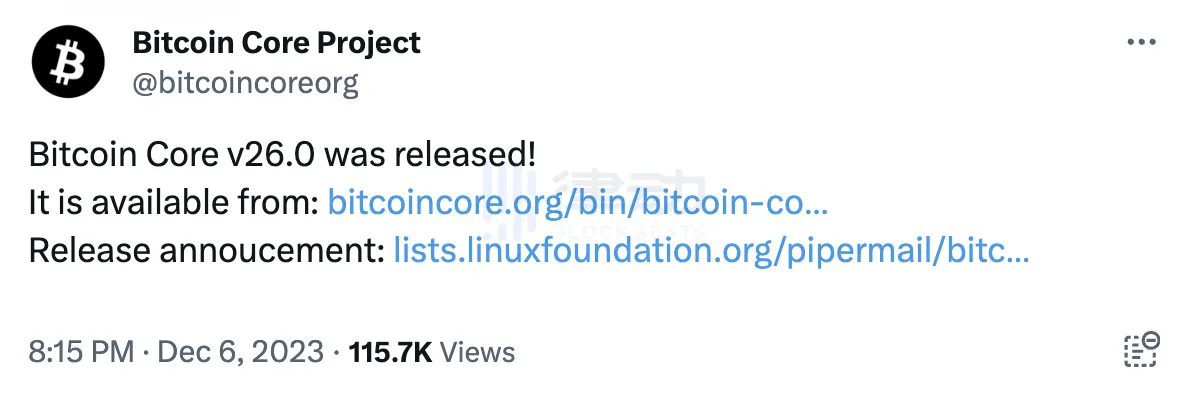
This reminds people of Luke's initial post on December 6th, which stated that "there are still vulnerabilities in Bitcoin Core in the upcoming v26 release. I can only hope that it will be finally fixed before v27 next year."
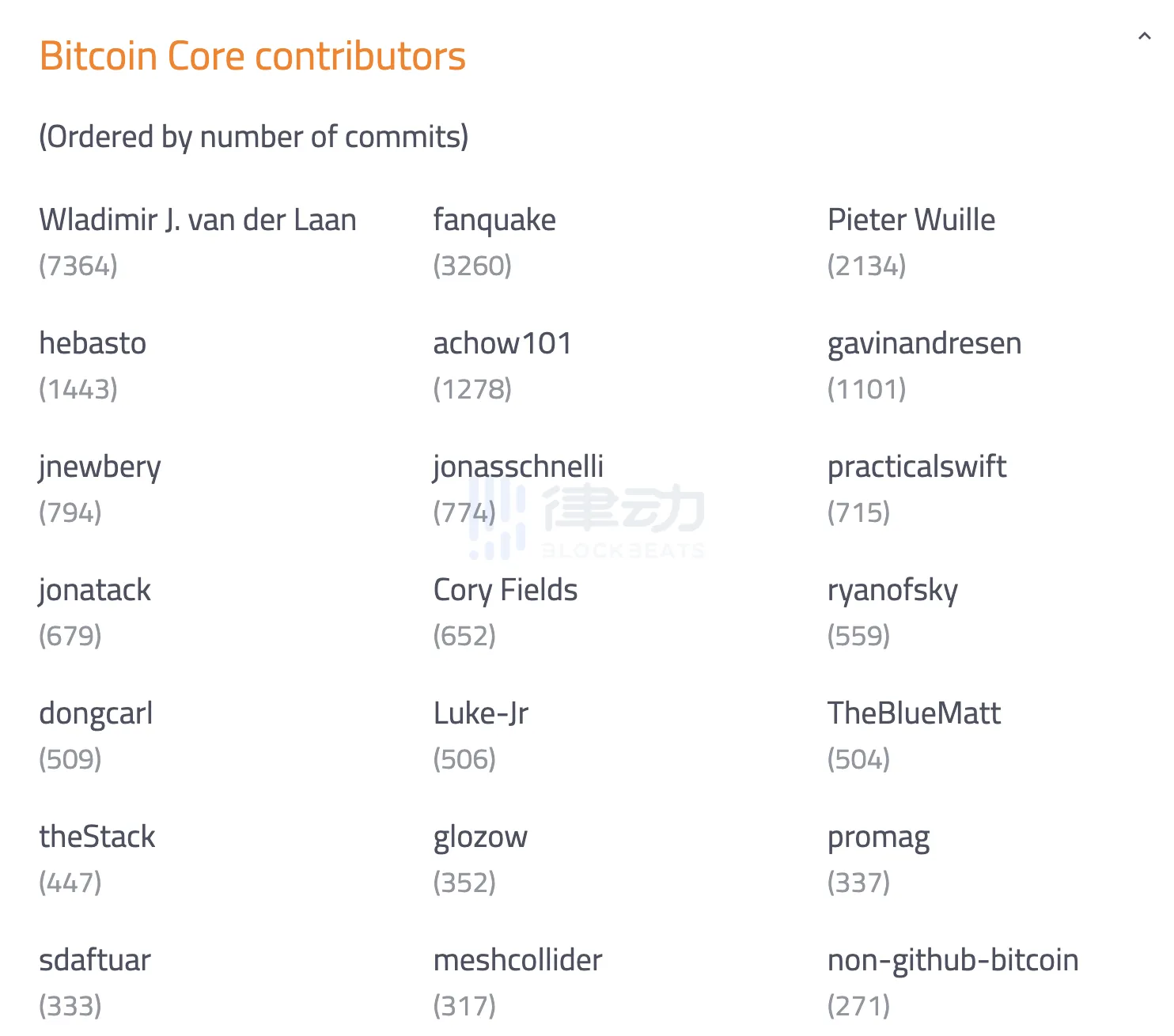
Meanwhile, Bitcoin Core developers including Hennadii Stepanov (@hhebasto), Jonas Schnelli (@_jonasschnelli_), and Sebastian (@theStack) have retweeted the announcement of the official release of version 26. Perhaps actions speak louder than words in the eyes of most developers.
It is worth noting that, according to observations by BlockBeats, many Bitcoin developers had already expressed their opinions on the inscription itself during the inscription and BRC-20 wave in the first half of this year.
Related reading: "BRC-20 causes network congestion, what do Bitcoin developers think?"
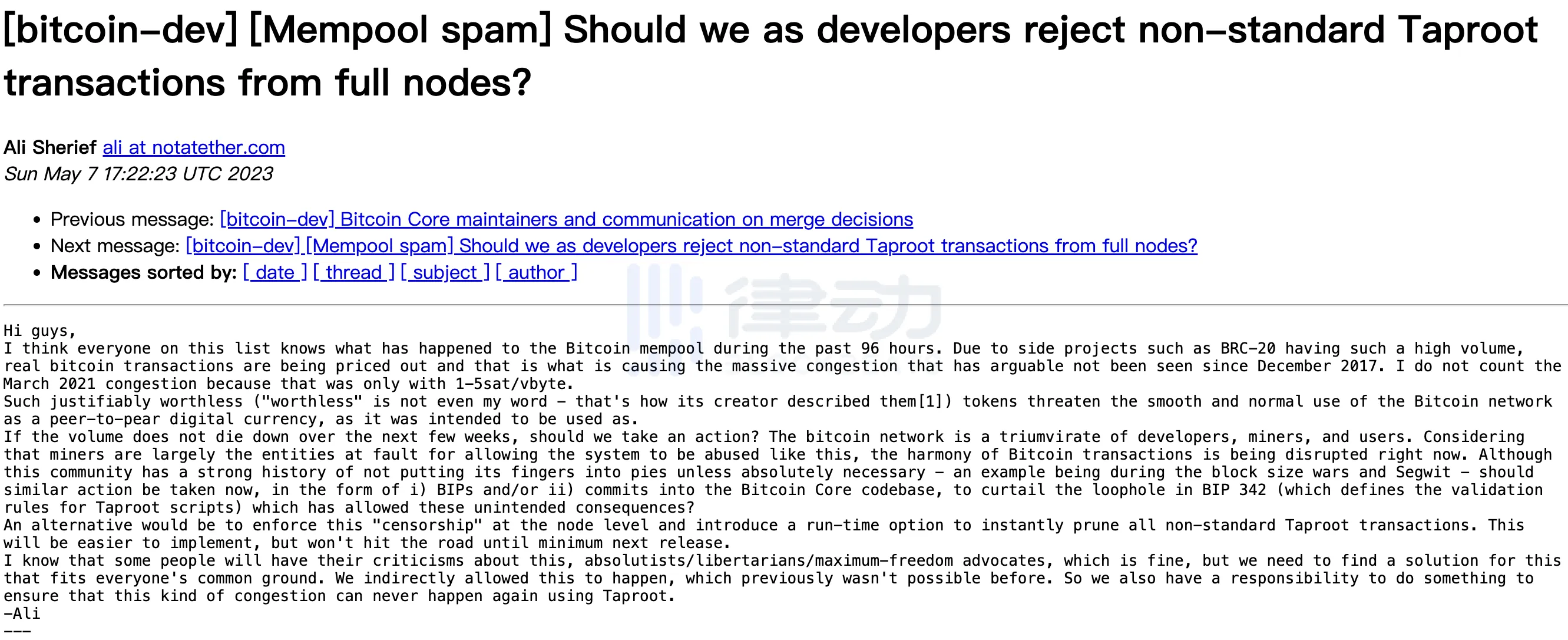
For example, Ali Sherief, one of the Bitcoin Core developers, initiated a discussion on the Bitcoin development mailing list, questioning whether Bitcoin developers should take action against such "worthless" transactions and proposing an optional solution to "introduce a runtime option to immediately remove all non-standard Taproot transactions".
Another developer, Erik Aronesty, also stated: "Bitcoin's primary goal may only be currency use cases, rather than becoming the global ledger for everything. It can provide a permanent incentive mechanism for non-economic transactions to remain off-chain (L2)."
Peter Todd believes that miners are the beneficiaries of this boom, and even with restrictions, miners have ways to bypass them: "Many people like me will not run nodes to review those transactions."
Samson Mow said in an interview with Cointelegraph that the hype around Ordinals and BRC-20 tokens is unsustainable and will disappear in a few months: "They are like spam clogging up the network. Bitcoin's widespread adoption is due to its use as a savings technology and a means of transaction, not because people are making JPEGs and pasting them on the chain."
Meanwhile, Luke pointed out that "action should have been taken months ago. Spam filtering has been a standard feature of Bitcoin Core since its inception. It's a mistake not to extend the existing filters to Taproot transactions now. We can fix this or try a more limited approach like OP_RETURN (as done by Ordisrespector). Since this is a bug fix, it doesn't even require waiting for a major release."
Bitcoin Core is what? How much power do developers have?
During this turmoil, Bitcoin Core has received increasing attention from more and more people. In fact, Bitcoin Core is a Bitcoin client, which is a software that can be run on a computer or mobile phone, allowing users to connect to the Bitcoin network and perform operations such as sending, receiving, storing, and querying Bitcoin.
However, there is not just one type of Bitcoin client, but rather multiple types and options. Based on their different functions and characteristics, they can mainly be divided into the following categories:
Full node Bitcoin clients: including Bitcoin Core, Bitcoin Knots, Bitcoin Unlimited, etc. Among them, the most well-known and mainstream is Bitcoin Core, which can download and verify the entire Bitcoin blockchain data, allowing users to fully participate in the operation and maintenance of the Bitcoin network independently, without relying on any third-party services.
Lightweight Bitcoin clients: including Electrum, BitcoinWallet, BRD, etc., help users download and verify only part of the Bitcoin blockchain data, making it easy to use the basic functions of the Bitcoin network without downloading the entire blockchain. They rely on third-party services.
Welcome to join the official BlockBeats community:
Telegram Subscription Group: https://t.me/theblockbeats
Telegram Discussion Group: https://t.me/BlockBeats_App
Official Twitter Account: https://twitter.com/BlockBeatsAsia

 Related Articles