Financing highlights | Paradigm invests in L2 network Blast; SevenX Ventures leads investment in Web3 entertainment platform MATR1X
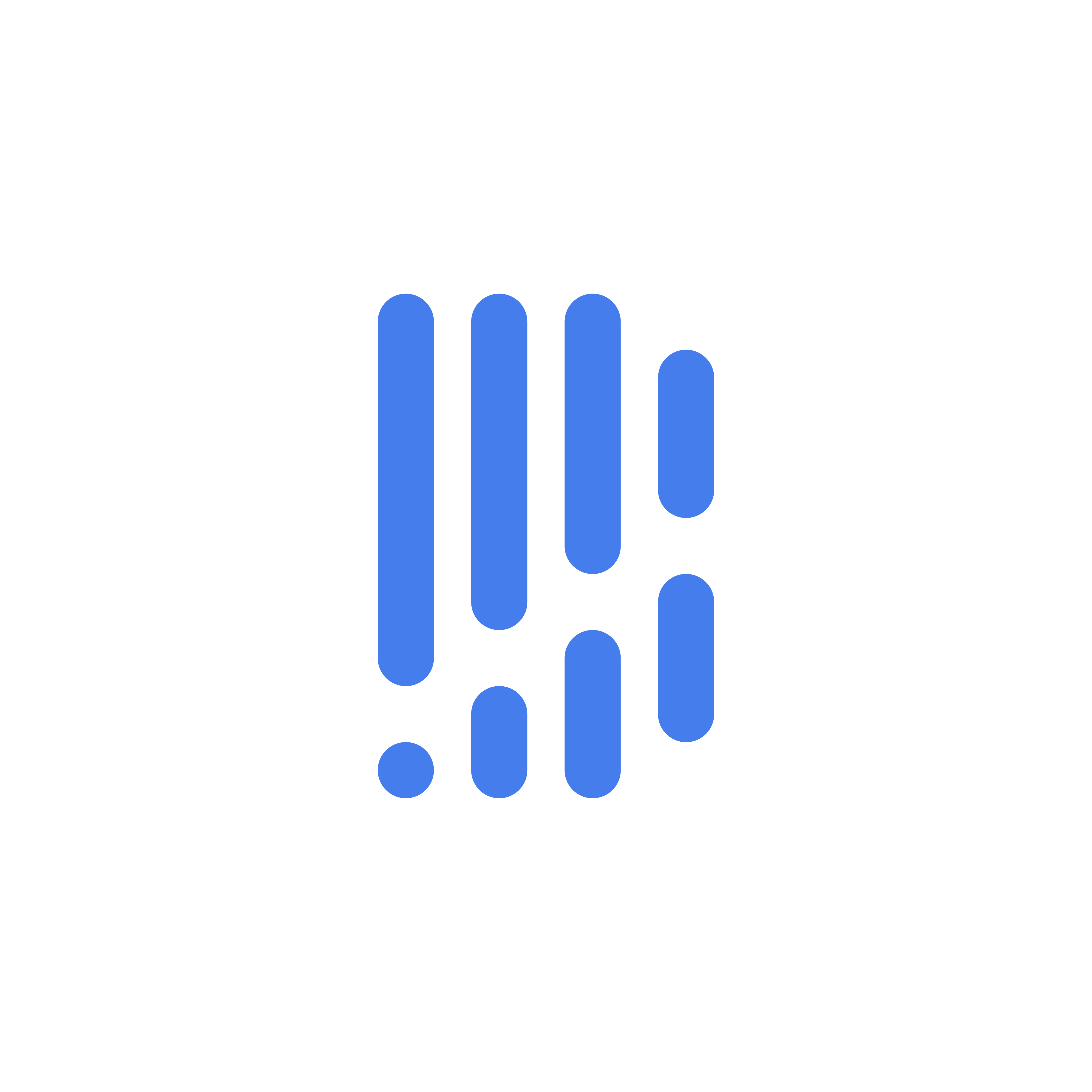
According to BlockBeats statistics, there were a total of 12 financing deals last week, which is a decrease compared to previous weeks. The total amount raised was approximately 137.47 million US dollars, with an average financing amount of 11.45 million US dollars. The Web3.0+AI sector dominated, while the infrastructure sector and the metaverse/GameFi sector had relatively more deals. The NFT/digital fashion sector and the DeFi sector saw an increase in deals, while the digital asset management/payment sector had fewer deals. There were no financing deals in the social/creator economy sector and other sectors. The following chart shows the financing distribution across different sectors last week:
Metaverse/GameFi
In the field of Metaverse/GameFi, a total of 2 financings were completed with a total amount of 15 million US dollars, accounting for 10.91% of the total financing amount last week.
MATR1X

On November 23rd, the MATR1X platform officially announced that it has successfully raised $10 million in its recent A-2 round of financing, bringing its total funding to $20 million. The round was led by Folius Ventures and co-led by SevenX Ventures, with other investors including ABCDE Capital, Find Satoshi Lab, Initiate Capital, and Jambo. In the previous A-1 round of financing, which raised $10 million, the platform received investments from top Korean financial institution Hana Financial Group, early ETH investment firm Hashkey Capital, SevenX Ventures, and Amber Group, among other well-known investors.
The first game on the MATR1X platform, MATR1X FIRE, is also the first shooting mobile game in the metaverse, with over 200,000 shooting game users. The founding team of the game comes from top game studios around the world, with extensive experience in game development and publishing, leading the release of many well-known game products. These game products have a total of over 100 million active users and have generated over $5 billion in revenue.
MATR1X is a Web3 entertainment platform that integrates gaming, esports events, IP, and NFTs. Each section empowers the others. MATR1X is developing a trilogy of games, with the narrative revolving around the central theme of Web3: centralization and decentralization, as well as the conflict of personal data sovereignty. It is reported that MATR1X's third set of NFTs, MATR1X KUKU, will be launched soon. As a platform-level NFT, KUKU corresponds to MATR1X's IP and creator ecosystem. Holders have the right to share in MATR1X creator economic income, and KUKU is also an upgradable battle pet in the game.
Related reading: "Web3 entertainment platform MATR1X completes $10 million A-2 round financing, total financing amount increased to $20 million".
Saga
On November 20th, Web3 game developer protocol Saga announced that it has received a $5 million seed round financing led by venture capital firm Placeholder. This investment brings Saga's total financing to $13.5 million.
Saga is a protocol designed to help cryptocurrency game developers launch their own blockchain. Saga introduces the innovative concept of Chainlets, which are dedicated blockchains that can be easily deployed. Similar to most smart contract platforms, developers deploy compiled smart contract binary code to the Saga mainnet. Essentially, Saga's Chainlet is a sovereign blockchain that runs a single smart contract with a virtual machine module. Since each Chainlet only contains the smart contract that developers or teams want to deploy on a single chain, developers have a flexible and usable development environment. This Chainlet is technically protected by Cosmos Interchain Security (CS), and its security is provided by validators on the Saga mainnet. These validators are the same as those on the Saga mainnet, responsible for generating blocks and checking whether other validators are performing their work according to the pre-set Service Level Agreement (SLA). The SLA includes ensuring normal operation, running relay services, and correctly verifying smart contracts without double signatures.
The economic flow of Saga is very different from other Layer 1 blockchains. Firstly, developers pay subscription fees in SAGA tokens to validators, which are used to instantiate and maintain Chainlets, allowing developers to easily create and maintain their own private blockchains. Secondly, the price of Chainlet guarantees is lowered through validator competition, attracting more developers to join Saga and forming a competition for the lowest price. End users do not directly pay fees, but rather developers choose the most suitable monetization method for their applications. By participating in the security of the Saga network, stakers receive inflation as a reward.
Related reading: "Saga: More than just a game, a customized L1 network for developers."
NFT/Digital Fashion
There were a total of 1 financing in the NFT/digital fashion field, with a total amount exceeding 10 million US dollars, accounting for 7.27% of the total financing amount last week.
Bean
On November 25th, according to Cointelegraph, AzukiDAO announced a name change to "Bean". The project stated that it has raised $10 million from "well-known investors" to accelerate its development in the Blast ecosystem. The specific investors have not been disclosed yet.
Azuki DAO is an unofficial decentralized autonomous organization centered around a collection of the eponymous non-fungible tokens. It has announced that it is dropping the lawsuit against Azuki founder Zagabond over the $39 million NFT minting incident. Currently, it is transitioning into a memecoin project and will be integrated into the ecosystem of the Ethereum Layer 2 solution Blast.
The proposed total supply of Bean memecoin is 1 billion. Azuki DAO developers have stated that the current token supply plan displayed on their website is "outdated". The plan previously stipulated that 40% of the tokens would be allocated to their treasury; 50% would be allocated to Azuki DAO members for the airdrop of Azuki series NFTs; and 10% would be allocated to Azuki NFT creator Zagabond. Minting is only available to Azuki NFT holders, who must mint within 24 hours of token issuance or face "token destruction".
DeFi
In the DeFi field, a total of 2 financings were completed with a total amount exceeding 9.5 million US dollars, accounting for 6.91% of the total financing amount last week.
Panoptic
On November 20th, Panoptic, a DeFi protocol based on Uniswap, raised $7 million in seed funding to help develop its perpetual option decentralized trading platform. The funding round was led by European cryptocurrency investment firm Greenfield Capital, with participation from HashKey, gumi Cryptos Capital (gCC), L1D, Heartcore Capital, Comma3, and Zee Prime Capital. This funding will help Panoptic further develop the platform during its current beta testing phase before its release on the Ethereum mainnet and the launch of its V2 product.
Panoptic enables DeFi users to trade options on any asset pool in the Uniswap v3 ecosystem using a permissionless and non-custodial protocol. As a result, it brings traditional finance (TradFi) options trading to DeFi and leverages the significant assets and liquidity already present on Uniswap v3. Its core advantages lie in leverage, maintainable composability, permissionlessness, and collaborative liquidity, rather than competitive liquidity and new financial features. Panoptic can support a minimum collateralization ratio of 20% of the strike price plus option funds.
By adjusting Uniswap V3 LP positions, Panoptic has recreated a yield-like option using a pair pool model without relying on Black-Scholes logic. Since Panoptic only needs to adjust Uniswap V3 positions, theoretically, once the Uniswap V3 market exists, all users can deploy option markets without permission. Panoptic can also be considered a virtual liquidity manager for Uniswap V3 positions, with both buyers and sellers of options helping to reposition liquidity at different prices during the trading process. Liquidity providers can earn more trading fees than they would with passive LP positions, and the increase in Panoptic liquidity also drives Uniswap liquidity, which may attract more liquidity than the current 250 million TVL in option protocols.
Related reading: "Panoptic: Top institutions optimistic about new options market based on Uniswap".
IntentX
On November 22nd, derivative trading agreement IntentX announced the completion of a $2.5 million seed round of financing, led by Magnus Capital, with participation from Agnostic Fund, Prismatic Capital, MS2 Capital, Coral DeFi, Contango Digital Assets, and Castle Capital.
It is reported that IntentX is a full-chain off-exchange derivatives market aimed at solving the problem of low efficiency in decentralized derivatives. The main innovation of IntentX lies in its intent-based architecture. This approach eliminates the traditional order book or automated market maker (AMM) model. IntentX traders no longer rely on order books or AMM models, where traders need to use committed funds to execute orders. Instead, IntentX traders can express their trading intentions, which are then executed by external solvers (market makers) that can access the liquidity of CEX, ensuring competitive quotes and minimal slippage.
IntentX can provide traders with the best price execution on DEX, minimizing slippage, efficient price discovery, and CEX-like liquidity and execution while maintaining typical DEX self-custody. In addition, IntentX manages position risk through bilateral protocols, isolates derivative contract risk, and ensures settlement through rule-based clearing (as specified by market makers). This ensures a trustless operation and a fair, scalable, and risk-free environment. Currently, IntentX has released an Open Beta version, providing trading for over 180 perpetual currency pairs.
Related reading: "IntentX: AMM new paradigm, derivative trading protocol led by Magnus Capital".
Infrastructure
There were a total of 4 financing deals in the infrastructure sector, with a total amount of over 39.97 million US dollars, accounting for 29.08% of the total financing amount last week.
Blast
On November 21st, according to official sources, Blast, a Layer 2 network based on Optimistic Rollup, completed a $20 million financing round. The round was co-led by Paradigm, Standard Crypto, eGirl Capital, and Mechanism Capital, with participation from several angel investors including Andrew Kang, co-founder of Lido, Hasu, strategic advisor to Lido, and Larry Cermak, CEO of The Block.
The concept of Risk Free Rate (RFR) suggests that the world of cryptocurrency also has inflation. ETH has a stable staking yield of 3%-4%, but most of the funds in Layer 2 accounts are only statically placed (yielding 0%), which means that these assets are passively devalued due to the inflation of ETH. Blast aims to solve this problem by using the corresponding ETH locked on the Layer 1 network for native network staking, and automatically returning the ETH staking yield obtained to the users on Blast. In short, if a user holds 1 ETH in their Blast account, it may automatically grow to 1.1 or 1.2 ETH over time.
In addition to participating in native ETH staking, Blast also supports passive income for stablecoins. When users bridge stablecoins (such as USDC, USDT, and DAI) to Blast, Blast will immediately deposit the corresponding stablecoins locked on the Layer 1 network into USDB (Blast's native stablecoin) through DeFi protocols such as MakerDAO, and automatically return the profits to users on top of Blast. After accessing the Blast network in advance, users can not only immediately enjoy the passive income of ETH 4% or stablecoins 5%, but also accumulate Blast Points rewards at the same time.
Privy
Manta Exchange
According to a report by Cointelegraph, the cryptocurrency trading platform Manta Exchange has completed a new round of financing, with the amount of financing not yet disclosed. Participating investors include ABCDE Labs, UOB Venture Management, C² Ventures, and Ocular.
Web3+AI
BP-FLAC stands for "blockchain powered federated learning artificial intelligence", which is a company that relies on global GPU nodes to provide computing power for AI training. They use zero-knowledge algorithms to solve data privacy issues during AI training and offer token rewards to users who provide computing power support. The new funding will be used to expand the company globally and build GPU computing power intelligent distribution technology.
On November 22nd, AI21 Labs, a generative AI company, completed a $53 million Series C expansion round of financing with participation from Intel Capital and Comcast Ventures. AI21's total funding has reached $336 million, with a valuation of $1.4 billion. Ori Goshen, co-founder and CEO of AI21 Labs, stated that the funding will be used for product development and expanding the startup's team.
AI21's flagship product is AI21 Studio, which is a pay-as-you-go developer platform for building custom text-based business applications using AI21's proprietary text generation AI models. The startup also sells Wordtune, a multilingual reading and writing AI assistant similar to Grammarly.
Welcome to join the official community of BlockBeats by LUDONG
Telegram subscription group: https://t.me/theblockbeats
Telegram communication group: https://t.me/theblockbeatsApp
Welcome to join the official BlockBeats community:
Telegram Subscription Group: https://t.me/theblockbeats
Telegram Discussion Group: https://t.me/BlockBeats_App
Official Twitter Account: https://twitter.com/BlockBeatsAsia

 Related Articles