Being bitten back by PUA, why does Blast make L2s so anxious?

Author: Kaori, BlockBeats
Editor: Jack, BlockBeats
The L2s, once regarded as treasures by encrypted VCs, are now being bitten back by their own "PUA behavior".
After Blur founder Pacman launched his new L2 project Blast this week, the L2 track, which was far behind the bull market of the Bitcoin ecosystem, has regained high market attention. However, this time, no one is a winner.
As Blast's TVL broke through the $10 million mark in just one day, people began to reflect on the "industry rules" of the L2 track in the past. The "L2 technology aristocrats" who refused or delayed giving back airdrops to the community seem to be facing unprecedented challenges in the face of absolute market trends.
L2们焦虑极了
translates to
L2s are extremely anxious
Founder of Blur, Pacman's L2 new project Blast has gained a lot of attention in recent days through social media and expected airdrops.
Blast claims that the benchmark interest rate for existing Layer 2 is 0%. By default, the value of users' assets will depreciate over time, but on Blast, users' balances will automatically compound and earn additional Blast rewards.
When users deposit funds into Blast, Blast will immediately lock the corresponding ETH on the Layer 1 network for native network staking, and automatically return the staking rewards obtained from ETH to the users above Blast. In addition, Blast also supports passive income for stablecoins.
For users, in addition to earning passive income through staking, Blast has also introduced a point system similar to the Blur gameplay. Currently, the official description of the points system only reveals that Blast plans to launch its mainnet and develop withdrawals on February 24th next year, and open the "redemption" of Blast Points on May 24th.
Related reading: "Disruptor on the scene? Blur founder brings "earn points to attract people" strategy to Layer 2 race".
On November 22nd, Blast announced on its social media platform that its TVL had reached $81.2656 million on the first day, with a user count of 23,368. As of the time of writing, Blast's TVL has reached $260 million, with nearly 40,000 addresses crossing funds into the network.
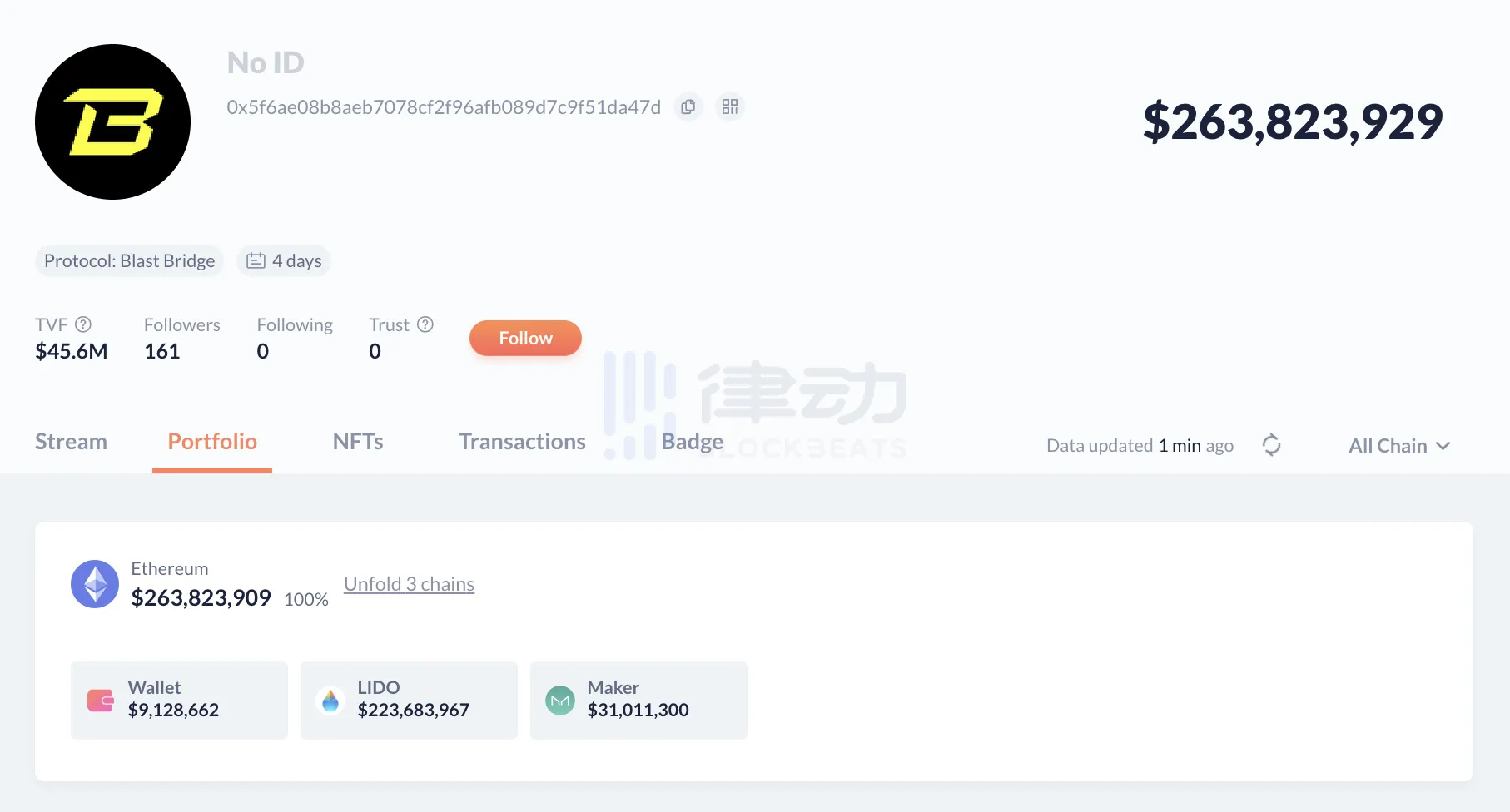
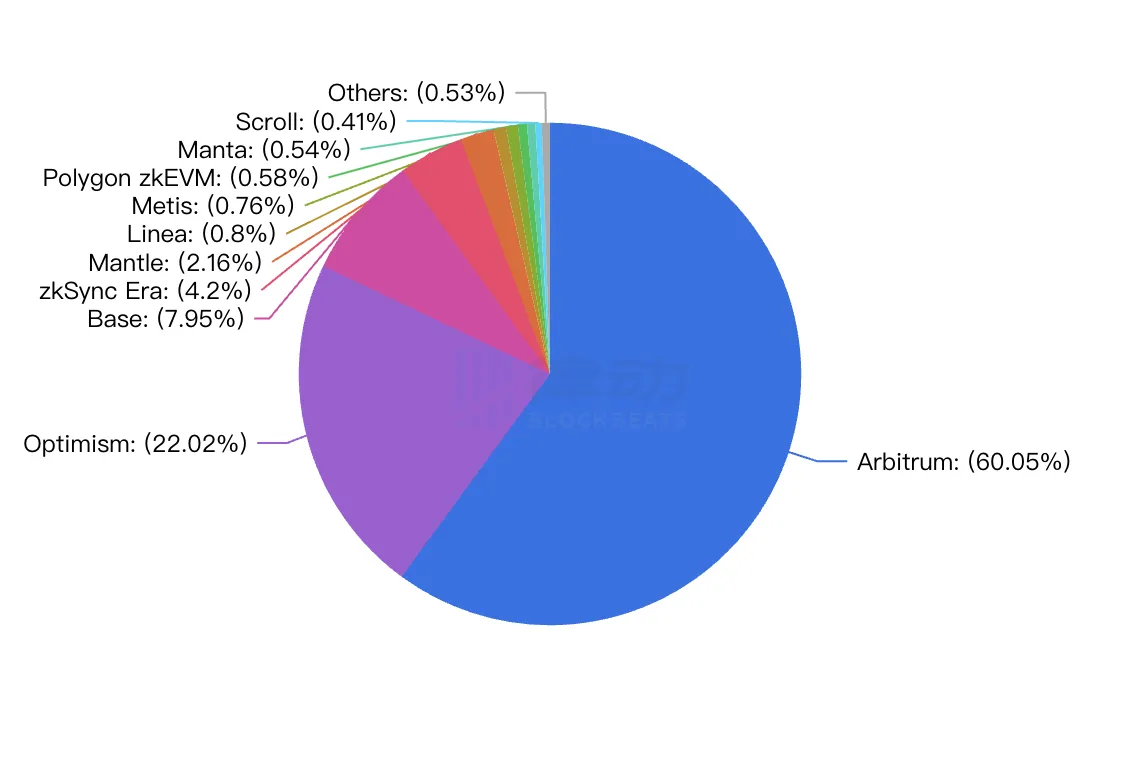
Compared to the past growth rate of TVL in L2, there has never been a growth curve like Blast in this field. In contrast, the current mainstream L2 leaders have almost no growth in this wave of growth. As of the time of writing, according to L2BEAT data, the ETH 7-day settlement increase of Ethereum L2 TVL is only 2.82%.
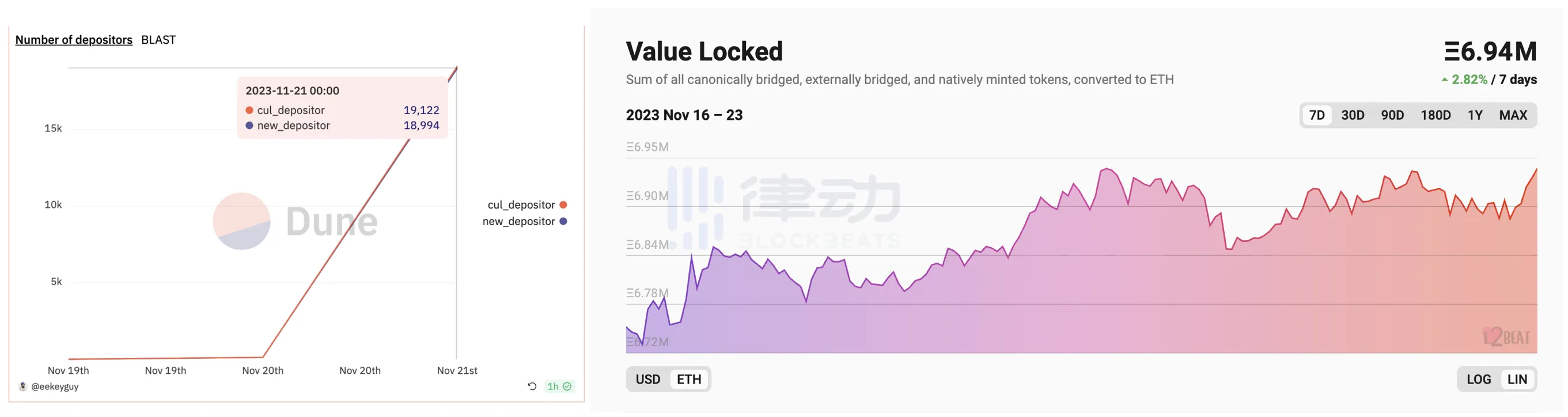
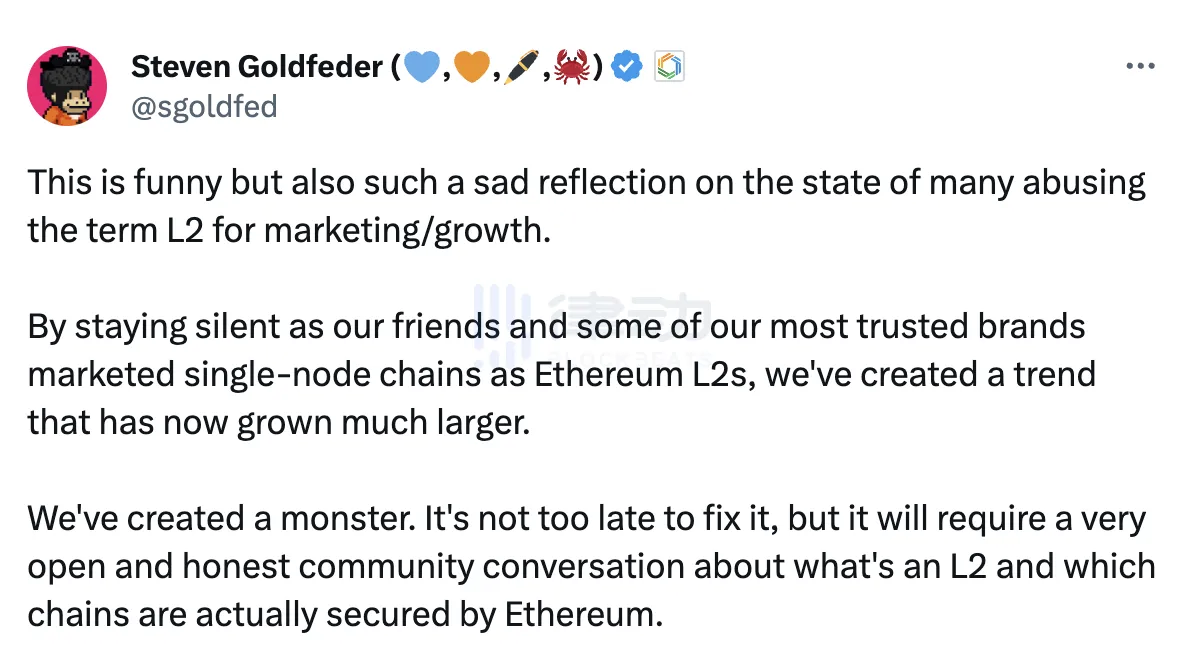
The rapid rise of Blast TVL has brought visible anxiety to some L2 nobles. Steven Goldfeder, CEO of OffChain Labs, the parent company of Arbitrum, bluntly stated in a tweet this morning that Blast is a "monster".
Playing PUA will also backfire
Since the L2 bull market brought by Arbitrum's "generous donation" at the beginning of the year, the market's expectations for the L2 track have continued to rise. However, as the crypto market enters a deep bear market, the competition and game between L2 projects and retail investors have become increasingly fierce.
Against this backdrop, "PUA" has become the default unwritten rule for players in the industry, whether it's mutual rolling on RaaS or repeated delays in airdrop distribution, all of which are manifestations of this problem.
As a disruptor in the L2 war, Blast's appearance inevitably brings to mind Blur, another project by Pacman, and its devastating blow to the NFT track. Of course, there is also the BRC-20 inscription market, known as the "victory of retail investors".
Opensea and BRC-20 Lessons
Blur was launched on October 19, 2022. On November 27 of the same year, Blur surpassed Opensea in trading volume with 5500 ETH, compared to Opensea's 5300 ETH. As of November 2023, Blur has a sales revenue of 43.17 million US dollars, occupying 61.7% of the market share, and has become the leader in the NFT market.
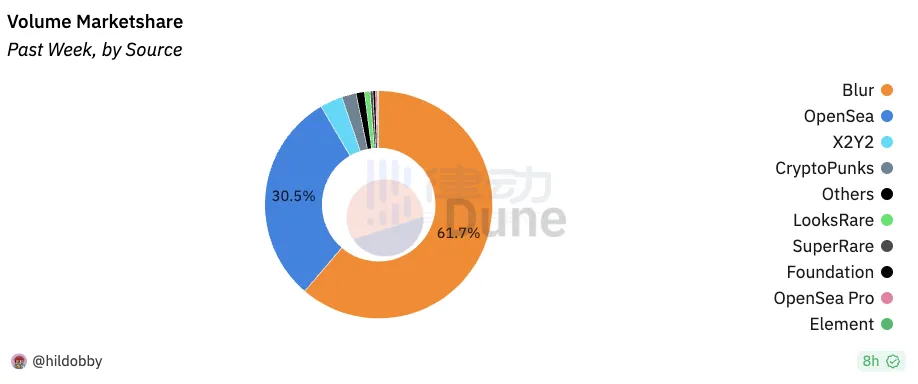
NFT market trading volume; Image source: Dune
Looking back at the confrontation between Blur and OpenSea in the NFT market, OpenSea's indecisive stance on airdrops may be the main reason for its defeat.
Blur is in the testing phase of its network and has attracted a large number of fans in a short period of time through a recommended waiting list. Users need to invite 5 people to participate in order to gain access. After the project is officially launched, Blur plans to conduct three airdrops for different types of users, and each airdrop will be larger than the previous one, which has aroused the appetite of users.
Compared to that, OpenSea is struggling. Initially, OpenSea was dominant and earned revenue through high royalties and fees. However, in terms of user experience, issues such as slow transaction speed and high gas fees, as well as product development stagnation due to crashes caused by increased traffic, have caused users to complain.
Related reading: "The last meme of 2021, SOS ignites people's anger towards OpenSea".
When the traffic began to lose to Blur, OpenSea started passive defense. On February 18th, OpenSea announced that transaction fees would be temporarily reduced to 0 and optional tax services would be enabled. OpenSea admitted that "since October last year, the effective transaction volume and user conversion have turned to the NFT market that does not fully execute creator income. Although we have made every effort, this shift is still accelerating rapidly."
Related reading: "First "passive defense", OpenSea faces the biggest challenge in history".
On November 4th, OpenSea laid off about 50% of its employees. A spokesperson stated that OpenSea is undergoing significant organizational and operational changes, with a focus on building a more flexible and better version. In response, OpenSea's co-founder and CEO, Devin Finzer, said, "Sometimes, OpenSea feels like a follower rather than a leader, and that's not what we want to be."
The most important reason for the current situation is that OpenSea did not provide airdrop incentives and did not reward users with cryptocurrency in a way that is popular in the crypto world. As a result, user dissatisfaction has been on the rise. Blur took advantage of users' profit-seeking mentality and squeezed out market share from OpenSea through points and airdrop expectations.
Time goes back to the recent past, under the bustling reflection of the Bitcoin ecosystem, Ethereum and a group of L2 seem a bit at a loss.
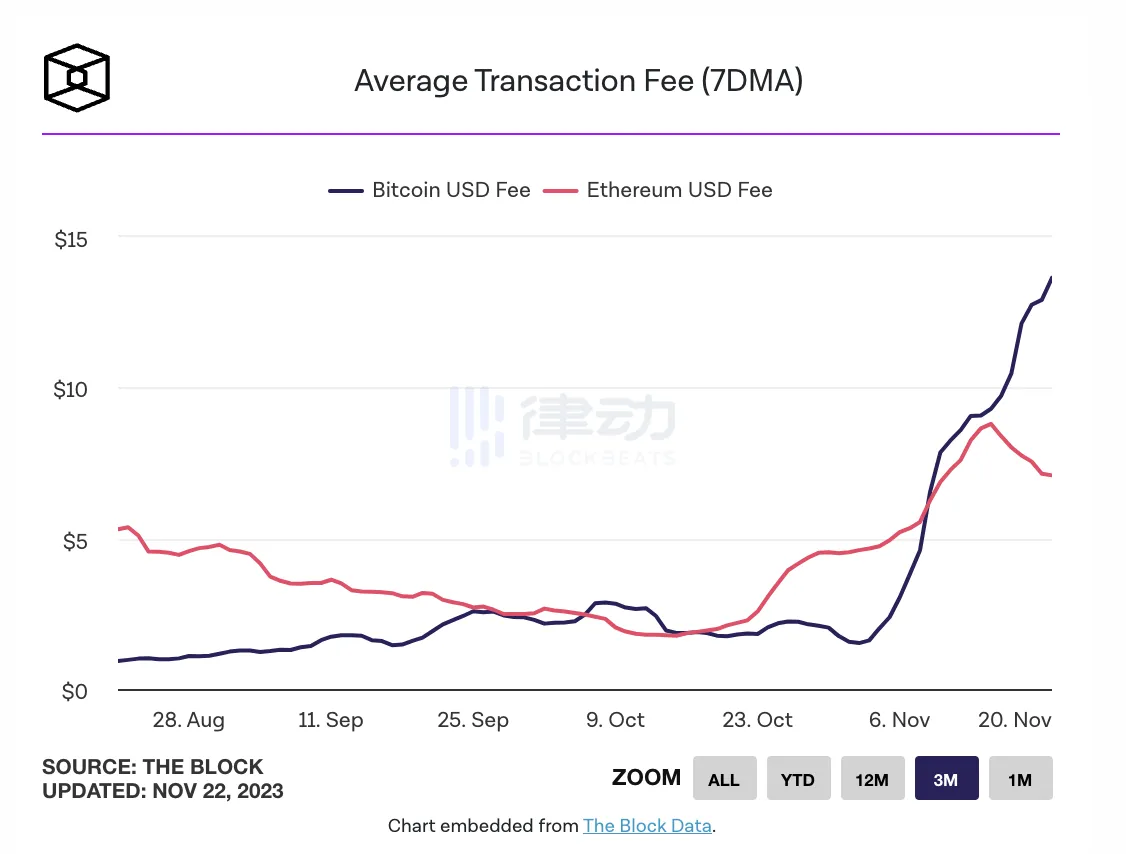
The Ordinals protocol enables the same effect of issuing ERC-20 tokens on the Ethereum network to be achieved on the Bitcoin network. The emergence of BRC-20 has allowed retail investors who have been dormant during the bear market in 2023 to find their own narrative, while also increasing the trading volume and fees of Bitcoin, benefiting multiple parties.
Welcome to join the official BlockBeats community:
Telegram Subscription Group: https://t.me/theblockbeats
Telegram Discussion Group: https://t.me/BlockBeats_App
Official Twitter Account: https://twitter.com/BlockBeatsAsia