Friend.Tech users mass exodus, can Web3 social friendship boat withstand the test?


Three months ago, the hot friend.tech now seems to have reached the end of the game and is facing a crisis.
On August 10, 2023, friend.tech officially launched. On October 2, friend.tech's TVL broke through $50 million. On November 19, its TVL fell to $33.98 million, a 19.5% decrease compared to $42.25 million on November 18. The crypto community has been crazy about it for the past three months, but now it seems to be losing momentum.
Despite the stable update frequency maintained by the friend.tech team, the frequent withdrawal of the founder, the large-scale profit of robot accounts, and the frequent changes in the points rules have made the community user experience unsatisfactory. With a large number of real user accounts being misjudged as robots in recent times, the data performance reflected through friend.tech indicates that the platform is going through a crisis moment.
A large number of user accounts have been mistakenly identified as robots, causing a wave of exits from friend.tech?
On November 17th, friend.tech launched the friend.tech feed, which allows users to control the ranking of posts through voting. Users with higher Key prices will be allocated more votes.
BlockBeats has observed that there are currently a large number of real friend.tech accounts that have been mistakenly identified as bot accounts, resulting in these accounts not receiving any points this week. According to some users, if a Twitter account uses a default username or a combination of letters and numbers for registration, this type of account will be identified as a bot by friend.tech.
Friend.tech stated on social media on November 18th that they have identified and removed 600,000 accounts recognized as bots from the voting distribution in their feed. If a user's account is mistakenly identified as a bot, they can contact friend.tech customer service and provide their Twitter username.
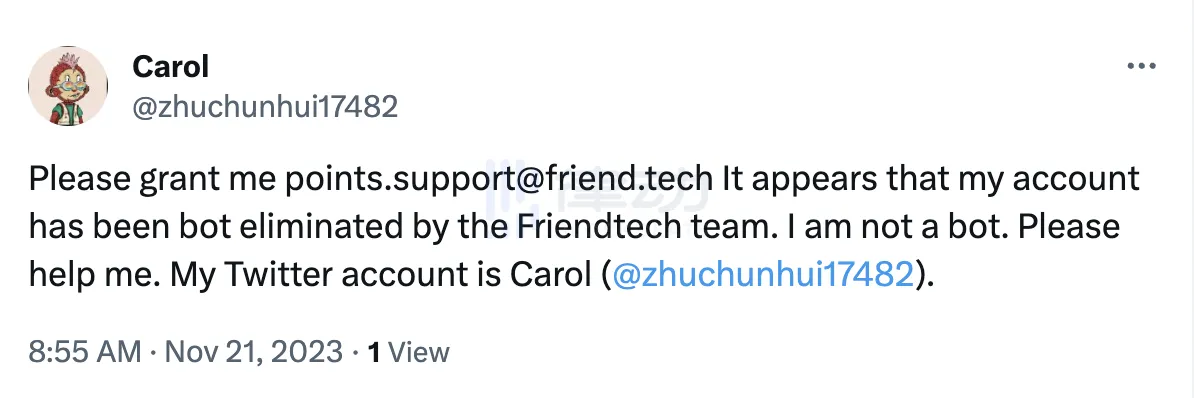
The user requested to unlock their account on X and mentioned @friend.tech
In terms of data, this past weekend, friend.tech's total transaction volume exceeded $10 million, reaching a new high in over half a month. However, this may be a form of exit behavior. From November 18th to 19th, friend.tech withdrew a total of 4420 ETH, and its TVL dropped by about 21%, the lowest level in nearly two months.
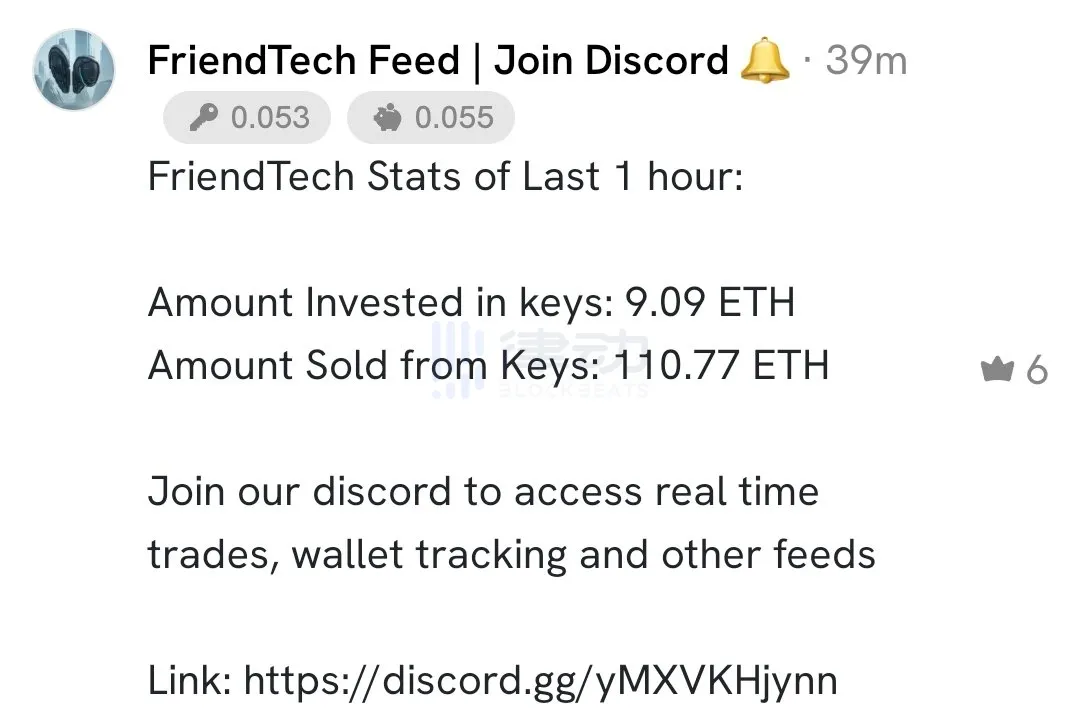
On November 20th, a large number of users were still selling keys and fleeing from friend.tech; image source community
The behavior of identifying real users as robots has generated a lot of negative reviews for friend.tech in the community. Cryptocurrency researcher @Loki_Zeng posted that all of friend.tech's strategies are trade and fee-oriented, which is not very user-friendly. "Not to mention how many real accounts have been mistakenly affected, do you think some user behaviors should not receive points? Shouldn't the 5% commission collected also be refunded?"
And when the Bot is making crazy MEV profits, why don't you care? A Bot that harms users but can generate income for you is no longer a Bot? The points system has been changed 800 times, and many people need to reconfigure it once it is changed, and the project party can earn a commission again. Is this really encouraging holders?
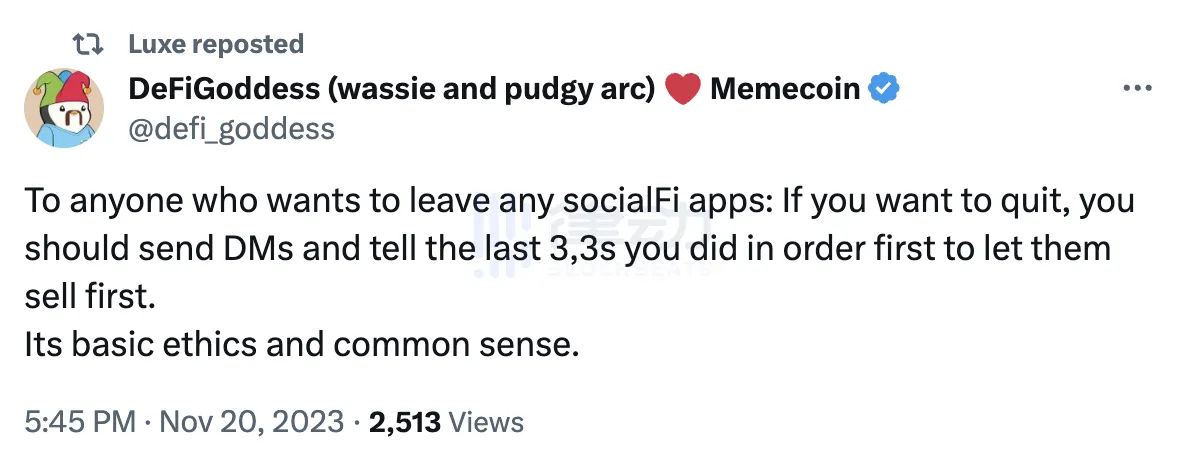
In addition, this wave of sell-offs has also brought a crisis of trust among the user community holding keys. Christian, co-founder of the encryption fund NDV and NFT whale, stated on his social account that the behavior of holders selling keys without the knowledge of the homeowner is not friendly. Community user @defi_goddess also stated that before choosing to exit, you should send a private message to those who have recently used the "3,3" strategy, so that they can sell first, calling it "basic ethics and common sense".
After the community emotions fermented, Racer, the founder of friend.tech, posted in Chinese on the platform, "Family, who understands?" Some platform users expressed that this seemed very unprofessional for the friend.tech team.

On FT, the friendly boat flips very quickly
When friend.tech was first launched, there were many articles analyzing its economic model in the encryption field. In addition, the friend.tech team has been updating its product features, and users' expectations for its airdrops and FOMO emotions have been increasing. However, with the recent market calming down, it seems that it is time to take a look at the other side of friend.tech that was once overlooked by the public.
The "3,3" mentioned earlier is a classic Ponzi game strategy. In friend.tech, the goal of the "3,3" strategy is to climb the leaderboard and send a signal to other accounts that you are a holder and will not sell their keys, achieving a win-win effect.
假设你的 Key 价值 0.1 ETH,你有一个朋友也价值 0.1 ETH。如果你们互相购买彼此的 Key,两人都将获得 5% 的费用,而且根据绑定曲线,你们的价值将从 0.10 ETH 增加到 0.12 ETH,实际上你的价值增加了约 0.02 ETH。然后你可以用另一个朋友重复相同的操作,再次增加你的价值,重复这个动作 100 次,你的 key 就会变得非常有价值。
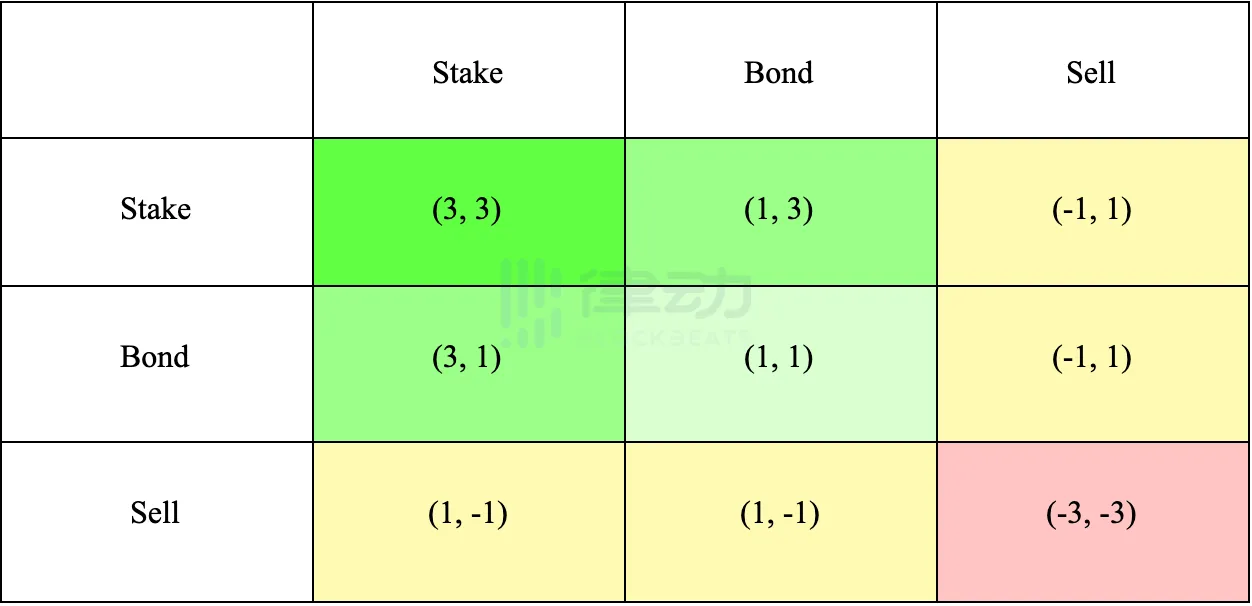
As a result, the Social proportion in friend.tech's SocialFi label is becoming smaller and smaller, while the Fi attribute allows a group of traders and profit robots to gain higher value profits.
Related reading: "Analysis of Friend.tech's economic model: game theory, expected value, and demand curve".
friend.tech is not a platform that is strongly tied to content production and social relationships. It is simply a financial product derived from Twitter, rather than a social product, which is the key to friend.tech's huge profits. The friend.tech protocol does not require KOLs to produce content, and users who come to purchase keys are not here to consume content. KOLs themselves do not seem to be responsible for users' keys, and the seemingly weak social relationships are completely overshadowed by friend.tech's financial attributes.
Christian mentioned his friend.tech trading strategy during his participation in the "Wang Feng Ten Questions Live/Web Three People Walk" program. When building a portfolio, he chooses more stable users based on criteria such as good character, vision, and strength. "The secret is to choose people with vision when making friends, and to do well on your own. Don't give up your reputation and accumulated things for a small immediate benefit. From the beginning, I said I wouldn't sell my Key in advance, and I will definitely leave time for everyone to sell before I leave."
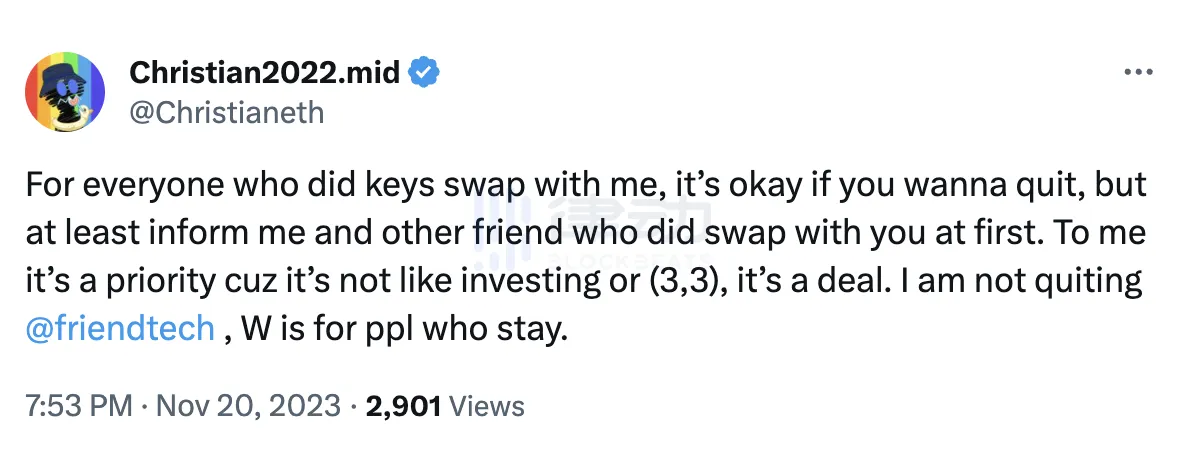
friend.tech user Christian expresses his attitude; image source: @Christianeth
However, from the current ecosystem of friend.tech, this friendship boat is flipping very quickly. More importantly, friend.tech embodies the "3, 3" as a classic Ponzi game endgame. The prisoner trapped in a desperate situation will always be the one who runs the fastest.
成也「3,3」,败也「3,3」。The number of users and prices of friend.tech skyrocketed in the early stages, thanks to its excellent economic model, but in the later stages, it could not continue to survive. Besides such an economic model, what other solutions can Web3 social networking have and where will it go? This is a thinking question for all relevant practitioners.
Welcome to join the official BlockBeats community:
Telegram Subscription Group: https://t.me/theblockbeats
Telegram Discussion Group: https://t.me/BlockBeats_App
Official Twitter Account: https://twitter.com/BlockBeatsAsia

 Related Articles