From third-tier exchanges to Binance contracts, the mining production line behind KAS.



Author: Kaori, BlockBeats
Editor: Jack, BlockBeats
On November 16th, Binance officially announced that it will launch KAS 1-50x U perpetual contract at 10:00 today. According to CoinGecko data, as of the time of writing, the POW public chain Kaspa's token KAS has broken through $0.13 and is currently priced at $0.134338, with a 24-hour increase of 18.3% and a price increase of 37.40% in the past 7 days.
On November 7th, 2021, the Kaspa mainnet built on the GhostDAG protocol was officially launched. It uses BlockDAG architecture to address scalability issues related to traditional blockchain operations.
KAS mining algorithm is kHeavyHash, which supports GPU solo mining or dual mining with ETHW and ETC, and supports some FPGA and ASIC mining machines. According to f2pool data, the current network hashrate of KAS is 60.97PH/s, and the 24-hour output revenue is 1.5267 million US dollars.
Kaspa's economic model is similar to Bitcoin's issuance mechanism, with no pre-mining or pre-sale, and all tokens can only be obtained through mining. The total supply of its token KAS is 28.7 billion, which is expected to be mined in 186 months, and the circulating supply will be released by April 2037.
Source: CoinGecko
KAS Flywheel
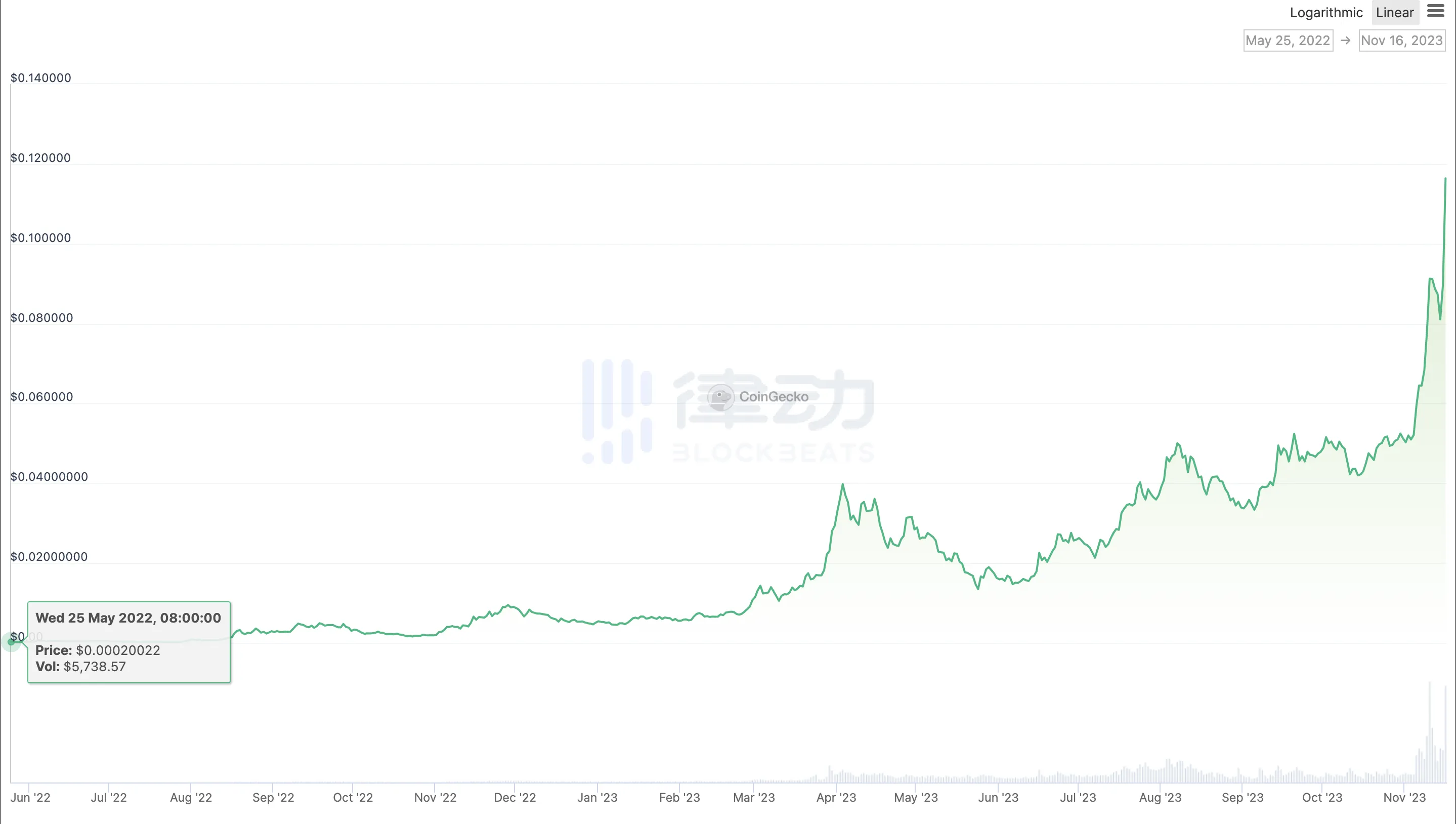
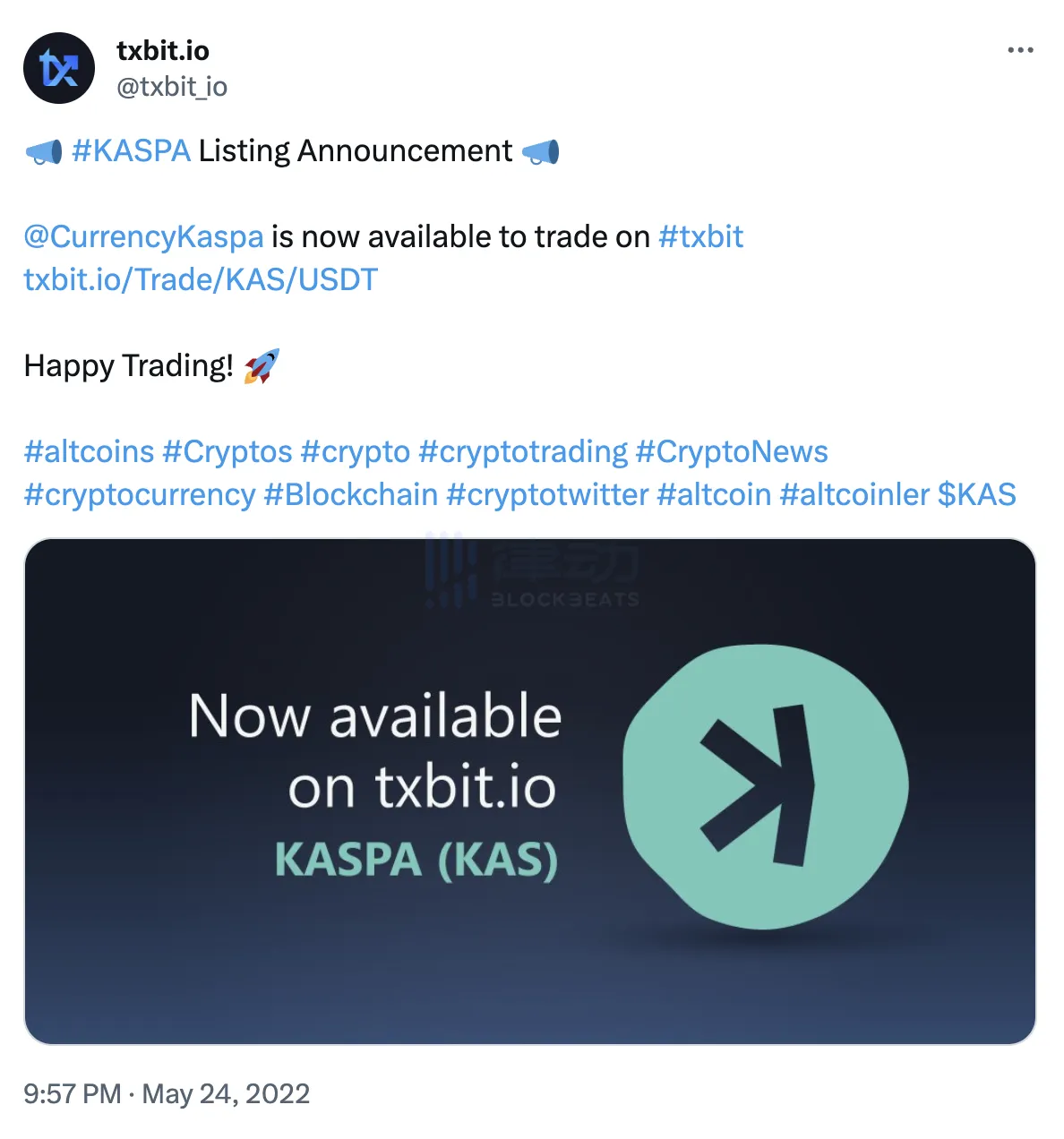
The rise in KAS coin price can be traced back to its listing on TxBit at the end of May 2022, when the lowest price of KAS was 0.0002 USD. In September 2022, KAS was listed on MEXC at around 0.004 USD before quickly rising to 0.008 USD after the listing.
By April 3, 2023, it had reached a historical high of 0.039 USD, and in less than a year, the KAS price had increased by 1850%.
In April 2023, the trading volume of Kaspa continued to increase, fluctuating between $15 million and $40 million per day, and even once exceeding $500 million. The top four trading platforms at that time were MEXC Global, TxBit, Gate.io, and Coinexcom.
In May, both Bitmain and Canaan released dedicated ASIC miners for the cryptocurrency industry. Manufacturers of these miners rushed to enter the Kaspa market.
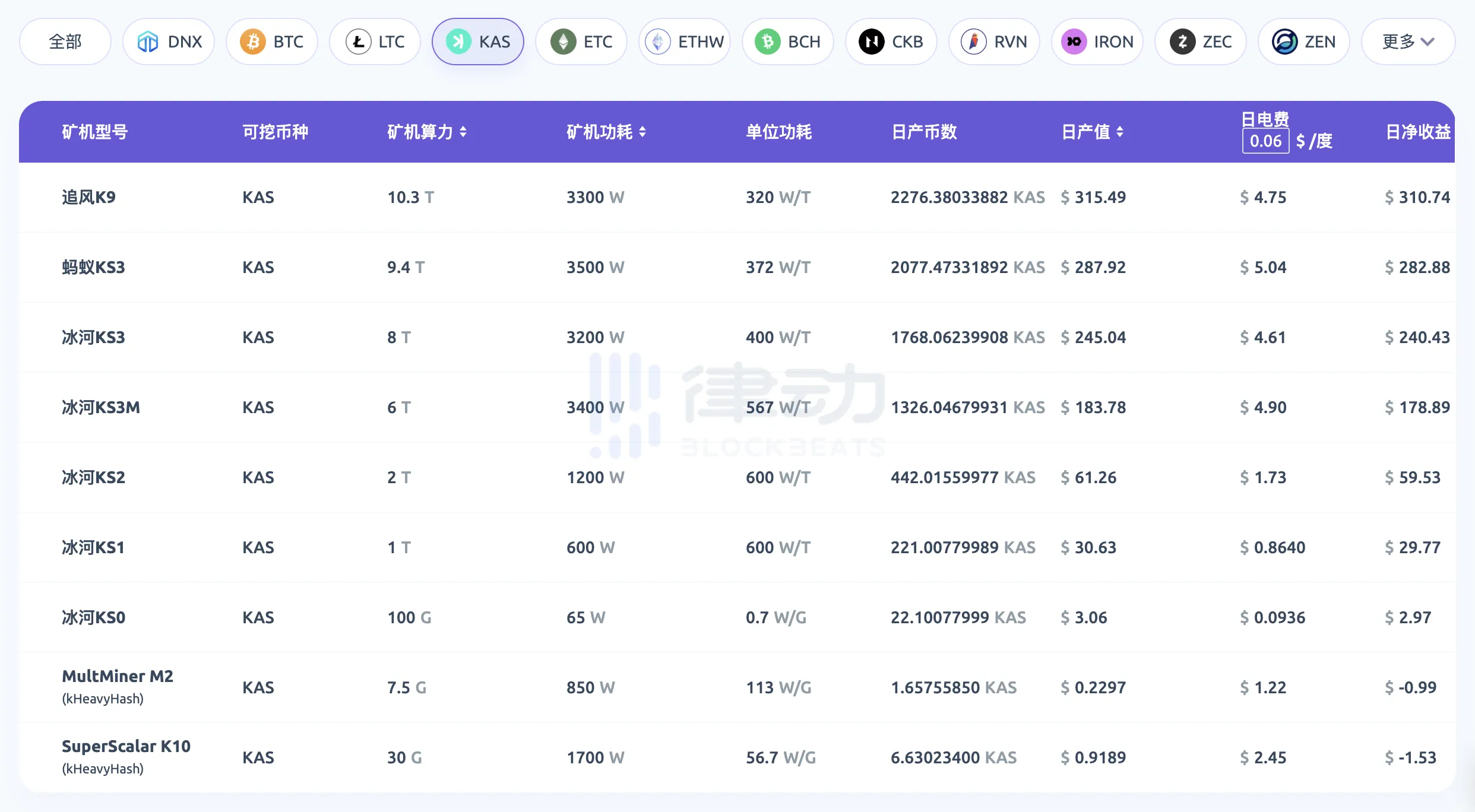
The first KS3 model Kaspa miner was released on the official website on May 17th. According to official data, the computing power of the KS3 miner is as high as 8.3TH/s, with a power consumption of 3188W and a unit power consumption of 384W/T. Based on the KAS price at that time, the net daily income of a single miner can exceed $2600. Currently, the mainstream miners for KAS mining are the Windcatcher, Ant, and Glacier series, with an average power consumption of over 3000W and a daily net income of 200 to 300 US dollars.
However, before August 2023, the price of KAS has dropped by about 50% since its peak in early April, and the sales performance of ASIC miners entering the market has not been prominent. This means that the distribution of miners for high-performance computing is still uneven, and miners have not yet sold their tokens.
On August 14th, TxBit announced that it would close platform trading on September 14th. At that time, many people in the Kaspa community jokingly said that KAS had allowed TxBit's founder to achieve his retirement goal directly, which shows that KAS has gained enough attention and liquidity after its launch on TxBit.
Meanwhile, the Kaspa community is also working hard to increase the visibility of KAS. Despite KAS's market capitalization ranking breaking into the top 34, its ranking on the CoinMarketCap website remains at 207. As a result, members of the community have been tagging the official CMC account to request a change in the ranking.
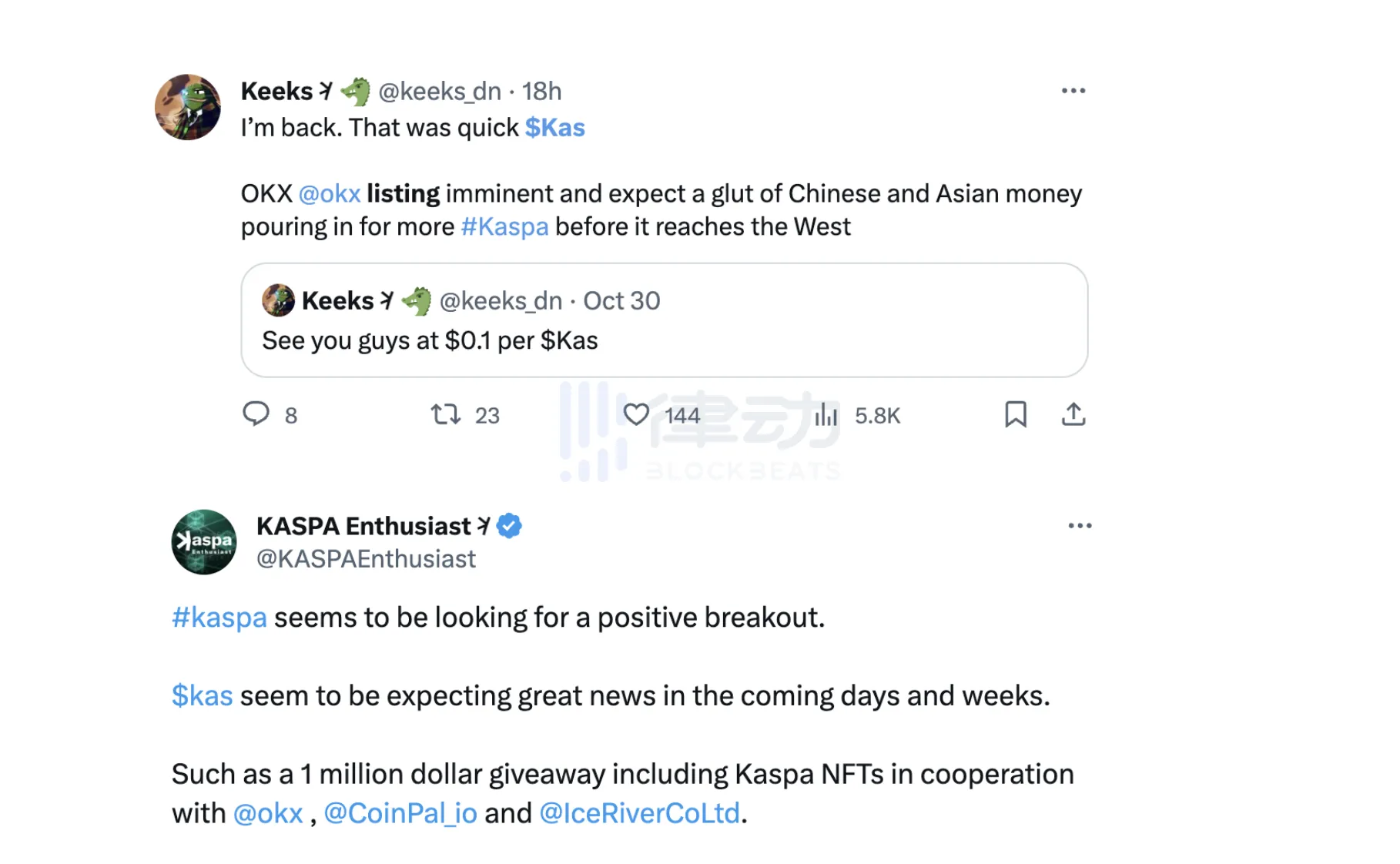
In November, KAS daily miner rewards reached $1.8 million, making it the second-ranked cryptocurrency after Bitcoin with $32 million, which is one-eighteenth of Bitcoin. In addition, Kaspa has frequent interactions with first-line trading platforms. On November 3, OKX Web3 wallet integrated with Kaspa Network; the community also jointly launched an airdrop activity with CoinPal and IceRiver.
Until last night, Binance announced that it will launch KAS 1-50x U perpetual contract on November 17th at 10:00, and KAS has finally completed its expansion from a third-tier exchange to a first-tier CEX.
Cryptocurrencies enter the gold rush, SafeTrade emerges
Driven by the rise in KAS price, the overall cryptocurrency prices in the mining sector have seen significant gains recently. Among them, early-stage mining coins such as Spacemesh (SMH), Qubic (QU), and Zephyr Protocol (ZEPH) have received a lot of attention.
On July 14th, 2023, Spacemesh launched its mainnet with the aim of establishing a block mesh operating system. The new consensus protocol, PoST (Proof of Space-Time), improves blockchain technology and can run on any desktop computer, with the goal of resisting expensive ASIC miners. On August 29th, Spacemesh (SMH) was listed on SafeTrade, and with the token price hitting a new high, it rose from $0.42 to a peak of $2.285, an increase of 442%.
Related reading: "Proof of Space-Time + DAG, how does Spacemesh enable mining on PC?"
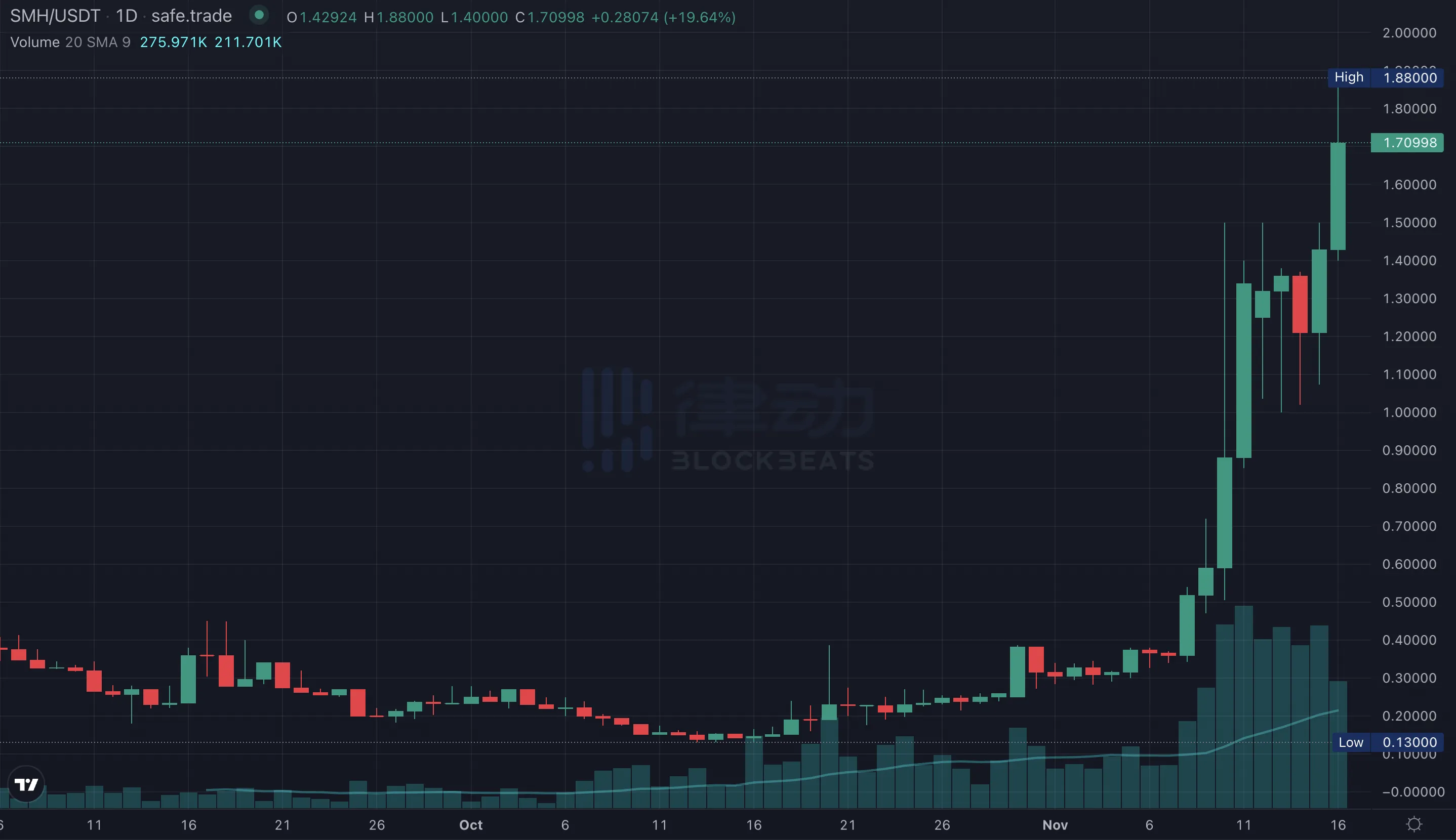
Source of the image: SafeTrade
In addition, the UPoW-driven L1 network Qubic (QUBIC) will be launched on SafeTrade on August 8, 2023. The token price increased from the lowest price of 0.000000234 US dollars after listing to the highest point of 0.0000039 US dollars, with a growth rate of 1566%.
SafeTrade's Mission
"TxBit brought us KAS and now it's offline, and now SafeTrade brings us QUBIC and SMH," said Thrifty SoFi advisor deXer (@DexerXP), adding that "QUBIC and SMH are not yet listed on Coingecko and Coinmarketcap, so it's still early days." This means that there is a similar development path ahead for them, just like KAS.
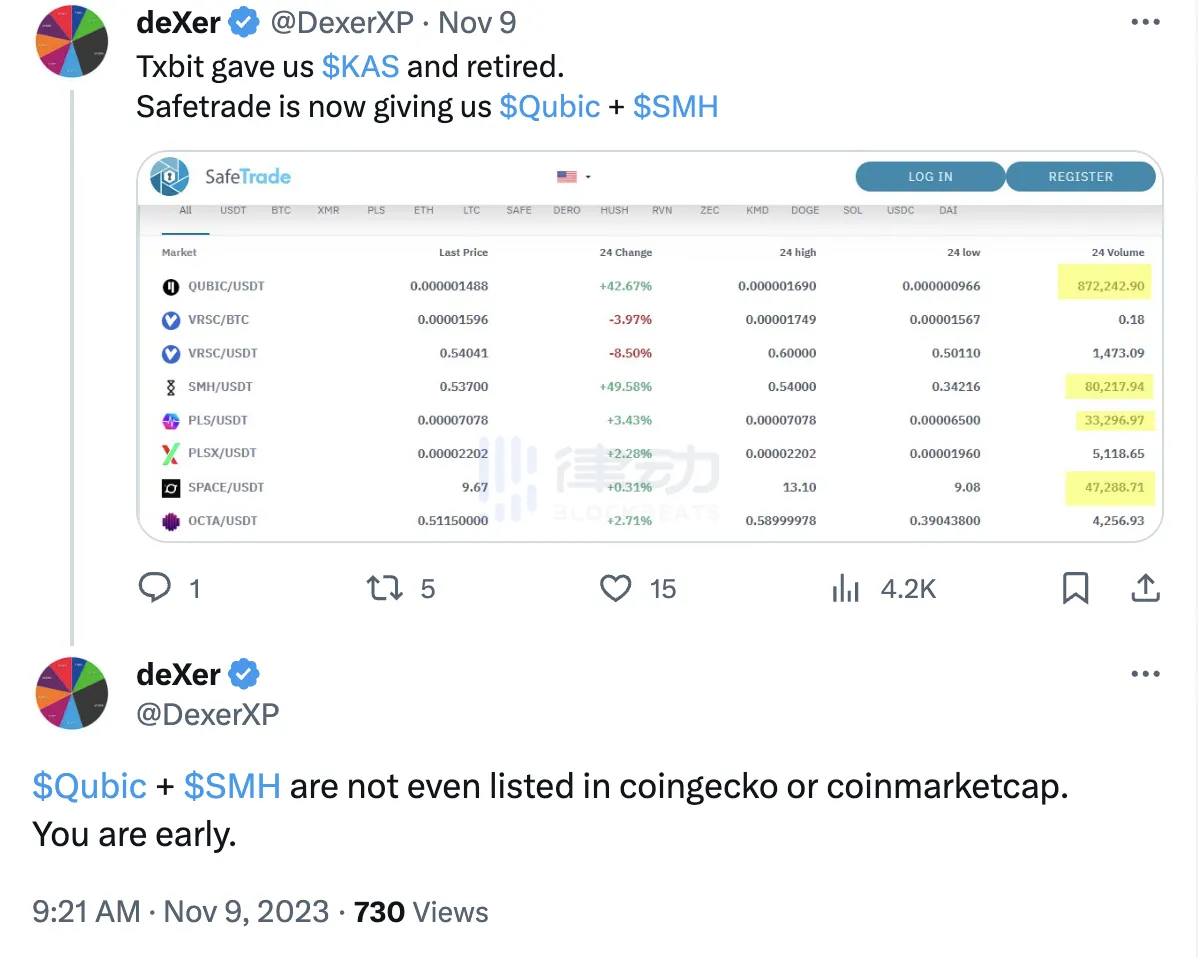
If you pay enough attention to the PoW coin ecosystem, you will find that SafeTrade is now appearing in the hottest coin communities.
When someone introduces the Spacemesh project and mentions that it can be traded on SafeTrade, the community raises doubts, saying "this trading platform is too small and looks strange." Little do they know that in the eyes of cryptocurrency OGs, SafeTrade is like TxBit, which has already closed down, and is a major platform for early-stage cryptocurrency trading.
SafeTrade is a centralized cryptocurrency trading platform, founded in 2018, currently offering 53 currencies and 102 trading pairs. According to Coingecko data, as of writing, SafeTrade's trading volume in the past 24 hours was $2,984,417 USD, with popular trading pairs including QUBIC, VRSC, SMH, PLS and other mining currencies. QUBIC and SMH are unique trading currencies exclusive to SafeTrade.
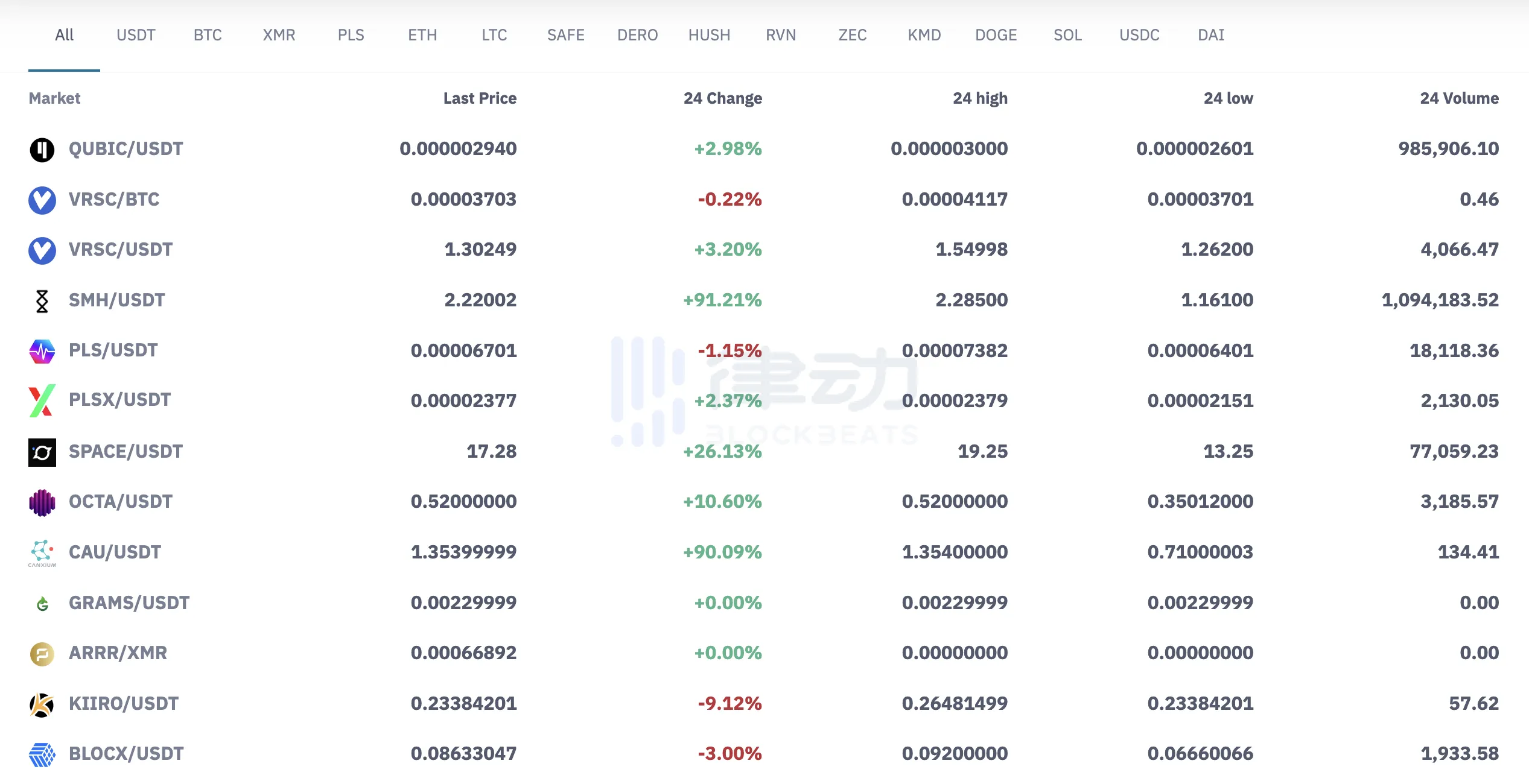
Source: SafeTrade
Although SafeTrade has been established for 5 years, its ranking of 225th on the BitDegree Exchange Tracker is not particularly outstanding, and it is precisely because of its niche position that it has gained the favor of miners selling coins.
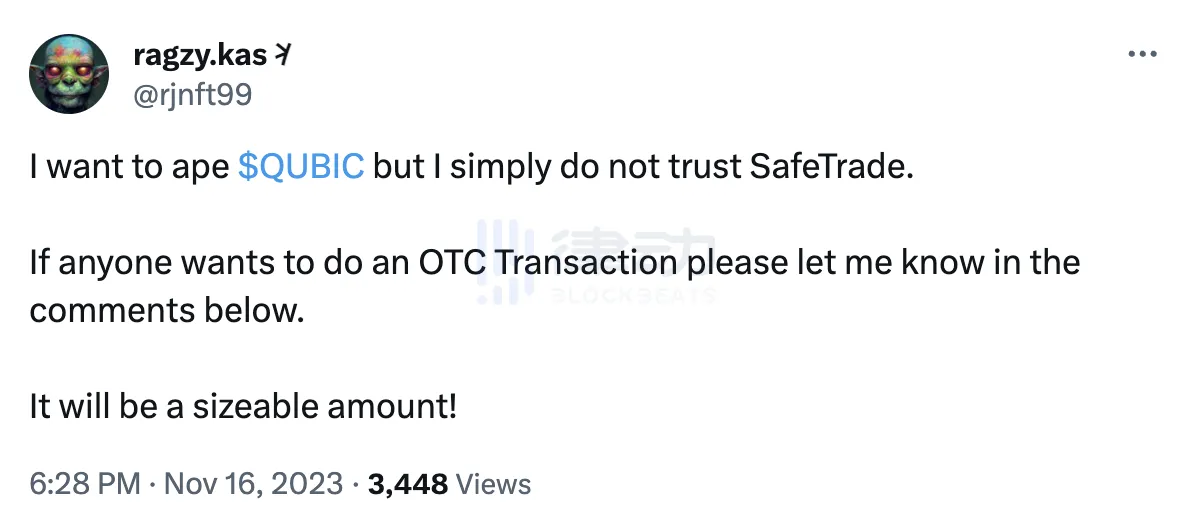
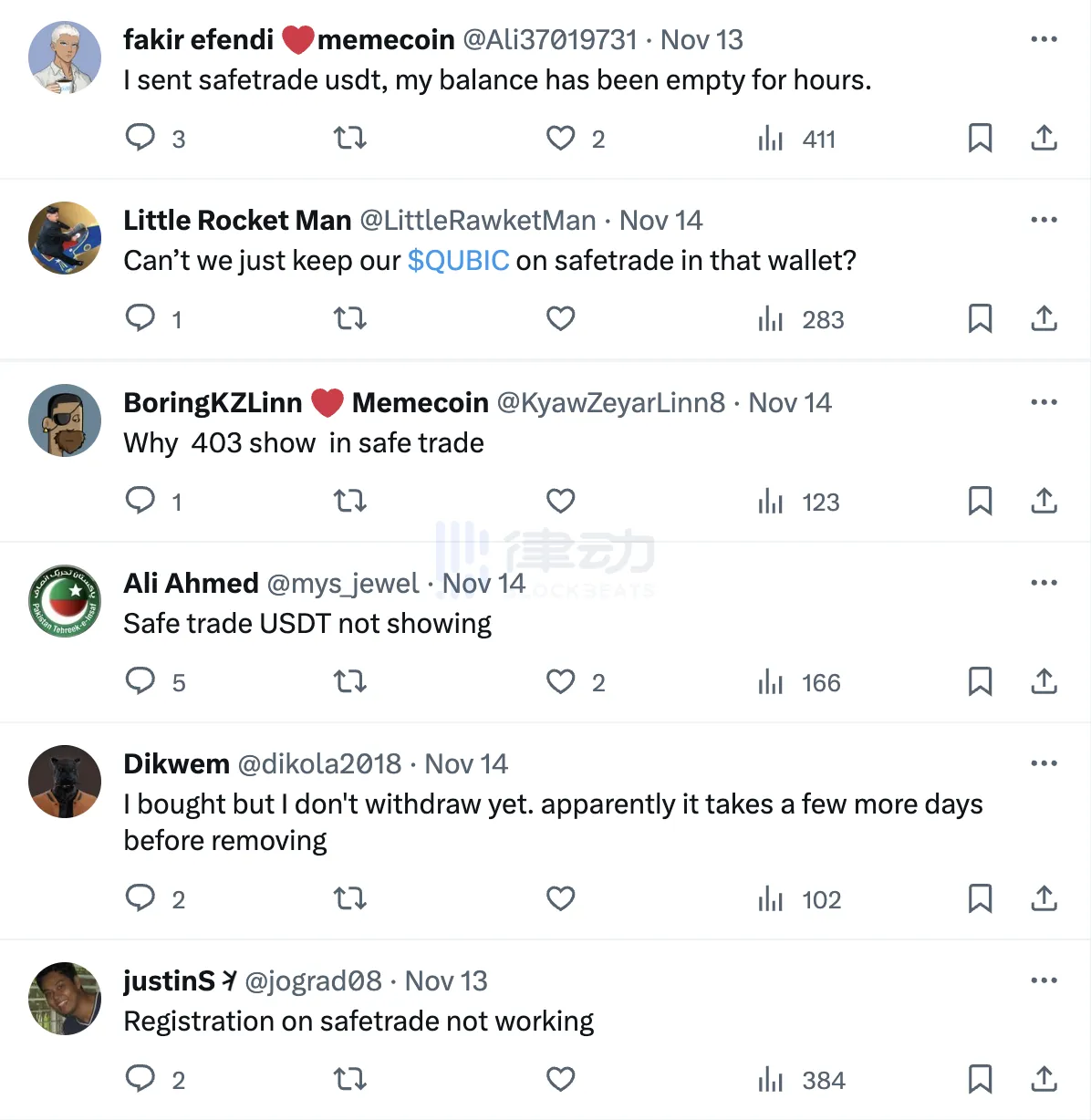
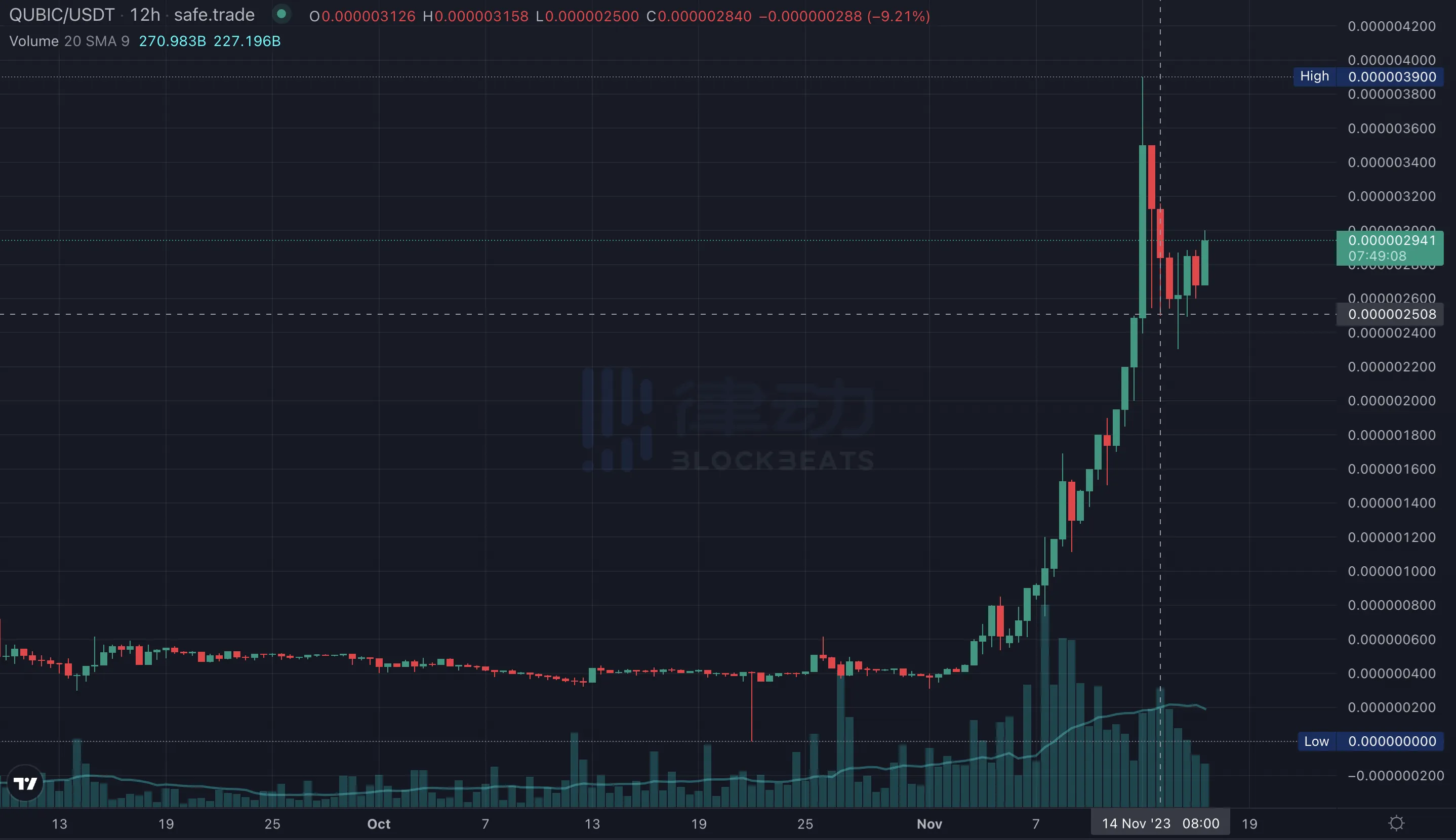

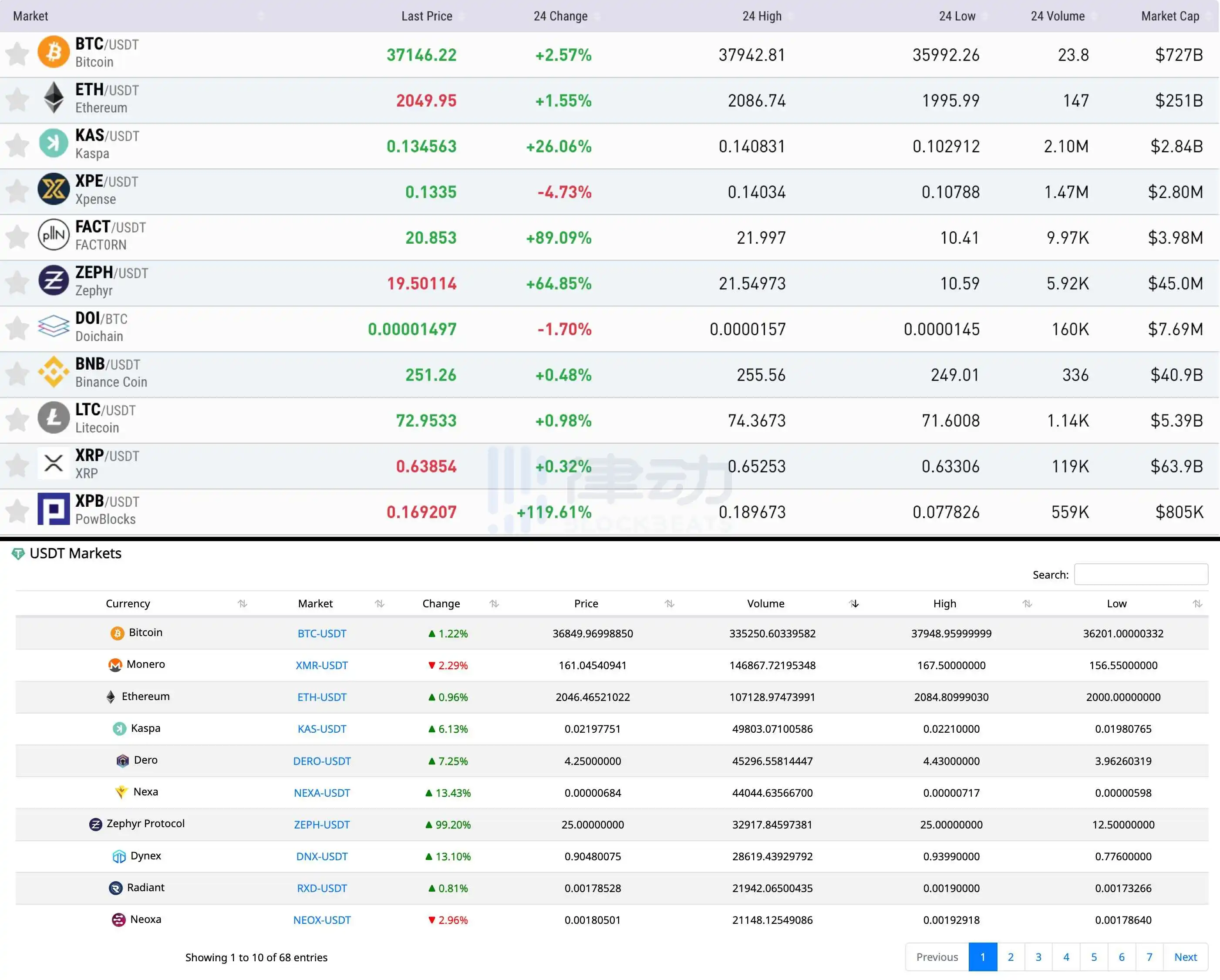
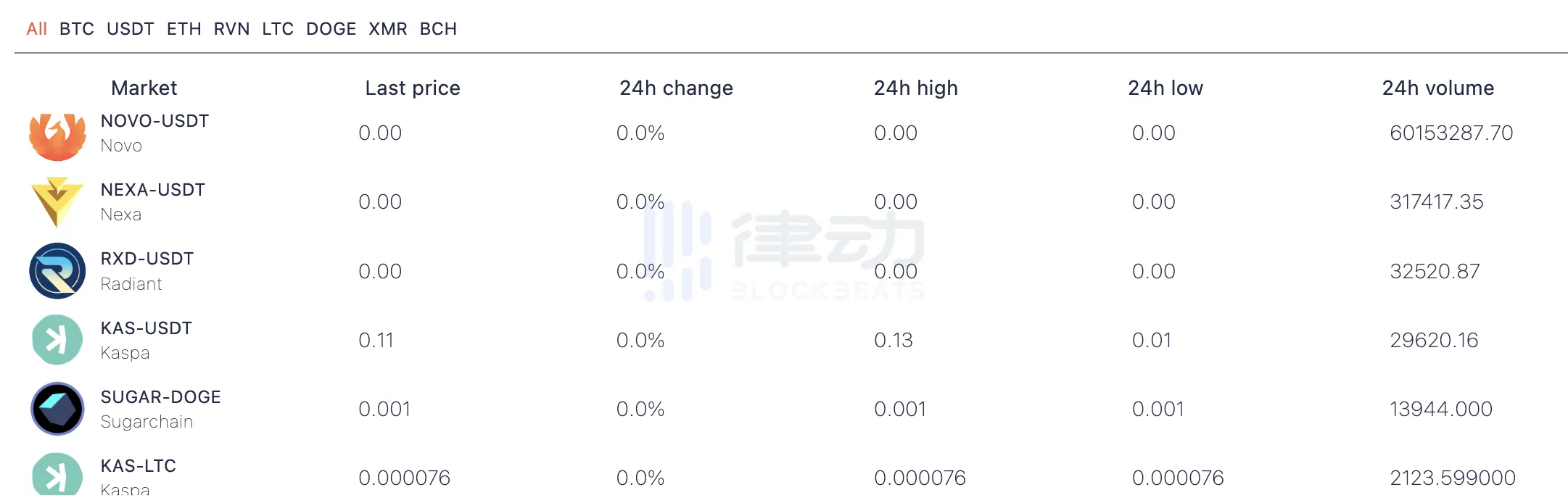
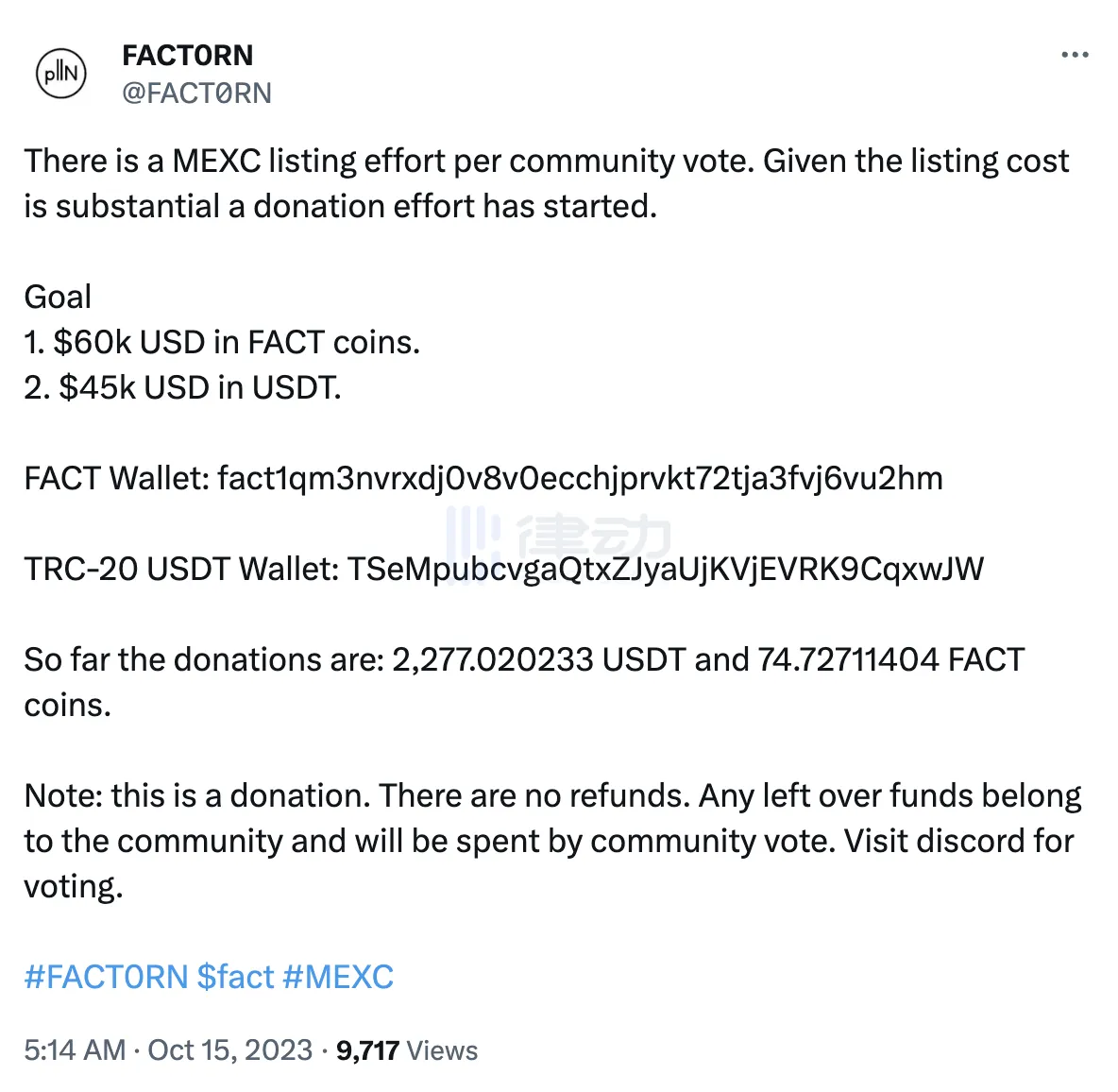

However, unlike in the past, PoW projects will first test the waters on MEXC. Only if the market responds well will they choose to target exchanges such as Binance and OKX. Just like the path chosen by Kaspa, perhaps there will be more early mining coins that will maximize their wealth effect by gradually testing the waters in the future.
矿机产矿币,矿币买矿机
Mining machines produce cryptocurrency, and cryptocurrency buys mining machines.
However, the cryptocurrency surge in November this year is not solely caused by this fixed wealth effect route. Such a centralized price explosion is inseparable from the operation of mining machine manufacturers.
The core logic of miners' profitability is the product of the number of coins mined and the price, minus the cost of mining machines. The profitability of mining machine manufacturers mainly depends on the sales of mining machines. Therefore, manufacturers must find ways to sell mining machines, which requires increasing the price of coins and thus increasing miners' revenue. By first driving up prices on small exchanges and then listing on second-tier exchanges to sell to some retail investors for profit, miners can purchase more mining machines.
If the consensus of this cryptocurrency is strong enough, there will be greater market development space. When it is listed on first-tier trading platforms, it will bring a larger wealth cycle.

Kaspa, as the biggest winner in the recent bull market of the mining coin industry, went through the entire process of being promoted from a third-tier exchange to being listed on Binance's contracts. This was made possible by the "production line" of wealth effects in the mining coin industry today.
Welcome to join the official BlockBeats community:
Telegram Subscription Group: https://t.me/theblockbeats
Telegram Discussion Group: https://t.me/BlockBeats_App
Official Twitter Account: https://twitter.com/BlockBeatsAsia

 Related Articles