MT Capital Research Report: Stacks Nakamoto is about to be upgraded, injecting new impetus into the Bitcoin ecosystem

Original Title: "MT Capital Research Report: Stacks Nakamoto Upgrade Imminent Injects New Energy into Bitcoin Ecology"
Original Source: Xinwei & Yimu, MT Capital
TLDR
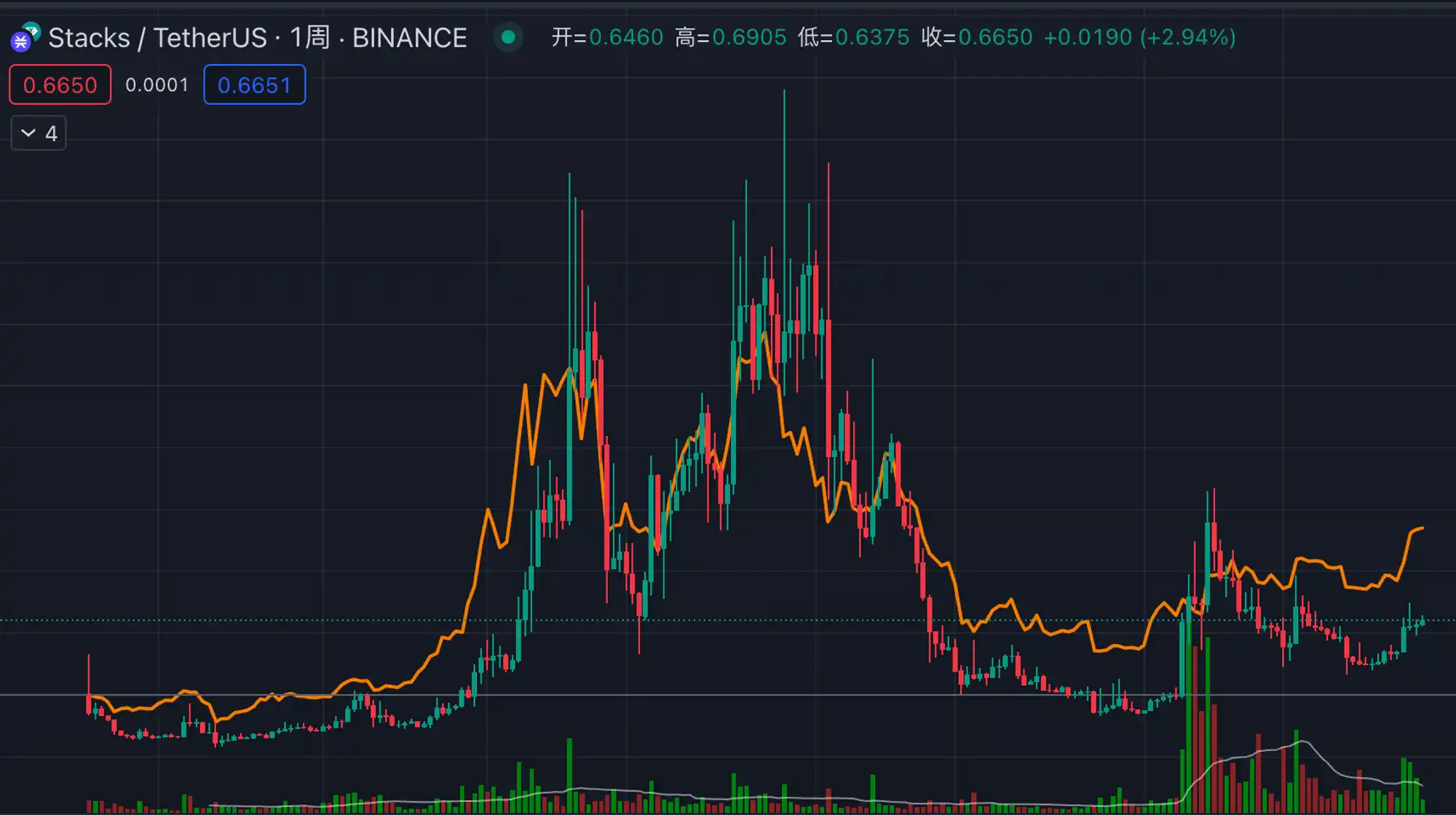
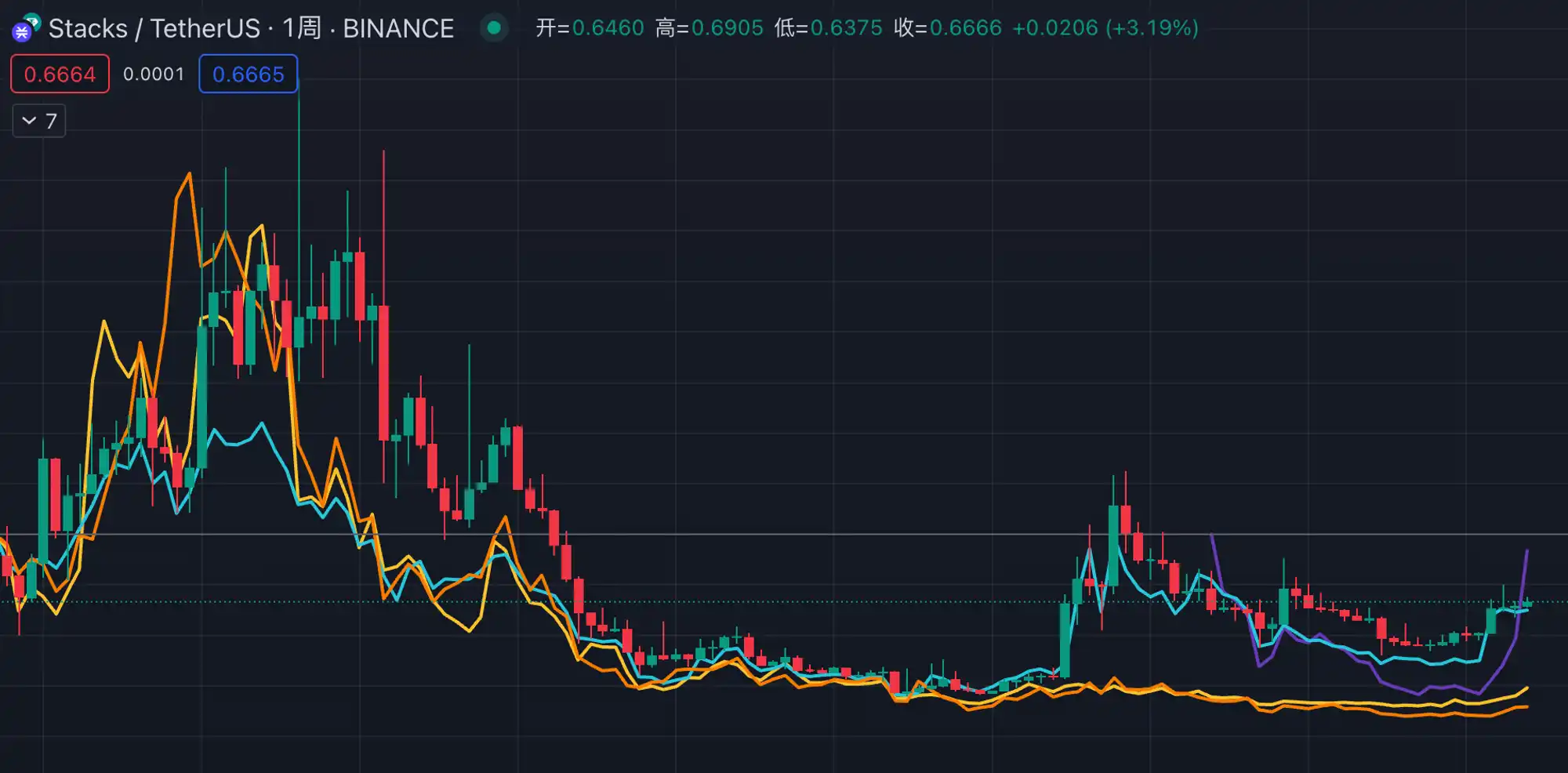
-Observing historical trends, STX always lags behind BTC trends, and its fluctuations are greater than BTC. Compared to other currencies in the BTC ecosystem, it is relatively strong.
-BTC halving is approaching, and the heat of BTC ecological concepts continues to rise. Stacks, as the leading project in the BTC ecosystem, will welcome the Nakamoto upgrade in Q4. The fast block generation time of 5 seconds and trustless sBTC will bring DeFi possibilities to BTC, which is expected to further prosper the Stacks ecosystem.
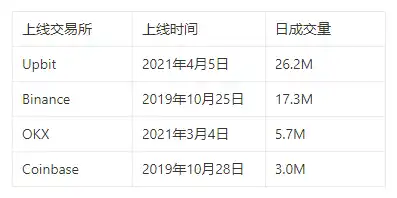
- Among the concept coins in the BTC ecosystem, STX has the largest quantity and is listed on all major exchanges including Upbit. It is also the most liquid asset and can be observed as a benchmark phenomenon for the entire BTC ecosystem.
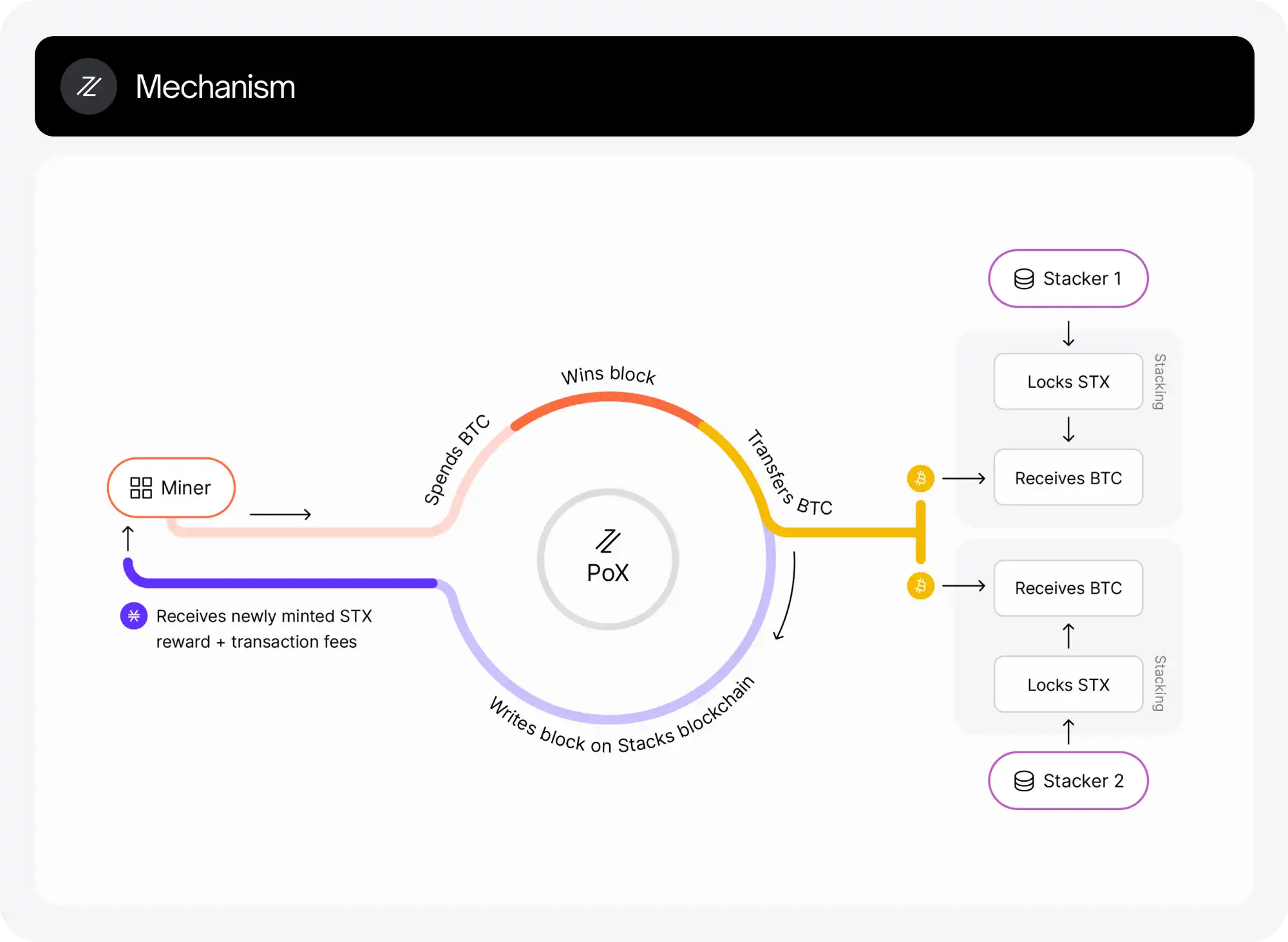
-Stacks uses the Proof of Transfer (PoX) consensus mechanism to build smart contracts and decentralized applications based on the Clarity language, while leveraging the security of Bitcoin. By locking up Bitcoin to mine and enhance its functionality as a layer 2 solution, Stacks enables fast transaction processing and finality guarantees for Bitcoin.
-Stacks ecosystem currently has a TVL of over $19 million, with over 120,000 deployed smart contracts and over 760,000 wallets. The ecosystem has a relatively complete range of projects, including wallets, DeFi, NFT, DAO, DID, Social, and more.
Introduction
Stacks (STX) is a Bitcoin smart contract layer designed to expand the functionality of Bitcoin, enabling it to support smart contracts and decentralized applications.
Objective: The main objective of Stacks is to introduce smart contract functionality on the Bitcoin blockchain, allowing developers to build decentralized applications (DApps) and smart contracts to expand the use cases of Bitcoin.
POX Consensus: Stacks 2.0 adopts POX consensus, and the rewards obtained by participants are more stable underlying chain cryptocurrencies. Compared with the cryptocurrencies of new blockchains, the rewards of underlying chain cryptocurrencies can better motivate early participants, which helps attract early participants and strengthens consensus.
Empowering BTC: By converting BTC into assets for building DApps and smart contracts, we increase the vitality of the Bitcoin economy.
Ecology: Currently, there are 79 projects in Stacks with a TVL of $24.95M.
One, Team Background

Image source: Linkedin
Stacks is a project composed of multiple independent entities and communities, initially led by Blockstack PBC and later renamed Hiro Systems PBC. According to the latest information on Linkedin, the headquarters is in NYC and the team currently has 49 members.
主要人物与职责:
translates to
Main Characters and Responsibilities:
Muneeb Ali: Co-founder of Stacks, CEO of Hiro, holds a PhD in computer science from Princeton University, and focuses on research and development of distributed applications. He has given speeches at forums such as TEDx, promoting cryptocurrency and blockchain, and has written numerous academic journals and whitepapers on related topics. Muneeb is also the CEO of Trust Machine.
Jude Nelson: Stacks Fund Research Scientist, former Hiro Engineering Partner, holds a Ph.D. in Computer Science from Princeton University, and was a core member of PlanetLab, which won the ACM Test of Time Award for implementing planetary-scale experiments and deployments.
Aaron Blankstein: Engineer, he joined the Blockstack engineering team after receiving his PhD in 2017. He studied computer science at Princeton University and Massachusetts Institute of Technology. His research covers multiple topics, mainly focused on web application performance, caching algorithms, compilers, and applied cryptography. His research on CONIKS won the Caspar Bowden Privacy Enhancing Technologies Award in 2017. He has been using Emacs for over 10 years.
Mike Freedman: Hiro Technical Advisor, is a distributed systems professor at Princeton University and provides technical guidance for the project. He has received the Presidential Early Career (PECASE) Award and the Sloan Scholarship. His research has led to multiple commercial products and the deployment of systems with millions of daily users.
Albert Wenger: Hiro is a director and managing partner at Union Square Ventures (USV). Prior to joining USV, he served as the CEO of del.icio.us and was an active angel investor, having invested in companies such as Etsy and Tumblr. Albert graduated from Harvard University with a degree in economics and computer science, and holds a PhD in information technology from the Massachusetts Institute of Technology.
JP Singh, Director Hiro, Professor and Undergraduate Director at Princeton University, focuses on parallel computing systems and applications. He has received the Presidential Early Career (PECASE) Award and the Sloan Scholarship, and co-founded the business analytics company, FirstRain Inc. He graduated from Princeton University and holds a graduate degree in Electrical Engineering from Stanford University, as well as a PhD. He is also one of the founders of Trust Machine.
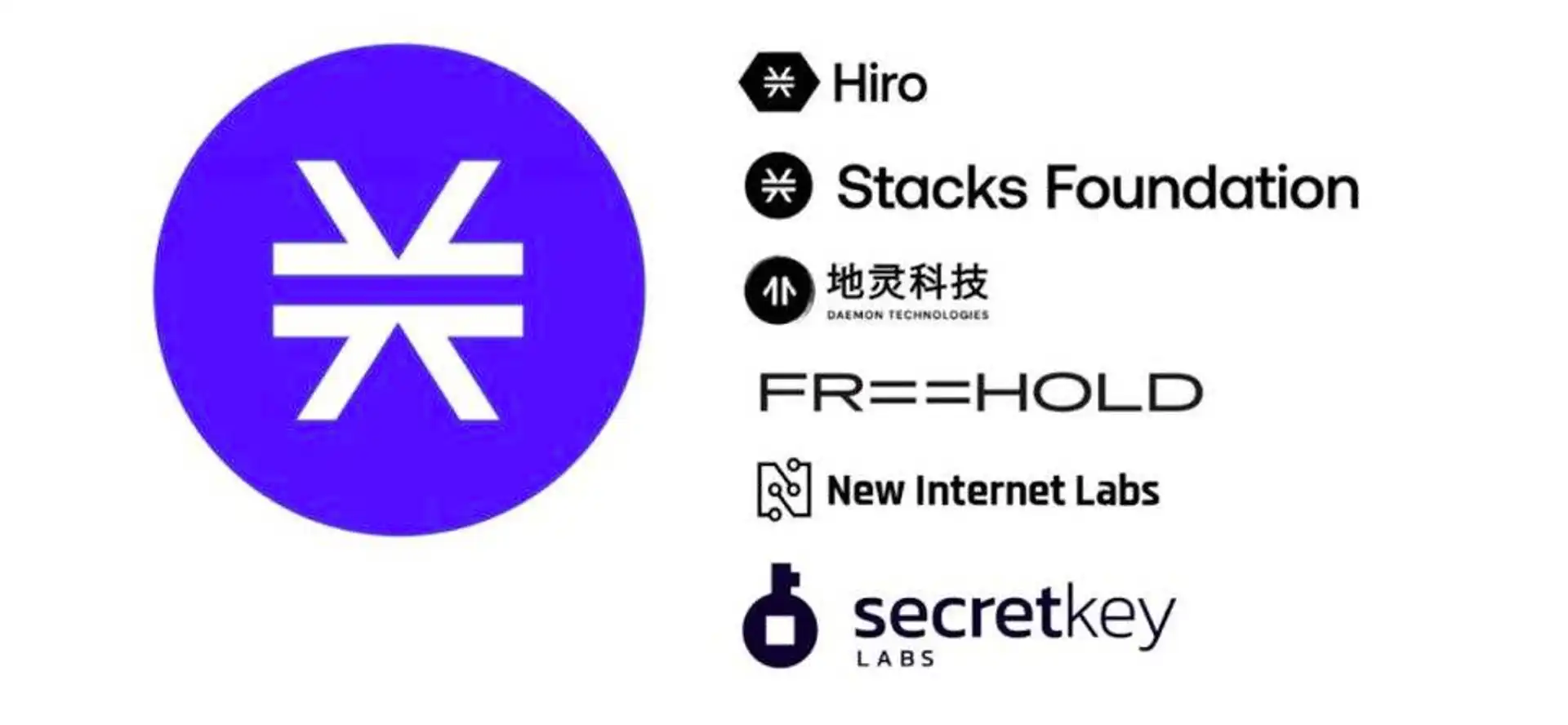
There are multiple independent entities in the Stacks ecosystem besides Hiro. These include Stacks Fund, Diling Technology, Freehold, New Internet Labs, and Secret Key Labs.
 The content you provided is:
Image source: stackschina
Hiro: Focused on providing and maintaining developer tools within the Stacks ecosystem.
Stacks Fund (Stacks Foundation): Supports the development of the Stacks ecosystem through governance, research, education, and funding.
Daemon Technologies: Focused on supporting Stacks mining and staking business.
Secret Key Labs: Focuses on providing Chinese mobile wallets that can directly participate in Stacking.
二、资本关系
Translation:
II. Capital Relations
Stacks has completed a total of 5 rounds of financing, with a total amount of $88M.
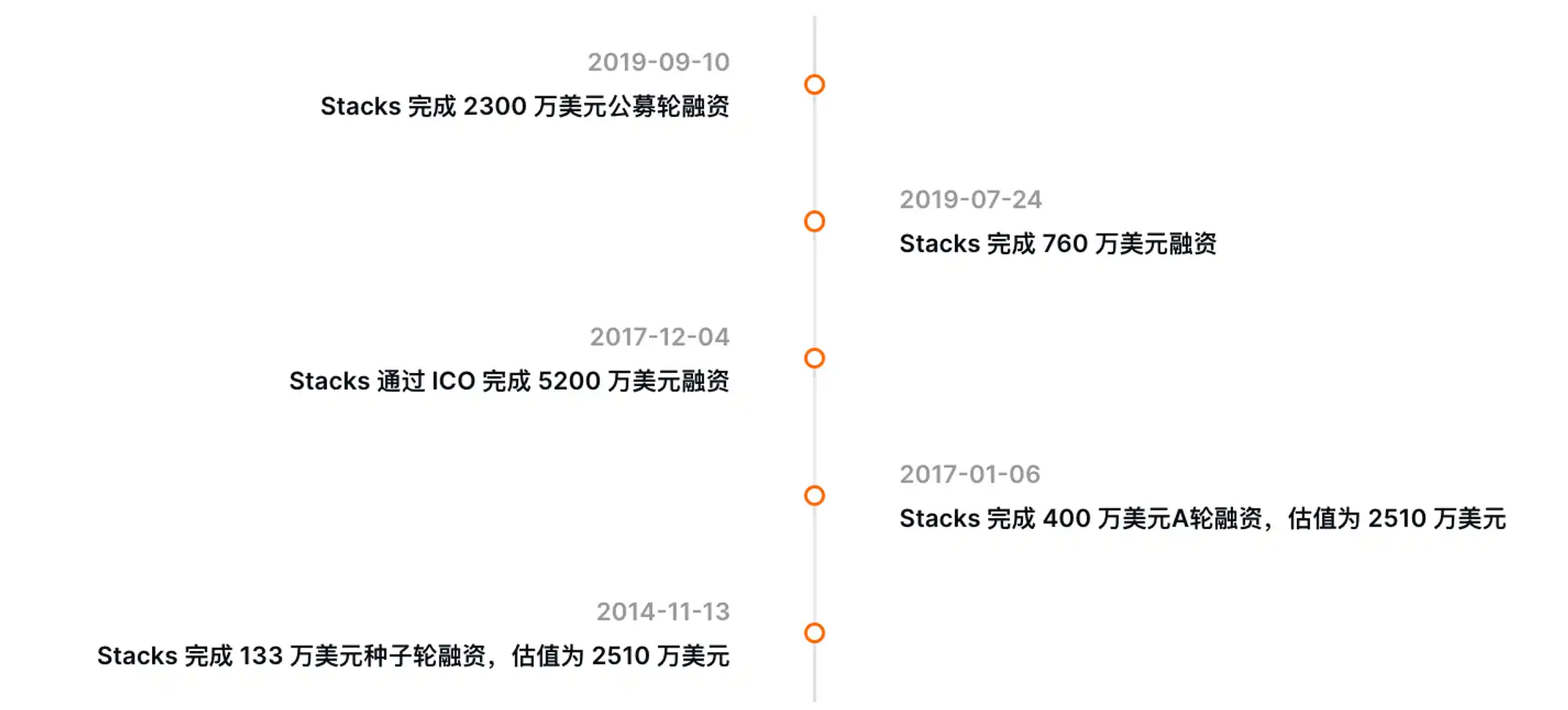
Source: Rootdata
The specific time points and capital parties are as follows:

Source: Rootdata
Trust machine:
Trust Machine was founded by two Princeton computer scientists, Muneeb Ali (one of the founders of Stacks) and JP Singh, the executive director of Hiro. Both are loyal believers in Bitcoin and believe that the Bitcoin layer can unlock a wide range of new use cases. Together, Muneeb Ali and JP Singh, founders of Stacks and executive director of Hiro, created Trust Machine.
Trust Machines has three products under its umbrella: Leather (a wallet, formerly known as Hiro wallet), Console (a social platform), and LNswap.
In April 2022, Breyer Capital, Digital Currency Group, GoldenTree, Hivemind, and Union Square Venture announced a $150 million investment in Trust Machine[1].
In addition, in March 2023, Trust Machine and Gossamer Capital announced a $2.5 million investment in Alex (the largest dex on Stacks).
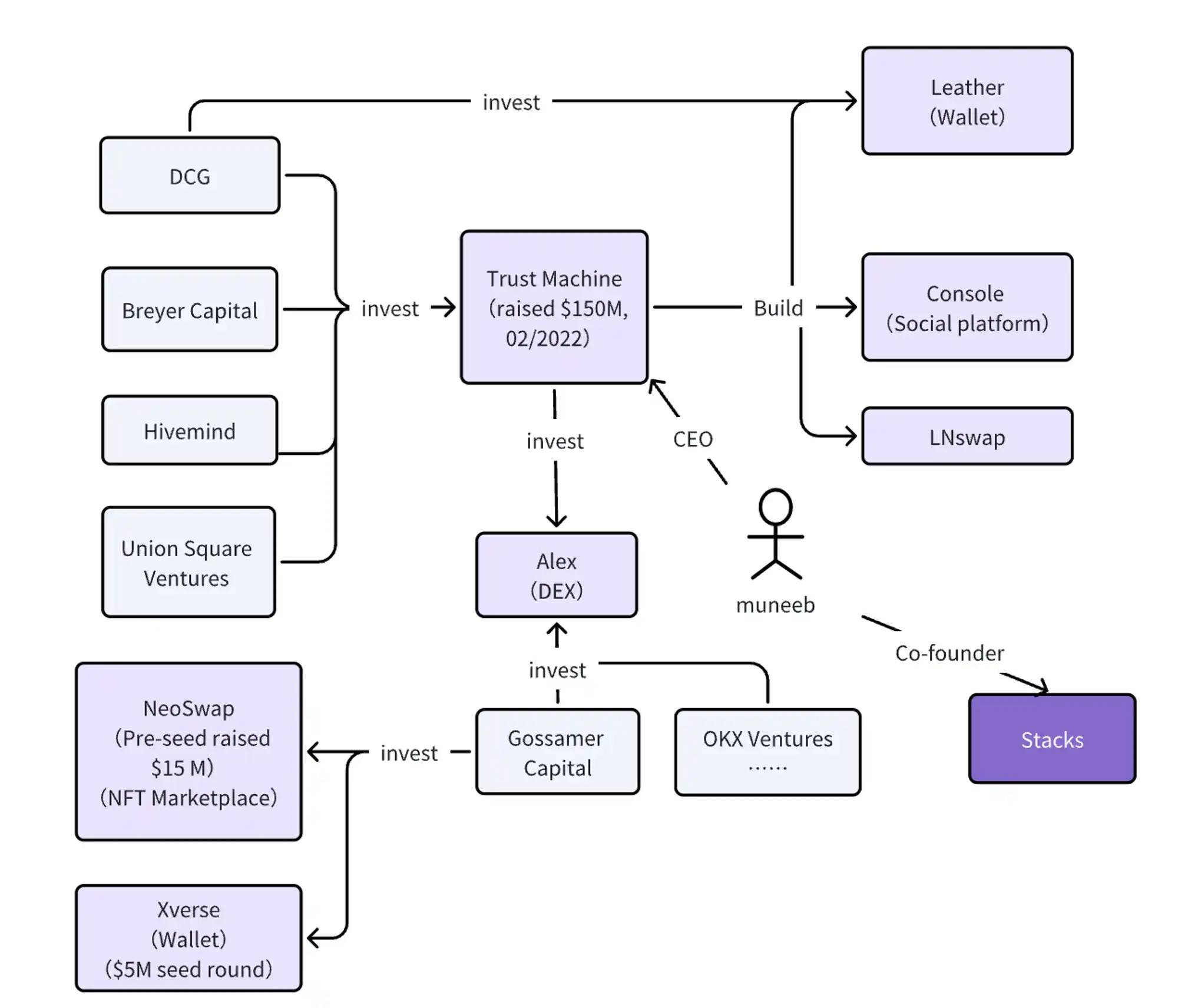
Image source: Compiled by the author of this article
Three, Development History and Current Situation
Development History

Source of information: This article is compiled based on publicly available information.
Current Situation
Stacks has undergone the latest v2.1 network upgrade in the first quarter of 2023, which includes updates to improve the Stacking feature, enhance the Clarity programming language, upgrade the internal blockchain, and improve reliability. In addition, the Hiro developer platform has been launched, allowing developers to build and deploy smart contracts on Stacks through a hosted experience.
Currently, the community is actively preparing for the Nakamoto upgrade expected to occur in Q4 2023.
Nakamoto's upgrade introduced a series of technological advancements, combined with the introduction of the 1:1 Bitcoin-backed asset sBTC, Stacks will soon be able to be written into Bitcoin in a fully decentralized manner. sBTC is a trust-minimized way of moving Bitcoin between L1 and L2. In addition, unlike early sidechain approaches, the threshold wallet is managed by a group of permissionless, dynamically changing entities who have economic incentives to maintain the peg and can freely join or exit peg maintenance. Using this mechanism, an asset can be issued on the Bitcoin layer that is always pegged 1:1 to Bitcoin. Furthermore, Nakamoto's upgrade will significantly reduce execution time from several minutes to several seconds.
The community has already opened the trial application for sBTC for developers, and actively organized community members to learn about the upgrade points and use cases.
Four, Consensus Mechanism: POX
Stacks' earliest consensus mechanism was POB (proof-of-burn), proposed by Jude Nelson and Aaron Blankstein at the end of 2018.
POX(Proof of Transfer)

L1 or L2?
2) Interpretive: Clarity code is interpretive, meaning it is executed line by line when submitted to the chain, unlike other languages such as Solidity which require compilation into bytecode. This reduces the potential for vulnerabilities introduced by compilers and maintains the readability of smart contracts, as Clarity contract code is the executed code and not compiled bytecode.
4) Prohibition of recursive calls: Clarity's design prohibits recursive calls, which is a situation that may lead to contract vulnerabilities, where one contract calls another contract and then calls back to the original contract, thereby triggering multiple extraction operations.
5) Preventing overflow and underflow: Clarity prevents numerical calculation overflow and underflow, which is a common type of vulnerability that may lead to abnormal behavior of smart contracts.
6) Built-in support for custom tokens: Clarity has built-in support for creating custom fungible and non-fungible tokens, which is one of the popular use cases for smart contracts. Developers do not need to worry about internal asset management, supply management, or token event emission, as these features are already integrated into the Clarity language.
7) Transaction protection based on post-conditions: Clarity supports attaching post-conditions to transactions to ensure that the chain state changes as expected after the transaction is completed. If the post-condition check fails, the transaction will be revoked.
8) Mandatory response handling: Public calls to Clarity contracts must return a response indicating success or failure. This helps ensure that errors are not ignored, thereby increasing the security of the contract.
9) Composition over inheritance: Clarity adopts the principle of composition over inheritance, rather than inheriting other contracts like in languages such as Solidity. Developers can define features and have them implemented by different smart contracts, providing greater flexibility.
10) Accessing the Bitcoin blockchain: Clarity smart contracts can read the state of the Bitcoin blockchain, which means you can use Bitcoin transactions as triggers in your smart contracts. Clarity also provides many built-in functions to verify secp256k1 signatures and recover keys.
Gaia Storage System
Gaia is a unique decentralized storage system in the Stacks blockchain, emphasizing user ownership and control of data. Unlike some other immutable storage solutions on other blockchains, such as IPFS and Arweave, Gaia focuses on user control of data rather than emphasizing immutability.
Gaia storage system consists of Hub services and storage resources provided by cloud software vendors. Storage providers can be any commercial providers such as Azure, DigitalOcean, Amazon EC2, etc. Gaia currently supports S3, Azure Blob Storage, Google Cloud Platform, and local disks, but the driver model allows for support of other backends.
Gaia stores data as a simple key-value store. Whenever an identity is created, the corresponding data store is associated with that identity on Gaia. When a user logs into a decentralized application (dApp), the authentication process provides the URL of the Gaia hub to the application, and Gaia performs storage operations on behalf of the user. A "pointer" is saved in Gaia that points to the Blockstack chain and Atlas subsystem. When users log in to applications and services using the Blockstack authentication protocol, this storage location information is passed to the application, which then interacts with the specified Gaia data, meaning that cloud storage service providers cannot directly see user data, but can only see encrypted data blocks.
Stacks blockchain only stores identity data, while data created by identity operations is stored in the Gaia storage system. Each user has personal profile data, and when a user interacts with a decentralized dApp, the application stores the data on behalf of the user in Gaia. Because Gaia stores user and application data outside of the blockchain, Stacks dApps typically have higher performance than dApps on other blockchains.

Image source: Stacks whitepaper
Here are some key features about Gaia:
1) User ownership and control: Gaia is designed with a focus on user ownership and control of their data. This means that users can decide where their data is stored and can modify or delete their data, which is different from some other immutable blockchain storage solutions.
2) Connection with Stacks Identity: Gaia connects data access with users' identity on the Stacks blockchain. This connection allows users to better manage and access their data, while being associated with their digital identity.
3) High performance and high availability: Storing user application data outside of the blockchain can provide higher performance and availability, as data read and write operations are not limited by the performance of the blockchain.
Six, Important Upgrade
Stacks Nakamoto Upgrade
Upgrade Points
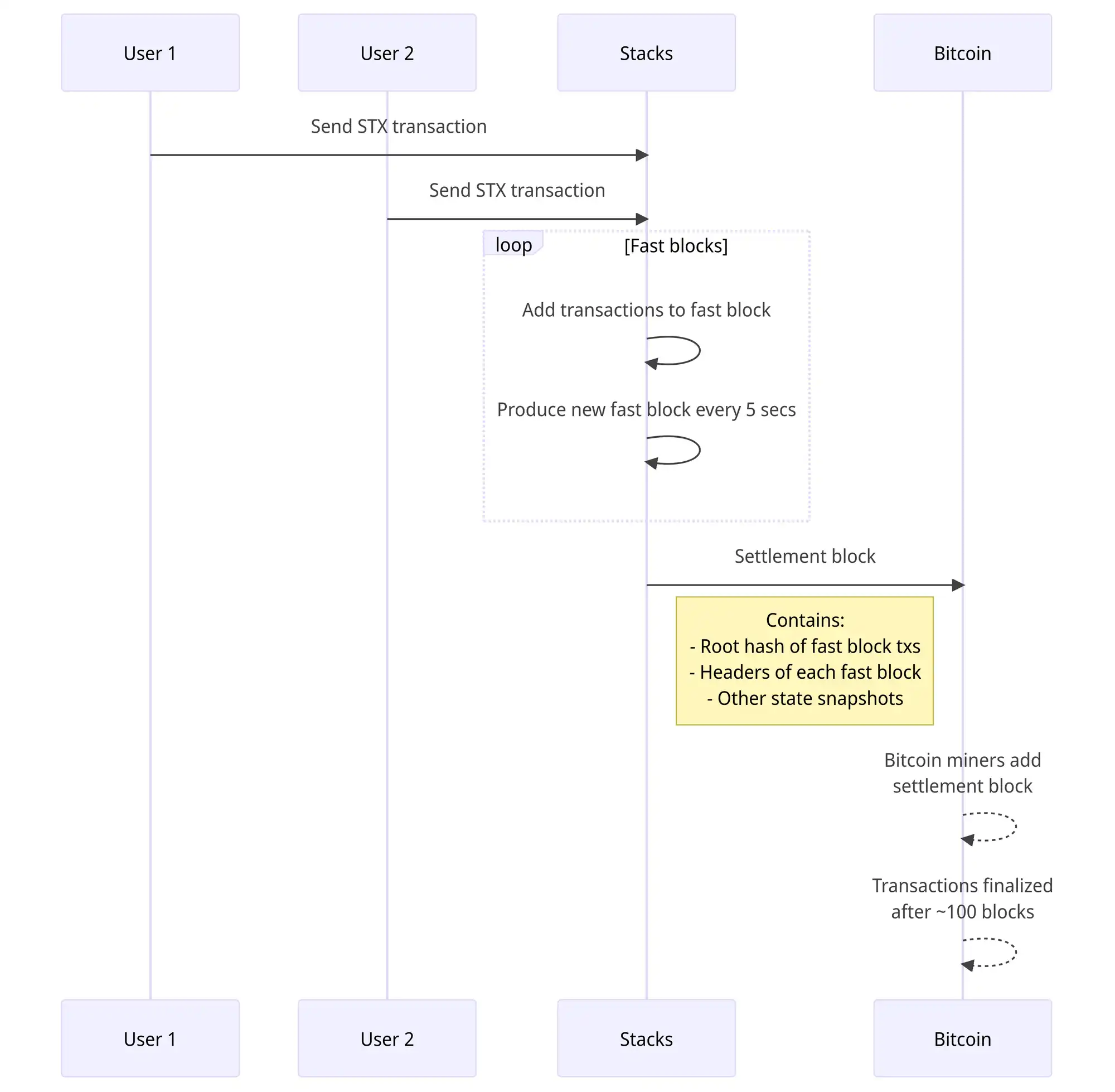
Nakamoto's upgrade introduced a series of technological advancements, combined with the introduction of the 1:1 Bitcoin-backed asset sBTC, Stacks will soon be able to be written into Bitcoin in a fully decentralized manner. sBTC is a trust-minimized way of moving Bitcoin between L1 and L2. In addition, unlike early sidechain approaches, the threshold wallet is managed by a group of permissionless, dynamically changing entities who have economic incentives to maintain the peg and can freely join or exit peg maintenance. Using this mechanism, an asset can be issued on the Bitcoin layer that is always pegged 1:1 to Bitcoin. Furthermore, Nakamoto's upgrade will significantly reduce execution time from several minutes to several seconds.
sBTC: Provides a trustless, decentralized, bi-directional anchoring solution that brings BTC liquidity into smart contracts.
The Finality of Bitcoin: Once a transaction on the Stacks blockchain is confirmed under the PoX (Proof of Transfer) block, it is considered irreversible.
Faster Blocks: Stacks blockchain has achieved faster block confirmation times, with each block being confirmed in 5 seconds.
Seven, Token Economy
The total supply limit of STX token is 1.818 billion, and the current circulating supply is approximately 1.42 billion.
The genesis block of Stacks contains 1.32 billion STX tokens. These STX tokens were distributed through multiple issuances in 2017 and 2019. The price of STX tokens issued in 2017 was $0.12 per STX, while the price of STX tokens issued in 2019 was $0.25 per STX. The SEC-compliant issuance price of STX tokens in 2019 was $0.30 per STX.

The mining rewards are distributed as follows: 1000 STX per block for the first 4 years, 500 STX per block for the next 4 years, 250 STX per block for the following 4 years, and 125 STX per block permanently thereafter. The STX allocated to founders and employees follow a 3-year unlocking schedule.
In October 2020, Stacks changed the minting and burning mechanism of the STX token. Stacks did not implement STX minting and burning, but instead reduced the token issuance. By 2050, the total supply will reach approximately 1.818 billion.


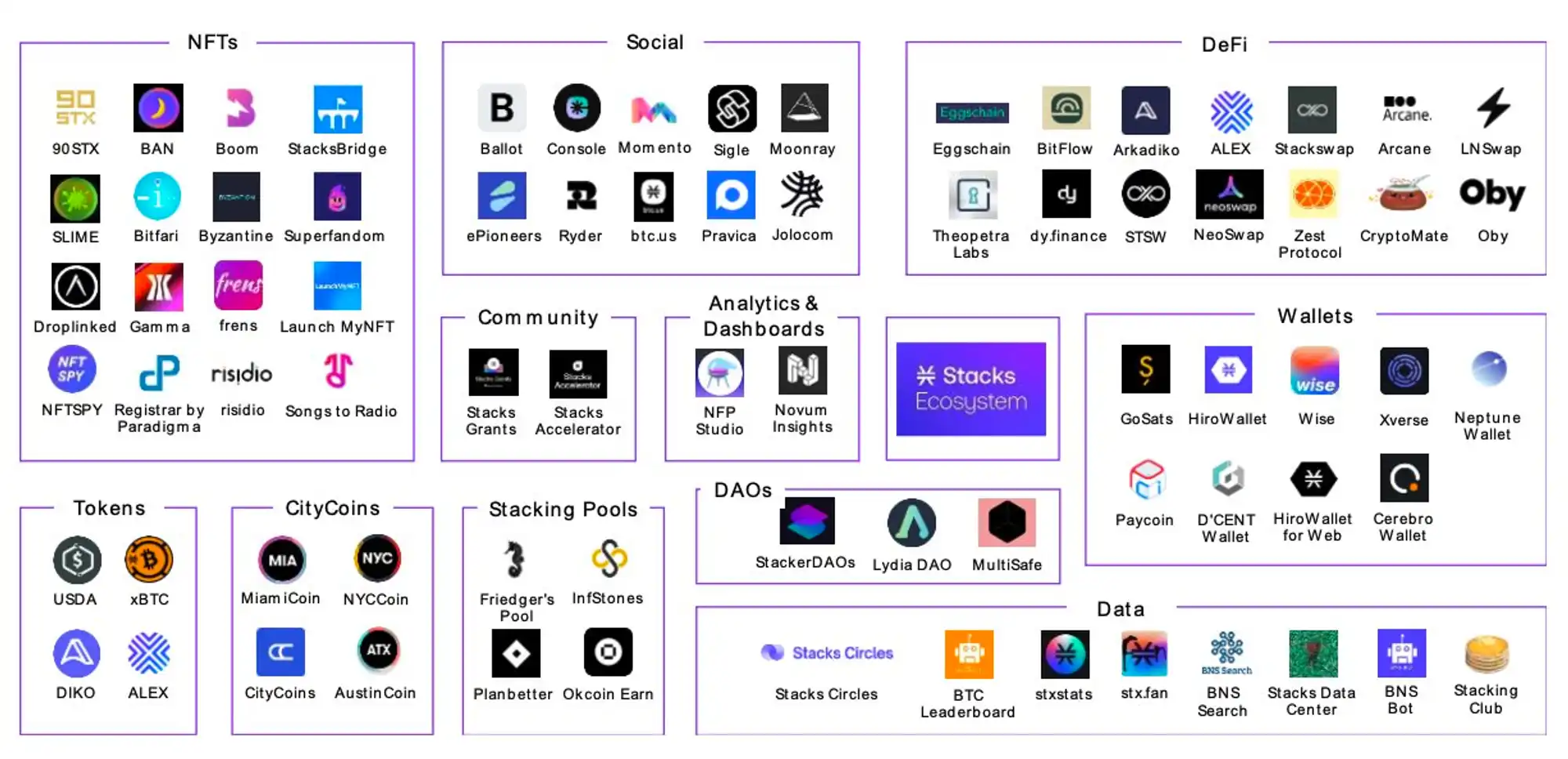
Xverse
Leather

DeFi
ALEX

Arkadiko

LNSwap

NFT
Gamma
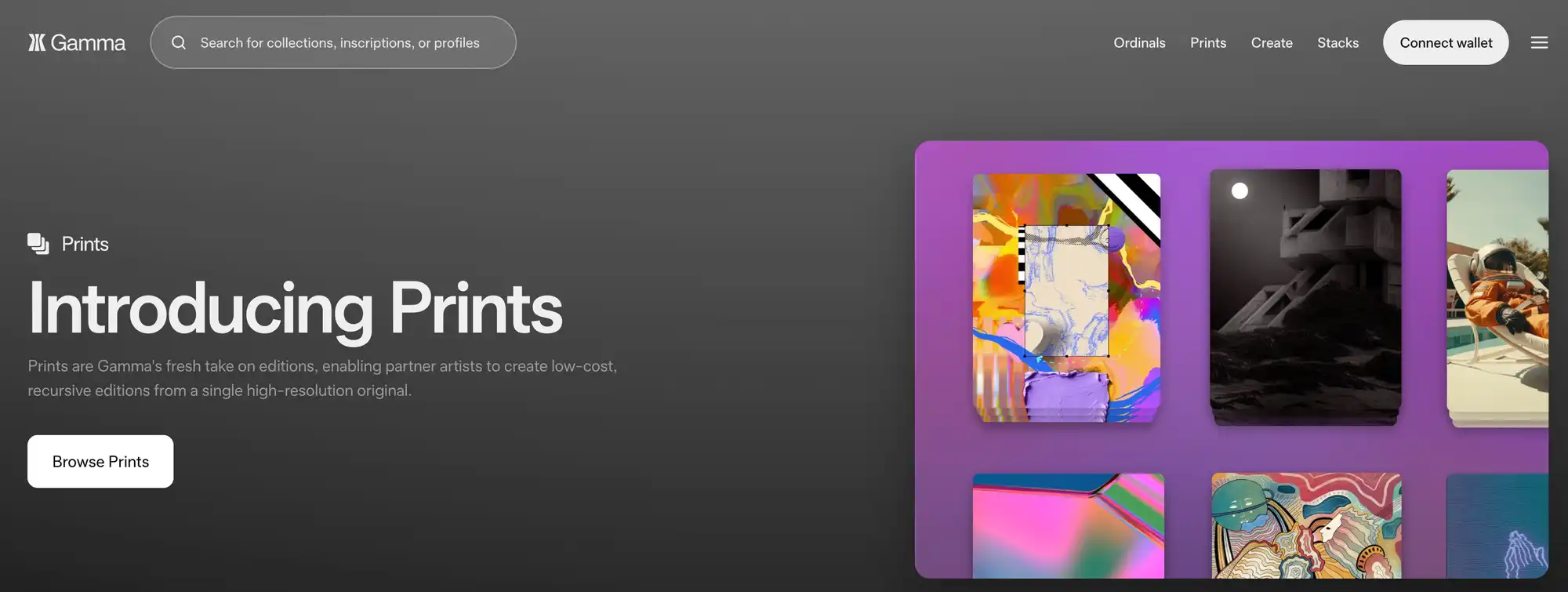
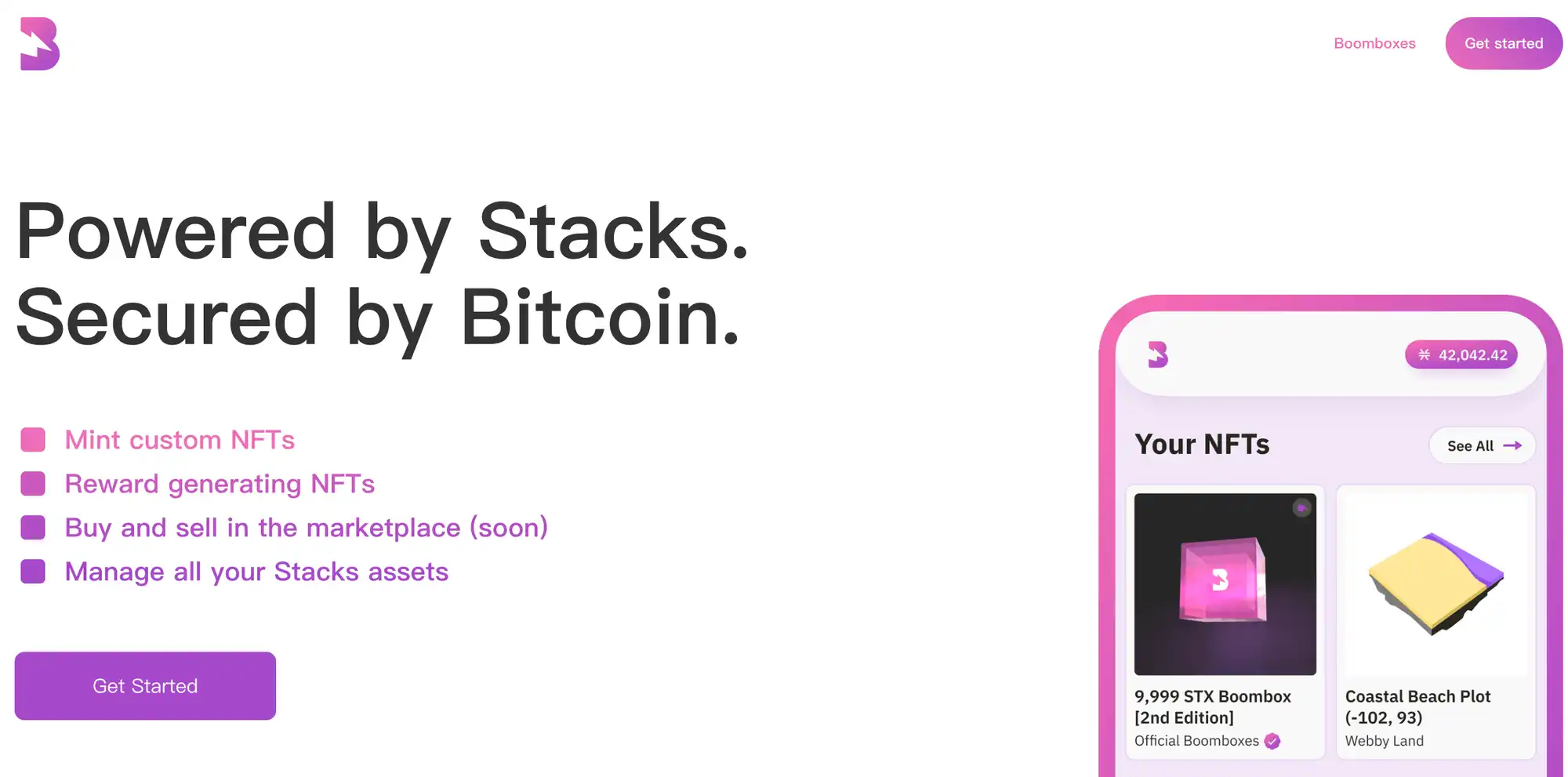
Boom
Ordinals & BRC20
The Oridnals protocol has completely ignited the BTC ecosystem, and its rapid development is also mutually promoting the adoption of Taproot. People can encode the data of NFTs and write them into the space of segregated witness extension (4MB per block).
Atomicals & ARC20
Atomicals is another derivative protocol that implements tokens on UTXO by engraving data.
Different from Oridnals, which was originally designed for NFTs, it rethinks from the ground up how to issue tokens in a decentralized, tamper-proof, and fair manner on BTC.
When verifying an Atomicals transaction, you only need to query the corresponding sat UTXO on the BTC chain. The atomicity of ARC20 Token is consistent with that of BTC itself, and the calculation of ARC20 transfer is completely processed by the BTC underlying network.
Atomicals' design of binding UTXOs cleverly avoids the complexity faced by BRC20, is more decentralized, more BTC-native, and most importantly, more in line with the culture of the BTC community.
Rune & Pipe
Amidst the trend of hype, Casey also proposed a way to issue FT specifically through an inscription implementation called Rune.
Rune's idea was just a concept. The founder of #Trac based on this idea to write the first usable protocol and issued $PIPE. Due to Casey's high popularity, $PIPE continued the hype of BRC20 and quickly completed the first wave of speculation.
The legitimacy of Rune is stronger than BRC20, but it is still difficult to be accepted by the BTC community.
Lightning Network
Lightning Network is the king of legitimacy in the BTC community. Since 2016, for a long period of time, more than half of the developers in the BTC ecosystem have been working on the development of Lightning Network.
The foundation of Lightning Network is payment channels, a concept first proposed by Satoshi Nakamoto. The two parties in a transaction lock BTC through multi-signature and maintain a ledger off-chain to record the transaction.
The interconnected payment channels form a network, allowing parties not directly connected to each other to transact through channel hopping. The Lightning Network has indeed expanded the performance of BTC transfers, providing users with a better experience.
The final BTC settlement can only be conducted on the BTC mainnet, and all coins are still stored in the public-private key system.
Taproot Assets (Taro)
Unlike BRC20 and others, Taproot Assets only writes token information in the UTXO output script of the BTC mainnet, without storing transfer, mint, and other functional codes for the token.
Taproot Assets only considers the BTC mainnet as a registry of tokens and does not rely entirely on the operation of the BTC mainnet. Therefore, these assets must be stored in the Lightning Network in order to be traded.
Therefore, the tokens of Taproot Assets must rely on third-party storage indexers. Without these indexers, the tokens will be lost forever.
RGB
RGB is an intelligent contract system based on BTC and Lightning Network, which is considered to be one of the ultimate scaling solutions. However, its progress has been slow due to its complexity.
RGB converts the state of a smart contract into a concise proof, which is then engraved into the output script of a BTC UTXO.
Users can verify this UTXO to check the status of the smart contract. When the smart contract state is updated, a new UTXO is created to store the proof of state change.
You can think of RGB as BTC's L2. The advantage of this design is that it utilizes BTC's security to guarantee smart contracts. However, as the number of smart contracts increases, the demand for UTXO encapsulated data will also increase, ultimately inevitably causing a lot of redundancy in the BTC blockchain.
RSK & RIF
RSK can be seen as the L2 of BTC, essentially an EVM-based smart contract chain.
RSK simply cross-chains mainnet BTC to its own face as network gas through Hash lock.
At the same time, RSK adopts the same POW consensus algorithm as BTC, so BTC miners can also mine on RSK at the same time and earn transaction fees in $RBTC.
BitVM
BitVM is currently the most BTC-native, most promising, and technically hardcore smart contract extension solution.
Without the need to modify the BTC network, a VM virtual machine that supports computation can be run through Optimistic Rollup to implement smart contracts for BTC. The BTC network is used to run fraud proofs for Optimistic Rollup.
Using the most basic Hash lock and BTC script operations, OP_BOOLAND and OP_NOT, a simple logic gate is implemented. By combining BTC logic gates, a circuit that can perform calculations is formed, and through this circuit, fraud proofs can be processed on the BTC chain.
Ten, Innovation and Risk
Innovation S (Secured by the entire hash power of Bitcoin): The security of the Stacks smart contract layer is supported by the entire hash power of Bitcoin, which means it is protected by the high security and decentralized features of the Bitcoin network.
T (Trust-minimized Bitcoin peg mechanism; write to Bitcoin): Stacks has adopted a trust-minimized Bitcoin peg mechanism that allows information to be written to the Bitcoin blockchain. This ensures interoperability between Bitcoin and Stacks while minimizing trust requirements.
A (Atomic BTC swaps and assets owned by BTC addresses): Stacks allows for atomic Bitcoin (BTC) swaps while ensuring that assets in smart contracts are owned by Bitcoin addresses. This means that assets can be safely transferred from the Bitcoin network to the Stacks blockchain and vice versa.
C (Clarity language for safe, decidable smart contracts): Stacks uses the Clarity programming language, which is designed specifically for writing secure and decidable smart contracts. The key feature of the Clarity language is its ability to reduce errors and uncertainty in smart contracts.
K (Knowledge of full Bitcoin state; read from Bitcoin): The Stacks smart contract layer has knowledge of the full Bitcoin state and can read information from the Bitcoin blockchain. This allows Stacks smart contracts to stay connected with the Bitcoin network, understand, and verify data on the Bitcoin chain.
S (Scalable, fast transactions that settle on Bitcoin): The Stacks smart contract layer supports scalable and fast transactions that settle on Bitcoin. Despite its fast transaction speed, Stacks still benefits from the finality and security of Bitcoin.
Risk
Security: Although Stacks transactions are batched and hashed on the BTC mainnet, the security of BTC is beyond doubt. However, like other blockchains, the Stacks network itself may face security threats such as vulnerabilities and hacker attacks, and some people question the degree of decentralization of the Stacks network. These situations may result in economic losses and compromise the security of the network.
Complexity: Although Stacks provides developers with constantly evolving infrastructure, the Clarity language still blocks many excellent developers. This complexity may lead to potential errors and low efficiency.
Interoperability: Despite being closely tied to BTC, Stacks and other BTC ecosystem projects still cannot efficiently interoperate. The ability for blockchain networks to seamlessly work together is crucial for technology adoption and efficiency. The lack of interoperability can lead to inefficiencies and hinder innovation.

MT Capital
Welcome to join the official BlockBeats community:
Telegram Subscription Group: https://t.me/theblockbeats
Telegram Discussion Group: https://t.me/BlockBeats_App
Official Twitter Account: https://twitter.com/BlockBeatsAsia
 Related Articles