Data analysis of South Korea’s CEX status and investor behavior
Original Title: "DI - 01: Korean CEX"
Original Author: Bulmat, Do Dive
Original Translation: Deep Tide TechFlow

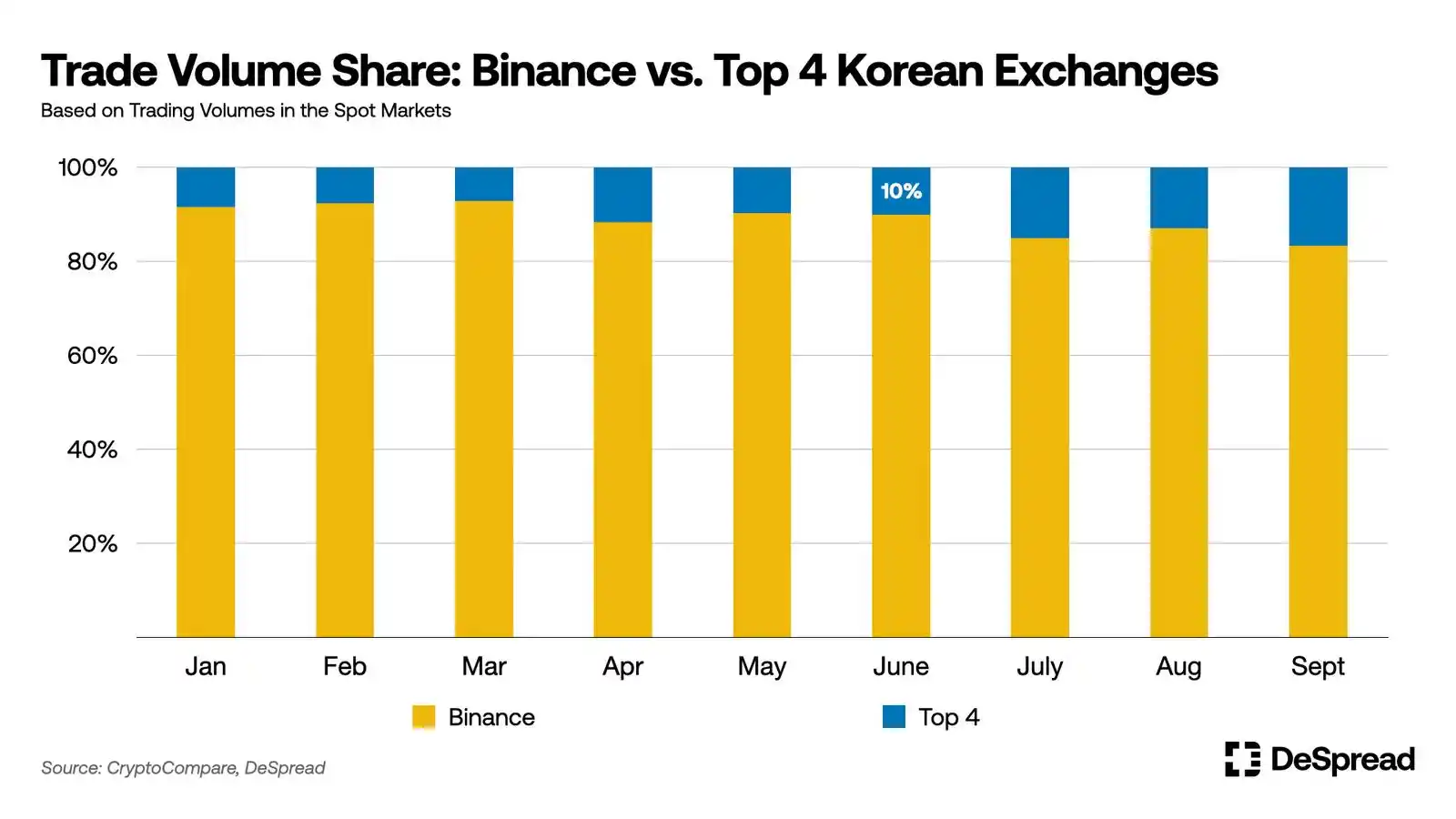
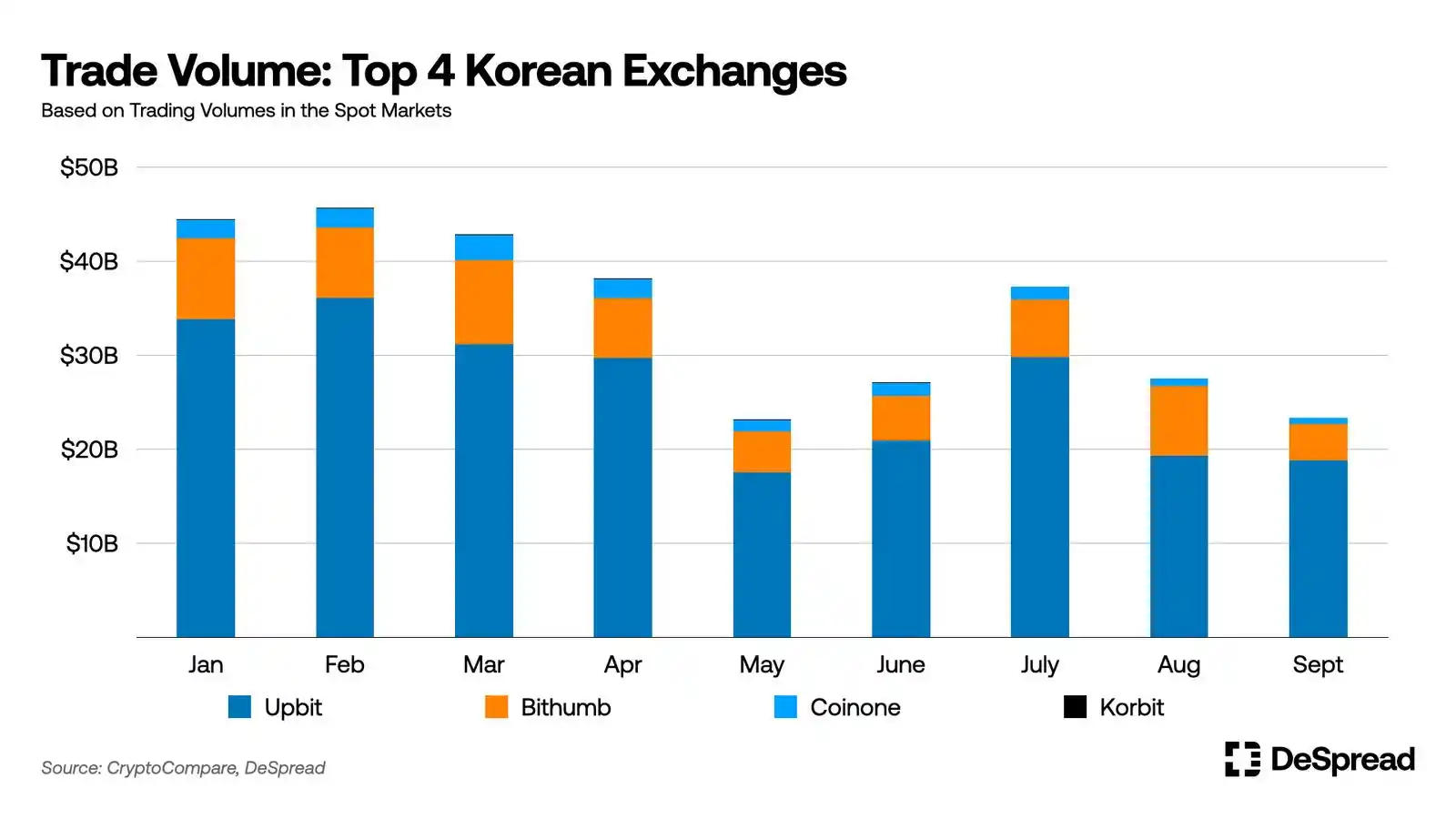
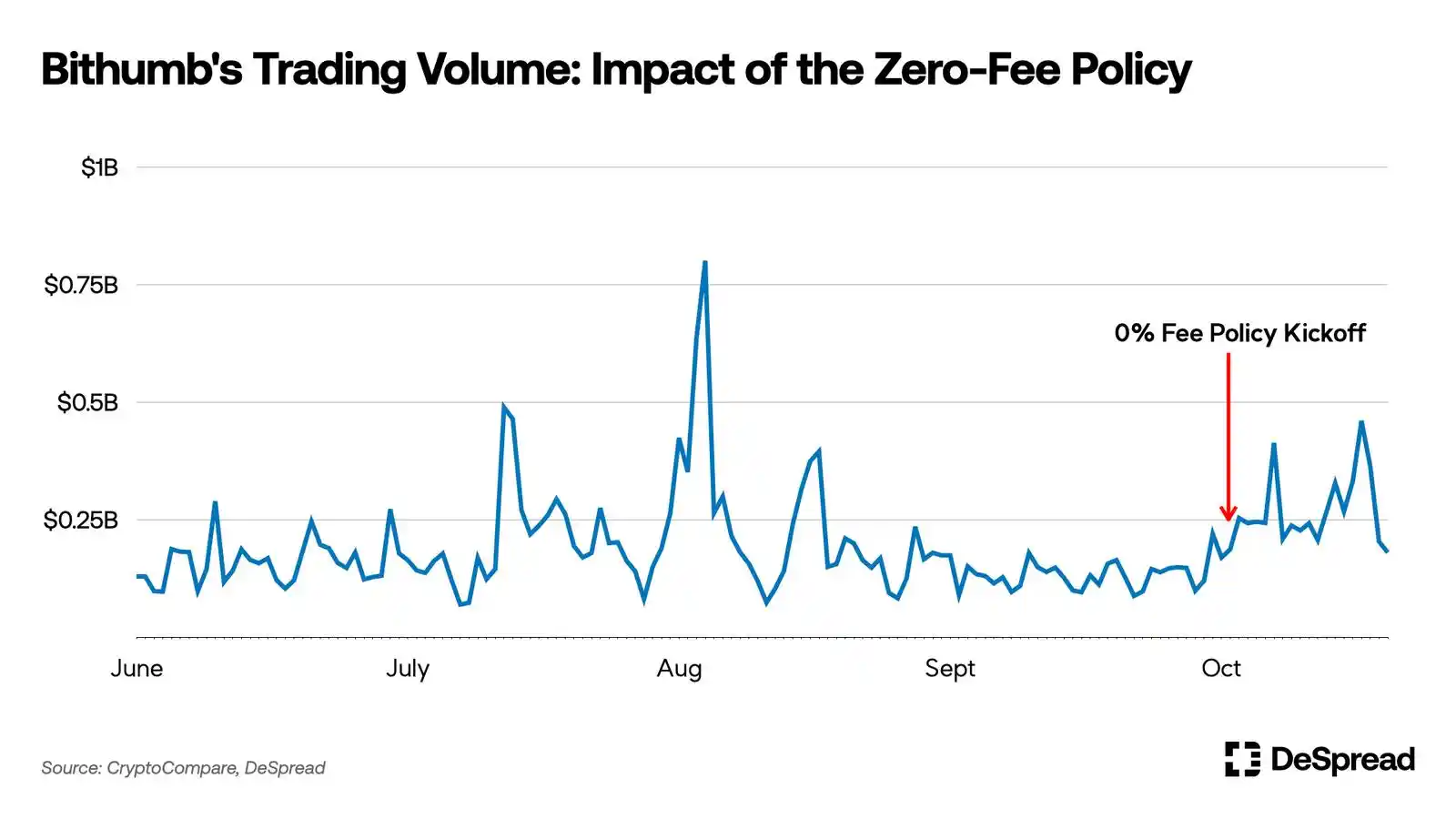
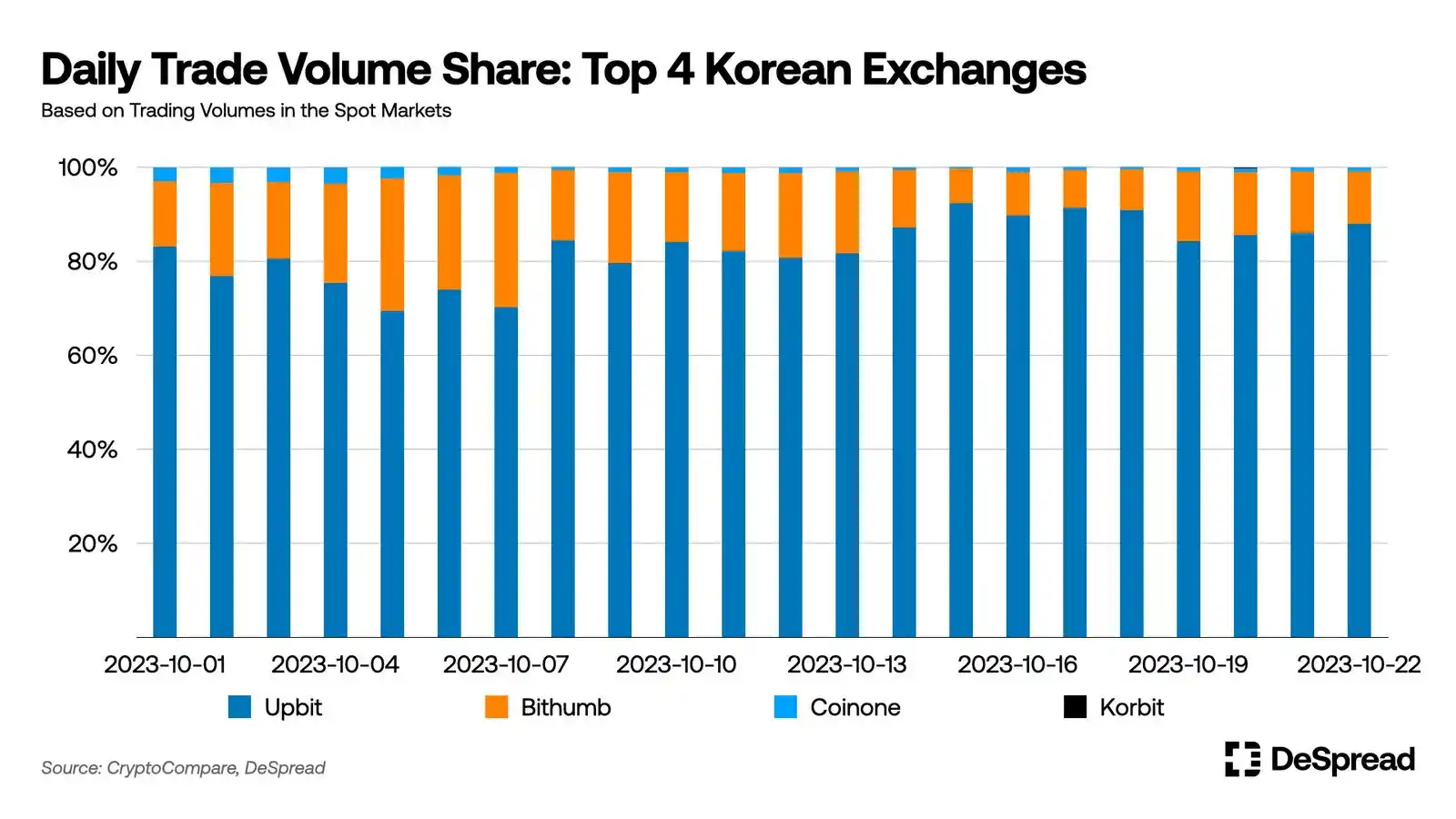
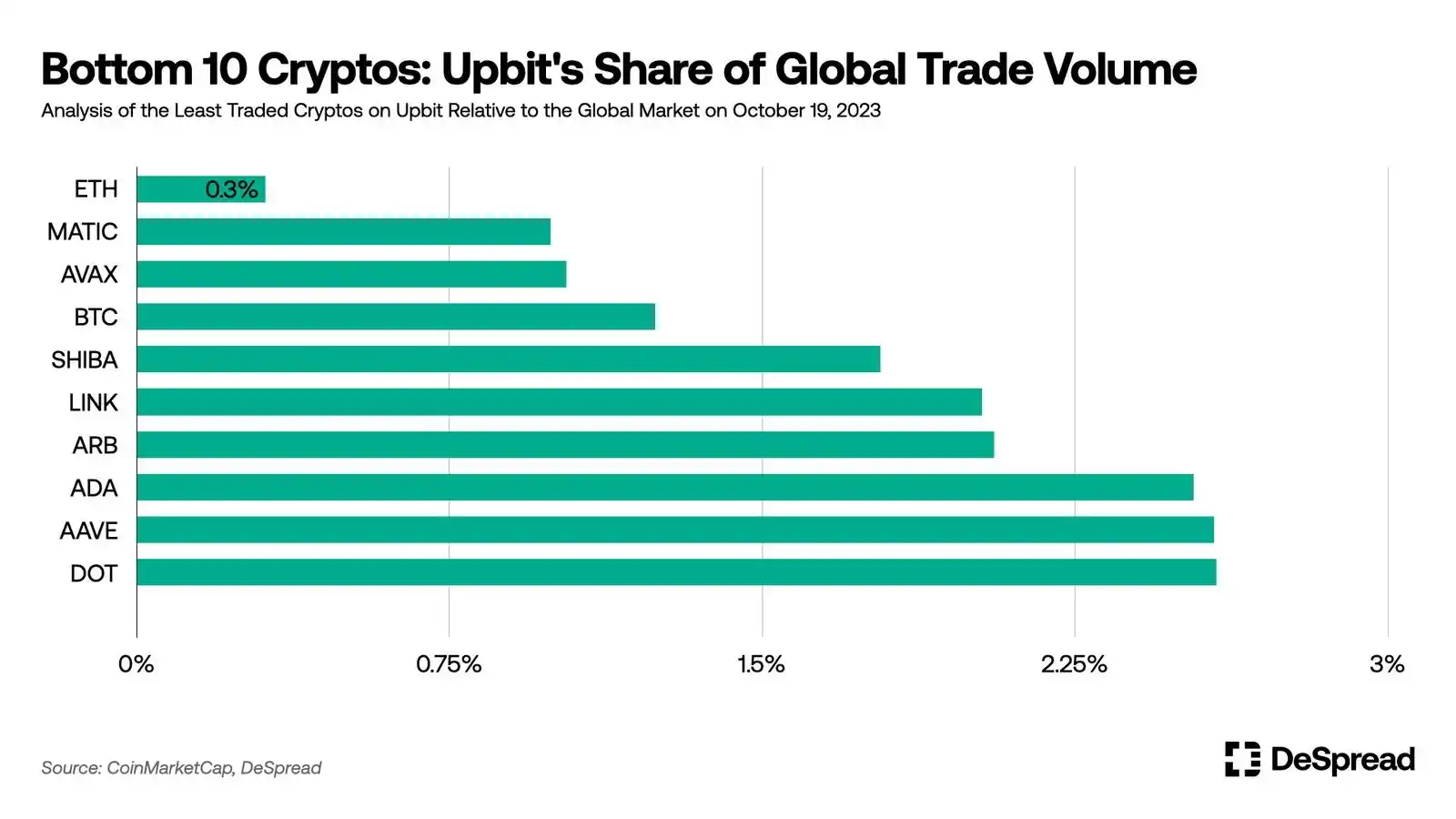
This article has chosen centralized exchanges in South Korea as the theme of exploration. According to a survey by the Korea Financial Intelligence Unit (KoFIU), it is expected that by the first half of 2023, the number of cryptocurrency investors in South Korea will reach about 6 million, which is an astonishing number, accounting for more than 10% of the total population of South Korea. Most of these investors are mainly involved in investment activities centered around centralized exchanges, which makes the influence of centralized exchanges in the South Korean cryptocurrency market quite significant. In the following section, we will examine the data of centralized exchanges in South Korea and explore the characteristics and trends of Korean investors. These analyses are mainly based on the data of four major exchanges: Upbit, Bithumb, Coinone, and Korbit. Some of the analyses are based on the data from the third week of October (14th to 20th). Declining trend in trading volume: Since reaching its peak in March of this year, the overall trading volume of centralized exchanges (CEX) has been on a downward trend. During this period, market volatility has also decreased, and the price of Bitcoin has remained relatively stable in the range of $27K to $28K for the six months from the end of March to the end of September, without any major fluctuations. The relative strength of Korean exchanges: Korean exchanges have also not been able to escape this contraction trend. After reaching a peak trading volume of $45 billion in February, it sharply dropped to $23 billion in May. However, it has been on the rise since then, reaching a trading volume of $37 billion in July, with even greater growth compared to the world's largest cryptocurrency exchange, Binance. Comparison between Korean exchanges and international exchanges: Compared to Binance, the four major Korean exchanges have a trading volume of approximately 10% of Binance's this year. Compared to Coinbase during the same period, their trading volume is higher, indicating that Korean exchanges have an important position in the international market. Market share growth trend: In addition, the market share of the four major Korean exchanges has been steadily increasing. Compared to Binance's trading volume, it has increased from 7% in March to 16% in September. This can be understood as an increase in the influence of domestic exchanges. Upbit is far ahead: In February of this year, Upbit recorded its highest trading volume of $36 billion, accounting for about 80% of the South Korean cryptocurrency trading market, maintaining its dominant position. Although its market share briefly dropped to 70% in August, it quickly rebounded to 80% the following month, and its market share has remained stable. The market share of Bithumb, Coinone, and Korbit: Bithumb, as the second largest participant in the market, maintains a strong position, accounting for 15% to 20% of the total trading volume of the four major exchanges. On the other hand, Coinone's market share is between 3% and 5%, while Korbit's share is less than 1%. The reaction of South Korea to the ruling on Ripple was strong: compared to the previous month, Binance's trading volume in July did not show significant fluctuations, but Korean exchanges had explosive reactions to news related to Ripple. The trading volume of the four major Korean exchanges was recorded at $27 billion in June, and increased to $37 billion in July, an increase of 37% from the previous month. This was mainly due to the news of Ripple's partial victory in the lawsuit with the SEC, which caused XRP prices to rise by 80% on July 13th and trading volume to sharply increase. Preliminary response to zero fee policy: Bithumb, the second largest exchange in South Korea, implemented a 0% fee policy on October 4th. This policy has had a positive effect, with Bithumb's trading volume increasing and its market share exceeding 20%. Market share decline: However, the impact of the free policy did not last long, and Bithumb's market share declined, returning to the level before the policy was implemented. The sustainability of zero-fee policy: Although Bithumb's free policy initially effectively increased market share, there is still uncertainty about whether the exchange can continue to grow in the long run. This also indicates that Korean investors' choice of exchanges is not entirely based on the presence or absence of fees. In addition, there are concerns about the sustainability of this policy, as it eliminates the exchange's main source of revenue. High-risk, high-return investment style: Although the trading volume of BTC and ETH accounts for a small proportion of the total trading volume on Upbit, these two cryptocurrencies have a significant share of trading volume on Coinbase, a representative cryptocurrency exchange in the United States. Most individual investors on Upbit show a strong interest in small coins with high profit potential and tend to accept high risks associated with them. This is considered one of the reasons for the high proportion of small coin trading in the Korean market. The cryptocurrencies favored by Korean investors: The chart above shows which cryptocurrencies Korean investors are most interested in. By analyzing the data of the most active cryptocurrencies traded in Korea compared to the global market last week, we found that Loom Network ($LOOM) had the highest trading volume with a market share of 62%, ranking first. Next were eCash ($XEC) with 55% and Flow ($FLOW) with 43%. Stacks ($STX) and Bitcoin SV ($BSV) also made it onto the list with 37% and 34%, respectively. The surge of $LOOM, a mysterious dynamic: In the third week of October, Loom Network ($LOOM) was the most active cryptocurrency traded in Korea compared to the global market. This means that Korean investors are actively trading this asset compared to global investors. Starting from September 15th, the token price began to rise inexplicably and skyrocketed nearly 10 times in just one month, reaching 686 Korean won. However, starting from October 15th, it began to sharply decline and was around 140 Korean won at the time of writing this report. Due to this drastic price fluctuation, Loom Network briefly entered the top 100 global market capitalization. The impact of exchange deposit and withdrawal policies: Changes in deposit and withdrawal policies of Korean exchanges may directly affect prices and trading volumes. Specifically, on October 14th, compared to the previous day, the price and trading volume of $FLOW both showed significant growth when deposits and withdrawals were temporarily suspended. This phenomenon, known as the "Gaduri effect," occurs when arbitrage trading with overseas exchanges becomes impossible due to the suspension of deposits and withdrawals. Continuously watched currencies: Although some cryptocurrencies, such as Loom Network and Flow, have received brief attention, cases like Stacks and eCash continue to be watched on Korean exchanges, unaffected by temporary events. These cases are worth noting because they are continuously traded in the Korean market, regardless of global trends. The "Kimchi coins" mainly traded on Upbit: Among the cryptocurrencies traded on Upbit, Steem Dollars ($SBD), Moss Coin ($MOC), and Hippocrat ($HPO) account for 100% of the trading volume and are exclusively traded on Upbit. In addition, cryptocurrencies such as Sentinel Protocol ($UPP), Aha Token ($AHT), and Groestlcoin ($GRS) are mainly traded on Upbit and are called "Kimchi coins" because they have not received much attention in the global market. These currencies are mainly traded by Korean investors and have formed their own market on the Upbit platform. The performance of mainstream currencies is relatively poor: Cryptocurrencies that dominate the global market, such as Bitcoin (BTC), Ethereum (ETH), and Polygon (MATIC), have a large trading volume worldwide. However, their trading volume is surprisingly low on Upbit. This phenomenon indicates that Upbit has unique characteristics compared to the global market and reflects differences in investor preferences and investment strategies between regions. However, it should be noted that compared to global giant exchanges like Binance, Upbit's total trading volume is relatively low, so the low trading volume of these major cryptocurrencies should also be taken into account. Diversity of global trends and regional markets: As mentioned above, the Korean market shows its uniqueness compared to the global market, which may also apply to other regions. This implies that global cryptocurrency projects need to establish and implement customized go-to-market (GTM) strategies tailored to the characteristics of each region. Welcome to join the official BlockBeats community: Telegram Subscription Group: https://t.me/theblockbeats Telegram Discussion Group: https://t.me/BlockBeats_App Official Twitter Account: https://twitter.com/BlockBeatsAsia
I am a professional in the encryption industry. Please translate the following Chinese text into English without considering the context or industry-specific terms and names. Do not omit any English words or phrases, including capitalized ones such as ZKS, STARK, and SCROLL. If there are English characters in an tag, do not translate them and return the tag as is. If the content consists only of punctuation marks, return them as is. Do not translate HTML tags such as , , , and
. If an HTML tag contains English characters, omit the translation and return the tag as is. Please preserve any content within tags. Translate all Chinese characters.
The text to be translated is:
Introduction
Korean exchange market share increases despite overall downward trend

Upbit's Monopoly

Bithumb's Zero Fee Policy
Coinbase and Upbit
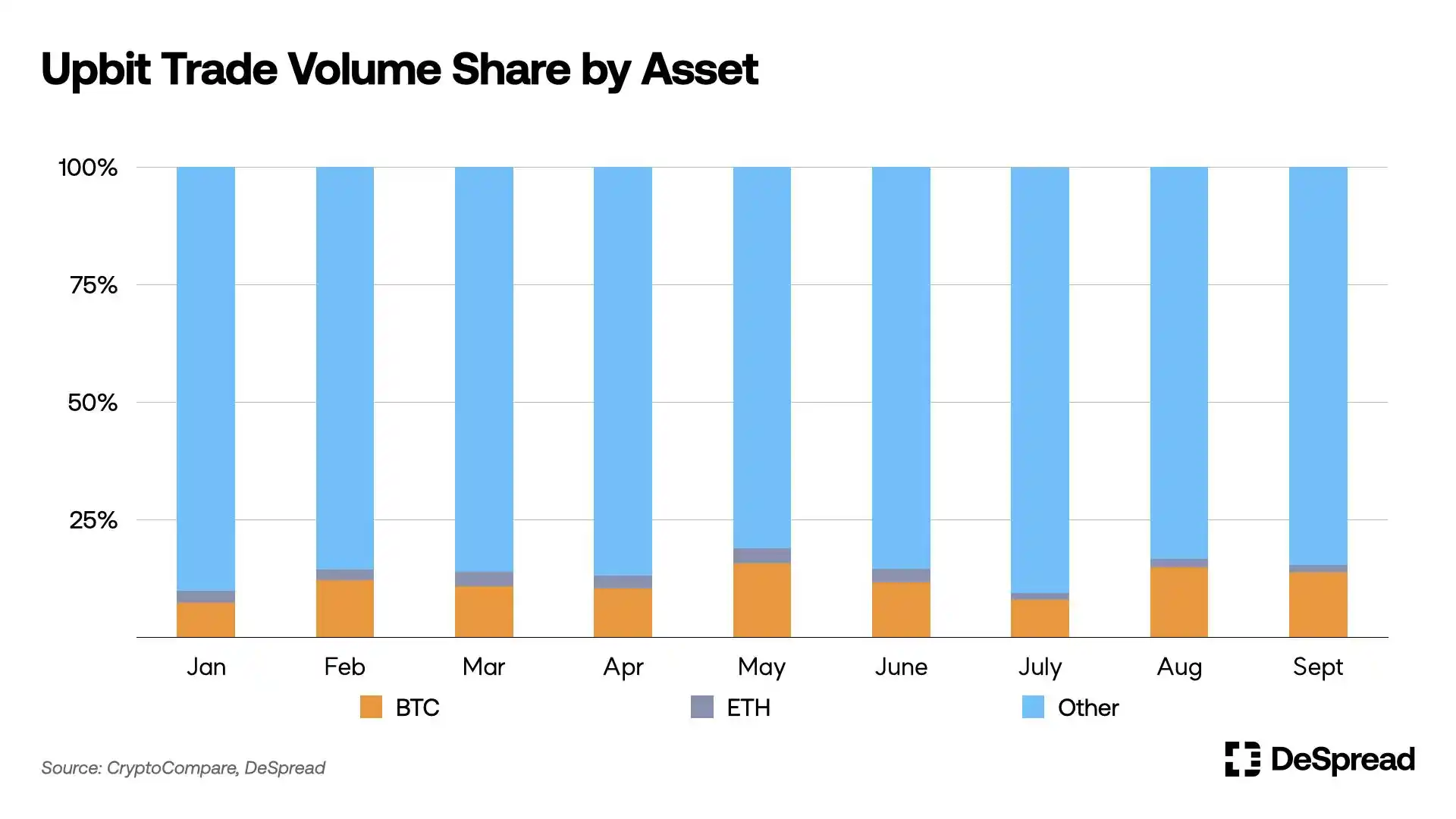

Trading centered around institutional investors: Unlike Upbit, Coinbase's trading volume is mainly driven by institutional investors. According to Coinbase's Q2 shareholder letter, institutional investors account for approximately 85% of Coinbase's total trading volume. They tend to seek portfolio stability, which is why trading in the highest market cap cryptocurrencies, BTC and ETH, accounts for a relatively high proportion.Korean Market Characteristics

Upbit Investor's In-Depth Analysis

Upbit Deposit and Withdrawal Network Analysis