Neon Machine: Polychain leads investment to achieve "resurrection", a game development studio favored by multiple institutions.

Author: Luccy, BlockBeats
Editor: Jack, BlockBeats
BlockBeats News. On October 25th, game development studio Neon Machine completed a $20 million Series A financing round, led by Polychain, with participation from Griffin Gaming Partners, Brevan Howard Digital, Franklin Templeton, IOSG Ventures, and Tess Ventures.
It is reported that the funds raised in this round of financing will be used to further develop its shooting game Shrapnel at "critical moments".
Highly anticipated Shrapnel
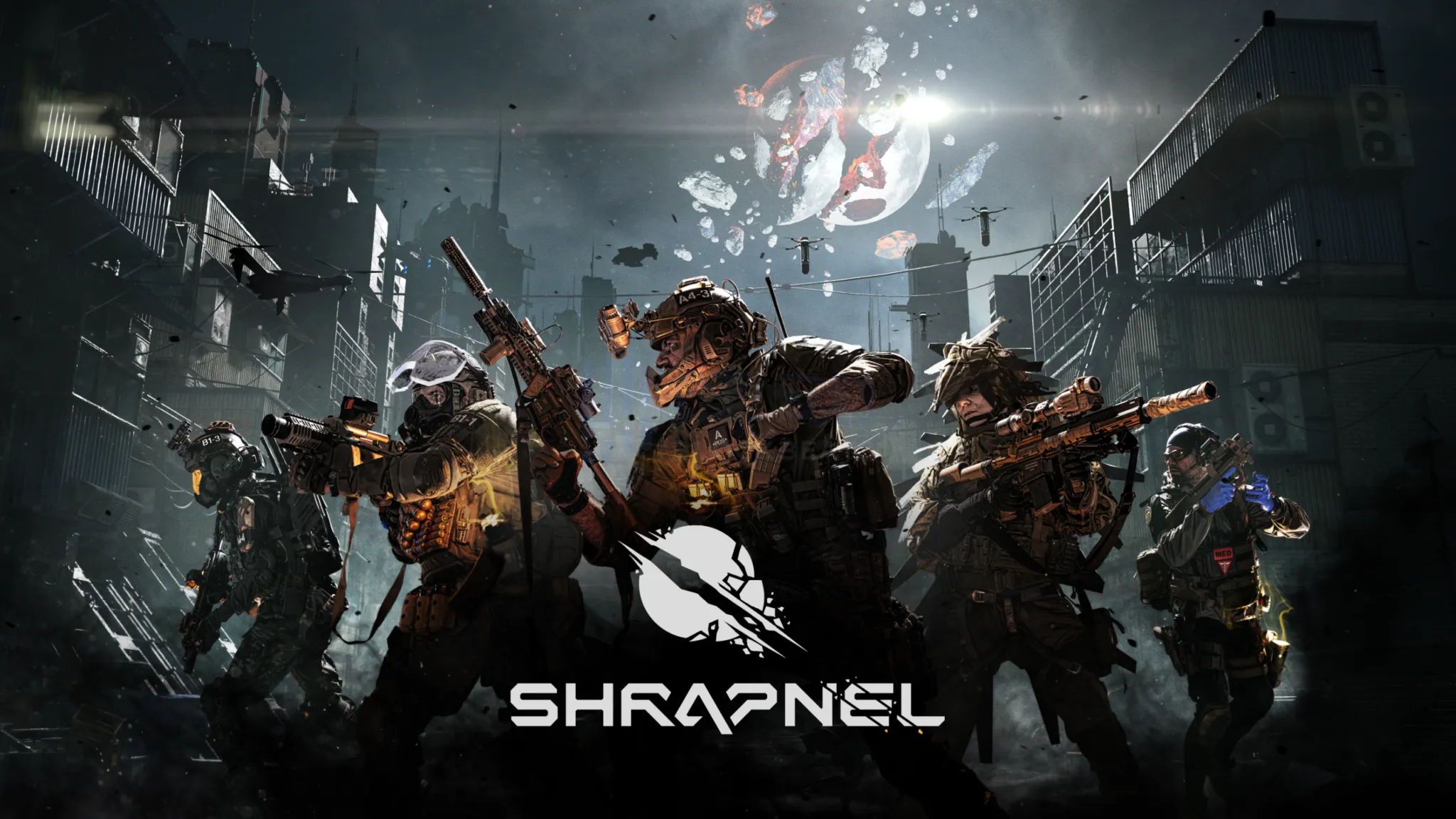
Shrapnel is a AAA-level FPS game, which is supported by blockchain technology for skill-based competition, creative modeling tools, and true digital ownership. As a competitive multiplayer first-person shooter game, Shrapnel bundles a rich set of player creation tools, combining combat, creation, management, and connection into a community where players own the platform and decide its future. Similar to the Call of Duty series, it is made using Unreal Engine 5.
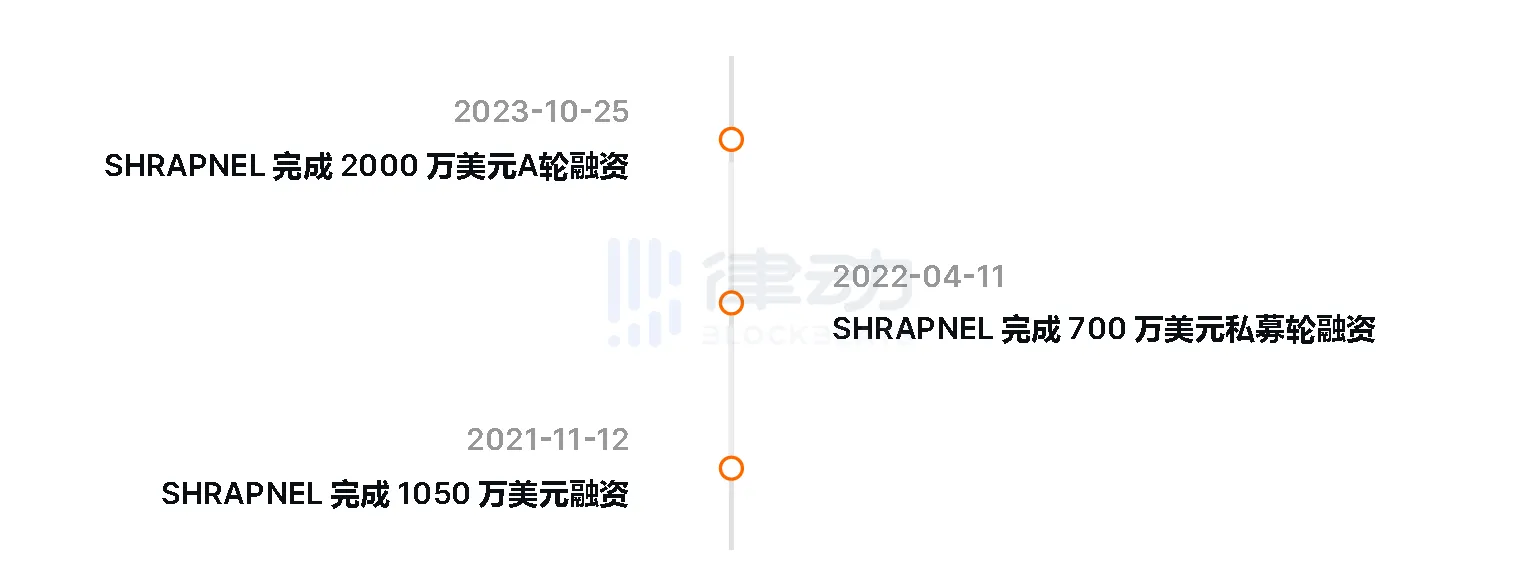
For those who frequently follow the gaming industry, Shrapnel may not be unfamiliar. From the $10.5 million funding led by Griffin Gaming Partners, Polychain Capital, and Forte in 2021, to the $7 million investment from multiple VCs such as Dragonfly, Defiance, and Three Arrows Capital in 2022, and now the $20 million funding led by Polychain, Shrapnel has always been a project of interest for major VCs.
This game is expected to be released in December, initially targeting paying users, and eventually developing into a free game, with plans to be fully released in 2024. Currently, the Shrapnel team has a total of 70 employees.
Based on the Avalanche Subnet NFT Economy
On September 13th, BlockBeats reporter reported on the front line of Token2049 that Emin Gün Sirer, CEO of Ava Labs, stated that Avalanche will launch a new type of subnet. This subnet is different from traditional virtual machines as it has a built-in large language model (LLM), similar to ChatGPT, which allows users to write smart contracts in natural language without relying on complex programming languages or cryptographic terms.
Related reading: "Avalanche targets the Indian crypto "red sea market" after cooperating with Tencent Cloud and Alibaba Cloud".
Shrapnel values the potential of user-generated content (UGC) and hopes to provide game players with the ability to use Shrapnel technology to generate their own game items, which can then be forged into NFTs. A large amount of game content, such as weapon parts, weapons, and cosmetics, will be offered in NFT form on Shrapnel's Avalanche subnet, which is a private encrypted network built on Avalanche.
As early as April, Shrapnel launched its ERC-20 token SHRAP on its Avalanche network, generating 3 billion SHRAP on April 29th. All player-created content (PCC) on the platform will be published on the chain as unique digital projects using SHRAP tokens, and the use of blockchain technology allows players to declare ownership of their creations.
Shrapnel blockchain leader Marc Mercuri explained that every part of each gun and every item that can be worn by characters in the game will be an NFT, including but not limited to symbols, badges, skins, maps, and vanity items. Players can choose to sell, auction, or retain ownership of everything they create.
All SHRAP holders can promote maps and certain fashion items as a way to vote on content. Based on the popularity of the content, promoters will receive a portion of the performance rewards in SHRAP. The implementation of the Shrapnel platform is to enable system payments for validators in the subnet, providing a gas-free experience for players and creators. In addition, SHRAP tokens are also used as exchange media in the Shrapnel market.
Avalanche promises to deliver the fast loading speeds and smooth player experience that Shrapnel players expect. Over time, players will be invited to make decisions about the game. And it's not just built on Avalanche. Shrapnel has launched as an operator of Ethereum NFTs, as well as exchangeable "Sigma Container Units" NFTs on the Ethereum scaling network Polygon, which will provide in-game items for holders.
The curator who successfully discovers exciting content for the community to enjoy will also share the spoils. Players can also purchase land. Landowners who make a pre-commitment to the ecosystem will receive a proportionate share of value creation. The game will also provide players with various types of matchmaking halls, which will be an option for those who want to play without NFTs. However, for those who own NFTs, Shrapnel plans to make each game high-risk, meaning that they will lose their NFTs upon death.
Build UGC with GameBridge
Shrapnel's CEO Mark Long stated in a statement: "Player-generated content is the core of the Shrapnel experience. Although we are just getting started, we already have a great community that is building the game into their own. Therefore, Shrapnel has chosen GameBridge."
GameBridge is a new platform for game developers and marketers, supporting in-game and cross-game content creation, purchasing, selling, and asset trading. Marc Mercuri, the platform leader of Shrapnel, discussed GameBridge with Kate Irwin from Decrypt at the 3XP Expo. This is a feature that simplifies the composability and interoperability of blockchain projects. GameBridge uses blockchain technology behind the scenes, and users do not need to understand concepts such as ERC, EIP, ZK, NFT, or Web3, but can use weapons, cosmetics, and other game concepts in familiar workflows and tools such as Unreal, Unity, and Web. GameBridge brings together the capabilities of cross-chain, content, business, and community.
Long has been thinking about this game since 2000. He hopes that players can modify the game themselves and be rewarded for their game time with SHRAP tokens based on blockchain technology. Don Norbury, the head of Shrapnel Studio, said in a statement: "Players' task is to find strategically important resources in the game, and to promote an exciting evacuation process, but the responsibility does not stop there."
Shrapnel presented some of its gameplay plans in the white paper. The game has two modes: single player and team play. The game is set in 2044 on a future Earth where meteor showers are commonplace. In Shrapnel's world, a giant asteroid named 38 Sigma collides with the moon, causing meteorite bombardment in a 500-kilometer-wide strip around the Earth. This makes an area called the "sacrifice zone" uninhabitable and cut off from the rest of the world.
Players can choose one of three operator categories: Assault, Survival, or Information Security, each with their own skill-based progression tree. As players develop their operators, they will unlock a series of abilities and specialized equipment to enhance their gameplay. A category's weaknesses can be supplemented by the strengths of other categories, encouraging dynamic strategies and alliances.
Shrapnel's strategic gameplay focuses on how players can use the equipment they extracted from previous games and the equipment they made themselves to create their own equipment. The equipment ranges from low-tech, reliable weapons for contract operators to advanced technology that is destructive but prone to failure for corporate expeditionary forces. When players understand the advantages and disadvantages of each type of equipment, they can recombine the equipment to customize their own equipment.
Players can participate in missions or create their own missions. They can also create their own tournaments. They can create their own fashion items and their rarity, and then sell them on the market. Using Shrapnel's creator tool, the community can build an NFT library for use in the game, shared with the community, and traded with other players. The process of promoting and discovering the best items and maps in this expanding collection is crucial for the creator ecosystem.
Neon Machine Team and Financing
Shrapnel's developer Neon Machine is a game studio based in Seattle. The company announced on October 25th that it has raised $20 million in Series A funding. Polychain Capital led the round, with participation from Griffin Gaming Partners, Brevan Howard Digital, Franklin Templeton, IOSG Ventures, and Tess Ventures.
Neon Machine was originally part of HBO Interactive. Since then, the studio has become independent and raised $10.5 million in seed funding in 2021, released a comic book, and launched a PFP NFT series last year. The Shrapnel manufacturer has currently raised a total of $37.5 million through seed funding, Series A funding, and private token sales.
The Shrapnel team separated from HBO Interactive and has extensive experience in cross-media, virtual production, and game-as-a-service. The Shrapnel team consists of senior professionals in the gaming industry who have won BAFTA and Emmy awards. They come from world-leading gaming companies such as Xbox, Electronic Arts, and LucasFilm. They hope to combine engaging gameplay with rich community creator tools to provide a high-quality gaming experience. A constantly evolving gaming experience.
Calvin Zhou, co-founder and business development director of Shrapnel, previously served as a director of 4D Factory, founder and CEO of Rahmm, and COO of Alare Advisors. Mark Long, CEO of Shrapnel, is a designer and bestselling author of The New York Times. He is passionate about gameFi, web3, and cloud gaming. With over 27 years of experience in the gaming industry, he has developed 32 games on various platforms from SEGA Genesis to Oculus Rift.
Welcome to join the official BlockBeats community:
Telegram Subscription Group: https://t.me/theblockbeats
Telegram Discussion Group: https://t.me/BlockBeats_App
Official Twitter Account: https://twitter.com/BlockBeatsAsia

 Related Articles