LD Capital: Breaking down the DWF business logic, how to use information to guide secondary market trading?
Original Title: "LD Capital: DWF's Business Logic and How to Use Relevant Information to Guide Secondary Trading"
Original Author: Yuuki & Jill, LD Capital
Introduction
Since the beginning of this year, DWF has gained a lot of popularity and has received large investments. The tokens associated with it have also seen a significant increase in value. How has DWF achieved this during the current bear market in the cryptocurrency industry? And how can investors participate in related targets?
Summary
DWF is a product born under weak regulation in the bear market, which takes advantage of the dilemma of project teams and the psychology of retail investors to achieve double profits. In the bear market, project parties generally face difficulties in realizing their assets and financing, and direct sale of tokens will also undermine the fragile market confidence, seriously bearish token prices, and affect the project ecology. In this case, DWF appears as a bridge for project parties to sell tokens, helping them to sell through OTC or other marketing means. For example, describing the behavior of buying OTC tokens from project parties as strategic investment, DWF did not actually observe any substantial help to the long-term development of the project, but instead turned around and sold the tokens; by packaging and promoting, DWF also achieved double profits for project parties and the market while concealing the nature of project parties' disguised selling.
As a secondary market investor, when seeing information about a project collaborating with DWF, it is necessary to first distinguish which business of DWF it belongs to (secondary investment, OTC, market making, marketing), and use different strategies for different businesses. In previous market performances:
1. DWF needs to pay special attention to the targets that directly participate in the secondary market investment. These targets are usually newly listed coins with good chip structure or Meme coins.
2. The target of DWF's purchase of coins from the project party OTC (packaged as strategic investment) often shows a few months of decline in the secondary market price, followed by a rapid rise. The market ends after DWF deposits coins to the exchange (bull market usually lasts no more than 1 week).
3. DWF's true market-making project does not have a doubling market, but it usually attracts speculation from retail investors and has a short window of opportunity for building positions. Seize the opportunity and stay ahead of the game.
4. The win rate and risk-reward ratio of market movements triggered by marketing news related to DWF are poor. The underlying logic is that stakeholders use DWF's current market influence to attract liquidity and sell off their holdings. Once it is determined that there is a willingness to push up the market, the sharp increase in the relevant contract positions and spot trading volume is a signal of market activation. The interaction between DWF's on-chain address and exchange address (at high prices), a decrease in positions, and extremely negative funding rates often indicate the end of the market trend.
Body
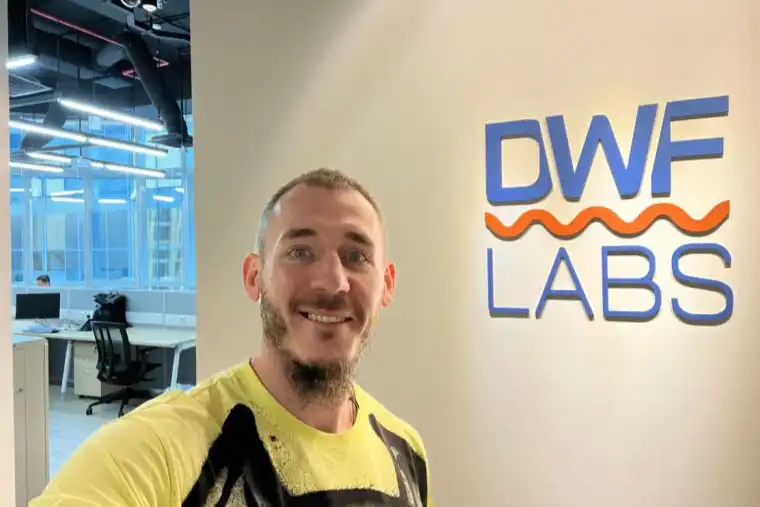
DWF Labs is a subsidiary of Digital Wave Finance (DWF), a global high-frequency cryptocurrency trading company that has been trading spot and derivatives on over 40 top trading platforms since 2018. When DWF Labs first appeared in the cryptocurrency market, it was as a market maker. However, it wasn't until the first quarter of CFX, ACH, and other Hong Kong concept coins that DWF caught the market's attention. In the second quarter, MEME coins such as PEPE and LADYS saw tens of times increase in value, and recently, YGG and CYBER, which have seen their prices multiply, have been listed on the exchange. Among them, CFX, ACH, and YGG are OTC coins, while PEPE (MEME), LADYS (MEME), CYBER (Binance Launch Pool), and other coins have good chip structures, and DWF directly purchases them through the secondary market to influence prices.
部分与 DWF 相关的代币涨幅数倍吸引市场关注
Some tokens related to DWF have seen their prices increase several times, attracting market attention.
DWF has attracted market attention not only because the currencies it handles have significant price fluctuations, but also because of its conflicts with other peers. Well-known market makers Wintermute and GSR have publicly expressed their dissatisfaction with DWF, believing that it is a poor quality market maker and a bad actor.
Breakdown of DWF's business scope:
In the encryption market, investment and market making are usually two distinct concepts. Investment usually refers to injecting funds into the team before the project releases tokens to support project development, operation, marketing, etc., and receiving token shares with a lock-up period as a reward after the project goes online. Market making aims to build good liquidity for already issued tokens, reduce transaction costs, and attract more traders. The source of income for investment behavior comes from the token return of the invested project, and the source of income for market making behavior comes from the market making fees paid by the project party and the spread (buy-sell difference) earned during the market making process. Well-known investment institutions in the encryption market include A16Z and Paradigm, while well-known market makers include Wintermute and GSR.
DWF has been criticized by participants in the cryptocurrency market for frequently confusing the concepts of investment and market making. On its official website, DWF positions itself as a Web3 venture capital and market maker, with three types of business: investment, OTC, and market making.
From the performance of DWF-related tokens in the past, its selection is mainly based on emotional themes, and the traded currencies include CFX, MASK, YGG, C98, WAVES, etc. However, from its past market-making cases, it can be found that it rarely truly supports the long-term development of projects. DWF usually chooses to inject funds and obtain tokens at a discount for "struggling" projects that have already issued tokens, and then sell them for profit in the secondary market. Moreover, in this process, it often violently pushes up the price of the projects it "invests" in, not only selling tokens at high prices, but also establishing a profitable image in the minds of retail investors, and then using this image advantage as a product to continue selling to the project party. For example, by jointly disclosing large investment information with the project party, creating market optimism, attracting liquidity, and better selling tokens.
Surface Business: Investment, Market Making, OTC, Marketing
Business essence: Inject funds into "difficult" projects, obtain OTC discounts for coins, sell them in the secondary market for profits; violently promote and build brand image, and continue to sell it as a product to the project party. Specific cases are as follows:
1、YGG&C98: OTC buying, secondary market selling
On February 17, 2023, the blockchain gaming guild Yield Guild Games (YGG) raised $13.8 million through the sale of tokens, with DWF Labs and A16Z leading the investment (YGG had already issued coins in 2021).
It is worth noting that DWF Labs received 8 million YGG from the YGG Treasury on February 10th, and transferred 700,000 YGG to Binance for the first time on February 14th. On February 17th, the media reported investment information, and then DWF transferred 3.65 million YGG to Binance in two batches on June 19th and August 6th. Combined with YGG's price performance: On February 17th, YGG was affected by investment information, with a maximum increase of 50% and a closing increase of 33% on that day. After that, it began a decline lasting for 5 and a half months, until the bull market started in early August this year, and YGG rose more than 7 times compared to its previous low. At the end of the market, DWF transferred the last batch of YGG tokens to Binance.

If you are an investor in the secondary market, you may observe abnormal contract data at the beginning of YGG's market launch. YGG's contract data showed a surge in open interest and stable fees in the early stage, a slowdown in open interest growth and a decrease in fees in the middle stage, and a decrease in open interest due to long position liquidation in the later stage.

Similar trading strategies can also be observed in assets such as CYBER: on August 22nd, DWF withdrew 170,000 CYBER from Binance, when the price of CYBER was about $4.5. Subsequently, the price continued to fall, reaching a low of $3.5. Seven days later, the CYBER uptrend began, reaching a high of $16.2, an increase of about 3.6 times compared to the price when DWF withdrew, and about 4.6 times compared to the previous low of CYBER. As a Binance Launch Pool project, CYBER had a good chip structure in the early stage of its launch, and there was little selling pressure in the secondary market. DWF's participation in the CYBER project is inferred to be buying coins in the secondary market, with little involvement with the project team. (Similar to DWF's participation in Meme coins such as PEPE and LADYS in the second quarter of this year.)

On the level of funding data, CYBER's performance is similar to YGG: contract data showed a surge in positions and stable rates in the early stages, a slowdown in position growth and rate decline in the mid-term, and a decrease in positions due to long position liquidation in the later stages.

On February 2, 2023, the DWF on-chain address received a transfer from the Coin98 official address, totaling about 4.12 million coins, which was approximately $1.11 million USD based on the market price that day (with C98 secondary market price at around $0.27 USD). The coins were immediately transferred to Binance exchange. On August 8, Coin98 announced a seven-figure investment from DWF Labs to promote the widespread adoption of Web3. On October 12, according to media reports, DWF transferred 1 million USDT to C98. Combining with C98's price performance, after DWF received the tokens and transferred them to the exchange, C98 briefly rose before entering a 5-month decline. On August 8, media reports caused the price to rise 58% in two days before quickly falling again. Looking back at the event, its essence may be that DWF obtained coins from C98 at a 10% discount and then sold them for profit on the secondary market.

C98 showed a significant increase in positions in the early stage of the pull-up period, and the end of the market was marked by a decrease in positions caused by long liquidation and the return of fees.

Similar pull-up techniques also include LEVER, WAVES, CFX, MASK, ARPA and other targets.

The above are typical DWF trading targets in recent times. It can be seen that DWF usually participates in both the contract and spot markets. In the early stages of the market, a large amount of funds will flow into the contract market. Due to the long position of the main funds in the early contract, the increase in positions will not affect the fee rate. In the middle term, it usually shows a rise in spot prices, and the long position of the main contract begins to close out. This stage often shows a sharp rise in spot prices, a serious negative fee rate for the contract, and stagnant or declining growth in positions. Some targets will also have a final wave of price increases to create liquidity, allowing the main spot to obtain better prices and liquidity. After the main long position in the contract is closed for profit, some targets will end directly. It is crucial to judge whether the benefits of continuing to raise spot prices for the main funds in the final stage will be greater than the cost. (Whether there is a key pressure level above, and whether there is a large amount of selling pressure on the market).


The proposal was voted on from September 11th to September 14th, and was passed. As a result, the price of SPELL rose from its low point of 0.0003716 on September 11th to its high point of 0.0006390 on September 19th, with a maximum increase of 72% (due to market speculation).
On September 19th, Abracadabra provided a 3.3M SPELL loan to DWF, which was then transferred to Binance. SPELL entered a downward trend and is currently priced at 0.0004416, a 31% decrease from its previous high.

From the funding data, it can also be seen that the consistency of funds in the short-term market of SPELL is poor, with 70% of the increase relying on multiple stock fund relay, which is highly uncertain.

Overall, DWF used the wealth effect generated by the early stage of the bull market to build its brand image. It was a product of the bear market under weak regulation, and it took advantage of the development difficulties faced by project teams and the psychology of retail investors to achieve profits on both ends. Project teams in the bear market generally face difficulties in realizing their assets and obtaining financing. Directly selling tokens would undermine the fragile market confidence and seriously affect the token price and project ecology. In this case, DWF appeared as a bridge for project teams to sell tokens, helping them to sell through OTC or other marketing methods. By describing the behavior of buying OTC tokens from project teams as strategic investment, DWF did not actually observe any substantial help to the long-term development of the project, but instead turned around and sold the tokens. By packaging and promoting in a way that conceals the nature of project teams' disguised selling, DWF also achieved profits on both ends for project teams and users.
As a secondary market investor, when seeing information about a project collaborating with DWF, it is necessary to first distinguish which business of DWF it belongs to (secondary investment, OTC, market making, marketing), and use different strategies for different businesses. In previous market performances:
1. DWF needs to pay special attention to the targets that directly participate in the secondary market investment. These targets are usually newly listed coins with good chip structure or Meme coins.
2. The target of DWF's purchase of coins from the project party OTC (packaged as strategic investment) often shows a few months of decline in the secondary market price, followed by a rapid rise. The market ends after DWF deposits coins to the exchange (bull market usually lasts no more than 1 week).
3. DWF's true market-making project does not have a doubling market, but it usually attracts speculation from retail investors and has a short window of opportunity for building positions. Seize the opportunity and stay ahead of the game.
4. The success rate and risk-reward ratio of market movements triggered by DWF-related marketing news are poor. The underlying logic is that stakeholders use DWF's current market influence to attract liquidity and sell off their holdings. Once it is determined that there is a willingness to push up the market, the sharp increase in contract positions and spot trading volume is a signal of market activation. The interaction between DWF on-chain addresses and exchange addresses (at high prices), a decrease in positions, and extremely negative funding rates often indicate the end of the market trend.
Original Link
Welcome to join the official BlockBeats community:
Telegram Subscription Group: https://t.me/theblockbeats
Telegram Discussion Group: https://t.me/BlockBeats_App
Official Twitter Account: https://twitter.com/BlockBeatsAsia

 Related Articles