BRC20 upgrades BRC100 and $ordi governance empowerment. What happened to the ecosystem after Bitcoin returned to $30,000?
Author: Joyce, BlockBeats
Editor: Jaleel, BlockBeats
Since the beginning of this year, the ecology and narrative of Bitcoin have become lively as the price of BTC gradually rises. In the past two weeks, the price of Bitcoin has reached a new high in 18 months, breaking the threshold of $35,000 yesterday.
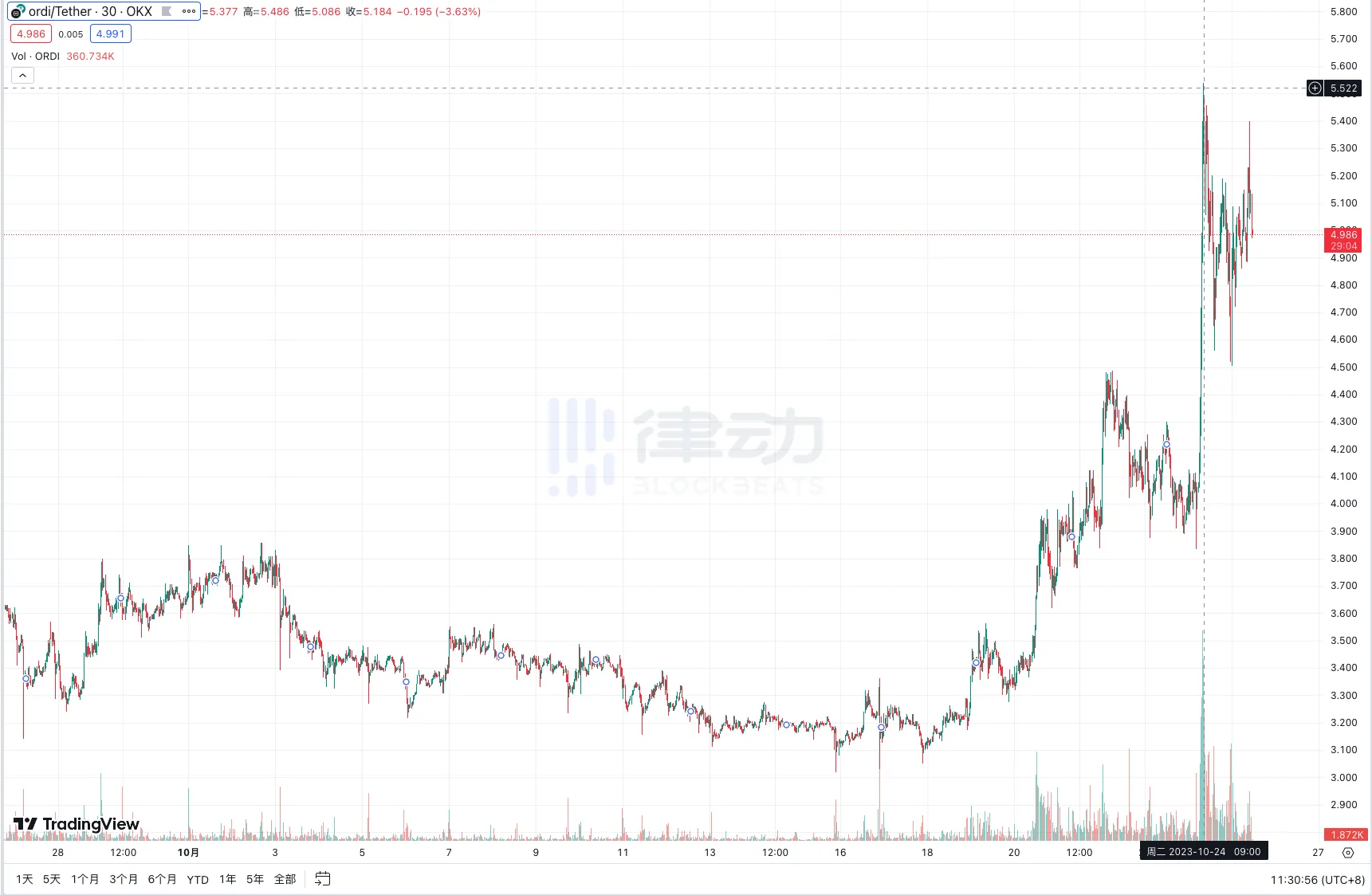
The water spilled over from the rise of Bitcoin to BRC20 and Ordinals, which excited the long-suppressed Bitcoin ecological community, and the price naturally rose. Taking the most representative ORDI as an example, the highest increase in October reached 30%.
Batch Engraving, Inscription Numbering, and URL Return in Ordinals' "Largest Ever" Update
On October 24th, Casey Rodarmor, the creator of Ordinals, merged the v0.10.0 update into the Ordinals code. This update has been hailed by the community as the "biggest update ever." According to the interpretations of developers @raphjaph, founder @SanjFomojis, and @rodarmor, BlockBeats discovered that the important features of this update include: batch engraving, adding metadata, endpoint of glyph numbering, and remote engraving commands.
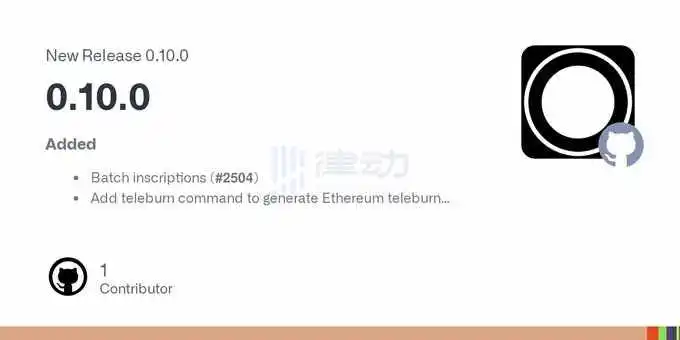
The batch engraving feature has been updated with a new pointer field, allowing for efficient engraving of multiple items in a single transaction. The principle of batch engraving is to place all engravings in the same input and specify where they should be engraved in the output. Community creators can use this feature by creating a file named "batch.yaml".
Adding metadata has added metadata fields in the inscription, allowing for the addition of any type of additional information. Users can specify a meta protocol in the inscription, build any content, and help the indexer distinguish between different protocols.
The inscription number endpoint allows visitors to obtain inscriptions by number in the URL. The remote engraving command engraves assets on the ordinal number and sends the corresponding ETH NFT to the remote engraving address for engraving. Among them, batch inscriptions are the most noteworthy feature, which is regarded by community developers as the "most powerful feature in the updated version" because it will lower the cost of casting recursive inscriptions. Recursive inscriptions are a feature unlocked in June when the Ordinals were updated this year, allowing inscriptions to interact with each other to achieve new use cases, making good use of the composability of the Ordinals protocol.
In addition, the new feature "allowing visitors to obtain inscriptions by numbers in the URL" is also an exciting point for the community. In the previous "inscriptions number variability" dispute, Casey Rodarmor hoped that the inscription number would no longer be used in the URL, but this idea carries the risk of diluting the meaning of the inscription, which caused strong opposition from the community. Finally, Casey compromised with the community's opinions, and the inscription number became a recognized important identifier for the community.
Related reading: "The Controversy over Variability of Ordinals' Inscription Numbers: Preserve Culture or Develop Technology?"
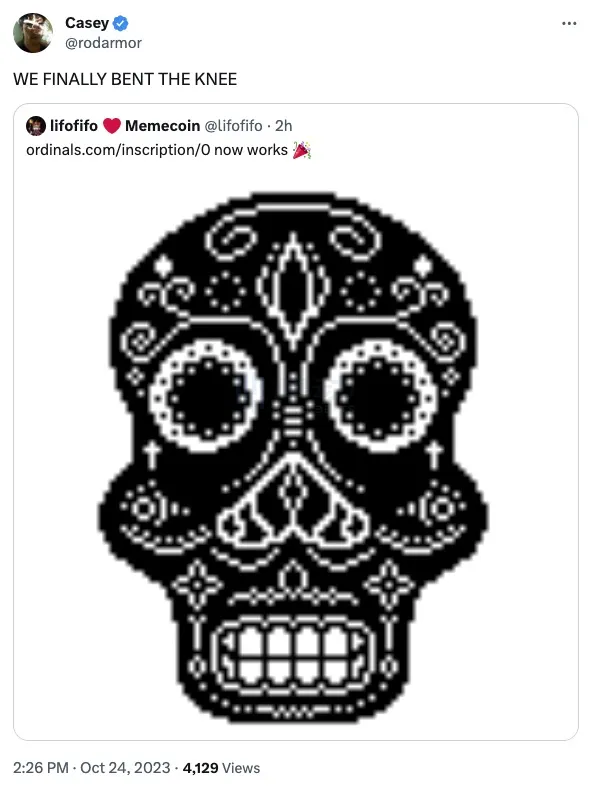
Interestingly, in a tweet celebrating the ability to once again directly access the corresponding NFT through the inscription number in the URL, Casey's retweet comments seem to contain a hint of helplessness and lingering resentment, "We finally gave in."
Bitcoin Idealist or Time Traveler? Someone was Collecting Rare Satoshi Eight Years Ago
The unit of composition for Bitcoin is Satoshi, and each Bitcoin is composed of 100 million Satoshis. Since each Satoshi of Bitcoin can be traced and transferred, and the scarcity and uniqueness of Satoshis can be determined by ordinal theorists, Satoshis have special significance.
On January 21, 2023, Bitcoin developer Casey Rodarmor launched the Ordinal protocol, which provided a unique numbering system for satoshis. This led to a new way of trading rare satoshis.
Related reading: "Rare Cong: Have you prepared for the next wave of hype after BRC20?"
Therefore, trading rare Satoshi coins is a new trend that only started this year. On October 23rd, Twitter user @TO discovered a Bitcoin wallet from 2014 containing 1616 Satoshi, with 1615 of them being rare. This means that the wallet owner separated the Satoshi from the UTXO before the ordinal theory was introduced 9 years ago.
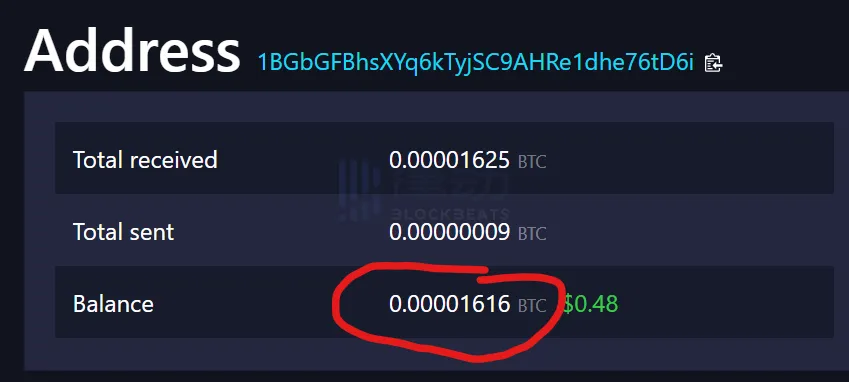
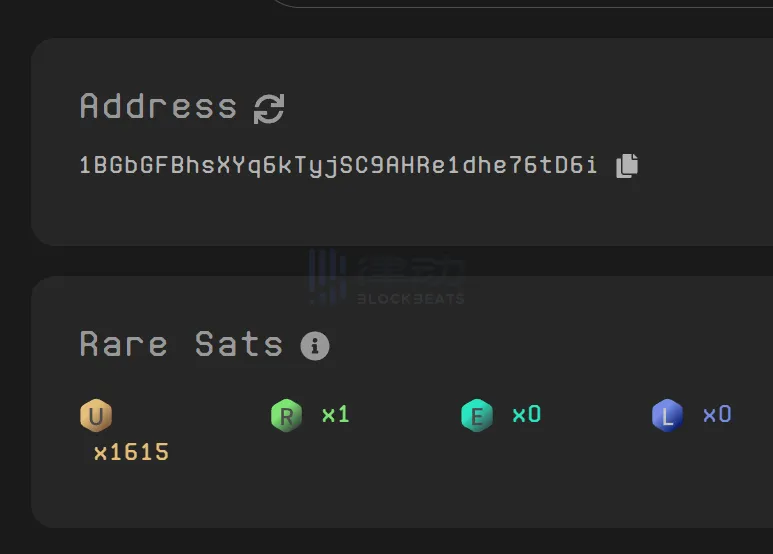
"1615/1616" such a rare probability, coupled with the time point of 8 years ago, this discovery can only be described as "surprising" and "magical".

Rare Cones is a concept that emerged after ordinal theory, so it is difficult to understand how the wallet owner was consciously "extracting" Rare Cones eight years ago.
The community dubbed this lucky person a "time traveler". Eight years ago, they quietly collected and held onto their Bitcoin through multiple ups and downs. With the emergence of the Ordinals protocol and the discovery of "Rare Cong", the collector's preferences suddenly gained recognized value within the community. This event added another footnote to the community's faith in Bitcoin.
BRC-69 New Gameplay, Ordibots 3D Series Released
OrdiBots founder @RAF_BTC announced on the morning of the 24th that the new series of Ordibots 3D will be randomly launched.
This 3D new series release uses the BRC-69 standard, which can achieve complete 3D assets on the chain. BRC-69 was created by Luminex Launchpad and uses a technology called recursive inscription to optimize up to 90% of block space usage.
Since its launch in July, BRC-69 has attracted great attention from the community. Through "recursive inscriptions", creators only need to input text instead of uploading image files to present the final image on all "Bitcoin NFTs". Based on this, the size of the inscription will not be limited by the 4MB block size of Bitcoin.
@RAF_BTC created a video in the announcement tweet of Ordibots 3D. The video showcases the first NFT series, OrdiBots, which was released in May of this year using Generative BRC-721. One by one, 3D OrdiBots push open the still NFT image doors and land.
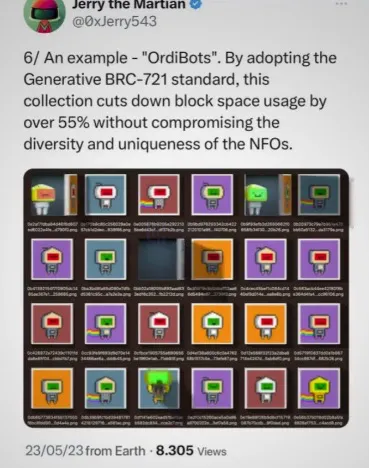
At that time, Generative BRC-721 significantly reduced the cost of issuing and minting NFTs for project parties and users by "only uploading features and then combining them", but that was just the beginning. BRC-69 gave Ordinals ecology even greater room for imagination.
Proposal to Govern BRC20 with $ordi
KOL 0xWizard (@0xcryptowizard) has proposed a governance proposal, stating that as the first and most widely accepted BRC20 asset, $ordi has been considered the Native Token of the BRC20 protocol. With more and more proposals related to BRC20 emerging, there is a need for a governance and punishment mechanism to prevent centralized indexers from acting maliciously. Therefore, 0xWizard proposes that $ordi be used as a governance token, allowing community participants to vote on future proposals related to BRC20. Indexers will need to stake $ordi for indexing and receive corresponding ecosystem fees (such as future ecosystem fees). If there are errors/malicious results, the indexer's staked $ordi will be confiscated as a penalty.
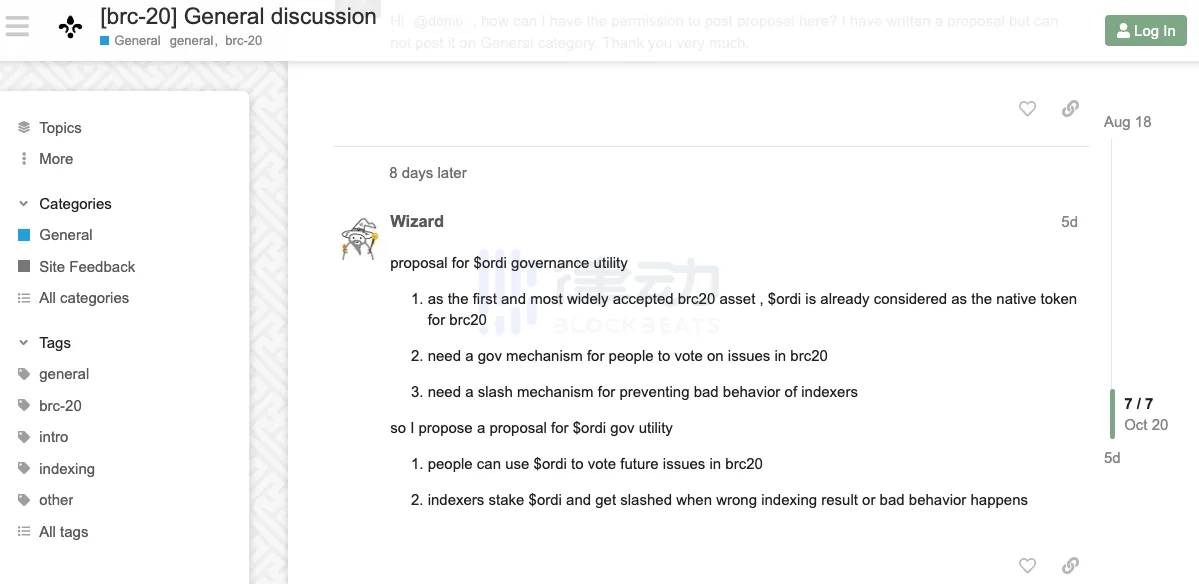
Community members expressed their thoughts: "The only way out for $ordi is to serve as the governance token of BRC 20, while empowering $ordi and opening up the future expansion of BRC 20. Unfortunately, after $ordi has come so far, no one can fully take over. If a few months ago, @domodata joined forces with several powerful exchanges to DAO the BRC 20 protocol and then started the decentralized index. Both BRC 20 and ordinals will develop better than they are now. This is a clear governance strategy, why hasn't anyone pushed it forward?"
OrdiBots and DogePunks founder @RAF_BTC fully agrees with this proposal: "However, it is clear that this measure should not become a speculative method. If a balance point can be found, this is a very good suggestion."
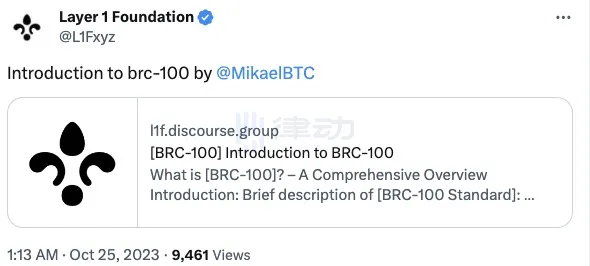
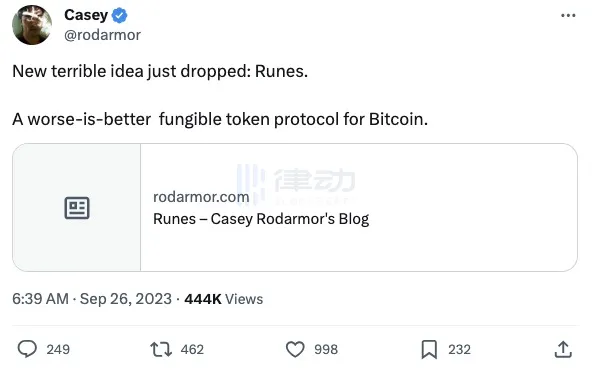
Ordinals Native DeFi? BRC-20's Upgraded Version BRC-100
Welcome to join the official BlockBeats community:
Telegram Subscription Group: https://t.me/theblockbeats
Telegram Discussion Group: https://t.me/BlockBeats_App
Official Twitter Account: https://twitter.com/BlockBeatsAsia

 Related Articles