TRON becomes a USDT chain: Use case analysis of the TRON ecosystem.

The Bull Case for TRON - the USDT chain
Original Author: CHULIE AND HUMBLE FARMER ARMY RESEARCH
Translation: Joyce, BlockBeats
Introduction
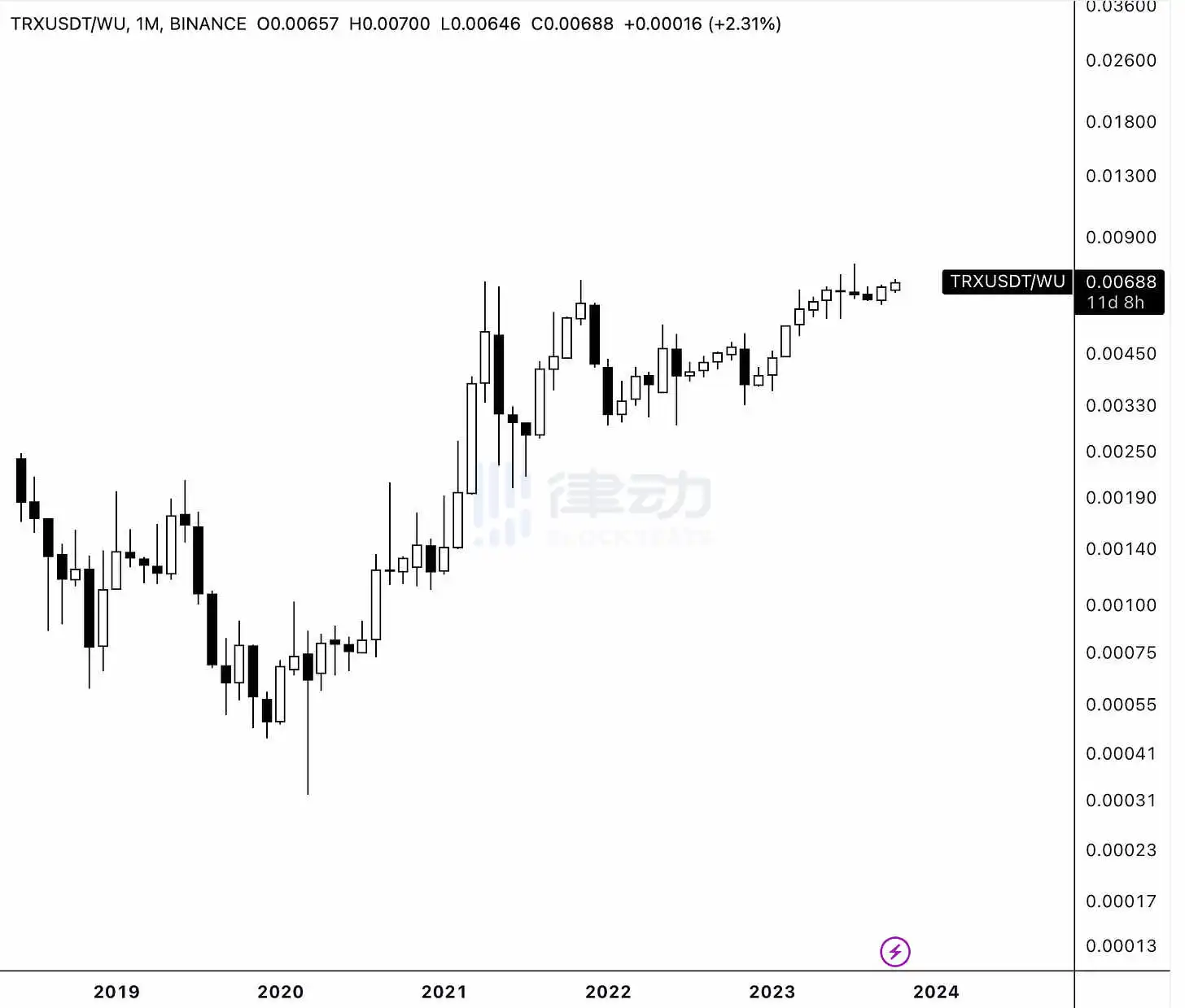
If you mention TRX to most people in the cryptocurrency industry, they may think you're joking and laughingly refute with "What, Justin Sun's chain?" or some similarly meaningless and ignorant comment. Meanwhile, Tron has slowly become the most frequently used blockchain in stablecoin activity, and TRX has been quietly performing well:
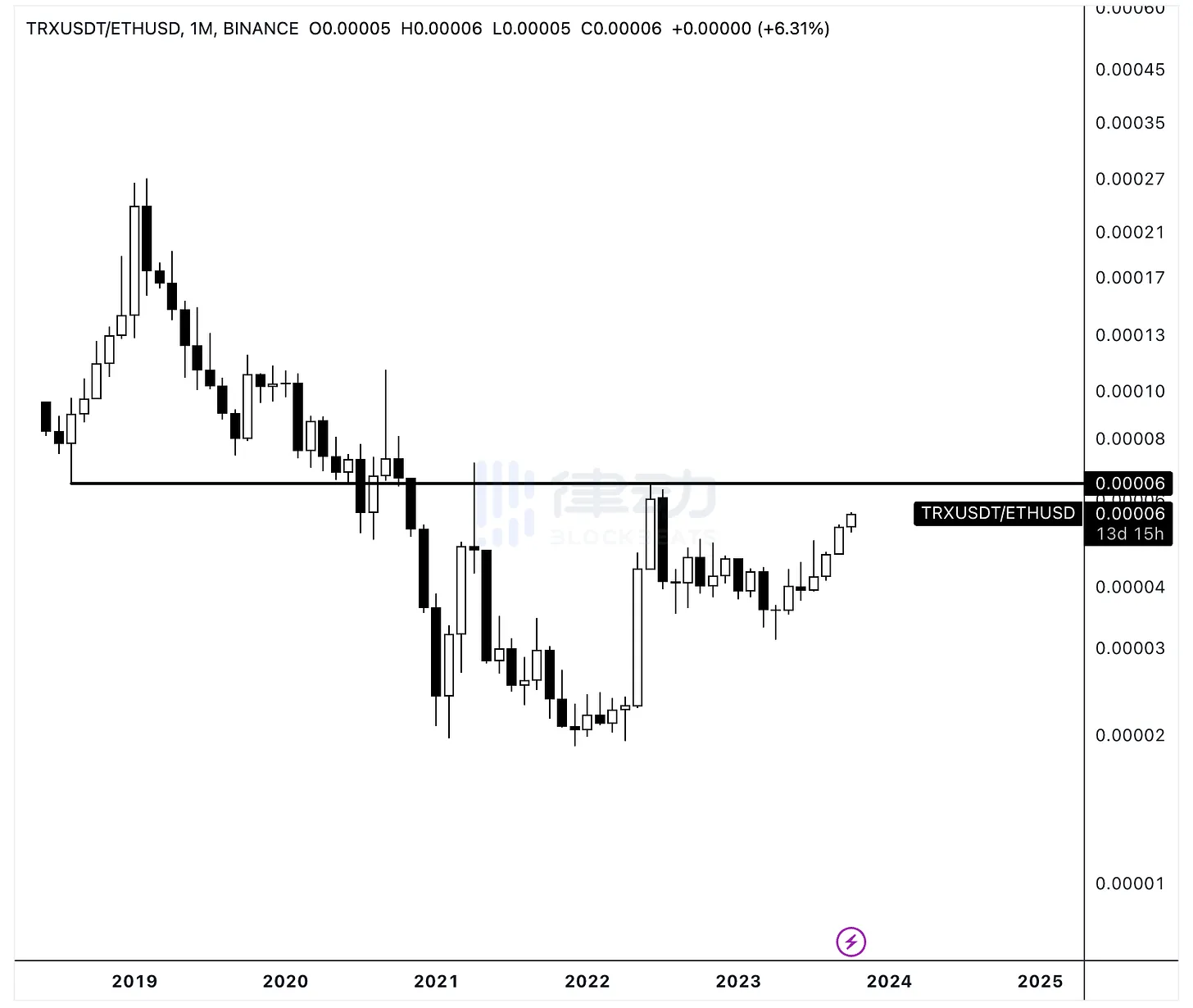
TRX/ETH ratio
After reporting on the RWA field, we have become increasingly interested in projects that solve practical use cases. Another DEX with minor optimizations and veTokenomics may not bring much change, but a global network for offshore USD settlement could cause a sensation! As more than half of the USDT supply is on Tron and there is a significant amount of trading activity, perhaps Tron is the ideal choice for such a global settlement network.
Data
"Stablecoin activity on Tron is higher than on any other blockchain. So far this year, transactions on the Tron blockchain account for 49% of weekly active addresses, 37% of transaction volume, and 35% of trading volume." - Brevan Howard
Recently, Tron's transaction volume has surpassed Ethereum, becoming the chain with the largest stablecoin transfer volume. Currently, its weekly on-chain stablecoin transaction volume is about 70 billion US dollars:
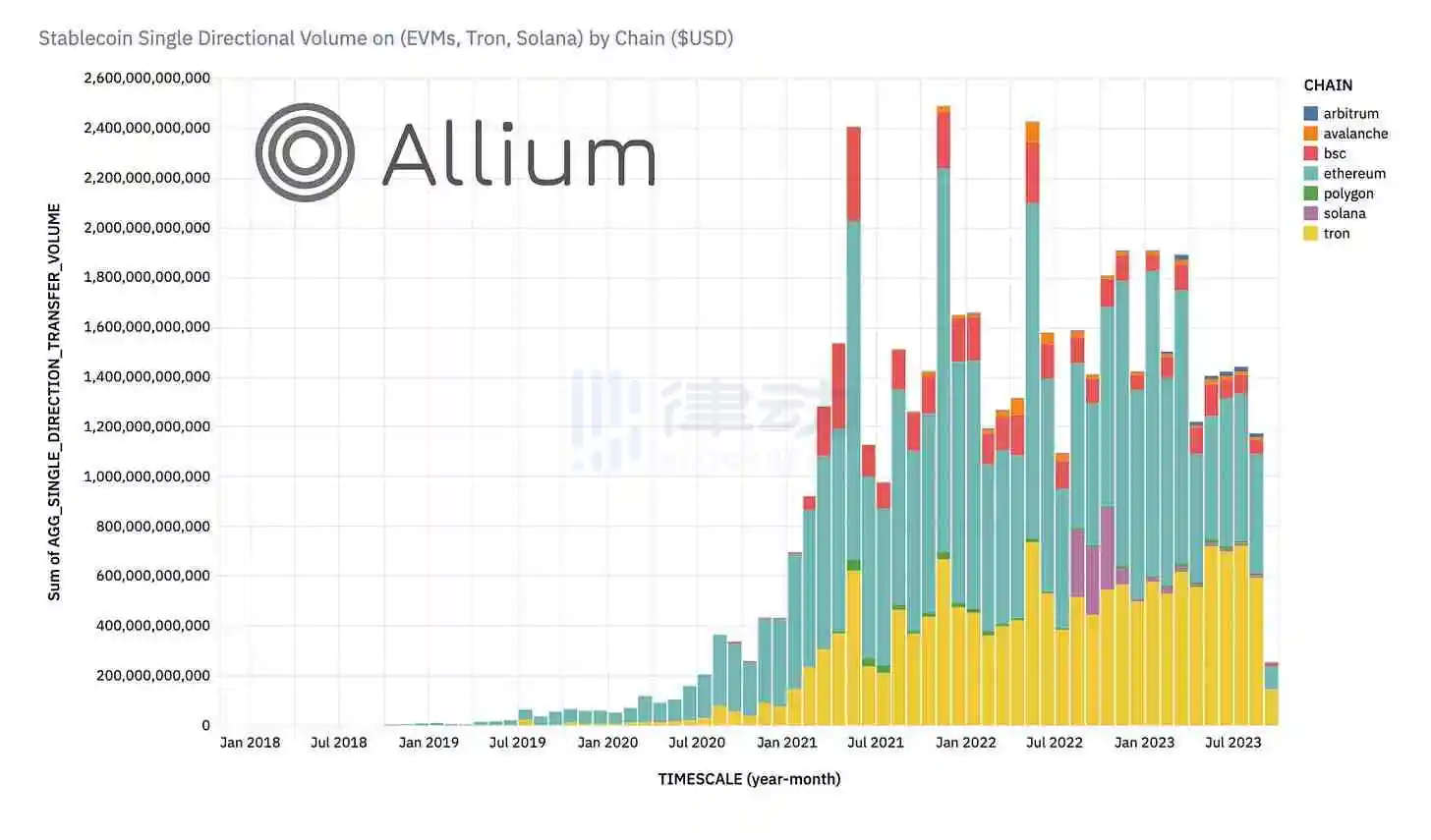
h/t Allium
Approximately 40% of active addresses sending stablecoins on-chain are on Tron:
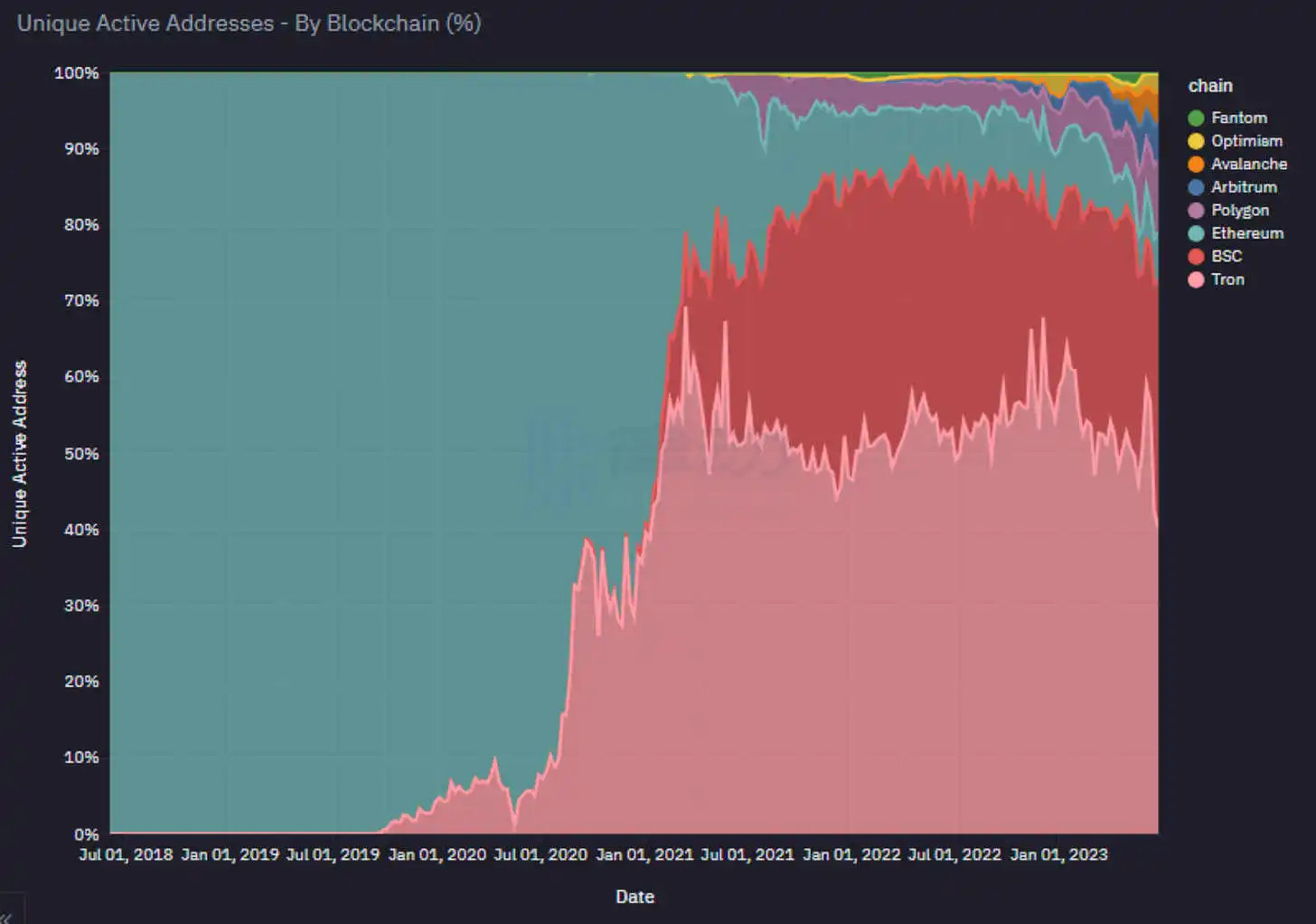
h/t Brevan Howard
The number of wallets holding USDT on Tron has increased by about 2 times so far this year, from about 16 million to about 32 million:
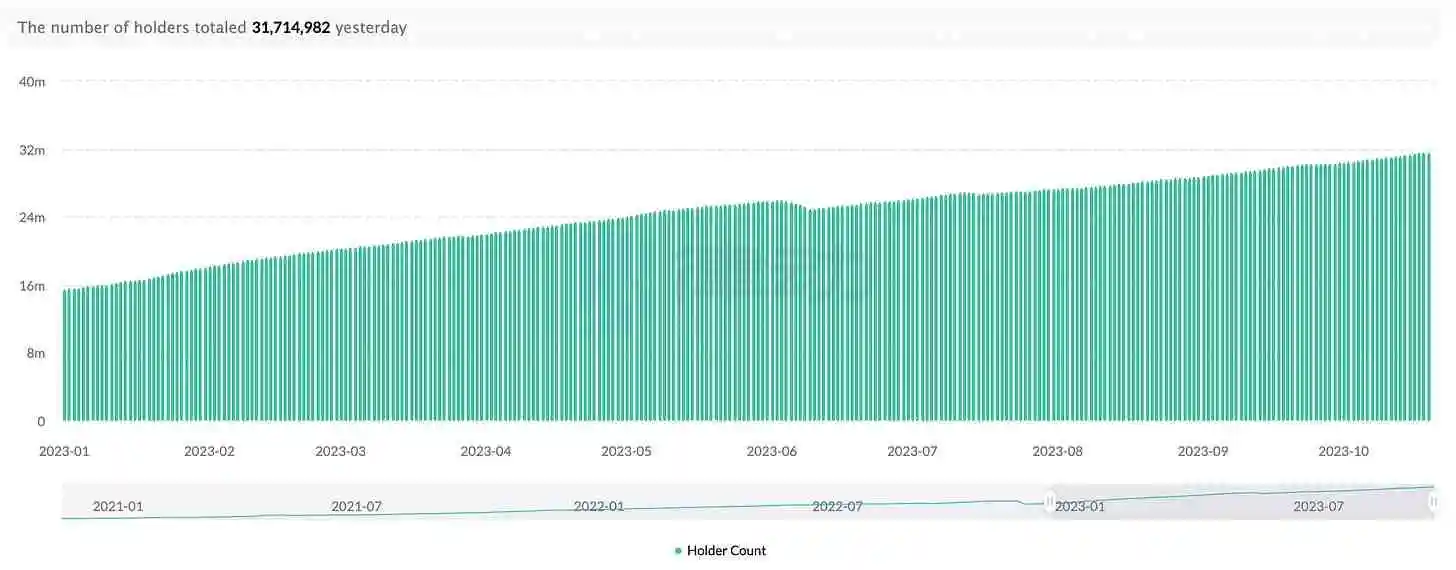
Source
The total supply of stablecoins on Tron is approaching a new high, depicting a scene that is completely different from Ethereum:
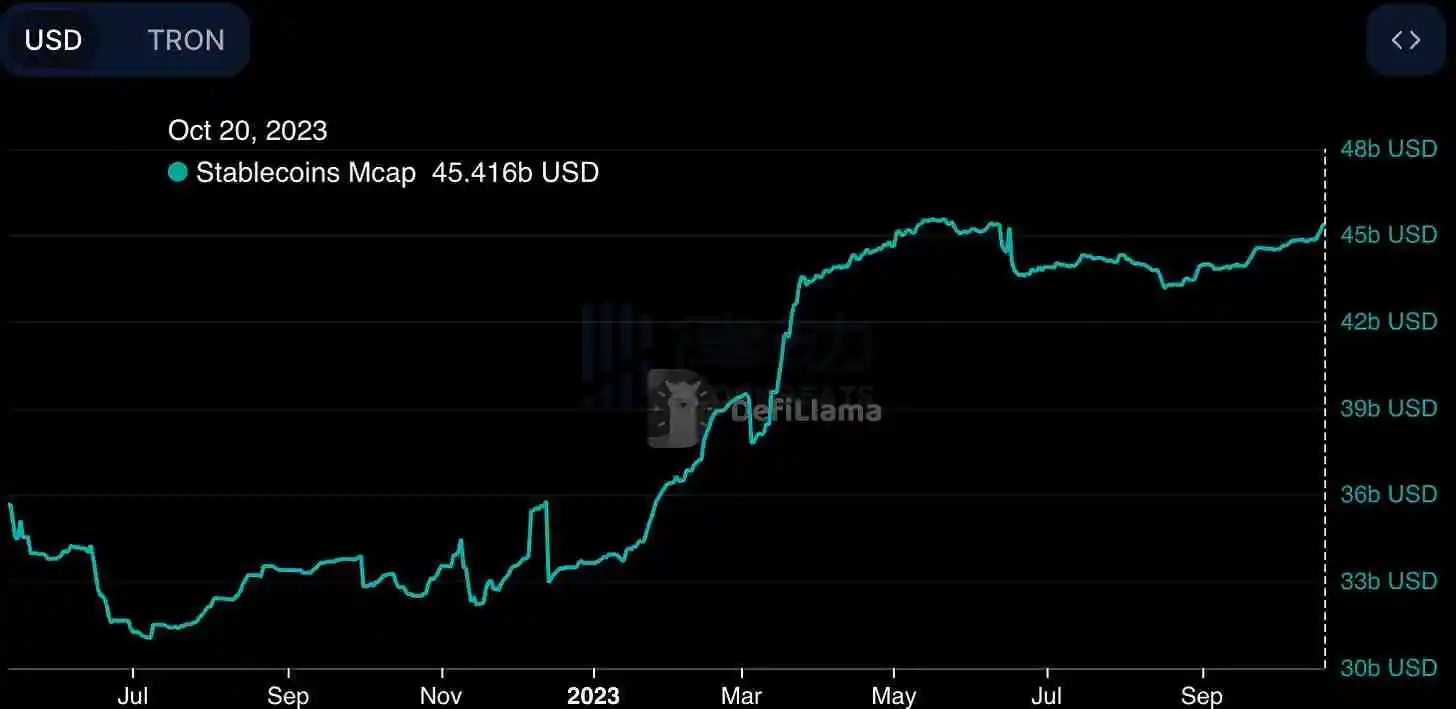

Contrary to the widely held belief that the Tron network is entirely controlled by Justin Sun, approximately 50% of the USDT supply on the Tron network is distributed among accounts outside the top 500, according to Tronscan. This indicates that USDT is widely distributed and used on the Tron network.
Finally, regarding data, the usage history of stablecoins has shown a low correlation with the wider cryptocurrency trading volume, indicating that it is mainly not driven by trading/speculative activities. Since reaching its peak trading volume, centralized exchanges (CEX) have seen a decrease of about 60% in trading volume, while stablecoin trading volume has decreased by about 10%, and the number of active stablecoin addresses and stablecoin transactions per week has increased by 25%.
stUSDT
stUSDT was launched in July 2023 as an RWA market built on Tron (now also available on Ethereum). Users can exchange USDT for stUSDT and receive a 4.73% rebase reward (as of the time of writing). The basic RWA strategy is not clearly defined; "the US dollar stablecoin pledged in the contract will be invested in low-risk, high-rated RWA." We assume that the principal is invested in short-term US government securities similar to MakerDAO or Frax Finance.
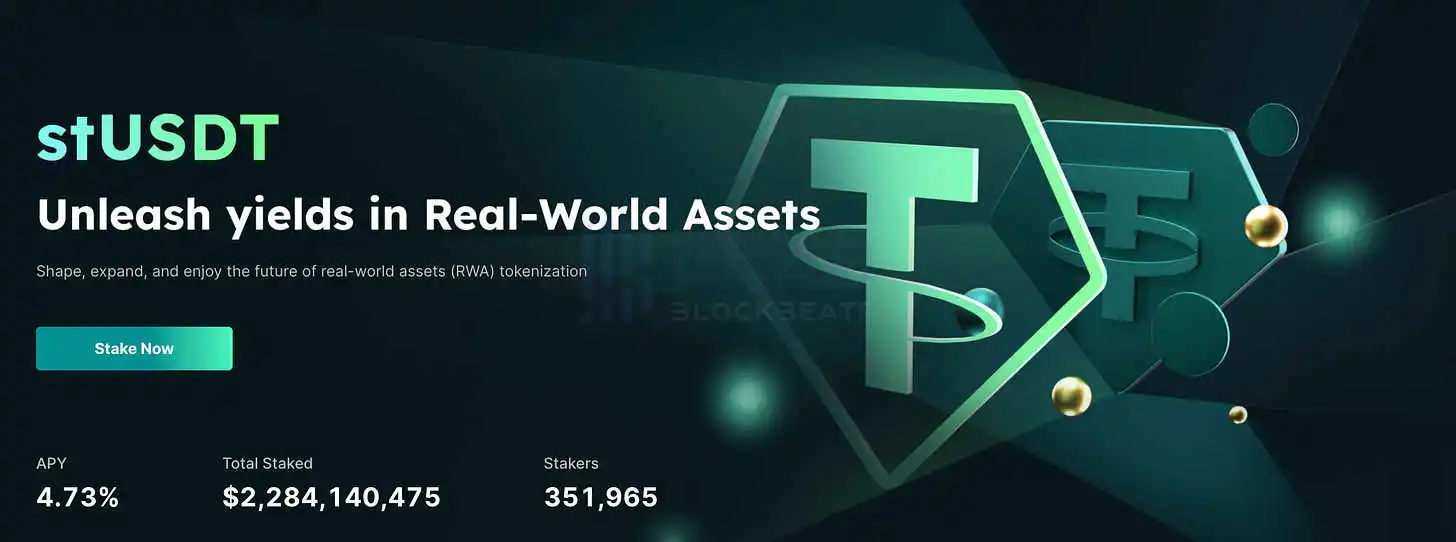
stUSDT is operated by RWA DAO, which is hosted by JustLend DAO, and JustLend DAO is indeed one of Justin Sun's projects. The only apparent fee is a 0.1% "promotion" cancellation fee for pledging, which seems to be included in RWA DAO. The current supply on Ethereum is $72.4 million, and the supply on Tron is $2.2 billion.
Although stUSDT does not directly bring value to TRX, it provides a reason for USDT to stay in the ecosystem.
TRX
Tron is a blockchain that uses delegated proof of stake mechanism to achieve consensus (using TRX) and executes using the Tron virtual machine. The virtual machine is compatible with EVM and allows for smart contract functionality. It uses a resource model with "bandwidth" and "energy" instead of gas. Bandwidth represents the size of transaction bytes to be stored on the chain, while energy represents the computational power required to perform specific operations. Each transaction requires computing resources, hence requiring bandwidth and energy fees.
Bandwidth points are distributed for free every 24 hours to all activated accounts, and can also be obtained through TRX staking, while energy can only be obtained through TRX staking. The annual interest rate for TRX staking is about 4%, and currently about 52% of TRX has been staked.
The basic mechanism of how bandwidth and energy operate in practice is a rather complex and dynamic system, but the ultimate impact is that more network usage leads to more TRX needing to be purchased and burned in the short term, as well as purchased and staked for the long term. Essentially, when energy demand exceeds available energy, TRX is burned. Similarly, if users do not have enough bandwidth to conduct transactions, a transaction fee of 0.001 TRX per bandwidth will be applied and burned. The growth in USDT usage directly drives the positive supply dynamics of the TRX token, as the USDT contract is the largest energy consumer and is far ahead:
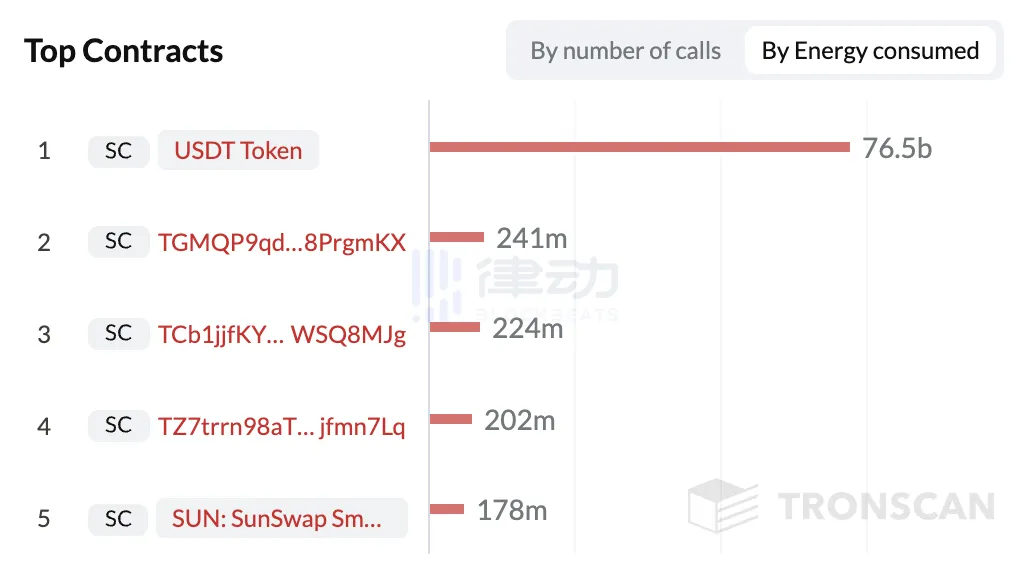
The extensive use of the internet has not only brought about favorable TRX supply dynamics, but also the growth of the network has brought about favorable TRX supply dynamics. To activate an account, users must pay a 1 TRX (or equivalent TRC-10 token) account creation fee.
Due to energy demand exceeding supply, network usage and growth have transformed into a sustained cost for the TRX network and a sustained state of currency contraction for the TRX token.
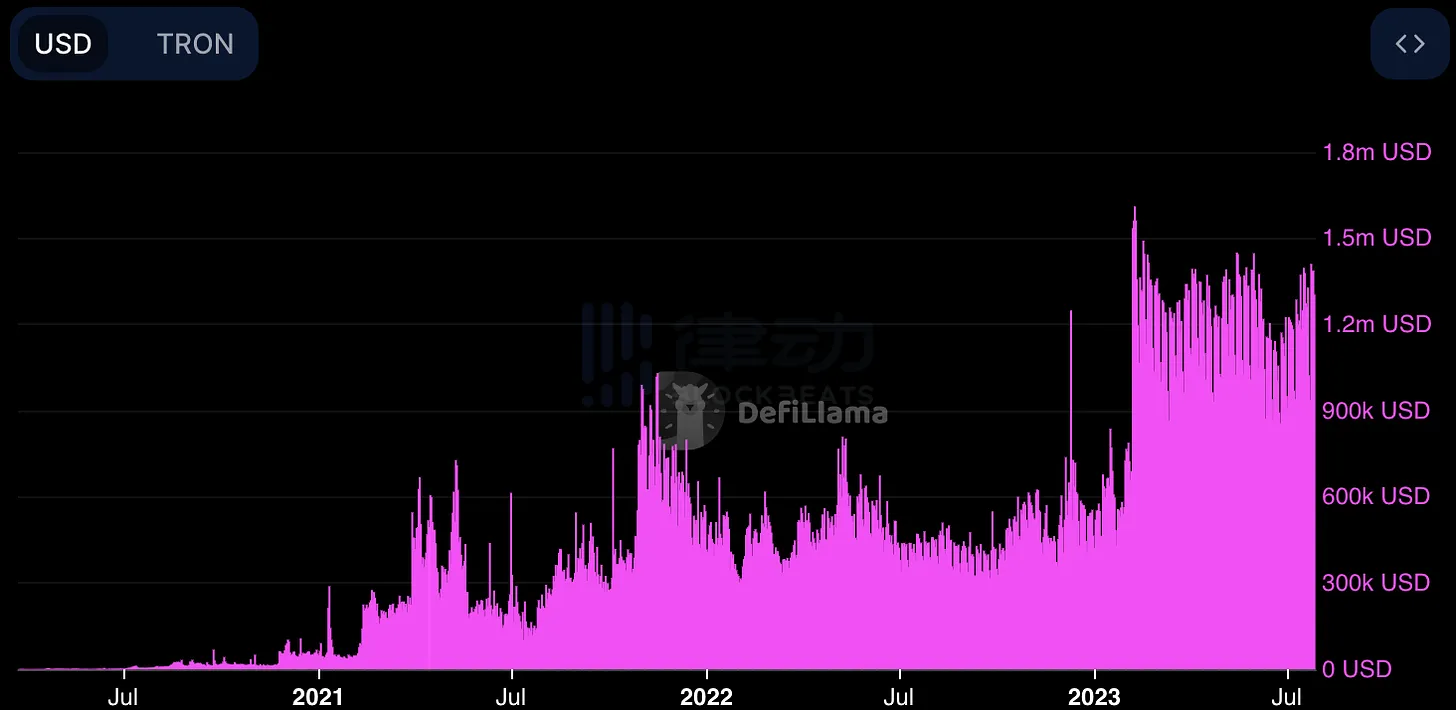
Daily Cost
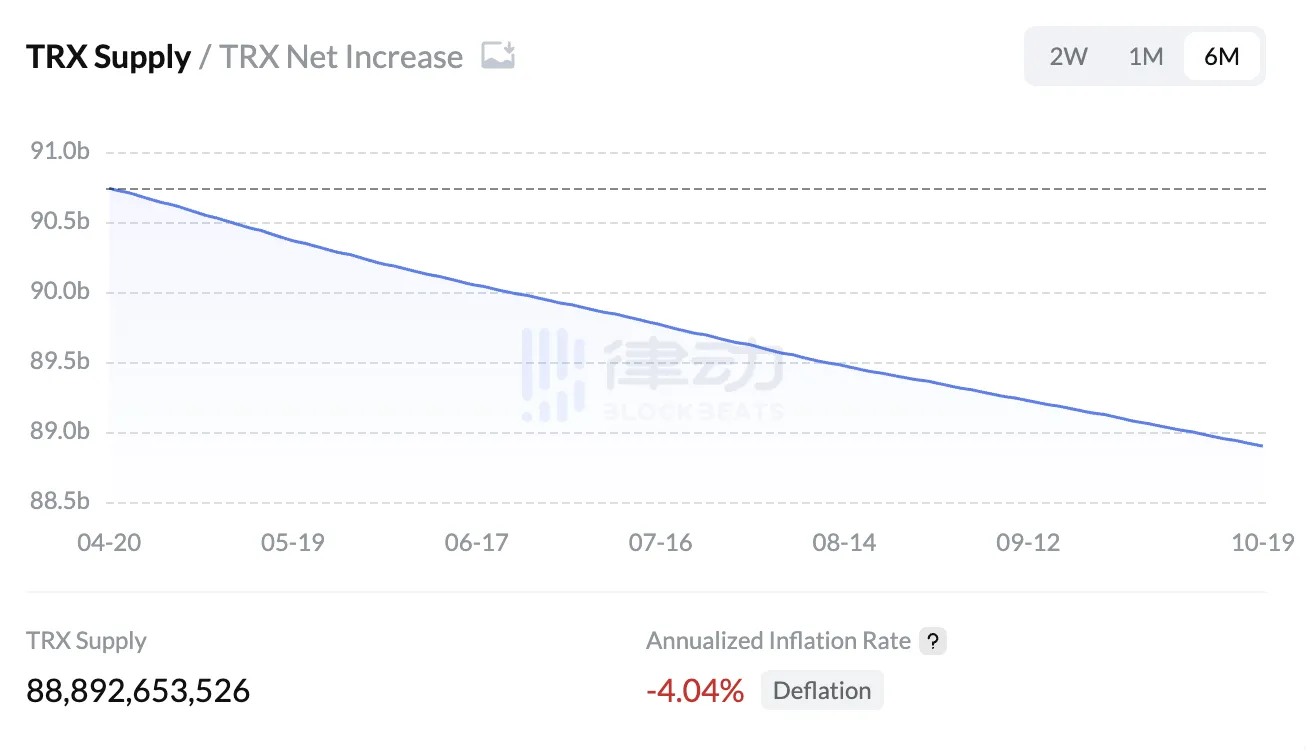
Conclusion and Main Risks
Many people say that stablecoins are the "killer application" of cryptocurrencies, and Tron seems to be the network that can achieve large-scale market distribution and use of this application. The valuation of TRX is 8 billion US dollars, which is relatively not overvalued and is in a favorable position to benefit from the sustained and expanded use of stablecoins globally.
Some people may argue that betting on TRX is facing potential Tether risks, and they are not wrong. The USDT risk has long been controversial, and we do not intend to discuss it again here. Just note that Tether plans to start real-time publication of reserve data next year, while increasing technical investment and engaging in dialogue with regulatory agencies.
Another risk is USDD, which currently has a supply of 726 million US dollars, supported by approximately 1 billion US dollars of TRX and approximately 400 million US dollars of BTC. Currently, the system has a serious over-collateralization, but once liquidation occurs, it may lead to a large amount of TRX selling. Of course, USDD may also just sit there and become an increasingly over-collateralized problem as TRX or BTC prices rise over time. This is still a relevant risk, and buyers should be aware of it.

The following picture tells an interesting story - is cryptocurrency railway slowly replacing traditional railway right under our noses? Perhaps it is as simple as buying tokens, providing convenient payment and USD cross-border settlement services for people who lack access to global banking.
原文链接 translates to
Welcome to join the official BlockBeats community:
Telegram Subscription Group: https://t.me/theblockbeats
Telegram Discussion Group: https://t.me/BlockBeats_App
Official Twitter Account: https://twitter.com/BlockBeatsAsia

 Related Articles