Lido validator suffers slashing loss of over 20 ETH, LSD "confiscation issue" draws attention.

Table of Contents:
· Lido suffers 20 penalty events due to validator issues, losing about $31,000
· Centralization concerns arise again for Lido, with attention on LSD penalty issues
Lido suffered 20 penalty events due to validator issues, resulting in a loss of approximately $31,000.
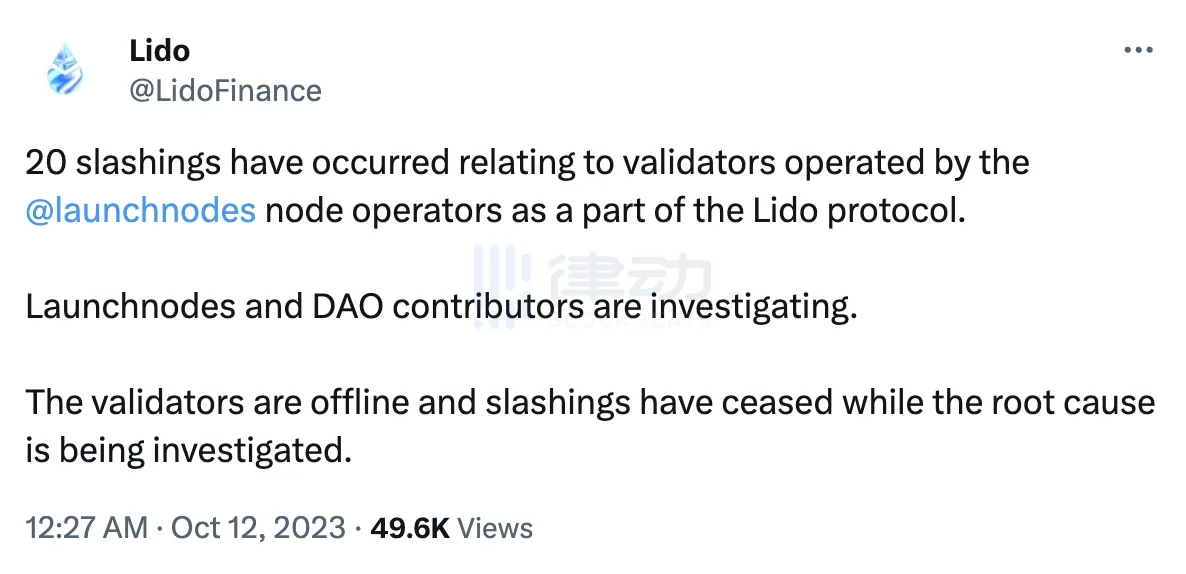
BlockBeats reported on October 12th that Lido Finance, a liquidity staking platform, disclosed that due to a series of infrastructure and signature configuration issues caused by validators operated by Launchnodes, the Lido protocol experienced 20 slashing events. (Note: Slashing refers to validators being punished for violating protocol rules, resulting in some or all of the staked ETH being deducted.)
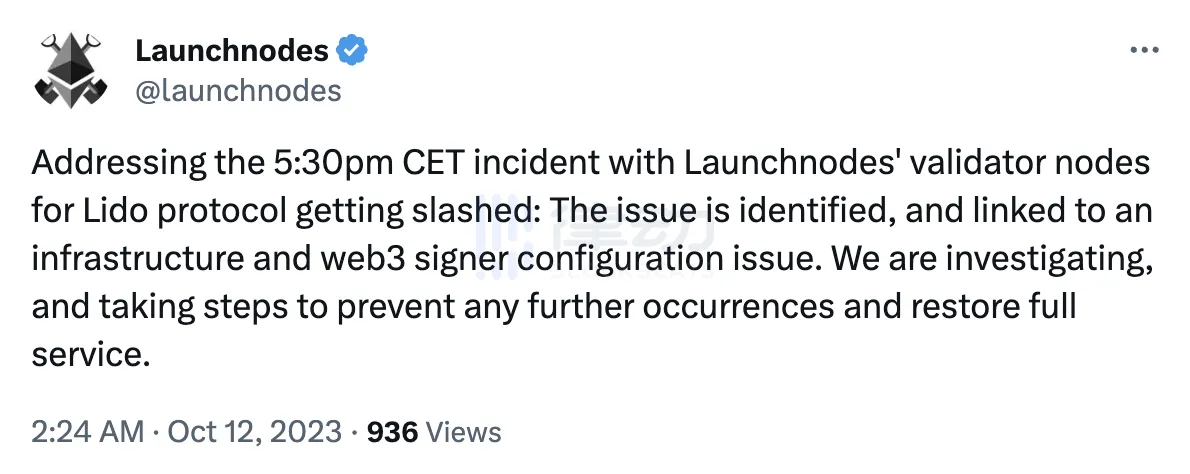
Launchnodes responded that the penalty occurred around 3:30 PM UTC on October 11th.
Lido estimates that the loss from this incident will be about 20 ETH, worth $31,000, as well as additional penalties during the validator offline troubleshooting period and accumulated inactive penalties. Lido stated that the protocol's stakers will not be affected other than a reduction in daily rewards reflected in the next benchmark adjustment on October 12. Once the "compensation method" is determined, stETH holders will receive compensation, and Launchnodes has committed to compensating Lido for all losses suffered.
Lido centralization raises concerns, LSD penalty issue draws attention
After the pledger clicks "Deposit" on Lido's interface, their ETH will be sent to the Stake contract of the protocol. These contracts collect funds from all users and distribute them to node operators selected by the DAO, who are entities responsible for managing and maintaining validators, meaning they are the ones actually doing the Staking.
This Lido penalty incident was caused by a series of infrastructure and signature configuration issues with the validator operated by Launchnodes, a node operator.
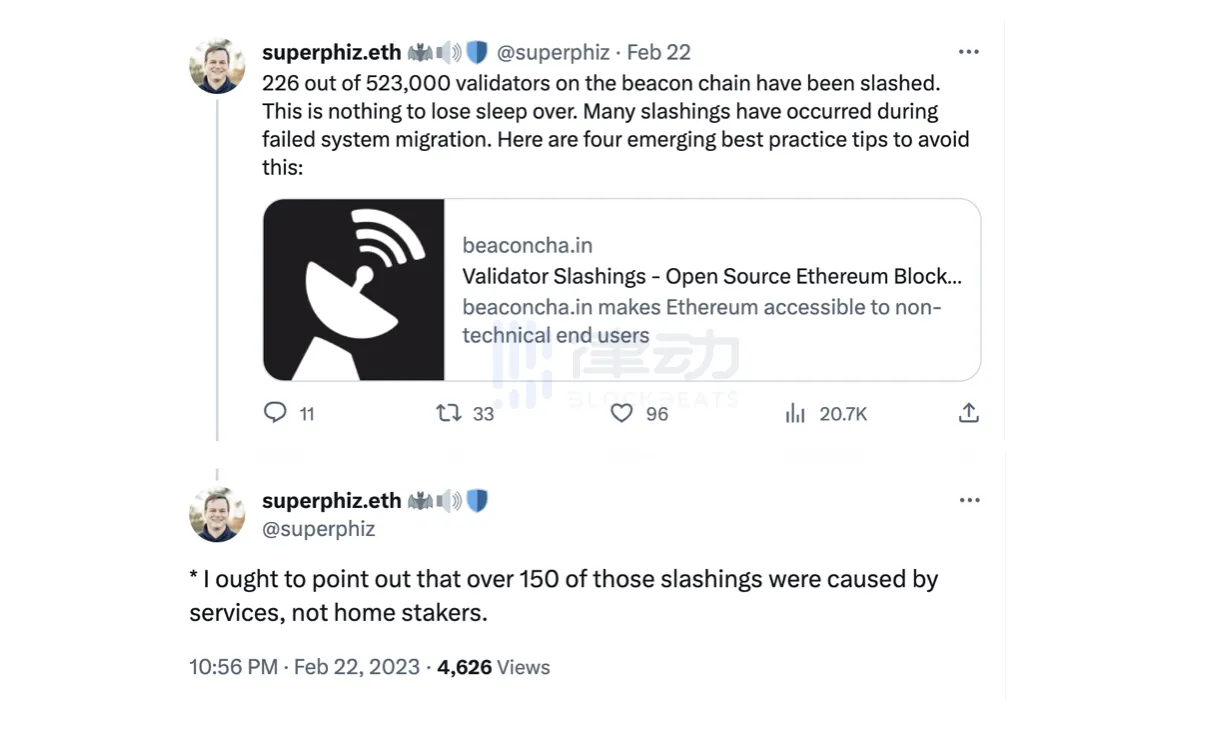
Ethereum core developer Superphiz stated on social media in February of this year that since the launch of the beacon chain on December 1, 2020, the Ethereum ecosystem has only reduced 226 validators, accounting for only 0.04% of the 524,060 validators. In the 226 instances of slashing, more than 150 were caused by "servers" rather than "individual stakers".
For most LSPs, fines and delisting penalties are somewhat inevitable, but this can result in stakers paying the price. Stakers have done nothing but provide funds, yet they face high risks of loss or reduced rewards due to fines and penalties.
Community users even commented, "Why stake on Lido when there is no power to stop it from threatening the network with a 32% share and being slashed?"
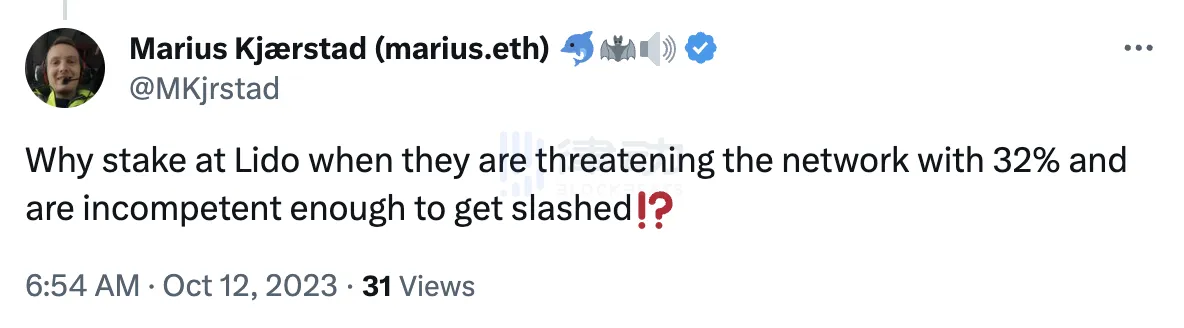
The reason for such a sound is that previously, RocketPool, StakeWise, Stader Labs and other Ethereum LSD protocols promised to limit validator shares to below 22%, while the market leader Lido Finance, which holds a share of up to 32%, did not make a statement on this. This has raised concerns in the market about Lido's excessive centralization, and even speculation that Lido will fork Ethereum in the future.
Ethereum community member Ryan Berckmans once criticized that "Lido's unlimited dominance is the only known substantial risk, which may reduce the value of Ethereum to only 1.2 to 3 trillion US dollars in ten to fifteen years, instead of 12 to 30 trillion US dollars."
Related reading: "Will Lido's Monopoly Threaten Ethereum? "
"Ryan Berckmans, a member of the Ethereum community (@ryanberckmans), believes that the risk of Lido's unlimited dominance is that Ethereum may be perceived as controllable or more centralized than other blockchains in the eyes of large companies and governments. If so, Ethereum's development speed may be greatly affected, which will limit Ethereum's benefits to humanity and reduce the value of ETH."
"Sacha, a contributor to the Lido ecosystem (@sachayve), published an article refuting many of Ryan's concerns, which are based on viewing Lido as a single entity. However, Lido is actually a coordination layer between multiple participants, and it is not difficult to explain to institutions that Lido is not a single entity, especially when LDO governance is greatly weakened and constrained by stETH holders."
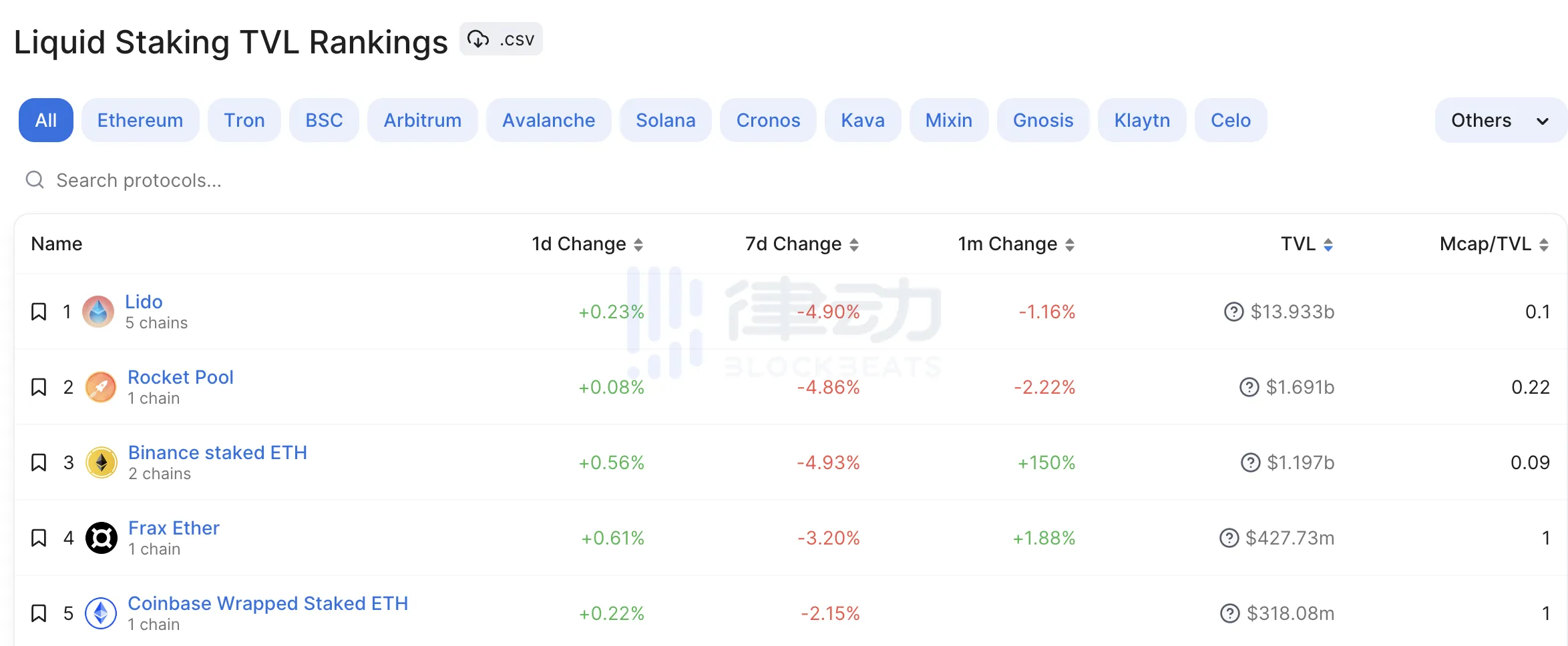
According to DefiLlama data, Lido is the largest liquidity staking protocol to date, with a TVL of $13.9 billion, while the second largest, Rocket Pool, only has $1.69 billion.
Welcome to join the official BlockBeats community:
Telegram Subscription Group: https://t.me/theblockbeats
Telegram Discussion Group: https://t.me/BlockBeats_App
Official Twitter Account: https://twitter.com/BlockBeatsAsia