Exclusive interview with Ryze Labs: Focusing on projects that can truly generate demand, while the vast majority of projects do not meet the criteria.

On September 6th, Sino Global Capital, a venture capital firm in the Web3 industry, announced the completion of its rebranding as Ryze Labs. The aim is to drive innovation and discover the potential of emerging markets.
Ryze Labs, established in 2015, has accumulated over 50 portfolios in these rounds of bull and bear markets, with DeFi accounting for the largest proportion, followed by infrastructure and gaming. Many well-known projects such as Solana, Polygon, and Wintermute are included in Ryze Labs' investment portfolio. In the early VC industry, Ryze Labs can be considered as a top-tier player.
During the TOKEN2049 conference, BlockBeats also had a chat with Matthew Graham, the founder of Ryze Labs, to hear his views on the current primary market and Ryze Labs' investment logic. They are more interested in projects that can truly generate demand, while the vast majority of projects currently do not meet this criterion.

Matthew Graham
Do not compare with any investment institutions
BlockBeats: First of all, congratulations on the brand reshaping of Ryze Labs. Could Matthew introduce himself and explain the reason for the brand reshaping?
Matthew Graham: I am Matthew, the managing partner of Ryze Labs, responsible for managing investment operations and other businesses that will be launched next year.
Our company was founded in 2015, and this is the first time we have undergone a brand reshaping. Initially, we focused on connecting the Greater China market with the international market, hence the name Sino, which means related to China. However, we have now expanded into markets in a wider range of emerging fields. We have a presence in various locations from Egypt to Singapore. Most importantly, our story is now even more grand than before, and our interests and mission have expanded to all emerging fields.
Brand reshaping is something we have been considering for a long time. As time goes on, the brand name will become more and more meaningful. A good name can better represent who we are now and give us room to further grow.
BlockBeats: Which venture capital firms do you currently favor, and which ones can Ryze Labs compare to? What scale do you hope Ryze Labs can achieve?
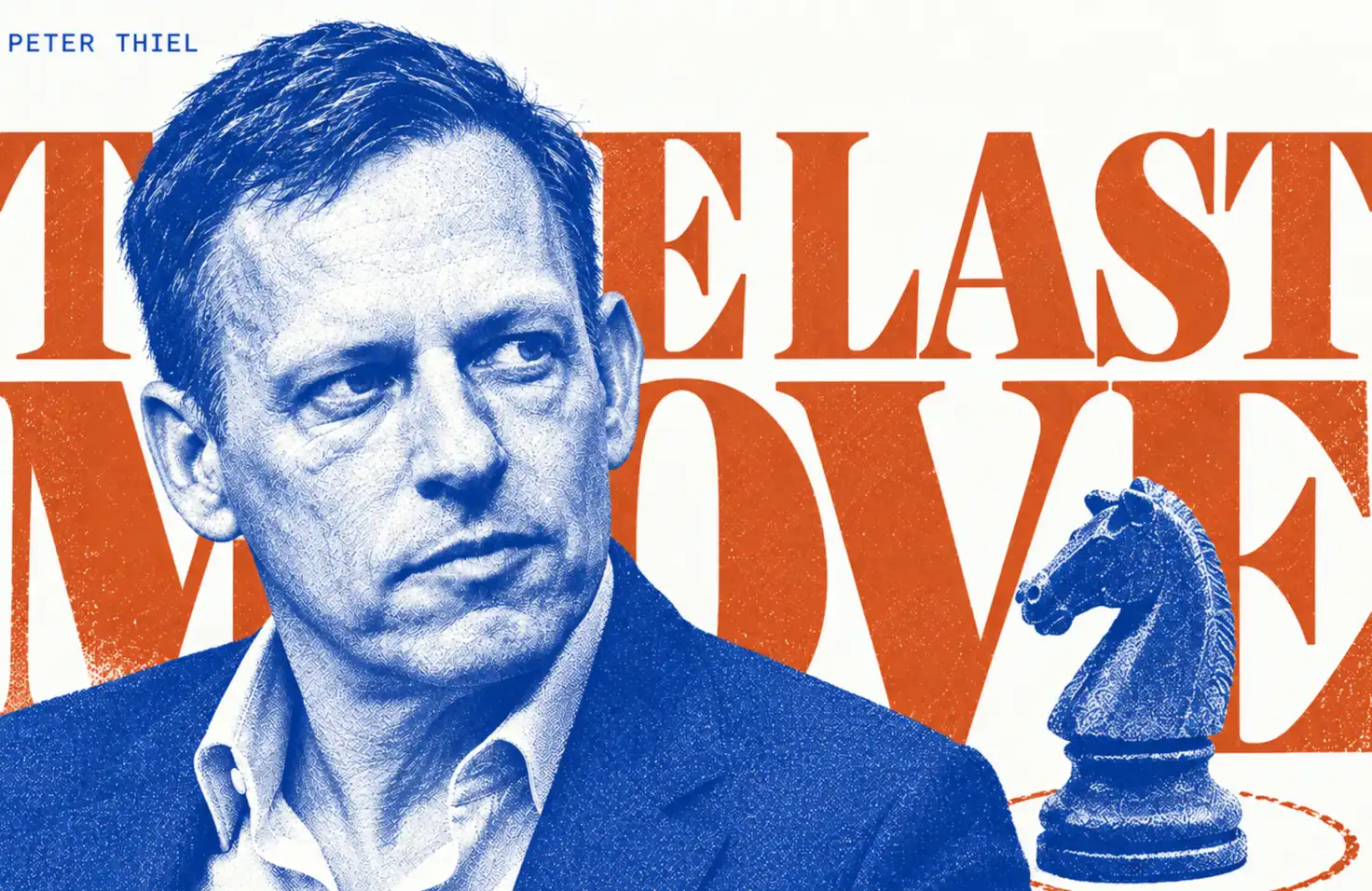
Matthew Graham: We shouldn't compare ourselves to anyone. No one is doing what we are doing, which is "bringing Web3 companies from all over the world to billions of potential customers." I agree with Peter Thiel's theory, why compete with others? We should find what we do best and execute it. Therefore, we are proud to be able to support, invest, and provide support for these very important and often struggling emerging economies around the world.
Most members of our team possess four key abilities: finance, technology, globalization, and local markets. This means they are experts in one or more emerging markets, and it also means we can provide a variety of support to investment portfolios in regions such as India, China, Singapore, the Middle East, and North Africa. This support includes advanced public relations, market research, market localization, business development, marketing communications, and even human resources. For example, if a project has difficulty finding a general manager in India, we can personally assist them.
"Bringing Web3 to billions of potential customers" is our unique value proposition. No one in the industry is doing anything similar.
Looking for projects that truly generate demand
BlockBeats: Does Ryze Labs currently have a specific investment philosophy, such as preferred areas or geographic focus? I noticed that the first three investment categories are DeFi, infrastructure, and gaming. Can you explain?
Matthew Graham: There are some specific things we focus on when evaluating projects. First, our investments cover from seed round to Series B, mainly focusing on seed round investments. For example, when we evaluate a seed investment opportunity, the primary thing I want to see is that they already have a group of "super fans" in my opinion. I hope to see that they have found the product-market fit, which doesn't have to be for a thousand people, it can actually be for five people. These "super fans" are not the project team's own social network, but those who have been found through project development, and they are the people who absolutely need your project. Because I believe that the hardest part is to make your project essential to two, three, or four people, and make them need it. This is actually very difficult.
Many projects, or even the vast majority of projects, do not have even one or two people who really need their product. I firmly believe that if you can find the five people who are crucial to your project and they need it, whether it's a game they want to play or a DeFi product they want to use, you can find a way to spread it to 60, 300, or even 5000 people. Most people don't have this ability. This is the first point I want to see.
The second thing I want to see is the ability to deliver quickly and consistently. Therefore, rather than focusing on specific geographic locations, I would prefer to see these two qualities.
BlockBeats: Why did Ryze Labs significantly reduce its investment volume this year?
Matthew Graham: Generally speaking, we want to adopt a counter-cyclical strategy. In bear markets, we even hope to be more proactive, but we want to see solid market performance and unique ideas, as I mentioned earlier. Therefore, we believe that whether it is a bear market or a bull market, we must maintain our standards and wait for projects that meet our standards. We are not in a hurry to take action.
BlockBeats: In the past year, it has been widely believed that gaming is rapidly becoming more popular. What is your view on the entire gaming industry?
Matthew Graham: First of all, I believe that games can be a key driver for mass adoption. In the first wave of gaming, there were two factors that hindered us from achieving more success. First, Web3 games may not be as fun as Web2 games. Web3 games have not reached the level of Web2 games. Second, the impact of gaming economy fluctuations is quite significant. We have made great progress in addressing the first issue, with better game quality and some even covering a wider gaming population.
There is still a serious problem that it is difficult to attract those who have not yet entered Web3. Web3 games usually do not use Web2 marketing strategies. The games will ultimately be aimed at a small group of people who have already entered Web3. To solve this problem, either reduce the friction of attracting users from Web 2.0, use different marketing techniques, or find alternative monetization paths.
BlockBeats: Do you have any personal investment cases that you consider to be very successful, very unsuccessful, or regretful so far?
Matthew Graham: Of course, we can review the past and say whether we should or should not have invested in a certain project. But in fact, our thinking will be different at different points in time. For example, an idea at one point in time may look very different six months later.
I believe that it is more important to find patterns and lessons that can be learned. Success may be based on luck, but it is crucial to make success more skill-based rather than luck-based.
BlockBeats: Multicoin was very popular and grew rapidly in 2021, but their management size has decreased by 90% this year. Will Ryze Labs be very difficult this year?
Matthew Graham: It is well known that cryptocurrencies are susceptible to extreme economic cycles. In my opinion, managing fund exposure to these cycles is crucial, especially if there are external investors involved. There may be various methods that can be used in this regard.
For example, if a large amount of investment is made at a certain point in time, the risk exposure will be huge, and the risk borne by the bear market will also increase and be unknown. However, if long-term weighted balance investment is adopted, the exposure to bull and bear market cycles will be reduced.
Market has bottomed out
BlockBeats: Do you think we are currently in the early stages of a bull market? Do you agree with the theory of market cycles?
Matthew Graham: Of course. I do believe that we have hit rock bottom. We have seen the worst period, with Solana's price dropping below $10 and Bitcoin's price dropping below $20,000. I am optimistic for the medium to short term, and I have always been very optimistic about the long-term development of this industry. I also agree with the concept of market cycles, especially in the cryptocurrency field, where market cycles are more extreme.
BlockBeats: Looking to the future, which tracks and fields do you particularly favor?
Matthew Graham: Anything that can promote more ordinary people's participation is very attractive, and the most important thing is to expand the audience of Web3. It is best to make users unaware that the underlying product is DeFi or some kind of cryptocurrency technology. We are very interested in such products and infrastructure that can support this goal.
Welcome to join the official BlockBeats community:
Telegram Subscription Group: https://t.me/theblockbeats
Telegram Discussion Group: https://t.me/BlockBeats_App
Official Twitter Account: https://twitter.com/BlockBeatsAsia