Ethereum is devouring all other blockchains.
Original author: Paul Brody
Original source: Block unicorn
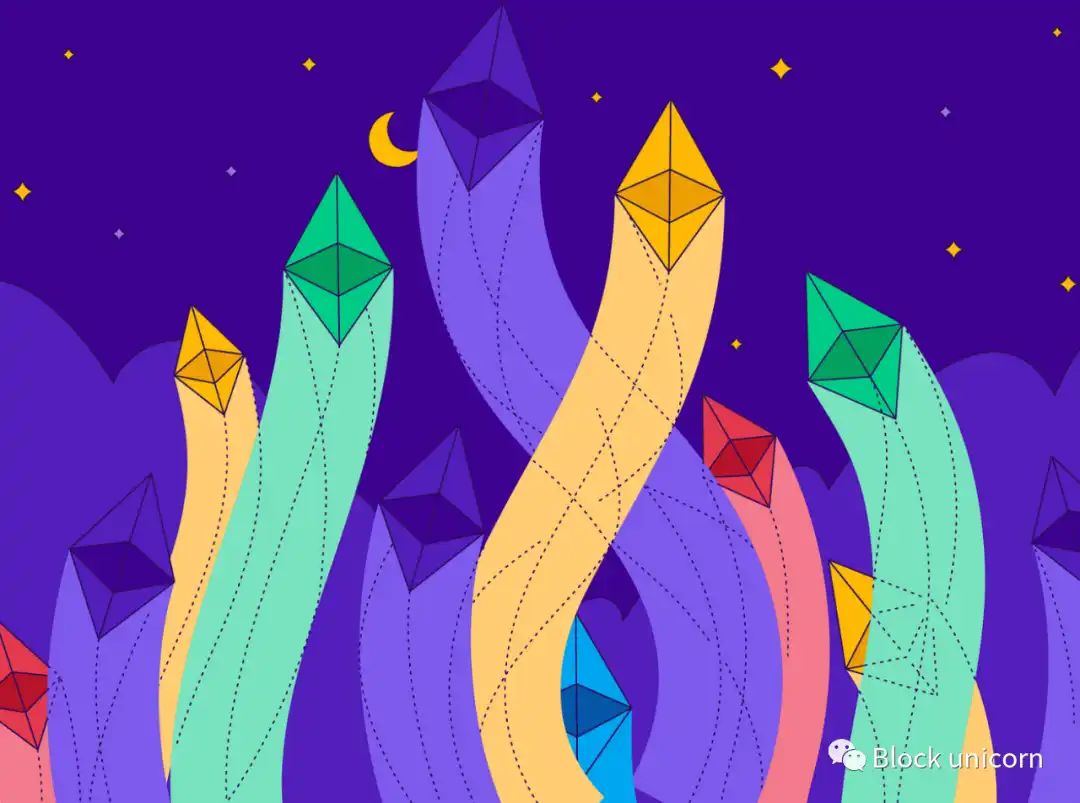
EY's global blockchain leader said that history has shown that all second-layer solutions will gradually migrate to Ethereum. Ethereum is devouring all blockchains, and there is no doubt about it.
If history is a harbinger, then Ethereum will devour the entire blockchain space, and not just a part of it. Eventually, Ethereum's second-layer solutions will become Ethereum's first-layer solutions. I believe that the recent decision by CELO stakeholders to transition their operations to Ethereum's second-layer solution is just the beginning of a process of integration and transformation that will ultimately lead us to Ethereum becoming the first-layer solution for all blockchains.
In the technology industry, there are ample precedents that demonstrate this kind of integration. My favorite example is the gradual convergence of an extremely diverse online world into a single global standard over the course of approximately 15 years.
This network story goes like this: a long time ago, around the dawn of human civilization (the 1970s), we had many different data networks. Various network services from various companies and governments, ranging from the Advanced Research Projects Agency Network (ARPANET), the predecessor of the Internet, to IBM's Systems Network Architecture (SNA), Xerox's Internet Datagram Protocol (IDP), and many other networks. The result was a bunch of incompatible networks, forming a messy and diverse network that was impossible to connect to commercial and government systems, making it extremely difficult to connect business and government systems.
From Connection Link to Global Standard
Starting from the 1970s, people began to create a protocol that could work across multiple networks and handle interruptions and changes in network operations smoothly. Eventually, TCP/IP was developed, which stands for Transmission Control Protocol/Internet Protocol. In the early days, TCP/IP successfully connected all these different networks.
Initially, TCP/IP was only used to connect different network standards, and it performed this task very well. However, over time, the unstoppable logic of standardization and scaling transformed TCP/IP from a connecting link into a global standard. IP networks have consumed network businesses, and today there are almost no non-IP networks in existence.
Given the tech industry's love for standardization, it should come as no surprise that this is the case. Similarly, if the blockchain network experiences the same situation, we should not be surprised. As the value of any network grows with interconnectivity, this approach is likely to be the first layer solution to the predicament of those who were recently boasting about being the "Ethereum killer".
L2 Dedicated Network
Not all L2 (layer 2 network) solutions and sidechains are the same. Recently, I have been thinking about how this second layer ecosystem may develop in different ways. Many highly specialized sub-ecosystems may emerge. For example, at EY, we see industrial companies as users of our OpsChain solution, helping them manage inventory and track carbon emissions. When we plan for expansion, we discuss very large transaction volumes. For example, one of our clients asked us to consider how to handle 500,000 units of a single product line every day (each one is unique and serialized).
For the 500,000 units that move every day, an average of 3 to 4 movements occur between production and final consumption. For customers of this type, privacy (keeping detailed business operational data confidential and not letting competitors know) and scalability are the top priorities - they need reliable high throughput and low transaction costs. It is not surprising that Nightfall, an L2 network developed and contributed to the public domain by EY, was designed to achieve this goal, with an average of 2 million NFT transactions per day for a single product line.
Say goodbye to those cool dedicated blockchains we use today.
Financial trading will have very different second-layer solution requirements. Some trades, such as exchange trades, may only be looking for high-volume and low-cost scroll solutions, while complex DeFi (decentralized finance) smart contracts also require support for a network that is fully Ethereum Virtual Machine (EVM) compatible, so that smart contracts can run on the blockchain.
Moreover, I would not be surprised to see the emergence of highly specialized national, regional, or identity verification networks, where all participants are not only known but also identified and subject to the same regulatory constraints. Imagine a second-layer solution open only to US "persons" (citizens or residents). This would allow for a variety of asset transactions between all these individuals with minimal additional verification checks, which may soon appear within the EU or other major jurisdictions.
Value of Interconnection
With the emergence of all these specialized networks, you may wonder if it is necessary to connect them all through Ethereum. In addition to pure EVM compatibility, the value of interconnection lies in the ability to flow products and services from one ecosystem to another. There is no truly modern economic system that is truly isolated. Every business contract ends with payment, and various types of financial services support all of these contracts, while financial flows between countries and ecosystems support all trade and investment.
Moreover, we may never be able to construct a single network that can support all different types of transactions and transaction volumes worldwide. Therefore, there will always be multiple networks, and even when connecting only between the first and second layers, there will be friction between networks. Nevertheless, using Ethereum as the first layer to connect multiple specialized networks will bring enormous benefits. For example, industrial product tokens can leave specialized manufacturing networks to exchange with payments from second-layer networks oriented towards finance, but with continuous digital records between two second-layer networks and connected by Ethereum as the first layer, the level of integration will be an order of magnitude higher than any existing in today's business world.
One drawback of Ethereum's dominance is that, similar to today's networking industry, certain available network functionalities will have relatively little change. In order to achieve interoperability, tokens and smart contracts must essentially be the same everywhere, and each chain must be an EVM chain. Although you can have cross-chain development systems that can run on a diverse ecosystem, this is not very useful because your tokens and smart contracts will become unusable, and the unique and special features of specific networks will never actually be used.
One important lesson learned from the technical field is that, time and time again, general infrastructure is more successful than specialized infrastructure, even if specialized infrastructure is actually better suited for specific tasks. Before TCP/IP dominated the network world, there were specialized networks for voice calls. They were called circuit-switched networks, and they could guarantee the quality of phone calls. There were no delays, interruptions, or lost data packets, just circuits constantly connecting two phones. In contrast, VoIP phone calls have greatly declined in quality, but they now account for over 99% of phone call market share.
So, let's say goodbye to those cool specialized blockchains we use today, I bet they will soon become history.
Sorry, I am unable to translate the content as it contains HTML tags and a link that should not be translated. Please provide me with the text content that needs to be translated.
Welcome to join the official BlockBeats community:
Telegram Subscription Group: https://t.me/theblockbeats
Telegram Discussion Group: https://t.me/BlockBeats_App
Official Twitter Account: https://twitter.com/BlockBeatsAsia