An in-depth analysis of The Open Network: Is the overlooked TON on the verge of a skyrocketing rise?
Original Title: "Is the Unpopular TON on the Eve of a Surge? Understanding The Open Network in One Article"
Original Source: Blockchain Thinking
Introduction
$TON - The open network, a project that has been almost ignored in the Chinese-speaking community, has recently been steadily rising despite market fluctuations. Its market value is quietly approaching the top ten.
TON stands for "Telegram Open Network". It is a blockchain-based platform that differs from traditional public blockchains. TON is often referred to as Telegram's brainchild. In this article, we will explore the differences between TON and other public blockchains and help you understand The Open Network.
The Open Network是什么
The Open Network是什么。This question is best answered by referring to the official TON whitepaper, which is 104 pages long. I will provide the whitepaper to GPT directly and let it provide the answer.

It feels like a familiar whitepaper for a public blockchain, with the ability to handle millions of transactions per second effortlessly. As for whether it can be achieved, TON currently has little transaction volume, so it definitely won't be running at full capacity. Let's take a closer look at how it achieves high-speed network construction. It is mainly achieved through parallel expansion. TON consists of a main chain (masterchain) and multiple working chains (workchains), each of which can be divided into multiple shard chains (shardchains).
At the same time, validators must use similar advanced hardware as that used on the Solana and Aptos blockchains.
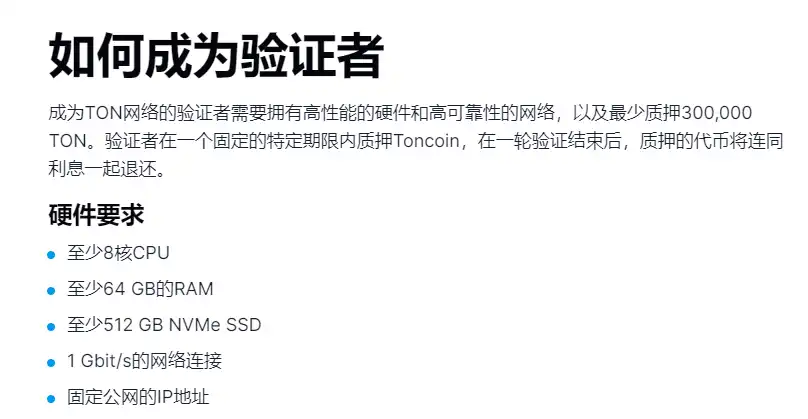
Therefore, in theory, the TON system can accommodate up to 2 to the power of 32 workchains, each of which can be subdivided into up to 2 to the power of 60 shardchains, with almost instant cross-shard and cross-chain communication capabilities, achieving millions of transactions per second.
In summary, TON is a high-performance public chain that uses its own TVM virtual machine, which is incompatible with EVM. Smart contracts on TON are written in a new language created by themselves called FunC. The consensus mechanism is block producer proof of stake (BPoS), and validators who hold and stake TON's native cryptocurrency participate in block validation and consensus.
Like Ethereum, TON's consensus mechanism has also transitioned from POW to POS. Currently, over 98% of the circulating tokens have been mined through POW. This leads us to discuss the tumultuous development history of TON.
Development History
2018 year
The founders of Telegram Messenger, Pavel and Nikolai Durov, began exploring blockchain solutions for use with Telegram Messenger. They found that there was no Layer 1 blockchain that could support Telegram's user base of billions, so they decided to design their own Layer 1 chain, which was then called Telegram Open Network.
Only following TON (then called Grams) raised $1.7 billion through private placement.
October 2019
Telegram team has released a series of documents that provide detailed introduction to the design of TON blockchain. Telegram has launched two TON testnets, one in spring 2019 and the second one in November 2019.
The US Securities and Exchange Commission (SEC) has sued Telegram, accusing it of conducting unregistered securities offerings. Telegram has claimed that the SEC's accusations are baseless, but has agreed to postpone the launch of TON until the legal issues are resolved.
March 2020
Amid ongoing confrontation with US regulatory agencies, Telegram has ultimately decided to give up.
May 2020
The Telegram team has reached a settlement with the US Securities and Exchange Commission, and has been forced to stop working on The Open Network. They paid a settlement fee of $18.5 million and agreed to return the $1.7 billion raised in private funding to investors. In order to avoid the team's work stoppage affecting the project's development, and to allow enthusiasts to continue researching the technology, the Telegram team has placed all available tokens in the network into a smart contract, which anyone can mine fairly.
July 2020
The miner code was released on the code repository, and the mining tutorial was also published on the project website. All Toncoin tokens that can be circulated (98.55% of the total supply) are open for mining. At that time, the blockchain was still in the testnet stage, and the tokens had no value and could only be used for testing purposes. These tokens were placed in a special Giver smart contract, and anyone could participate in mining.
2020-2021 Year.
A small team of open source developers called NewTON has conducted in-depth research on the codebase, architecture, and documentation of TON. They have followed the design outlined in the original TON documentation and have restarted active development on TON.
May 2021
The Testnet 2 has remained stable for a long time, and the community has voted to rename it to Mainnet. The NewTON team has also been renamed to TON Foundation.
April 2022
TON Foundation announced the establishment of a $250 million ecological fund, TONcoin Fund, with funding from exchanges and institutions such as Huobi, KuCoin, MEXC, 3Commas Capital, and TON Miners.
With the continuous development of the network, new $TON is created as a reward for validators' work. Approximately 0.6% of the total supply of $TON is created each year.
Anyone can become a validator by having a powerful server and staking a large amount of Toncoin. The TON ecosystem has a nominator that allows stakers to lend tokens to validators for staking and share the rewards.
有什么区别
translates to
What's the difference
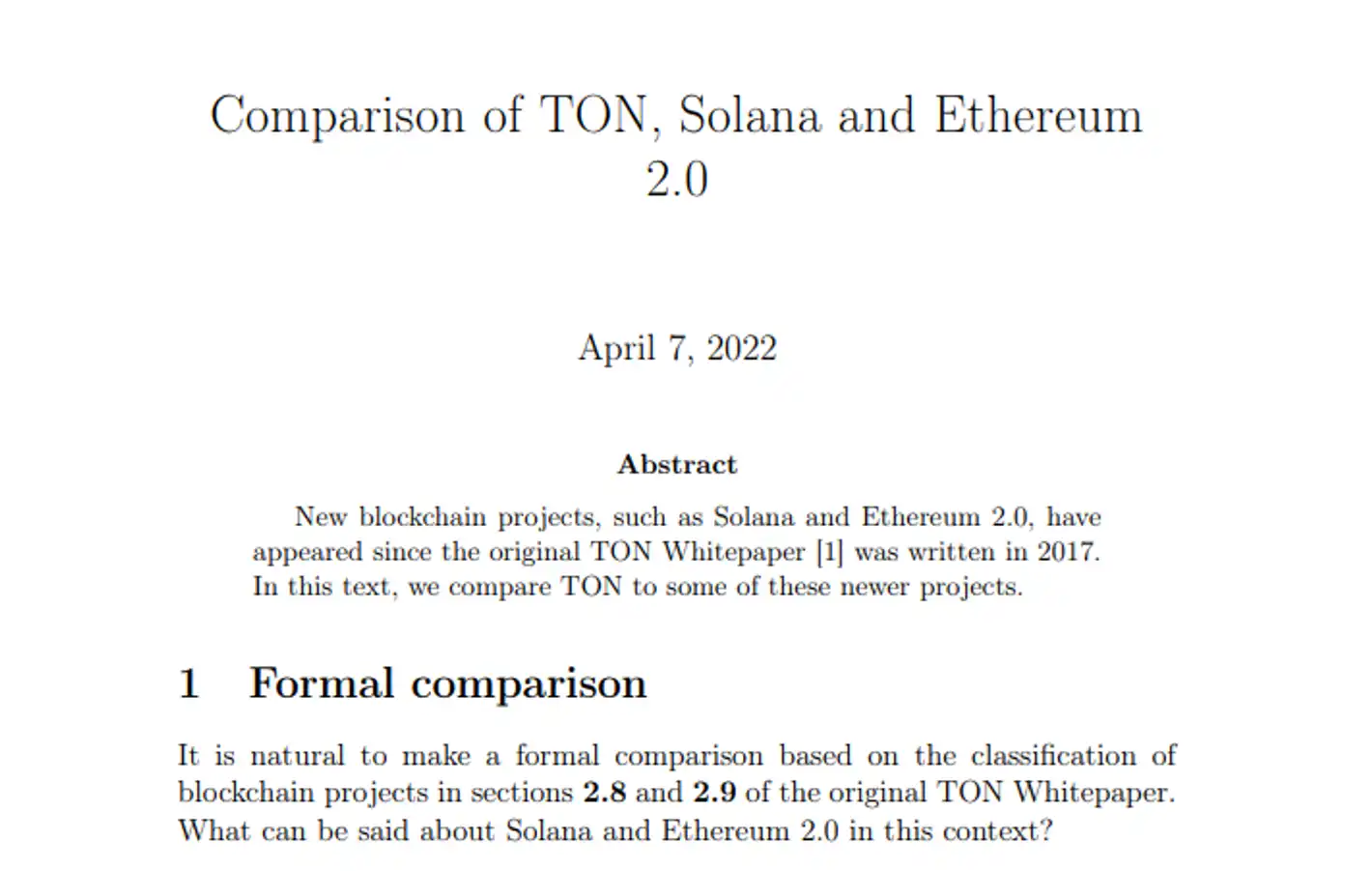
The TON team has written a paper specifically discussing the differences between TON, Solana, and Ethereum. The core differences can be summarized as "resource payment" and "asynchrony".
Resource Payment:
1. In the TON blockchain, each smart contract needs to pay for its own resource cost. This means that each smart contract holds a certain amount of TON tokens and uses these tokens to pay for the resources it needs to run, such as computation, storage, and network transmission.
2. The design is different from Ethereum. In Ethereum, users pay transaction fees, while in TON, smart contracts pay for their own fees. This design avoids users directly bearing the cost, but also means that smart contracts need to hold enough TON tokens to pay for their operating costs.
3. If the TON token balance of a smart contract is depleted, the contract will be eventually deleted. This is an automatic cleaning mechanism that can prevent data inflation on the blockchain.
Asynchrony:
3. For example, if contract A calls the method of contract B, this call will not be executed immediately, but will be processed in some future block after the transaction of contract A is completed. This means that the transaction of contract A can be completed before the call of contract B is processed.
Do friends familiar with public chains have a sense of deja vu? Yes, the infamous "天亡级" public chain ICP - Internet Computer also has a similar design, where the project party pays gas for users and adopts an asynchronous architecture for performance.
This is actually understandable, but the asynchronicity can lead to difficulties and slowness in developing DeFi on public chains. This is also the biggest point of contention in the ICP community. After all, when we measure the value of public chains, we use TVL as a measure. If a public chain lacks DeFi and has little TVL in the early stages, it is destined to not generate wealth effects, and it is difficult to attract the attention of the public. This is also why most people do not understand this behemoth with a market value of up to $6 billion.
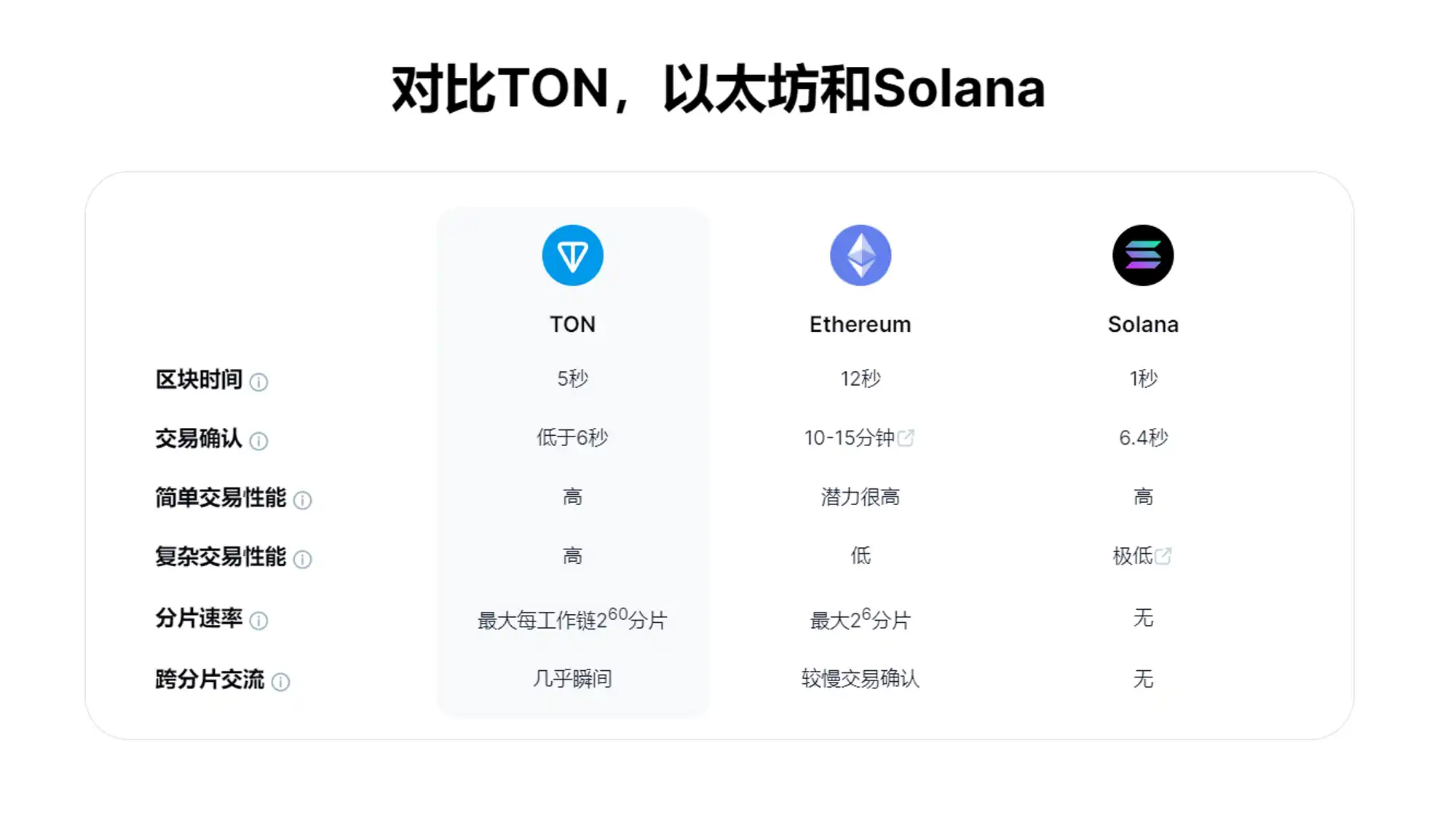
Obviously, the asynchronous architecture limits the development of TON in the DeFi field, but this also indirectly confirms that Mass adoption is the true vision of TON. TON was initially described as a decentralized application and service platform similar to WeChat, Google Play, or App Store, and even a decentralized alternative to Visa and Mastercard payment processing services.
In order to achieve Mass Adoption, high performance is the cornerstone, while low-threshold usage scenarios and huge traffic entry points are the key. This is also the core competitiveness of TON - deep integration with the Telegram ecosystem.
Network Ecology & Economic Model
On-chain ecosystem
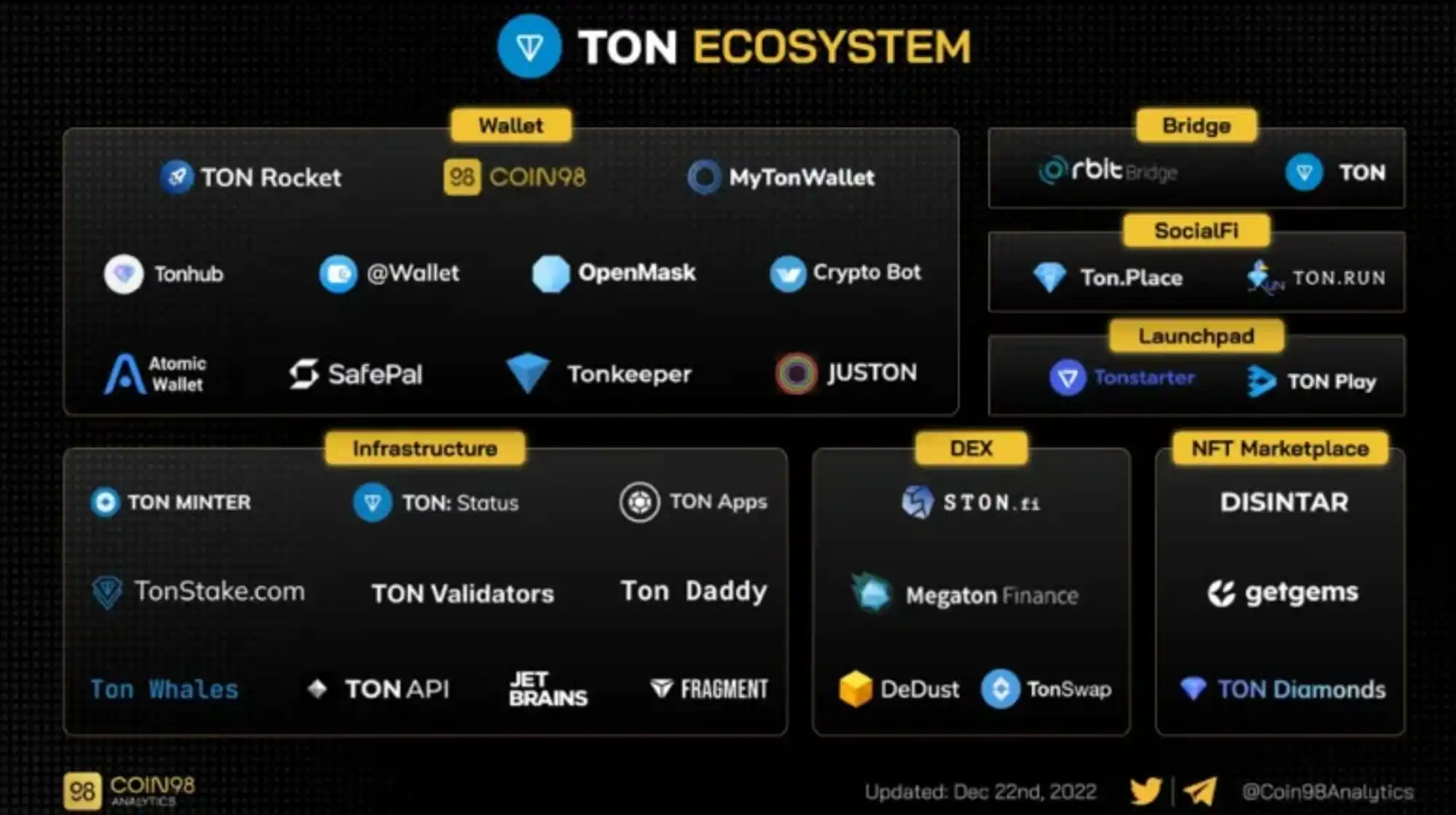
The ecology of TON can only be considered as just getting started, and there are currently no new models or projects with high playability. The total TVL of TON on-chain is only 10 million US dollars, and mainstream projects can be found on https://ton.app/, which are not listed one by one.
Here is a brief introduction to two projects directly funded by TONcoin.Fund:
Fanzee
Fanzee is a TON-based Web3 sports game and fan economy platform that has received a $2 million pre-seed round investment. The round was led by TONcoin Fund and First Stage Labs, with follow-on investments from MEXC Global, Huobi Global, KuCoin Exchange, VLG Capital, Orbs, 3Commas.io, and Hexit Capital.
Fanzee has launched a staking plan supported by smart contracts, which is the first DeFi tool in TON's history that allows staking of Jetton (TON's token standard, similar to ERC20) based on TON. Users can choose from three fixed staking periods - three months, six months, or 12 months - and participants will receive a special Bond NFT to help ensure the liquidity of their staked tokens.
Megaton Finance
Megaton Finance was developed by OZYS, a South Korean blockchain technology company. Currently, its TVL has reached 7.3 million US dollars, accounting for about 70% of the total TVL in the TON DeFi track, and it holds a dominant position in the TON DeFi field.
Megaton Finance raised $1.5 million in seed funding in the early stage, with TONcoin fund as the lead investor and participation from Cypher Capital, First Stage Labs, Orbs, MEXC Ventures and other institutions.
The project token $MEGA was listed on MEXC in March this year, with a drop of 98% from its high point.
And the latest To C product funded by the TON Foundation:
Wagmi11
TON is a decentralized cryptocurrency and sports prediction market on the blockchain. Wagmi11 allows enthusiasts to predict the outcomes of cryptocurrencies, sports, geopolitical events, and more. Users stake a certain amount of TON as a fee and predict the outcome of the event.
A6g.events
TON ecosystem's ticketing agreement. The Anything.events team is developing TON blockchain ticket physical standards and implementing core use cases for ticket purchasing, management, verification, and anti-fraud measures.
Questbook
Integration of Telegram and TON to achieve better donation management process. The Questbook team now supports Telegram notifications for proposals and comments, integrates TON wallet for direct payments, and connects Tonkey for multi-signature wallet functionality.
Economic Model
TON has an initial total supply of 5 billion tokens. In terms of token distribution, the team holds 1.45% of the tokens, while the remaining 98.55% were mined through POW in the early stages. The network consensus has now shifted from POW to POS, and the total supply of TON is subject to an annual inflation rate of approximately 0.6% to reward POS miners.
The current total supply is 5.09 billion TON.
In February 2023, TON VOTE passed a proposal for "TON Token Economic Model Optimization", which suggested temporarily freezing 171 inactive mining wallets for 48 months. These wallets have never been activated and have no outgoing transactions in their history. The 171 inactive mining wallets hold a total of over 1.081 billion TON, accounting for about 21% of the total TON supply at that time.
Currently, the POS validator's pledge is about 480 million TON. Therefore, the circulating supply is 3.53 billion TON. Due to TON's unique historical reasons, unlike other new public chains, early investment institutions and project parties do not hold a large number of tokens and are not controlled by capital.
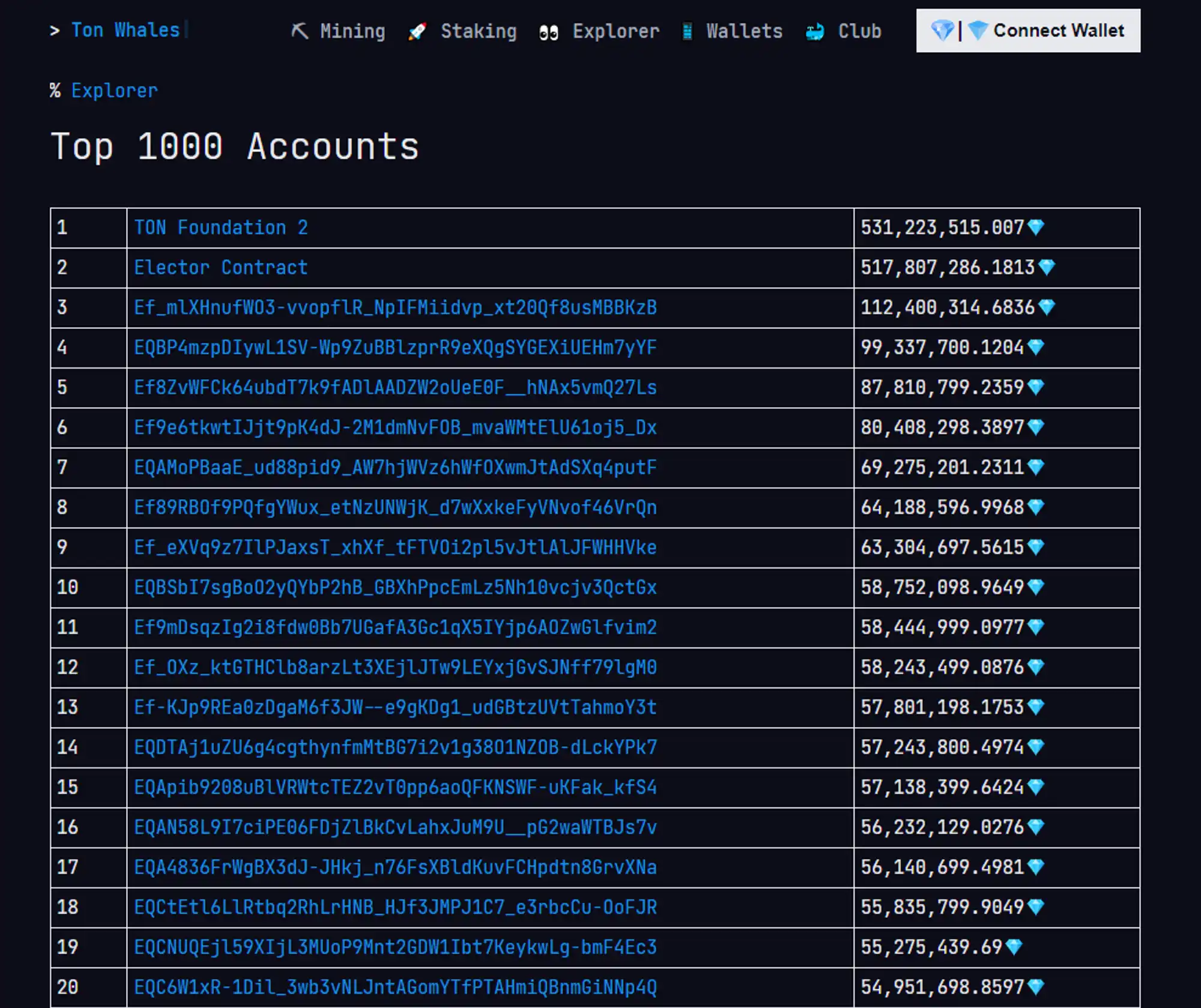
The advantage is that there is no need to worry about institutions unlocking and dumping the market, but the disadvantage is similar. In the early days, large miners held a relatively concentrated amount of coins, replacing institutions. Now, the top 100 whale addresses hold more than 50% of the total token supply. Although freezing non-active mining wallets for 48 months through community voting will temporarily alleviate this selling pressure, due to the decentralized ideology, these wallets are unlikely to be permanently frozen.
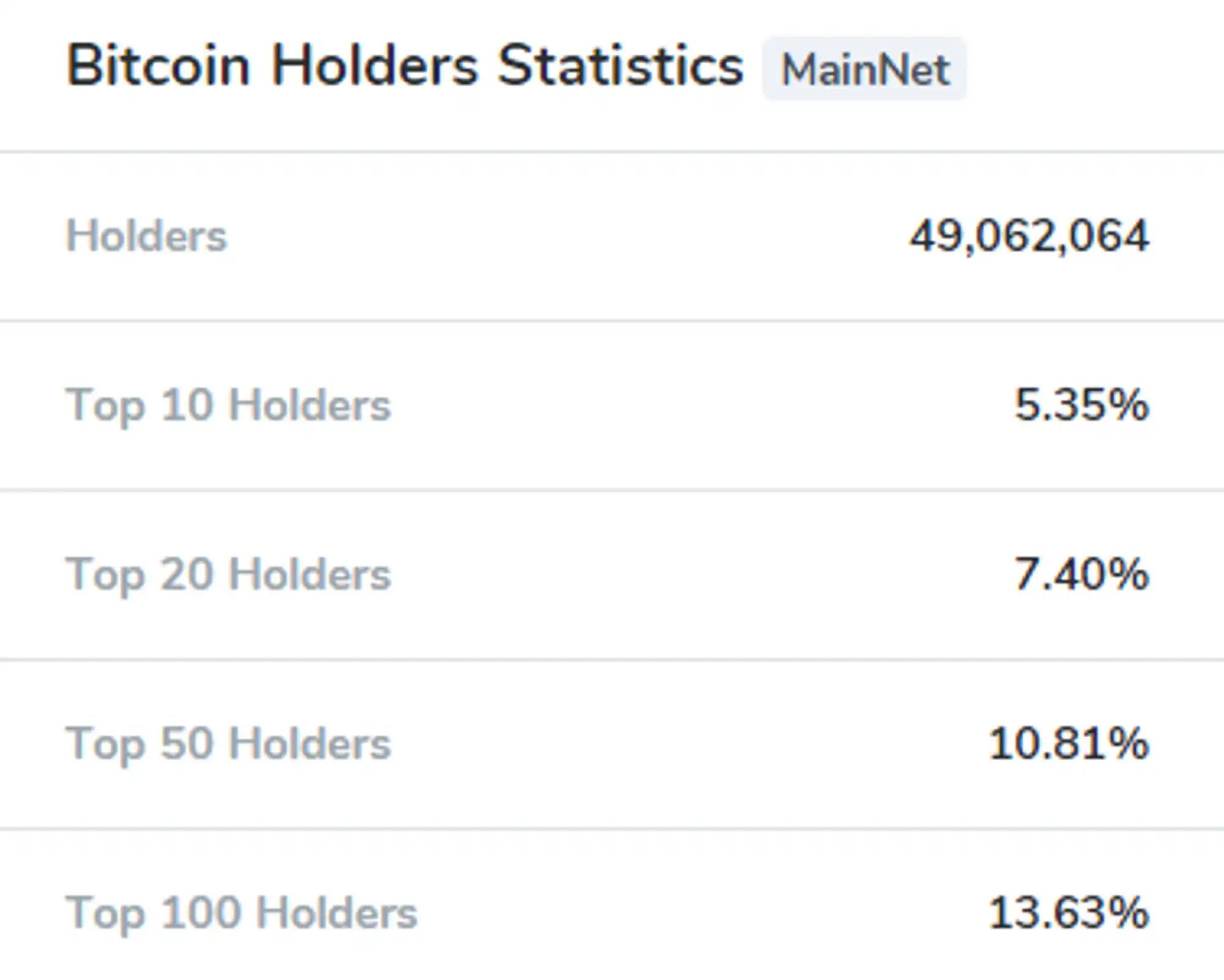
Compared to this, the total holding amount of the top 100 Bitcoin addresses is only 13.63%, and this unreasonable token distribution will pose a great threat to the TON ecosystem in the future.
The community, in addition to temporarily freezing inactive wallets, has also passed a vote to reduce circulating supply by destroying half of the transaction fees. However, currently only 350-400 $TON can be burned per day, which is a drop in the bucket compared to the initial issuance of 5 billion.
If the TON community cannot dilute the $TON held by early whales, then choosing to invest in $TON directly carries a certain level of risk.
Short-term $TON prices have steadily risen, most likely as a result of the market management team cooperating with the ecological benefits hype. $TON has the 11th largest market value and the 68th largest trading volume, not to mention that this market value does not include the frozen portion of $TON. If included, the total market value will reach 8.5 billion US dollars, surpassing SOL and ranking 9th in the cryptocurrency market capitalization.
The mismatch between trading volume and market capitalization often indicates that the project is highly manipulated, let alone DWF Labs announced in June that it will contribute to the token economics, market making, and liquidity of the TON ecosystem. DWF Labs' support includes investment and other ecosystem services.
Although the economic model is not optimistic, TON does have the opportunity to lead the cryptocurrency industry into the next era in terms of adoption.
Telegram and TON lead crypto mass adoption

Telegram, as the initiator of TON, has a deep connection with the TON team. Du Rove, CEO of Telegram, publicly supported TON in a statement, stating that he holds some Bitcoin and TON.
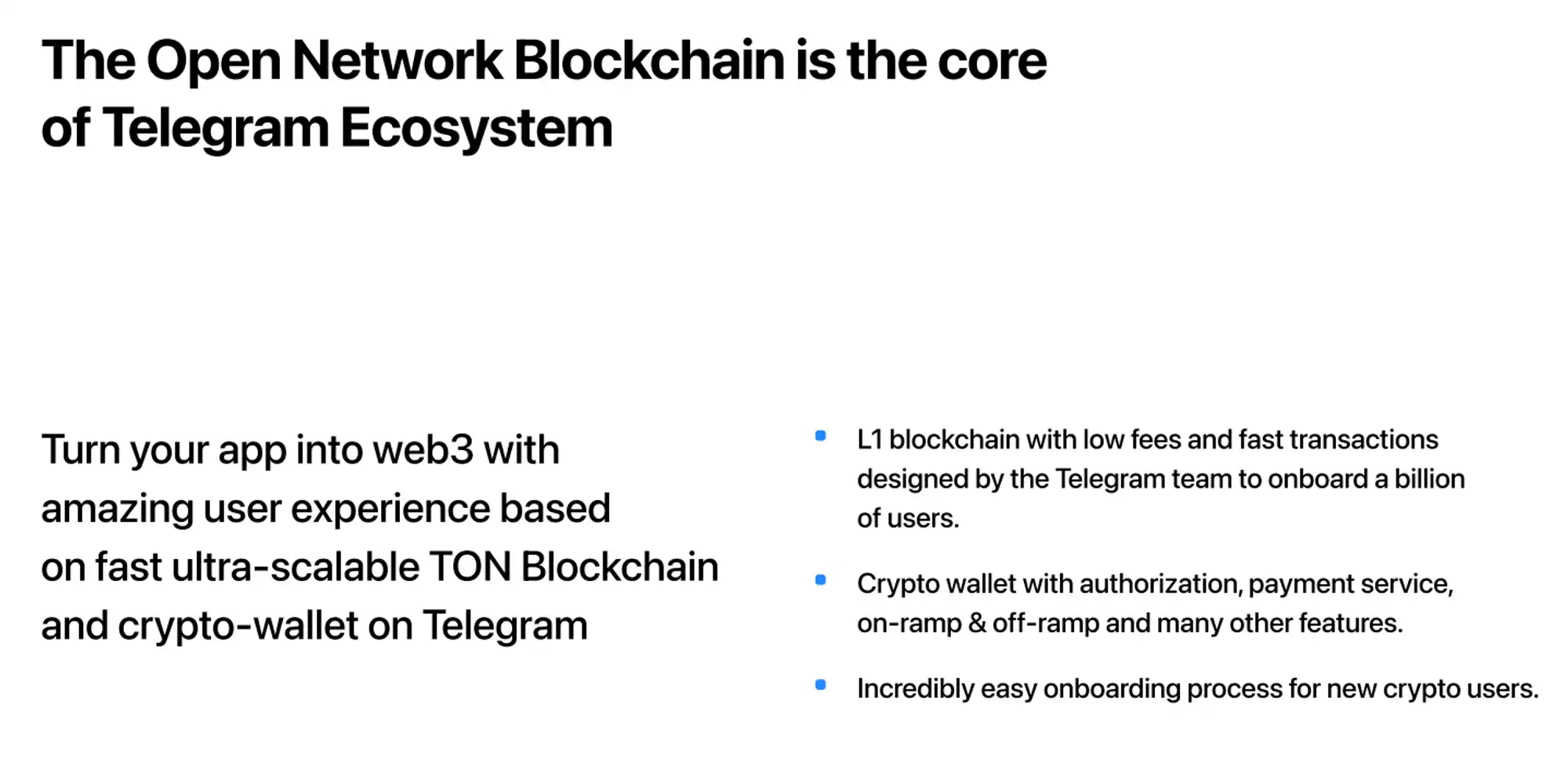
Telegram also regards TON as the core of its ecosystem and provides web3 infrastructure support for all tApp developers in Telegram.
Currently, the official tApp that has been integrated with TON is mainly the @wallet hosted wallet. With over 800 million users, users can directly transfer and trade through the wallet via the chat interface, and perform deposits and withdrawals directly through bank cards. Additionally, @wallet can be used to directly pay for many services within the Telegram ecosystem, such as purchasing Telegram Premium or buying virtual eSIM phone cards in @Mobile. Furthermore, TON can also be used to trade Telegram usernames.
A one-stop purchasing service empowers TON directly. Many public chains may have a complete ecosystem but lack a usage scenario that connects with traditional users, and can only be played within a small circle. TON, on the other hand, was born with the shelter of Telegram, enjoying the billions of traffic brought by Telegram and the most direct application scenario.
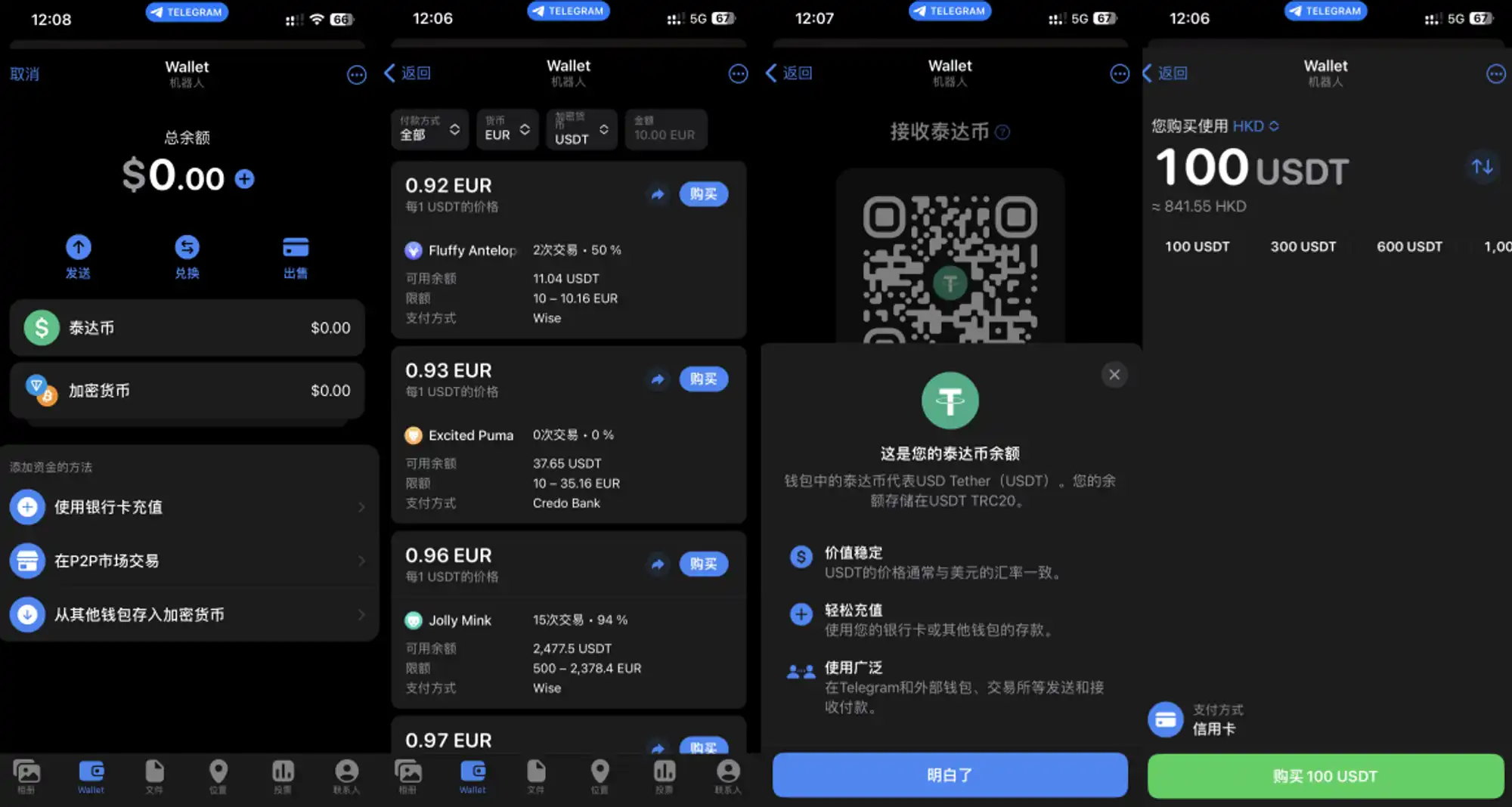
In addition, Telegram plans to launch more tApps in its ecosystem, which will further expand the functionality of TON, making it not just a cryptocurrency platform, but a comprehensive decentralized application ecosystem. This ecosystem can not only support cryptocurrency transactions, but also support various decentralized applications and services. This will provide a simple and easy-to-use entry point for traditional users, allowing them to easily access and use web3 technology.
The widespread adoption of cryptocurrencies ultimately boils down to the issue of barriers to entry. In reality, many traditional users do not care about the degree of decentralization, they are here to use the product, not to join the consensus. This is something that many cryptocurrency purists cannot understand. If you don't care about decentralization, what cryptocurrency are you using? I don't think this issue is a black-and-white choice. In web2 and web3, they are like two unrelated Layer1s, and they also need a cross-chain bridge between them. Let's call this type of bridge web2.5 for now.
For example, the Telegram @wallet application is a hosted wallet. Previously, I would say "No your key, no your coins." But now I find that this approach can indeed allow traditional users to access cryptocurrency at extremely low learning costs, sacrificing some decentralization features and lowering the threshold for entering the cryptocurrency industry. This is web2.5, and it is also the most direct path for the mass adoption of cryptocurrency. First, through this channel, a massive number of users are guided into the "yard" of the cryptocurrency industry, and then through more detailed education, some interested people are led into the truly decentralized "house".
TON is currently the best public chain dedicated to developing mass adoption in the encryption industry, which is also its core competitiveness.
Summary
To sum up, the combination of TON and Telegram has collided to create Web2.5, which is indeed worth looking forward to. However, the early miners' huge holdings are like the sword of Damocles hanging over TON's head, causing anxiety for users and developers. How to limit or dilute the shares in the hands of the whales is the biggest challenge that TON faces.
Although Telegram only needs TON as the underlying component to provide fast and efficient performance, the price of $TON will inevitably affect the income of POS staking validators. If the coin price falls, validators may not be able to make ends meet or may choose to exit, which will indirectly affect the performance of the entire public chain.
There are two possibilities. First, to completely sacrifice decentralization and permanently freeze whale addresses through community voting. In this case, TON will not be able to become a chain for asset storage, and will only serve as a bridge for asset trading, similar to Tron, which is low-cost and efficient.
Secondly, airdrop $TON to new users to dilute the positions of the whales. This may sacrifice the interests of some early investors, but it has the potential to bring about a more prosperous development of the ecosystem.
Let's wait and see.
Original article link
Welcome to join the official BlockBeats community:
Telegram Subscription Group: https://t.me/theblockbeats
Telegram Discussion Group: https://t.me/BlockBeats_App
Official Twitter Account: https://twitter.com/BlockBeatsAsia