Good Entry: Arbitrum-native perpetual contracts that cannot be liquidated.

Recently, a whale's ETH long position was liquidated in the two recent market crashes, resulting in a loss of approximately $5.1 million. Market volatility is a risk that all financial investors must consider, especially in the DeFi field. In most perpetual contract protocols, liquidation is a crucial component because the accumulation of bad debts may cause the protocol and/or LP to go bankrupt.
Compared with traditional perpetual contracts, Good Entry appears to offer a safer trading experience. Good Entry belongs to a basket of investments, similar to the famous perpetual trading platform GMX. However, the volatility of currencies such as BTC and ETH can bring direct exposure, and the fluctuation of asset value can bring risks of loss to users. Good Entry claims to be a "protected perpetual contract" that can significantly reduce liquidation risks for users in the face of market fluctuations. In addition, ezVaults launched by Good Entry V2 allows users to automatically earn profits and withdraw assets at any time.
Unsettled perpetual contracts
Protected perpetual contracts allow traders to hold long or short positions without being liquidated by price movements. This means that in the event of a significant market downturn, Good Entry can ensure that traders do not suffer significant losses due to their trading activities, allowing them to continue trading until they ultimately profit.
When a user trades on Good Entry and buys an out-of-the-money option for $2,100 while the spot price is $2,000, they pay funding rates in the form of Uni V3 swap fees and AAVE borrowing fees. These funding rates can be approximated as the premium of the option, and the option's expiration time is calculated based on the time of each block.
For traders, good position monitoring allows them to avoid significant costs. If the spot price is above $2,100, the return is linear. If the spot price is below $2,100, the trader only loses the funding cost. This allows traders to validate trading hypotheses at a lower cost and maintain most of their positions when the hypotheses are invalid.
For example, if a trader opens a position at an activation price of $1,900 for 8 hours. When the market price drops from $1,831 to $1,771, the trader does not suffer a 3% loss, but rather a loss of 0.04% for the 8 hours (8 * 0.005). Compared to the actual loss incurred after the stop loss is triggered, these losses can be ignored.
ezVaults: "Once and for all" revenue strategy
The upgraded Good Entry V2 has launched the ezVaults feature, which is similar to GLP promoted by GMX, holding multiple uniswap v3 asset positions. These positions will be rebalanced according to market conditions and optimized for maximum yield.
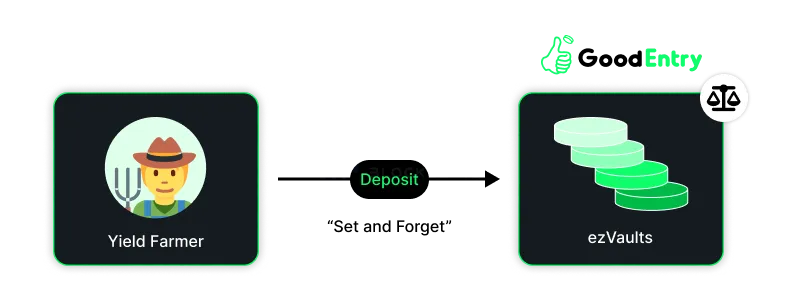
ezVaults provides yield farmers with a user-friendly "set it and forget it" strategy to earn passive income from actual revenue sources in the DeFi ecosystem. The main source of this revenue comes from traders depositing positions into AMMs when trading. Users can deposit and withdraw assets from ezVaults at any time, providing flexibility and control over their liquidity supply.
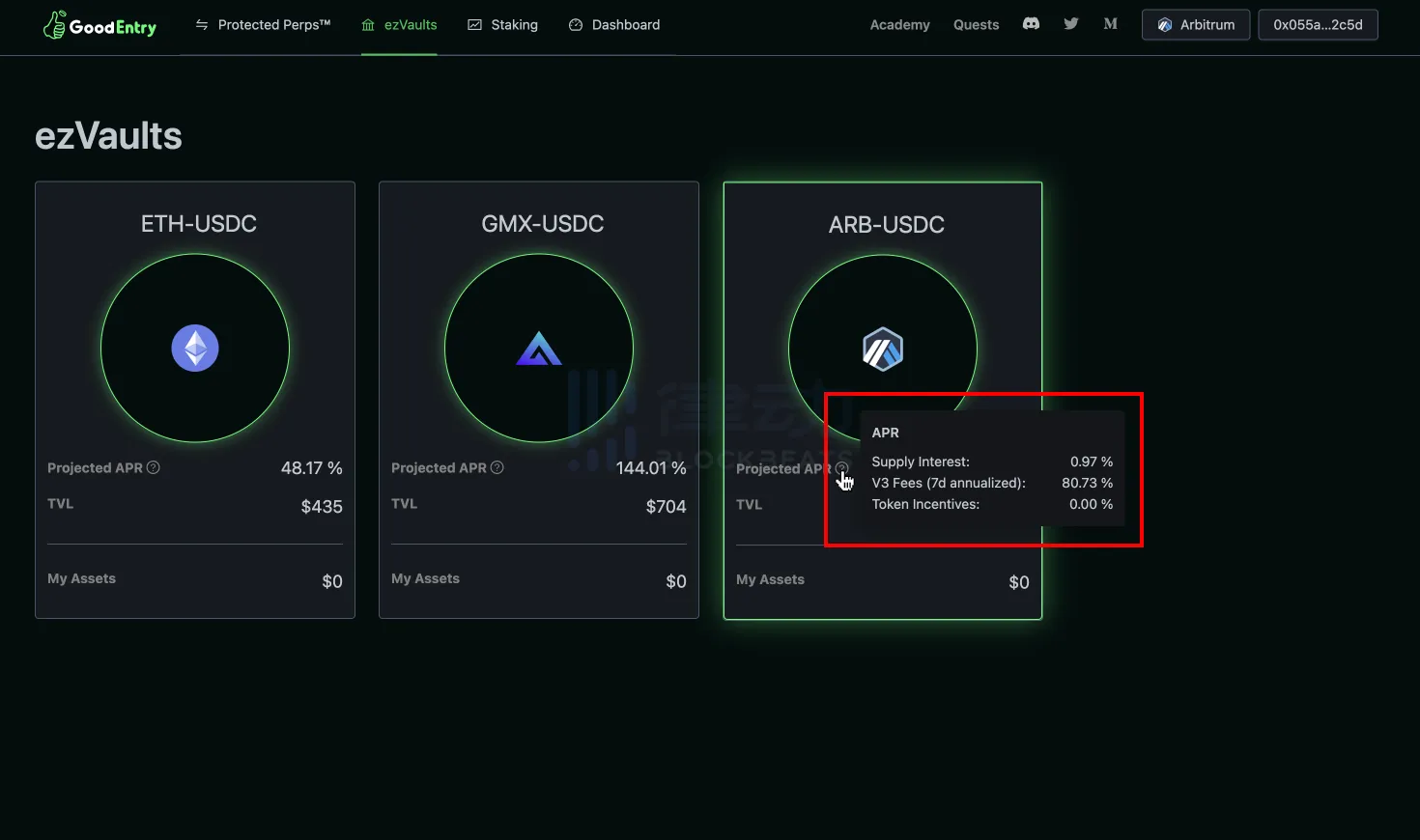
Good Entry ezVaults generates revenue through three main mechanisms, namely AMM swap fees, supply APY, and token incentives.
The liquidity provided to ezVaults is allocated to four independent Uniswap V3 positions, which have a narrow range and can be referred to as stock codes. For example, ETH @$1,800, $1,900, $2,000, $2,100. These stocks may not necessarily have the same asset types. They can include the assets they trade or stablecoins such as ETH and USDC. When the market price is lower, USDC will be held, and vice versa for ETH.
When traders execute trades and the market price of the underlying asset intersects with these codes, transaction fees are generated. The revenue is redeployed into the treasury to earn more fees, while liquidity is strategically stored in each position and rebalanced in the best way possible to maximize the profits of liquidity providers.
When traders hold protected permanent positions, the liquidity provided to ezVaults can earn the trader the annual supply interest rate paid. The supply interest rate depends on the demand and supply of specific assets in ezVault. This is an additional source of income beyond AMM swap fees. In addition, each liquidity mining season will increase token incentives, which can further increase the revenue of ezVault.
ezVaults automatically reinvests the generated profits back into the strategy. Over time, this can increase returns and maximize users' income potential.
Deposit and Withdrawal
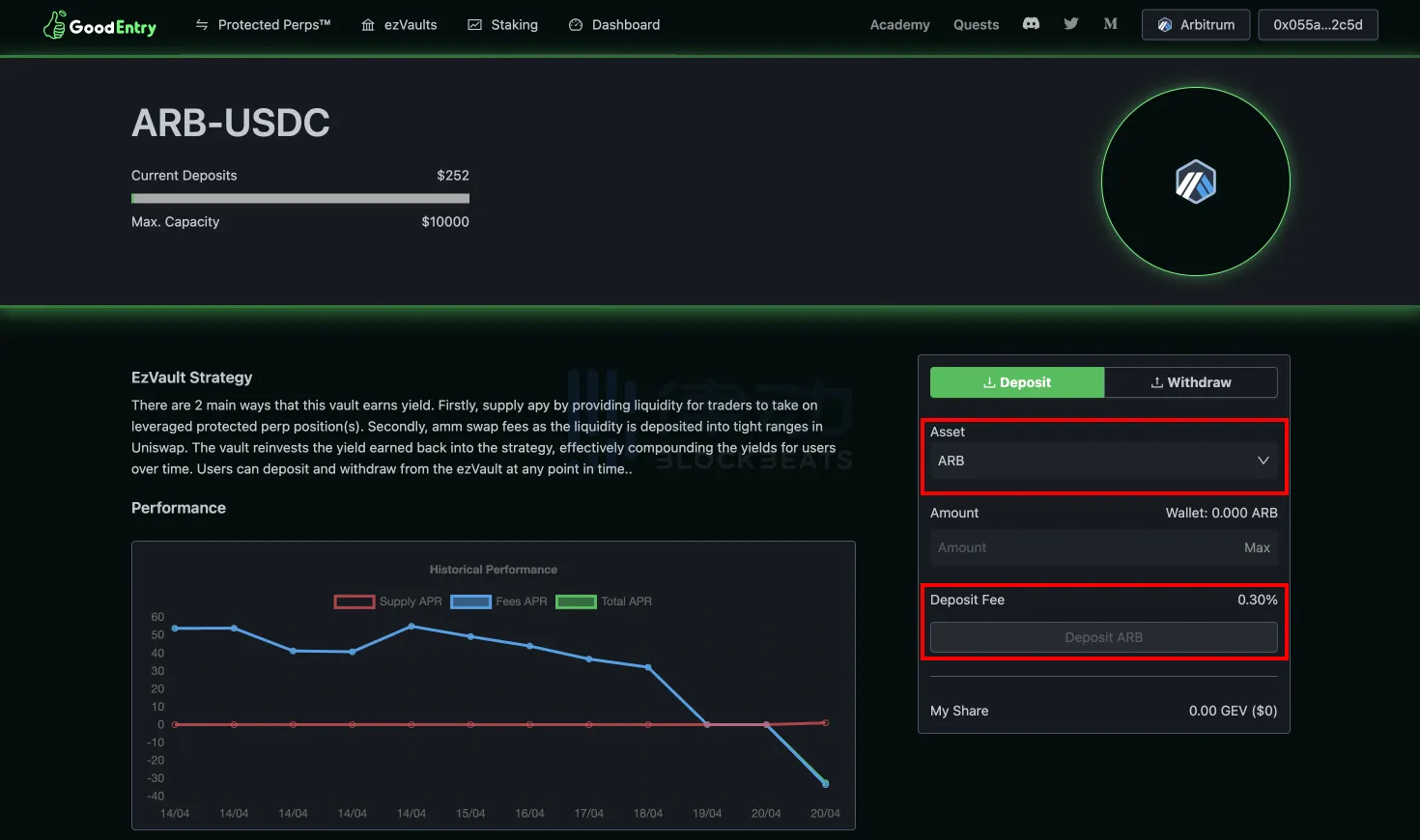
Users can select the ezVault they want to participate in by clicking on the product card within the platform. Therefore, please check the relevant deposit fees before depositing assets into the selected ezVault. These fees may vary depending on the type of asset and the current balance of the ezVault. Users can deposit liquidity at any time without any conditions. Good Entry charges a deposit fee of 0.1% to 0.3% of the total liquidity deposited, based on specific market conditions, to incentivize certain types of liquidity when the vault reduces holdings of a certain asset. These fees can be dynamically adjusted to incentivize the deployment of certain types of liquidity over others, allowing the vault to rebalance proportionally.
Users can withdraw their liquidity at any time based on the available liquidity in the quote. The amount of liquidity that can be withdrawn includes their principal liquidity as well as any additional swap fees, borrowing fees, and token yield generated. Due to the composition of ezVault, in order to incentivize proportional distribution of liquidity in ezVault, the dynamic withdrawal fee is between 0.1% and 0.3%.
ezVault View ezVault View
Translation:
ezVault View ezVault View
Protocol Profit and Risk
The main profit driver for Good Entry comes from ezVaults. Whenever the spot price exceeds the Uniswap V3 price change point, the protocol reduces transaction fees by 20%, adds the profit to the principal, and automatically compounds to generate more returns. This accounts for about 90% of the total protocol profits.
In addition, Good Entry will extract profits from the borrowing fees. The current fee configuration is 10% of the borrowing fees.
The main risk is IL (impermanent loss risk), where assets are settled from one asset to another every time the market price crosses the Uniswap price change point. Unlike Uniswap V2 IL, the impermanent loss risk of ezVaults is highly concentrated. In Uniswap V2, when a user sells a basket of options, IL is non-linear. In ezVaults, IL is linear. However, while the IL risk is concentrated, the yield is also concentrated.
This risk is within an acceptable range, as transaction fees, borrowing costs, and any additional token yield will exceed the risk of temporary loss.
In addition, when traders execute transactions on ezVaults, they borrow Uniswap v3 quotes from ezVaults and redeem their components. Therefore, when the position is high, there may be a situation where liquidity providers cannot withdraw. Good Entry stated that the situation of insufficient liquidity is only short-term, and with new liquidity providers entering the vault, liquidity providers in the protocol should be able to withdraw all liquidity in a timely manner.
Like any DeFi protocol, Good Entry has inherent smart contract risks, such as vulnerabilities or exploits. To mitigate these risks, the platform regularly undergoes third-party audits by accredited auditors to ensure the security and integrity of the smart contracts.
Protocol Interaction
Deposit collateral and choose activation price
Before opening a protected perpetual position, users need to deposit collateral to obtain margin in order to start trading in a specific market they want. Good Entry automatically calculates the user's maximum allowed leverage position based on the collateral deposited. The opening and maintenance positions are measured by available margin borrowed from the lending market. When the margin utilization rate exceeds 99%, the position will be rebalanced to maintain the overall margin utilization rate.
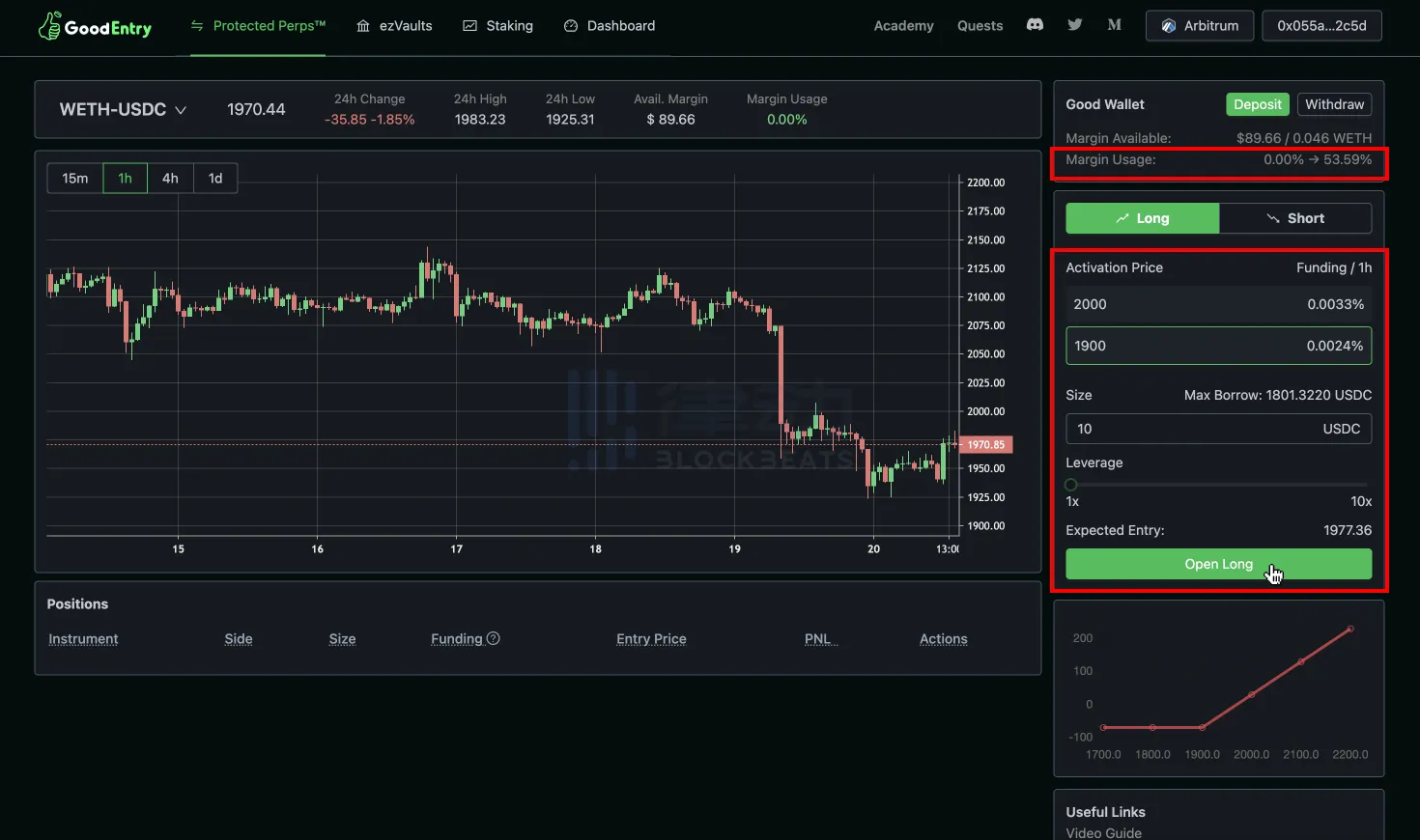
Assuming the user wants to trade long on WETH. In this case, WETH, ETH, or USDC needs to be deposited into the WETH-USDC market. If the user deposits 10 USDC as collateral into the WETH-USDC market, their available margin will increase to $90.99.
After the user deposits collateral into the desired trading market, they can start trading with protected perpetual contracts by opening and closing positions at any time. First, choose to go long or short on the asset. If the asset price trend matches expectations, the user will make a profit; if not, the user's loss will not exceed the selected activation price.
When choosing the activation price, it is necessary to consider the length of time the user plans to hold the position and the expected direction of the asset price. Different activation prices have different maximum borrowing amounts, which will affect the size of the position opened by the user. The activation price will also affect the slippage, which will be reflected in the entry price displayed on the user interface.
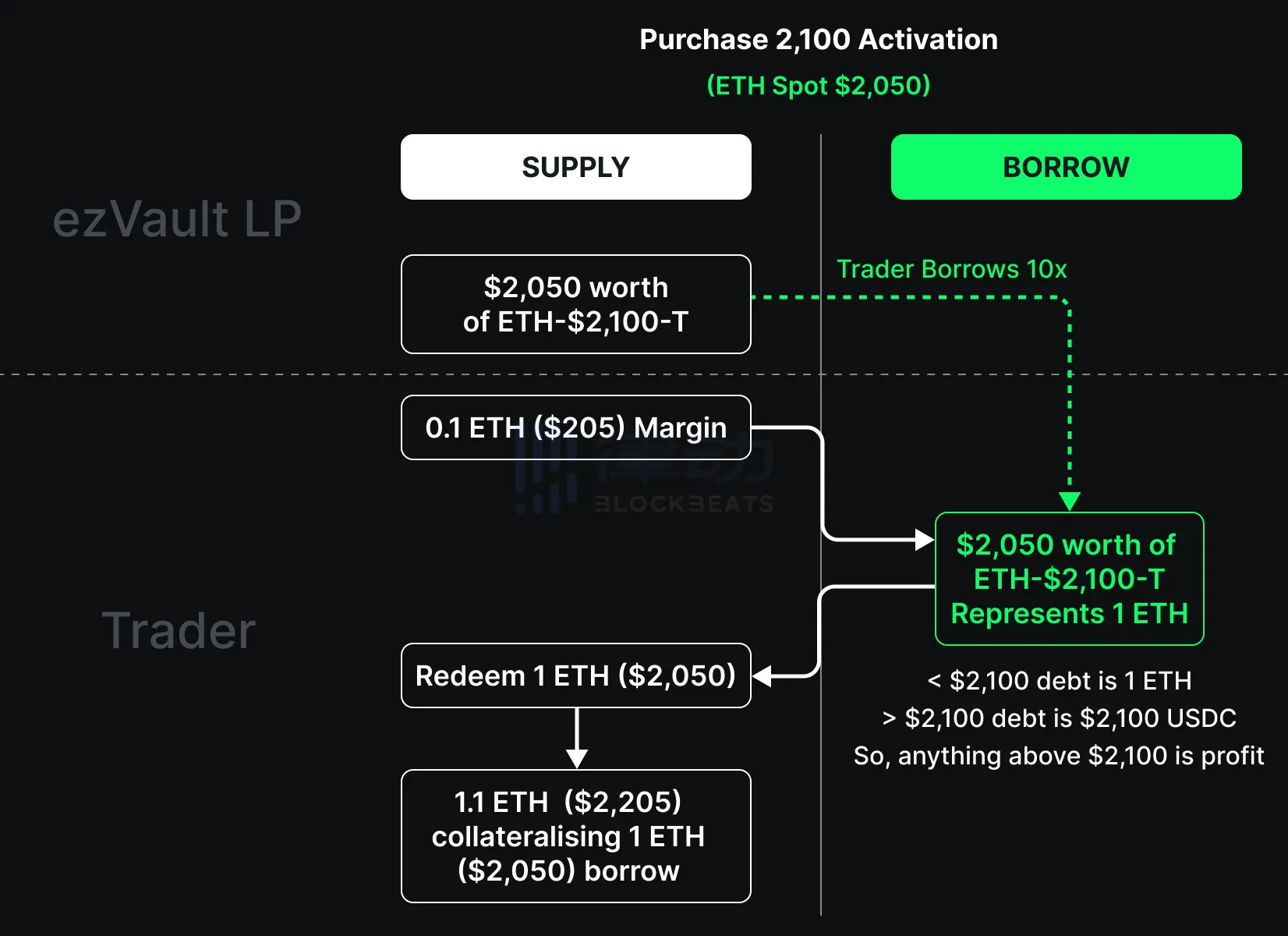
For example, the spot price is $2,050. The trader enters an activation price of $2,100 and uses 0.1 ETH as collateral to have a 1 ETH position with 10x leverage. If $ETH exceeds $2.1K, the trader will receive linear returns. If $ETH remains below, the trader's debt remains at 1 ETH and continues to pay funds.
Adjust position size and open position
Check the available margin and maximum borrowing for each activation price to determine the position size. The position size can be manually entered or adjusted using the leverage slider. In the same interface, you can observe how the position size affects the available margin and margin usage. Then simply click the "Long" or "Short" button to open a position. As Good Entry does not rely on the order book system, the user's entire position size will be opened immediately.
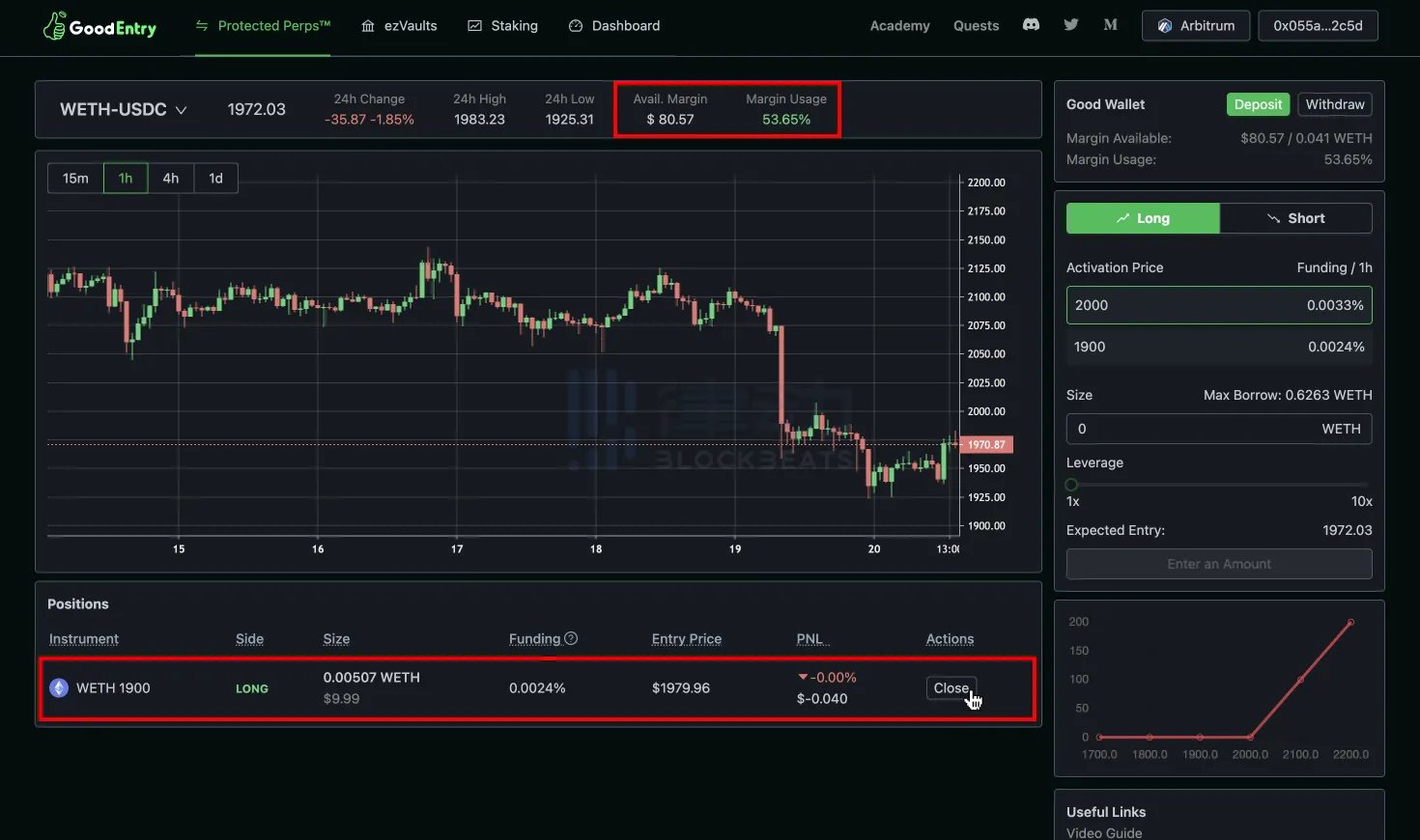
After opening a position, you can view it in the position list. The user's profit and loss depend on the position size and are affected by hourly funding. If the position incurs losses, the hourly funding will increase the margin usage. When the margin usage rate for a specific market exceeds 99%, the user's position may need to be rebalanced.
The content you provided is:
费用结构及风险. Translated to English, it is:
Fee Structure and Risks.
The rebalanced amount needs to pay a fee of 1%. For example, an open position worth $100 with a margin utilization rate of 100%, then $5 of the $100 will be rebalanced to restore the margin utilization rate to 95%. The rebalancing fee is $0.05, which is 1% of the rebalanced $5. There is no opening/closing fee for protected perpetual positions.
When considering the risk of low liquidity and accelerated depletion of margin, it is important to note that borrowing interest rates can quickly increase when the vault has low liquidity and high positions. This may cause the "premium" paid for options to significantly increase in chunks, leading to accelerated margin depletion towards the liquidation threshold. Once the liquidation health factor is met, the agreement will perform a soft liquidation of the position to reduce the position size under the same leverage. This situation will continue until the trader closes their position or the position becomes too small.
Token Economics
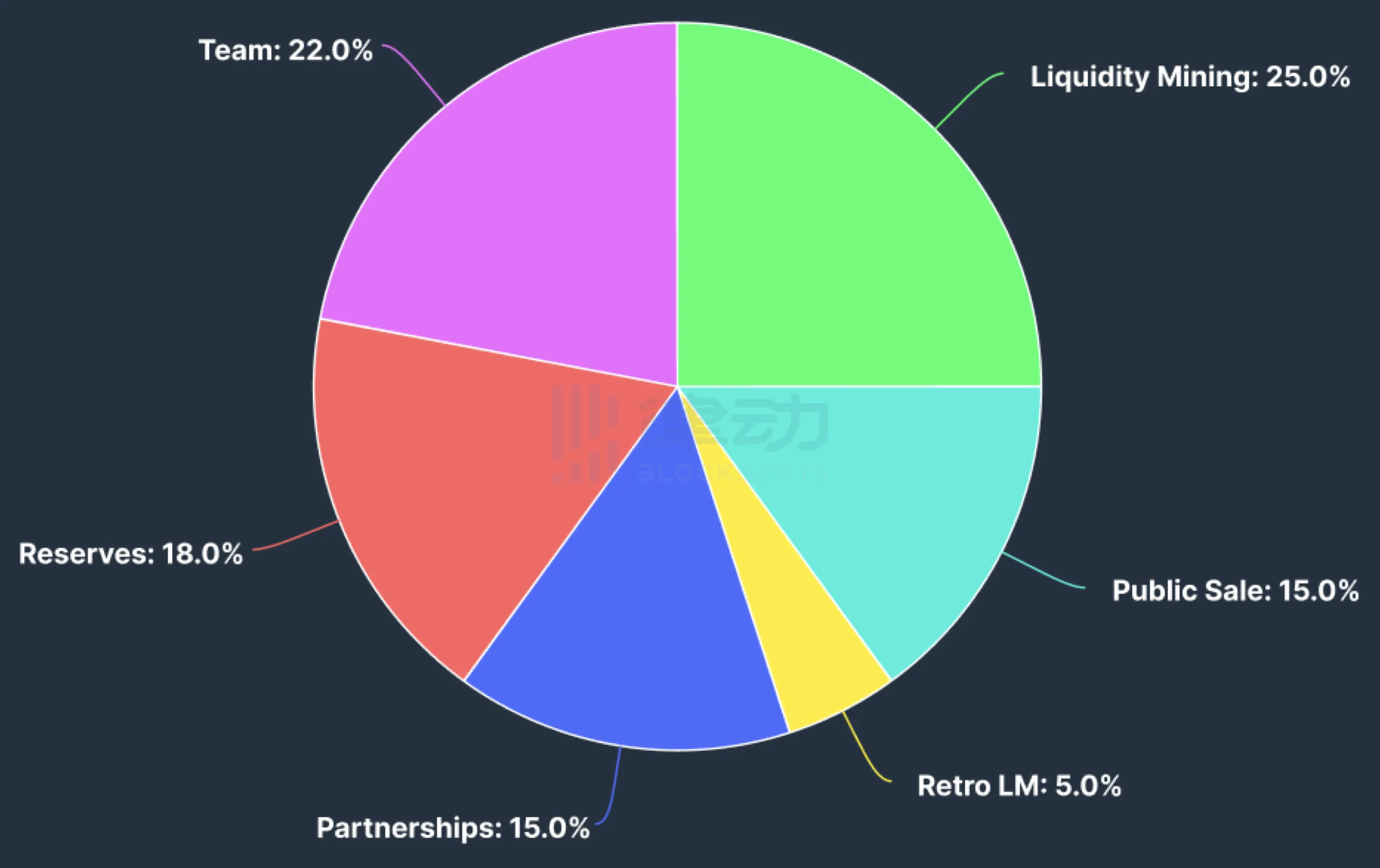
15% of the tokens are used for public issuance, 25% for liquidity mining, 15% allocated to partners, and 18% reserved. 22% is allocated to the team, with a 1-year lock-up period for team members.
5% of the pre-mined tokens will be reserved for the first quarter, followed by a 9-month linear lock-up period. These tokens will be pre-mined and sent to a multi-signature wallet for quarterly release. $GOOD can be obtained through ezVaults, trading, and completing tasks.
Welcome to join the official BlockBeats community:
Telegram Subscription Group: https://t.me/theblockbeats
Telegram Discussion Group: https://t.me/BlockBeats_App
Official Twitter Account: https://twitter.com/BlockBeatsAsia

 Related Articles