The "friendly ruling" by a US court on Uniswap - what does it mean for DeFi regulation?


Author: Jaleel, Kaori, BlockBeats
Regulatory compliance has become an unavoidable topic in the cryptocurrency industry. On one hand, there is the ongoing battle between mainstream CEXs like Binance and Coinbase and US regulatory agencies. On the other hand, Ripple, Grayscale, and SEC are fighting it out in and out of court. Even in the DeFi space, Tornado Cash fell victim to regulatory issues, with its founder facing imprisonment. Now, DEX leader Uniswap has joined the "party" by bringing DeFi regulation to the forefront.
DeFi's "Huge Win" Moment
The court believes that the defendant's rebuttal has its own reasoning, and this case is more like asking the developer of autonomous driving cars to take responsibility for the third party's use of the car to commit traffic violations or bank robberies. Uniswap founder Hayden Adams posted a long thread today, quoting a court document from the Southern District of New York in the United States, and exclaimed 'Huge Win, Long Live DeFi!'
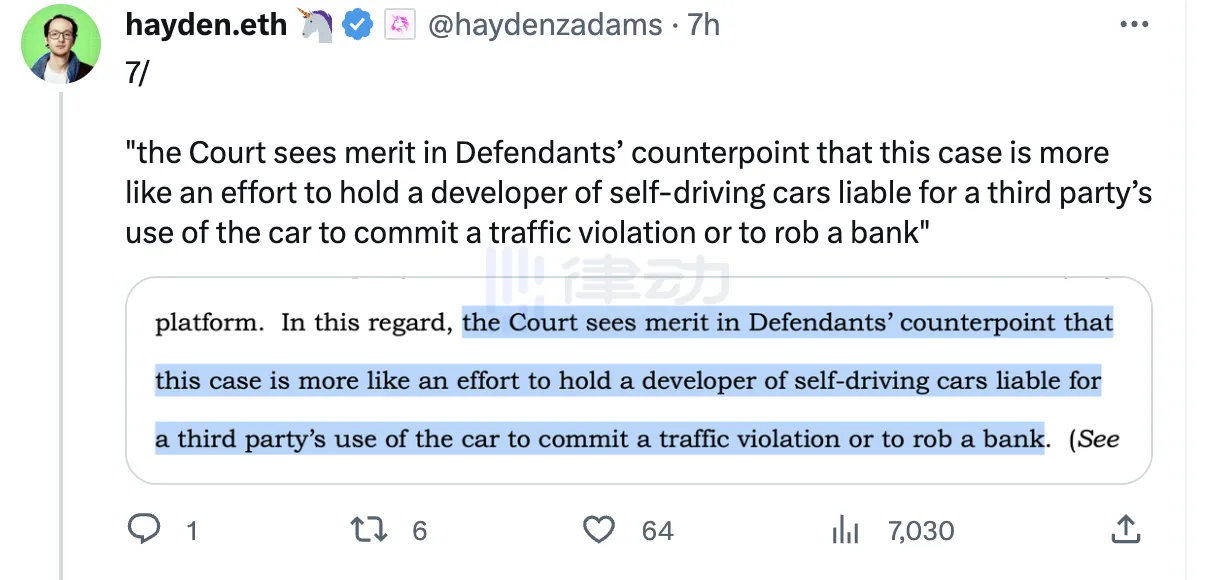
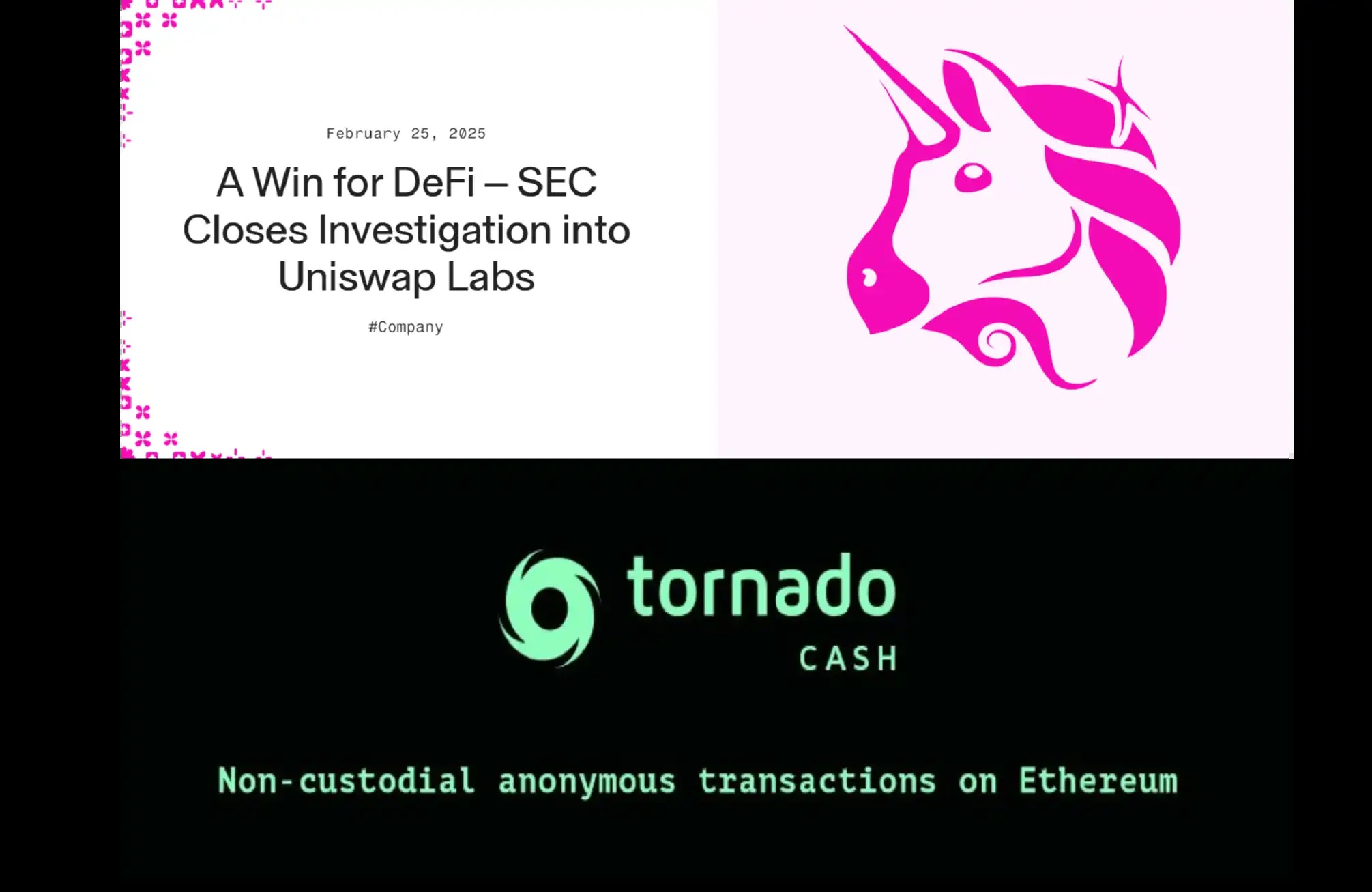
This is called the "Huge Win" event, where a judge in the Southern District of New York dismissed a class action lawsuit against Uniswap.
On April 9th, 2022, the US law firm Kim & Serritella and Barton announced the initiation of a securities class action lawsuit, accusing defendants Uniswap Labs, Paradigm, a16z, and others of violating securities laws by issuing and selling unregistered securities in the form of digital tokens on the Uniswap platform, including Uniswap's own token, UNI.
And the outcome of this lawsuit is scheduled for August 29, 2023. Court documents from the Southern District of New York indicate that the Uniswap platform is capable of and, in many cases, operates legally; the plaintiff did not transact with the Uniswap platform or protocol; and current securities laws do not appear to cover the responsibility of DeFi protocols themselves for fraudulent behavior. The judge believed that the plaintiff was harmed by fraudulent token issuers who used Uniswap's core contracts and relays to front-run, and that Uniswap created this platform where fraudulent token issuers engaged in fraud, but at least under US securities law, this does not mean that Uniswap is responsible for fraud and the resulting harm.
Consensys lawyer Bill Hughes said that the judge clearly ruled in the collective lawsuit against Uniswap that Ethereum is a commodity, not a security. Although it is unclear whether the plaintiff will appeal, many lawyers in the cryptocurrency field may cite this case and the ruling in the future, and the "Huge Win" moment of Uniswap also reminds us of the Tornado Cash case.
Tornado Cash, heavily impacted by US sanctions
On August 8th, one year ago, the official website of OFAC (the Office of Foreign Assets Control of the US Department of the Treasury) displayed that certain Ethereum addresses that interacted with the Tornado Cash protocol or were related to it were added to the SDN List (Specially Designated Nationals List) for sanctions.
Related reading: "Interpreting the most severe encryption sanctions in history: What happened to Tornado Cash."
Tornado Cash has always emphasized the privacy of its platform since its inception, allowing users to trade without revealing their identities. However, this privacy feature has also provided convenience for illegal transactions to some extent.
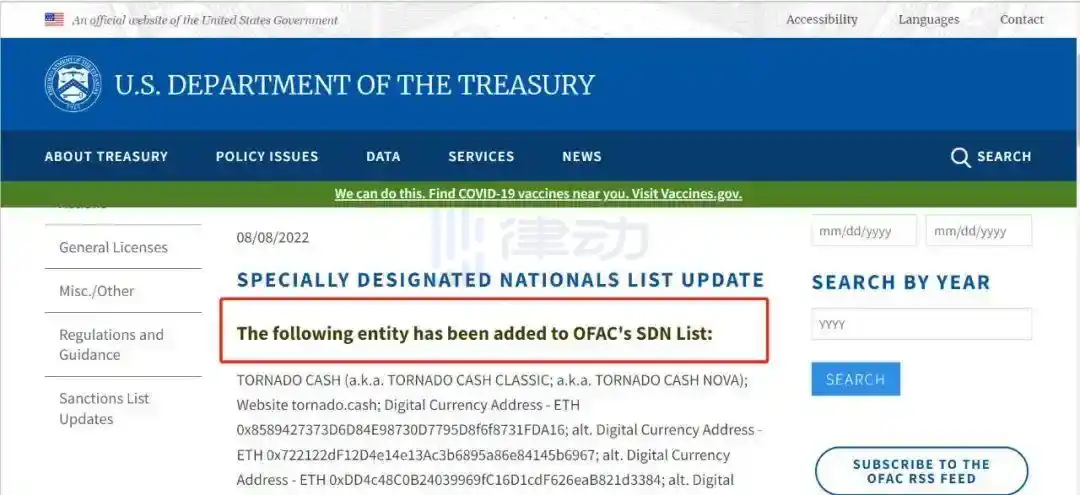
Source: US Department of Treasury
Uniswap founder Hayden Adams has expressed his views on the Tornado Cash incident in a tweet, stating that "privacy is crucial for a normal and secure society, and it is absurd and dangerous to focus only on privacy to facilitate illegal activities. Sanctioning companies to comply with the law is usually less effective than implementing reasonable laws or policies."
And this year, Tornado Cash has been hit by a new round of sanctions from the US government, which claims that Tornado Cash is involved in providing cover for a series of illegal transactions. On August 24th, Tornado Cash co-founder Roman Storm was arrested by the FBI and the IRS on charges of "conspiring to launder money, conspiring to operate an unlicensed money transmitting business, and conspiring to violate sanctions." Roman Storm has since been released on bail, but they are very disappointed with the prosecutor's charges against Roman Storm for helping to develop the software, as their novel legal theory has a dangerous impact on all software developers. Tornado Cash's other co-founder, Roman Semenov, is still on the run.
Now, the founder of Tornado Cash has also been included in the list of numerous other political criminals in the United States, just like Ross Ulbricht (founder of the dark web Silk Road) and Julian Assange (founder of WikiLeaks) before him.
The Tornado Cash incident has made the entire encryption community nervous about the protocol layer, as this sanction bypassed the user privacy layer and directly targeted the protocol layer. This is a direct attack by regulators on the protocol layer, stating that "creating privacy protocols for use by criminals is a criminal act".
Protocol Layer and DeFi: A New Direction for Global Regulation
After Tornado Cash, other cryptocurrency service providers have also been alerted to remind them to ensure compliance while pursuing technological innovation. Today's Uniswap lawsuit has also sparked a discussion on DeFi regulation.
Nowadays, DeFi is not only a trending topic, but also considered as a disruptor of future finance by many industry insiders. However, as the financial system transforms, the regulatory challenges of this new economic model have emerged. With the continuous expansion of the DeFi field, regulatory agencies have begun to take action and formulate corresponding policies to ensure the healthy development of this field. It can be said that DeFi is gradually attracting the attention of regulatory agencies around the world, from the United States to France, and even to Hong Kong, the global regulatory trend has undergone significant changes.
In April 2023, the US Treasury Department presented a thought-provoking gift to the world by releasing an assessment report on illegal financial activities in the DeFi industry. This carefully crafted document not only reveals potential risks in DeFi services, but also provides a thorough analysis of criminal activities carried out by illegal actors using these services. In addition, in July, four US senators proposed the "Cryptocurrency National Security Enhancement and Enforcement Act" aimed at strengthening regulation in the KYC, AML, and DeFi fields.
Some of the provisions have sparked widespread discussion on social media: the bill provides a new framework for regulating DeFi, requiring that DeFi be regulated like other cryptocurrency institutions, and requiring that any "person" who can control the project be responsible for it. The bill may also mention that if there is no specific person who can control the DeFi service, any investor who invests more than $250,000 in the project should be responsible for it.
Source: US Department of Treasury
Just one day later, the International Organization of Securities Commissions (IOSCO) once again attracted widespread attention from the market. It was revealed that the organization intends to gradually release regulatory consultations on cryptocurrency assets and DeFi within this year. It is worth noting that IOSCO is not an isolated entity, but represents an international cooperation network aimed at promoting globally recognized securities regulatory standards.
Meanwhile, in Europe, the French Financial Markets Authority (AMF) has a more positive attitude towards DeFi. Its recent discussion report believes that DeFi not only has the potential to drive financial innovation, but also carries hidden risks. Therefore, the AMF expressed its intention to work closely with all parties in the coming years to create a balanced regulatory system.
The views of Gary Gensler, the chairman of SEC and a long-time rival in the encryption industry, are even sharper. He believes that most DeFi trading platforms are actually no different from traditional exchanges in their definition. Four heavyweight senators in the United States have also proposed a new bill on encryption assets, KYC, anti-money laundering, and DeFi, aimed at further clarifying the regulatory framework and responsible parties.
Most countries are still exploring specific regulatory strategies for DeFi. The Dubai Financial Services Authority (DFSA) is one of the few regions that has explicitly released policies related to DeFi, setting clear licensing thresholds for DeFi participants. The Financial Conduct Authority (FCA) in the UK has also opened a regulatory sandbox for DeFi applications, providing a testing ground for emerging enterprises.
As one of the global financial centers, Hong Kong seems to have a more pragmatic attitude towards DeFi. In the view of Mr. Christopher Hui, the Chairman of the Fintech Advisory Group of the Securities and Futures Commission of Hong Kong, DeFi is not a completely novel concept, and its substantive activities should be subject to regulatory requirements similar to traditional financial entities.
Regulatory rulings on Uniswap and Tornado Cash are completely different
The Tornado Cash incident means that the struggle between "cryptographic protocols" and "regulation" has once again escalated. However, today in the collective lawsuit ruling against Uniswap, the judge made a favorable ruling for Uniswap, seemingly wanting to suppress the flames of this war.
Last year, a16z wrote a comment letter for the Financial Stability Board's (FSB) "International Regulation of Crypto Asset Activities" theme event, which started by discussing the differences between DeFi and CeFi, and how an appropriate DeFi regulatory framework should regulate Web3 applications, not Web3 protocols (regulating enterprises, not software). The debate over which aspects of DeFi protocols and applications are suitable for regulatory environments has been ongoing, but even so, most legal experts agree that any DeFi front-end associated with the United States (broadly defined) must comply with US sanctions laws.
Tornado Cash and Uniswap provide excellent observation samples for this view with two different verdicts. Regulatory agencies are trying to find a balance point that does not suppress financial technology innovation while ensuring market fairness, justice, and stability. Behind this, the real challenge of regulation is how to ensure that technology and law progress synchronously, and how to find a common standard in a global financial market.
Welcome to join the official BlockBeats community:
Telegram Subscription Group: https://t.me/theblockbeats
Telegram Discussion Group: https://t.me/BlockBeats_App
Official Twitter Account: https://twitter.com/BlockBeatsAsia

 Related Articles