Interpreting Binance Research's Account Abstract Report: Ecosystem Map, Feasible Use Cases, and Development Status.

Original Title: "Interpreting the Abstract Report of Binance Research Institute Account"
Source: Binance Research
Translated by: Deep Tide TechFlow
Account abstraction has recently become very popular.
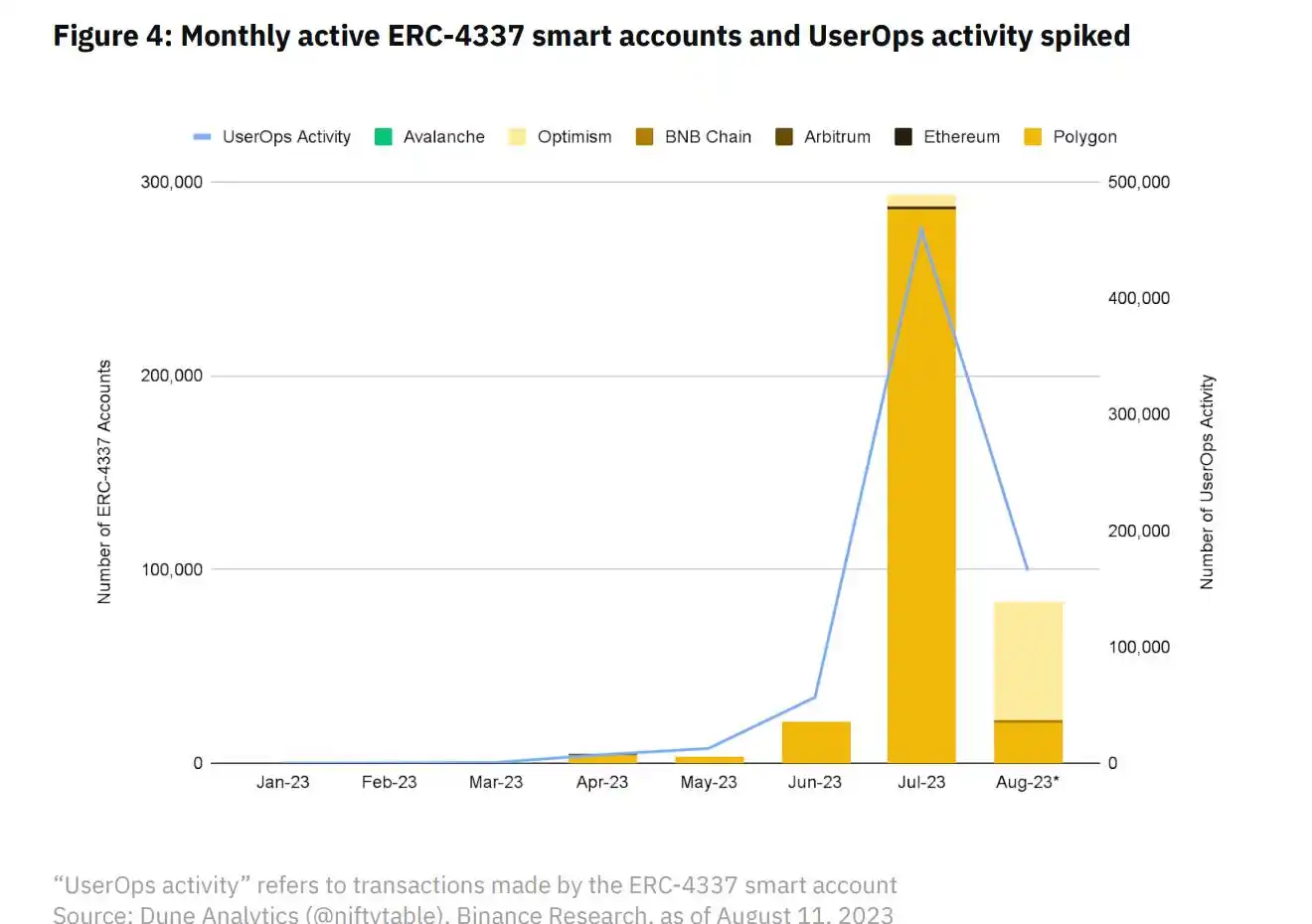
In the past July, nearly 300,000 smart contract accounts were created. At the same time, players in the market are also eager to try:
OKX has launched a smart contract wallet, and StarkNet and zkSync also have native support for AA solutions. Cyber Connect and Lens are also making efforts...
What is the discussion about "Jumping out of AA", how is AA currently developing, what is the ecological map, feasible use cases, and the development history? From various articles and analyses, we often only get fragmented impressions, and cannot systematically grasp the panorama of this track and technology.
These days, Binance Research Institute released a report on account abstraction, providing a systematic description and analysis of the issue. As the report is quite lengthy, DeepTech has read and extracted the report to help everyone better understand the core viewpoints and conclusions.
Key Points
With the introduction of ERC-4337, Account Abstraction (referred to as AA) can now be supported on the Ethereum mainnet without the need for changes to the core consensus layer.
StarkNet and zkSync have launched native account abstraction solutions, and wallet providers such as Argent and Bravoos are also seeking to offer these solutions.
Usage cases, such as traditional institution Visa, are also exploring in this field. Lens Protocol and CyberConnect have also adopted account abstraction, which has been proven to demonstrate the benefits of implementation and potential, to encourage users to join the Web3 environment.
AA Technical Implementation
Regarding the classification of Ethereum accounts, such as the difference between EOA and AA, I will not elaborate here. If needed, please refer to the original report.
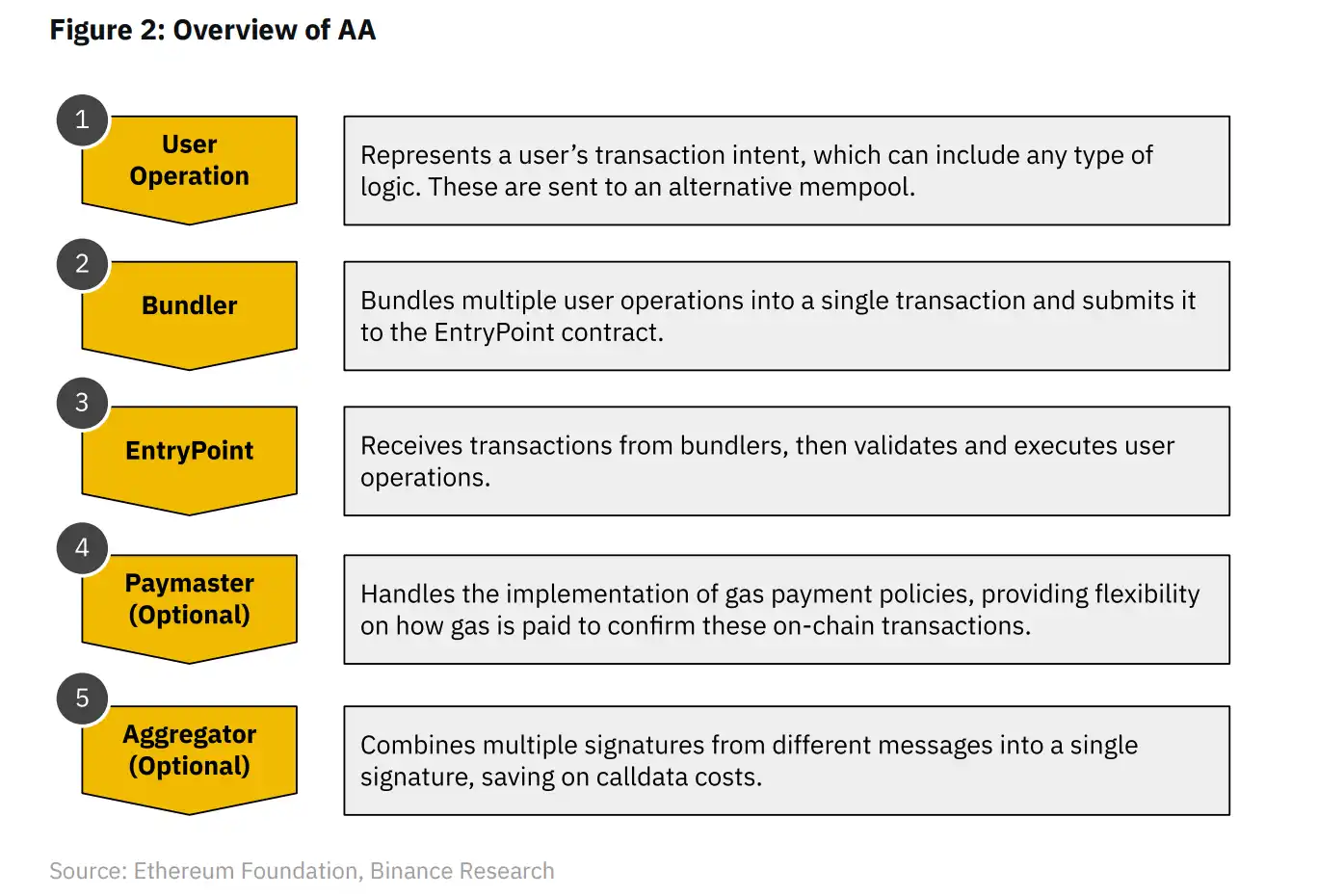
AA General Technical Implementation: It can be understood through the key components in the following diagram, which interact with each other and allow developers to build smart contract wallets compatible with on-chain dApps.
The summarized process is as follows:
Users interact with the abstraction layer on the front-end, which translates user actions into basic transactions.
EntryPoint smart contract is responsible for verifying user signatures and processing transactions initiated by the abstraction layer.
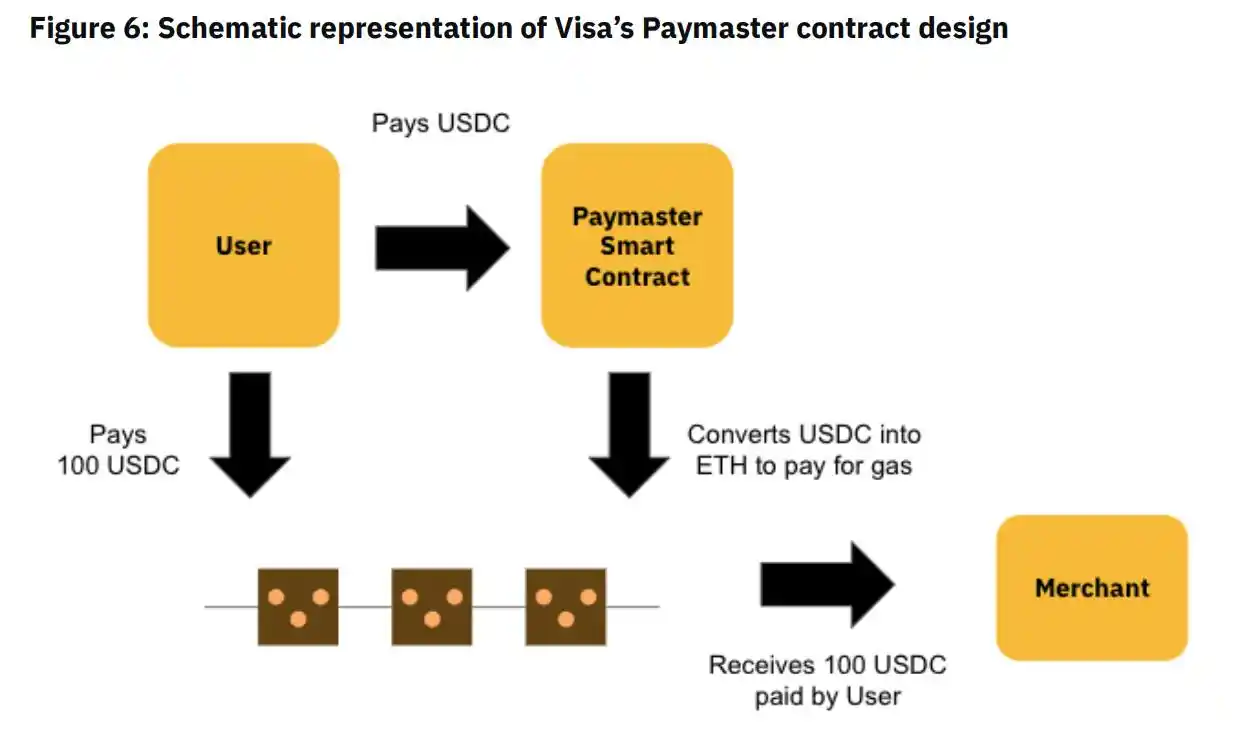
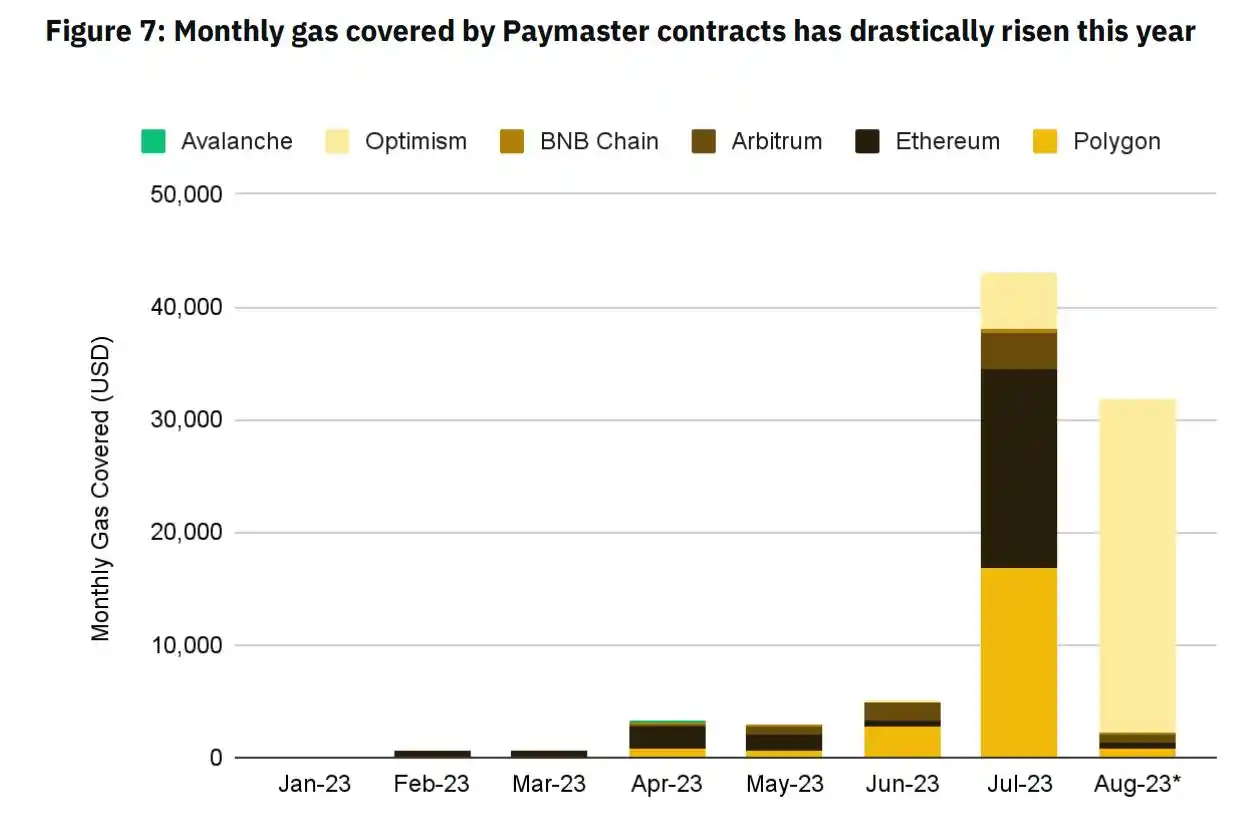
Paymaster contract is responsible for paying transaction fees for user operations.
On-chain applications interact with user operations, just like with any other external account.
AA Ecosystem Map
AA ecosystem continued to expand over the past year as developers recognized the need for clearer user experience and more user-friendly interactions between wallets, applications, and end-users.
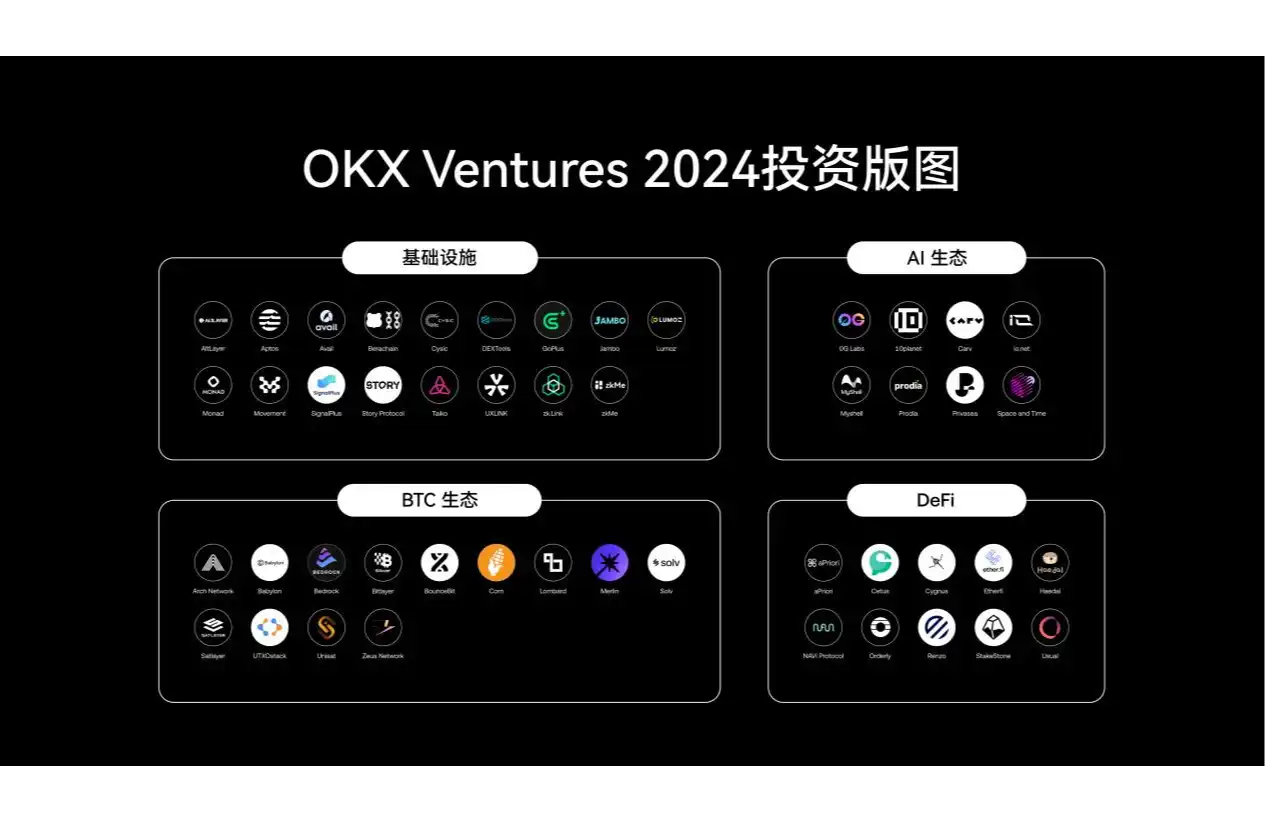
By implementing AA, this can help enhance existing infrastructure and expand the possibility of user participation in on-chain activities. The progress in this field can be broadly classified into two parts: "Infrastructure" and "Social", as shown in the figure.
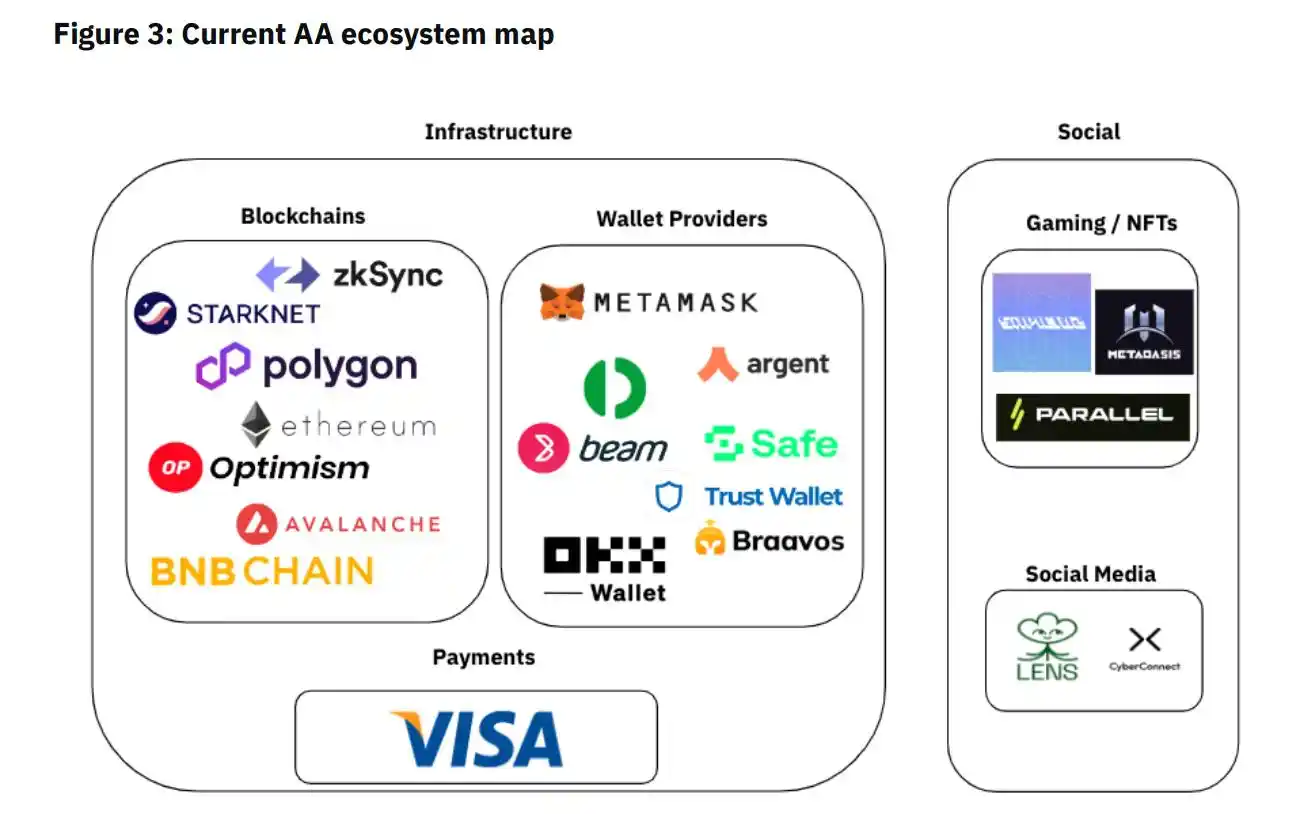
Participating roles in the infrastructure field:
Blockchain: AA-supported EVM-compatible blockchain and zk-rollup extension solution.
Wallet provider: Utilizing AA to provide specific functions for users' wallets.
Payment: Paymaster contract provides fee abstraction capability, allowing users to execute digital transactions without owning the native token of the blockchain.
Participation roles in the social field:
Games/NFTs: Adopting AA and token standards such as ERC-4337 and ERC-6551 to improve the on-chain gaming experience and expand the utility of NFTs.
Social media: Combining AA forms such as signature abstraction, allowing users to continue to interact with social networks using Web3 wallets.
Safe:
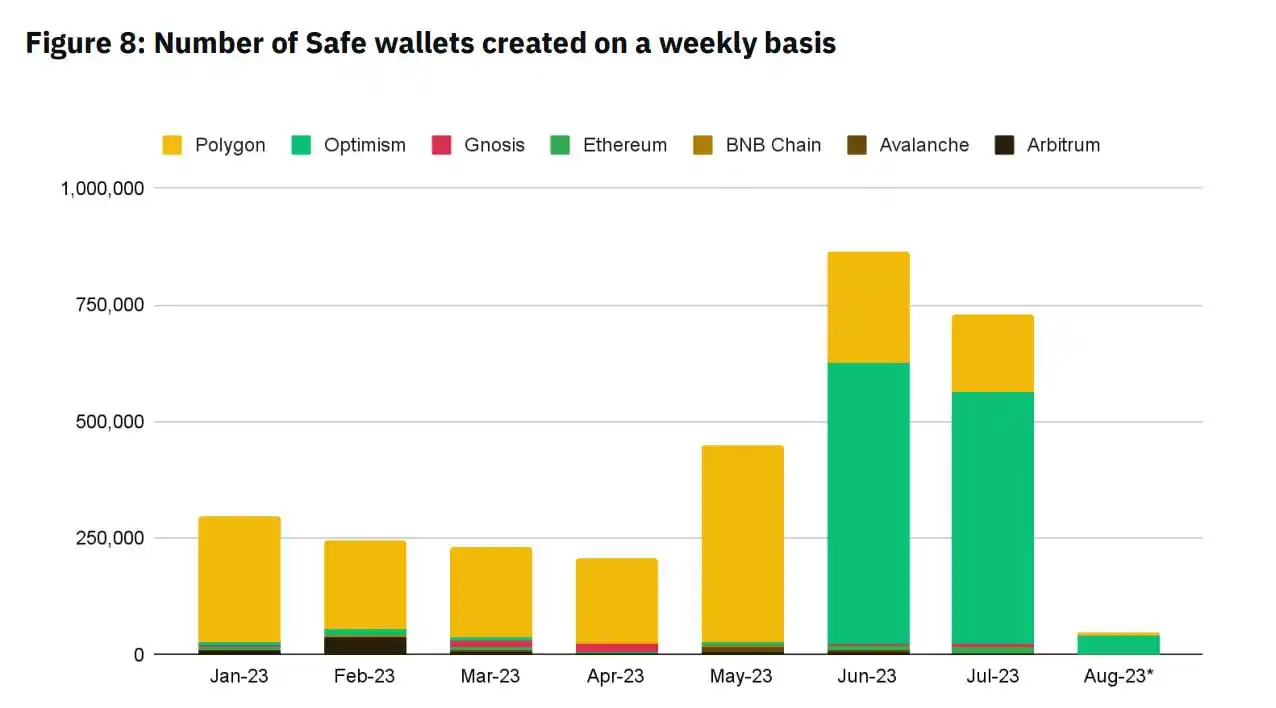
Argent:
Braavos:
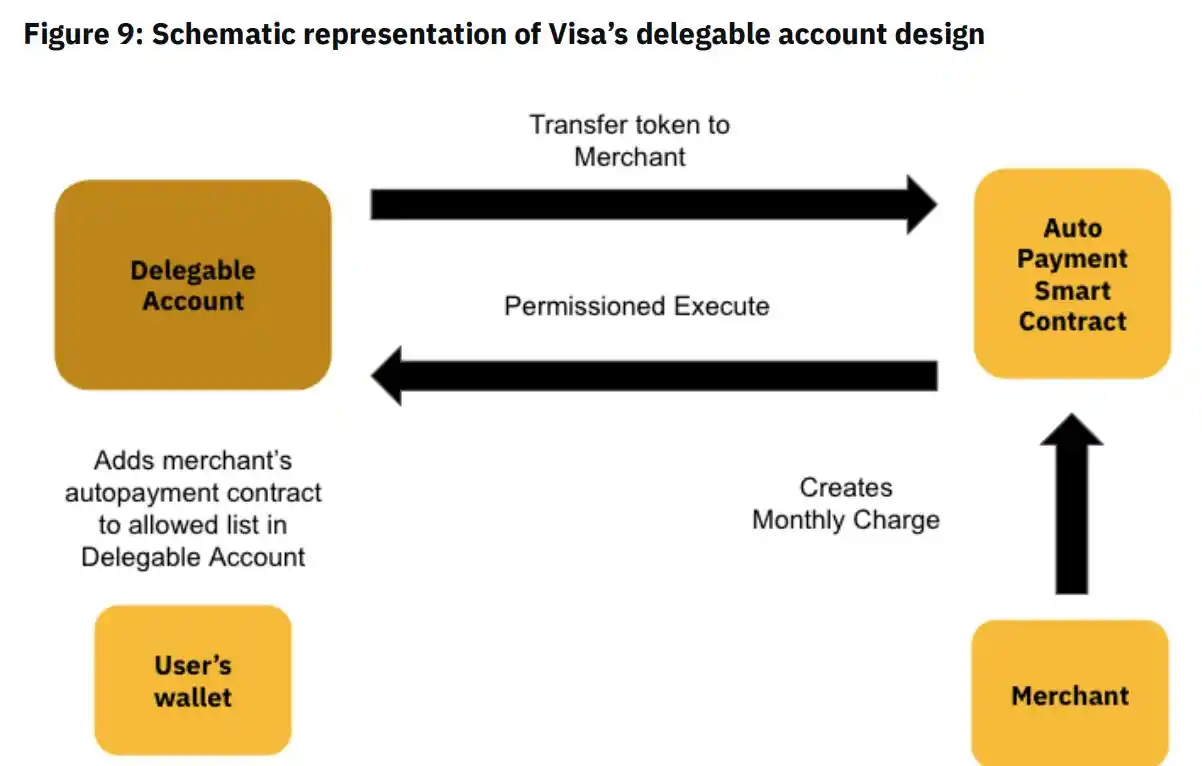
"Delegated account" uses AA to allow users to delegate signature permissions to an approved external contract. The account contains rules customized by the user according to their preferences, and interacts with the applications mentioned in the rules without the need for manual approval of each transaction.
VISA's automatic payment plan:
While having complete control over the wallet, users can approve automated payments for public utilities and subscription bills.
This type of delegation effectively abstracts signature verification and changes user interaction within the application for a more user-friendly experience.
Lens social use cases:
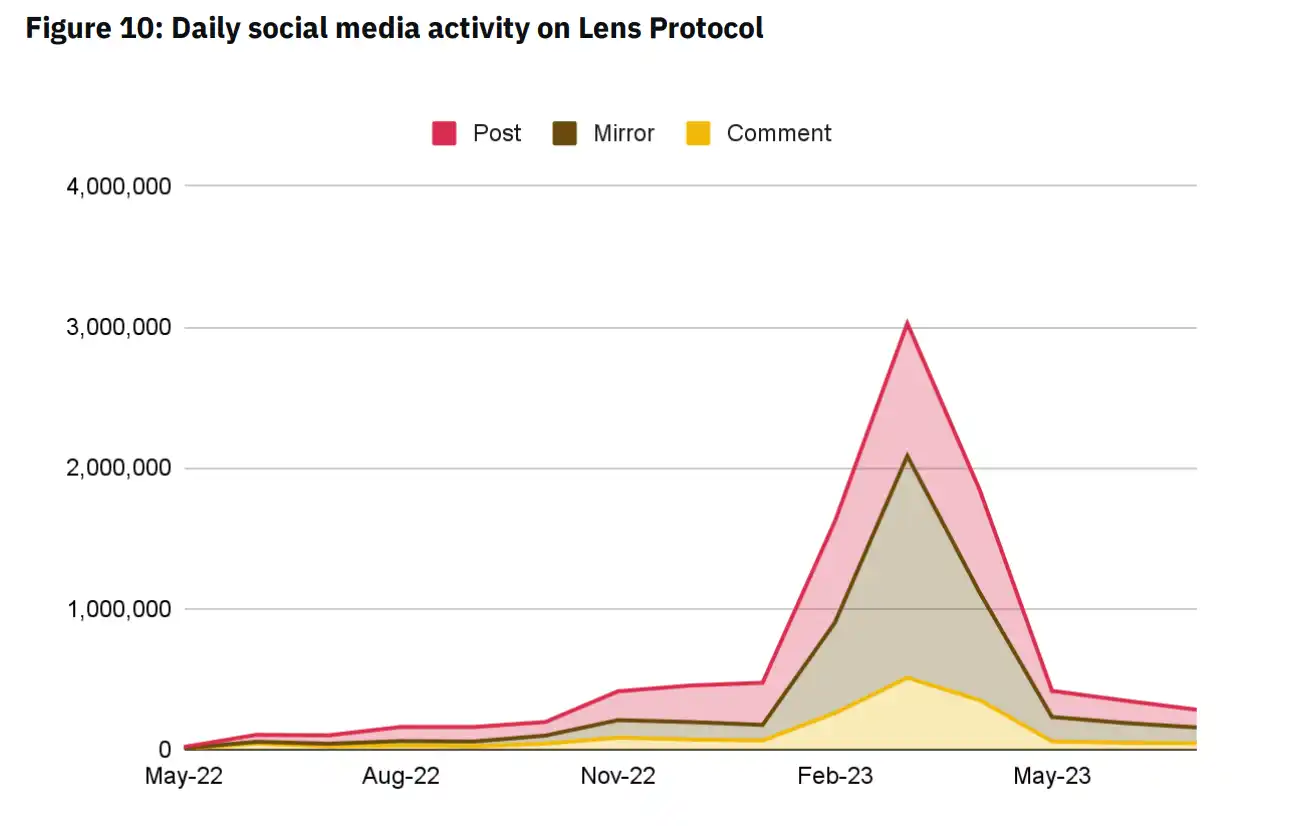
Allow users to delegate signature permissions to the dispatcher wallet to execute posting, commenting, and changing personal information;
Users can interact with dApps continuously without needing to approve each time.
Dispatcher will also pay the gas fee for these transactions, and users do not need to hold the native tokens used for in-app interactions.
Token Binding Account Use Case
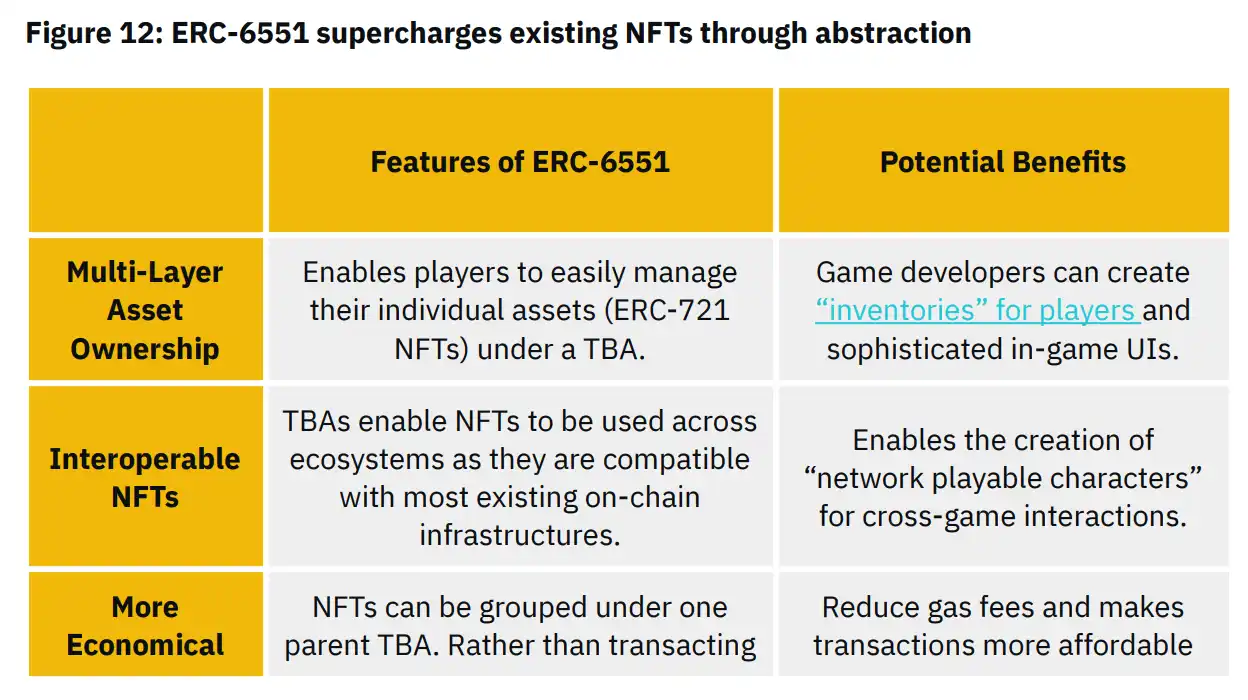
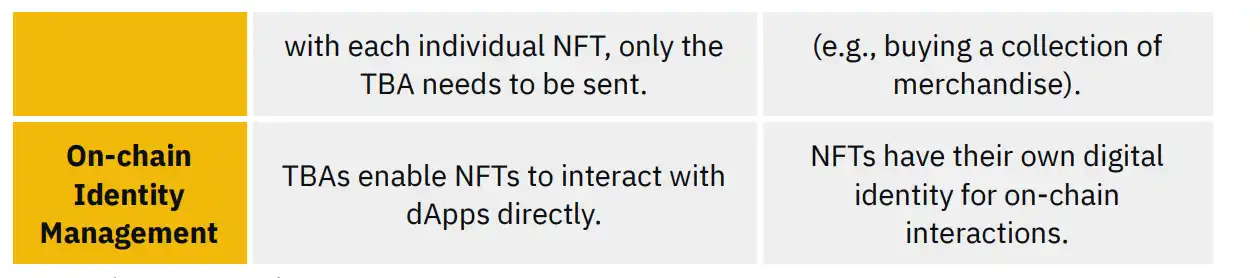
ERC-6551 introduces Token-Bound Accounts (TBA) as an Ethereum standard, empowering NFTs to act as "smart contract accounts" and register themselves as wallets without permission. This enables an integration mechanism that allows owners to host NFTs in TBAs.
Recently, the TBA account has seen a significant increase in the past month.
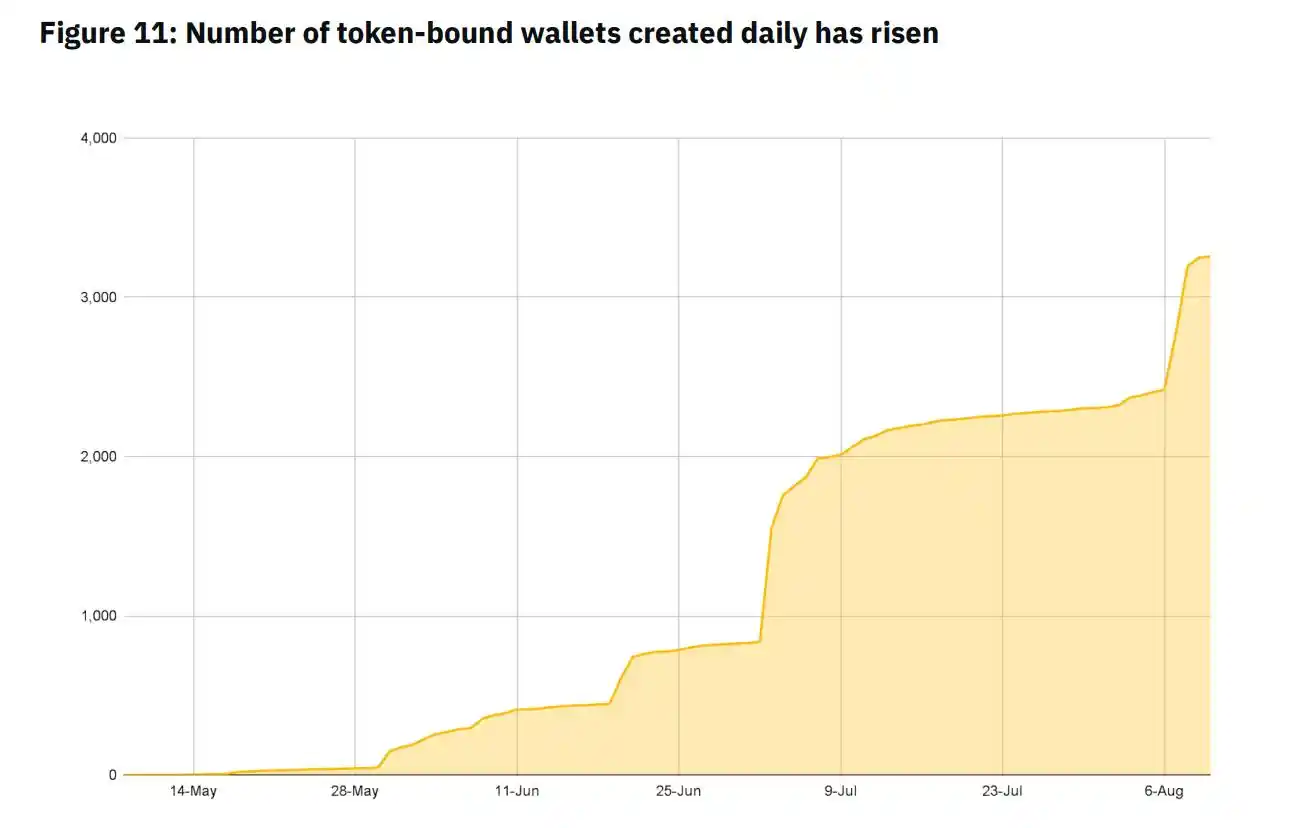
Through abstraction, existing NFTs can be greatly empowered to achieve the following capabilities:
Implementing multi-layer ownership of assets.
Make NFTs interoperable between ecosystems.
Example: Sapienz Street Culture
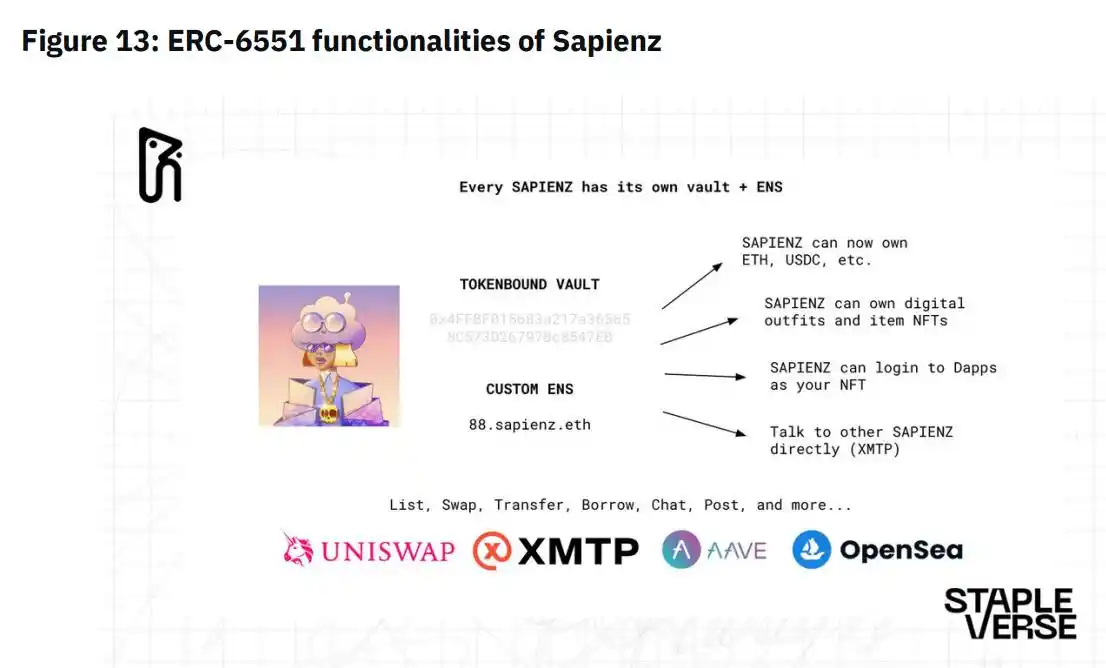
The Sapienz project brings the ERC-6551 standard to digital street culture.
The user receives a customizable character, and its unlocking is based on the NFTs they own.
"Character" is the customizable avatar that users obtain. This avatar is a virtual representation of the user, and users can unlock different appearances for this avatar based on the NFTs they own. They can equip the character with different decorations and customize it according to their preferences.
AA Key Development Points Worth Noting
Smart contract wallets currently rely on "relayers" operated by intermediaries to convert user-signed messages into typical Ethereum transactions.
Therefore, the new L2 chain is a viable alternative solution for developers to experiment with AA. For example:
zkSync is the first EVM-compatible chain to implement native AA at the protocol level.
Similarly, the zk-rollup solution, StarkNet, has also implemented AA.
Optimistic rollups such as Optimism and Coinbase's Base have also implemented the AA form.
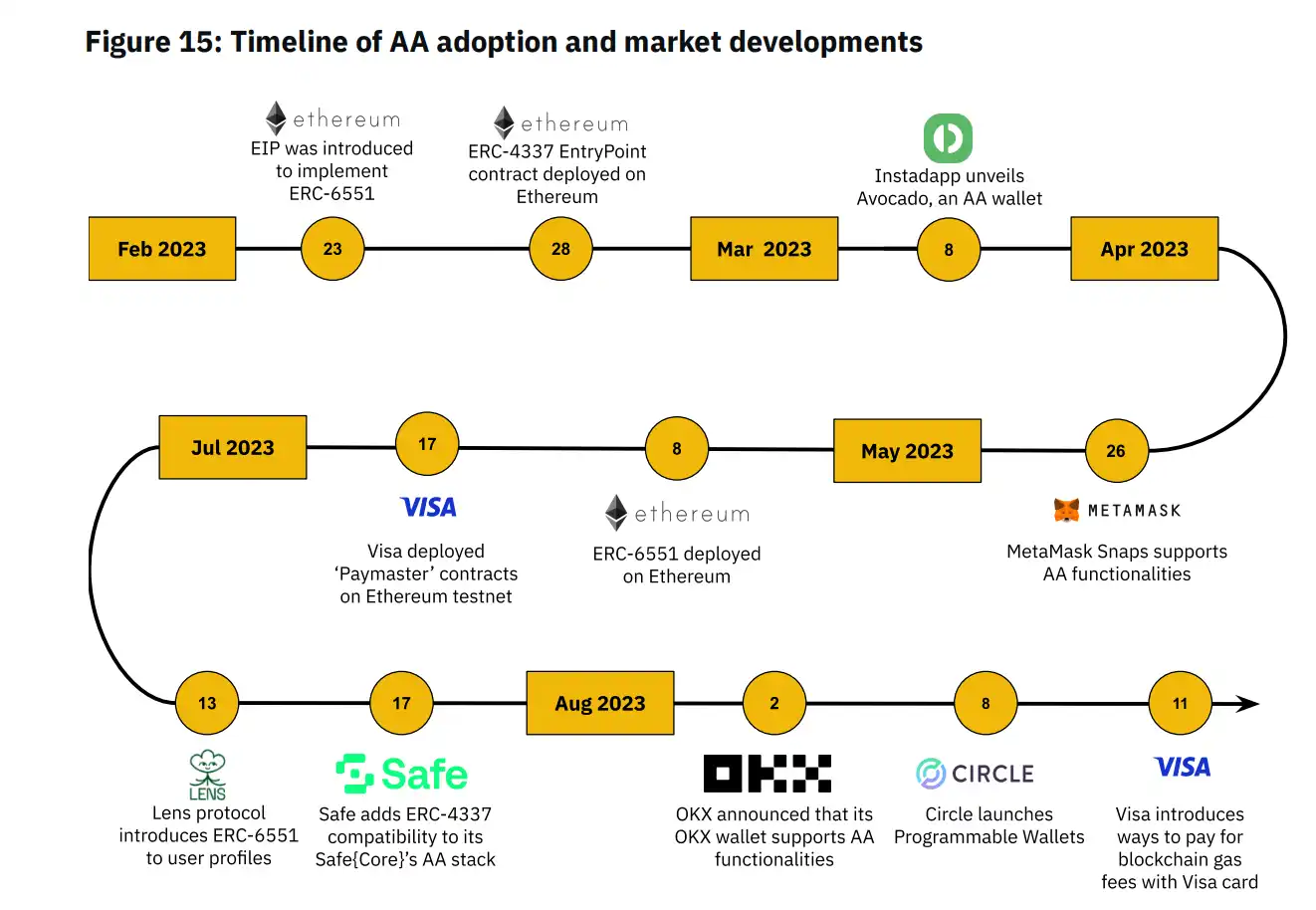
Proposals and protocols related to AA:
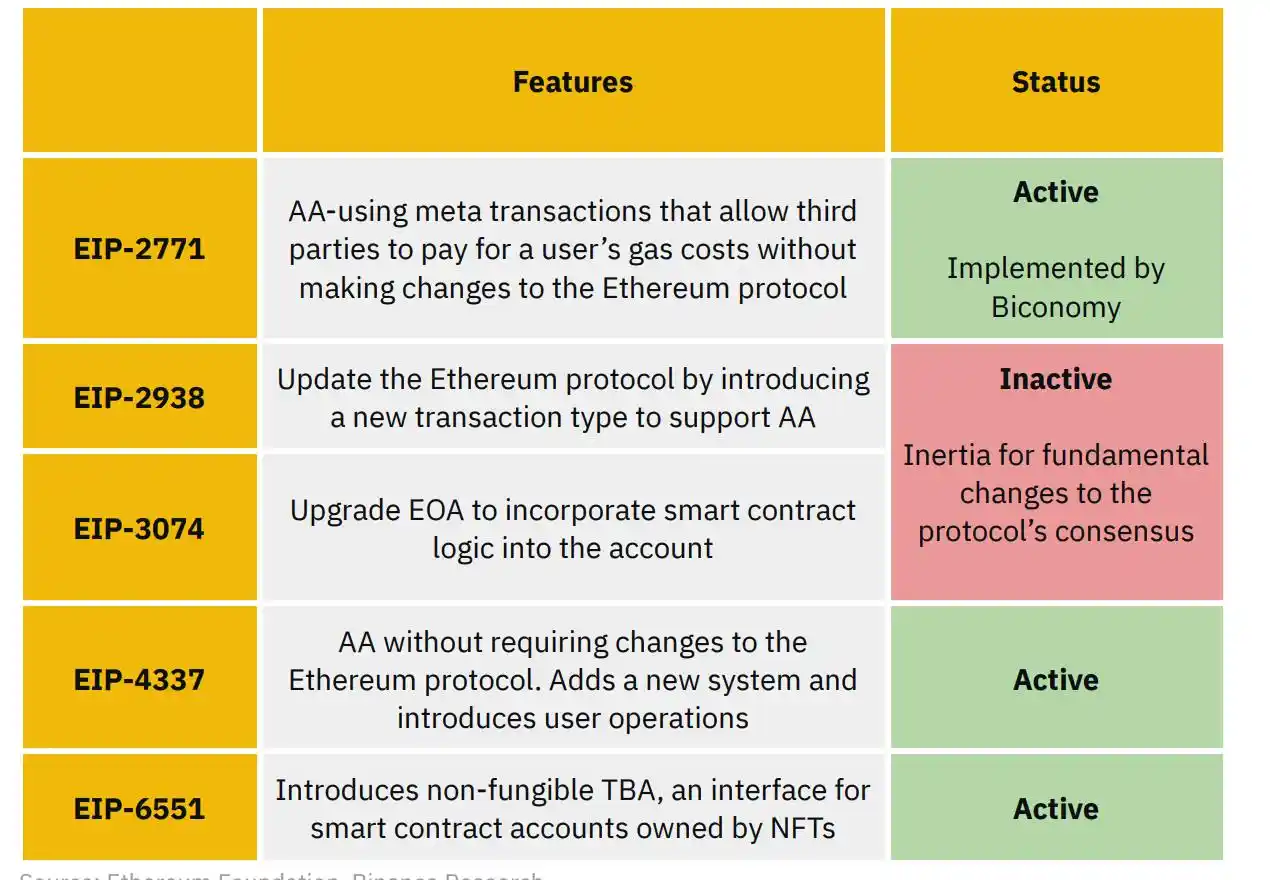
AA has been adopted from proposal to present within six months. Here is a list of key events:
原文链接Translation:
Original Link
Welcome to join the official BlockBeats community:
Telegram Subscription Group: https://t.me/theblockbeats
Telegram Discussion Group: https://t.me/BlockBeats_App
Official Twitter Account: https://twitter.com/BlockBeatsAsia

 Related Articles