SignalPlus Macro Research Report: Escalating Risk Aversion Triggers Flash Crash of BTC and ETH in New York Closing Session.
Original Title: "SignalPlus Macro Research Report (20230818)"
Original Source: SignalPlus Chinese
Recently, both the US stock market and digital currencies have experienced adjustments after a long absence. From the perspective of news, there are new updates every day, but there hasn't been any news that can affect the trend. The recent adjustment is more due to concerns about future liquidity shortages caused by the rapid rise of risk assets, which led to selling. The volatility surface of the digital currency options market has also seen a long-awaited increase, reflecting the concerns of option participants about future liquidity. The author maintains the same view as before, that it is difficult for the market to produce a large-scale bull market before the end of the interest rate cycle.
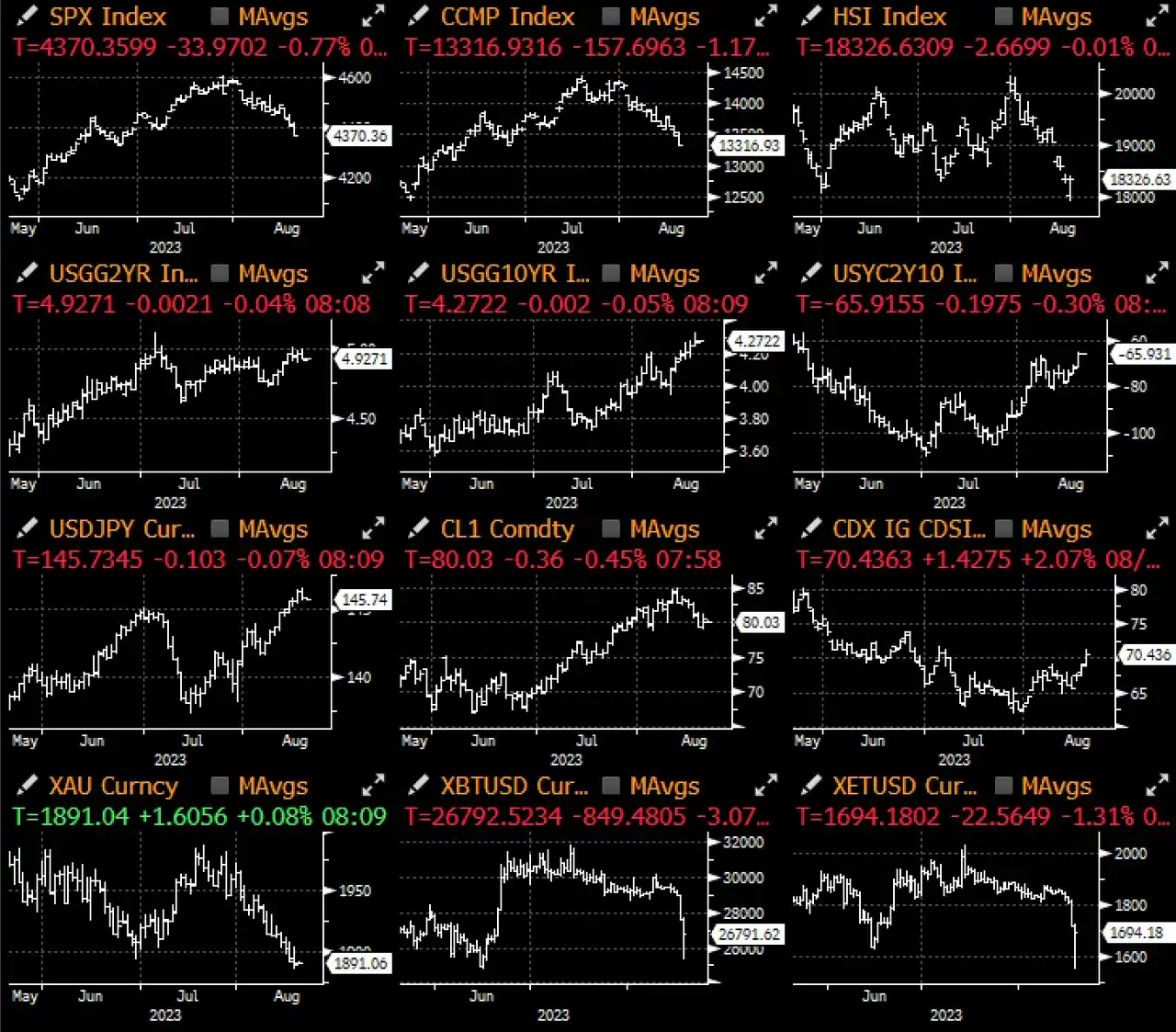
The tranquil end of summer seems to be a luxury.
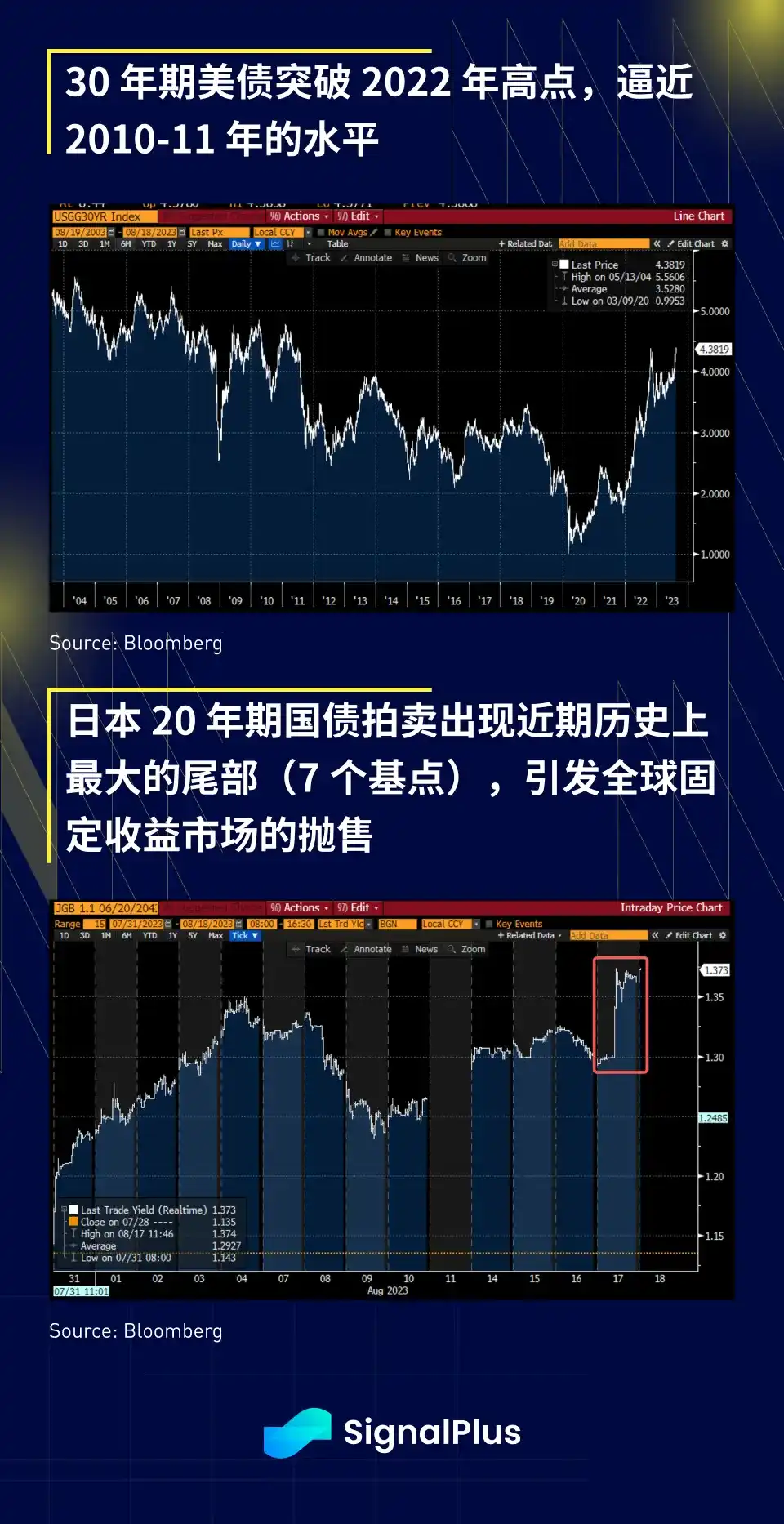
US Treasury bonds have been sold off for 6 consecutive days, with the 30-year yield rising to nearly 4.40%, breaking the panic high of 2022. The last time it was close to this level was in 2010/2011. This chaos began with the weakest 20-year Japanese government bond auction in history, with the tail at 7 basis points, causing the yield curve to rise by 7-10 basis points overall, which triggered a sell-off in the global fixed income market.
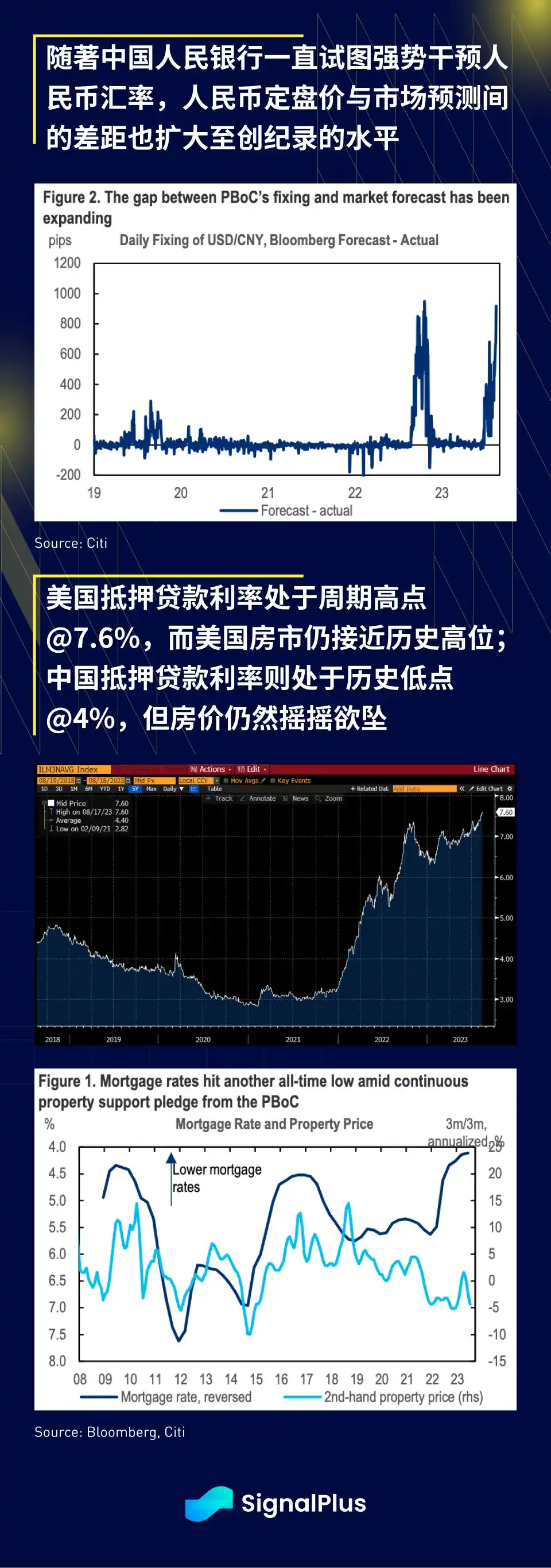
In China, the People's Bank of China has been intervening in the foreign exchange market. Compared with Bloomberg's market forecast, the RMB has achieved the second strongest fixing price in history (918 points difference). As of the writing of this article, the USD/CNH spot has fallen from 7.35 to 7.28 amidst the recent rapid depreciation of the RMB. Against this backdrop, the People's Bank of China released its second quarter monetary policy report yesterday. In addition to the consistent slogan of the Central Political Bureau to "increase the intensity of macro policy adjustments," the Monetary Policy Committee for the first time explicitly mentioned "resolutely preventing exchange rate overshooting risks" as official guidance. In addition, there was also a clear official buying trend for Chinese stocks/H shares yesterday, and there was a large inflow of southbound funds through the Hong Kong Stock Connect. The Hang Seng Index rebounded from a drop of about 2% during the day and ultimately closed flat.
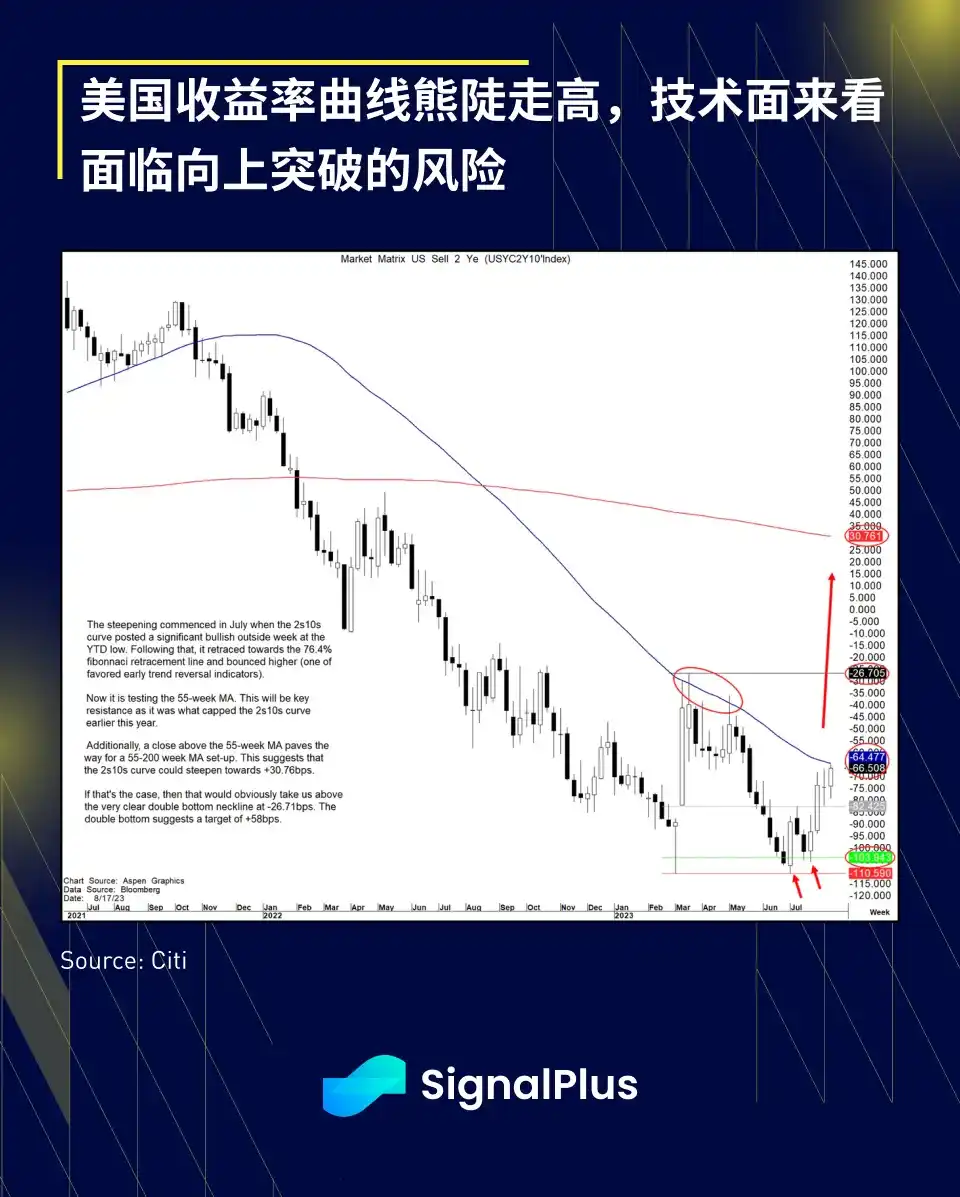
Unfortunately, even the risk aversion caused by China's temporary calm cannot save the sell-off of US bonds. The stable initial jobless claims (-11,000 to 239,000) and the rebound of the Philadelphia Fed Manufacturing Index pushed up bond yields. The Philadelphia Fed Manufacturing Index rebounded 25.5 points to 12, the first positive value in a year, far higher than market expectations, and all components showed improvement, especially the surge of new orders by 30 points. The 30-year real yield (adjusted for inflation) rose to a new high of 2.10%, and the yield curve continued to bear steeply. The rise in interest rates is no longer dominated by the hawkish Fed, but driven by long-term rates and economic improvement. The 10-year yield once touched a cyclical high of 4.33%, and then rebounded slightly due to the continuous decline of the stock market. Traders are worried that risk aversion will plummet, so they have reduced some of their short positions in bonds.
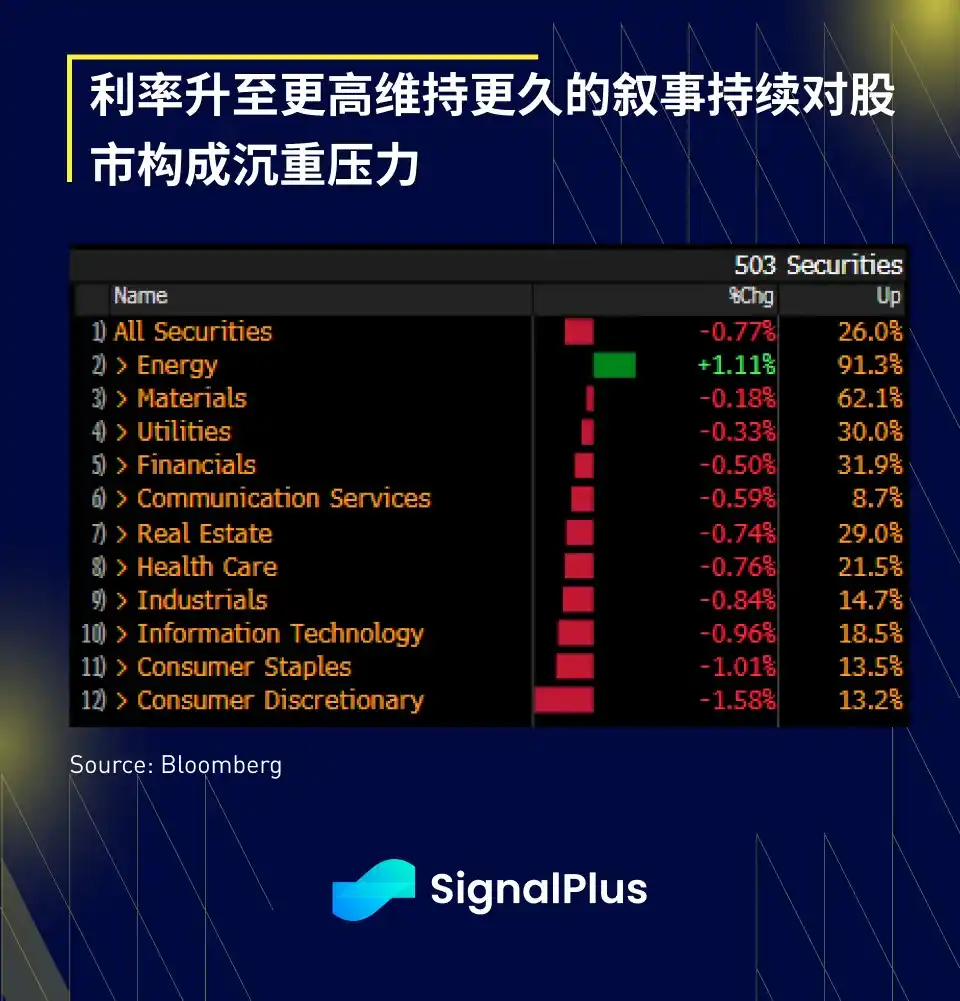
The narrative of rising interest rates lasting longer continues to affect the stock market, especially for high-growth industries and companies with poor profitability. Yesterday, the SPX was led lower by technology (-1%) and consumer stocks (-1.6%), while energy was the only sector to rise. Citigroup's "unprofitable tech stock" index fell 3.3% yesterday, and the Russell 2000 index has fallen for 8 consecutive trading days, reaching its lowest level since July.
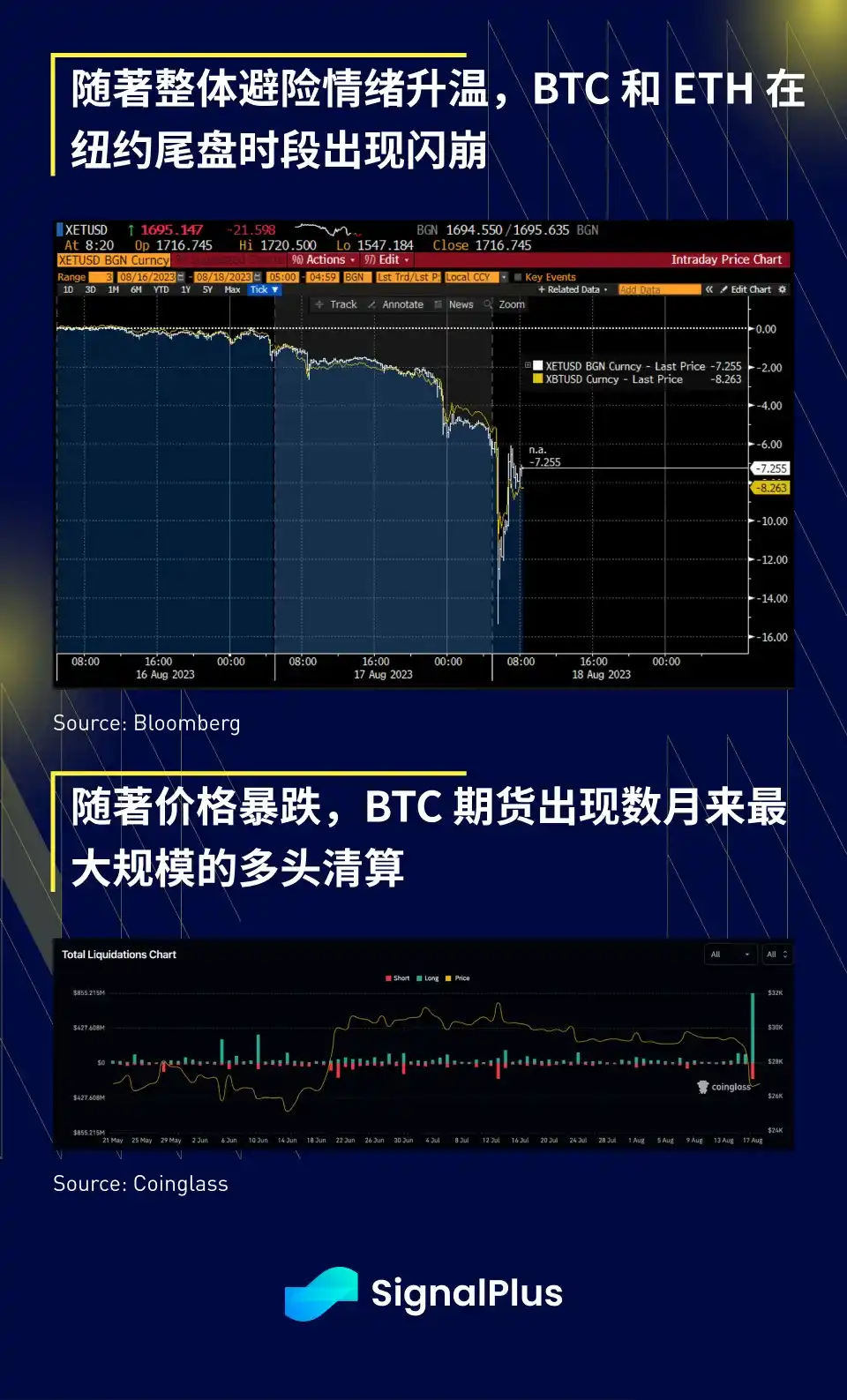
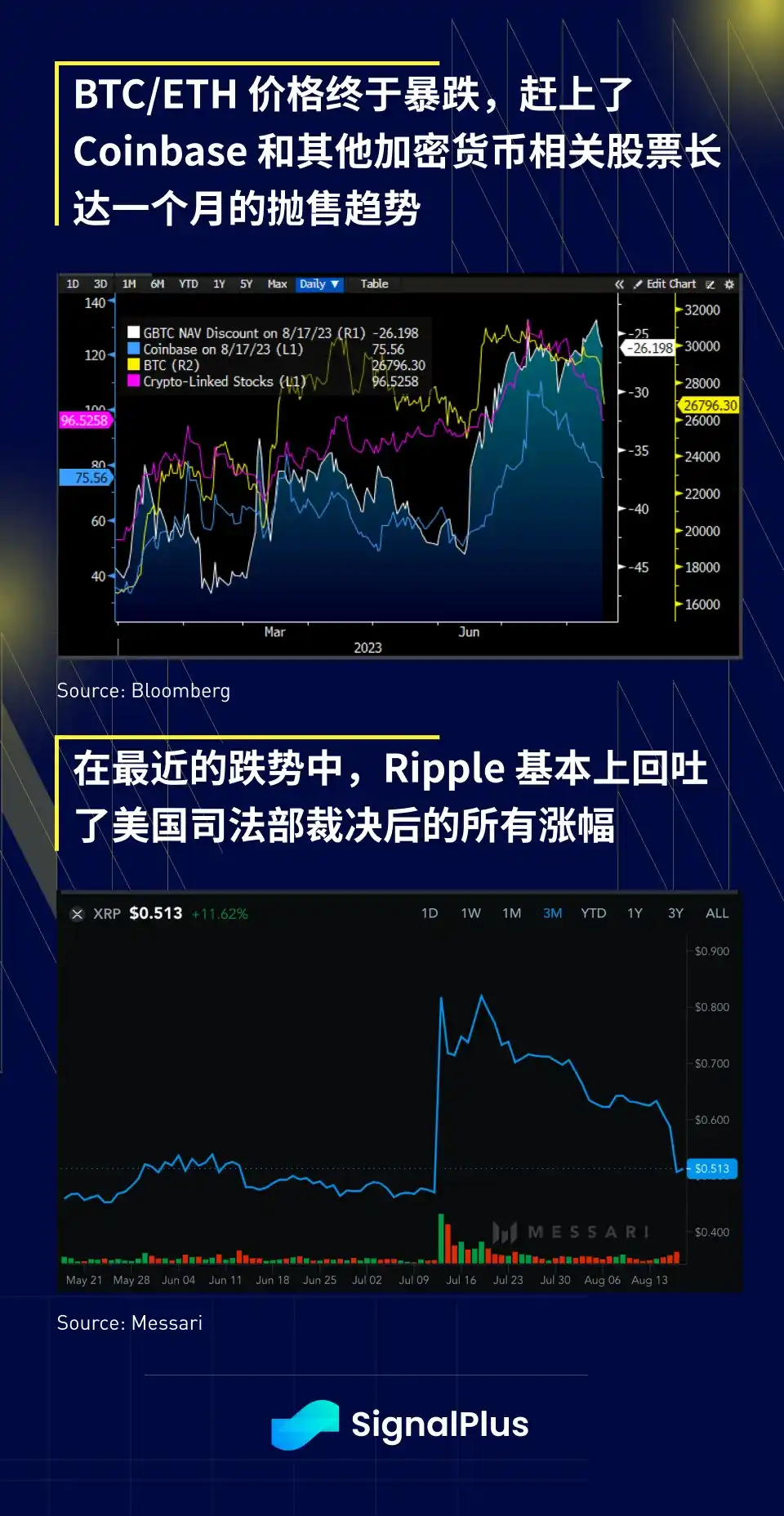
The market's general risk-averse sentiment has finally spread to the cryptocurrency field, and the spot price of gold (<1890) and cryptocurrency prices both experienced a simultaneous plunge at the end of trading in New York. In extremely thin liquidity, BTC and ETH prices plummeted by nearly 15%. As expected, this crash caused a large number of futures long positions to be liquidated, with the scale of liquidation reaching the highest level in several months, exacerbating the downward cycle. What's more complicated is that later news pointed out that, according to "informed sources," the US SEC seems to be "ready" to approve ETH futures ETF, causing the price to rebound and recover about half of the decline.
We expect prices to continue to change in sync with the macro market's risk tone, especially whether interest rates will rise again from their current levels. We recommend that everyone exercise caution in risk control and adopt defensive strategies.
Original article link
Welcome to join the official BlockBeats community:
Telegram Subscription Group: https://t.me/theblockbeats
Telegram Discussion Group: https://t.me/BlockBeats_App
Official Twitter Account: https://twitter.com/BlockBeatsAsia