RWA+DeFi protocol aimed at the 17 trillion trade finance gap, how does Polytrade solve the financing pain points for small and medium-sized enterprises?
Source: R3PO
Author: Tian
The maturity and development of blockchain technology have brought about innovations in decentralization, trustworthiness, transparency, data security and privacy, efficiency, and more. DeFi, as a type of financial service based on blockchain technology, provides users with safer, more convenient, and more transparent financial services through smart contracts and decentralized methods. The rapid development of DeFi allows people to engage in various financial activities on decentralized platforms, including loans, insurance, trading, and more. The total locked amount of DeFi has grown from over $500 million in 2020 to $52 billion today, a 100-fold increase that demonstrates its strong vitality.
However, since entering the bear market of the encryption industry, the development of DeFi seems to have stagnated and urgently needs new growth points to emerge. As a bridge between TradFi and DeFi, the RWA track has become a new popular narrative. Unlike other DeFi products that heavily rely on trading volume and market activity to generate returns, real-world assets (RWA) are introducing a wave of new DeFi products whose value comes from the real income of tangible assets in the real world.
Source:Binance Research
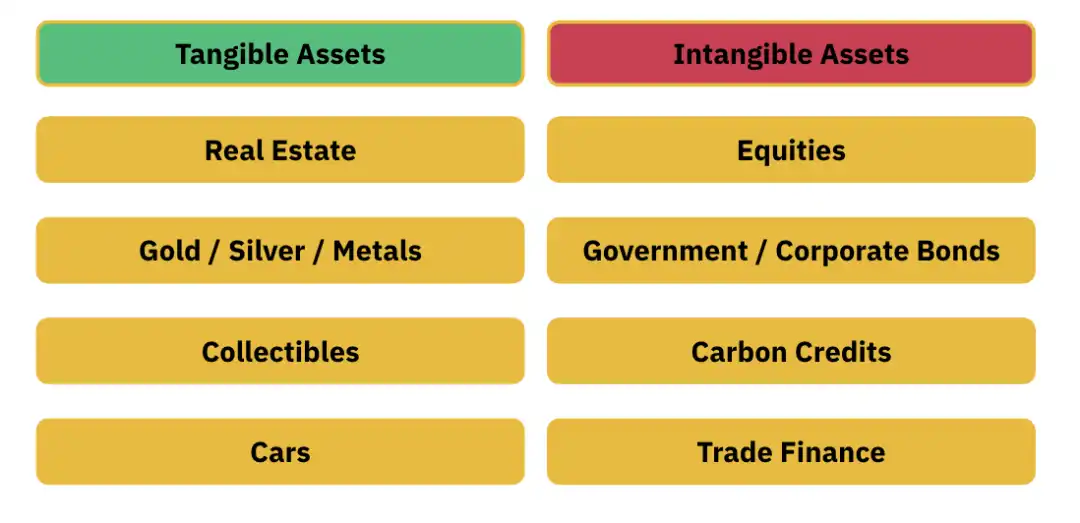
RWA can represent many different types of traditional assets, such as real estate, gold, stocks, and bonds. Financial institutions such as Binance, Goldman Sachs, and Siemens, as well as top DeFi protocols such as MakerDAO, Aave, and Compound, have also entered the RWA race, attracting market attention. Currently, according to Rootdata, there are 54 projects in the RWA race, including projects invested by top investment institutions such as a16z, CoinbaseVentures, and PolygonVentures. This time, R3PO will bring you an interpretation of the "RWA+DeFi" protocol Ploytrade.
Targeting the 17 trillion yuan trade financing gap to solve the financing pain points of small and medium-sized enterprises
In the international market, the development of trade finance has a history of nearly a hundred years, which can effectively promote the development of import and export trade. However, trade finance is more for large enterprises with quick and convenient services, while small and medium-sized enterprises with limited financial resources and weak backgrounds are generally in a disadvantaged position in trade finance.
Its main pain points include:
Funding difficulties: Due to the small size, low credit rating, or lack of sufficient asset collateral of small and medium-sized enterprises, they often have difficulty obtaining financing support from traditional banks or financial institutions, which limits their ability to manage cash flow and expand their business.
High Interest Fees: Even if small and medium-sized enterprises can obtain financing, they are often considered high-risk customers and therefore need to pay higher interest fees, which increases the cost of trade financing.
Insufficient Funds: During the trading process, small and medium-sized enterprises may need to pay for the costs of suppliers or the supply chain, but customer payments are often slow, which may result in insufficient funds and may affect normal business operations.
Complex Process: The traditional trade financing application and approval process is usually cumbersome and complex, requiring a large number of documents and approval time, resulting in a slow financing process that cannot meet the funding needs of enterprises in a timely manner.
Lack of transparency: Small and medium-sized enterprises may lack understanding of the trade finance market, and may not be aware of the advantages and disadvantages of various financing products and services, which makes it difficult to make wise financing decisions.
需求不匹配:Some small and medium-sized enterprises may require smaller amounts of short-term financing, but traditional financial institutions tend to provide larger amounts and longer-term financing products, resulting in a mismatch between financing demand and supply.
The current market size of the trade financing industry is close to 10 trillion US dollars. Despite the huge market, there is a significant trade financing gap. According to a WTO survey, the trade financing gap in 2021 is about 1.7 trillion. This gap is mainly due to the imbalance between the trade financing demand and supply of small and medium-sized enterprises. Based on this reality, Polytrade seizes the opportunity to simplify the accounts receivable financing experience for small and medium-sized enterprises, using the liquidity pool of cryptocurrency to provide new sources of funding for them, and is committed to becoming the first platform to meet the trade financing needs of small and medium-sized enterprises.
Polytrade team has many members from India. Before transitioning to a blockchain platform, Polytrade's predecessor was Riqueza Capital, which was established in Hong Kong in 2014 and has extensive experience in Web2 trade financing. By 2020, the company had provided trade financing to 5,000 sellers and financing services to 250 of them, with a total value of $500 million. In March 2023, Polytrade completed its seed round of financing, with investors including Matrix Partners, Polygon Ventures, Alpha Wave Global, and others.
Polytrade Operational Mechanism Analysis
In order to fill the financing gap and meet the financing needs of small and medium-sized enterprises, Polytrade has created an innovative system that allows for the investment of funds obtained from cryptocurrency investors into real-world assets.
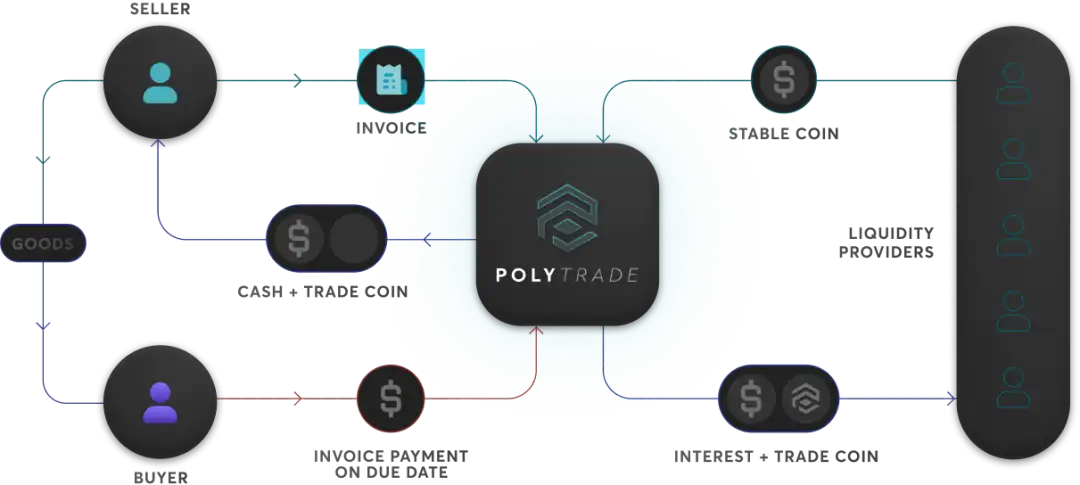
Investors can inject stablecoins into Polytrade's liquidity pool, which will convert these stablecoins into fiat currency and use the funds for factoring/invoice financing.
Asset Evaluation: In trade financing, determining the quality of underlying assets is a key challenge. Data on underlying assets and payment history will be recorded on the blockchain, and the protocol will determine the rating of each asset through algorithms.
Borrower Evaluation: Similar to asset evaluation, borrower evaluation will also be defined by the agreement standards. The borrower's rating will be generated based on algorithms that utilize the borrower's activity on the blockchain, personal profile, and submitted financial documents. This rating will also affect the borrower's loan interest rate.
Risk Exposure: In risk management for trade finance, a critical component is to avoid overexposure to a single asset or entity. When loans to a single entity or asset reach a certain percentage, adjustments are made through algorithms. Similarly, for borrowers, rules ensure that agreements are not exposed to the risk of a single borrower.
Governance: The platform's governance adopts an on-chain governance model, allowing different network participants to reach consensus through a direct voting mechanism. Voting will use a weighted mortgage mechanism, meaning that higher mortgage rights will receive greater voting rights. The governance team will formulate rules on mortgages, interest rates, risk management, validator mortgages, protocol fees, and other aspects.
Through an example, we can better understand its specific operation mechanism:
If John's furniture manufacturing plant sells $4,000 worth of goods to IKEA every month with a credit period of 3 months, which means John's collection period is 3 months, $12,000 worth of funds will be locked up and he will have to wait for the credit period to end in 3 months to receive the payment.
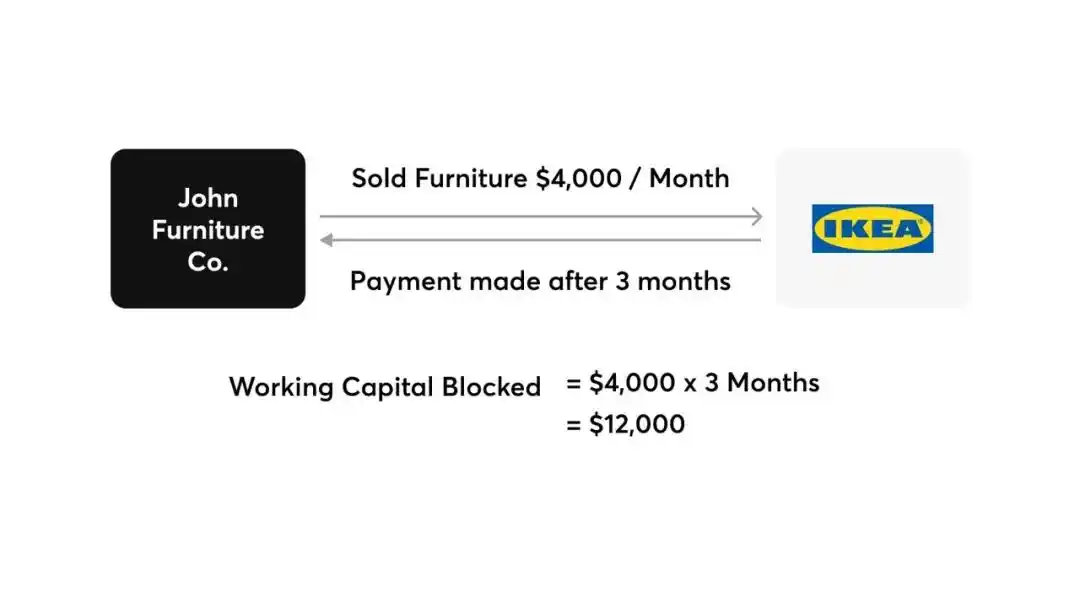
Due to difficulties such as small amount of capital and short term, John finds it difficult to obtain financing from traditional financial institutions. At this time, John can choose to enter the invoice and related documents into Polytrade and complete the relevant review. After the review is passed, Polytrade will immediately transfer the financing amount from the liquidity pool to John's account. The interest rate for borrowing will be adjusted according to the algorithm, and when the payment is due, the funds transferred by IKEA will be injected into the liquidity pool.
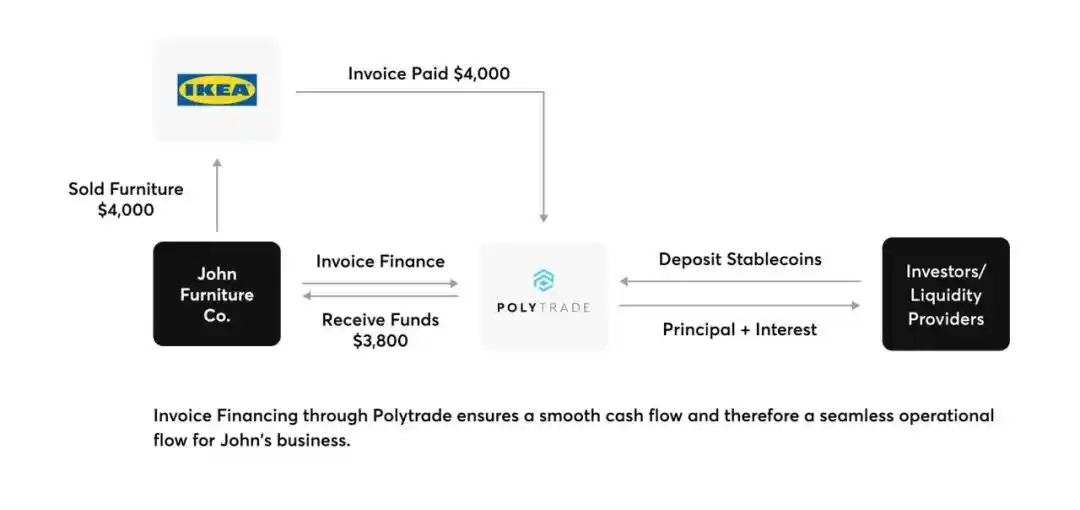
John will receive $3800 immediately transferred by Polytrade, and the difference of $200 between $4000 and $3800 is the profit earned by Polytrade from this transaction.
During this trade financing, Polytrade demonstrated its advantages, including:
Transparency: The trading process on the Polytrade platform is open and transparent, with all transaction records being recorded on the blockchain, which can be viewed and verified by anyone. This increases the transparency and credibility of transactions, while reducing the risks involved.
Fast: The trading speed of the Polytrade platform is very fast, and transactions can be completed in a few minutes, greatly shortening the financing cycle and improving the efficiency of fund utilization.
Flexibility: The trading on the Polytrade platform is very flexible, and customized financing solutions can be tailored to different needs and situations to meet the financing needs of different enterprises.
Low cost: The trading cost of the Polytrade platform is very low. Compared to traditional trade financing methods, it can reduce financing and trading costs, and improve the profitability of enterprises.
TRADE Token
TRADE token is the main payment tool within the Polytrade platform, as well as a tool for platform governance, protocol incentives, staking rewards, and settlement. TRADE token is issued on top of Polygon and BSC. The total issuance of TRADE token is 1 billion, of which 70% is used for public sales, 20% is used for team and advisor, and 10% is used for community and ecological construction.
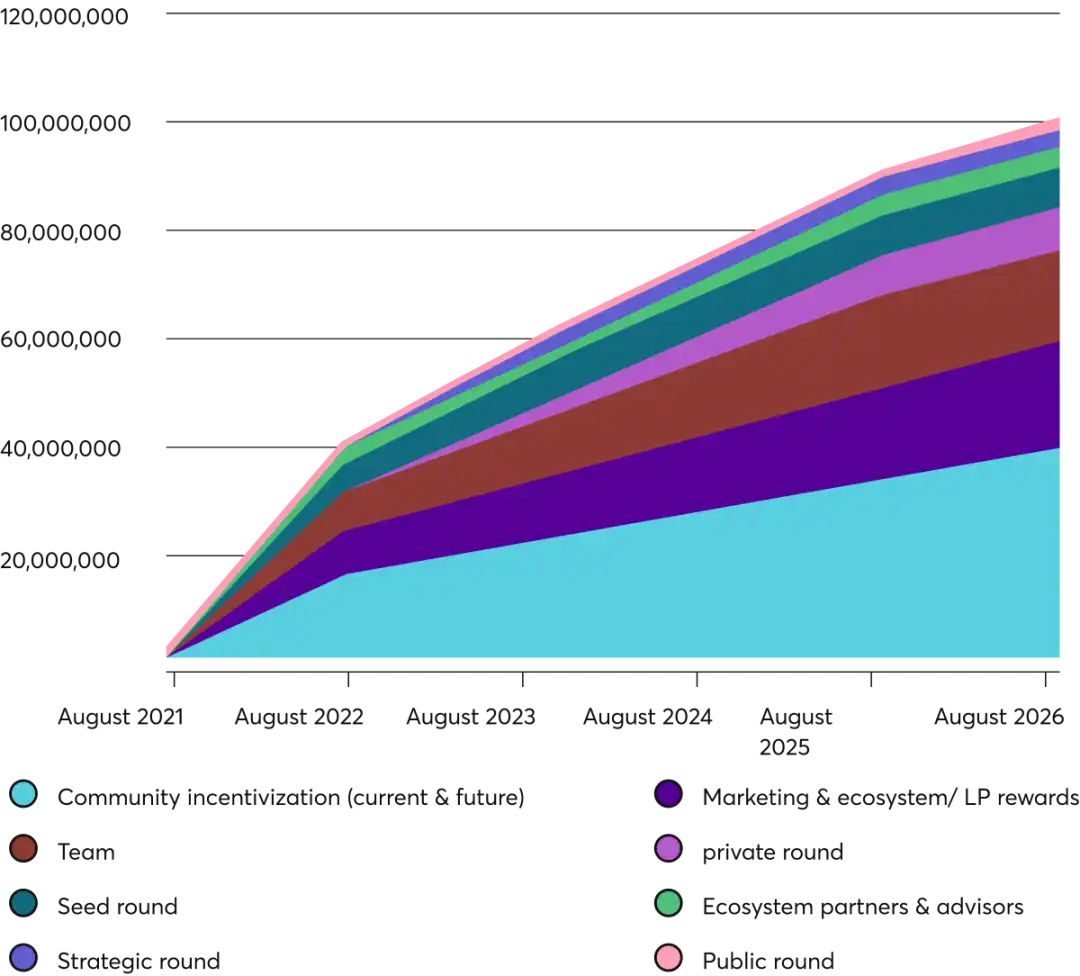
TRADE token's main functions include:
Payment Platform Service Fee: Sellers need to pay a certain amount of TRADE tokens as platform service fee to obtain financing services.
Reward Participants: Polytrade platform has a built-in reward system, which rewards participants with a certain amount of TRADE tokens for every successful transaction.
Platform Governance: TRADE tokens can be used for platform governance, and holders can participate in platform decision-making and voting.
Protocol Incentives: TRADE tokens can be used to incentivize the execution and maintenance of protocols, ensuring the normal operation of the platform.
Pledge Reward: TRADE tokens can be used for pledge rewards, and holders can receive additional income.
Settlement Tool: TRADE tokens can be used for settlement and clearing within the platform, improving the efficiency and security of transactions.
Conclusion
Polytrade bridges the gap between TradFi and DeFi by utilizing blockchain technology to address pain points in trade financing for small and medium-sized enterprises in the real world. With the further development and application of blockchain technology, Polytrade is poised to make even greater breakthroughs in trade financing. The decentralized nature of blockchain will bring about broader market participation and more efficient transaction processes, providing SMEs with more options and flexible financing solutions. In addition, as the concept of RWA gradually becomes more widespread, the field in which Polytrade operates may become an important trend in the financial industry.
Reference:
https://polytrade.gitbook.io/polytrade-gitbook/
https://medium.com/@Polytrade/tokenization-of-rwas-how-polytrade-does-it-58f9bfa964eb
https://www.theblockbeats.info/news/36289
https://blog.polytrade.finance/defi/exploring-fractional-ownership-of-real-world-assets-in-defi/
Original article link
Welcome to join the official BlockBeats community:
Telegram Subscription Group: https://t.me/theblockbeats
Telegram Discussion Group: https://t.me/BlockBeats_App
Official Twitter Account: https://twitter.com/BlockBeatsAsia