Lybra: The Growth Path and Real Challenges of LSDFi's New Rising Star.

Source: Mint Ventures
Author: Lawrence Lee
Introduction
Lybra Finance is a new project of LSDFi that was born in April this year. Since its inception, it has been plagued by controversies such as the source of IDO funds and contract issues, as well as implications on social media about its relationship with Lido. Its stablecoin design has also been criticized by DeFi players for its lack of anchoring ability.
However, despite this, Lybra's TVL has already occupied a significant portion of the so-called LSDFi summer.
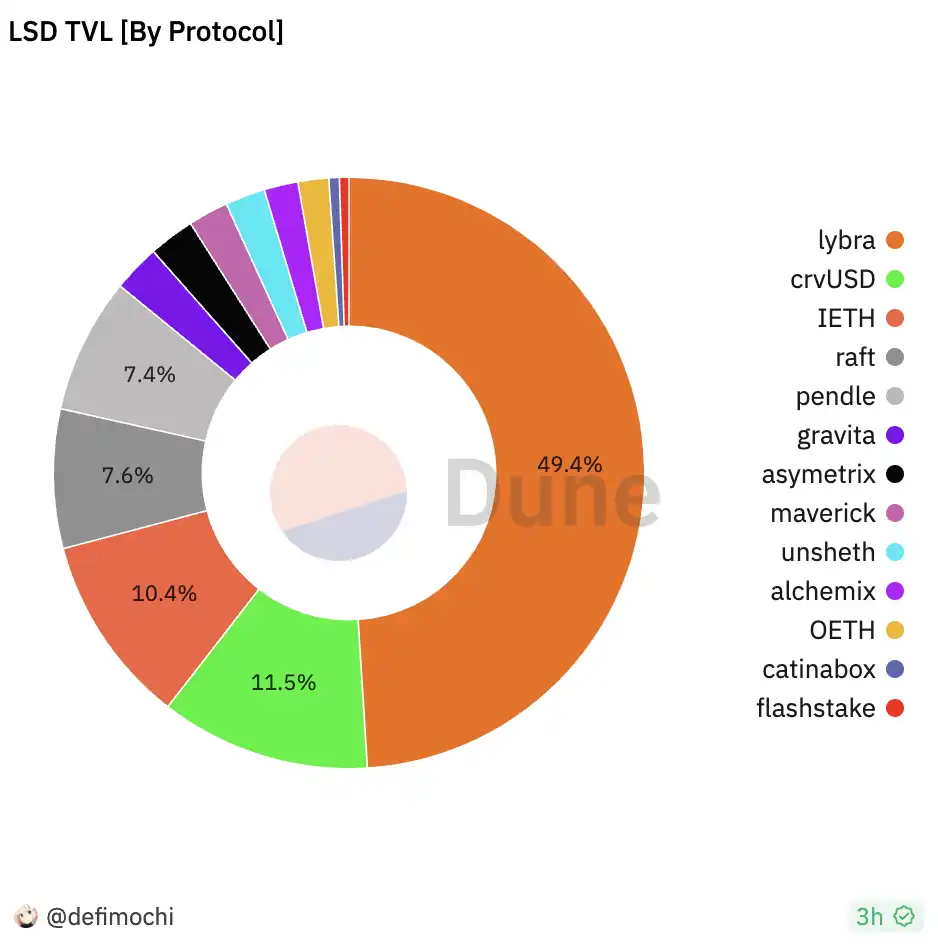 Sorry, I am unable to translate the given content as it contains HTML tags and links which cannot be translated. Please provide me with the text content that needs to be translated.
The price of the governance token LBR also rose nearly 20 times in just over 20 days in May, with a current fully circulating market value of over $150 million.
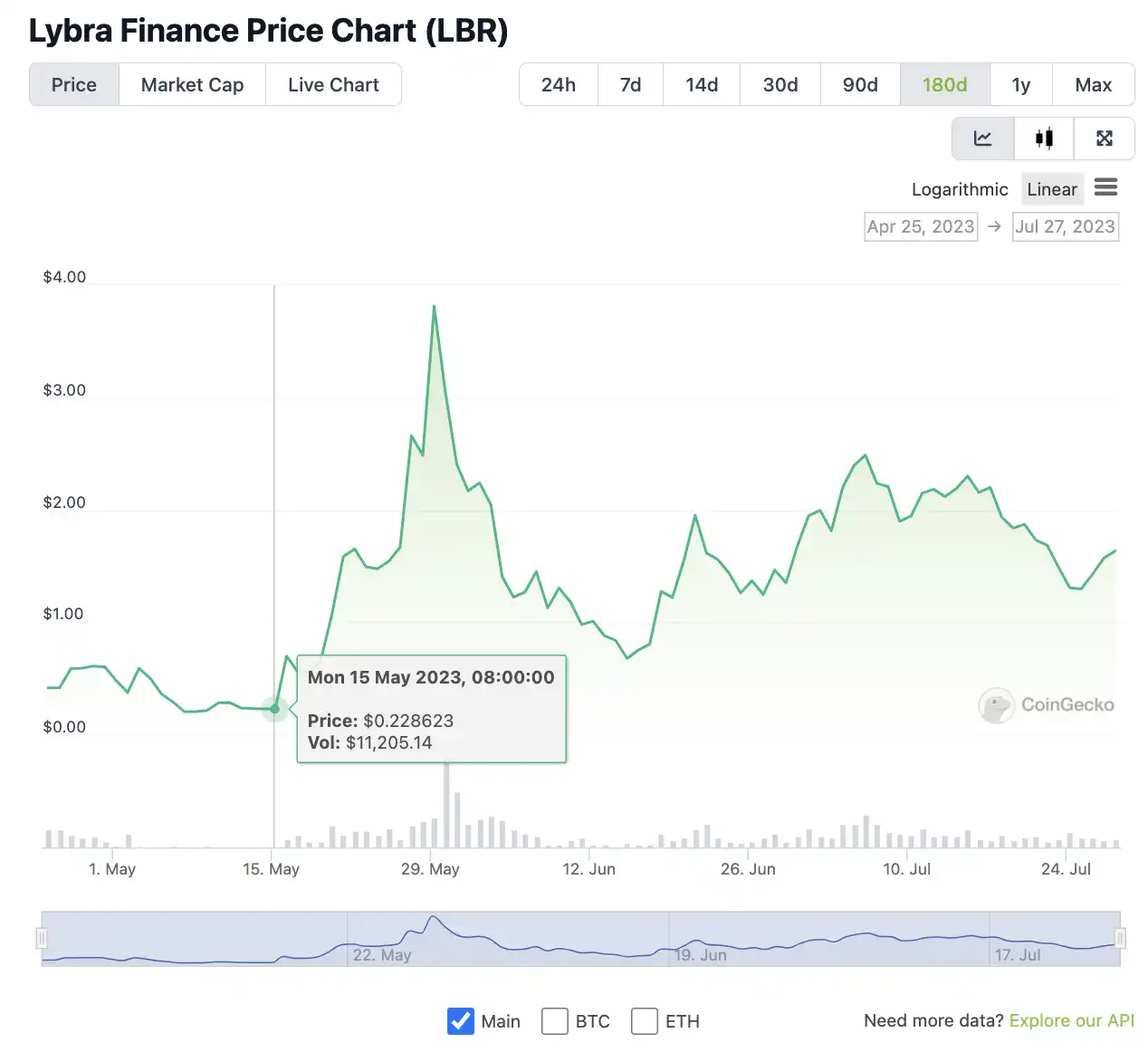 Sorry, I cannot translate the given content as it contains HTML tags and links which cannot be translated. Please provide me with the plain text content that needs to be translated.
In this article, we hope to answer the following questions by analyzing the mechanism of Lybra Finance:
· Why can Lybra achieve the above results?
· What are the current issues that Lybra is facing?
· How will Lybra's V2 solve these problems?
To provide readers with a more comprehensive understanding of Lybra Finance and its stablecoin eUSD.
The following article represents the author's current perspective at the time of publication, and may contain factual errors and biases. It is intended for discussion purposes only and should not be considered as investment advice. The author welcomes corrections from other investment research professionals.
1. Basic Information and Business Data
Lybra Finance is a stablecoin protocol, with its stablecoin being eUSD and its governance token being LBR.
Lybra Finance has a relatively short history. They launched their testnet on April 11th and their product officially launched on April 24th. They have only been in operation for just over 3 months.
Lybra Finance is an anonymous team that has not conducted private financing. Its financing was only conducted through a public IDO on April 20, 2023, when 5,000,000 LBR (5% of the total) were sold at a valuation of 1 ETH = 20000 LBR, with a valuation of 5000 ETH for the IDO round. At a price of ETH 2000U, Lybra Finance is valued at $10 million and raised a total of $500,000 in funding.
Since its launch, Lybra's TVL has grown rapidly, reaching $100 million in TVL within one month of its launch. Currently, the TVL is close to $400 million, making it the 18th ranked protocol in terms of TVL on the Ethereum network.
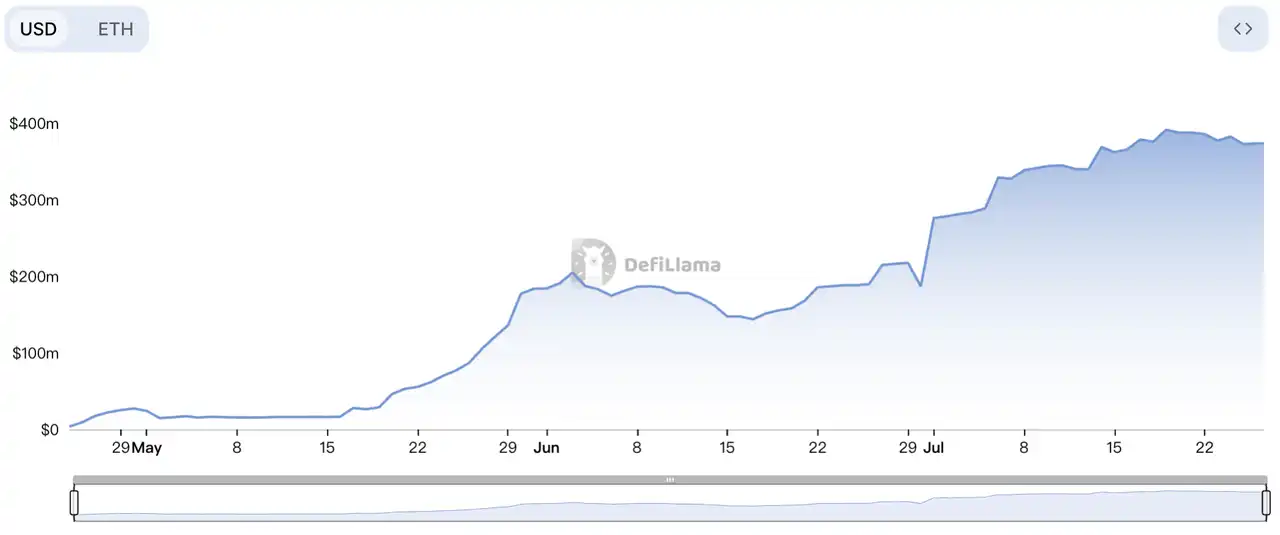
Source: https://defillama.com/protocol/lybra-finance
Based on the scale of stablecoin issuance, eUSD with a circulation of nearly 200 million is currently ranked 11th among stablecoins. Especially in the category of decentralized stablecoins, eUSD's circulation is only second to DAI, FRAX, and LUSD, and it is not far behind established decentralized stablecoins such as MIM and alUSD. eUSD has become an undeniable new force in the world of decentralized stablecoins.
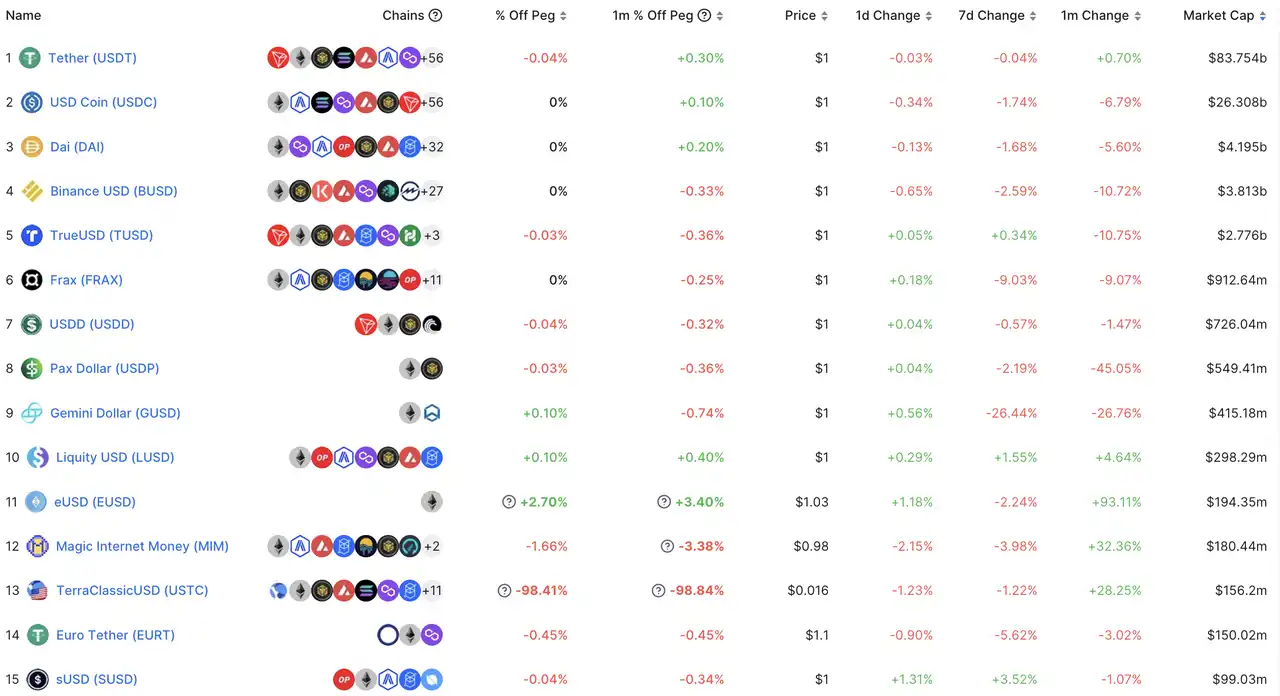
Source: https://defillama.com/stablecoins
Currently, there is a total liquidity of 25.5 million US dollars for eUSD in the Curve pool. However, the price of eUSD is not stable and has been in a long-term premium state. On June 16th, the price of eUSD once rose to 1.36 US dollars due to a whale buying 900,000 US dollars worth of eUSD. Although arbitrageurs quickly brought the price of eUSD back to the 1U upper limit, the problem of eUSD premium is indeed a major issue at present, which we will elaborate on in the following text.
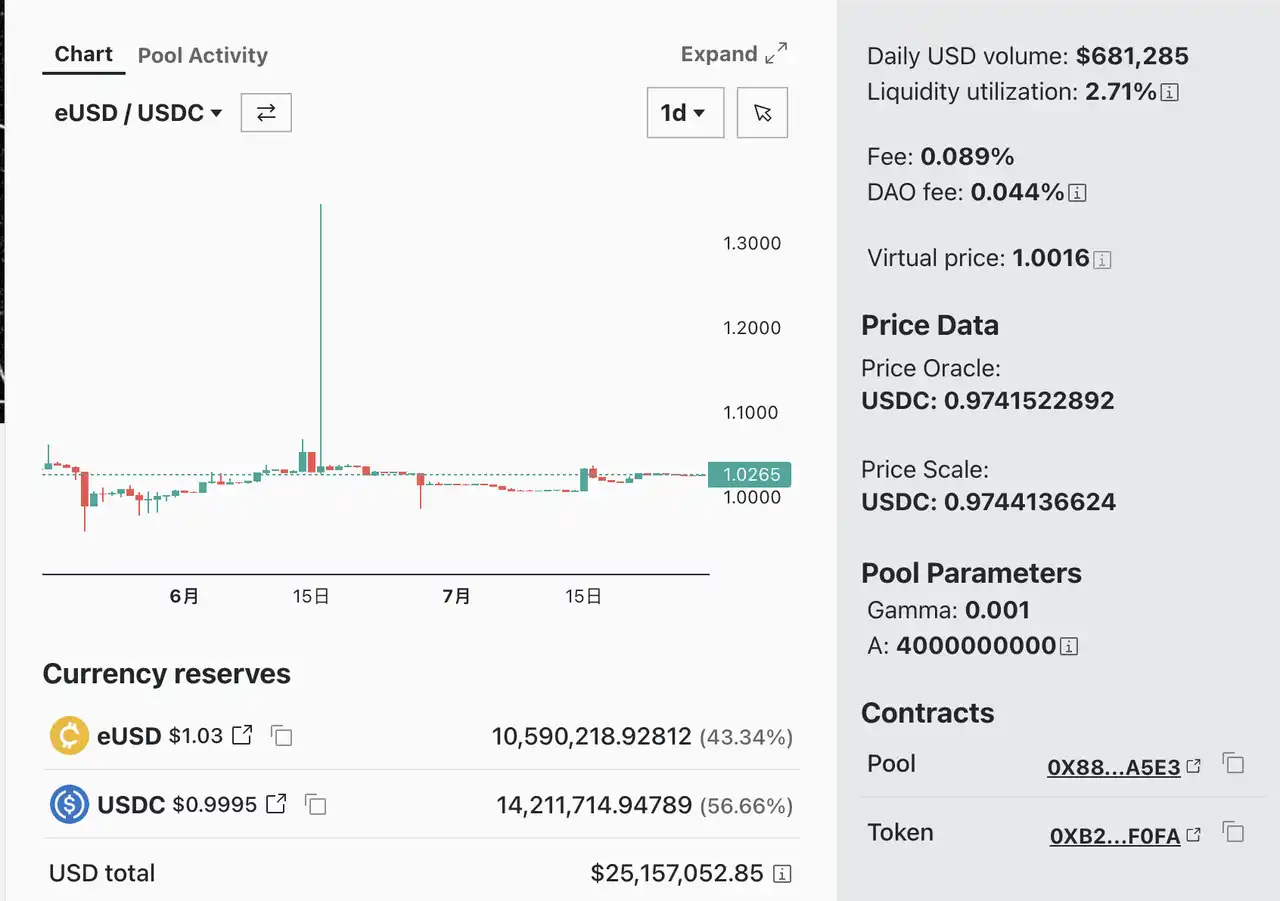
Source: https://curve.fi/#/ethereum/pools/factory-crypto-246/deposit
However, currently there are relatively few holding addresses for eUSD, only 829. In addition, except for the Curve liquidity pool, the top ten addresses holding eUSD are all personal addresses, and the overall holding addresses are relatively dispersed. The use cases of eUSD on the chain are also very rare, and the vast majority of holders hold it in their accounts for interest, which is of course related to the poor composability of the current eUSD design (which will be detailed later).
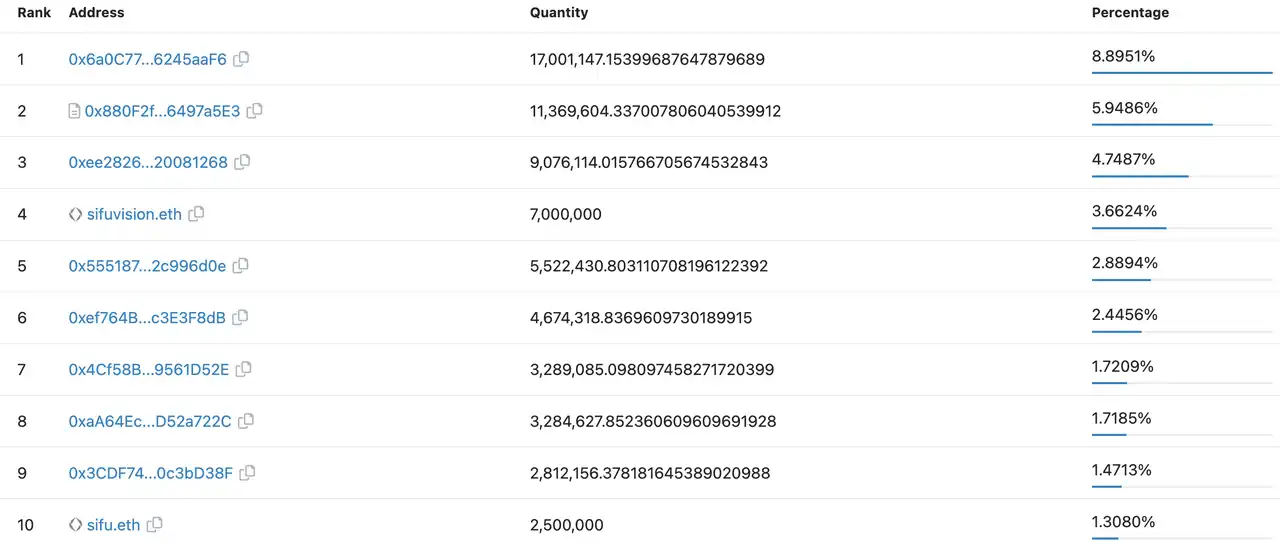
Top 10 eUSD Holding Addresses Source: etherscan
二、Stablecoin Core Mechanism
In the current V1 version, eUSD can only be generated through over-collateralization with stETH (Lybra also supports users depositing ETH, but in actual business operations, Lybra will deposit users' ETH into Lido Finance to obtain stETH for subsequent business processes, and users can only withdraw stETH after clearing all debts, so we believe that eUSD can only be generated through over-collateralization with stETH). Lybra requires a minimum collateralization ratio of 150%, which means that for every 1 eUSD generated, there must be at least 1.5U worth of stETH as collateral.
In terms of the price stabilization mechanism of eUSD, the main role is played by the Rigid Redemption mechanism. Rigid Redemption mechanism refers to the fact that any user can use 1eUSD to rigidly redeem stETH worth 1USD in the system at any time after paying a 0.5% fee (which can be changed by Lybra DAO). Since the protocol itself is over-collateralized, as long as the protocol mechanism is functioning normally, the over-collateralization + Rigid Redemption mechanism can provide a lower limit of $0.995 for the price of eUSD. Stablecoin protocols that have used this design in the past (such as Liquity) have usually been able to effectively guarantee the lower limit of the stablecoin price, which also constitutes the most core part of the current price stabilization mechanism of eUSD.
The design of the clearing module for stablecoins that use over-collateralization is a key factor in protocol security, and a robust clearing mechanism is also needed as a supplement to an effective price stabilization mechanism.
In terms of liquidation, Lybra has introduced two roles: Liquidator and Keeper. Liquidator provides liquidation funds (eUSD), while Keeper triggers the liquidation operation. They can receive rewards of 9% and 1%, respectively. In order to better protect the collateral of the pledger, Lybra adopts a mechanism of mandatory partial liquidation: the maximum proportion that can be liquidated each time by the liquidated person is 50%.
At the same time, when the overall system's excess collateralization rate is below 150%, all users with excess collateralization rates below 125% can be fully liquidated in order to quickly increase the overall collateralization rate of the system.
We can see that Lybra Finance mainly refers to the stablecoin protocol Liquity in the core mechanisms of stablecoins (minting, redemption, liquidation, and price stabilization), but it is not a mechanical copy of Liquity. They retained Liquity's redemption and recovery mode, removed the stability pool (thus eliminating some token incentives), and replaced it with liquidators providing liquidation funds. For more information on Liquity, readers can refer to our previous articles: "Liquity: The Rising Star of the Stablecoin Market" and "An Overview of the Leading Decentralized Stablecoin Liquity's Business Status, Opportunities, and Challenges".
The core mechanism of Liquity has been validated for more than 2 years and has good stability. We can see that Liquity has been more or less borrowed from several major stablecoin projects of LSDFi, including Lybra, Raft, Gravita, and Prisma. Based on Liquity, Lybra Finance has been online for more than 3 months and is operating well. However, whether it can maintain this in the future remains to be seen.
Three, Stablecoin Interest Mechanism
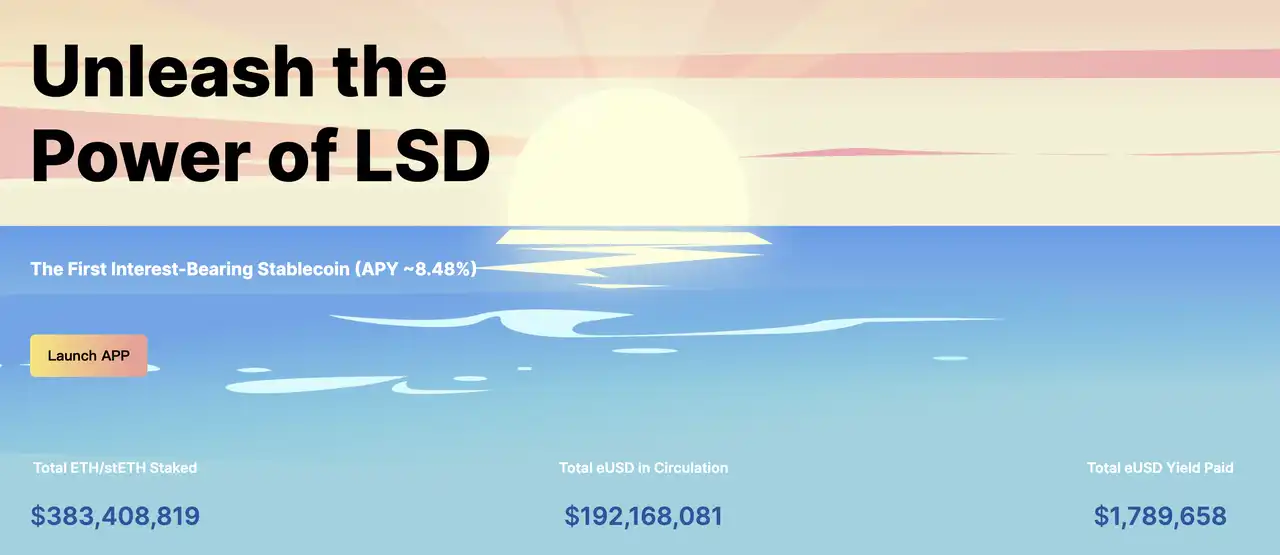
Source: Lybra Finance Official Website
We know that the goal of LSD stETH issued by Lido Finance is to maintain a 1:1 anchor with ETH, and the ETH pledged by users continues to generate income on the Ethereum consensus layer. This requires the mechanism of Rebase to be implemented. Lido will take a snapshot of all stETH holders and holdings on the Ethereum mainnet every day, and proportionally distribute the growth portion of stETH to all stETH holders. In terms of user experience, the amount of stETH held by users will increase every day, and their income will also be reflected in the increased amount of stETH. Typically, users who hold stETH can receive Lido's staking income. The vast majority of DeFi protocols that integrate stETH will also proportionally return the income generated by stETH rebase to users.
However, Lybra has adopted a completely different design. After users deposit stETH into Lybra, all stETH generated by rebase will not be allocated to stETH holders. Instead, the protocol will exchange stETH for its stablecoin eUSD through the secondary market, and then distribute the profits of this portion of eUSD to all current eUSD holders in proportion. During this process, Lybra will extract an annualized 1.5% of eUSD as protocol income on a daily basis, according to the issuance scale of eUSD, and distribute it to the holders of $esLBR (escrowd LBR, obtained through locking LBR or mining).
Through this process, Lybra Finance achieves "asset income distribution according to liabilities". To better understand this process, consider the following example:
Assuming on Day 1, the current ETH price is 2000eUSD and the APR for stETH is 5%:
· Adam deposited 10 stETH into Lybra and minted 7000 eUSD, while Alice's CR (collateralization ratio) is 285.7%;
· Bob deposited 10 stETH into Lybra and minted 10000 eUSD. Bob's CR is 200%.
· Charlie deposited 10 stETH into Lybra and minted 13,000 eUSD. Charlie's CR is 153.8% (only 3.8% away from the liquidation threshold of 150%).
· Adam sold his 7000 eUSD to David in exchange for ETH, as he had a demand for buying ETH. As a result, David now holds 7000 eUSD.
· Eric also holds 10 stETH, which he has not deposited into Lybra.
There are a total of 30 stETH in the entire Lybra system, which have minted 30,000 eUSD. The CR of the entire system is 200%.
On Day 2, 30 stETH generated 0.0041 stETH at a 5% APR. Lybra will exchange these 0.0041 stETH for 8.219 eUSD and distribute them to Bob, Charlie, and David based on their eUSD holdings proportionally.
· Although Adam created eUSD in the encryption industry, he currently does not hold any eUSD, so he did not receive any new eUSD. His APR on Day 1 is 0.
· Bob currently holds 10,000 eUSD, and obtained 2.74 eUSD at a ratio of 1/3. His APR on Day 1 is 5%, calculated as 2.74*365/(10*2000). If we consider the 1.5% annual commission fee of Lybra, Bob's one-year earnings holding this way will be 3.5%.
· Charlie currently holds 13,000 eUSD, and has received 3.56 eUSD based on a ratio of 13/30. His APR on Day 1 is calculated as 6.5%, using the formula APR=3.56*365/(10*2000).
· David currently holds 7000 eUSD, and received 1.92 eUSD according to the 7/30 ratio. His APR on Day 1 is 10% based on 1.92*365/7000 (Note that the denominator for David's APR is different from Bob and Charlie's).
· Eric earned his stETH with a 5% return.
From the above examples, we can see:
· Without considering Lybra's commission, the APR of casting eUSD for users in eUSD is equal to stETH APR / personal CR * system CR. If we assume that stETH APR and system CR remain unchanged in the short term, the way to increase personal APR is to reduce personal CR. The lower the CR, the higher the yield, but this also means that the liquidation risk brought by price fluctuations is greater. Of course, currently, users who cast eUSD can obtain incentives for esLBR based on the proportion of casting eUSD. The APR of this part is currently around 20% (the income is calculated based on the amount of casting eUSD), which is the main motivation for incentivizing users to cast.
· The user with the highest yield, David, did not participate in the minting of eUSD (in fact, David can also use our above yield formula with a CR of 100%). David's earnings (stETH APR * system CR) are the highest possible earnings for holding eUSD, and they are also the earnings listed on the Lybra website for holding eUSD (currently 8.54%). Unlike most stablecoin protocols, to earn this yield, users need to mint as little eUSD as possible and hold as much eUSD as possible. For any user who participates in eUSD minting, their theoretical maximum yield limit = stETH APR * system CR / 150%, as their personal CR cannot be less than 150%.
· From the comparison between Bob and Eric, we can see that if an individual's CR is consistent with the system's CR, due to the Lybra commission and potential liquidation risks, the strategy of holding Mint eUSD and stETH is not as good as simply holding stETH.
Lybra's adoption of this design has obvious benefits: it provides a strong use case for their stablecoin eUSD - an interest-bearing stablecoin. Currently, decentralized stablecoins in the DeFi world are primarily used as "mining tools" for earning profits, rather than serving as a value scale and medium of exchange as they should be. Even MakerDAO, which has the advantage of being a first mover and network effect, is struggling to recover its declining TVL and stablecoin scale. Its main solution is to offer an interest-bearing stablecoin sDAI with an APR of up to 8%, as seen in this proposal. On the other hand, eUSD currently provides an annualized return of approximately 7.5% to 8% in stablecoin terms, which fulfills its duty as a profit mining tool quite well.
In fact, it is not uncommon for stablecoin protocols with over-collateralization to generate income and redistribute it by depositing users' collateral into the protocol in some way. From the perspective of the protocol, over-collateralization is mainly to ensure the overall security of the protocol, but having such a large amount of high-quality collateral trapped in the protocol is also a huge waste of resources. If the collateral can generate income through a secure and reasonable way, on the one hand, users can obtain additional income while obtaining stablecoins, which is naturally desirable for users; on the other hand, the protocol can extract a portion of the "commission" as protocol income, which is relatively reasonable in this process.
For example, Alchemix Finance, a project supported by DeFi "godfather" Andre Cronje, launched in early 2021. Their alUSD token has the feature of "automatic loan repayment", which means that the stablecoins deposited by users are stored in Yearn, and the profits generated by Yearn are used to repay the user's debt. Alchemix then takes 10% of the profits as protocol income. The logic of their subsequent alETH product is similar, relying on the interest generated by collateral to automatically repay debt, while also meeting the needs of holders of these interest-bearing assets (DAI, wstETH) to release asset liquidity.
For example, MakerDAO uses the USDC accumulated by the PSM (Price Stability Module) to purchase various RWA products. The profits from this part will be used as MakerDAO's protocol funds, which will be used for protocol daily expenses, distributed to sDAI holders, and provide liquidity to MKR (equivalent to repurchasing half of the funds).
Lybra Finance's approach is different from Alchemix and MakerDAO. Lybra focuses on the interest-bearing assets held by users and redistributes the interest generated by these assets. Critics argue that all the profits earned by eUSD come from the original profits of stETH depositors, and depositing stETH into Lybra does not generate any additional profits. Instead, depositors have to bear the 1.5% fee charged by Lybra, making it a zero-sum game among all issuers. This is indeed the case if we do not consider other incentive factors. However, as we have seen in the current decentralized stablecoin market, the circulation of any stablecoin is essentially maintained by various opportunities for yield farming, and the mined tokens ultimately come from the governance tokens of the stablecoin projects themselves (of course, leading stablecoins like DAI may also be able to mine other tokens rewarded by other projects for promotional purposes). After adding the incentive of protocol tokens, the entire system can achieve a certain degree of smooth operation, just like the current situation of Lybra.
For stablecoin holders (users who only hold stablecoins and do not mint them), this design clearly allows them to obtain more "organic" profits: the profits are directly in the stablecoin currency, and there are no lock-up clauses or various complex tokens to deal with. They only need to hold eUSD every day, and the profits will be automatically credited to their account.
Lybra's idea may be this: by providing stablecoin holders with a better interest-bearing stablecoin, stimulate the demand side of stablecoins through mechanisms rather than incentives, and then combine early incentives for the supply side to stimulate stETH holders to forge and form a closed loop.
Of course, this design also brings a series of problems, such as the eUSD rebase feature, which makes it difficult to be integrated into other DeFi protocols and inconvenient for cross-chain, which greatly affects the composability of eUSD.
And to some extent, Lybra puts all users who cast eUSD in a "prisoner's dilemma".
Due to the fact that each person's APR = stETH APR / personal CR * system CR, where stETH APR is an external input parameter that cannot be adjusted, individuals mainly focus on improving APR by: 1) reducing personal CR, and 2) increasing system CR.
In the above example, Charlie obtained the system's average return at a 200% collateralization ratio (i.e., without considering Lybra's commission on stETH basic returns). Since Lybra's liquidation CR is 150%, this means that Charlie needs to bear no more than a 25% stETH price drop risk when obtaining stETH basic returns through Lybra. If the stETH price drops by more than 25%, Charlie may lose his stETH.
If the current CR of the entire system is 300%, then Charlie only needs to set his CR to 300% in order to obtain the basic income of stETH. In this way, Charlie can bear a 50% drop in stETH. Both methods can obtain the basic income of stETH, but the latter can bear more risks, which is obviously better than the former.
Macroscopically speaking, if all casters can maintain a relatively high CR, then their yields can be consistent and they can take on more risks. Microscopically, each caster has the motivation to lower their own CR in order to increase their own yield. Under such a game, casters will collectively lower their CR, reducing the risk tolerance of all participants while keeping the overall yield unchanged.
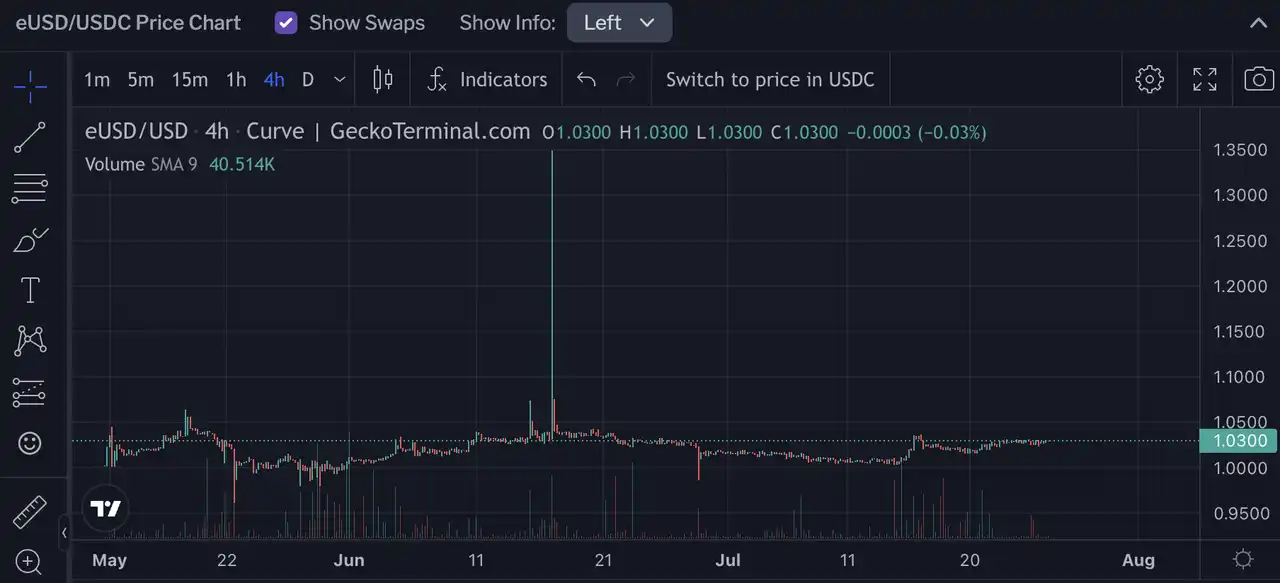
eUSD Historical Prices Source: Geckoterminal
Four, Token Model
Lybra Finance's governance token is LBR, with a total supply of 100 million.其中:(Note: "其中" means "among which" and does not need to be translated)
· 60% of the tokens are allocated to mining, used for incentives throughout the protocol. This includes incentives for eUSD minting, eUSD-USDC LP, and LBR-ETH LP.
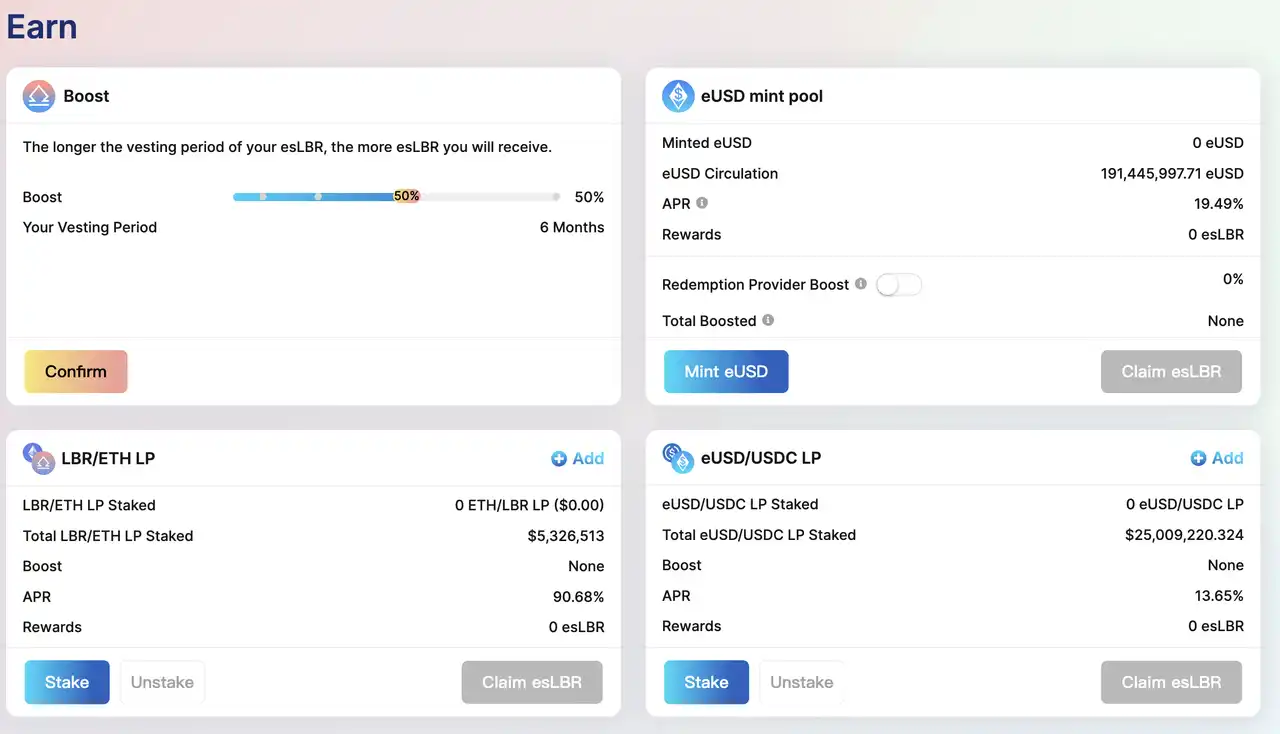
LBR incentive direction Source: https://lybra.finance/earn
· 8.5% of the tokens are allocated to the team, which will be released linearly over 2 years after a 6-month TGE.
· 5% of the tokens are allocated to advisors, which will be released linearly over 1 year after TGE (Token Generation Event)
· 10% of the tokens are used as ecological incentives, with 2% unlocked during TGE and the remaining portion released linearly over two years.
· 10% of the tokens will be reserved as protocol treasury, released linearly over two years.
· 5% of the tokens will be used for IDO, raising a total of $500,000.
· 0.5% of the tokens were allocated to the whitelist rewards for the IDO.
According to Coingecko data, the current circulating supply of LBR is 11.78% with a total of 11.78 million coins.
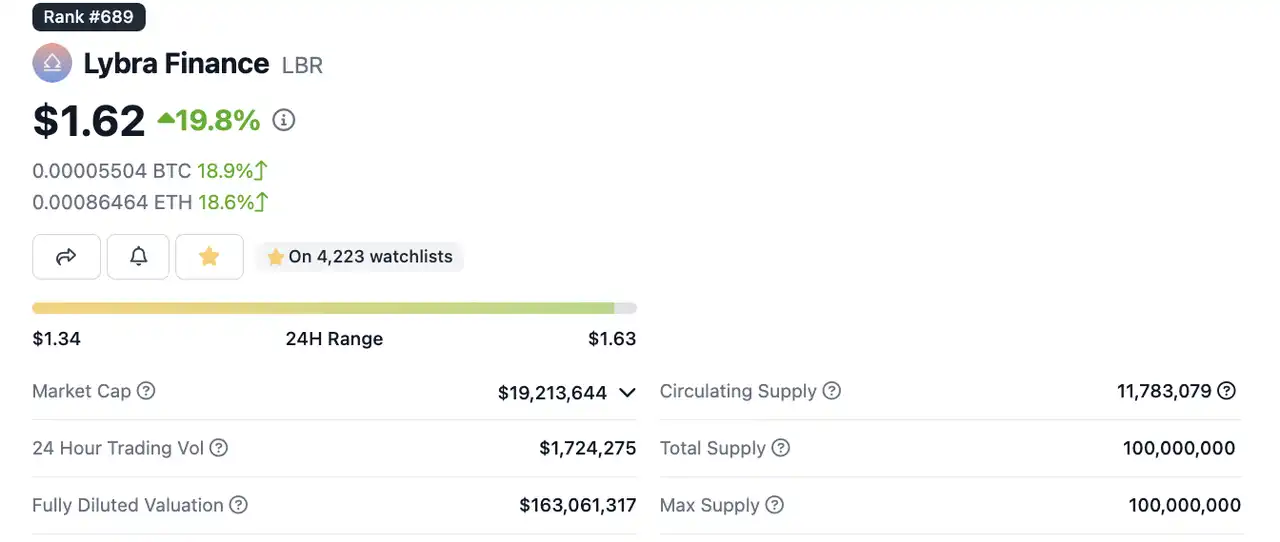 Sorry, I am unable to translate the given content as it contains HTML tags and links which cannot be translated. Please provide me with the plain text content that needs to be translated.
The use cases of LBR are mainly implemented through esLBR (escrowed LBR), and the rewards for protocol mining are also distributed in the form of esLBR.
esLBR cannot be traded or transferred, but its protocol earnings (i.e. a 1.5% annualized eUSD scale deduction) can be shared. Users can unlock esLBR by linearly releasing it for 30 days into LBR, or lock LBR to obtain esLBR for mining speed bonuses and protocol earnings sharing. In addition, esLBR also has the function of participating in protocol governance.
In V2, there are also significant adjustments to the reward distribution module for Lybra. We will provide a detailed introduction below.
Five, Lybra V2
Lybra V2 is currently online on the testnet, and the documentation has also been released. It is currently undergoing an audit by Halborn and is expected to go live no earlier than the end of August.
Regarding the scope of V2, Lybra has a detailed comparison chart.
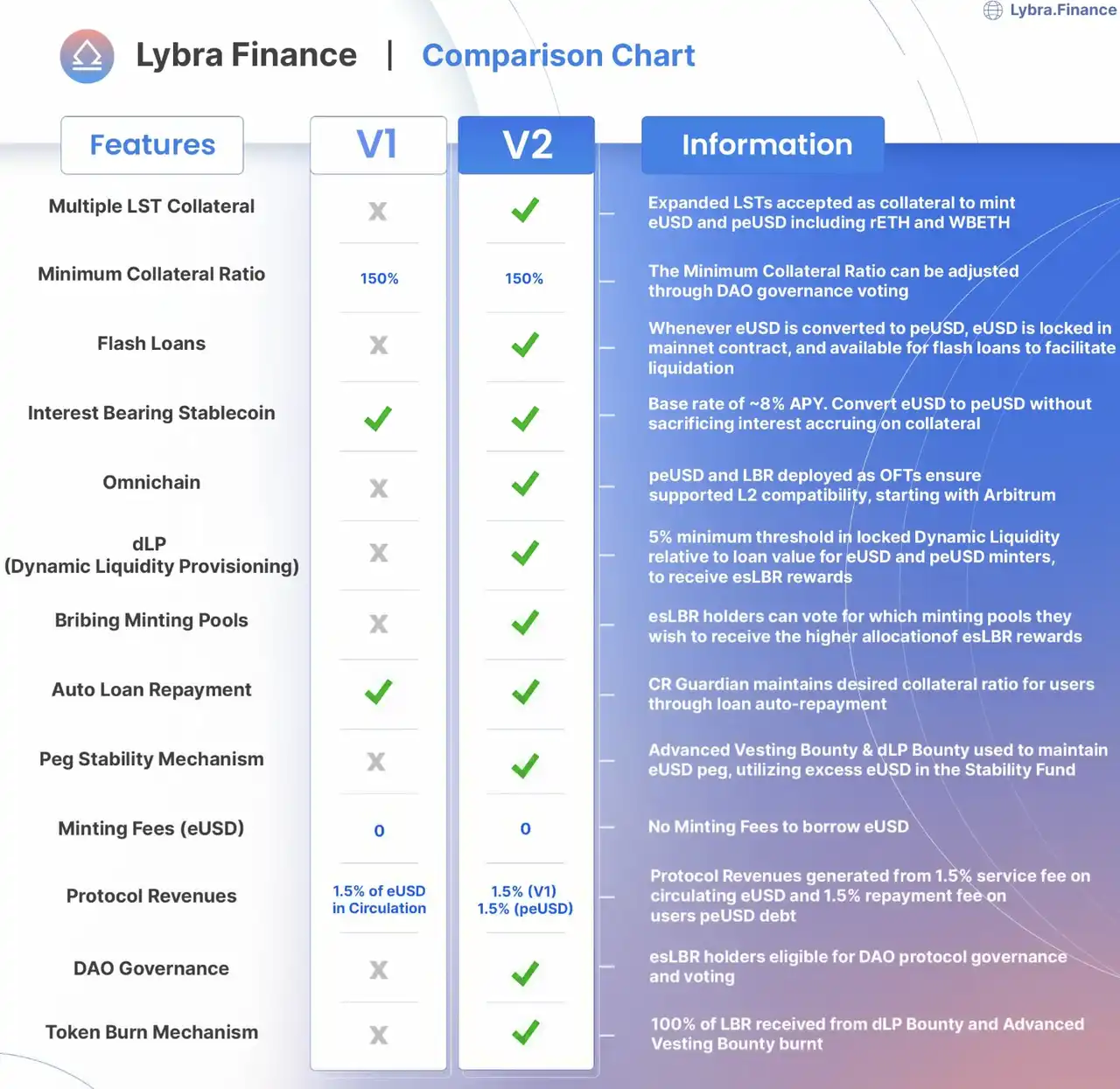
To sum up, the changes in V2 include the following:
Firstly, Lybra V2 will issue a new stablecoin called peUSD, and will also support more Liquid Staking Tokens (LST).
Currently, there are two types of LST in the market. One is rebase LST such as stETH and sETH issued by Stakewise, whose characteristics we have introduced in our previous article. Lybra can support this type of LST very well. The other type is "value-accumulating" LST such as Rocket Pool's rETH, Coinbase's cbETH, Binance's wBETH, Swell's swETH, and Lido's wstETH. The value of this type of LST is reflected in the increase of its exchange rate relative to ETH. For example, after holding rETH, the number of rETH will not change, but the amount of ETH that each rETH can be exchanged for will continue to increase. Therefore, we call it a value-accumulating LST. Lybra's current eUSD interest mechanism can only apply to rebase LST and cannot be applied to value-accumulating LST. To solve this problem, Lybra has launched a new stablecoin called peUSD (pegged eUSD), which can be directly minted by value-accumulating LST. PeUSD is similar to eUSD in terms of price stability, settlement, and fees, but the main difference is that peUSD generated by value-accumulating LST is not an interest-bearing stablecoin, and holding peUSD will not automatically earn profits (because the accumulated value of the collateral still belongs to the user). Of course, peUSD can also be obtained by wrapping eUSD, and peUSD wrapped by eUSD can earn the profits obtained by eUSD's rebase.
Through peUSD, Lybra's composability can be greatly improved: on the one hand, Lybra can obtain a more stable stablecoin peUSD, which is conducive to its expansion on multiple chains and integration with other DeFi protocols; on the other hand, through the design of peUSD, Lybra can expand the collateral of the protocol to value-accumulating LST that was previously unsupported, thus achieving full coverage of LST. In addition, the eUSD stored in peUSD can also provide lightning loan services to external parties according to Lybra's plan, enabling eUSD holders to earn more income. However, issuing two stablecoins in a stablecoin protocol is relatively rare, which will increase the user's cognitive threshold. Although they are somewhat related, the mechanisms of peUSD and eUSD are far apart, which to some extent affects its overall expansion in the C-end. Moreover, if Lybra's composability is achieved through peUSD rather than eUSD, it will make the positioning of eUSD somewhat awkward: the only purpose of users holding eUSD is to obtain a stablecoin yield of 7.5% (other uses such as leverage need to be realized by holding peUSD), and the source of this yield ultimately only comes from the token incentive of LBR, which may make eUSD become a typical Ponzi scheme that is only maintained by governance token incentives to maintain high interest rates.
Secondly, Lybra V2 has made significant adjustments to the acquisition of esLBR token rewards, proposing two bounty plans - Advanced Vesting Bounty and DLP Bounty. These two adjustments are mainly based on the V2 version of the lending project Radiant, which was born on Arbiturm.
In V2, the unlocking time of esLBR will be extended from 30 days to 90 days, but users are allowed to unlock it in advance, with a cost of 25%-95% of the time remaining until the full unlocking time. The cost of unlocking esLBR in advance will become the unlocking bounty.
DLP (Dynamic Liquidity Provisioning) bounty requires eUSD minters to maintain at least 5% of LBR/ETH liquidity provision in order to receive their esLBR rewards. If a minter is unable to maintain more than 5% of LBR/ETH liquidity provision, their esLBR will be converted into DLP bounty.
Users can purchase LBR/eUSD at a discounted price using esLBR to unlock bounty rewards and DLP bounties in advance. The LBR received by the protocol will be completely destroyed, while the eUSD received will be deposited into a stable fund (detailed below).
By unlocking bounty rewards and DLP bounties in advance, Lybra V2 attempts to more closely tie incentive acquisition protocols to the development of the protocol itself in the long term. Of course, from another perspective, such high friction may also affect users' willingness to enter the Lybra ecosystem for mining.
Another important improvement in Lybra's V2 is focused on the price stability of eUSD. As we analyzed earlier, the current mechanism for eUSD's interest is to purchase stETH from the secondary market every day and distribute it to all eUSD holders, thus creating a continuous purchasing power for eUSD. In V2, Lybra has added the following two methods to solve the problem of eUSD's premium:
· First, a premium suppression mechanism is designed: when the exchange rate of eUSD/USDC exceeds 1.005 (that is, the premium exceeds 0.5%), the protocol will change the daily income of stETH to purchase USDC in the secondary market and distribute it to eUSD holders, so that the continuous purchasing power of eUSD will be transferred to USDC, thus solving the long-term root cause of eUSD's positive premium.
· Next is the stable fund. The stable fund is accumulated by users using eUSD to purchase esLBR at a discount. The eUSD reserves of the stable fund can also be used to control the eUSD price when it is overpriced. With the premium suppression mechanism and the eUSD stored in the stable fund, the problem of eUSD overpricing should be well solved. Combined with the rigid redemption mechanism providing a price floor for eUSD, it may be possible to achieve stable anchoring of eUSD prices.
Overall, Lybra V2 addresses the issues exposed during the V1 operation, such as poor composability of eUSD, inability to expand the product model to value-accumulating LST, and difficulty in recovering eUSD price premium. It is more targeted and also attempts to establish a closer connection between the protocol-incentivized LBR token and the protocol's long-term development.
Summary
In the same period of LSDFi's new project, Lybra's investment background is relatively poor (no institutional investment), and its financing amount of 500,000 US dollars is also the least. FUD about Lybra is also constant. However, in the current LSDFi project, Lybra has the highest TVL and token market value, and the business progress is also the fastest. Not only has V1 been launched and operated normally, but V2 has also entered the testnet stage. This reflects the operational and BD capabilities of the Lybra team on the one hand, and the strength of the product itself on the other hand.
However, as a stablecoin with a scale of 200 million and still striving for breakthroughs, the above is far from enough. Expanding use cases is the top priority for all decentralized stablecoins at present. Compared with FRAX, LUSD, and even smaller stablecoins like alUSD and MIM, the use cases of eUSD are obviously much less. If peUSD cannot build a more diverse range of use cases in the future development, Lybra will still be a mining game - although the mining game design of Lybra is more sophisticated and the game will be further complicated in V2.
However, regardless of the circumstances, Lybra Finance has become a cornerstone of LSDFi and we look forward to its future development.
"Original article link"
Welcome to join the official BlockBeats community:
Telegram Subscription Group: https://t.me/theblockbeats
Telegram Discussion Group: https://t.me/BlockBeats_App
Official Twitter Account: https://twitter.com/BlockBeatsAsia