Bankless: Takeaways from EthCC 2023 - significant infrastructure progress and potential for explosive growth in the application layer.

Original Title: "Bankless' Gains at EthCC 2023: Protocol Layer Costs Decrease, Consumer Applications Explode"
Original Author: David Hoffman
Translated by: TechFlow ShenChao

So...we are now past the halfway point of 2023, where are we currently positioned?
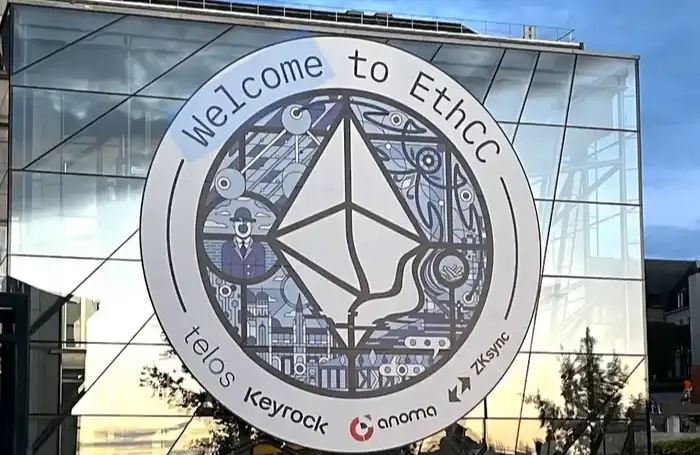
We spent some time reviewing the countless conversations that took place during EthCC 2023, and summarized some of the main thoughts and takeaways.
Protocol is becoming a commodity
As the Dencun upgrade approaches, the Ethereum community is preparing for a hard fork that will introduce a large-scale scalability upgrade in EIP4844 (also known as Protodanksharding), enabling Ethereum's Rollup to obtain a cheaper form of block space on L1, called "blobspace". This long-awaited upgrade finally makes these L2s the most scalable versions.
This upgrade marks a moment in the development of the cryptocurrency industry, as we approach the theoretical minimum point of the cost of cryptographic economic resources. Not just Ethereum, many different protocols seem to be approaching their final form, having minimized the cost of accessing optimized resources.
Data availability" is the main category, which refers to the resource types addressed by EIP4844 and other data availability solutions. Ethereum's block space has become cheap for the first time! However, Ethereum is not the only protocol optimizing data availability. Celestia, Avail, and EigenDA are all data availability protocols outside of Ethereum, which have increased the scalability of blockchain to levels we never thought possible a few years ago!
This is not limited to data availability. Espresso Systems was warmly welcomed at the largest EthCC side event - the Modular Summit. Through their shared sorting test network and collaboration with Eigenlayer, Espresso is no longer waiting for L2 to build their own shared sorting system, but focusing on one thing: optimizing shared sorting.
In the zkRollup field, the "prover" is a key component that enables end users to verify the zk-proof of the extended zk-rollup. zkSync has released their "Boojum" upgrade, claiming that their proof can run on mid to high-end gaming graphics cards. The significance here is that the prover can now run on consumer-grade hardware, rather than highly specialized enterprise-level machines, which means that zk-proof can more meaningfully decentralize these networks.
Protocol Fusion and Verticalization
Aave, as a currency market, now has a decentralized stablecoin called GHO. MakerDAO, as a decentralized stablecoin, now also has a currency market called "Spark". Frax has developed its own stablecoin-currency market-LSD ecological vertical field over the past year. These three protocols are merging and evolving towards the same goal, and are now competing in the same field: TVL, stablecoin supply, and most importantly, fees.
Just take a look at the launch of UniswapX, which is an order execution protocol based on free market competition, aimed at promoting the best decentralized order execution. It can also serve as a cross-chain abstraction layer, allowing the free market to choose its own solution to execute cross-chain DEX exchanges. In other words, if I have token A on chain 1 and want to get token B on chain 2, who can give me the fastest and best exchange rate?
UniswapX is a supplement to Uniswap's Automated Market Maker (AMM).
Each version of Uniswap has added complexity; with the introduction of Hooks in version 4, the homogeneity of Uniswap AMM pools is becoming less guaranteed. As the number of chains potentially hosting Uniswap deployments increases, the problem of optimizing order routing becomes too complex to be controlled by a rigid on-chain smart contract system. UniswapX has built a new vertical by allowing order execution and fulfillment to be completed off-chain, and ensuring correctness through minimal viable proof, to address any complexity that Uniswap v1-v4 may bring.
Even after all of this, the L2 ecosystem has still achieved success in rapid integration similar to design patterns.
We have the OP Stack from Optimism.
Then comes Orbit from Arbitrum;
zkSync has released ZK Stack;
Finally, with the launch of Polygon 2.0, we now have Supernets.
Just like L2 itself, they are all different. Each of them has its own strategy. But they are all effectively pursuing the same vision, that the number of chains generated from Ethereum will eventually be comparable to the number of web pages generated from HTTPS.
So, which standard will promote the Cambrian explosion of chains?
In this regard, Optimism undoubtedly leads the way, with three large chains and some small chains. Polygon has ImmutableX. Arbitrum has Nova (although it is internally generated), and although ZK Stack is still looking for its first major adopter, many startups have reported choosing ZK Stack to build their custom ZK chains.
This news, coupled with the expected launch of the Base mainnet in early August, has prepared us for the long-awaited L2 Summer for Ethereum since 2021.
以消费者为中心
translates to
Customer-Centric
If you have read this far, I hope you have realized how much progress we have made in terms of our protocols and infrastructure. I am pleased to announce that the issues surrounding cryptocurrency protocols and infrastructure have been resolved. Of course, there is still much work to be done, but exploring and pioneering in this field has become a science. The forefront of cryptocurrency protocol development has reached a level of maturity that allows us to see the ultimate goal for the first time in the history of cryptocurrency.
So now, since we have solved all these major problems... Is there no one willing to develop some applications?
L2 has provided more block space than ever before! Data costs are close to the lowest! Latency and response times are better than ever before! It's time to build applications again! Who will consume all the L2 block space? Now that we have ample cheap and secure block space, let's start using it. However, we should not stop at blockchain applications! Let's take it to the next level and start productizing these systems! Has no one considered the consumer?
Let's build consumer-facing applications. Let's hire talented user experience/user interface designers whose job is to serve those who don't have private keys or only have funds stored on Coinbase or Kraken. Let's build applications for users who have never interacted with blockchain before.
Our protocols have become cheap enough that their use can be subsidized by users. As block space becomes increasingly affordable, new revenue models can begin to subsidize user transactions on our increasingly inexpensive L2.
A small group of people have already realized that we are currently in the meta phase. I hope this article can emphasize this point and make others aware that our protocol is ready. Let's start the difficult work of user research, clever abstraction mechanisms, and consumer-oriented applications.
Do you want some examples about this? Check out Gnosis - they launched Gnosis Pay and Gnosis Card at EthCC.
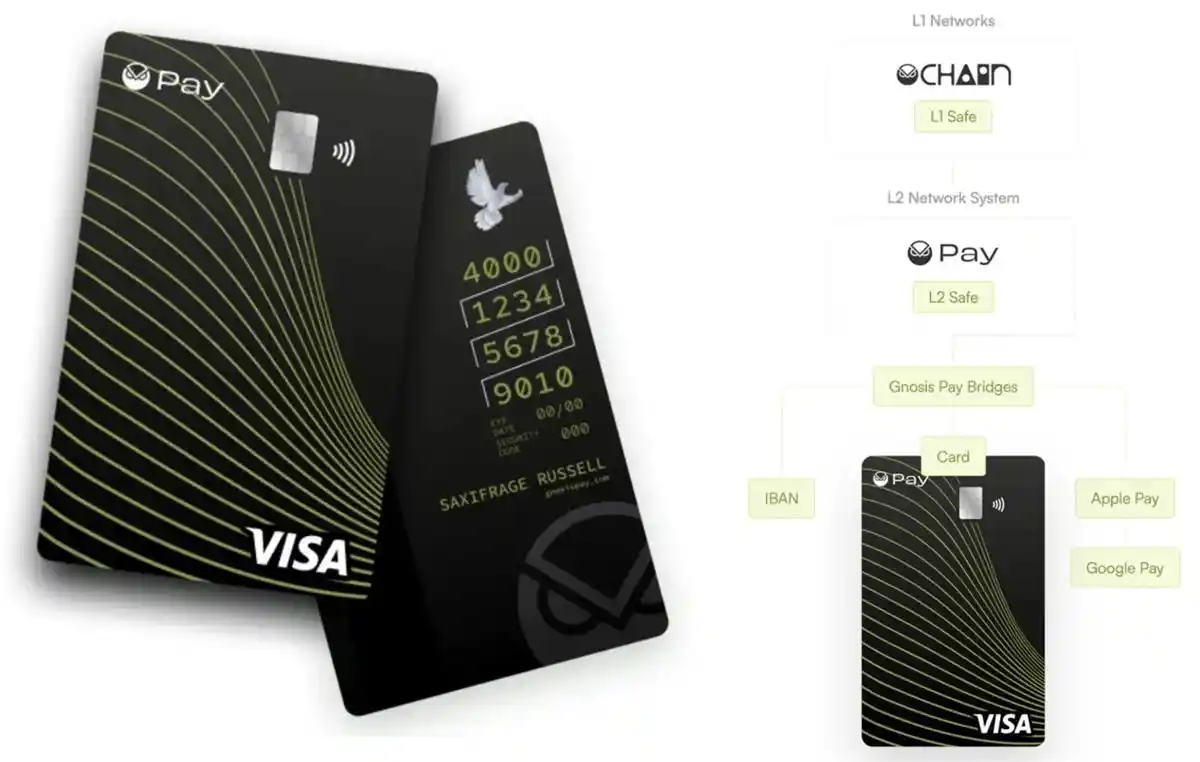
Within the Gnosis ecosystem, there are currently:
Gnosis Safe (Your High-Security Cryptographic Vault);
Gnosis Pay (a payment chain built on Gnosis Chain).
Gnosis Card (a financial technology payment built on Gnosis Pay).
As Ethereum enters the consumer era, cryptocurrencies are fighting the biggest regulatory battles in history.
Once we have gone through all of these regulatory trials... Once we ultimately defeat Gary Gensler, change the SEC, win the right to fair token issuance, and obtain high-quality legislation through Congress, the cryptocurrency industry will be in the most friendly regulatory state ever. Right now, cryptocurrency is "doing the hard work" in terms of regulation. We will never be accepted by larger players until we confront regulators and legislators head-on and gain recognition.
Modular Summit Vs EthCC
The modular summit will be held on the Friday and Saturday after EthCC. It is large enough in scale and rich enough in knowledge that it is not appropriate to describe it as an "EthCC off-site event".
EthCC has always been a welcoming place for developers in the Cosmos ecosystem and beyond. This same energy has evolved into the modular aspect of cryptocurrency, of which Ethereum is both a part of and distinct from.
Interestingly, it is seeing different prototypes finding homes in modular communities and resonating more strongly with them, rather than with the 100% pure Ethereum community. It is also interesting to see these communities naturally come together because the technical forms are very compatible. Ultimately, Ethereum will absorb all useful modules generated by modular communities - the essence of the system is to aggregate all useful open source code into a single top-level structure.
Undoubtedly, modular ecosystems have entered the new technological frontier faster than any other field in the cryptocurrency industry. This makes sense - modularity means concentrating resources on a single problem rather than dispersing them, attempting to solve multiple areas' problems simultaneously. The rigor expressed in the cryptocurrency industry has attracted all of the smartest minds in the field. I believe you can expect great things from this corner of modularity.
Original article link
Welcome to join the official BlockBeats community:
Telegram Subscription Group: https://t.me/theblockbeats
Telegram Discussion Group: https://t.me/BlockBeats_App
Official Twitter Account: https://twitter.com/BlockBeatsAsia

 Related Articles