Prospects and Data Analysis of Synthetix V3 Application.
Original author: BitAns, Krypital Group
This article is for communication and learning purposes only and does not constitute any investment reference.
After the bankruptcy of FTX, the trading volume and attention of decentralized derivative exchanges have significantly increased. In recent years, with the improvement of L2 and various Appchain open source architectures, the reliability and concurrency performance of Dex have greatly increased. Dex PERP has become the most profitable product in the bear market. As the industry continues to explore decentralization, these products will undoubtedly become an important part of the industry in the future.
Currently, the mainstream decentralized derivative designs in the market mainly include the Orderbook model represented by Dydx, and the Pool and Vault model represented by Snx. Snx has evolved from an asset synthetic platform in 2017 to a modular liquidity protocol, aiming to become a universal liquidity layer for on-chain financial products. New features and improvements are expected to bring new business increments and valuations. In this article, we will interpret Snx V3 through data and application scenarios.
TOC:
I. Snx V2 existing mechanisms and issues
II. Snx V3 New Feature Modules
A. Liquidity as a Service
B. New Debt Pool and Collateral Mechanism.
C. Perps V2 and Perps V3 engines.
D. Improvement plan for Oracle, anti-Oracle delay arbitrage.
E. Cross-chain Liquidity Solution
III. Economic Model + Revenue Data
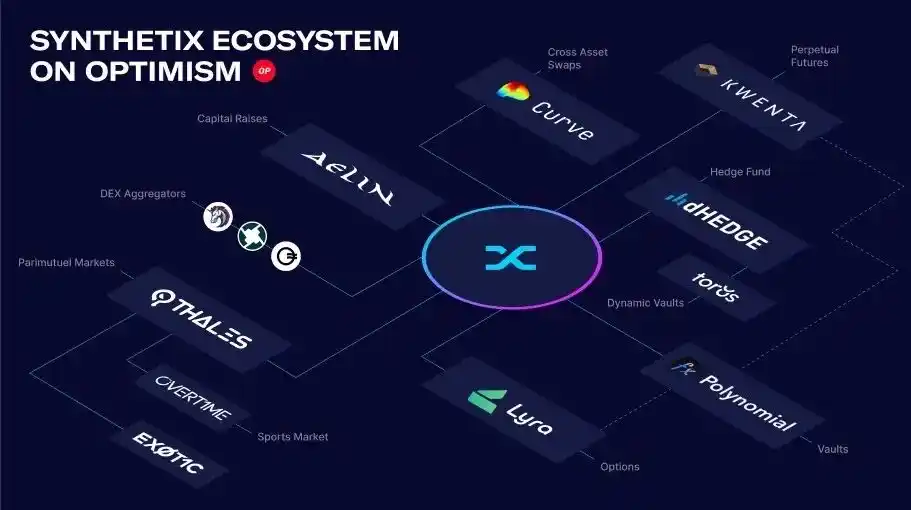
Snx V2 Operating Mechanism
In order to better understand V3, we need to briefly review the existing design of Snx and the various issues that exist.
There are two types of core users in the Snx ecosystem.
1. Staker is the pledging user.
Pledge Snx to receive system inflation rewards and Trader transaction fees.
2. Is trading user Trader
The users who use atomic swaps or Perps trading within the Snx protocol.
Principle of Synthetic Assets
The principle of pledging stablecoins is to generate tokens equivalent to the US dollar by collateralizing assets. Similarly, users can pledge assets and generate tokens anchored to the price trends of stocks, gold, and other assets through price data from oracles.
Snx ecosystem currently has Synths synthetic assets that anchor to the USD price, sUSD, anchor to the Bitcoin price, sBTC, and anchor to the Ethereum trend, sETH, etc.
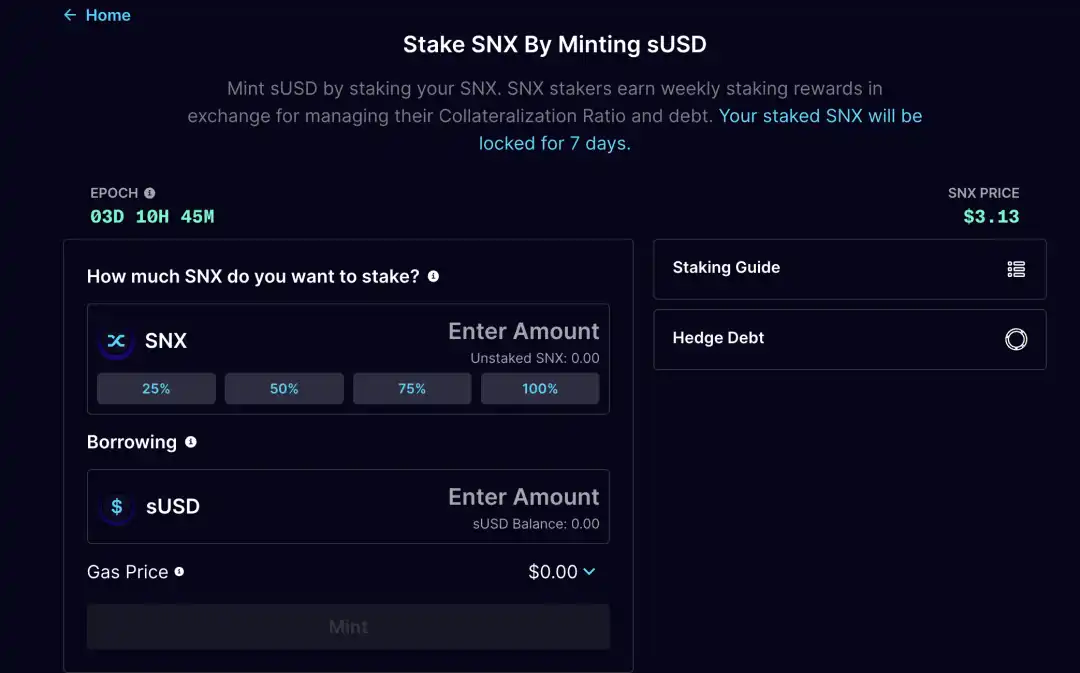
The entire system's debt is denominated in sUSD. The Snx V2 version only allows Stakers to mint sUSD by staking Snx. Essentially, Snx is used as collateral to borrow sUSD. Therefore, the minted sUSD represents both the user's and the system's debt.
When the collateralization ratio reaches 400% or above (this ratio will be determined by DAO voting based on market conditions), Stakers will receive inflation rewards and transaction fee rewards for SNX. If the collateralization ratio is below 160%, and there is no additional collateralization of SNX or repayment of sUSD debt within a 12-hour buffer period, the Staker may face the risk of liquidation unless the collateralization ratio is raised to 400% or above. If a Staker needs to withdraw their collateral, they must repay all sUSD debt first.
Process of Atomic Swaps
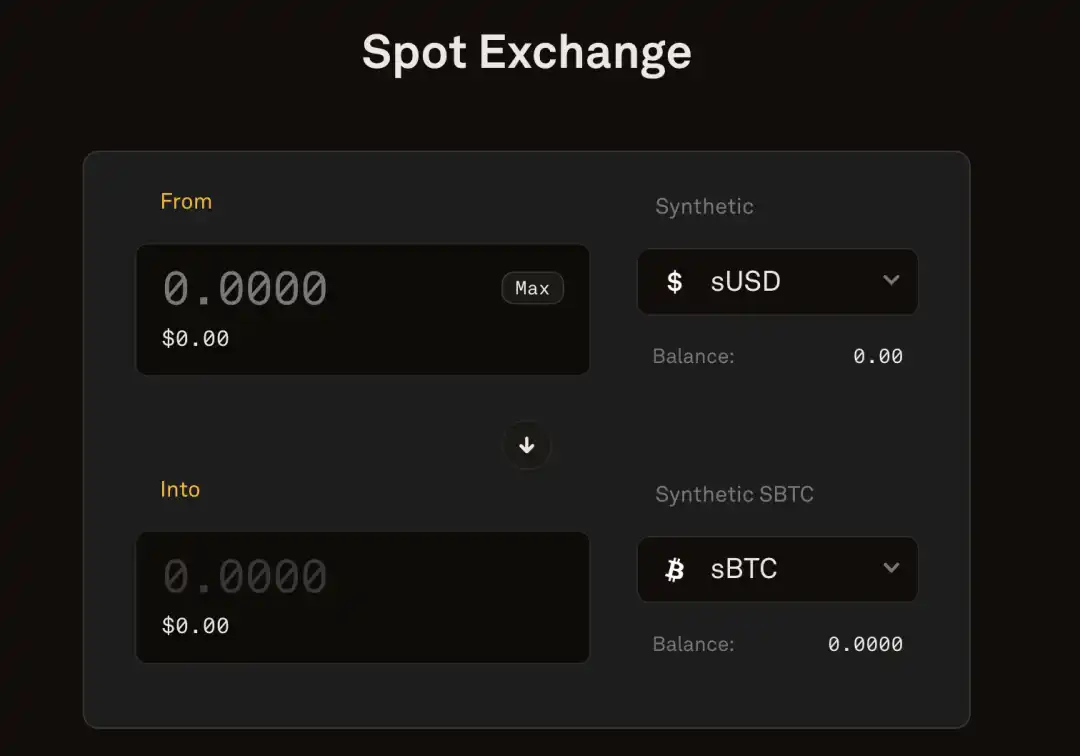
The transaction between synthetic assets in SNX is completed by destroying one token through a smart contract and minting another token. Therefore, there will be no slippage except for price fluctuations caused by delays when TVL is met.
Principle of Dynamic Debt Pool
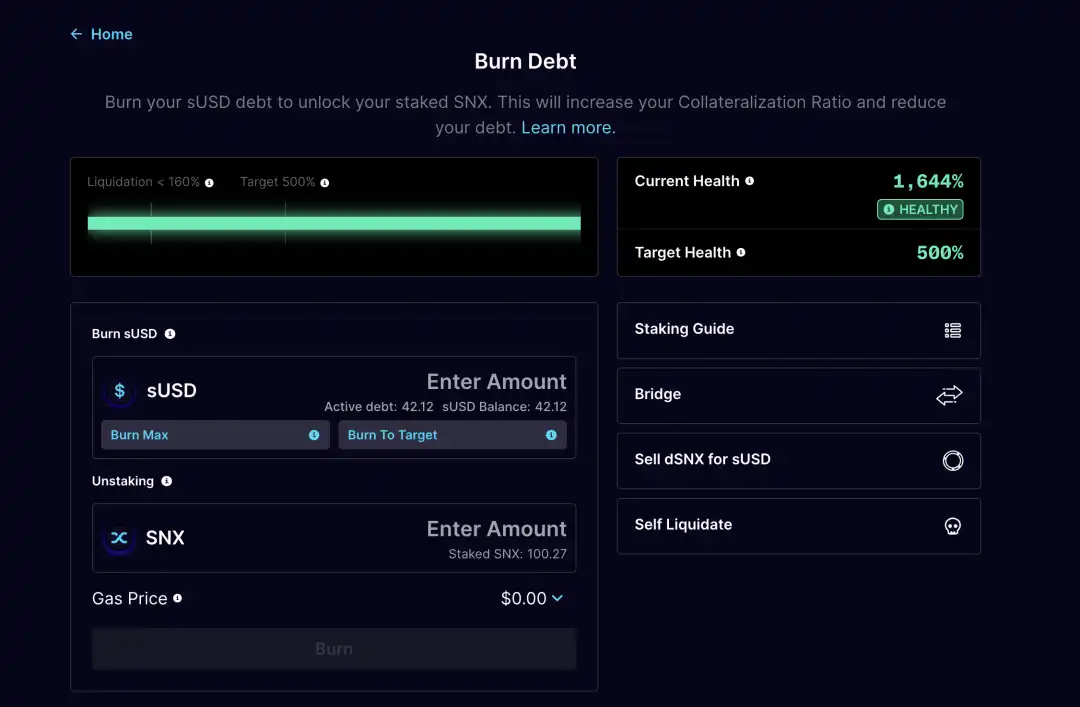
The total value of all Synths assets in the entire system = total debt issued by the system.
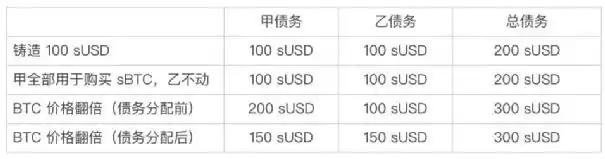
If the trading user Trader exchanges sUSD for other Synths assets, such as sBTC, the overall amount of debt will increase or decrease with the corresponding Synths price fluctuations. Therefore, the total debt of the entire system is not fixed, hence it is called a dynamic debt pool. The total debt of the entire system is shared proportionally by all SNX collateral providers. Therefore, even a Staker who only participates in minting sUSD without any other operations will also have dynamically changing debt.
Case study:
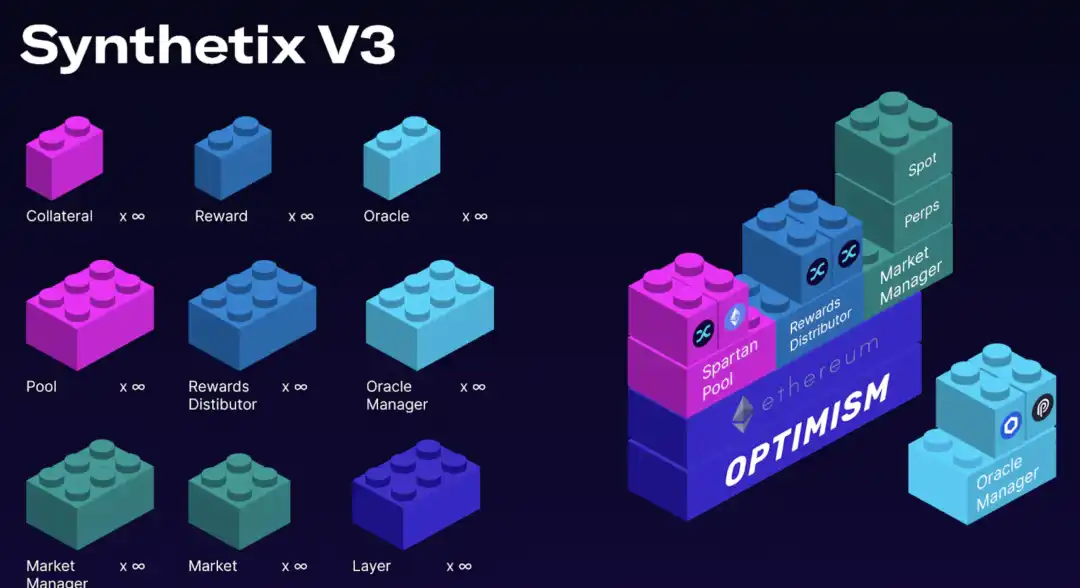
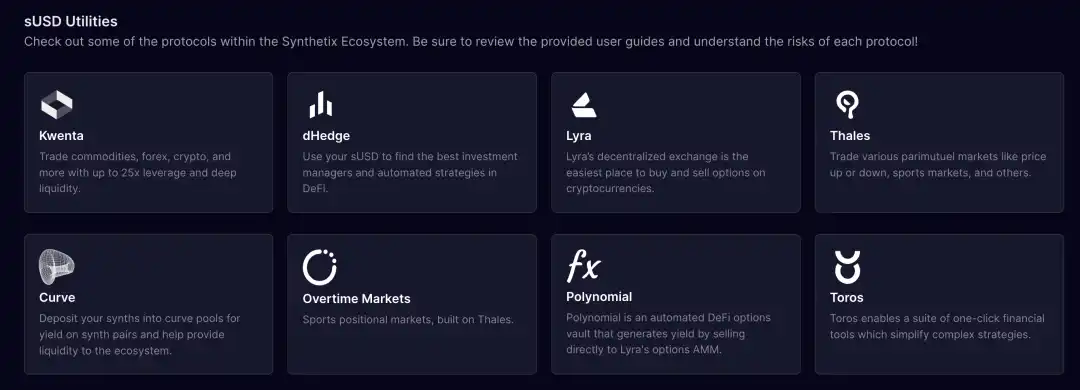
Case study: Currently online are Kwenta and Polynomial exchanges, while GMX can also be built on Synthetix v3.
- NFT-Fi lending/perpetual contract: Users can borrow synthetic assets pegged to the trend of NFTs or create perpetual contracts speculating on the future price of NFTs in the market.
For example, nftperp.xyz can be built on Synthetix v3.
- Market prediction / binary options / sports betting: Users can bet on the outcome of events.
As mentioned above, in Snx's Pool and Vault mode, Stakers need to temporarily act as Traders' counterparties, and the size of the Staker debt pool determines the liquidity ceiling.
Currently, there may be the following issues with a single type of collateral in the pledging industry.
- 会导致系统最大未平仓量会受到 Snx 本身市值限制,也就是交易员的流动性受限,
This will cause the maximum open interest of the system to be limited by the market value of Snx itself, which in turn restricts the liquidity of traders.
Different synthetic assets have varying levels of volatility. The returns and risks of Staker may not be suitable.
- There may be potential risks of spiral liquidation in extreme environments.
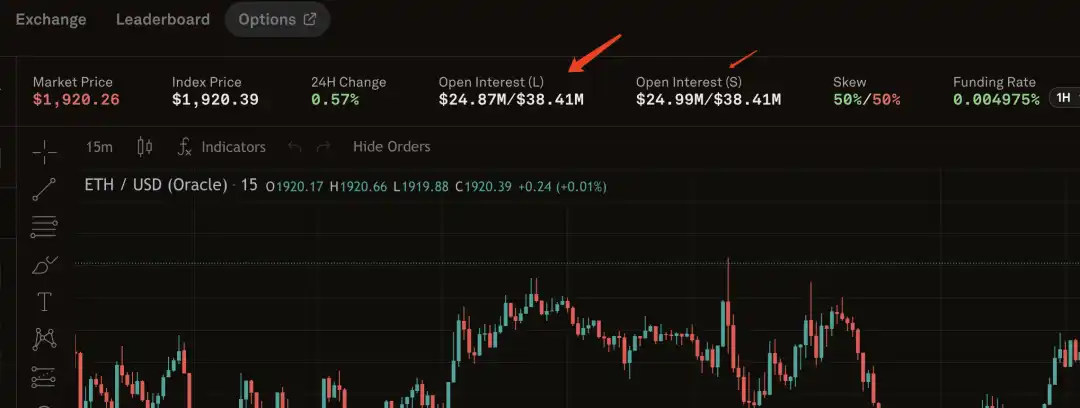
You can see the total position of Snx currently held by the entire network on Kwenta. Under the incentive cooperation with OP, the short and long positions of BTC and ETH have repeatedly approached the system's capacity limit.
To solve the above-mentioned problems, V3 has launched the following features.
Isolation Debt Pool
In the existing Synthetix V2, all transactions go through a single Snx debt pool, while the volatility of different synthetic assets varies, and the risks and returns of holding them are also different. To address this issue (relevant cases will be listed in the section on anti-oracle delay attacks later in this article).
Synthetix V3 has passed the SIP-302: Pools (V3) proposal, allowing Stakers to decide which markets to support liquidity for based on their risk preferences. Through voting governance, they can also decide the collateral type and upper limit for each pool, limiting risk to a small range even in the event of a risk. This also provides SNX stakers with the opportunity to take on higher risk for higher returns, giving them more control over their exposure. For example, they can decide to only provide exposure to mainstream assets such as ETH and BTC, and not participate in market debt pools for long-tail assets such as NFTs.
Multi-Collateral Mechanism
V3 has created a universal collateral vault system that is compatible with multiple types of collateral. This means that in addition to $Snx, Synthetix will also support other assets as collateral for Synths to expand the market size of Synths assets.
The decision on which assets to support as collateral, in addition to the current Snx, will be determined through voting governance. For example, it can be voted to include ETH as collateral. Eight proposals related to this have been approved, namely SIP-302 to SIP-310.
So the new fund pool and treasury system have three main advantages:
- More effective risk management: The fund pool is connected to specific markets, thus having specific exposure.
- More effective hedging capability: The fund pool is connected to specific markets, allowing for precise hedging.
- Greater collateral scope: Pledgers can pledge any asset accepted by the liquidity pool, solving the risk of a single asset.
Perps V2 and V3 Engines
Perps is a decentralized perpetual engine based on debt pool liquidity launched by Snx.
The beta version of Synthetix Perps V1 was released in March 2022. Without any trading incentives, it generated over 5.2b+ USD in trading volume and provided 18.1 million USD in transaction fees for stakers.
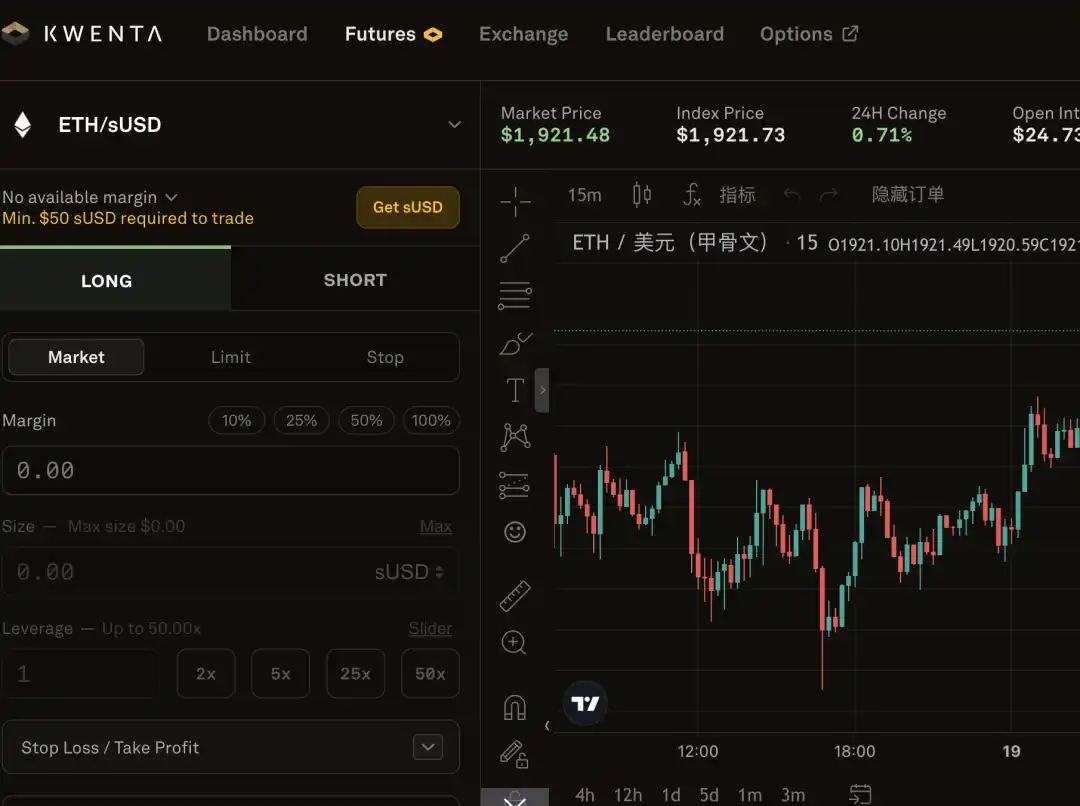
Synthetix Perps V2 will be launched in December 2022, and it is currently the version in use. This solution can reduce costs, improve scalability, and increase capital efficiency. It also supports isolated margin.
Synthetix Perps V3 is scheduled to be released in Q4 of this year. Synthetix Perps v3 supports all v2x features, plus some new features such as full collateral margin and new risk management functions aimed at eliminating market bias. These include price impact measures and dynamic funding rates.
The founder Kain Warwick stated that Synthetix aims to launch the Perps V3 version and its new decentralized perpetual contract exchange front-end Infinex in the fourth quarter of this year.
The team stated that Infinex will focus on making it easy for users to trade decentralized perpetual contracts. Compared to other decentralized exchanges, it aims to provide a better user experience and eliminate the cumbersome process of signing for each transaction currently required by DEX.
Maintaining Delta Neutrality
Perps V2 can effectively match buyers and sellers, and Snx stakers only need to act as temporary counterparties, temporarily assuming asset risks. Incentives will reward traders to keep the market neutral.
Synthetix incentivizes the balance of long and short open contracts in the market through funding fees and discount/premium pricing functions. The crowded side of the trade will be charged funding fees, while the other side will receive funding fees.
On centralized trading platforms, funding fees are usually charged every 8 hours, while funding fees in Synthetix are collected in real-time as positions are held. Similarly, trades that cause an imbalance in the long/short ratio will be charged a premium, while trades that maintain balance between long and short positions will receive a discount. This mechanism encourages arbitrage traders to actively profit from deviations and reduces the risk for liquidity providers in one-sided markets.
Oracle Improvement Plan
Anti-Oracle Delay Arbitrage
Oracle Latency Arbitrage is the main reason why Dex platforms were unable to compete with centralized exchanges in the past.
In previous versions of Synthetix, Synths relied on the oracle Chainlink to provide prices. However, the price updates of the oracle on the chain lagged behind the price changes in the spot market, which created the possibility of front-running trades. In the context of Synthetix's zero-slippage trading, SNX stakers may face heavy losses as a result. For example, if a user observes that the price of ETH has risen from $1000 to $1010 in the short term, while Chainlink's quote is still $1000, the user can exchange sUSD for sETH at a price of $1000 in Synthetix. After the oracle price is updated, without considering transaction fees, each sETH can earn a profit of $10, and the user's profit comes from the losses of SNX stakers due to front-running trades.
Supplementary case: Snx's biggest competitor GMX currently adopts the strategy.
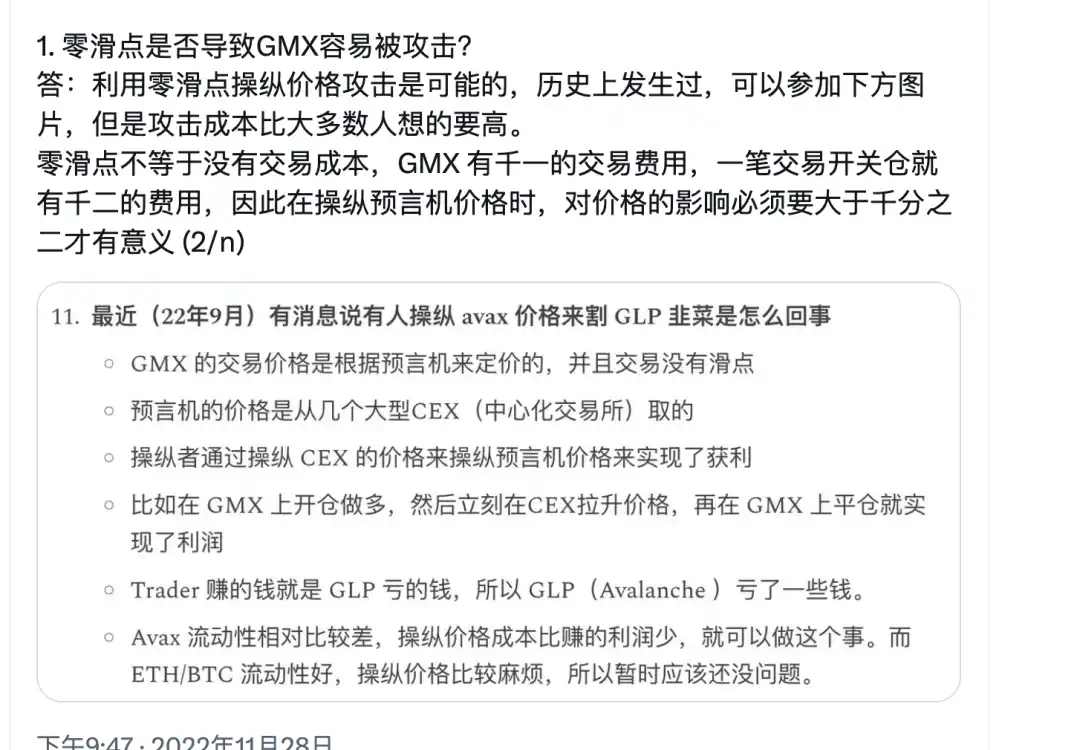 Material source: CapitalismLab.
Snx currently provides an oracle management mechanism: market creators can choose from multiple oracle solutions, set custom aggregation, and give integrators more control over the oracles that power the market. The oracle manager provides new opportunities to support new markets and assets.
Example: Select the lowest price of spot Bitcoin based on the time-weighted average price (TWAP) of Chainlink, Pyth, and Uniswap.
Synthetix (Snx) has also explored two solutions to address the oracle delay arbitrage issue.
1. Hindsight Oracle Solution: A solution proposed by Synthetix and Pyth teams. This solution reduces the possibility of oracle delay arbitrage by using asynchronous transactions and configuring delay time. This helps to lower the transaction costs of DeFi platforms and make them more competitive.
2. Chainlink's low-latency data source: Another solution provided by the Chainlink team for Synthetix. This solution aims to provide low-latency data sources to reduce the opportunity for oracle latency arbitrage. This solution is superior to the hindsight oracle solution in some ways, such as not relying on third-party executors (keepers) to complete transactions, reducing transaction costs, and protecting the data privacy of data providers.
Pyth and Snx Collaboration Introduction:
https://www.youtube.com/watch?v=UAFR4c4-DPk&ab_channel=PythNetwork
Off-chain oracle realizes fast on-chain prices with competitive costs. It plays an important role in significantly reducing transaction costs. Due to the solution of the oracle delay arbitrage problem, the transaction fees of the main currency pairs of Synthetix are currently between 0.2% and 0.6%, which is equivalent to Binance's advanced VIP users.
Cross-chain solution
Teleporters - For Stablecoins
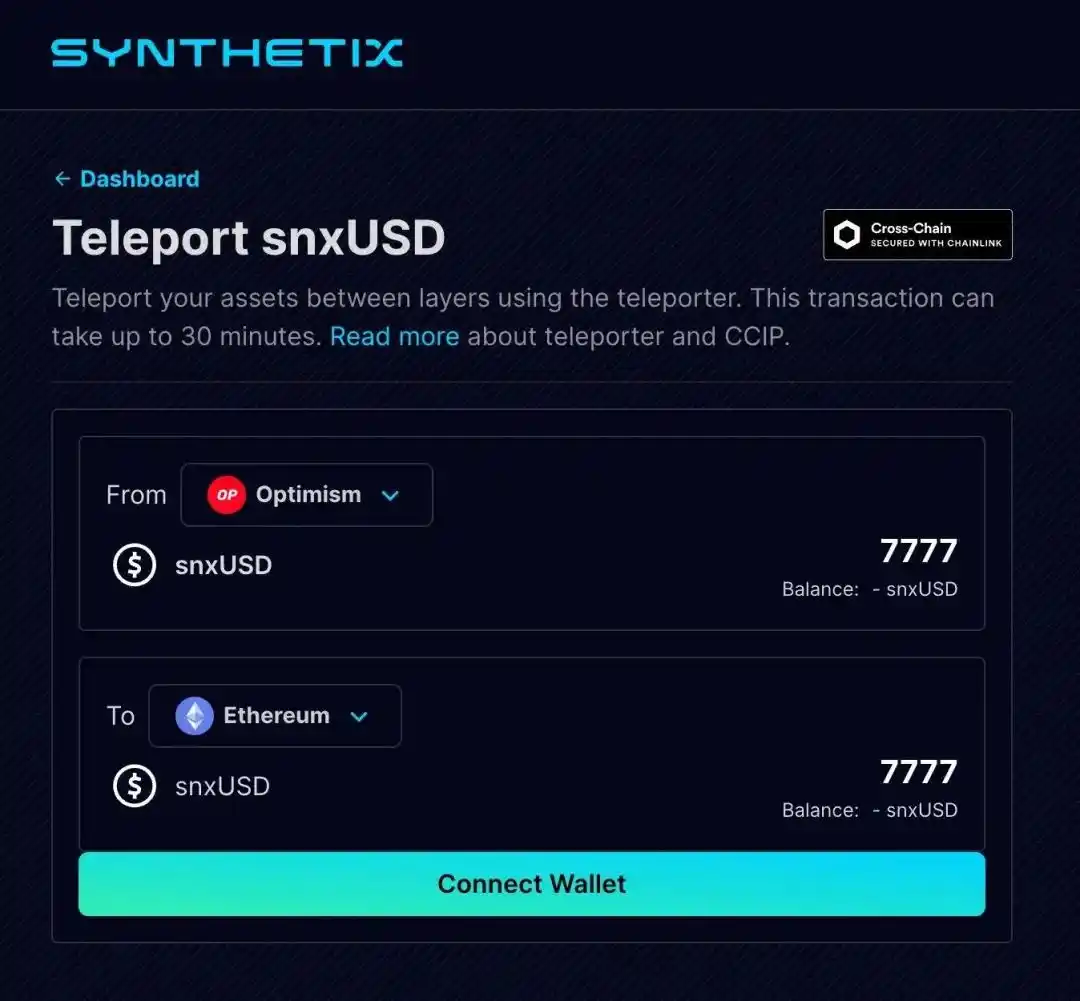
The SIP-311 proposal introduces the concept of Teleporters, which, once launched, can burn newUSD on one chain, transmit cross-chain messages, and mint newUSD on another chain.
- This means that the newUSD stablecoin can be used on any chain deployed by Synthetix without the need for cross-chain bridges or transfer slippage.
- 可以让流动性层在所有链之间共享抵押品
It can allow the liquidity layer to share collateral among all chains.
- Without the need to challenge verification time, you can quickly move between chains and return from L2 to L1.
Cross-chain liquidity pool
Regarding the debt pool.
- SIP-312 proposal, enabling all on-chain markets and mining pools to access the current status of all on-chain composite collateral
- This means that the Perps market can be quickly deployed to new chains and can leverage collateral from existing debt pools on Optimism and the Ethereum mainnet.
As mentioned above, through Teleporters and cross-chain liquidity pools, the Synthetix liquidity layer can be extended to any EVM chain, and new chain deployments can directly obtain liquidity support from other chains.
Economic Model + Revenue Data
The revenue of the Synthetix protocol comes from several different channels. Mainly through perpetual contract and synthetic asset exchange fees, perpetual contract and Snx liquidation fees, as well as fees from the synthetic asset minting/burning process. All revenue from the protocol will be distributed to integrators and Snx stakers.
Profit Distribution for System Integrators
Products like Kwenta that integrate with the Snx protocol are also known as integrators. Snx rewards a certain percentage of fees based on trading volume, and pays in Snx: 10% of fees up to $1 million, 7.5% of fees between $1 million and $5 million, and 5% of fees over $5 million. Integrators are free to decide how to use these fees, such as empowering their own platform tokens.
Snx development team no longer runs the front-end on its own, but instead hands over specific business to integrators, adopting incentive schemes for integrators, which will make them more network-effective and likely to be integrated into more products, becoming an important defi component.
User Growth Status
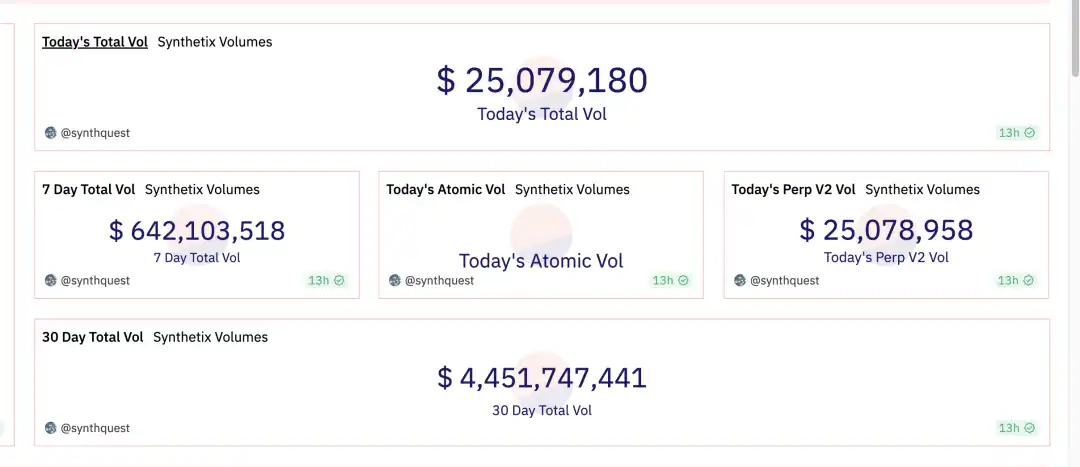
Synthetix Perps has received the liquidity incentive program of Optimism chain this year. Trading users of Synthetix Perps will receive OP airdrop rewards.
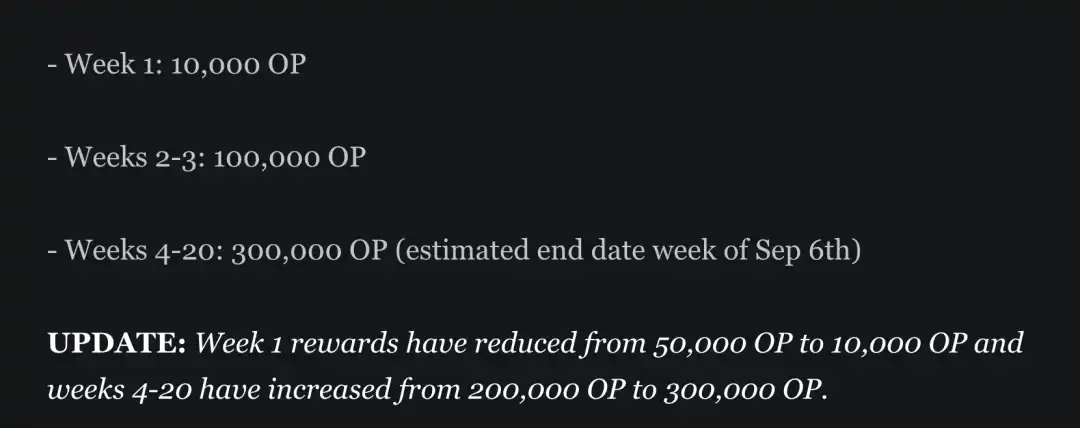
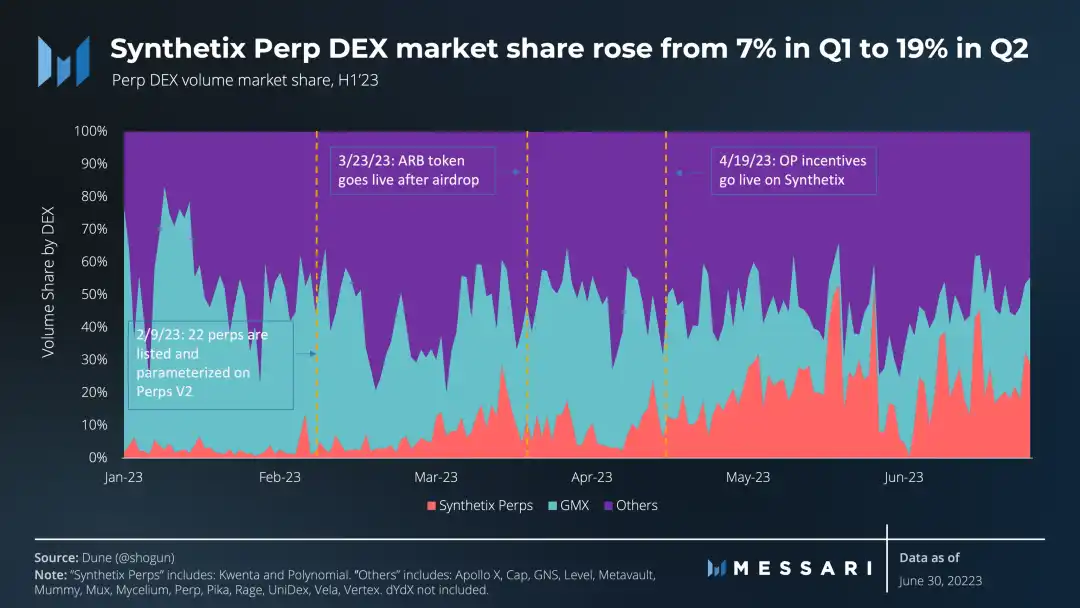
OP incentives began on April 19th and currently cover approximately 80% of transaction fees.
According to Messari data, Perps has experienced strong growth in trading volume due to subsidy incentives. User trading frequency and trading volume data have grown rapidly.
According to the trend of on-chain interaction address quantity, although the transaction volume has increased, the number of users has not significantly increased. This means that the largest increase in transaction volume comes from the increase in transactions by existing users.
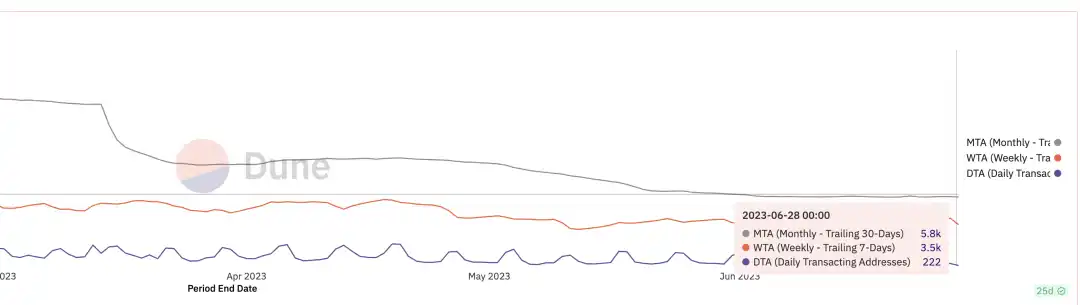
https://dune.com/queries/452148/859385?1+Project+Name_t6c1ea=Synthetix&4+End+Date_d83555=2023-06-28+00%3A00%3A00
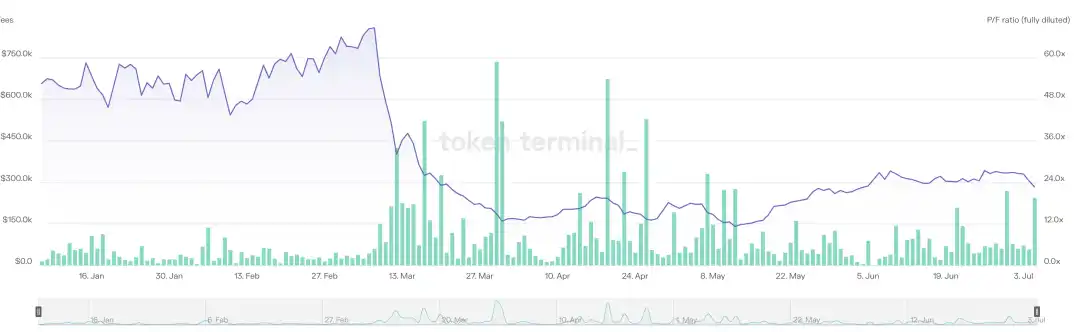
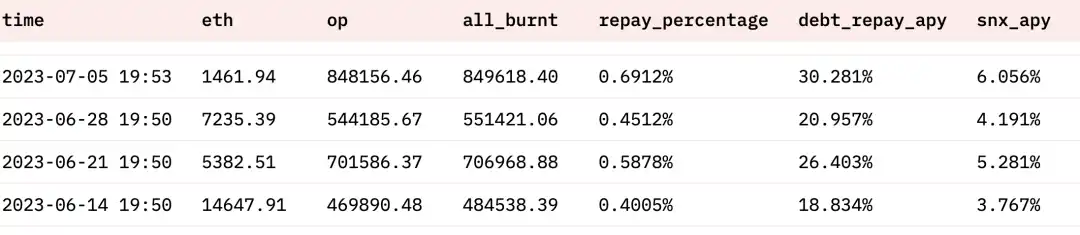
Data source:
https://dune.com/synthetix_community/fee-burn
Snx is currently in a fully circulating state, with approximately 5% inflation rewards provided to Snx stakers annually.
In August 2022, Kain Warwick, the founder of Synthetix, proposed SIP-276, suggesting that the issuance of SNX be set at 300 million and to stop issuing after reaching that number. However, the proposal has not been approved yet.
In June of this year, Kain proposed a new Snx staking module to be implemented in Synthetix V3. This module will simplify the entire staking process, allowing users to simply deposit Snx without facing market risks or considering hedging needs. Initially, the finance committee will fund this staking pool, but in the future, a portion of Synthetix's protocol fees may also be allocated to this staking pool. Kain emphasized that this simpler staking method is designed to attract more new users to the Synthetix V3 system. Currently, this proposal is under discussion and is expected to further increase the Snx staking rate.
Summary:
Long-term, the decentralized derivatives trading space has huge potential. The launch of Snx V3 is an important milestone for the Synthetix protocol, introducing many new features and improvements. These enhancements can improve the protocol's capital efficiency and security, remove liquidity constraints, enhance user experience, and attract more users to participate in the Synthetix protocol. After the full launch of V3, it is expected to bring new business increments and valuations. It is expected to be integrated into more products and become an important defi component.
However, at this stage, the growth of new users is slow, and the development cycle required for the full launch of V3 functionality is uncertain. Under the new token model, the yield of SNX staking and the retention rate after the third quarter will be important valuation indicators for SNX holders in the short term.
Reference materials can be found in the original article link below.
Original article link
Welcome to join the official BlockBeats community:
Telegram Subscription Group: https://t.me/theblockbeats
Telegram Discussion Group: https://t.me/BlockBeats_App
Official Twitter Account: https://twitter.com/BlockBeatsAsia