Reasons and Prospects Behind Venus's Revenue Growth in Q2.
Original author: Kentrell Key
Original translation: Cointime.com QDD
Key Insights
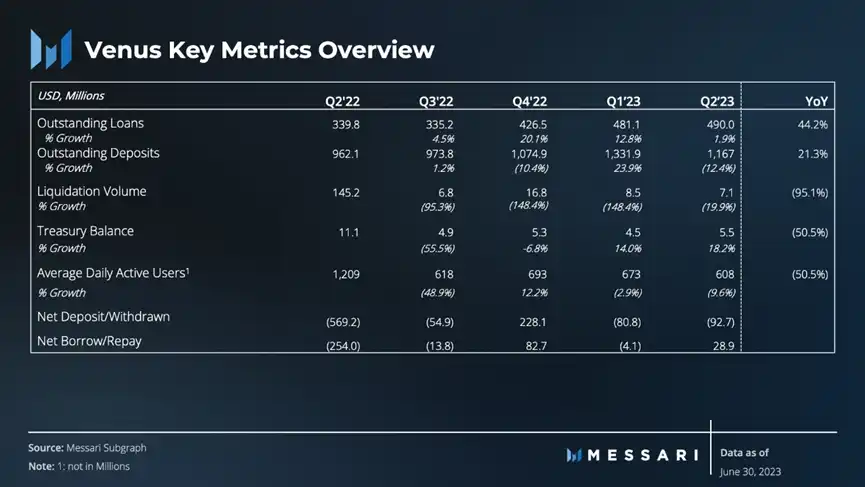
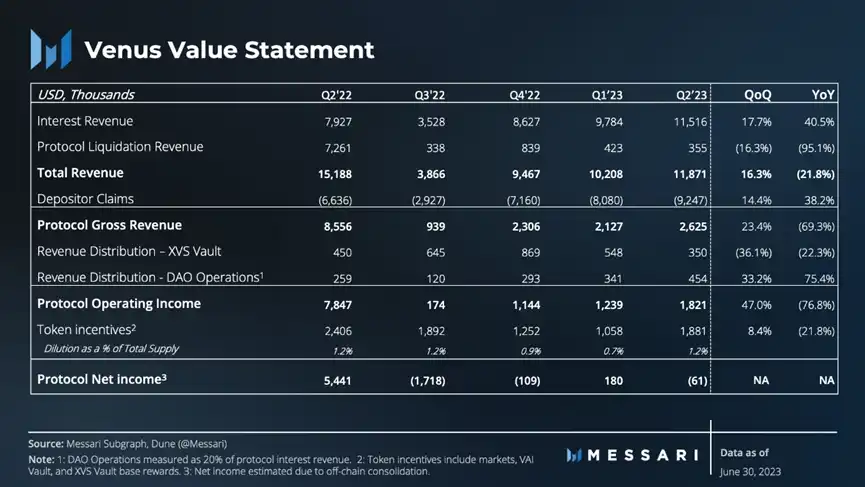
l Venus achieved interest income growth for the fourth consecutive quarter, contributing $2.3 million to DAO and $9.2 million to depositors.
l Due to the charges brought by the US Securities and Exchange Commission (SEC) against various Binance entities, the price of BNB has dropped by 32%, affecting the total asset value on Venus and resulting in a 12% decrease in total supply value during the quarter.
l Venus continues to launch V4 features, including isolated fund pools and elastic price sources, to enhance the security, flexibility, and reliability of the platform.
The adjustment of interest rate parameters has led to an increase in borrowing interest rates, and user activity has declined in the second quarter, including during the "Maverick Launchpool" activity period, which was not as high as usual.
About Venus
Venus is a decentralized currency market protocol based on the BNB chain, used for depositing and borrowing various encrypted assets. The interest rates of these assets are set algorithmically through an interest rate model, which triggers updates based on the borrowing ratio of the deposited assets. The protocol is managed by the VenusDAO community and governed by the XVS token. Users can stake governance tokens in the insurance pool, participate in governance, and receive a portion of the protocol's income.
Key Indicators
Key Indicators
Usage
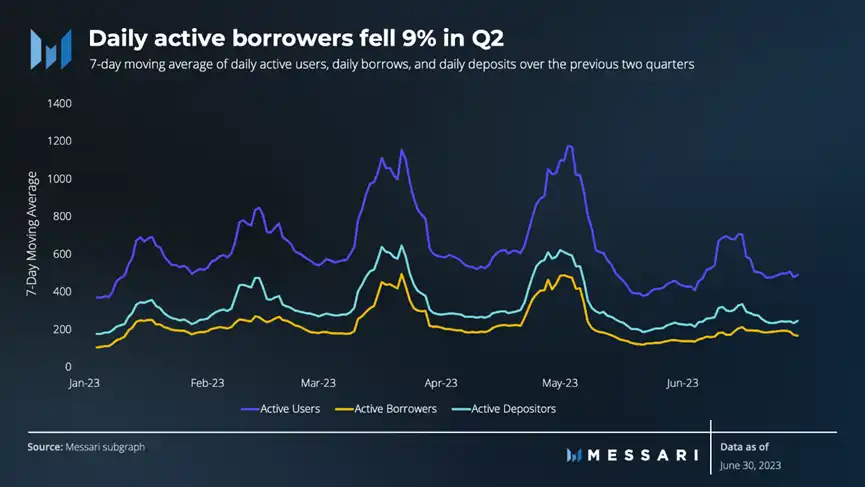
The Venus protocol saw a decline in user activity in the second quarter, with active borrowers and depositors decreasing by 9% and 10%, respectively. This was mainly due to adjustments in interest rate parameters, which led to an increase in borrowing rates and thus suppressed the profitability of leverage strategies.
Binance Launchpool activities usually promote borrowing activities on Venus. During such activities, the number of active borrowers on Venus usually increases by 100% to 200%. However, during the "Maverick Launchpool" launched in June, there was no significant increase in activity. In addition, on June 10th, the amount of BNB borrowed dropped to the lowest level since January 2021, with only 89,140 BNB borrowed.
Total Supply Value
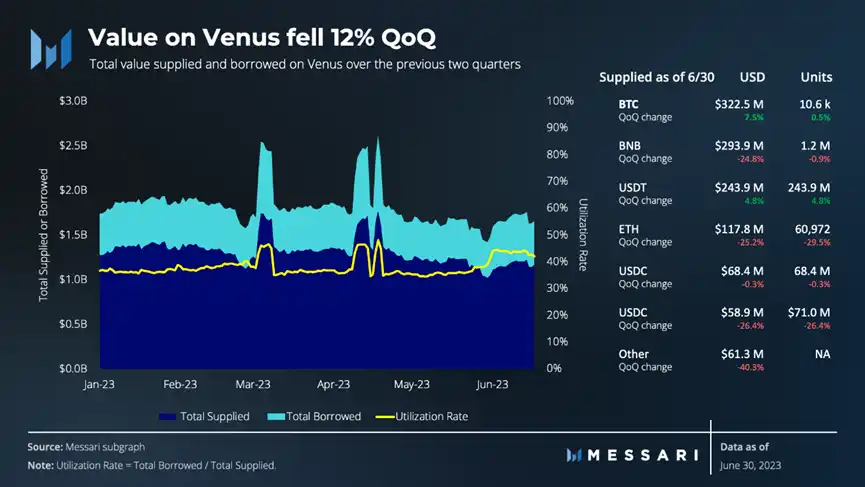
The total supply value on Venus decreased by 12% in the second quarter, despite the relatively stable prices of most cryptocurrencies. This is mainly due to the 32% drop in BNB price, which is a result of the U.S. Securities and Exchange Commission filing 13 civil charges against various Binance entities. The impact of this regulatory action caused a decrease in the asset value held by Venus, with outflows occurring in all non-stablecoin assets except BTC, XVS, CAKE, ADA, and MATIC.
Income
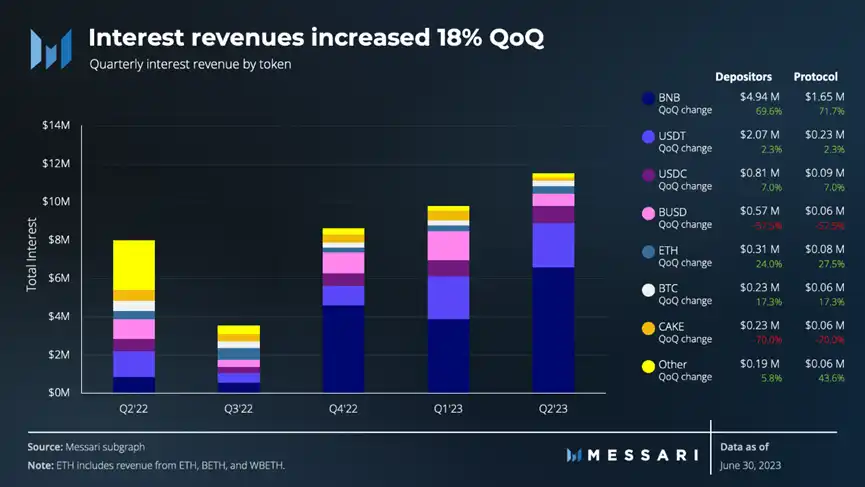
Interest income has grown for the fourth consecutive quarter, reaching $11.5 million. The growth in the second quarter was mainly due to the interest rate curve recommended by Gauntlet and borrowing activities that are relatively insensitive to interest rate changes. These adjustments increased the protocol's interest income by 33% and depositors' income by 14%.
In this income growth, the income growth of BNB is particularly prominent, with a month-on-month increase of 70%. If depositors from the Binance Launchpool activity maintain high levels of earnings and the position of attackers on the BSC Token Hub does not fall to the liquidation level, this growth is expected to continue.
During the Launchpool event, a large amount of stablecoins were deposited and the maximum amount of BNB was borrowed. By holding BNB on Binance exchange, users can obtain tokens for new projects.
At the end of the quarter, the attacker's position was only about 10% away from liquidation (calculated at around $220 BNB). This position was formed after spending approximately $1.3 million in USDC and USDT loans and approximately 11,000 BNB (devalued due to the decrease in BNB price) in the second quarter.
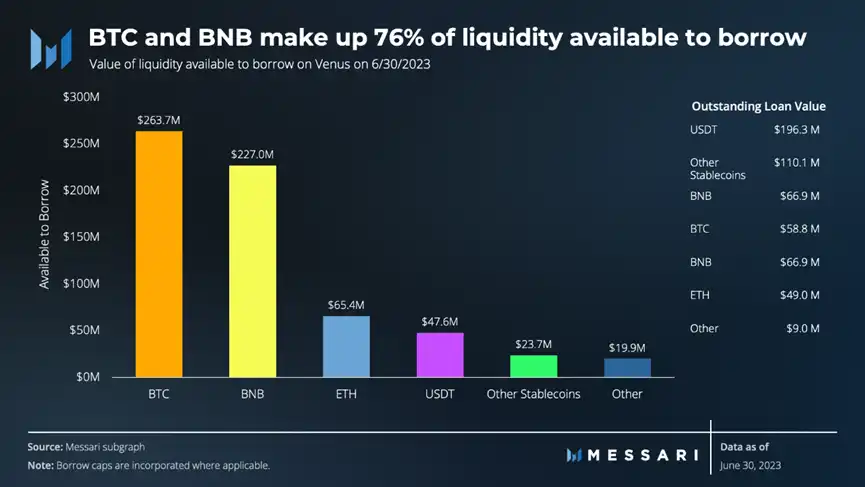
At the end of the quarter, there was still liquidity worth $647 million available for lending, with BTC and BNB accounting for 76% of the total value. The high utilization rate of stablecoins is mainly due to the excess position held by the attacker of BSC Token Hub, which accounts for 59% of the total outstanding USDT debt and 64% of the USDC debt.
In addition, a considerable portion of the outstanding loans have not been repaid since the liquidation events involving CAN, XVS, and LUNA in 2021 and 2022. Specifically, at least 95% of the BTC loan balance, 24% of the BUSD balance, and 29% of the ETH balance have not been repaid, and there is currently insufficient collateral. Excluding the debt of the BSC Token Hub attacker, Venus currently has $83 million in bad debt in the protocol. These debts totaling $238 million account for almost half of Venus' total outstanding loan value. The Venus team is focused on managing the debt and has stated that they are almost ready to repay the insufficient portion through a new automated system of smart contracts using interest income.
Income and XVS Rewards
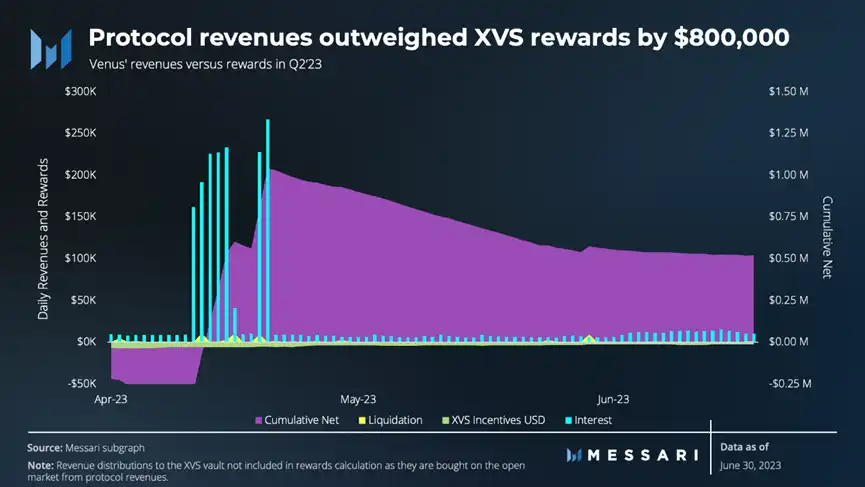
In the second quarter, the interest income and settlement income from the agreement exceeded the XVS rewards distributed to users, amounting to over $800,000. This surplus was mainly generated during the SUI Launchpool and Open Campus Launchpad events, which accounted for 68% of the quarterly interest income, as evidenced by the growth in interest income.
However, the interest income surge expected from the Maverick Launchpool event that started on June 14th did not materialize. This suggests that despite the BNB borrowing rate on Venus reaching its lowest point of the year, BNB leverage may still come from other platforms.
The impact of the Gauntlet interest rate curve optimization implemented on June 1st is also evident. After the adjustment, the daily interest income in June increased significantly by 34% compared to May, starting to grow after the SUI Launchpool on May 3rd. The modification of the interest rate curve has a positive impact on income, verifying the importance of managing borrowing costs on the platform.
XVS Insurance Vault
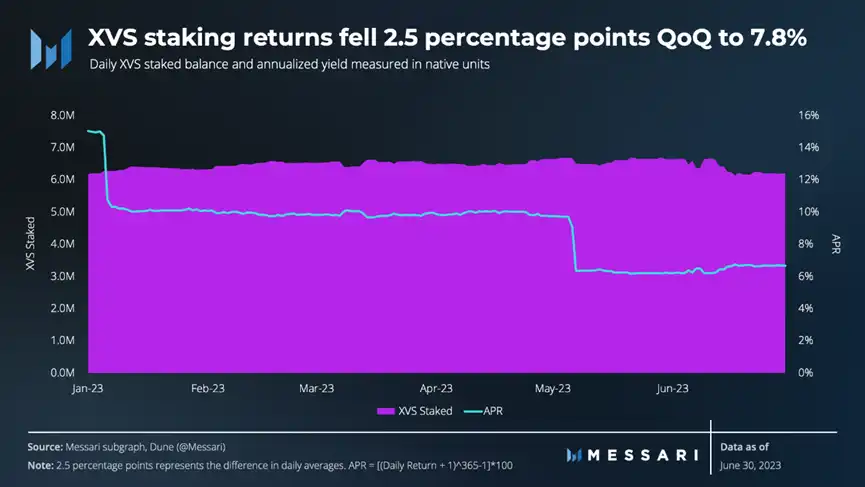
Aside from the basic reward of $354,000, XVS stakers also received 350,000 XVS tokens from the protocol revenue distribution. Despite a 46% increase in the basic reward, the revenue distribution decreased by 36%. The implementation of VIP-113 will increase the daily basic reward from 525 XVS to 1,100 XVS. Additionally, compared to the net inflow in the first quarter, the reserve pool experienced a net outflow of 290,000 XVS in the second quarter. The proposal also includes the expectation of restoring a 9% annual interest rate in the next quarter.
Due to various ongoing changes and audits, we are unable to adjust the annual interest rate allocated to XVS Vault before today, and more XVS has already been distributed in earlier weeks. Therefore, it is necessary to further reduce the annual interest rate for the remaining part of this quarter to compensate for the extra XVS that has already been distributed. We expect that due to Venus's outstanding performance in the past few weeks, the annual interest rate will rise to over 9% in the next quarter.
Borrower's Perspective
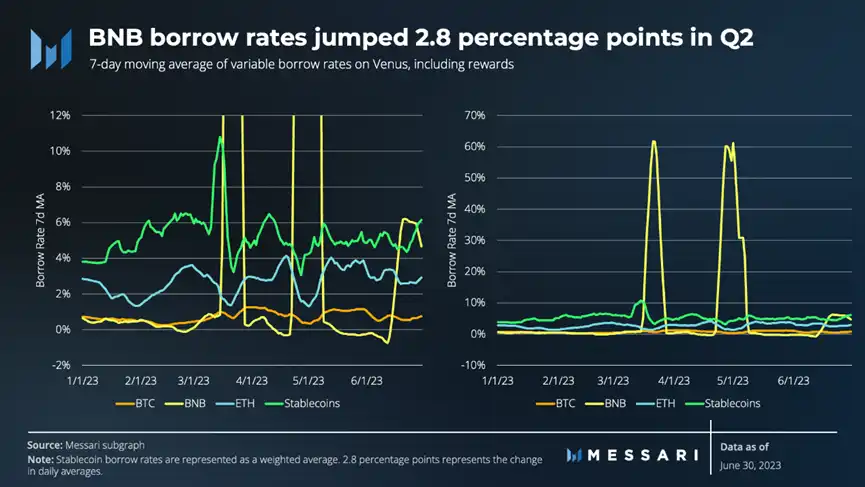
Overall, BNB borrowing rates saw the largest increase among the aforementioned categories, with a daily average growth of 2.8 percentage points in the second quarter. However, between May 12 and June 12, the XVS rewards obtained from borrowing BNB exceeded the borrowing cost, averaging over 36 basis points. In such cases, users borrowing BNB actually received increased returns, assuming prices remain unchanged. In short, these users received positive returns on both collateral and loans. Although the average stablecoin borrowing rate remained relatively stable, the high rates at the end of the quarter may persist due to reduced liquidity.
Qualitative Analysis
Isolated Fund Pool
The Venus team continues to introduce new features and gradually realize the vision of VenusV4. One development in the second quarter is the introduction of the "Isolated Fund Pool" function, including stablecoins, DeFi, Liquid Staked BNB, GameFi, TRON, and preliminary support for nearly 20 new markets.
These isolated fund pools are independent from the Venus core fund pool. They represent individual lending markets with unique parameters. Creating these isolated fund pools expands users' choices and enables them to utilize a wider range of assets in the DeFi and other fields.
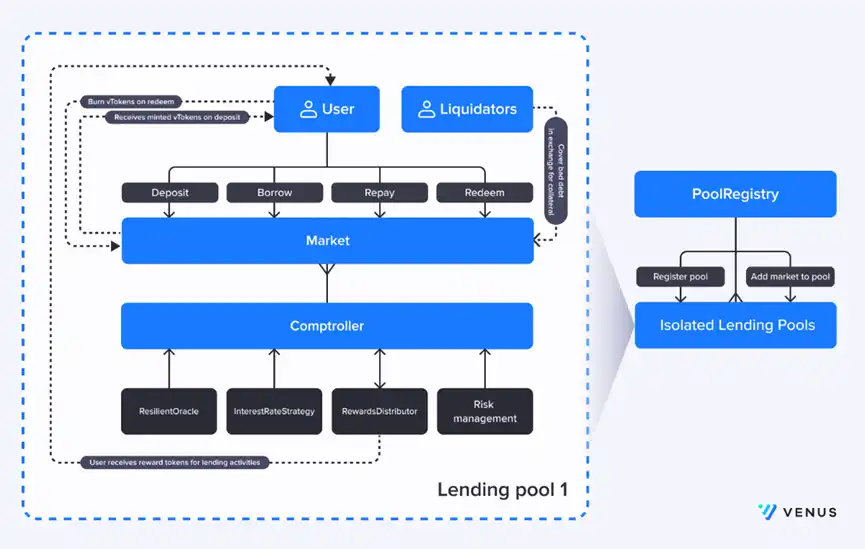
As shown in the above figure, Venus' isolated fund pool provides various advantages compared to traditional fund pools. Firstly, the isolated fund pool promises an additional layer of security, as any abnormality in one fund pool will not affect other fund pools in the protocol. By reducing systemic risk, users can better evaluate their investment considerations and make decisions based on specific fund pools. This flexibility allows users to better match their investments with their financial goals.
On this development trajectory, Venus plans to launch the second phase of isolated lending in the third quarter, which includes the launch of four new isolated fund pools in categories such as DeFi, GameFi, Liquid Staking BNB, and TRON. The second phase will be launched.
Elastic Price Oracle
In the second quarter, VenusV4 introduced elastic price feeds through VIP-123, achieving another important milestone.
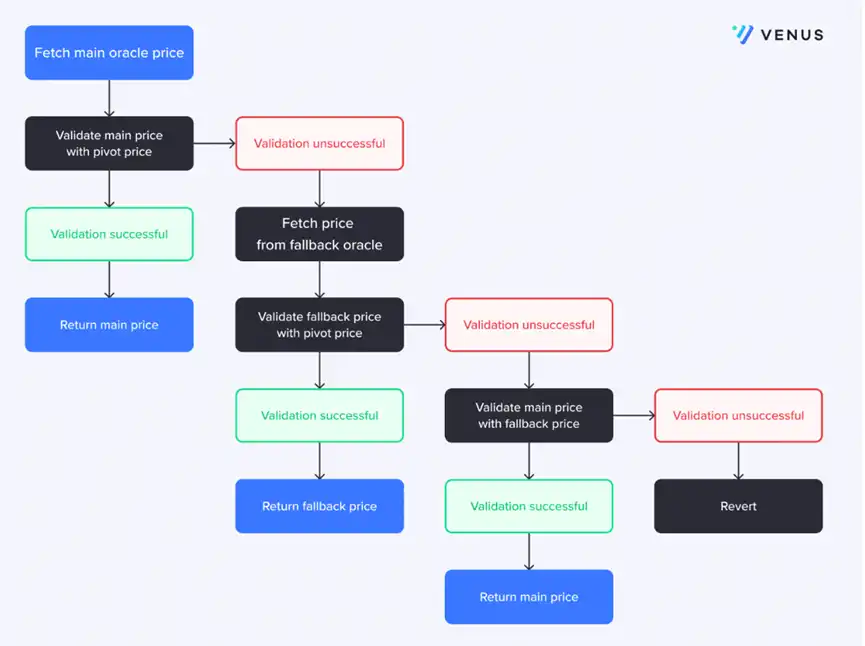
The Elastic Price Oracle provides additional security layers for the Venus protocol by integrating multiple oracle supports, perception checks, and backup mechanisms. Its design is mainly aimed at eliminating the risk of single point of failure when obtaining real-time asset prices.
In order to understand the background, when LUNA became a collateral asset on Venus in May 2022, it relied entirely on Chainlink's price feed for real-time pricing updates. The minimum value of the LUNA price feed contract is approximately $0.10 and is equipped with a circuit breaker that will stop price updates once the threshold is reached.
When the market price of LUNA is significantly lower than its minimum hard-coded value of 0.10 USD, due to the lack of outdated price detection in the Venus market, the Venus market continues to process transactions at this minimum value. The difference between the actual price and the processing price results in bad debt for the protocol. Before the Venus team could suspend the system for security maintenance, users exploited this loophole.
In order to prevent similar situations from happening again, Venus has implemented elastic price feeds to effectively handle such situations. The current implementation plan includes integration with multiple reputable sources, including Chainlink, Pyth Network, Binance Oracle, PancakeSwap, and the upcoming RedStone Oracles. This multi-source approach ensures a more accurate and reliable representation of asset prices, thereby enhancing the stability of the Venus protocol.
Bad Debt Repayment
Since its establishment in 2020, the Venus Protocol has experienced multiple bad debt incidents. However, the income growth from BNB loans has enabled the protocol to begin addressing these bad debt issues and releasing liquidity.
In the second quarter, the risk fund of the protocol successfully repaid 1437.5 ETH and 90.3 BTC, with a total value of approximately $5 million, according to the provisions of VIP-118 and VIP-121. However, the balance of the risk fund cannot be publicly confirmed on-chain. When examining the repayment transactions, it was observed that the funds for BTC and ETH repayments were transferred from different addresses to the treasury approximately 4 days and 3 days before the proposal was executed, respectively. The wallet that repaid ETH still owes 2945 ETH, and the wallet that repaid BTC still owes 1825 BTC. It was observed that the BTC borrower has been liquidating XVS to repay BTC until September 2022 and currently holds approximately 73,000 XVS rewards, which Venus considers as an already destroyed account.
Summary
Venus Community experienced growth in activities during the second quarter, executing a total of 27 proposals, a significant increase from the 18 proposals in the first quarter, and hosted over 100 AMA sessions in various languages. Despite a decrease in daily usage during the second quarter, the protocol continues to move forward in its development. The increase in borrowing interest rates has affected the profitability of leverage strategies and changed user behavior in the recent typically active Binance Launchpool event. It is worth noting that the total supply value on Venus has decreased by 12%, mainly due to the drop in BNB price after the US Securities and Exchange Commission filed charges against different Binance entities.
Despite these challenges, the protocol achieved revenue growth for the fourth consecutive quarter, reaching $11.5 million. This growth can be attributed to interest rate adjustments and lending activities that are relatively insensitive to interest rate changes. At the end of the second quarter, there was still $647 million in liquidity available for lending, with BTC and BNB dominating.
Original article link
Welcome to join the official BlockBeats community:
Telegram Subscription Group: https://t.me/theblockbeats
Telegram Discussion Group: https://t.me/BlockBeats_App
Official Twitter Account: https://twitter.com/BlockBeatsAsia
 Related Articles