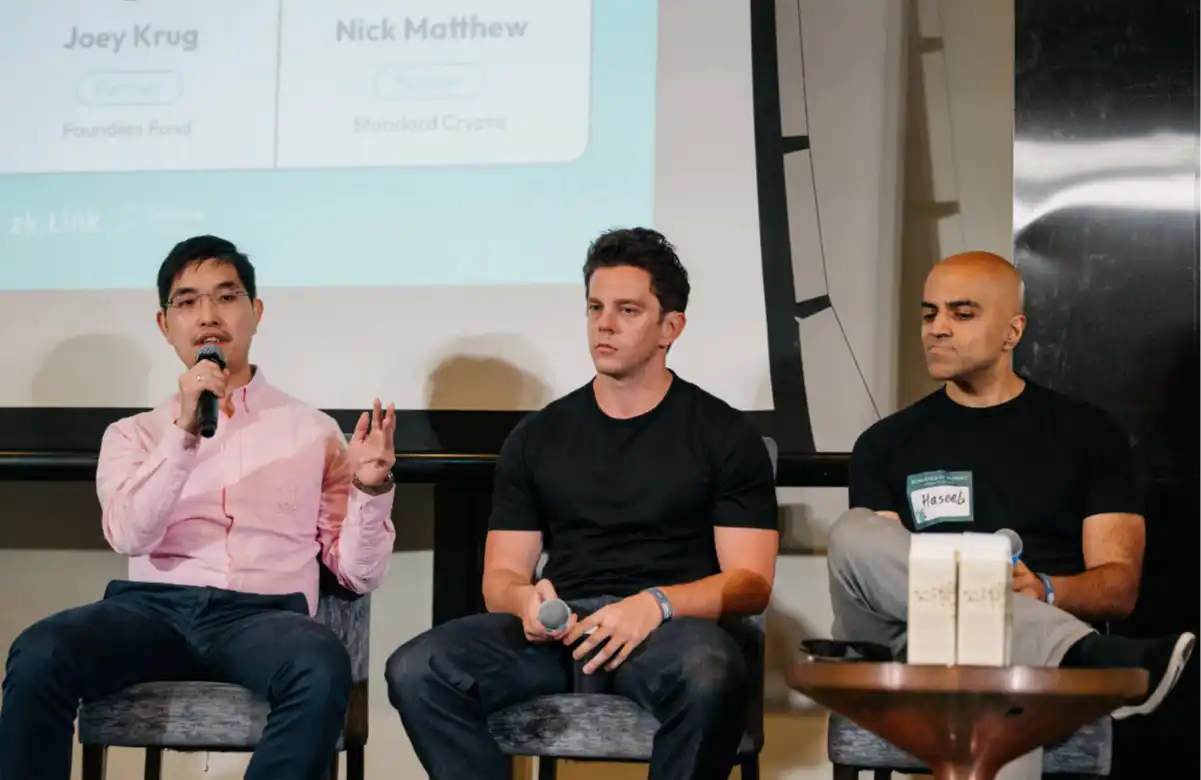
Founder of Folius Ventures: Web 2.0 entrepreneurs transitioning to Web 3.0 can still apply their existing experience.
Source: Jason Kam, Founder of Folius Ventures
After spending almost 5 months in Shanghai, I have met many outstanding Web2 to Web3 app entrepreneurs. Let's talk about some recent thoughts, feel free to criticize. Elon's thread throttling is quite frustrating, sorry for making everyone read a long post.
USD payment is already the strongest application in the industry. Allowing users to trade with USDX is still the best solution to expand the user base, as the majority of people cannot handle their own utility tokens. The deposit issue is gradually being resolved, but the last mile of withdrawal requires more detailed implementation, and we haven't figured out how to make it work yet. If you have any ideas, please feel free to contact us. Many apps have huge demand =)
The pure halal account system is currently a self-entertainment in the industry, and the semi-centralized solution similar to CEX is most suitable for comrades who want to quickly land. In addition, most users really don't care about the Web3 native set. Only when you are full and have a large base can you have poetry and distance. This is estimated to be quite mature within 12-24 months. As for the halal faction, I can only hope that a few geniuses can also do a good job of UIUX and finally overtake in the last bend.
Pond's uses the multiplier behind free coins and cash flow, and the mismatch of circulation time within a set time to create scale and network effects through the wealth effect, and ultimately relies on the product bottom line and entertainment consumption demand to solidify. Many current Web3 products have neither scale nor network effects, and the overall completion is like a pile of shit. When unprepared, using Pond's as a hormone is naturally a death sentence. Of course, this stimulant is a super weapon that competes with general projects and Web2 leaders, and it is also a winning hand. However, it has not yet played well in terms of not significantly changing user portraits, continuously motivating newcomers, binding continuous contributors, and balancing the interests of different classes. Personally, I still look forward to new models emerging.
Previously mentioned. You don't even dare to touch the edge of value capture, and you dare to say you love Web3. There are many ways to capture value, not just buybacks. How about increasing airdrops and blind box drops in-game after staking, and increasing the drop rates? What about premium buybacks/cashbacks for Stakers and potential in-game value? What about significant tax reductions or even discounts/subsidies for many tax scenarios? In connection with the previous point, I personally believe that teams with excellent products and mechanisms can beat similar Web3 teams in terms of new user acquisition efficiency, ARPU, and retention for a certain period of time.
It's already 2023, so don't use "we are an NFT project" as an excuse anymore. NFTs, like FTs, will become a standard feature of Web3 fusion projects. So even if you say "we are a Web3 luxury fashion brand", it's better. In terms of gaming, the current industry throughput cost does not support general game props to be put on the chain, so CEX-form transactions will still be mainstream for a while. What can be put on the chain are valuable items, and there are many gamification opportunities (such as buff/debuff when brought back into the game after being put on the chain). In this regard, we can think more about why a valuable item is put on the chain.
We generally haven't figured out how much of the in-game economic industry chain belongs to the official side and how much belongs to the players, as well as how durable goods should be consumed in the end. We don't have an answer to this ourselves. We can only take it step by step. The big players in this industry know more than we do. Looking forward to exchanging ideas.
The real money-making scenarios for apps are just two. As mentioned earlier, the entertainment factor determines the level of consumption, and the other is people who have ROI needs outside the app paying for certain behaviors within the app, the most typical of which is advertising/eyeballs. It is indeed difficult to create entertainment value, so I am also looking forward to seeing apps that can directly meet external demands and provide cashback to users. This is best done with high-frequency utility apps that have strong profitability in Web2. Whether it's Strava, Chrome, or Today's Headlines. If you have any good ideas, just send them to us =)
The vast majority of projects currently seen in Web3 do not understand 2C products or how to achieve user growth (although CEX is generally doing well in this regard). Experience from Web2 is often very applicable, so people who have had successful Web2 entrepreneurial experiences actually have an advantage. However, it is important to recognize that many of the industry's potential opportunities have not yet been fully realized, and there are many infrastructure issues to contend with. Additionally, it is important to understand that adding Web3 features is essentially playing a financial game. While past experience is certainly valuable, it is still easy to make mistakes if one does not manage expectations and is not sensitive to financial pricing. We can learn together.
Finally, I want to give a shoutout to @Scroll_ZKP, @degame_l2y, @Galxe, @ChainbaseHQ, @zellic_io
. Welcome to collaborate with these Web3 App entrepreneurs.Original Link
Welcome to join the official BlockBeats community:
Telegram Subscription Group: https://t.me/theblockbeats
Telegram Discussion Group: https://t.me/BlockBeats_App
Official Twitter Account: https://twitter.com/BlockBeatsAsia

 Related Articles