Interview with NDV: Why did traditional asset management elites choose to heavily invest in GBTC when encountering crypto whales born after 2000?

Interview: Jack
Editor: Jaleel
When it comes to NDV, many people may not be familiar with it. The full name is NextGenDigital Venture, and NDV is a new fund established in collaboration with cryptocurrency wealth management company Metalpha Technology Holding Ltd this year. In March, it received a $20 million fund subscription. Interestingly, despite its name, NDV's first major move after its establishment was to invest in the "forgotten" Grayscale Bitcoin Trust (GBTC) in the market.
Many institutions have expressed their lack of understanding regarding the choice of NDV.
Before the encryption market completely turned bearish, the negative premium trend of GBTC seemed to be irreversible. In order to convert the trust into a spot Bitcoin ETF and correct the "discount" of GBTC, Grayscale has been pushing for the conversion of GBTC into a spot ETF, but all three applications have been mercilessly rejected by the SEC. After institutions such as Celsius and Three Arrows went bankrupt, the idea of institutions using GBTC for arbitrage through circular mortgages became widely circulated. As of now, the negative premium of GBTC has reached -36.6%. Some even believe that Grayscale does not actually hold the claimed 630,000 GBTC. It is in this context that this "new generation player" that was only established this year has firmly chosen to seek opportunities in the "antique industry" of GBTC.
In May, NDV announced that its first phase of the Next Generation Fund, which focuses on cryptocurrency, received another $5 million investment. NDV hopes to allow investors to directly invest in Grayscale Investments LLC's products through structured derivatives, as well as indirectly invest in GBTC assets.
Compared with the name NDV, the two founders Jason Huang and Christian have higher visibility in their respective fields. One is an outstanding representative of traditional finance, with ten years of VC and investment experience, from the family office Blue Pool Capital of Cai Chongxin. The other is a top KOL on encrypted Twitter, a typical GenZ rich second generation. However, the two partners with different backgrounds have indeed sparked a different kind of spark after coming together. Recently, BlockBeats interviewed NDV co-founders Jason and Christian. Why are they so bullish on GBTC? What are their future layouts and prospects for the encryption industry? We will find the answers one by one in the following text.
Encounter between venture capital elites and 00s crypto Degen
Jason, 35 years old this year, graduated from the School of Economics at Peking University with dual degrees in Economics and History. After graduating from Peking University in 2010, he joined Huaxing Capital and then joined Qiming Venture Partners in 2014, where he was promoted to Vice President two years later. Later, Jason was responsible for Chinese investments at Blue Pool Capital, the family office of Richard Li.
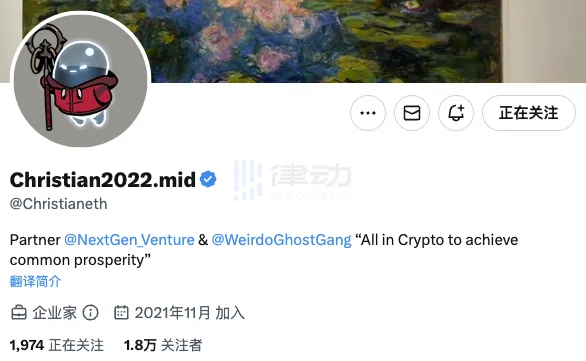
As a post-00s generation, Christian is a true "crypto Degen". Attracted by NFT, Christian quickly immersed himself in the cryptocurrency industry. Unlike many "lying flat" rich second generations, he not only actively learns new industry knowledge, but also actively participates in project investment and construction. In less than two years, he has grown into a top KOL and investor in the industry.
And the first thing that these two people with different styles thought of when they got together was to invest in GBTC.
Jason: The opportunity for me to enter the circle mainly came from Tesla. I personally held Tesla for 5 years before, and because of this, I joined many Tesla shareholders' communication groups. In 2020, I met a senior in the group who was a very successful individual investor. He held Apple in full position in his early years, and later switched to Tencent, Tesla, and Bitcoin. I was lucky enough to have a deep conversation with him for about three to four hours. He told me that he believed there were two things that could change the world now, one was Tesla, and the other was Bitcoin. He said since I already held Tesla's stock, I might as well study Bitcoin seriously. He also told me about his long-term value of Bitcoin, which has significant significance both in terms of currency and network effects. After listening to him, I spent two days seriously registering on Binance and doing KYC, and thus entered the world of cryptocurrency.
BlockBeats: Are many traditional finance practitioners who enter the cryptocurrency industry only staying in the Bitcoin field and have some resistance to the broader Web3? Is Jason in the same situation?
Jason: Yes, initially I was a big believer in Bitcoin and didn't pay much attention to anything else. But two things happened that changed my perspective. The first was that since 2013, I had a group of friends who were starting businesses in the cryptocurrency world, working on a variety of projects including DeFi and the Metaverse. Through my interactions with them, I gradually came to understand how crypto can improve financial efficiency and change production relationships through tokens. The second turning point was the NFT craze in early 2022, which made me realize that crypto can attract new users beyond Bitcoin.
Last year during the lockdown, I did something that had a significant impact on whether or not I would go all in crypto. I created a group and invited a bunch of people who were either working in the crypto industry or were interested in it. The group had members from various backgrounds, including crypto entrepreneurs, primary and secondary investors, market makers, and even some big names who had been deeply involved in the crypto field for 8-9 years. Every Saturday at 9 pm, we would discuss various crypto-related topics for a few hours. We named this DAO 699DAO, which meant 9 people having a fixed discussion at 9 pm on Saturday night. From them, I discovered the vitality of crypto and realized that if you can view crypto across asset classes, you can find many interesting angles to participate in this market. So, this may be the reason that triggered me to truly learn about crypto.
I remember that in the early days of our DAO, we coincidentally invited an early participant and investor in Luna. He predicted what he thought would happen to Luna, and coincidentally, Luna collapsed the second week after his sharing. This left a deep impression on me, that a $10 billion Crypto project could be reduced to zero in an instant. Later, we also discussed in the group that there would be an exchange sacrifice in each cycle, but it was difficult for us to guess which one it would be. That's why I now try to put my money on the chain, which also allowed me to successfully avoid the entire FTX storm. So under this positive cycle, my interest in Crypto is getting stronger and stronger. Of course, I also realize that Crypto may need to move towards stricter regulation, which may be better for individual investors because it can provide more protection.
BlockBeats: Please introduce yourself, Christian. As a post-00s generation and a well-known Twitter KOL, how did you "enter the circle"?
Christian: My identity may be different from most fund practitioners, as I am currently an undergraduate student at Peking University. Since my freshman year, I have been involved in entrepreneurship with my school friends, and have also gained some interest and understanding in investment. It was probably during the NFT Summer of 2021 that I truly became interested in Web3 or Crypto.
Initially, I was interested in contemporary art and was trying to understand NFTs as a new form of art. Later on, with the rise of various DAOs towards the end of 2021, my background in philosophy and interest in political economy led me to explore this field from the perspective of public governance and distribution. Although it may not seem very popular at the moment, I still find my original intention of entering this industry quite interesting, and I believe it embodies one of the most fundamental charms of the crypto world.
Returning to the previous topic, I joined the industry mainly because of NFT, so I developed a habit of operating on the blockchain. For me, due to various reasons, I basically stored, traded, and explored most of my assets on the blockchain at the beginning. From this perspective, I have always been a user who leans towards exploring DeFi and believes in its future, so the issue of problems with exchanges has never really affected me.
Speaking of the views of the post-00 generation on Crypto, I believe that based on my actual contact, whether it is the post-95 or post-00 generation, that is, the young generation now, their investment concepts regarding Crypto or slightly more radical are indeed very different from the previous generation. I think this difference is largely due to the fact that class solidification is indeed happening globally, and many stable financial returns and growth paths are now unable to keep up with the speed of the widening wealth gap. Therefore, I think that some young people who are capable and have cognition will inevitably seek to find some cognitive fields they are good at to achieve this catch-up. At the same time, the growth environment of the younger generation also makes them more able to accept network culture, including accepting the investment concept of virtual assets such as Crypto or completely operating on the chain, which I think is indeed special.
BlockBeats: How did you two meet? And why did Christian choose to collaborate with Jason?
Christian: I met Jason last year, just like he introduced earlier, he created a very active organization with members who have a deep understanding of the industry. One of my friends is now responsible for investment in a first-tier fund, and he is also my senior at Peking University. It was he who introduced us to each other because he also believed that Jason has a broad vision, mature and rich investment experience, and unique perspectives. Most importantly, Jason is a person who has always been exploring in the industry, which I think is the most rare quality.
Therefore, we had frequent communication after we got to know each other. Initially, it was not just from the perspective of Crypto. I consulted Jason on many issues related to traditional investment. Because Jason had some work experience in this field, and I was also responsible for managing some asset allocation at home, we initially discussed some views on asset allocation, macroeconomics, and some ideas about the future of the industry.
Continuing on this year, Jason suddenly approached me after the FTX and Genesis incidents and asked if I knew about the GBTC asset and if I had any channels to purchase it. At the time, GBTC's negative premium was at its historical high, basically close to 50%. When I heard Jason's words, I suddenly felt very excited, and I felt that Jason had introduced me to a very interesting idea.
Immediately after that, I quickly looked up the past situation of GBTC and the reasons for the current situation. I also asked some channels around me, such as some private channels and securities companies. We found that the channels for Asian customers, or more specifically, Chinese customers, to legally or quickly purchase GBTC are actually very limited.
Initially, we attempted to purchase some of this asset as individual investors because we believed it could generate better alpha returns than Bitcoin. However, we also realized that since this channel was already very difficult for us, we believed that for ordinary people, even for Web2, or for institutions or high-net-worth individuals who have never been exposed to Crypto, understanding and configuring this asset is an enormous challenge. Later, we found our other partner, and the three of us researched together, and finally found that we could provide a channel to obtain GBTC, which is also the prototype of Next Generation Fund I. We believe that in this cycle stage, purchasing Bitcoin at a 40% discount, combined with our derivative tools and on-chain data monitoring team, is the best crypto configuration for most people.
That's pretty much the process of how Jason and I met, and why we founded NDV to invest in GBTC. We hope to provide a convenient and efficient way for more people to access these highly valuable assets, as well as to popularize the concept of blockchain technology and cryptocurrency allocation for those outside the industry, rather than just limiting it to our own investment behavior. This is something we find very meaningful and quite challenging.
NDV Why is interested in GBTC?
Grayscale Bitcoin Trust, or GBTC for short, refers to the fund managed by Grayscale Investments - the Grayscale Bitcoin Trust Fund. GBTC tracks the price of Bitcoin but not entirely consistently, and its premium rate is an important indicator in the cryptocurrency market. GBTC is the largest single institutional investor in Bitcoin worldwide, holding a total of 630,000 Bitcoins, accounting for 3% of the total Bitcoin issuance. Its shares are publicly traded on the OTCQX in the United States.
Although GBTC is traded on a securities exchange, it is not a stock but a trust fund. Its operation principle is that Grayscale invites investors to invest in the fund, buys a large amount of Bitcoin, and then lists the trust on the exchange for investors to publicly buy and sell shares of the trust. GBTC shares can be created but not redeemed, and investors can only sell their shares on the open market. GBTC tracks the price of Bitcoin but is not entirely market-based, and there may be premiums/discounts.
Due to the complexity of compliance and trading, institutional investors find it difficult to directly hold BTC, while for individual investors, there is a certain learning curve for trading and storing cryptocurrencies. The emergence of GBTC has largely alleviated these issues. Therefore, many institutions participate in the premium arbitrage movement through the product structure of GBTC. Many people believe that it was precisely because of Grayscale's GBTC that the previous bull market cycle occurred.
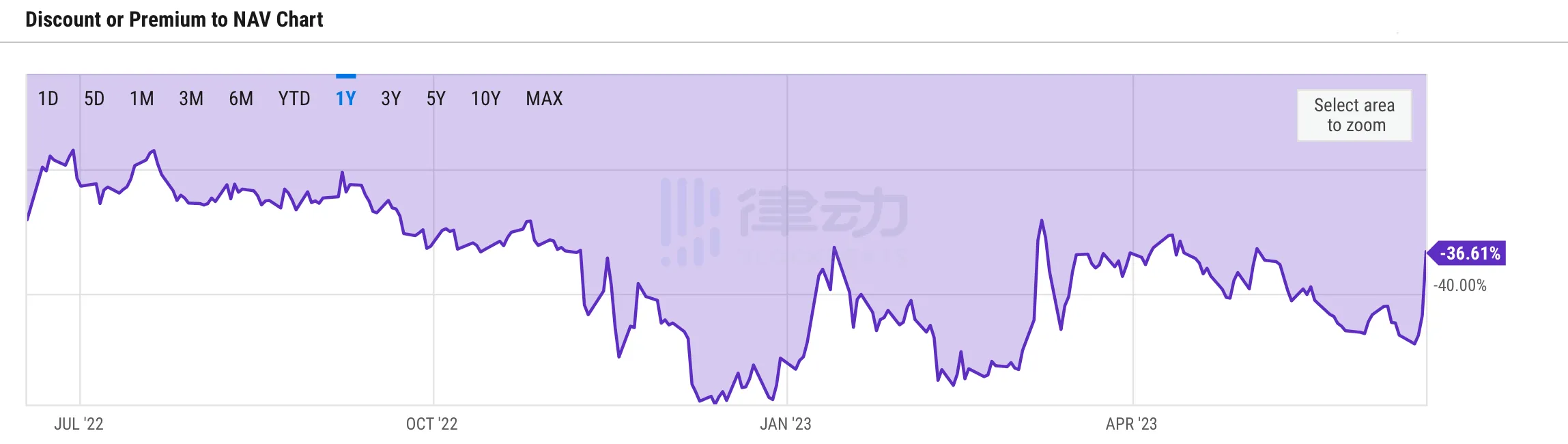
However, in NDV's view, the situation is not like this. With the end of the US dollar interest rate hike cycle, now is a good time to allocate GBTC. By allocating GBTC, NDV will not only gain the benefits of BTC's halving cycle, but also have the additional alpha opportunity of getting GBTC at a discounted price for free.
BlockBeats: From Jason's perspective, why did he team up with Christian to create NDV for GBTC investment?
Jason: I used to invest in internet finance for a period of time in the early years. Although I didn't invest in P2P, I have a deep understanding of the operation mechanism of the entire P2P industry. I found that platforms like FTX were once regarded as myths in the West. The founder graduated from MIT and came from a family of professors at Stanford. However, he still misused user funds, ultimately leading to the platform's bankruptcy. This scenario is exactly the same as what I saw when studying P2P. This made me realize that when funds are deposited into an unregulated account, various problems may arise.
Therefore, whenever I make a Crypto investment, I always consider this question: Who am I entrusting my money to? This question led me to start researching GBTC with Christian. We have carefully studied their on-chain wallet numbers, reviewed whether Gray Scale really has that many Bitcoins, and even verified some of Coinbase's own announcements.
After all these questions are answered, we believe that GBTC is a good investment target. We had already planned to invest in this field, but if we can find an opportunity for everyone to participate together, it can help us achieve our own interests while also helping everyone to gain profits. This is the starting point for us to do this thing.
However, from the perspective of value proposition, I think the focus of Crypto users and traditional users is different. For traditional users, especially high net worth users, their biggest concern is: if I invest my funds in the Crypto field, can I safely retrieve my funds? On this issue, I believe that GBTC is the best way for traditional users to enter the Crypto market today because it is fully regulated and its underlying assets are very clear.
However, for users who lean towards Web3, I believe they are more concerned about profits. For example, today's 60% discount on GBTC, combined with the use of some derivatives, may result in a nearly doubled but non-liquidating BTC leverage without leverage. I think for Crypto users, they don't need to be educated on the long-term value of BTC. A BTC leverage that can bring almost double the profit without liquidation is already very attractive. This is the original intention of our project.
BlockBeats Note: When the stock of the grayscale Bitcoin trust fund changes hands at a price higher than the underlying Bitcoin price, GBTC trades at a premium. Conversely, if the trading price of GBTC stock is lower than the net asset value, it is considered a discount (negative premium) transaction.
BlockBeats: How to understand assets like Grayscale and GBTC?
We recently looked at their asset status and found that they have approximately 630,000 bitcoins, but their trading price is discounted by about 42% compared to the market value of their bitcoins. Therefore, if we only buy shares of this trust, the value of the BTC assets we actually receive may be 50% to 60% more than what we actually invest. That's roughly the situation.
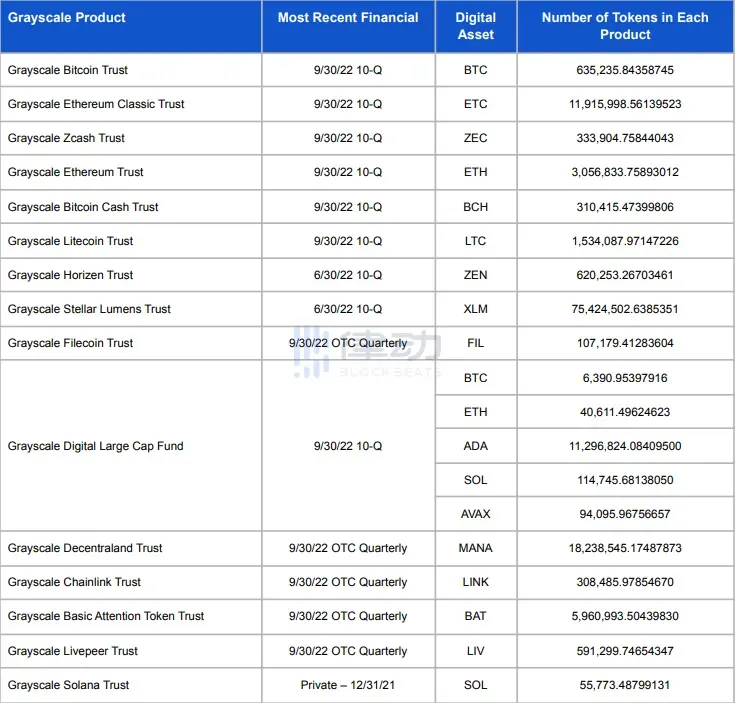
Coinbase's grayscale asset holding report released at the end of 2022
BlockBeats Note: Grayscale's assets are held in offline cold wallets by an independent entity, Coinbase Custody, which is regulated by the New York Department of Financial Services (NYDFS) and is a subsidiary of Coinbase. Although Coinbase has not provided on-chain proof, it has issued a document stating that as of September 30, 2022, the number of BTC held by Grayscale Bitcoin Trust is 635,235, which is consistent with Grayscale's publicly available data.
Secondly, OXT analyst Ergo found through on-chain analysis that 634,693 BTC are held in 846 wallets that contain GBTC, which is consistent with Grayscale's statement. NDV also monitored these 846 addresses and found that 36 wallet addresses did not belong to GBTC. The total remaining balance of the wallets is 605,117.83. On March 6, 2023, the balance of 3 wallets changed, and the total remaining balance of the wallets is 602,333.24. The wallet search model is not completely accurate, and there may be wallets that have not been counted, so overall NDV believes that GBTC does indeed hold the amount of BTC it claims to hold. (Related reading: "Why Nextgen Invests in GBTC-GBTC Series Research 3/4: Why is GBTC currently heavily discounted?")
BlockBeats: In the previous cycle, institutions such as Three Arrows and ARK participated in early GBTC trading and arbitrage. In your opinion, what positive effects did these "arbitrage behaviors" bring to the market?
Jason: The brick-moving behavior in the previous cycle actually partially triggered the bull market of Bitcoin. The initial reason for GBTC's brick-moving was that US retail investors had the opportunity to directly purchase GBTC from their securities accounts, and GBTC was the only way for US retail investors to quickly obtain BTC positions at that time, which kept GBTC at a long-term premium level. Many of our investment circle friends were also early holders of GBTC. Because of the premium, some particularly savvy funds, such as 3AC, began to put their BTC into GBTC's fund for arbitrage, with the specific method being to deposit BTC into GBTC and then sell it on the secondary market after a 6-month lock-up period. This circular arbitrage method allowed institutions to benefit greatly in the early stages and also encouraged them to buy more BTC.
BlockBeats: Why doesn't Jason prefer to create another "Bitcoin Trust Fund" himself?
Jason: First of all, I don't think we have the opportunity to buy a large amount of Bitcoin anymore. Taking exchanges as an example, we saw 2.3 million Bitcoins last week. I'm not sure if Grayscale's numbers should be included in the exchange's calculation. If included, Grayscale's 630,000 Bitcoins account for a quarter of all exchange inventory. Even if we were given the same amount of funds, it would be a problem for us to buy so much Bitcoin in practice. That's the first point. The second point is that today's price is discounted, so why wouldn't I buy discounted goods instead of buying spot goods? I currently don't directly hold BTC, basically I put my BTC position into our fund, which is equivalent to me having 50% more coins, and I don't have to worry about the risk of exchange misappropriation or bankruptcy. I personally think that investing funds in the fund is actually putting my crypto exposure into the fund. That's my main logic.
BlockBeats: What is the product logic and implementation method of NDV's product for GBTC?
Jason: We hold the No. 9 license in Hong Kong, which is a license for hedge funds in Hong Kong. We have a custodian bank DBS and we release reports every month. The entire process of fund flow is within the regulatory scope of the SFC in Hong Kong. Simply put, this is a hedge fund and GBTC is a security listed on a US securities trading platform. Therefore, we actually buy it like buying stocks (today, due to regulatory reasons, retail investors can no longer buy GBTC directly), except that the underlying asset of this "stock" is BTC, and it is currently heavily discounted. We will conduct a large amount of on-chain data monitoring ourselves, such as how many BTCs are in the trading platform we mentioned earlier, what are the long-term holding Bitcoin addresses, and conduct transactions through these. From the current results, we have outperformed GBTC by at least 6 points in the past two months. This is our achievement.
What we want to do is related to the Bitcoin cycle, because Bitcoin itself has a clear four-year cycle. At least in the first 15 years of operation, the previous three cycles all had a four-year phased high and low point, which is determined by the Bitcoin issuance mechanism. Our fund only plans to operate for four years, and within those four years, we will end the entire fund and return the US dollars to our investors. We hope to lead everyone interested in BTC and everyone who wants to allocate digital assets, because today, many people may feel that there is a legitimate and reasonable crypot exposure for personal assets in the background of great power games and the Fed's printing of money. We want to allocate BTC, allocate Crypto, and we only plan to complete this four-year cycle. I will move forward and retreat with everyone at the end of the four-year cycle, and this is what we want to do.
Not just GBTC: How do the "young combination" layout the encryption industry?
Of course, the GBTC Fund is just a "special fund" under NDV that focuses on GBTC opportunities and has a operating cycle of only 4 years. As for NDV itself, its ambitions are not limited to GBTC. From the background of its founder, NDV is quite unique in the encryption industry. Traditional venture capital and asset management elites, combined with native Degen researchers in encryption, may be the ideal configuration for encryption VC. How does this tension-filled and complementary combination view innovation, valuation, and regulation in the entire encryption industry?
BlockBeats: Does "financialization" represent the only way out for cryptocurrencies in NDV's view? What other possible narratives exist for the entire industry?
Jason: First of all, my understanding of the concept of financialization may be a bit vague. Personally, as a crypto industry practitioner, I believe that regulation is necessary. Because when someone is willing to invest a large amount of money, they may feel more at ease at the beginning. But from another perspective, once you deal with traditional financial institutions, you will feel that innovation in crypto is essential. I think regulation is very helpful for customers to adopt crypto in the early stages. This is also why we are very excited about Hong Kong's open attitude, because it may provide Asian customers with a legitimate and reasonable way to enter the crypto market, which is very important for their confidence and security.
On the other hand, we always ask: is encryption really innovative? I have to admit that recently I haven't seen the script I imagined, such as a potentially great Crypto super application. In fact, this is the same as the AI industry. An example of AI is ChatGPT, which is the fastest application in human history to reach 100 million users and can also be monetized. So this makes all investors have great expectations for the direction of AI. I think that further development of the encryption industry also requires similar situations, whether it is achieved by native encryption products or by adding crypto characteristics to a Web2.0 application, both are possible.
From what I understand from history, the first application that truly proved the value of mobile internet was WeChat, and then Douyin (TikTok) emerged only after mobile internet and smartphones had reached a certain scale. Therefore, I cannot say for certain whether encryption will follow the same path. For current crypto entrepreneurs, the key is to figure out how to acquire a large user base at a low cost.
On this issue, I often think of the game "Genshin Impact" developed by miHoYo. The early gaming and crypto industries were somewhat similar in that they were able to earn a lot of money in a short period of time. However, miHoYo's team dared to invest all the money they earned into "Genshin Impact" at that time. As far as I know, they even faced the risk of bankruptcy because of tight cash flow and may not be able to pay salaries in a few months. But later, "Genshin Impact" successfully launched and solved all the problems. I believe that whether you are making a good game or a good product, as long as your experience is 10% to 20% better than others, you may get a lot of natural traffic and may be able to acquire many users at a low cost.
I think the Crypto market is indeed lacking such products today. However, whether to develop a native application by oneself or suddenly say something like Twitter: "Hey, I'll open a wallet for everyone, and then everyone can use Dogecoin for tipping." I think these are all ways to quickly acquire a large number of users. Therefore, I think there may be many possibilities for the future of Crypto.
BlockBeats: When it comes to innovation, the current encryption industry seems to have entered a narrative exhaustion dilemma. This has led to the situation where excellent and innovative projects have appeared with extremely high valuations, further dividing the primary and secondary markets. How do you view and respond to this situation?
Christian: The phenomenon of overvaluation is not something that will disappear at the end of this cycle, in my opinion. Looking objectively at the entire industry and the users and investors within it, the pursuit of concepts and hype began from day one. I don't think people will suddenly feel that these projects are overvalued from a traditional perspective. I tend to think that from a narrative and trend perspective, we need to grasp onto something that can evoke market sentiment.
Returning to the actual operation of our fund, a strategy that I personally like is to find some fundamentally sound and undervalued projects within the valuation system built by Crypto itself, although we cannot say that the valuation system of Crypto is the same as that of traditional finance. I think this is a relatively reasonable approach at present.
High-quality projects do exist, such as GMX, which has a very stable and good cash flow that can be multiplied with the expansion of trading volume and the arrival of a bull market. I don't think an institution should claim to seize opportunities of 100 or 500 times, because when you really look at it, the average return rate of all first-level funds is not too high. In fact, as long as you can heavily invest in a high-quality project, even if the final increase is five or ten times, because this cycle is relatively short, I think this performance is enough to surpass the returns of all traditional investments. So personally, I tend to favor this approach, which is also based on the valuation system we currently have.
For some projects in the crypto industry that are purely narrative or hype-driven, without any financial analysis, they actually make up the majority. These projects operate on a different logic, which may be understandable to many young people and those who have been in the industry for a long time, but many traditional investors may not be able to adapt. This system ultimately competes based on your diligence and established cognitive system in the industry, as well as your unique information channels and advantages in the industry. I think this is very important, and we cannot ignore this point.
BlockBeats: Does NDV still believe in the four-year cycle of Crypto?
Christian: From my perspective, the four-year cycle is like the story of searching for a sword while sitting in a boat. Investors should not view this four-year cycle as an unchanging truth or rule. Compared to science, the laws of social science are difficult to exist, especially in the investment field. However, this four-year cycle is a widely accepted consensus. Moreover, this is not only an independent cycle of Bitcoin halving, but also related to the macro trend we have observed in the past two years. Therefore, our fund set an expected cycle from the beginning, which is also part of our original intention. As for whether this cycle can be verified later and how high the upper limit can be, it depends on the subsequent situation.
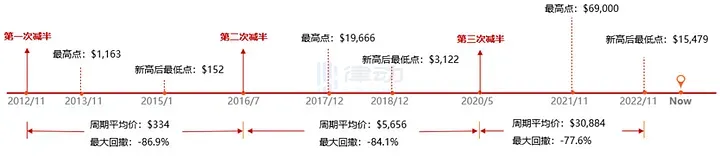
NDV Bitcoin Halving Cycle Summary
Regarding the cycle, there are two points worth noting. Firstly, I believe that in the current stage we are in, everyone can clearly feel the lack of narrative. Whether it's myself or some top funds, the projects we see are basically the same. For example, ZK technology, account abstraction, RWA, and blockchain games are not really new things. Secondly, AI is now very popular, and the obvious trend is that many non-native institutions and investors have turned to AI, which is why the Web3 market is so sluggish.
BlockBeats: Indeed, many practitioners in the encryption industry, as well as top-tier organizations like Paradigm, have recently shifted their resources and focus towards AI. Will NDV also do the same?
Christian: From my personal perspective, I believe that this period is actually the best stage for us to strengthen our confidence, delve deeper into Crypto, and constantly explore new opportunities. Because the overall heat of the industry is definitely not as high as before, only at this time can we generate and seize the biggest opportunities. We also firmly believe that the entire industry will have a more solid value someday in the future.
I believe that whether it's ourselves, other investors, project teams, or OGs within the ecosystem, we all understand that although we cannot determine when the new narrative will emerge, if we can cultivate deeply when everyone is potentially transitioning away and wait for the next wave to return, the future returns will definitely be high. Personally, I am not willing to pivot now and chase after AI or other hot topics.
And I believe that if an investment institution does this, its returns will definitely not be very good. I firmly believe that the value and returns of investment come from our deep understanding and long-term adherence to the industry, rather than short-term trend chasing. Therefore, although the current situation does not look ideal and the market has cooled down, I still see a bright future for the cryptocurrency market.
BlockBeats: Currently, NDV believes that there are more opportunities in the primary market or the secondary market?
Jason: Actually, I think the secondary market has more advantages than the primary market because prices can be corrected. For example, we have invested in iZUMi, which has retreated more than 90% from its high point, but compared to other DeFi projects, it still has at least 3 to 5 times discount space based on TVL and other indicators. We are willing to make such investments. The situation with GBTC is similar. Mainly because BTC and GBTC themselves have retreated enough, we believe that this kind of investment makes sense and can be scaled, so we raised funds to do the GBTC fund. However, we must realize that the odds of the primary market and the secondary market are different in different market stages, and we need to dynamically look at this issue.
In addition, the situation of inverted yield curve between primary and secondary markets is not limited to the crypto industry. In traditional finance, such as many SaaS companies in the United States, if they were to go public immediately, they would definitely be deeply underwater. Every industry has a primary market, and I believe we need to be more cautious in our approach. The valuation paid today is illiquid, and if the valuation is too high, it may remain stagnant, waiting for an opportunity. If the company develops, you may still have a chance to break even, but if the company does not develop, you will have to accept the loss and move on. Therefore, even though I have been in the primary market for so many years, I still maintain a cautious attitude towards it.
BlockBeats: Let's talk about the recent regulatory attention that has been receiving a lot of attention. What does it mean for innovation in the industry?
Jason: From the perspective of being a pure new asset, Bitcoin has proven itself as a new asset. It cannot be manipulated and has shown its value in responding to unstable geopolitical environments. This is beyond doubt. As for the inherent innovation of Crypto itself, as a former internet investor, I believe Ethereum's greatest invention is its reshaping of production relations, especially in its significant innovation in distribution methods.
The best example, in my opinion, is actually in the creator economy. For example, I once invested in bilibili in the early days. When B station went public, the founder may have made billions of dollars, but the biggest UP master on his platform may only have an annual income of one or two million yuan. This situation is not unique to B station, as platforms like Twitter and YouTube also face similar problems. However, in the end, it is these creators who create new content every day and provide it for users to consume.
So, is there a new creator economy platform that can allocate resources better in a different way? At the same time, can this new platform solve the problem of low customer acquisition cost? This may be an area with innovative potential. However, the innovation in this field is unlikely to be led by a true industry giant, but more likely by the second or third player in the industry, just like 360 did to the traditional antivirus software industry back then.
As for DeFi, I think all technological innovations in their initial stages involve regulatory arbitrage. Take Uber and Didi for example, the initial theory of ride-hailing was technically illegal, but with regulatory intervention, a certain balance was found. This depends on whether the innovation truly creates value and whether there are a large number of users. I think DeFi is still in this stage today, and they may be looking for a place where they can merge with regulations. However, we really don't know how this will end up. This is my opinion.
BlockBeats: In the future, how to find a balance between the anti-censorship spirit of encryption technology and the compliance requirements of the encryption industry?
Christian: I am relatively optimistic about regulation. Just like the recent actions taken by the US Securities and Exchange Commission (SEC) against various trading platforms such as Binance, this has sparked a series of hot discussions. Both Jason and I are optimistic about emerging centers like Hong Kong, which hope to embrace this industry and promote the development of both regulatory and more physical projects and enterprises. I believe that in the midst of this, some people must take responsibility. Currently, it seems that CEX has taken on this responsibility. We also talked about the issue of thresholds, and I think it is undeniable that the first stop for all users will definitely be centralized platforms.
I think the best scenario is for CEX to maintain good relationships with local governments and regulatory agencies, while leveraging these regulations to connect with traditional financial systems, thereby bringing in more investment capital and users. As for DeFi regulation, I think it may be too early to discuss this issue now. We are still dealing with the issues of CEX, let alone implementing regulations for DeFi.
Now there should be some room for development left for DeFi. That's why I am very optimistic about this field and have participated in it from an investment perspective. I believe that this field will definitely bring new changes and provide some paradigms that can truly change and improve financial efficiency. These new ideas and models may be borrowed by centralized institutions, and ultimately we may return to a state of harmonious coexistence between the two sides. I think the ideal endgame is for each to do their own job, and each department can obtain their maximum benefits throughout the entire chain. I think this will look better.
BlockBeats: How important is compliance to the development of the cryptocurrency industry?
Jason: I believe that compliance is a prerequisite for attracting more mature or larger investors to this industry. Because, I remember just about 6 months ago, FTX experienced a crash. So the question is, how can we make those larger investors truly trust Crypto? I think compliance is an important consideration for them, because at least for now, these traditional large investors still trust the government first. That's why I think Hong Kong is particularly valuable in this matter.
BlockBeats: Under the new regulatory policies in Hong Kong, how does NDV plan to construct its own GBTC product?
Jason: To be honest, we are already in compliance with Hong Kong's regulatory requirements, which is currently the most cost-effective way we have found. If you ask me to directly buy BTC and ETH, I personally think that discounted GBTC and ETHE are more attractive. On the other hand, this also depends on how the Hong Kong government will enforce the relevant regulations. We know that the current requirements for anti-money laundering are very high, and some licensed and compliant trading platforms may take a week or even two weeks to complete a customer's KYC process. The speed of this onboarding process is actually quite slow. Therefore, we also need to see how the later regulations gradually relax from the execution level. In addition, how to transfer funds between traditional financial institutions and these licensed institutions is also a problem. In reality, many Hong Kong banks may still be unwilling to interact with these licensed institutions on fund transfers. So overall, we will see how things go.
Question at the end: Is Crypto still the best career choice for young people?
In the current cryptocurrency industry, the topic of new-generation investors cannot be avoided. Attracted by technological innovation and wealth effects, the industry is filled with a large number of young people born after 1995 and 2000 who have almost no investment background or experience. Their work and investment styles in the industry have also become a symbol of the cryptocurrency industry. Of course, more importantly, young people hope to turn cryptocurrency technology into a new opportunity to change their destiny or build their careers.
Christian, born in the 2000s, can be considered an outstanding example among young people. He is not only a KOL in the cryptocurrency industry, but also an excellent trader and investor. In his opinion, is cryptocurrency still the best career choice for young people? What advice does he have for young people who are involved in it?
BlockBeats: Christian mentioned earlier that he also joined the industry because of NFTs. In the previous cycle, NFTs seemed to attract many young people to enter the industry. In your opinion, what attracts them more, economic incentives or cultural innovation?
Christian: I think this issue is actually unrelated to finance, but more importantly, it lowers the entry barrier. In the NFT field, a considerable number of NFT players are not familiar with the entire DeFi operation. I think DeFi and NFT are more like two different groups. However, from a narrative perspective, I am optimistic about NFT because of its combination with art and community concepts, which is more suitable for bringing people who did not have a deep understanding of this field into the circle compared to pure DeFi.
Including those around me, some young rich second-generation friends I know also got into this field because of the hype around NFTs. In the end, some of them may have temporarily lost interest or suffered some damage due to the bear market, but there are still some who remain steadfast and continue to build, whether in the NFT field or the entire crypto industry. I find this phenomenon quite interesting. Although everyone knows that the NFT field has undergone many changes in the past year, and the market sentiment has even reached freezing point in recent months, I still believe that the main advantage of NFTs is its low threshold and the cultural attributes it embodies, which make it a better medium for breaking through barriers.
BlockBeats: After joining the industry, Christian quickly became a well-known crypto KOL due to his proactive views. How do you view the role of being a KOL on crypto Twitter? What impact does this identity have on your investments?
Christian: Not well-known, but this question is quite interesting because "Twitter KOL" seems to have become a derogatory term in the crypto community. I think Twitter KOLs in the crypto circle have always been in an undesirable state because their influence is largely used to fleece investors. For example, during the recent popularity of Dogecoin, many Twitter KOLs started their own projects, only to suddenly disappear or take money from project parties and collude with them to set traps. Even if some Twitter KOLs have been publishing valuable in-depth research, they may still be labeled by the public due to the scandals of others.
As for my own opinion on being a Twitter KOL or sharing investment insights, I believe that when sharing any content in public, the first thing that should be done is to practice what you preach. When discussing or analyzing any project, I myself have already invested a large amount of funds, which shows my confidence in the project and is proven by my position. I cannot guarantee that my views and judgments are always correct, but I think that at least when sharing, you should truly believe in and recognize the value of the project.
I believe that the biggest benefit of sharing opinions on social media is being able to attract people who are at the same level of understanding as you. In fact, a few simple paragraphs of text are the best way to judge a person's true level of understanding, rather than some common KOL activities such as lottery draws, events, or casual shouting. I believe that a person's growth, including my own growth in this industry, is based on continuous communication and consultation with outstanding peers. Therefore, I believe that writing articles to express one's own opinions on social media is actually the best business card.
Many titles may not truly reflect a person's level of knowledge. If you want to talk about the benefits of Twitter KOL, I don't think it will be of much help for trading, because I basically don't do short-term trading and my trading address is also public. In projects with low liquidity, Twitter KOLs may sometimes have a significant impact, but this will also affect individuals' exit strategies, so I think there is no absolute good or bad in this sense.
Regarding investment, I believe that investors can have a certain degree of influence and dissemination ability, which is good for projects. Especially in the crypto community, I personally appreciate funds that can produce investment research, so our NDV is also trying to do such things now. Our public account will regularly update our knowledge and opinions on GBTC. As for the disadvantages, I think they are relatively few, perhaps because we have not encountered many negative comments or attacks. However, I believe that a very important point is that a person's influence and the responsibility they need to bear are consistent. In the crypto community, especially in the Chinese region, there may be many Twitter KOLs who do not abide by this point. They may rely too much on their influence to monetize, but I think that in the long run, this approach is not conducive to their own development or the development of the industry.
Therefore, I think the most valuable approach on social media is to summarize some investment and growth insights. Although the number of people who watch these contents may not be as many as those who share wealth secrets, I believe this is the most valuable point for sharing on Twitter or as a Twitter KOL.
BlockBeats: So overall, Christian still hopes that every investor at level one will open a social network account and become a KOL, right?
Christian: Yes. Many investors I know around me may also be partners or investment managers of some top institutions. However, there are not many people who directly share their opinions on social media, which also makes me start to think about whether we, as venture capitalists or investors, can still succeed if we stay in the old mode and do what everyone did in the last cycle. I doubt whether the model of trying to find top projects, focusing on leading technology, or making a name for ourselves by investing in some big projects in the early stage can outperform the rise of core assets such as Bitcoin and Ethereum in the next cycle.
Therefore, I think this strategy should be different. Previously, some first-tier funds released research reports that were very valuable because they were at the forefront of the industry and conducted research on new emerging technologies or possible new narratives. However, personally, I prefer to output my own opinions on the secondary market. I think this may be more valuable because it can directly produce influence and falsification. Therefore, I think this may be different from some first-tier funds.
To elaborate further, in the current cycle we are in, it is evident that most projects have experienced significant drops in both coin price and valuation compared to the bull market. At this time, many so-called "golden opportunities" have emerged, some of which may not be based on traditional analysis methods, but at least present some value investment opportunities.
I think some first-tier institutions are not as "responsible" as they seem. They write their views on the entire track or direction in the early stages of investing in a project, but in the end, many early financial investors will simply exit once the project goes live, such as when the currency is issued or enters the secondary market. For those who buy in the secondary market, whether they are retail investors or institutions, the project is not very attractive. I believe that truly valuable investors should participate more deeply, help the project grow together, help the team polish the product, introduce funds, and actively operate. This is also what we hope to achieve.
BlockBeats: From the perspective of Twitter KOL, Christian wonders if NFT models like PFP will still be viable in the future. Will blue-chip NFTs have new growth potential in the next market cycle?
Christian: I think the first issue to discuss is whether the blue-chip projects from the previous investment cycle, which are the NFT projects that everyone is familiar with, can maintain their status and value in the next investment cycle. This issue actually involves the team's ability and original intention. If a team has no new ideas, cannot drive the innovation of the community, or has no new business models and development directions, then I think such projects are likely to encounter difficulties in the next cycle. On the contrary, projects like Azuki have excellent community building, and I even think their narrative is more charming than monkeys, which enables them to maintain the value of the project even when the market sentiment is low.
From this perspective, I am somewhat disappointed with BAYC at the moment. I feel that its current development direction and approach are actually continuing the previous logic without any changes, and it has not been able to truly do something that can attract more people. Nevertheless, I still believe that in the next bull market cycle, the monkeys still have the potential to become an important force leading the market sentiment with their upcoming game release.
As for the NFT projects that can lead the next cycle, I believe there will be earth-shattering changes, and there will always be successors. We have gone through a complete investment cycle, and many projects have been proven false. Everyone also understands the development direction of the entire market. In this case, I think new NFT projects must have two characteristics: one is to attract more outsiders to join the community through cultural output; the other is to move from virtual to real, with real products and sustainable business models, so that everyone can see the value of Web3 and what they are doing. I think this is also a mission that the entire NFT industry should shoulder. Only by achieving these two points, I think it is possible to succeed in the future cycle. Therefore, this is also the reason why I invested in The Weirdo Ghost Gang, because they continue to deliver excellent products, have a reasonable business model, and can steadily convey Web3 culture to young people in Web2 through trendy culture and physical products, attracting more like-minded talents to join.
BlockBeats: In terms of the entire industry, does Christian still firmly believe in the future development of Crypto as an industry?
Christian: Yes, I actually wrote something on Twitter before, and I think this current cycle has already revealed which trends and concepts from the previous cycle have been proven false. But there are things, like DeFi, that I have always said have immense value. I believe anyone who has had even a little experience with traditional finance can see the inconveniences it presents, as well as the efficiency improvements and scalability of DeFi in the future, including the recent rise of RWA narratives. This is not something that can be achieved in the short term, but I believe it will definitely be realized at some point in the future.
So, going back to that statement, the entire industry is still built on a narrative lever. From this perspective, I still hope to remain clear-headed and not be fooled by any narrative as an investor. But if you ask me if I firmly believe in the development of Crypto as a new industry, my answer will always be yes.
BlockBeats: So do you think the cryptocurrency industry is still the best industry for young people?
Christian: I think that young people in the encryption field, if they have certain professional skills and diligence, can indeed achieve significant returns in a short period of time. Of course, this requires a deep understanding of the operation mechanism of this industry, establishing contacts with resource-rich and capable people, and placing oneself at the core of the industry. I think that for young people who want to change their social status, there are huge opportunities in the Crypto field, which is also a replicable path, so choosing Crypto is completely feasible. After all, in traditional industries, it is difficult to quickly stand out unless you have a higher education and outstanding professional skills in a cutting-edge technology field. However, young people should be more aware of the limitations brought about by their lack of experience and reflect on whether they are gradually rising. It is difficult to see through the fog and find the right path. The Crypto industry is easy to get lost in, and many people will make extreme mistakes because they cannot control their greed. Young people should always consider risk control and how to continue to "survive" in the industry. As long as they can achieve this, they can outperform most people. If they can get rid of the "retail investor mentality" and consciously move towards the center, there will be opportunities to achieve excess returns.
Welcome to join the official BlockBeats community:
Telegram Subscription Group: https://t.me/theblockbeats
Telegram Discussion Group: https://t.me/BlockBeats_App
Official Twitter Account: https://twitter.com/BlockBeatsAsia