Increased 10 times in half a year, understand the LSD track innovation agreement Pendle in one article
Source: R3PO
Author: Tian
Since the beginning of this year, due to the upgrade in Shanghai and the positive stimulus of the transition from Pow to Pos mechanism, the LSD (Ethereum staking derivatives) track has experienced a big outbreak. A number of LSD track concept tokens such as LDO, RPL, and SSV have all seen huge gains. However, affected by macro liquidity tightening and market hotspots switching, the LSD track has cooled down and related project token prices have generally experienced a pullback.
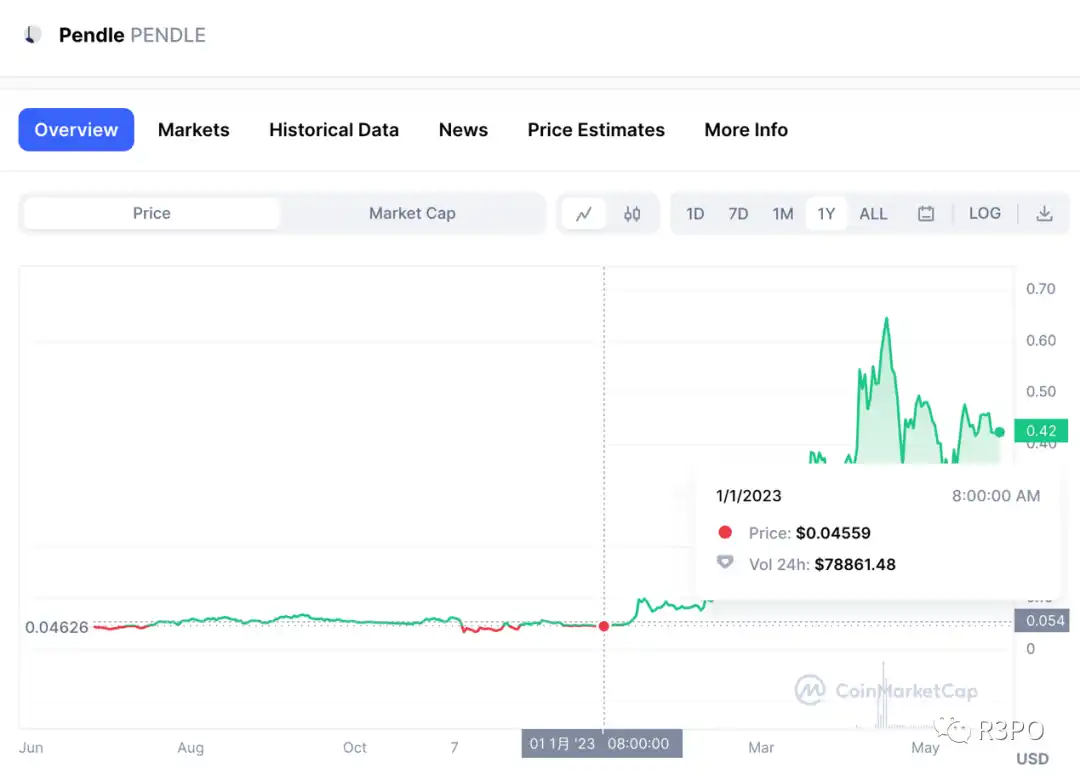
However, there is a protocol whose token price has always maintained strong resilience. Its token price has increased nearly tenfold from 0.04 USD at the beginning of the year to 0.42 USD today. The progress of Pendle's project continues to attract market attention. After being deployed on the Arb chain, the PENDLE/ETH pool launched on Camelot has surpassed 1 million USD in liquidity in just a few days. This article will provide a detailed introduction to Pendle, a powerful and innovative protocol in the LSD track.
LSD's potential market size on the racetrack
Before interpreting the Pendle protocol, let's first understand the LSD track and why it is said to have the potential to reach a market size of tens of billions.
LSD, short for Liquidity Staking Derivatives, is a type of DeFi derivative product that involves liquidity staking. The LSD protocol emerged alongside the growth of DeFi derivatives in the wake of the ETH 2.0 upgrade. On April 12th, after the Shanghai upgrade, ETH officially transitioned from a PoW (Proof of Work) mechanism to a PoS (Proof of Stake) mechanism, making the Shanghai upgrade a significant milestone event in the Ethereum upgrade roadmap.
After the upgrade in Shanghai, users can freely withdraw their deposits to reduce pledge risk, which will greatly increase users' willingness to pledge and improve the pledge rate of ETH. As shown in the figure, the number of Ethereum pledge nodes and the amount of pledged ETH have not decreased but increased after the upgrade in Shanghai, and the market's general concern about the possible ETH selling pressure due to the upgrade has not materialized.
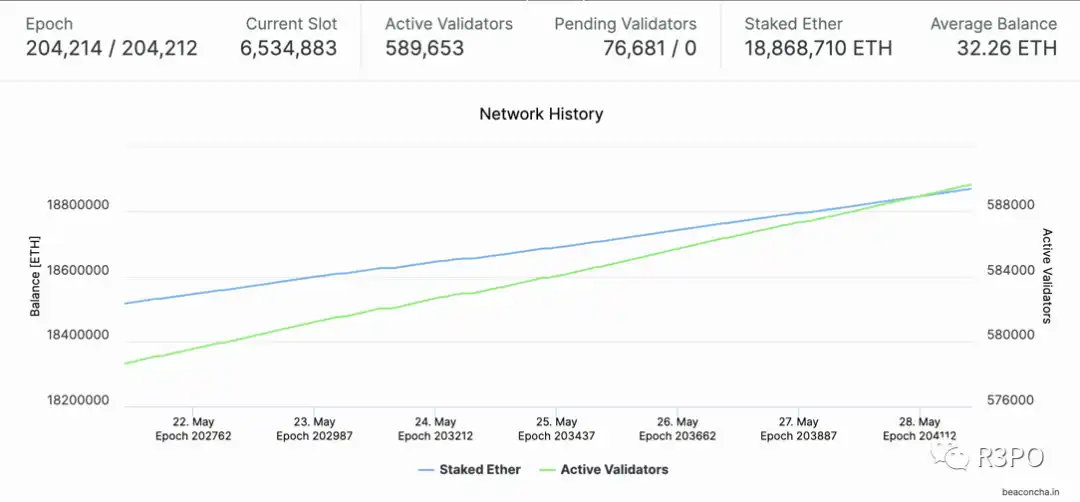
Ethereum staking has a decent return rate, typically fluctuating between 5%-8%, with the current staking return rate at 5.268%. The high yield and flexibility of being able to withdraw at any time make staking ETH a reliable source of income, attracting investors, especially in the current bear market situation.
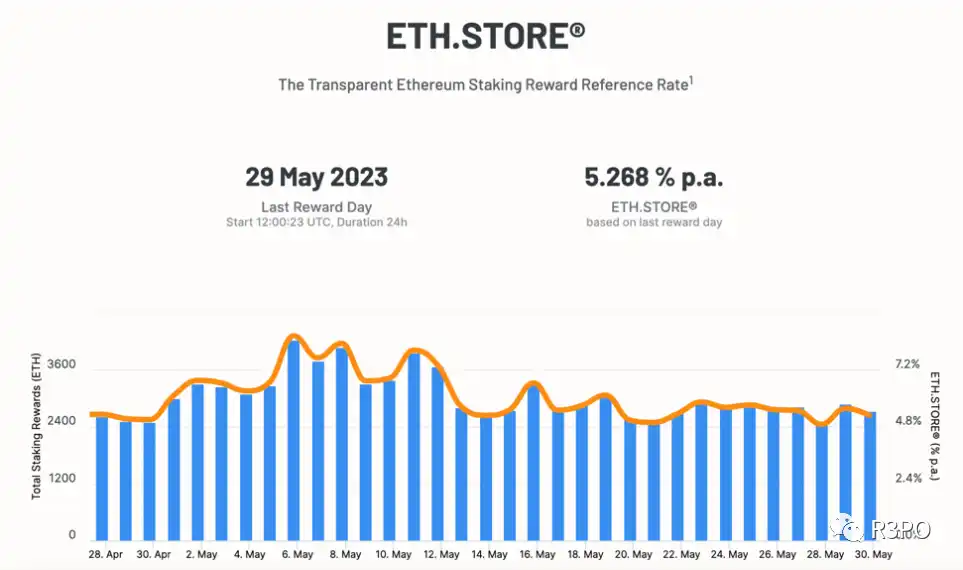
Compared to other leading PoS blockchain networks with a staking rate of 60% to 70%, Ethereum's staking rate is only 15.43%, indicating significant room for growth.
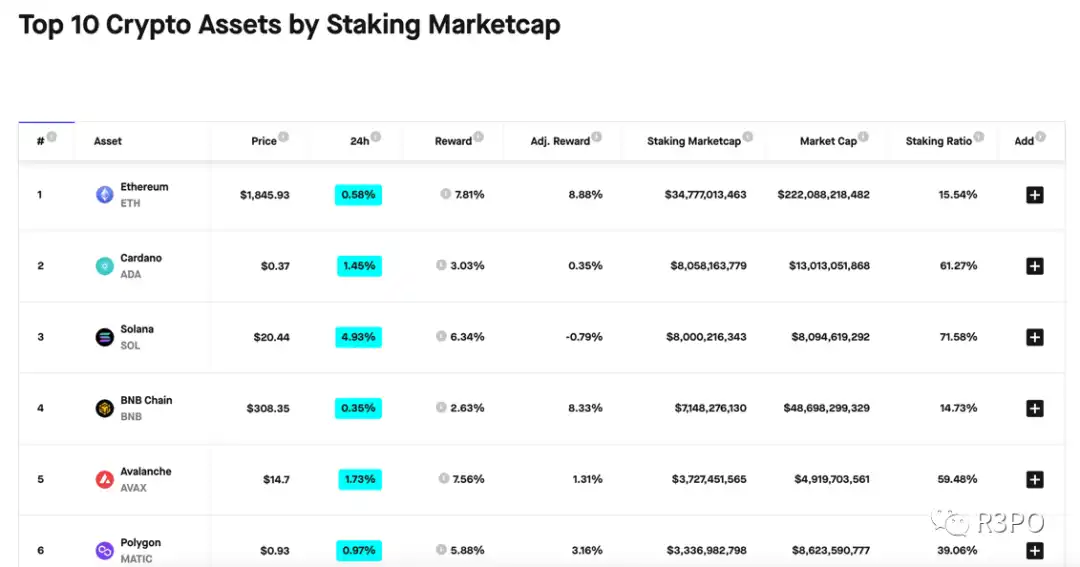
If the ETH staking rate can reach 60%-70%, there is nearly four times the room for improvement compared to the current staking rate of 15%. The current staking asset scale of Ethereum is about 34.7 billion US dollars. Without considering the price of ETH, the LSD has the potential to grow into a market with a size of hundreds of billions. As one of the main narratives of this year and even the next bull market, the LSD track is worth long-term attention.
Borrowing the wind of LSD, achieving tenfold increase
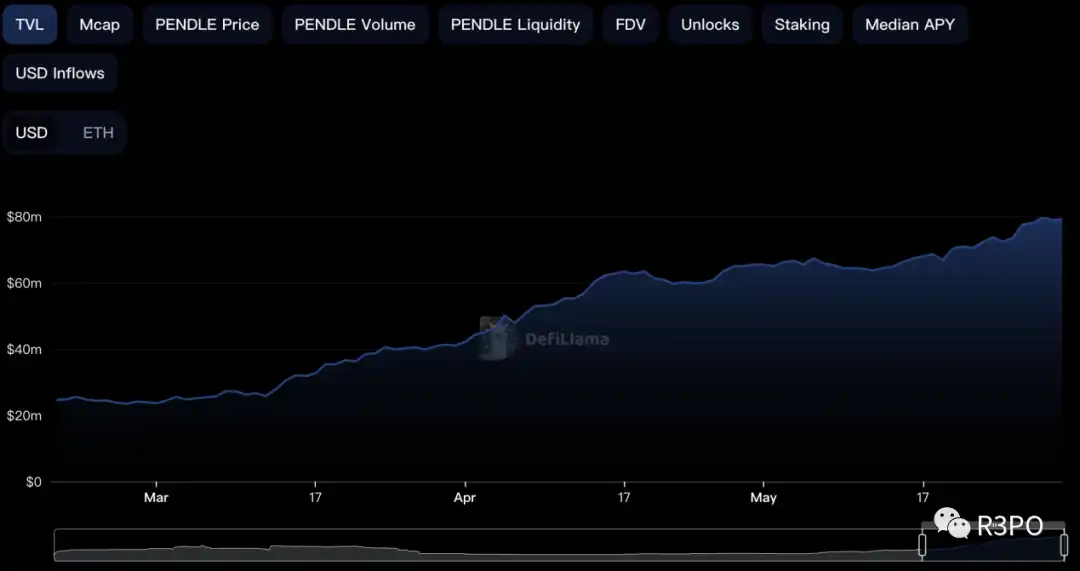
With the help of the LSD track, Pendle's clever and innovative project business design has performed exceptionally well among the LSD track projects. The token price and TVL have both risen, with the token price increasing nearly tenfold from the beginning of the year to now.
TVL has continued to grow from $1.557 million at the beginning of the year to $7.912 million today.
1. Project Highlights
Pendle Finance is a DeFi yield trading protocol deployed on Ethereum and Arbitrum. Pendle's function is similar to the stripping of coupon payments in the bond market. Pendle packages the underlying interest-bearing assets into standardized yield tokens (SY), which are then divided into principal tokens (PT) and yield tokens (YT) to meet the investment needs of different users. Users can purchase assets at discounted prices, participate in various yield strategies, or earn income by providing liquidity to the pool.
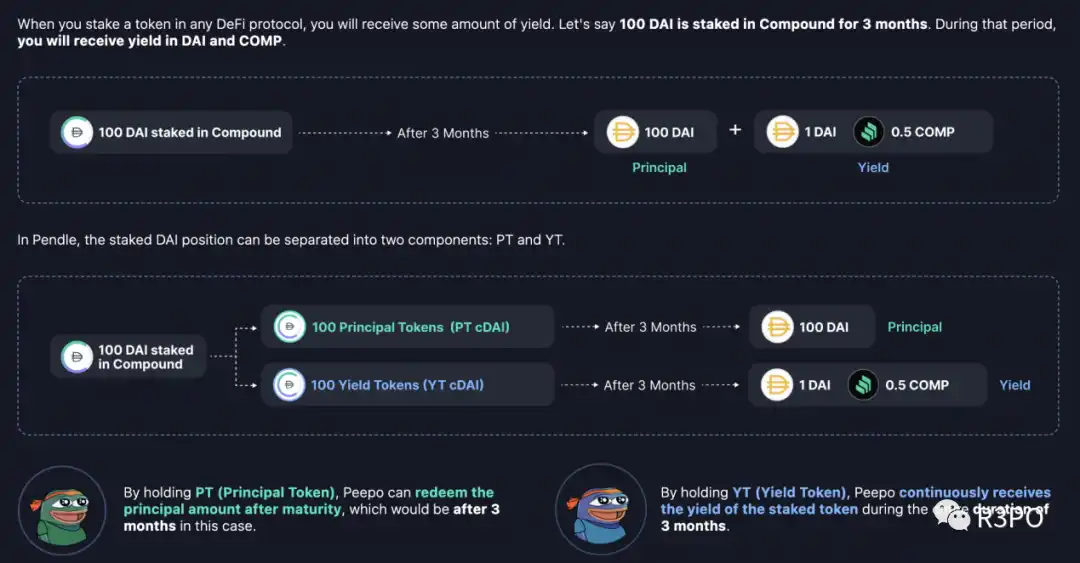
Holding principal TokenPT is similar to holding zero-coupon bonds, which is equivalent to buying Tokens at a discount. The closer it gets to the maturity date, the closer the price of PT is to face value. The income TokenYT can continuously receive interest income during the holding period. For example, depositing stETH obtained on Lido into pendle can obtain stETH PT representing the principal part and stETH YT representing the interest part. They both have a maturity date, and stETH PT is fully redeemed on the maturity date. stETH YT can enjoy all the interest generated before stETH matures.
By dividing PT and YT, Pendle provides users with diversified profit strategies. For users who are less risk-averse and prefer to reduce volatility, it is suitable to purchase and hold PT Token at a discount. At the end of the holding period, the price of PT will return to face value, and the user's profit is the difference between face value and purchase price. For users who are more risk-averse, they can participate in speculation on future profits by purchasing YT Token. If the user estimates that the future rate of return will increase, they can choose to purchase YT Token to achieve the purpose of long-term rate of return.
Aside from the clever project design, Pendle's user interface design is also quite user-friendly. The user interface of Pendle is divided into two parts: Simple and Pro. Even novice users who have difficulty understanding the principles of Pendle can easily use the Simple interface, while the Pro interface is more suitable for professional users who are proficient in DeFi and can explore a variety of profit strategies.
2. Team
Pendle's CEO TN Lee has extensive experience in the blockchain industry and has worked with team members for a long time. Prior to founding Pendle, TN and Greg and YK (now Pendle team members) founded a data analysis company specializing in software engineering consulting to meet the needs of many Layer1 projects. Projects they have worked on include Tezos, IoTex, Zilliqa, Band Protocol, Stellar, Polygon, and more. TN has also worked as a founding team member for Kyber Network, responsible for marketing and business development.
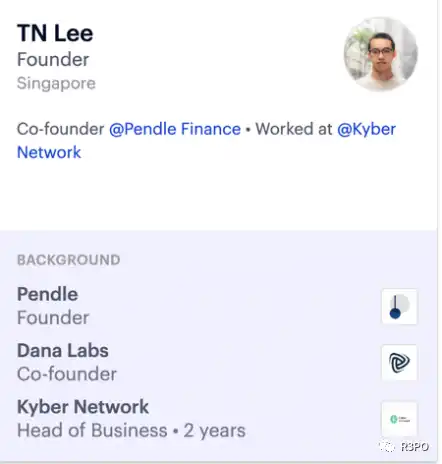
According to LinkedIn data, Pendle's team is mainly composed of developers, with a total of 12 employees currently.
3. Financing Background
As early as 2021, Pendle completed a $3.5 million financing round with strong backing from investors. Mechanism Capital led the round, with participation from Crypto.com Capital, Hashkey Capital, Spartan Group, CMS, imToken, DeFi Alliance, D1 Ventures, Hongbo (Co-founder & CEO of DeBank), Taiyang Zhang (Co-founder & CEO of Ren Protocol), and others.
In April 2023, Bixin Ventures announced its investment in Pendle, and the transaction was completed through off-exchange OTC methods.
4. Token Economics
Recently, Pendle released its V2 version, which updated the token economic model to use the vePENDLE model, reducing gas fees and paying ETH to stakers instead of USDC. The application scenarios and value capture of PENDLE have been significantly improved compared to before. 获取治理权:Users can obtain vePENDLE by staking and locking PENDLE, and participate in the governance of the Pendle protocol. 增加 LP 收益:vePendle Token holders will receive increased incentives (up to 2.5x) for providing liquidity in any liquidity pool they participate in. Fee sharing: 3% of revenue generated from YT will be distributed to vePENDLE holders who vote for this pool. At the same time, vePendle can receive 0.1% of the transaction fees generated by the pool it voted for. In addition, LSD has a broad prospect in the track, with several times growth space and a market value of nearly 100 billion in the foreseeable future. Positioned to support LSD assets, Pendle has gained support from mainstream projects such as Lido, Frax, and Rocketpool. Smart Contract Risks: According to official website information, the Pendle protocol has been audited by 6 audit companies such as Ackee Blockchain and Dedaub. However, in addition to the risk of potential vulnerabilities in its own smart contract, Pendle also faces the risk of smart contract vulnerabilities from its partner projects, as the underlying assets come from other projects. Underlying asset price volatility risk: With the continuous changes in the market and external environment, the price fluctuations of underlying assets may be significant, which may in turn lead to fluctuations in the prices of PT and YT. Especially for investors in YT Token, they may face greater market volatility. Welcome to join the official BlockBeats community: Telegram Subscription Group: https://t.me/theblockbeats Telegram Discussion Group: https://t.me/BlockBeats_App Official Twitter Account: https://twitter.com/BlockBeatsAsia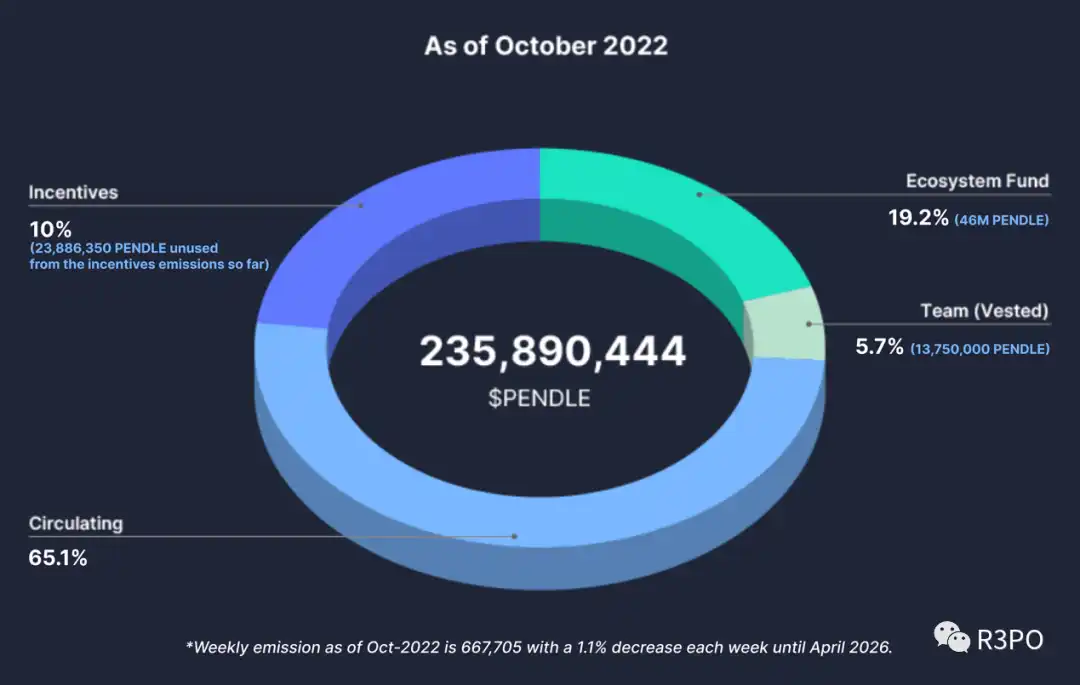
The value capture of Pendle Token mainly comes from gaining governance rights, increasing LP yield, and fee sharing.5. Future Outlook
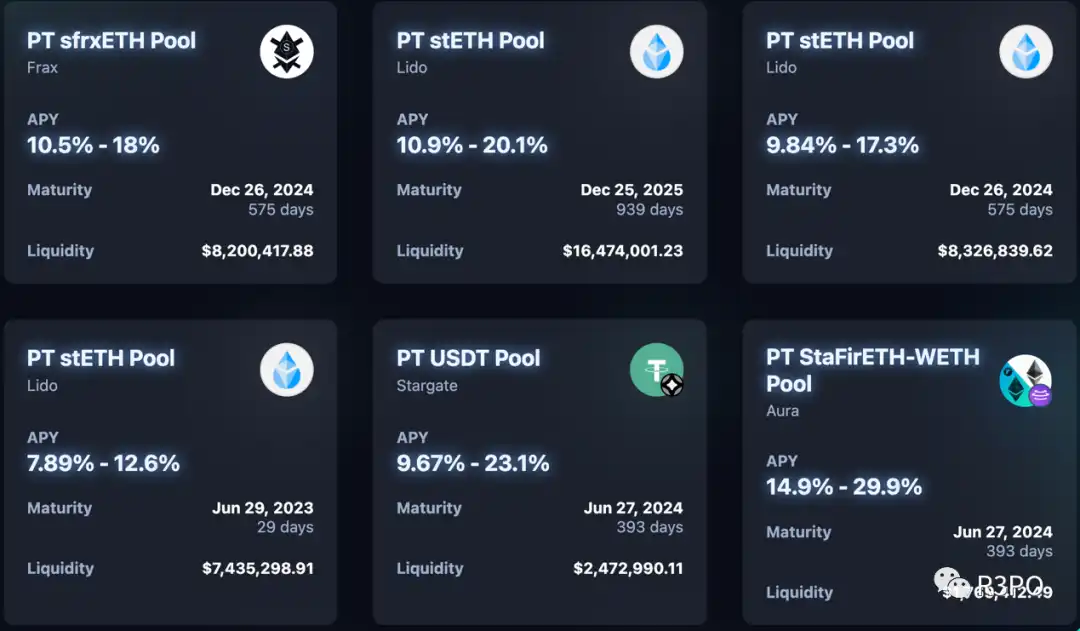
R3PO believes that the innovative mechanism adopted by Pendle provides users with diversified tools for yield management. The simple and user-friendly interface design reduces the investment threshold and is conducive to user adoption. At the same time, using LSD assets as the underlying interest-bearing assets ensures Pendle's continued profitability in bear markets, and the LSD narrative also depicts sufficient imagination space for Pendle's future market size. The tenfold increase in half a year reflects that Pendle's value is gradually being recognized by the market, and Pendle may reach even higher positions in the future.6. Risk Warning
Reference materials
https://docs.pendle.finance/Home
https://www.tokenomicshub.xyz/pendle
https://medium.com/pendle/pendle-tokenomics-3a33d9caa0e4
https://www.panewslab.com/zh/articledetails/4x2pe3t9.html
https://www.linkedin.com/company/pendlefinance/people/
https://www.odaily.news/post/5185892
Original article link

 Related Articles