Bankless: BRC-20 meme has short-lived fate, Bitcoin expansion is fundamental

Original title: " Bankless: The BRC20 meme craze will eventually be "a piece of chicken feathers", and Bitcoin expansion is fundamental "
Original source: Bankless
Original compilation: Bitpush News
The Memecoin craze is spreading!
A new token type called BRC-20 is attracting developers and is now live on the Bitcoin blockchain Provides an experience similar to the garbage coins in the Ethereum ecosystem. The BRC-20 is built using the Ordinals protocol, which has recently gained traction for introducing NFTs to Bitcoin.
In this article we will delve into everything about BRC-20, from the basic definition to the hyped token, while dissecting the on-chain carnage that the hype has caused ( Not every user is happy about this...) We then discuss our thoughts on the state of the BRC-20 market and why this mania is no different from the ones that came before.
"The new overlord in the square"
BRC-20 has recently angered those BTC pure Domo, because it's named after Ethereum's ERC-20 token standard, and is the brainchild of Domo, which calls itself "Dune Wizards on the terminal chain" (Dune Wizards: a nickname for blockchain analysts).
BRC-20s use an ordinal inscription of JSON data to create what are essentially fungible collections of NFTs. While this experiment created a fungible ERC-20-style token, its use cases are rather limited.
Unlike ERC-20, which can be used as collateral in various dApps on Ethereum, BRC-20 is limited to minting and transferring functions. In the absence of a Bitcoin-native decentralized exchange solution, asset sales can be done on-chain through escrow or token treasury functions.
At the time of contract deployment, anyone can mint BRC-20 tokens for free (plus transaction fees) in increments specified by the token contract - assets Issues cannot be pre-minted. While there has been much discussion surrounding the token type, the project’s white paper notes that the issuance of Bitcoin assets backing Taproot is not a new concept, citing the Taro protocol as offering a “clearly better solution.”
BRC-20「To The Moon」
BRC- 20's total market capitalization has soared over the past few weeks, surging 3441% from $17.5 million on April 25 to $619.7 million on May 9. Many BRC-20 tokens experienced similar parabolic gains.
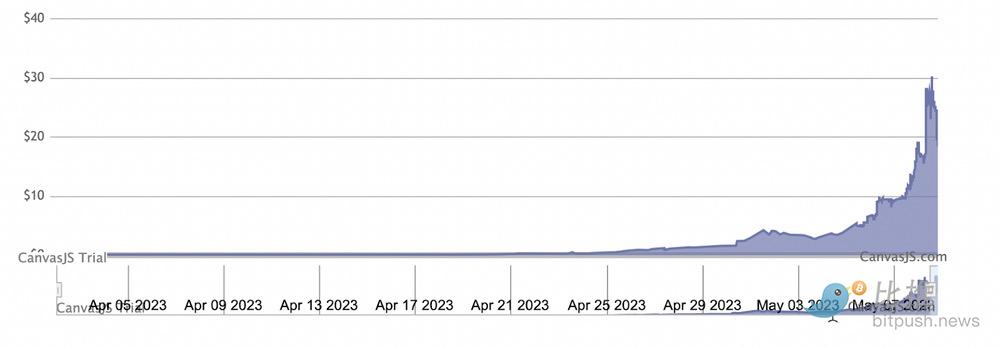
For example, market value The first and largest BRC-20 ORDI at $434 million rose 2357% from $0.75 to $18.43 over the period. Since April 2nd, ORDI has skyrocketed by 18,330% and started to land on centralized exchanges such as Gate.io.
Other BRC-20s have produced similar exponential returns for holders. Tokens such as PEPE, MEME and MOON have all gained more than 2,000% in the past month.
Bitcoin transaction fees soar
BRC-20 mania leads to Bitcoin fee market mess.
BTC fees have reached their highest level since April 2021, with the average fee per transaction soaring and currently around $31.
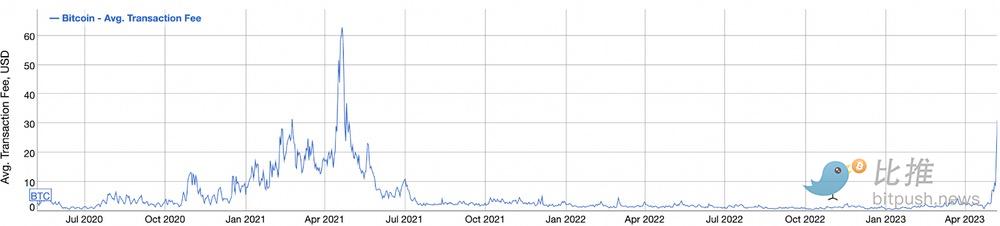
With BRC The -20 craze intensified, with the Bitcoin blockchain generating over $49 million in transaction fees in total over the past week. Between this period and block space rewards, miners generated over $204 million in revenue during this period.
For reference, this weekly earnings is the highest since May 2022.
The surge in demand for block space has caused severe network congestion. There are currently over 411,000 pending transactions in the mempool.
Congestion has also had an impact on centralized crypto platforms. Binance, which was forced to halt withdrawals twice between May 6 and 7, is now prioritizing lightning withdrawals to provide users with alternative options.
"Sunrise in the east and rain in the west"
Speculators is busy dumping it all at meme casinos, meanwhile individuals who use crypto systems in the real world - especially in latin america, africa and asia - now have to compete with these gamblers (degens) for blocks space.
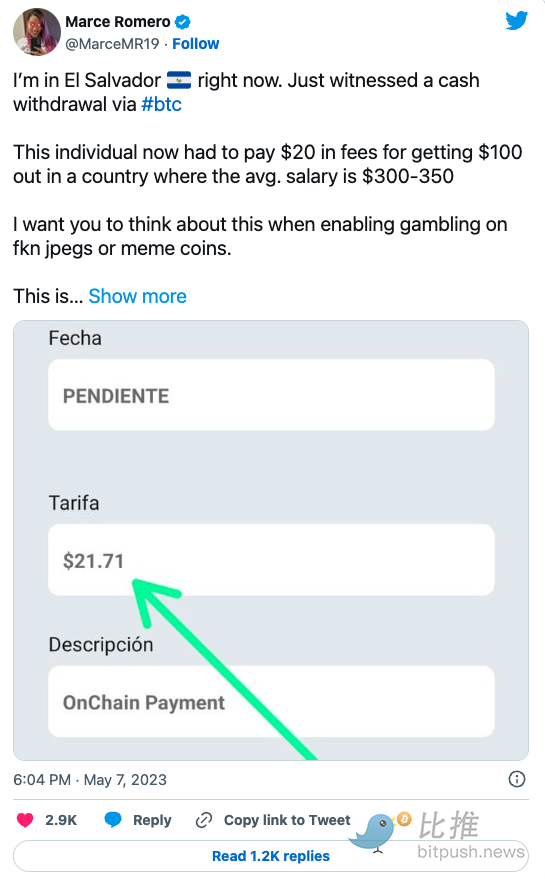
Providing alternative stores of value to fiat currencies in hyperinflationary regions and providing financial services to the unbanked have long been two of Bitcoin’s strongest value propositions. Soaring transaction fees pose a major barrier to adoption among low-income, fee-sensitive segments of the population that have traditionally benefited the most from alternative currencies and financial systems.
Some users have blamed the BRC-20 craze as the root cause of congestion, with some observers even claiming that the adoption of BRC-20 is akin to a DDoS attack on the Bitcoin network.
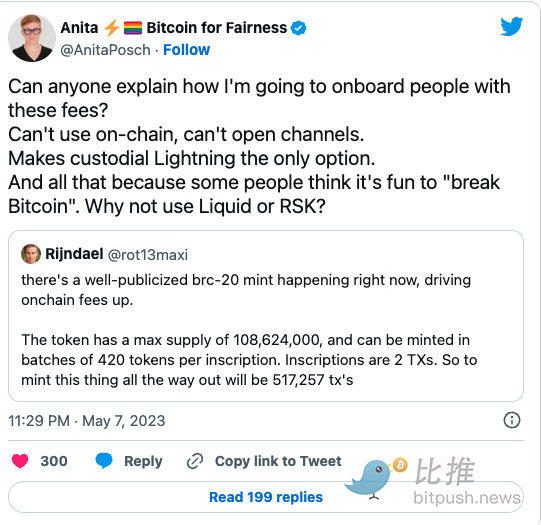
While this phenomenon should be criticized, it is also the reality of commoditization of publicly available block space. These transactions, which may seem silly and pointless to some, are a perfectly valid use of Bitcoin block space.
Blockchain has not yet been widely adopted, and the idea that the future of consumer finance will be on a Layer-1 basis is ludicrous. Layer 1 networks alone, neither Bitcoin nor Ethereum, can provide enough block space to achieve the scale required for next-generation financial primitives.
Instead of combating current fee increases by attacking specific use cases (which is a relatively minor problem when considering the exponential growth in future adoption), we must Focus on building reliable decentralized scaling solutions.
Familiar Fates
Like their ethereum-based memecoin cousins, In the long run, the demand for BRC-20 will be short-lived. Their prices will not rise, but a series of plummets: these instruments are not suitable for investment!
They have no value other than the value generated on the meme layer, although BRC-20 has been around for two months, these fungible bits Coin ecosystem tokens need cross-chain meme enthusiasm to attract a lot of attention. While we’ve seen memecoins explode in the past, the mania always subsides and they return to their tracks.
While you may be tempted to follow some of the more explosive-sounding moves, be warned: you could lose more than your investment is worth. Properly distributed as these tokens have no value and operate under an immature framework!
Bottom Line
BRC-20s may not facilitate any meaningful encryption advancements, but they do Representing a powerful thought experiment, Ordinals Theory highlights the role of culture in a crypto-financial system.
High gas fees (although today's encrypted financial system has limited use cases in developing countries) should serve as a warning that contemporary blockchain systems cannot meet future needs, Drive awareness among industry players of the need for decentralized scaling solutions.
Meme crazes come and go, but creating demand for block space is critical to ensuring the continued security of the network. Especially for the Bitcoin network, with successive halvings and reduced block incentives, miners will increasingly rely on transaction fee income to pay for operating costs. The long-term future of Bitcoin is multiple expansion methods, the outbreak of Ordinals and the resulting High fees are the catalyst toward this future.
Original link
Welcome to join the official BlockBeats community:
Telegram Subscription Group: https://t.me/theblockbeats
Telegram Discussion Group: https://t.me/BlockBeats_App
Official Twitter Account: https://twitter.com/BlockBeatsAsia