Analysis of BRC-20 Token Principles and Characteristics, What Other Participation Opportunities Are Available to Ordinary Users?

Original Title: "Is There Still An Opportunity for BRC20 Token Genesis? An In-depth Look at BRC20 Principles, Features, and Participation Methods"
Original Source: ChainCatcher
Today, the news of "BRC20 Token Ordi Price Breaking $10, Market Cap Exceeding $200 Million" has been circulating in major communities. This Token was launched and issued on March 9, and during the initial issuance, it was free. Users only needed to pay on-chain minting Gas fees to receive a large amount of ordi Tokens. Assuming a user minted 1000 ordi Tokens at the beginning of the issuance, it is now worth close to $100 million US dollars.
Compared to participating in airdrops, the myth of BRC20 Token wealth creation is even easier. Users do not need to engage in on-chain operation drama, nor do they need to worry about not meeting strict conditions. They only need to mint at the time of Token issuance, and even when the Bitcoin chain is not congested in the early stages, the on-chain GAS fee cost is only a few US dollars.
Fueled by the continuously surging token price and the wealth creation stories of minting BRC20 Tokens, BRC20 has now become a new narrative in the cryptocurrency market, attracting a large number of users.
On May 5th, crypto KOL Plan B conducted a Twitter poll about BRC20; Wang Feng, the founder of the NFT marketplace Element, announced on social media that Element will develop BRC20-inscribed Tokens and an NFT trading market supporting Bitcoin Ordinals for community users. Today, Huobi announced that BRC20 Token ordi, with a total of 23.91 million votes, won first place in the fifth round of the coin listing vote event. Once the relevant standards receive industry consensus, spot trading of ordi will be opened immediately, with the second place going to BRC20's PEPE. Following this, OKX tweeted that they are intensively analyzing BRC20 and pushing for wallet support for ordi trading.
It is evident that BRC20 is becoming a new battleground for users, projects, and CEX exchanges. So, what exactly is BRC20? As an ordinary user, how can we participate in this new wealth creation opportunity? What risks will we face?
What Is BRC20? How to Mint BRC20 Tokens?
BRC20 is an experimental format standard for issuing fungible Tokens on the Bitcoin network, created by Twitter user @domodata on March 8, 2023, based on the Ordinal protocol. Similar to Ethereum's ERC20 standard, it specifies the name, total supply, transfer functions, etc., for Tokens issued on Ethereum, and all Token contracts developed on Ethereum adhere to this standard.
The main difference between BRC20 and ERC20 is that the Bitcoin network does not support smart contracts. Instead, Token contracts, minting, and Token transfers are deployed using the Ordinal protocol by setting inscriptions as JSON data format, allowing developers to create and issue fungible Tokens via the Ordinal protocol.
What is Ordinal?
Ordinal was proposed in January this year and is a system for numbering the smallest unit of Bitcoin, satoshis (sats).
1 BTC = 100 million sats. Initially, each satoshi was the same unit, meaning 1 BTC held by Xiaoming was the same as 1 BTC held by Xiaolan.
Through Ordinals, these sats can be sequentially arranged and assigned a specific ordinal number, meaning the Ordinal protocol assigns a unique number to each satoshi. This uniqueness allows for tracking each satoshi on the blockchain. When users attach specific information, such as images, text, code, etc., to these sats, each satoshi becomes unique, creating a Bitcoin NFT. The attached information is called "inscriptions," and the process of attaching information to sats is called "inscribing," meaning to "inscribe" the "inscription" on the satoshi.
User @domodata believes that the Ordinals protocol can be used not only to issue NFTs but also to issue fungible Tokens. When the attached information (inscriptions) follows a unified protocol standard (JSON data format), it can become a fungible Token BRC20. In simple terms, BRC20 can be understood as a mutated form of Ordinals NFT, where NFTs have image inscriptions, and BRC20s have uniform inscriptions in JSON format text data (Text). In BRC20, inscriptions also serve as the ledger for BRC20 Tokens, allowing tracking of each Token transfer.
The BRC20 standard provides 3 main functions for issuing Tokens on the Bitcoin network, including deployment of BRC20 Tokens, minting, transferring, etc. Developers can create and issue BRC20 Tokens by following this standard.
Along with the release of the BRC20 standard, @domodata introduced the first BRC20 experimental Token named ordi, with a total supply of 21 million. In the early days, users could mint it by only paying on-chain GAS fees. Now, users can only purchase it on the secondary market, with the current price being $10 and a market cap of $210 million. However, @domodata also reminds users that this is just an implementation standard and has no investment value.
For example, in the case of creating an ORDI Token, users can create the Token by simply entering the code below.

This diagram represents the JSON data text input for deploying the ordi Token, with a total supply of 21 million and a maximum minting limit of 1000 per transaction. Users can change the field after "op" to represent the operation they want to perform, where Deploy stands for Token deployment, Mint stands for Token minting, Transfer represents Token transfer; "tick" indicates which Token's name is being executed, and users can input the Token name they want to execute.
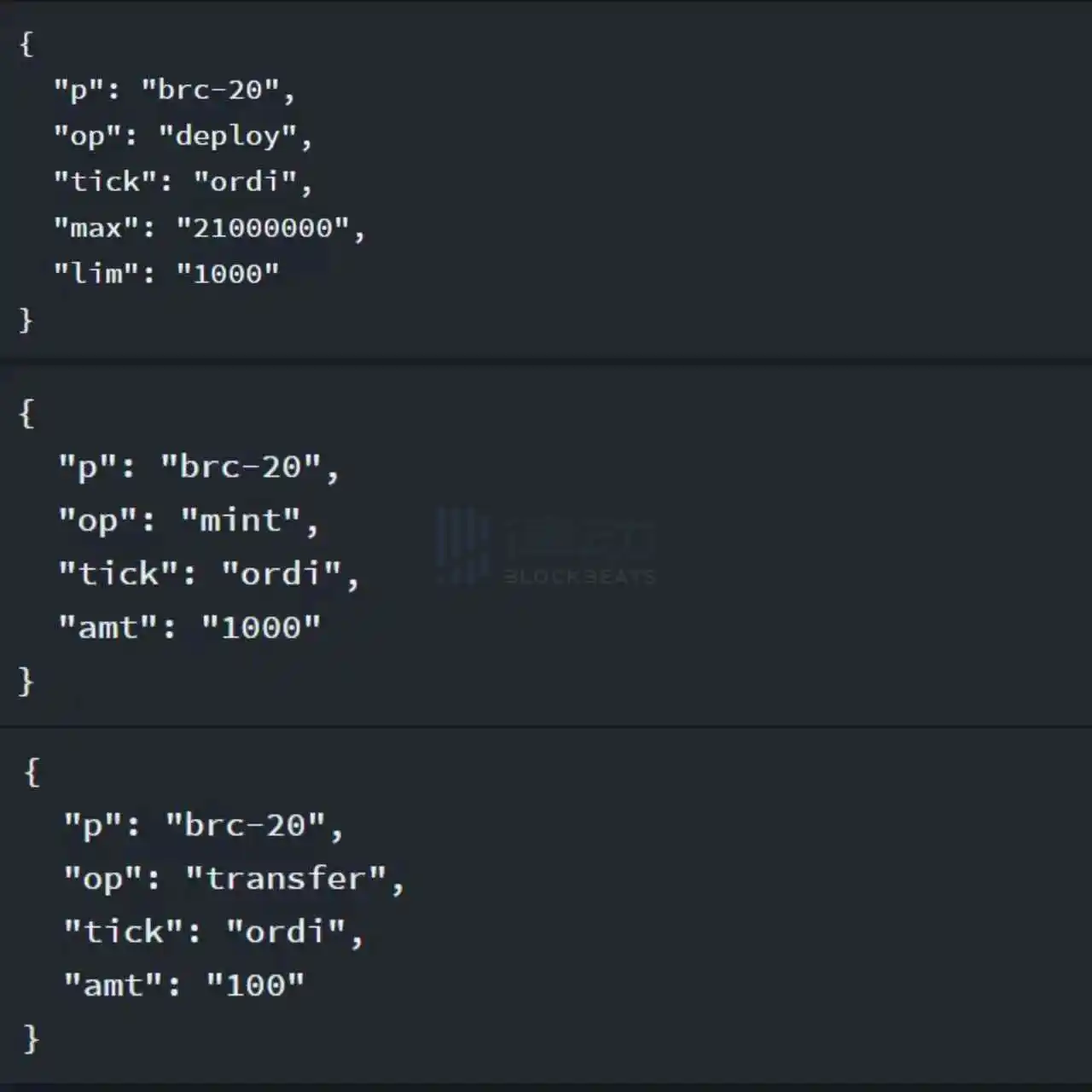
BRC20 Three Contract Standards
Currently, anyone can deploy a BRC20 Token. It is important to note that the deployed BRC20 Token name can only consist of 4 characters (English punctuation, English, numbers) and is not case-sensitive (DOGE=doge); it is on a first-come, first-served basis, meaning if a token like ordi already exists, then another Token with the same name cannot be deployed later.
Users can now use third-party tools to perform Token deployment, transactions, and other operations. Currently, most activities are done through the Unisat wallet.
How to Issue a BRC20 Token?
Users need to install the Unisat wallet (https://unisat.io/), set up the wallet by selecting the format "m/86'/0'/0'/0/0," which supports receiving NFTs and BRC20 Tokens; extract BTC from a CEX to the Unisat address, which starts with bc1p; click on inscribe (to inscribe the issued Token onto the blockchain), select BRC20; choose Deploy, enter the desired Token name, total supply, and per transaction minting limit; submit, pay the Gas fee, and it's done;
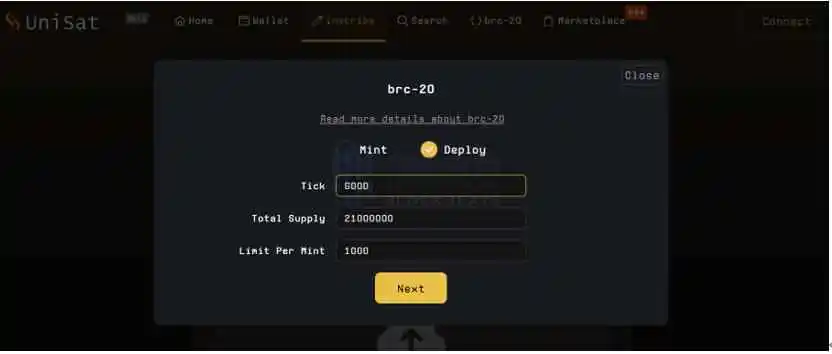
How to Purchase a BRC20?
Purchasing a BRC20 Token can be divided into two cases: including newly minted coins and already minted Tokens.
Regarding newly minted coins, users do not need to purchase, only need to pay on-chain GAS fees for Minting.
For the specific execution steps, users can use Unisat to click on inscribe, select BRC20 - choose Mint, enter the Token name, select the number of Mints to submit, pay the on-chain GAS fee, and that's it.
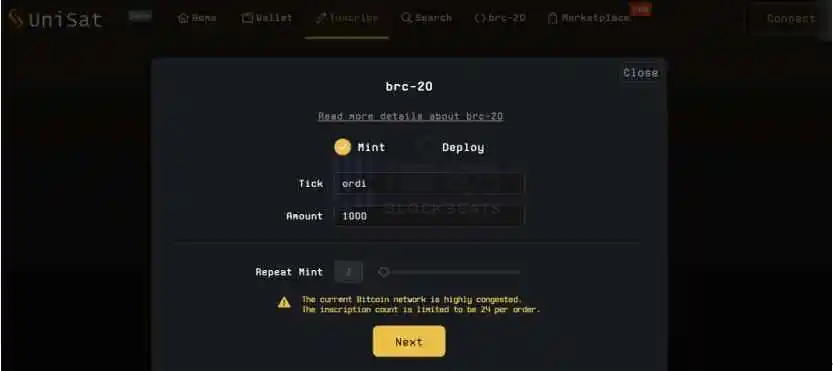
It is important to note that when paying the on-chain GAS fee for Minting Tokens, during peak hours, users often need to pay a higher fee than displayed, otherwise, the Minting may fail. This is because Bitcoin network miners prioritize transactions based on GAS fees, and transactions with higher GAS fees are more likely to be included in blocks.
For specific GAS fees, please refer to: https://mempool.space/
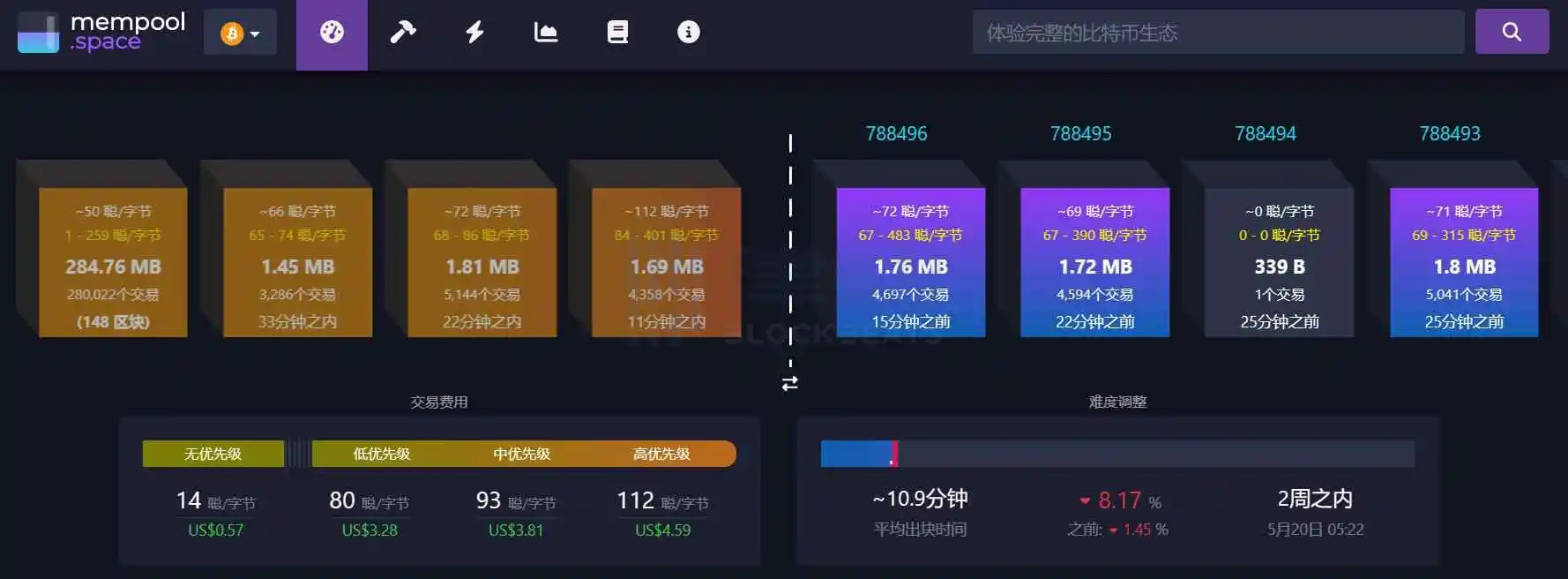
For already minted Tokens, if users choose to execute the Mint function again, the generated Tokens will be invalid.
Users looking to obtain the corresponding Tokens currently need to purchase through peer-to-peer OTC transactions, mainly in two ways: one is to privately find a third-party escrow transaction, which is prone to encountering scammers such as taking money without sending coins or sending fake coins; the other is to trade on specialized platforms, such as UniSat's Marketplace. This trading market is similar to an NFT trading platform, where sellers will list the quantity and price of BRC20 Tokens they want to sell on the platform. If a buyer wants to purchase, they need to buy all the Tokens the seller has listed in a single transaction and cannot choose the quantity to trade.
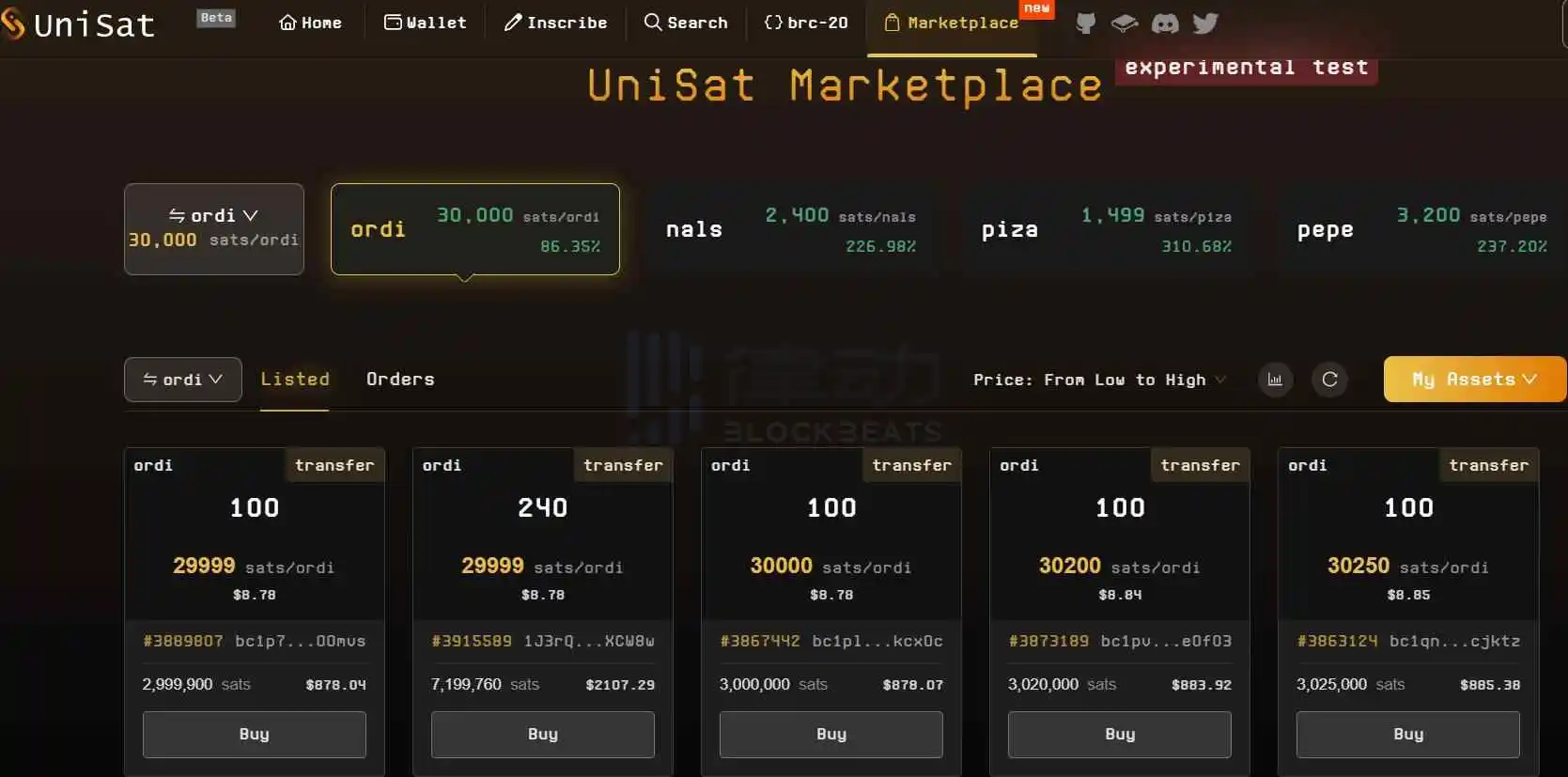
However, using Unisat's Marketplace for the first time has a threshold; either you are an early OG user of Unisat or have 20 Unisat points.
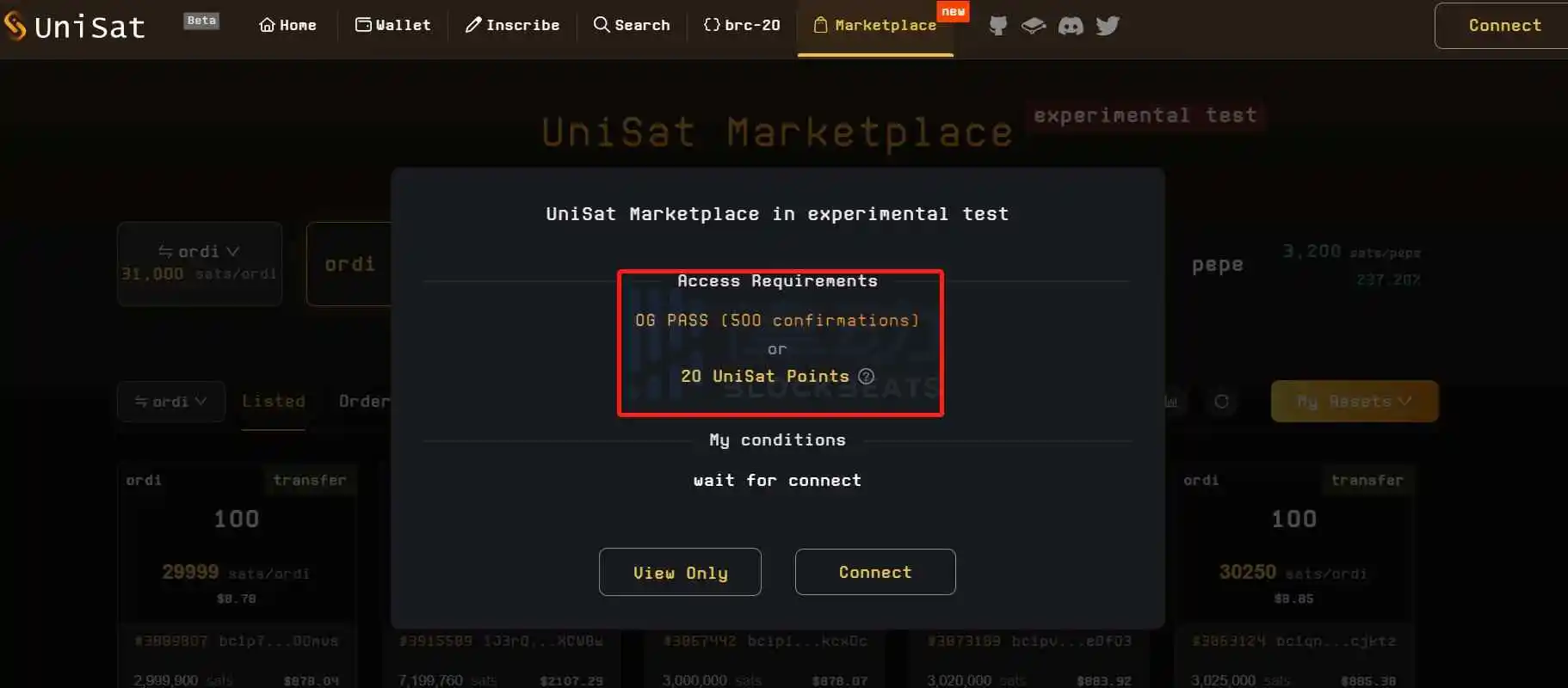
How to Get 20 Unisat Points? You need to use Unisat's Mint feature (also known as Inscription), Minting one yields one point, and you need to Mint 20 of them. Based on the current Bitcoin network GAS fee, Minting 20 points would cost approximately $160. In other words, users need to pay around $160 sats before entering the Unisat trading market without doing anything, which is why BRC20 Tokens restrict some users.
Furthermore, on the Unisat website, users can also view the BRC20 Token's deployment time, Mint completion rate, the number of holding wallet addresses, and the number of completed transactions. The more holding wallet addresses, the more purchasing users there are.
BRC20 Token Representations
Ordi — the first BRC20 Token issued by @domodata, went live on March 9th, with a total supply of 21 million, currently priced at $10, held by 5,261 addresses, with 62,936 transactions.
Nals — derived from a meme, Nals combined with Ordi becomes ordinals, the protocol's full name. This Token went live on March 10th, but was not fully Minted until May 1st. It has a total supply of 21 million, currently priced at $0.9, held by 1,385 addresses, with 39,546 transactions.
PIZA — with a supply of 21 million and a price of $0.43.
Meme — with a supply of 99,999, currently priced at $91.
PEPE — derived from an ERC20 Token meme coin, currently priced at $0.68, with a total supply of 42.096 million.
What Are Some BRC20-Related Tools?
Third-party BRC20 Token Minting Platforms — Idclub; Looksordina; Unisat, with only differences in fees.
BRC-20_io — a platform to view BRC-20 Token price and market cap data.
Unisat——A wallet and trading market aggregator for BRC-20
Ordiscan——An ordinal explorer to view BRC-20 transaction status, view Inscriptions and Collections addresses
Ordspace——A BRC-20 and ordinal NFT data analytics platform, where you can view BRC-20 market cap, price, etc.
BRC-20 tokens are mostly meme coins, so be cautious when purchasing
According to the BRC-20.io website, as of May 6, there have been 13,083 BRC-20 tokens issued, with a total market cap of up to 280 million USD and a trading volume of approximately 4.27 million USD in the past 24 hours.
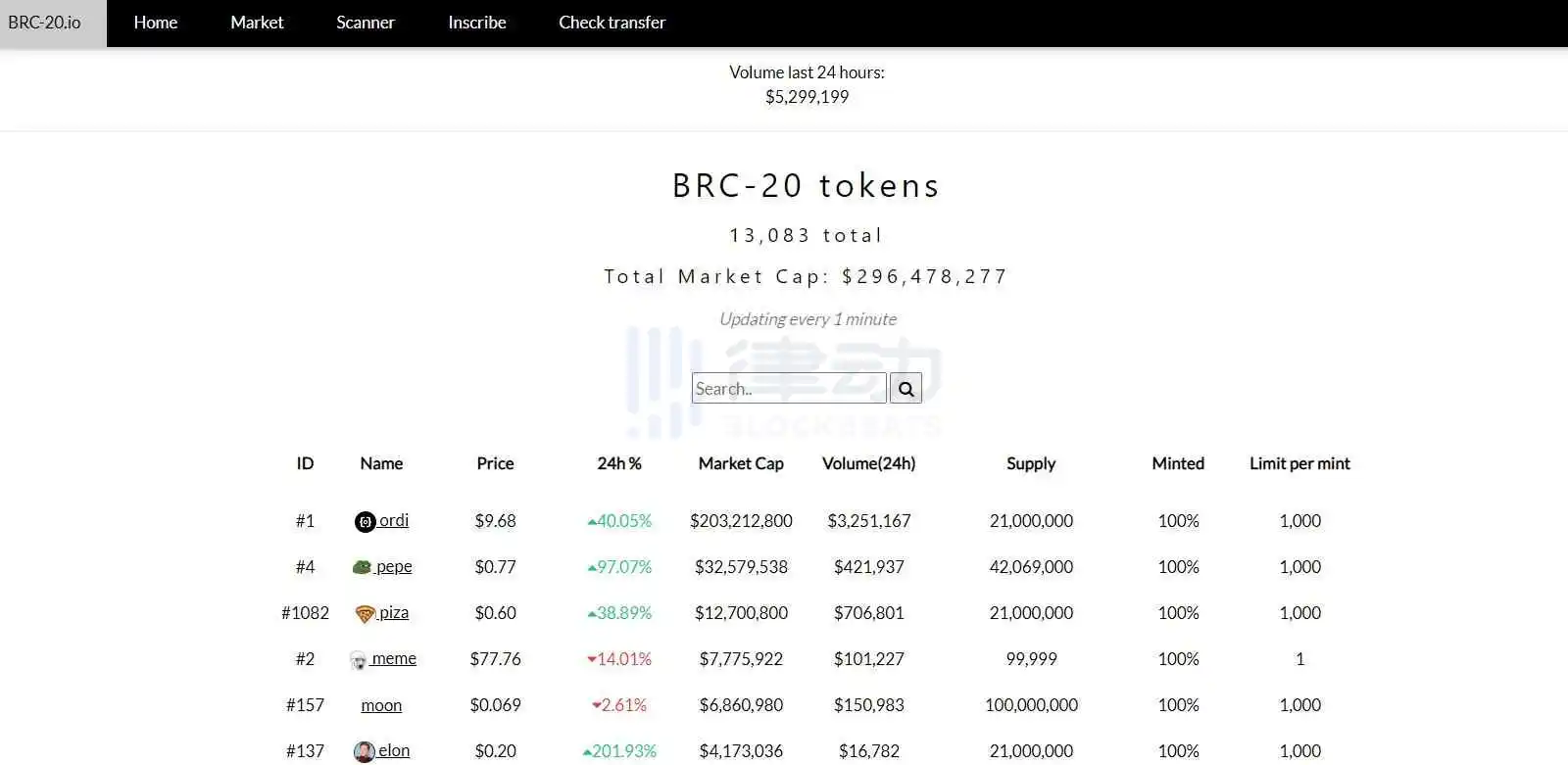
Furthermore, looking at existing BRC-20 tokens, apart from the first ordi token, the top market cap tokens are mostly meme coins such as MEME, PEPE, PIZA. These tokens are mainly speculative in nature and lack real underlying value. In terms of the number of holders, even the largest market cap ordi token has only 5,261 holders. This indicates that the current BRC-20 player base is very niche, with poor token liquidity, and most tokens have value but no market.
The reason why BRC-20 tokens are popular among users is mainly due to the fair issuance of BRC-20 tokens, where all minting users are treated equally. Project teams cannot reserve or increase issuance, and even the issuer, to obtain the issued BRC-20 tokens, must start minting just like regular users, truly making everyone an equal participant in the ecosystem.
However, it is important to note that currently BRC-20 tokens are just tokens, and where they will ultimately go and what applications they will have are still unknown.
Due to the fact that most BRC-20 tokens are from grassroots projects with no value or utility, they have faced opposition from the original users of the Bitcoin community, who believe that such actions only contribute to network congestion without benefiting Bitcoin.
However, some users believe that this has added new utility to the Bitcoin network, attracting a new wave of enthusiastic users and developers to join the Bitcoin community, increasing demand for BTC, which is beneficial for the price of BTC, as users need to use satoshis to pay for on-chain purchases of any BRC-20 token.
From the current results, the emergence of BRC20 has been most beneficial to miners, bringing them huge revenue. According to The Block data, the transaction volume of the Bitcoin blockchain surged from $499.34 in February to $689.68 in March, with Bitcoin miners' revenue in March reaching at least $718 million, marking a new high since May 2022.
In addition to BRC20, ORC20 and LTC20 Token have also been introduced.
ORC20 - an upgraded version of BRC20 that can change the initial and maximum coin supply; the token naming characters have no fixed number limit (BRC20 Token supports only 4 characters); it allows users to cancel transactions; furthermore, ORC20 Token enforces royalties, meaning that holding or trading ORC20 Token requires paying royalties, similar to NFTs.
LTC20 - a Litecoin community imitation of BRC20, proposing the LTC-20 Token experimental standard, which is developed on the Litecoin Ordinals protocol.
However, in terms of current community attention, the popularity of ORC20 and LTC20 has only remained at the launch stage, and their tokens have not gained the same level of popularity as BRC20 Tokens.
Original Article Link
Welcome to join the official BlockBeats community:
Telegram Subscription Group: https://t.me/theblockbeats
Telegram Discussion Group: https://t.me/BlockBeats_App
Official Twitter Account: https://twitter.com/BlockBeatsAsia