Fed's 25 basis point rate hike hints at pause, Powell says 'it's too early to cut rates'
Original title: " Fed raises rates by 25 basis points and hints at pause, Powell says 'it's too early to cut rates' "
Original source: BitpushNews
The Fed announced a 25-basis-point interest rate hike on Wednesday, the 10th rate hike since March 2022 and the first time since 2007 that the federal benchmark rate has been raised to a range of 5%-5.25%.
The Fed's most aggressive interest rate hike in 40 years is likely to become history. In its post-meeting statement, the U.S. central bank deleted the words "further tightening policy", which has been regarded as a key word for the central bank to continue raising interest rates. sign. The wording of the new statement was revised to read: "In determining the degree of additional policy tightening that may be appropriate to bring inflation back to 2 percent over time, the Committee will consider the cumulative tightening of monetary policy, the lags with which monetary policy affects economic activity, and inflation , and economic and financial development."
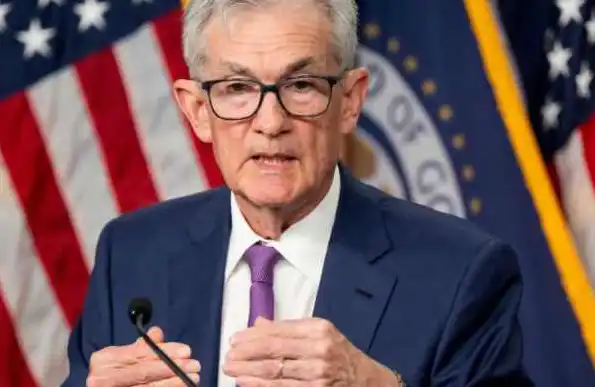
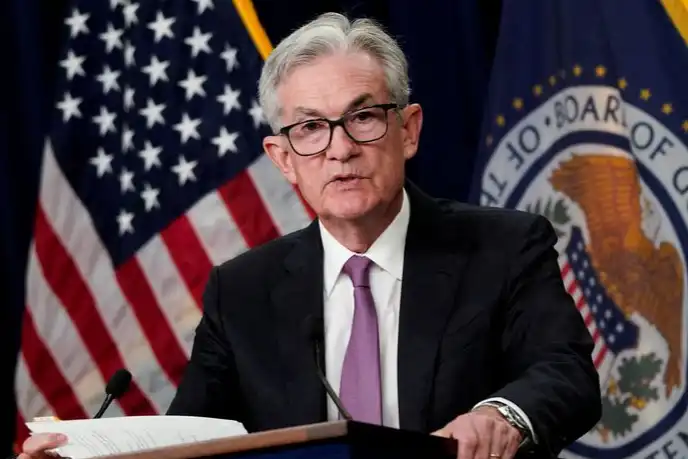
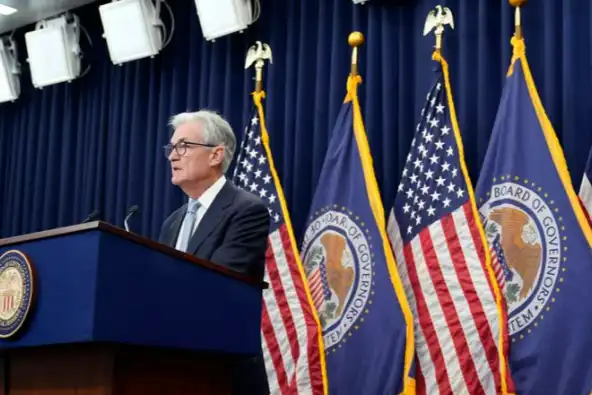
However, Federal Reserve Chairman Jerome Powell warned at a news conference that the policy-making committee believes that inflation will take time to come down, and that the current inflation outlook does not support cutting interest rates now.
What is the Fed's benchmark interest rate now?
Wednesday's hike took the key interest rate to 5% to 5.25%, the highest level in 17 years. The Fed achieved that goal in near record time, raising interest rates from near zero in March 2022 in an attempt to curb inflation, which rose sharply last June as the U.S. economy quickly recovered from the Covid pandemic. It also reached its highest level in ten years.

While consumer price gains have since slowed, the "core" measure, which strips out volatile food and energy items, has risen more than expected this year, leading futures markets at the start of the year to predict the Fed will raise interest rates to 2023. 5.6%.
But the March failures of Silicon Valley Bank and Signature Bank led financial institutions to tighten lending standards, which Fed officials said could slow the economy and inflation, and this week, the collapse of First Republic Bank and JPMorgan Chase's Not involved in acquisitions.
Some economists say Fed policy makers may be reluctant to step up pressure on the financial system given that the rate hike itself has exacerbated the banking crisis by exacerbating the banking crisis by exacerbating large losses at some regional banks heavily invested in rate-sensitive bonds .
Powell also touched on the banking sector in his post-meeting speech, arguing that the U.S. banking system remains "robust and resilient." He mentioned that the run on Silicon Valley Bank is unprecedented in history, and the central bank will work hard to strengthen the supervision of medium-sized banks. Acknowledging the Fed's mistakes in bank regulation, Powell said, "I don't know anyone who thinks this is going to happen so quickly ... it's going to be up to Vice Chairman Michael S. Barr to actually take the lead in designing a way to address these issues."
No decision to pause rate hikes, it may be too early to cut rates
Powell said that no decision to suspend interest rate hikes was made today, and the outcome of interest rates will be determined meeting by meeting. Asked whether the Fed would pause rate hikes at future meetings, Powell said it would rely on data to make decisions and that future policy actions would depend on developments.
The Fed's preferred measure of core inflation remained elevated at 4.6%, even as headline inflation fell to 4.2% in March from a peak of 7% in June, according to a government report last week. A separate report showed that employee wage growth accelerated slightly in the first quarter.
Inflation, labor market and credit conditions data will continue to influence future policy, Powell pointed out that the U.S. job market is still very tight, the extent to which bank lending reductions will drive economic cooling remains uncertain, and the Fed will continue to shrink its balance sheet.
The Fed is still digesting conflicting economic signals. While the 236,000 U.S. jobs added in March showed strong growth, monthly job growth slowed markedly compared with the start of the year. The April jobs report, due on Friday, is expected to see job creation fall to 180,000, according to economists' estimates.
The U.S. Labor Department reported on Tuesday that job openings fell further in March, hitting a near two-year low, with the level of job vacancies the lowest since April 2021 and the ratio of open jobs to available workers rising from the previous two-year low. Around 2:1 fell to 1.6:1, which indicates that the extremely tight job market in the United States is easing and may reduce inflationary pressures.
In his post-meeting statement on Wednesday, Powell said it may take some time for a rate cut to look justified. He said: "Our committee's view is that inflation will not come down so quickly, it will take some time, and if our forecasts are broadly correct, then it would not be appropriate to cut rates, and we will not cut rates."
Demand and labor market conditions may need to weaken further before a rate cut is considered "appropriate," he added.
Powell sees moderate growth in US economy, not recession
Gross domestic product expanded at a modest 1.1% annualized rate in the first quarter, despite the U.S. economy growing modestly at the start of the year, under pressure from Fed rate hikes and inflation remaining stubbornly high. Growth in consumer spending, which accounts for 70% of GDP, was stronger at 3.7%, but growth driven by consumer spending is losing steam, manufacturing output has also fallen, and growth has begun to show signs of cooling.
In his speech on Wednesday, Powell said early signs of weakness in the labor market indicated that the path to a "soft landing" for the U.S. economy was not impossible. "It's not a promise of any kind, but in my view it's possible that we can continue to cool the labor market without the massive rise in unemployment that we've seen in many previous events, wage growth has been falling, and that's a good thing," he said. signs, a decline to a more sustainable level ... In my view, the chances of avoiding a recession are greater than the chances of a recession occurring".
Market reaction
Stock, bond and crypto markets reacted softly to the meeting compared to previous meetings. As of the close of U.S. stocks on Wednesday, the S&P 500 Index fell 0.6%, the Dow Jones Industrial Average fell 0.80%, and the 2-year U.S. Treasury yield fell 6 basis points to 3.9%. Bitcoin rebounded slightly by 2% to above $28,900.
Greg Magadini, director of derivatives at cryptocurrency analysis firm Amberdata, said in his tweet that Bitcoin "has been driven by macro events this year, with a 25 basis point rate hike, the market should have little reaction, and the hint of a pause in tightening should be positive for BTC. Favorable and could send BTC slightly higher (around $29,000-$30,000), but unsurprisingly, no return to above $30,000 is expected immediately.
Original link
Welcome to join the official BlockBeats community:
Telegram Subscription Group: https://t.me/theblockbeats
Telegram Discussion Group: https://t.me/BlockBeats_App
Official Twitter Account: https://twitter.com/BlockBeatsAsia

 Related Articles