Shardeum: Basic concept, unique function and operation mechanism
原文标题:《 一文详解 Shardeum:基本概念、独特功能及运作机制 》
Original source: CJ, CoinGecko
ChainCatcher
Shardeum is an EVM-based Layer 1 Network, designed for linear scalability. With advanced sharding solutions, Shardeum promises to keep gas bills low forever. Shardeum will also launch its own native Token SHM.
Key points
Shardeum solves the scalability problem through linear scaling and sharding, as well as automatic scaling and its unique quorum proof consensus.
Shardeum utilizes dynamic state sharding to improve transaction throughput while keeping gas bills low.
Arbitrum is an expanded solution for Ethereum that allows for the execution of transactions with higher TPS and cheaper gas charges, which is one of the reasons for the network's popularity. As a result, Arbitrum's airdrop campaign was highly anticipated by the crypto community, and ARB rewarded those who participated in Arbitrum's main network early on.
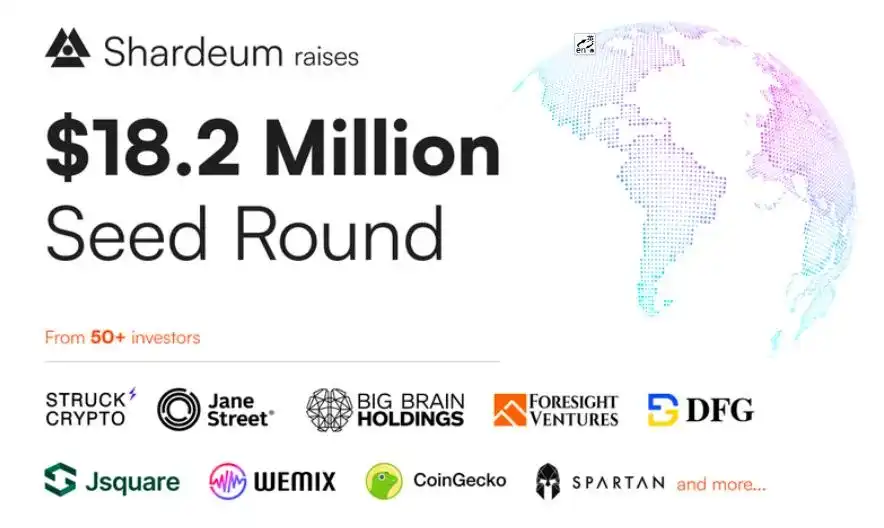
In addition, there are many other protocols in the crypto world that aim to implement DeFi extensions, and Shardeum is one of them. Shardeum was founded by the founders of WazirX, an Indian cryptocurrency exchange with a team that has been building the Web3 project since 2017. Shardeum closed an $18.2 million seed round in October 2022 and will likely make airdrops to those participating in its test network.
Source: Shardeum blog
In this article, we'll learn what Shardeum is and its unique extensibility capabilities and ecosystem.
What is Shardeum?
Shardeum Is an EVM-based Layer 1 Blockchain, designed specifically for linear scalability, promises to deliver low gas costs while maintaining decentralization and security through dynamic state sharding. Shardeum's potential use cases range from DeFi to open source AI and gaming, aiming to get the next billion people to join the cryptocurrency space.
To overcome the blockchain trilemma of scalability, security, and decentralization, Shardeum borrows from Ethereum's decentralization and security, while enhancing linear scalability through dynamic sharding and its combined Quorum and Proof-of-Stake consensus.
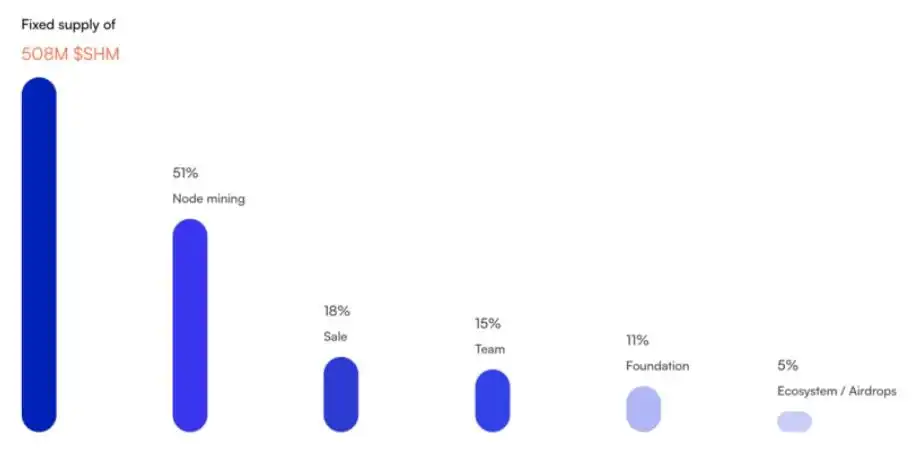
Shardeum will be launching its own native cryptocurrency, SHM. The team has published its Token economics with a fixed supply of 508 million pieces, but SHM is still in the development stage at the moment.
Let's explore what makes Shardeum worth watching.
Shardeum's unique features
Shardeum expands by using sharding technology, which breaks the blockchain into smaller, more manageable parts.
Specifically, blockchain is essentially a large database system, and fragmentation blockchain refers to the splitting of large data tables into smaller data tables. By breaking down information into manageable parts, sharded networks are able to process more transactions per second (TPS) than non-sharded blockchains.
Sharding is no stranger to Shardeum, Zilliqa, Polkadot, Near and even Ethereum use sharding (they use a version called Proto Danksharding). However, Sharedum uses a unique sharding technique called "dynamic sharding".
Dynamic sharding
dynamic state sharding is one of the leading solutions in sharding technology. Its architecture is flexible and can easily adapt to changes in the entire blockchain ecosystem. In dynamic sharding, instead of all nodes covering the same address range, different address ranges are assigned to these nodes so that transactions from multiple shards can be processed simultaneously instead of sequentially. This technology reduces transaction time and also helps increase transaction throughput while always keeping gas bills low.
Essentially, it allows the network to add or remove blockchain fragments or data storage methods on the fly, depending on fluctuations in dynamic demand. The advantage is that the network can be easily upgraded without shutting down the ecosystem.
Unlike static sharding, dynamic sharding does not slow down the network because it can be performed when the network load changes and can easily cope with fluctuations in the network load.
Atomic processing and cross-shard composability
Shardeum also supports the use of atomic processing technology to ensure that transactions execute correctly. Atomicity means that a transaction can be partially executed, or none at all. Without atomic processing, transactions can fail and create network data inconsistencies, leading to security risks and reduced reliability.
Shardeum combines atomic processing and cross-shard communication to allow transactions to access data and state from different shards. It will enable complex transactions and smart contracts to be executed in a shard environment, thus making coding easier for smart contract developers.
Auto zoom function
Because the load and demand of the network change over time, automatic scaling needs to adapt to the level of demand without compromising security and network performance.
Automatic scaling measures the network load per cycle (1 minute) based on the load, and it will agree on the number of validator nodes needed to handle the load. The whole process is self-executing without any intermediary. This is similar to how the Bitcoin network automatically adjusts its difficulty level every two weeks based on the hash rate.
For example, when Shardeum dApp receives a large amount of activity, the network automatically adds more activity validator nodes to increase throughput. As activity decreases, it reduces the number of active validators and keeps operations lean on the network.
Linear scaling
As the name suggests, Shardeum allows more nodes to be added to the network to immediately increase transaction throughput during periods of peak demand, making Shardeum a linearly scale-out Web3 network. When a node is in standby, it is waiting for network activity to resume and needs to be activated in order to increase TPS.
Regardless of network demand, this is the main X factor that affects blockchain availability, including throughput, decentralization, security, and constant transaction fees.
Therefore, it is theoretically possible for Shardeum to achieve over 100 if there are enough requirements and nodes. Transaction speed of 000 TPS.
Proof of Quorum (PoQ)
Shardeum uses a unique combination of consensus mechanisms, along with Proof of Equity (PoS) + Proof of Quorum (PoQ).
Equity certification is a mechanism for how new blocks of transactions are verified, whether they are correct, and who gets rewarded. Anyone who holds the minimum required shares of SHM can participate in the verification. This is currently the most popular consensus mechanism, used by Ethereum, other L1, and all. Cosmos Application use.
Shardeum uses proof of equity to validate new blocks, and in addition, it uses proof of quorum to validate transactions within the group. In more detail, proof of quorum is the verification method used to manage transactions within a consensus group, which consists of multiple nodes in a shard. The PoQ node verifies the transaction individually as soon as it receives the time-stamped transaction (this prevents "double spending," where someone changes the blockchain network to recapture the cryptocurrency they have spent so they can spend it again). The transaction is then broadcast to all the other nodes in the consensus group/shard on the network, not to every node on the network.
Certificate of equity and certificate of quorum together allow Shardeum Votes (also known as a quorum) are collected in a trust-free manner and in the form of receipts, thus keeping the network decentralized.
Permanently lower Gas rates
On Shardeum, consensus and processing are done at the transaction level rather than the block level.
Because of dynamic state sharding, the network slices its state evenly and dynamically distributes computing workload, storage, and bandwidth among all nodes. This type of transaction parallel processing makes the validator nodes very low overhead because they will only store state data for the transactions they are involved in.
This allows Shardeum to always stay low for developers and users alike. gas charges.
Shardeum ecosystem
Shardeum currently has three test networks: Shardeum Liberty 1.X, Liberty 2.X, and Sphinx 1.X, which has 69 projects in its ecosystem.
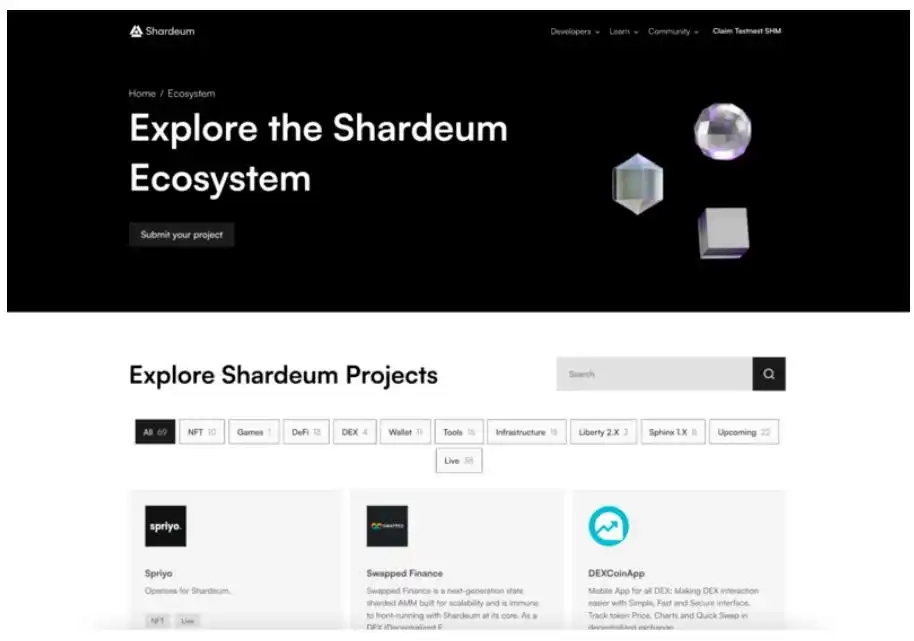
Shardeum has various categories of applications, from NFT to DeFi, and on-chain play.
The most important pillar of an ecosystem is DEX, so let's first take a look at the DEX that has been tested on Shardeum.
Decentralized exchanges
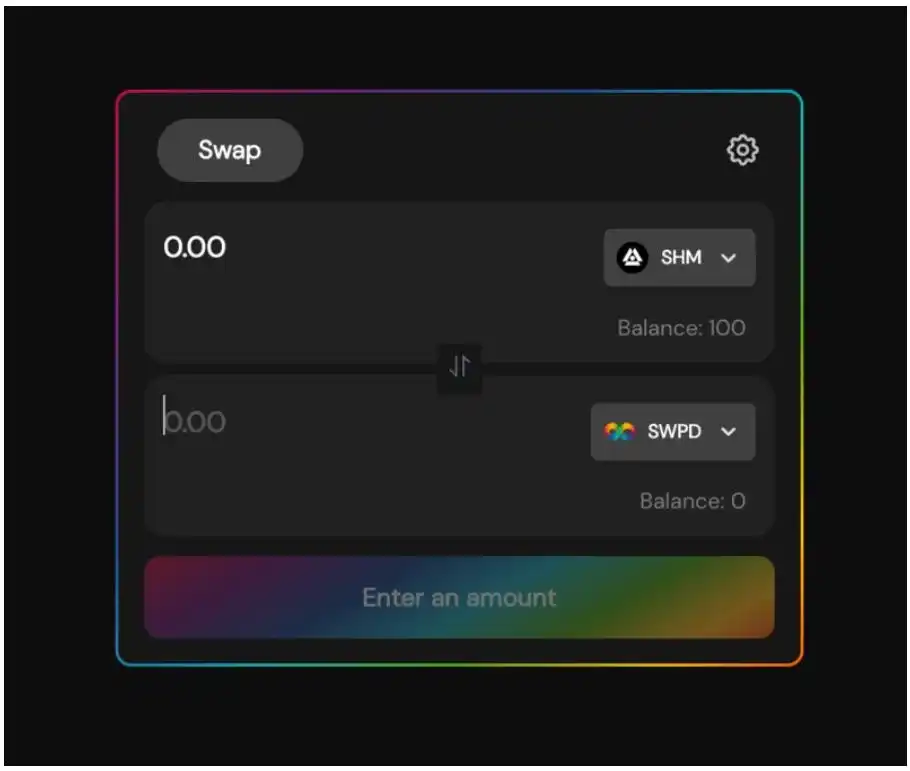
Every ecosystem needs a DEX because it is where most trades and transactions are done. At the time of writing, Swapped Finance It's the only DEX running on Shardeum's test network.
Swapped Finance is similar to Uniswap V2-style DEX, where users can exchange different tokens and charge a 0.3% fee, as well as provide liquidity and earn about 0.21% on all transactions pro rata.
Domain name service
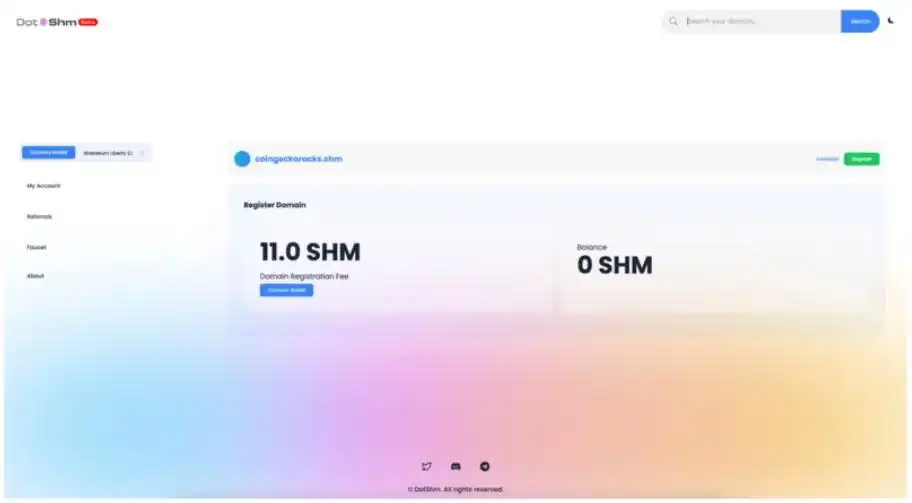
Dotshm.me Is a Web3 domain name service similar to the Ethereum Name Service (ENS), making it easier for others to send cryptocurrencies to personality domains instead of users' "0x" addresses.
Users simply connect the wallet to Liberty 2.X, search for an available domain name, and you can register a domain name.
NFT market
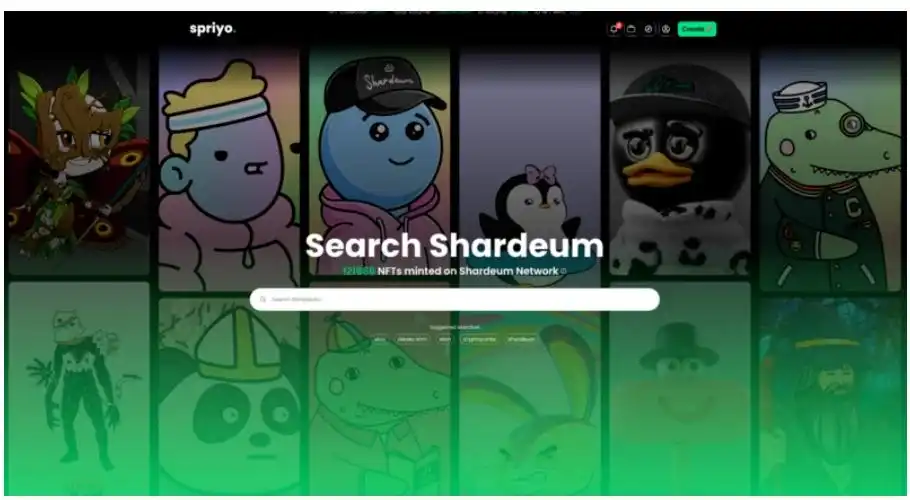
No. NFT market, DeFi ecosystem is incomplete, and Spriyo.xyz is exactly that. There are nearly 3. 000 different collections, more than 120 minted. 000 NFT. Users can explore the market and bid on favorite NFT.
Keep in mind that all of these applications are currently beta netters, but they also have the potential to provide individual project drops to beta netters users in the future.
conclusion
With the next billion users entering the crypto space, scalability is a real problem that many networks are seeking to solve. Sharding is one way to improve scalability by splitting blockchain databases into smaller tables. It is also one of the next big upgrades to the Ethereum ecosystem, although they will face competition from other chains. Shardeum is likely to be one of the main players in the extension and sharding space, as they have been building their own version of advanced sharding since 2017, which allows their network to scale infinitely.
Luckily, they're still in the test net phase, which means it's still possible to get SHM airdrops, especially since the team announced that it will reserve 5% for ecosystem and airdrops.
Original link
Welcome to join the official BlockBeats community:
Telegram Subscription Group: https://t.me/theblockbeats
Telegram Discussion Group: https://t.me/BlockBeats_App
Official Twitter Account: https://twitter.com/BlockBeatsAsia

 Related Articles