



From consumers to creators, stand in the perspective of the player to talk about the whole chain of game design
Title: From Consumer to Creator, Gamer Perspective on Game Design for the Whole Chain IOSG
Original article by IOSG Ventures
preface
A full chain game is a complex application built using smart contracts with a core game loop running directly on the blockchain, but why bring games on-chain?
From "pong" in Atari, to fighting in arcade, to FPS and MMO in PC and Internet, to fruit ninja on mobile, and now to AI-generated storytelling. A straw snake in the history of video games is the inspiration of new technology for new gameplay.
If the chain of game assets -- the token economy/item NFT -- gives traditional games a 'real money' component, it's more a measure of monetization and live-ops
To link the core logic of a game is to inspire a group of games that achieve maximum "freedom to play" at the level of gameplay design, which is our answer to the question.
What's fun about the full chain game?
While builders are still building, the killer fully on-chain game that can break the circle has not yet appeared, talk about where the future full chain game will be fun, how to design one. It's fun. The full chain game.
We've probably all heard the sad story of v and the designers of World of Warcraft. The story of creating a world of its own with a full-chain game and establishing the laws of digital physics is sexy, and there are a number of recent projects that have gotten a lot of attention, but the narrative of fully decentralized games, player sovereignty, etc., still needs a lot of rethinking.
Instead of getting into a debate about the definition of an on-chain game, how many chain games are fully on-chain, and whether a product is a game, it is better to return to the first question: If a full-chain game product is defined as a video game, What's fun about being a game? Who's going to pay for him? If you had to recommend any product in this category to a gamer, what would you say? all after all, what's so fun about it?
We're starting with a piece of fresh news from GDC.
Epic Games will open beta testing of its Unreal Editor for Fortnite on March 22. In a nutshell, it's Epic's "kill the devil," using UE5-powered technology to create a Fortnite content editor for players to create and share content within the game.
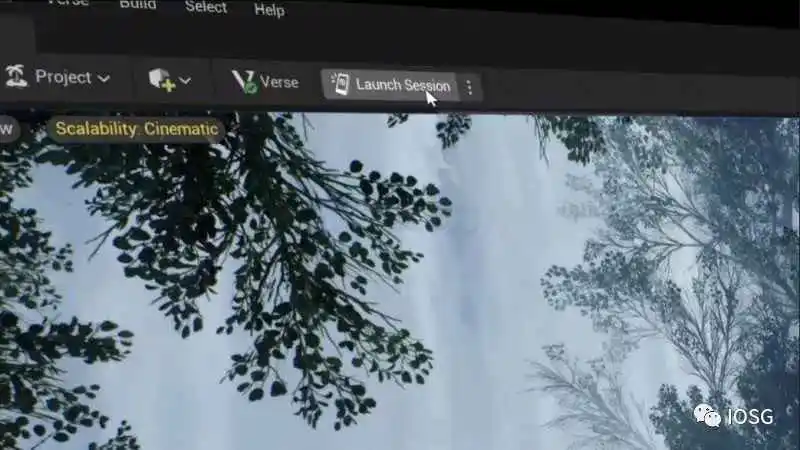
UEFN's predecessor is Epic Games' Fortnite Creative editor tool, which came out in 2018. Fortnite Creative's features are "goofy" : Players can move around characters, modify in-game terrain using "mobile" items, edit and place materials and objects in simple ways, and have a limited set of assets to work with.
UEFN introduced this time is more functional than its predecessors. In addition to all the tools available in Fortnite Creative, Epic has given players a whole set of professional development tools used extensively in Unreal 5, including the special effects tools Niagara, the animation tools Control Rig and Sequencer, and more. Players can also load external texture, mesh, audio and animation files, create materials and 3D modeling in UEFN, import external model assets, and more. Epic even debuted its own programming language, Verse, in UEFN. In terms of functionality, Fortnite is equipped with UEFN that can almost be described as UE5 Youth.
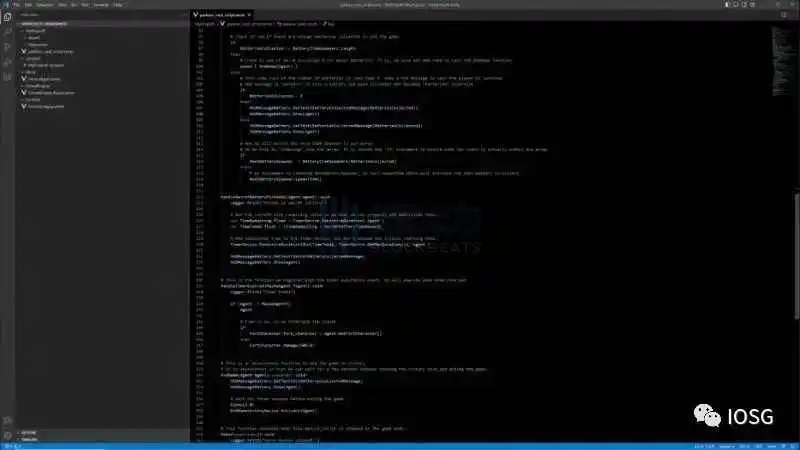
Smart creators are making games with players.
From the legendary private server, to mods for GTA, to Minecraft, Robolox, to more recently Fornite creative mode, and even looking at other content areas, the most effective way to build content barriers/combat content consumption, It is always a good creation tool for users/players to thrive on the UGC ecosystem. But back to games, the proposition of decentralizing and empowering individuals is much more complicated:
As the ninth art and an interactive and immersive content, the design and development of traditional video games, from indie to commercial games, from $999 to 3A, actually values the top-down communication of designer consciousness. As the chief engineer, the game producer is the first author of the game, and has all the power over the design and development process. Europe and the United States 3A big factory so, the star producer system of Japanese manufacturers even more.
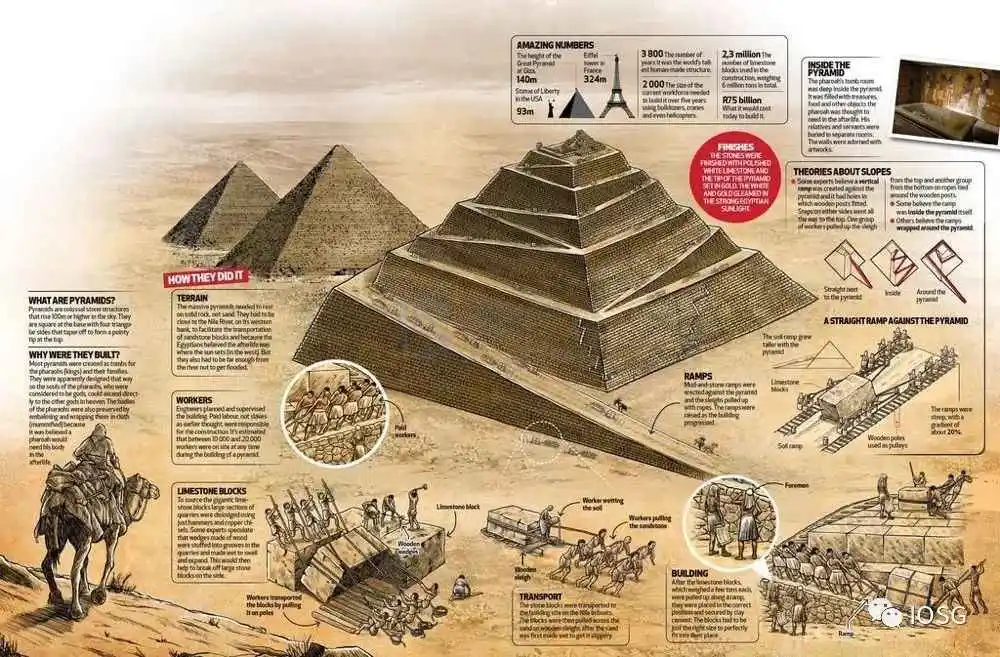
The development process for traditional big games is more like building a pyramid, which is a highly centralized affair. only a selected few get to set the rules. The freedom given to other "ecological players" is minimal.
Gameplay itself is all about the refinement and design of rules, and in order to ensure the unity of theme and gameplay, it's hard to be without a designer's awareness/core gameplay design, otherwise it's just some kind of social experiment, and it's not in the realm of "games".
At the end of the day, radical decentralization makes it hard to build playful, immersive experiences.
On April Fool's Day 2017, Reddit hosted a social experiment called r/space, where tens of thousands of players painted on the same, pixelated canvas. Painting on top of each other is beautiful, but it's hard to imagine a unified theme/gameplay on this canvas
-- Lack of consensus among creators.
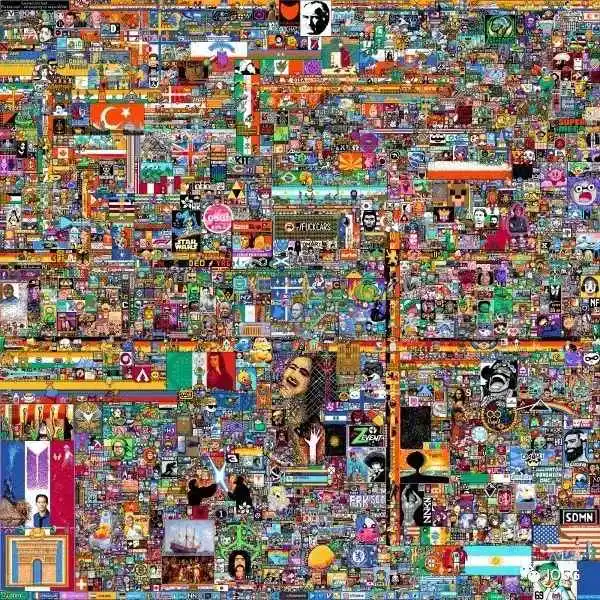
The paradox is that game designers control creative freedom too much, making it difficult for players to participate in the game. So how do you allow creative freedom while maintaining the core gameplay? Full-chain games offer something of a silver lining.
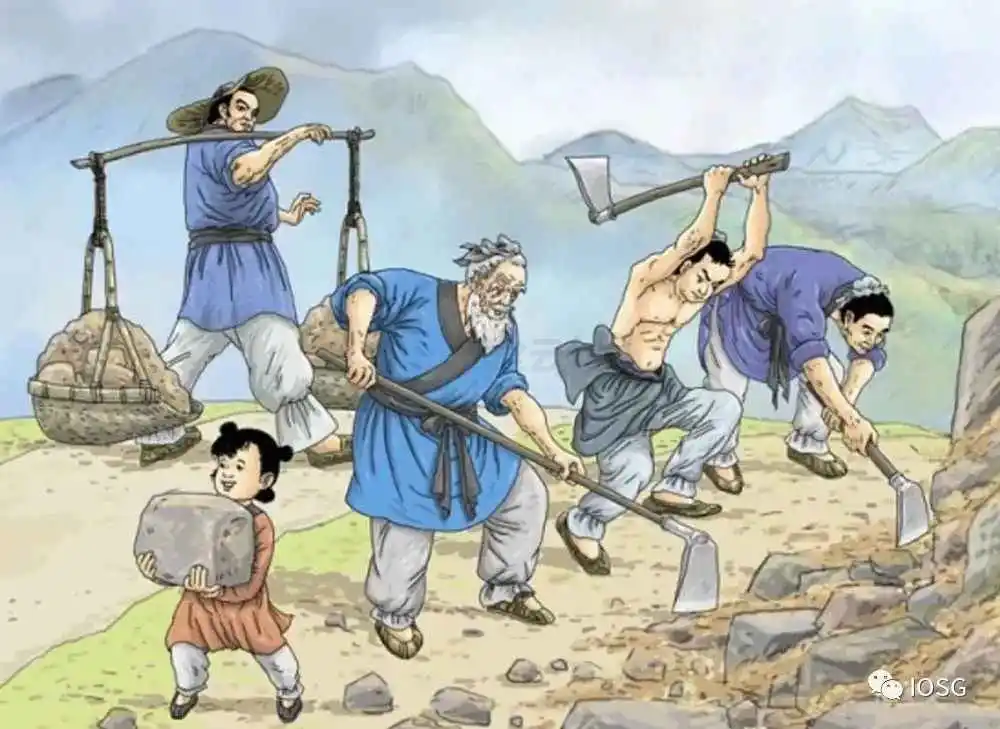
In contrast to the pyramid example, Yu Gong said to his descendants, you should tell your descendants that our family will dig this mountain so that we can go to sea. Zizi grandchildren some with a shovel digging, some with explosives, some invented a plane to fly in the past...
What would happen if we took the wisdom of the foolish old man and gave the player the freedom to play the game with a simple but solid consensus?
Hand to hand design a full chain game
The fun of full-chain games should be to build solid and immutable core gameplay on blockchain, and to maximize the design of derivative gameplay to the players, so that the derivative of the game itself can produce countless possibilities, and the content creation has infinite malleability.
I think creating a fun full-chain game can realize this vision. The designer should try to play god (of course, it is a fun god) and create an interesting world. Specifically, there are three steps:
1) Take the core gameplay, identify the elements that you want to embed in your dna that you don't want anyone (including the author) to change, and then break the core gameplay down into its smallest atoms
2) Turn game atoms into players' consensus with blockchain, and become the underlying rules of the game world
3) Encourage humans to use these atoms to create a more interesting and richer world with proper design.
Let's imagine this:
1) Break down the core gameplay into its smallest atoms. Let's say we are making a medieval survivior-building game, the core gameplay of which is crafting: A +b= C. We often get crafting: A + B = C. We often get crafting: A + B = C. We often get crafting: A + B = C. We often get crafting: A + B = C. We often get crafting: a+b=c.
We decided to put crafting logic into a smart contract. Unlike the game logic stored in a centralized server, we can get into and check the logics. These games are like the physics of the world, not because of anyone's will.
2) Turn game atoms into players' consensus with blockchain, and become the underlying rules of the game world. Next, let's define a world in which there are five elements: LIFE, ATTACK, DEFENCE, SPEED, BULK.

All objects in the world contain these elements, and if a piece of wood picked up in a game walk has 100 defensive properties, it can be turned into a shield. Turning wood into a shield is the job of writing a smart contract, and the player can also add this Smart contract to buildings on the map to create a factory building used to turn wood into a shield -- a weapon factory.
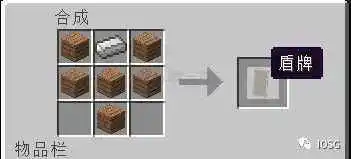
This could be a very simple smart contract: lumber in, shields out. But behind it lies the physical laws of the world
1. Items and items can be synthesized into new items.
2. Wood can defend against attacks. The laws of physics are immutable, and all players need to respect them.
But how you use it -- whether you attach it to a building and name it a weapons factory, or attach it to an npc and name it Valkyrie -- can also magically turn wood into a shield called Solomon. That leaves it up to the player to create. Nothing is prohibited by law.
Smart contracts aren't just about making things. As a player in the game, I wanted to write a sub-story about the Shield. This can be done using materials that contain a lot of BULK atoms to create a building -- a fortress. Attach a smart contract to this wall, allowing only past players who carry a shield called the Immortal Shield to pass. Such an immortal Shield has other utility besides being useful in combat. In addition, the items themselves can be used to make new items, so 10 Immortal Shields and a witch's tooth can be entered into a draw that has the probability of drawing the Ancient Ring, allowing the holder to obtain a road map on the map through the inherited SPEED element.
This kind of logic that the designer didn't envision can be developed and added to the game by the player because the rules are left blank.
There are so many things to think about besides crafting above. For example, buildings can run any smart contract, allowing AMMs to trade posts, casinos, dungeons. Remember that forest where you were gathering wood? It's just an object with some LIFE elements that doesn't fight back. The dragon? It is another object that has a lot of ATTACK elements and requires a lot of players with ATTACK and DEFEND elements to defeat.
The designer can safely leave the code to the player to edit, leaving the game wide open for the player to create, because they can be confident that what they've dictated is hard to tamper with.
I'm not thinking big, these concepts are being tested, like in xgrasia, a sandbox game on the chain, where each piece of land is a smart contract that the player can program.
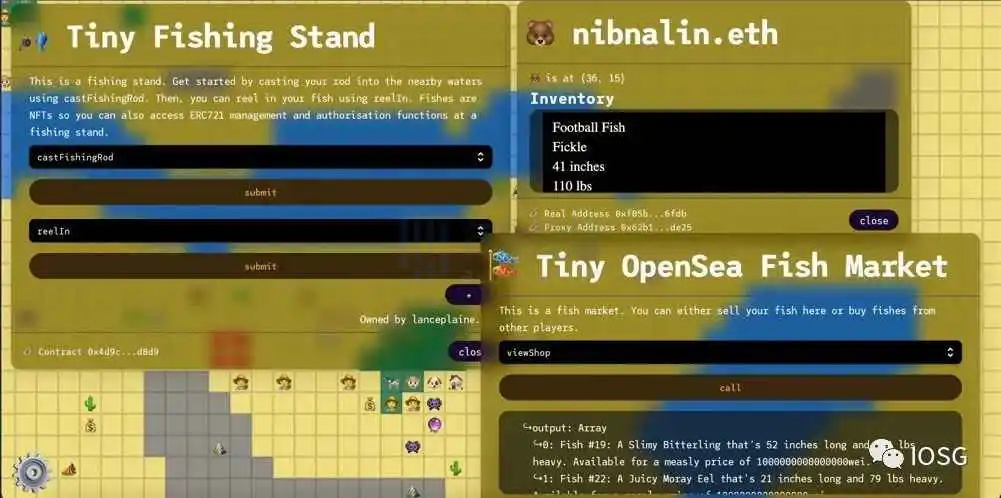
3) Encourage humans to use these atoms to create a more interesting and richer world with proper design. The last step is actually the hardest, give your game aesthetics and dynamics and tell the player, the world can do so many things, but why should I? This is the scope of traditional game design, and it is also the aspect that many proof-of-concept full-chain game projects still need to improve. The space here is limited, and it will not be expanded.
Closing thoughts
When new concepts are difficult to describe, it is a good idea to find a proper reference in the old. This applies especially to games, where the feedback loop in the human mind really doesn't change much, from drawing a bow and shooting a bow to crossing fire. If I were asked to explain what it is about the core logical chain of a game that contributes to the fun of the game, to choose a reference...
I would look for board games with player co-construction, or poker, where there are hard rules designed by the developer that are universally agreed upon and cannot be tampered with, like the number and suit of cards in poker. On the one hand, the rules are simple enough, and the consensus broad enough, to be passed down from culture to culture and time to time without loss. On the other hand, everything outside of these rules is free. You can use them to hit Texas, fight landlords, fry golden flowers, even use physical attributes to play Jenga house of cards, darts, etc.
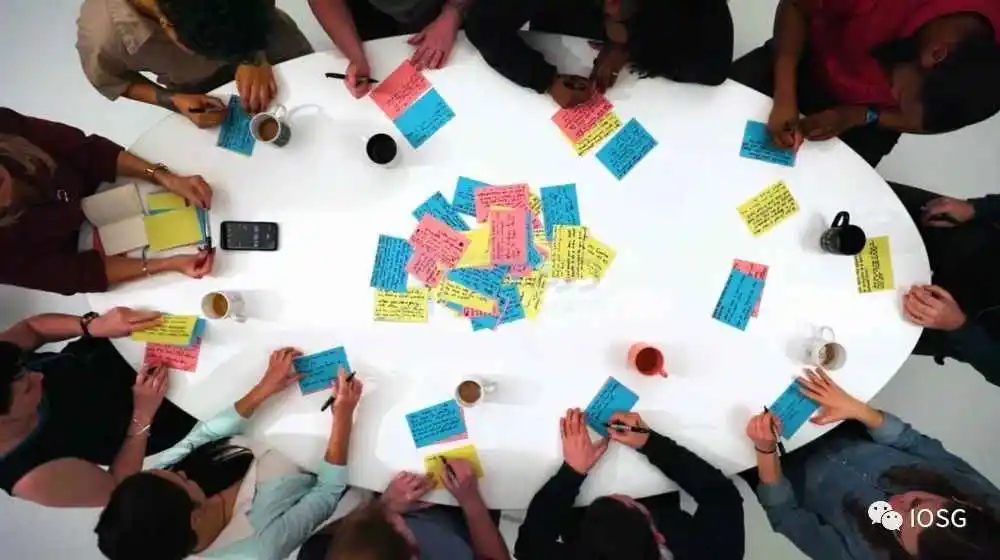
The rules that need to be followed have been designed, but all gameplay is waiting to be developed. With the strictest rules, comes the greatest freedom. This is the greatest freedom of play that can be designed.
Original link
Welcome to join the official BlockBeats community:
Telegram Subscription Group: https://t.me/theblockbeats
Telegram Discussion Group: https://t.me/BlockBeats_App
Official Twitter Account: https://twitter.com/BlockBeatsAsia







