Worldcoin: Humanity in the AI Era.
The ability of artificial intelligence is rapidly approaching that of humans, and in many specialized fields, it has already surpassed humans. Although the rise of large language models (LLMs) recently suggests that these models are becoming more versatile and appear to be more "general intelligence", they feel more intelligent because they have learned the main interface for interacting with humans perfectly: language. Although it is unclear whether this breakthrough will lead to artificial general intelligence (AGI) in the short term, the models we have now have been trained to perfectly mimic highly skilled humans in digital interactions. Some may say that the AI era has already begun.

More and more people are able to use increasingly powerful models in an uncontrollable manner. Stable and diffused image generation models and software for generating deep fakes are open source, and Meta's LLaMA language model has been leaked and can be run on a laptop.
A significant short-term consequence is that until recently, we believed that text-based information was sufficient to prove human identity, which is the famous Turing test. Robots have been common on social media platforms and have been involved in manipulation activities for some time. However, in most cases, they can be distinguished from real human users. Now, modern AI has either passed the Turing test or is very close to doing so. This will make it impossible to determine human identity based solely on intelligence in the future. In addition, recent imitations using deepfakes have proven that video-based identity verification is becoming increasingly unreliable. Therefore, there is no longer a reliable way to verify human identity online.
However, in the digital realm, human proof will be a crucial and possibly inevitable tool, especially in this new chapter of human history. Although there are various methods to achieve human proof (PoP), it is crucial that this important infrastructure prioritizes privacy, autonomy, inclusivity, and decentralization to benefit and protect individuals.
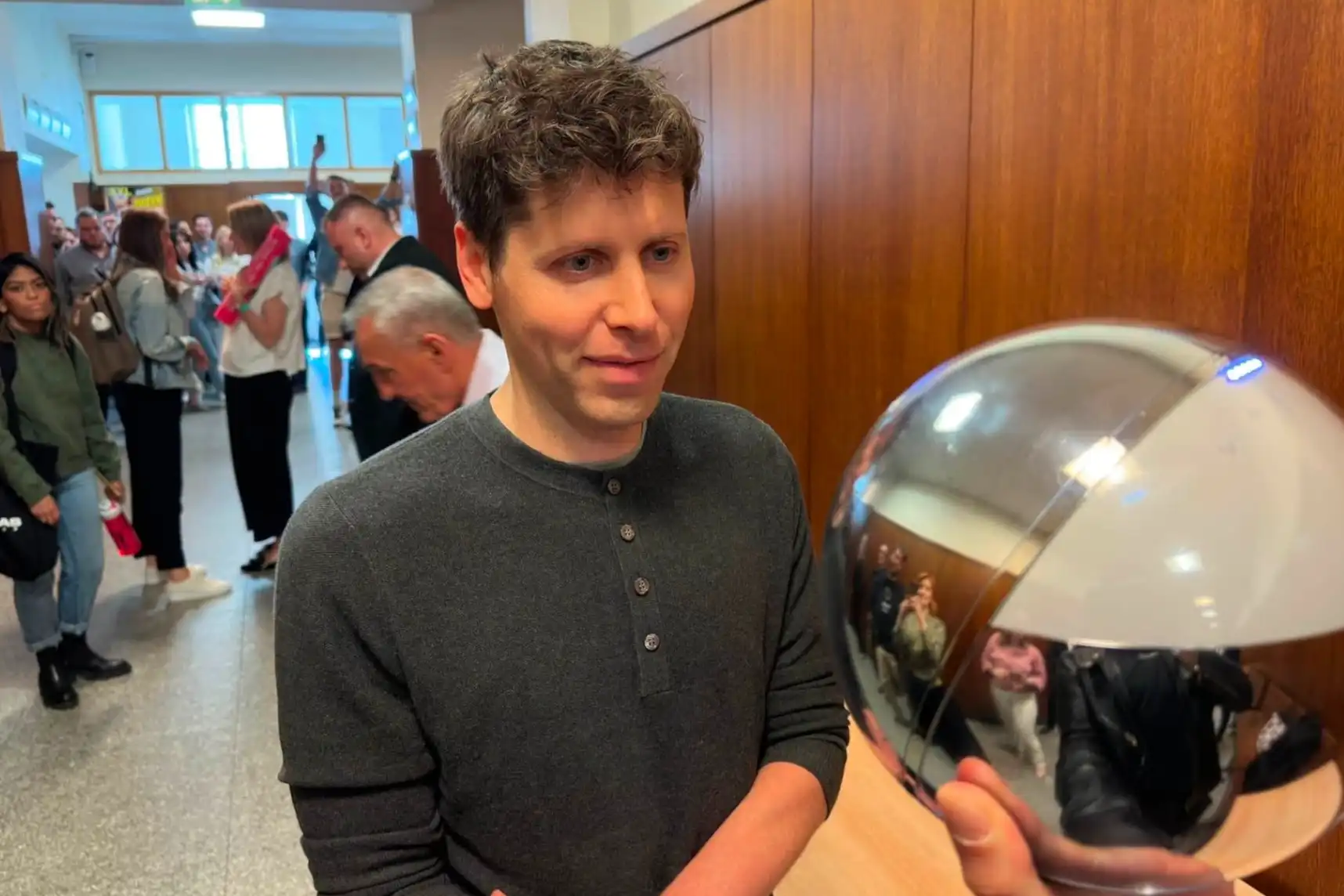
In response to this challenge, the Worldcoin project has launched an open identity protocol called World ID. Advanced AI generation makes it impossible to prove a person's human identity with data generated digitally. Therefore, the focus needs to shift to verifying human identity through real-world proof. To evaluate human identity based on unique physical characteristics (i.e. biometrics), Tools for Humanity has contributed to the design of a custom, open-source hardware device to support the Worldcoin project. This state-of-the-art device uses multiple neural networks to verify biological and uniqueness without storing any image data, issuing an AI-secure PoP credential on World ID. Although there are many ways to prove human identity (different applications have different requirements), the current state of technology indicates that this method is the only scalable, anti-fraud, and inclusive global PoP establishment mechanism.
Through the PoP credential, the World ID protocol empowers everyone to prove their human identity online without the need for a third party. The protocol utilizes zero-knowledge proofs to maximize privacy and is ultimately governed by people through World ID itself. Today, preliminary versions of hardware devices, mobile clients, and deployment mechanisms have been implemented, all of which will gradually become decentralized. Applications can interact with proofs on the protocol through the recently launched SDK. The protocol itself is permissionless and is designed to ultimately support a variety of credential types that can be proven by anyone. World ID will be compatible with verified credential standards, allowing for diversity in representing personal social interactions (such as soul-binding tokens and cross-social data).
Up to now, more than 1.4 million people have participated in the World ID project. If successful, World ID will become the largest real human network on the Internet, open to everyone as a public good.
Reasons for Introducing Human Proof
Advanced generative AI has introduced two mechanisms to enhance online fairness, social interaction, and trust: (1) limiting the number of accounts each person can create to protect against impersonation attacks. This is particularly important for achieving digital and decentralized governance, fair distribution of scarce resources such as universal basic income (UBI), social welfare, and subsidies; and (2) preventing the spread of AI-generated content that is almost indistinguishable from human-created content, using deception or scaling to spread false information.
Although there is no good solution, human identity verification can solve these two challenges.
By using PoP authenticated accounts to provide natural rate limiting, impersonation attacks are essentially eliminated. Naturally, people can use their credentials to verify robots, but the scale is very limited. For example, creating 1000 robot accounts requires finding 1000 human users willing to constantly verify their authenticity.
It is more difficult to distinguish between content created by humans and content generated by AI. It is worth noting that content generated or co-created by AI is not necessarily undesirable, and in fact may be the opposite. It only becomes a problem when it is used to scale the dissemination of false information in a credible manner.
Basically, intelligent verification will no longer be an effective human discriminator. PoP allows users to choose to interact only with authenticated accounts or verified content. Similar to how users can filter various content types (such as "following" and "for you" pages) on social media, PoP helps filter content or accounts that have been confirmed to be human. In addition, it can also implement a reputation system to discourage the spread of false information, whether generated by AI or not. This can also help prevent the behavior of individual verified robots.
In the end, PoP can be seen as the basic building block of digital identity. The first layer, human identity proof, establishes a person's human identity and uniqueness. The second layer, digital identity authentication, ensures that only the legitimate owner of the identity can use it. This layer answers the question "who are you?". Finally, digital identity verification, the third layer, focuses on answering the question "who are you?".

Human Proven World
After establishing a global, authentic and unique human identity network, we will be able to enhance various aspects of society.
Establishing Fair Distribution of Wealth in the AI Era: With the advancement of AI, the value obtained and created through UBI's fair distribution will play an increasingly important role in countering the centralization of economic power. To ensure that each individual registers only once and to guarantee fair distribution, a global human proof protocol is needed.
Advanced spam filter: By only processing messages verified by humans, the foundation is laid for advanced spam filters, cleaning up Twitter timelines and eliminating CAPTCHA or browser DDoS protection, providing a smooth user experience.
Reputation System: The human proof makes it possible to prevent the creation of multiple accounts, which enables reputation scoring. This makes global, frictionless, and unsecured loans possible, especially for those who cannot access traditional financial systems, which is particularly advantageous.
Governance: Digital collective decision-making faces significant challenges. Web3 projects typically rely on token-based governance (one token, one vote), which may exclude some individuals and disproportionately support those with greater economic power. As of today, only a few projects have explored actual democratic voting, such as Optimism's Citizens House. Reliable, Sybil-resistant mechanisms simplify the implementation of democratic governance models based on unique human identities, such as "one person, one vote," and expand the design space for new structures based on unique human identities, such as second voting. The Worldcoin project uses human proof to truly govern the protocol by the people, ensuring that the project benefits everyone. While exact governance structures such as direct voting or election of representatives require further consideration, this represents a paradigm shift that makes true decentralization possible. Another particularly important application is AI. In order to ensure that the benefits of AI are shared by everyone, not just a small privileged group, inclusive participation in its governance is crucial.
Identity Verification: Biometric-based identity verification can be a part of the solution to the growing problem of digital identity theft, which can have serious consequences for affected individuals. In 2021 alone, data breaches impacted 300 million people.
Fair distribution of scarce resources: By using human proof, key elements of modern society such as subsidies and social welfare can be made more fair. This is particularly important in developing countries where social welfare programs face resource capture issues - false identities used to obtain more resources than an individual deserves. In 2021, India saved $5 billion in subsidy programs by implementing a biometric-based system, reducing fraudulent behavior. Decentralized human proof protocols can extend similar benefits to any project or organization globally, allowing users to better share value and align incentives.
Looking back, it's hard to believe that there was once no simple, privacy-preserving way to authenticate identities on the internet. This article explores various methods for establishing human proof and digital identity verification, highlighting the necessity of customizing biometric devices.
Design Requirements for Human Proof
For the security requirements of the PoP mechanism, it depends on the specific application and potential fraud risks. In addition, certain applications may choose to accept multiple PoP mechanisms for registration in order to expand coverage, as long as they can accept users registering multiple times with different PoP credentials. However, for high-risk use cases such as subsidies, global fair airdrops, and UBI, a single, highly secure, and inclusive mechanism is needed to prevent multiple registrations. Depending on the context, voting and reputation scoring may also require stricter security measures.
When evaluating methods for building a global PoP, there are several important factors to consider:
Privacy: Most importantly, privacy cannot be compromised in the name of convenience. All interactions should default to anonymity and support multiple personal profiles that are not publicly linked to other platforms.
Autonomy: Users must always have control over their accounts, data, and how to share them.
Fraud Prevention: The mechanism must be able to prevent duplicate registrations. An unreliable mechanism that allows multiple registrations will severely limit the design space that may be applicable, eliminating trust in use cases such as democratic governance, reputation systems, and fair distribution of scarce resources (such as UBI, authoritative subsidies, etc.).
Inclusivity and Scalability: Global PoPs should include everyone. This means that the mechanism should be able to distinguish billions of people. There should be a feasible global implementation path, and people should be able to participate regardless of nationality, race, gender, or economic status.
Decentralization: PoP is the underlying infrastructure and should not be controlled by a single entity to maximize resilience and integrity.
Continuity: Once the identity proof is granted, it must be ensured that it is difficult to sell or steal, but easy to recover. Although the need for recovery is self-evident, both recovery and authentication help prevent the sale of PoP credentials and ensure that only legitimate owners can use them for authentication purposes. Despite these preventive measures, it is important to recognize that they cannot completely prevent collusion or other attempts to circumvent the one-person-one-proof principle. To address these challenges, innovative thinking is needed in mechanism design and social relationships attribution.
可行的人类证明机制
"Feasible human proof mechanism"
There are different mechanisms for establishing global PoPs. The table below compares different methods and their effectiveness in addressing the above requirements.

Online Account
The simplest attempt to establish a PoP in terms of scale involves using existing accounts such as email, phone numbers, and social media. However, this approach failed because a person can have multiple accounts on each platform. Additionally, the famous CAPTCHA (usually used to prevent robots) is ineffective here because anyone can pass multiple CAPTCHAs. Even the latest implementations, almost all major vendors have shifted from "marking traffic lights" to so-called silent CAPTCHAs (such as reCaptcha v3), which basically rely on internal reputation systems and are also limited.
In short, current methods are unable to deduplicate existing online accounts (i.e. ensuring individuals can only register once), such as account activity analysis, lacking necessary anti-fraud capabilities, and unable to withstand attacks from major incentives, as demonstrated by large-scale attacks against established financial service operations.
Official Identity Verification (KYC)
For online services, in order to comply with the "Know Your Customer" (KYC) regulations, it is usually necessary to provide identification (usually a passport or driver's license). In theory, this can be used to deduplicate individuals globally, but there are problems in practical applications due to several reasons.
KYC services are not inclusive globally; over 50% of the global population lacks a digitally verifiable ID. Additionally, it is difficult to build privacy-preserving KYC verification methods. When using KYC providers, sensitive data needs to be shared. This can be addressed by using zkKYC and NFC-readable IDs. Relevant data can be read by the user's phone and verified locally after being signed by the issuing authority. Unique human identity can be proven by submitting a hash value based on the user's ID information without revealing any personal information. The main drawback of this approach is that the occurrence rate of NFC-readable IDs is much lower than that of regular IDs.
Without readable NFC-enabled ID cards, identity verification can be vulnerable to fraud, especially in emerging markets. ID cards are issued by national and authoritative bodies without a global verification or accountability system. Many verification services, such as KYC providers, rely on data accumulated by credit bureaus over time, which can become outdated and cannot be verified for authenticity by the issuing authority (i.e. the authoritative body) as APIs are often not available. Fake IDs and the real data used to create them are easily obtainable on the black market. Additionally, due to the centralized nature of issuing and verifying organizations, corruption at the organizational level cannot be eliminated.
Even if the authenticity of the provided data can be verified, establishing global uniqueness between different types of identity documents is still difficult: fuzzy matching between documents of the same person is prone to errors. This is due to changes in personal information (such as address) and the low entropy captured in personal information. Over time, people are issued new identity documents with new document numbers and (possible) personal information, leading to similar issues. These challenges result in a high error rate, including misidentification and user rejection. Ultimately, under the current infrastructure, global PoP cannot be initiated through KYC verification due to lack of inclusiveness and fraud resistance.
Web of Trust
The basic idea of the 'trust network' is to verify identity claims in a decentralized manner.
For example, in the classic web of trust network adopted by PGP, users meet at "key signing parties" (via identity documents) to prove that the keys are controlled by the claimed owner. Recently, projects like Proof of Humanity are building trust networks for Web3. These networks allow for decentralized verification using facial photos and video chat, avoiding the need for in-person meetings.
However, due to the heavy reliance on individuals, these systems are vulnerable to human errors and Sybil attacks. Requiring users to stake funds for their own verification or for verifying each new user can increase security. However, this can also create friction as users may be penalized for mistakes and may be unwilling to verify others. Additionally, this can decrease inclusivity as not everyone may be willing or able to lock up funds. There are also privacy concerns (such as posting facial images or videos) and risks of fraud using deepfakes that these mechanisms may not meet some of the design requirements mentioned above.
Social Network Analysis
The idea of social graph analysis is to use information about the relationships (or lack of relationships) between different people to infer which users are real.
For example, it can be inferred from the relationship network that users with more than 5 friends are more likely to be real users. Of course, this is an overly simplified inference rule, and projects and concepts in this field, such as EigenTrust, Bright ID, and soulboundtokens (SBTs), have proposed more complex rules. Please note that SBTs are not designed as a mechanism for personal identification, but for applications that require proof of relationships rather than unique human identity. However, they are sometimes mentioned in this context, so discussions related to them are meaningful.
The fundamental observation underlying all of these mechanisms is that if it is difficult for one person to create another person's profile with sufficiently different relationships, then social relationships constitute a unique human identifier. If creating additional relationships is sufficiently difficult, each user will only be able to maintain one profile with rich social relationships, which can serve as the user's PoP. One key challenge of this approach is that the required relationships are established slowly on a global scale, especially when relying on parties such as employers and universities. It is not clear how easy it is to persuade institutions to participate, especially in the early stages when the value of these systems is still small. In addition, it seems inevitable that in the near future, AI (possibly assisted by humans obtaining "real-world" proof of multiple different accounts) will be able to construct such profiles on a large scale. Ultimately, these methods need to abandon the concept of a unique human and accept the possibility that some people may have multiple accounts and appear in the system as independent unique identities.
Therefore, although social graph analysis methods are valuable for many applications, they do not meet the fraud resistance requirements of PoP.
Biometric Technology
None of the above systems can effectively verify uniqueness on a global scale. The unique mechanism that meets all PoP requirements, including reliably distinguishing the scale of populations in untrusted environments, is biometric technology. In fact, Indian authorities have saved $5 billion in fraud costs annually in social welfare programs by implementing the Aadhaar system for de-duplication, proving the effectiveness of biometric technology. Importantly, biometric systems can be implemented in a highly privacy-protective manner, as images do not need to be stored and even decentralized verification systems can be used.
Biometric Authentication
Different systems have different requirements. Verifying whether a user is the legitimate owner of a phone through FaceID is very different from verifying the uniqueness of billions of people. The main differences lie in accuracy and anti-fraud capabilities. When using FaceID, biometrics are actually used as passwords, and the phone performs a single 1:1 comparison to determine if the user is who they claim to be. Establishing global uniqueness is much more difficult. Biometric features must be compared to (ultimately) billions of previously registered users in a 1:N comparison. If the system is not accurate enough, more and more users will be wrongly rejected.

Due to the existence of error rates, the system's inclusiveness is mainly influenced by the statistical features of biological characteristics. The iris biometric feature is superior to other biometric identification patterns and has achieved a false match rate of 1.2x10^14 (one error match in ten trillion) twenty years ago, even without the latest advances in AI. This is several orders of magnitude more accurate than the current state-of-the-art facial recognition technology. In addition, the structure of the iris exhibits a very stable characteristic over time.

In addition, iris modification is difficult. It is easy to modify fingerprints by cutting them, but accurate imaging may be difficult because the ridges and valleys of fingerprints may wear due to manual labor. In addition, using all ten fingerprints for deduplication or combining different biometric patterns is vulnerable to combination attacks, where different existing identities are combined to create new identities (for example, by combining fingerprints from different people). In theory, DNA sequencing can provide sufficient accuracy, but DNA reveals many additional private information about the user (at least for the party running the sequencing). In addition, from a cost perspective, it is difficult to scale and implement reliable live detection measures. In contrast, facial biometric technology has better live detection capabilities than DNA sequencing. However, compared with iris biometric technology, the accuracy of facial recognition is much lower. With the increase in the number of registered users, this will lead to more and more incorrect matches. Even under the best conditions, the false rejection rate of a legitimate new user will increase to double digits in a global population of billions, which hinders the inclusiveness of the system. However, even iris biometric technology is not perfect-there will always be a small error rate. Whether it is possible to establish a system that does not reject anyone in the entire human range is an open research question, but there is reason to believe that it can be achieved.
Hardware Verification
As far as biometric verification is concerned, the fastest and most scalable approach would be to use smartphones. However, this method faces two key challenges. Firstly, due to the low resolution of the iris across the entire iris area, the smartphone camera is insufficient for iris biometric verification, which reduces accuracy. In addition, imaging in the visible spectrum may produce specular reflection on the lens covering the iris, and the low reflectivity of brown eyes may introduce noise.
Secondly, the achievable level of security is very low. For PoP, the important part is not identification (i.e. "Is this person who they claim to be?"), but proving that someone has not yet registered (i.e. "Has this person already registered?"). A successful attack on the PoP system does not require the attacker to impersonate an existing individual, which is a challenging requirement that needs to unlock someone's phone. It only requires the attacker to look different from everyone who has registered so far. Smartphones lack multi-angle and multi-spectral cameras as well as active illumination for liveness detection, to detect so-called presentation attacks (i.e. deception attempts) with high confidence. A widely watched video demonstrates a seemingly effective method of deceiving Samsung's iris recognition, which shows how simple such attacks can be without the necessary hardware capabilities.
In addition, we need to establish a trusted execution environment to ensure that registration begins on a legitimate device (rather than a simulator). While some smartphones include dedicated hardware to perform these operations (such as the Secure Enclave on iPhone or the Titan M chip on Pixel), most smartphones worldwide do not have the necessary hardware to verify the execution environment. Without these security features, it is essentially impossible to provide any security, and deception of image capture and registration requests is easy for capable attackers. This will allow anyone to generate any number of synthetic registrations. Therefore, custom hardware is required.
恢复和认证
->
Recovery and Authentication
Except for the initial registration process (deduplication step), biometric technology can achieve continuity. Even in decentralized systems, recovery mechanisms can be designed so that individuals can easily regain access to their PoP permissions through their biological characteristics. In addition, biometric technology can serve as proof of ownership, a concept that is often encountered in daily life: when verifying someone's identity, the reviewer not only checks the authenticity of the ID, but also confirms that the photo presented by the person matches the photo on the ID. Similar to Face ID, local facial recognition performed on the user's phone can be used to authenticate the user, ensuring that only the legitimate owner proven by PoP can use it for identity verification. By implementing local zero-knowledge proof on the user's device and using signature image data from custom biometric devices, secure and seamless proof of ownership can be achieved, extending the security of trusted hardware to the user's phone.
Let humans prove themselves to be a reality
Consistent with the theoretical foundation proposed in this blog post, the Worldcoin project has established a human proof mechanism based on custom hardware devices, using iris biometric recognition technology, because this is the only way to ensure inclusiveness (that is, everyone can register regardless of their location or background) and prevent fraud, promoting fairness for all participants. The hardware device can issue AI-secured human proof. The issuance of proof is privacy-protected because no images need to be stored. The use of this proof does not reveal personal information because the protocol adopts zero-knowledge proof. For more detailed information, please refer to the dedicated privacy blog post. The future development of the community can be achieved by allowing users to verify themselves to ensure continuity, thereby ensuring that only they can use their proof. In addition, the recovery process that relies solely on biometric features, without any memory, can prevent the proof from being lost.
Humans have proven to be the foundation of the World ID protocol, which is an open and permissionless identity protocol that enables individuals to autonomously prove claims about themselves (i.e. proofs issued by anyone). The protocol also plans to support verification credentials, and its dependencies will be fully decentralized.
In addition, the Worldcoin project has proposed the initial implementation of the protocol's mobile client and deployment mechanism through independent operators. These two aspects will be detailed in the upcoming blog post.
Using human proof, Worldcoin is launching a global identity and financial network as a public utility, giving individuals ownership regardless of nationality or background, accelerating the transition to a future that welcomes and benefits everyone on Earth. The identity layer will enable humans to distinguish themselves from other humans and advanced AI online, empowering individuals with global digital identities and enabling organizations to achieve their goals. When used in conjunction with the financial layer, it can distribute wealth and establish a global non-national UBI infrastructure for AI financing. Given current progress, the latter may come earlier than expected, and it is necessary to establish infrastructure when needed.
Up to now, more than 1.4 million people have participated in the first small-scale stage of the protocol's founding phase. The project will soon transition to the next stage.
Welcome to join the official BlockBeats community:
Telegram Subscription Group: https://t.me/theblockbeats
Telegram Discussion Group: https://t.me/BlockBeats_App
Official Twitter Account: https://twitter.com/BlockBeatsAsia

 Related Articles