What does the collapse of Silicon Valley banks mean for the crypto industry
原文标题:《 硅谷银行的崩溃:对加密行业意味着什么》
原文来源: 比推 BitpushNews
March 10, 2023, CaliforniasupervisionThe Department of Institutional Financial Protection and Innovation declared an emergency closureSilicon Valley Bank(Silicon Valley Bank: SVB) and entrusted the Federal Deposit Insurance Corporation (FDIC) to take it over. The one-time darling of Silicon Valley finance fell precipitously, and SVB made history as the first Fdic-insured institution to fail in 2023: Became the first bank to be liquidated with just a sell rating.
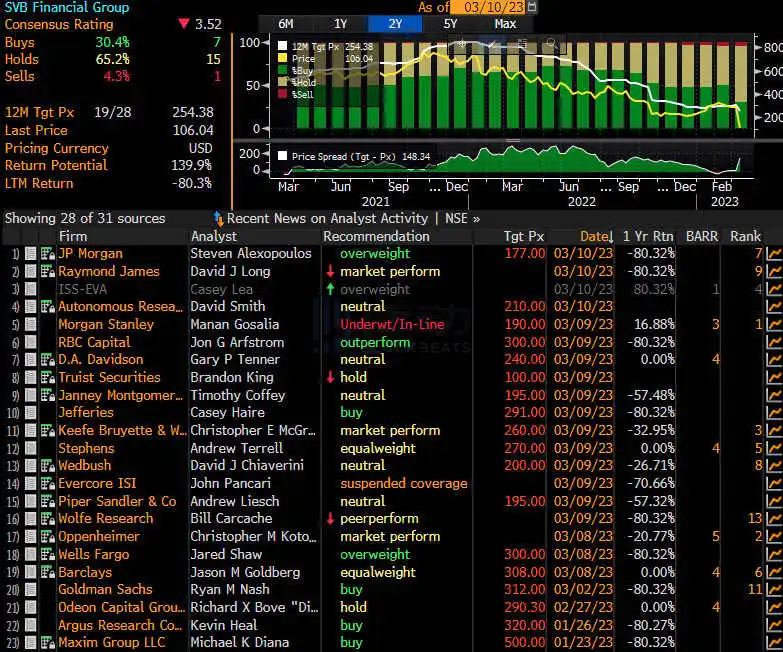
Silicon Valley Bank is the 16th largest bank in the United States, according to official Fed data, and most of its clients are high-tech and biotech startups. It also provides financial services to several crypto-focused venture capital firms, including Andreessen Horowitz (a16z) andSequoia Capital.
With assets of about $209 billion as of Dec. 31, 2022, it is the largest bank to fail since the 2008 U.S. financial crisis, second only to crisis-era Washington Mutual Inc., Lehman Brothers collapsed with $639 billion in assets.
Depositors with more than $250,000 in their accounts face uncertainty
More than 93 percent of the bank's $161 billion in deposits are uninsured, Bloomberg reported, and three sources familiar with the matter said a number of cryptocurrency companies had moved to withdraw cash deposits held in custody at the bank earlier this week.

The FDIC website caps deposit insurance at $250,000 per depositor, per Fdic-insured bank, per title class, and the amount of deposits beyond that limit had not yet been determined when Silicon Valley Bank closed. To protect insured depositors, the FDIC created a new entity called the Santa Clara Deposit Insurance National Bank (DINB). DINB will maintain regular business hours at Silicon Valley Bank and resume banking activities, including online banking and other services, no later than next Monday, the FDIC said. "The amount of uninsured deposits will be determined once the FDIC has more information from banks and their customers," the agency explained on Friday. "Depositors with accounts over $250,000 can contact the FDIC for resolution."
Crypto companies' very little exposure '
At the end of its year. SEC In its 10-K report, SVB said it has "minimal exposure to cryptocurrencies and digital assets by providing loans, deposits and investments to clients in these industries."
Binance, Gemini, Galaxy Digital Circle's Jan. 17 reserve report showed that about $9.88 billion in cash was held in regulated banks, including SVBS, but the exact exposure was not disclosed. Given that the company also lists six or seven Bank clients, including New York Mellon, Customers Bank and New York Community Bank, the eggs are not in one basket and USDC's exposure may be manageable.
SVB's collapse comes shortly after Silvergate Bank, a cryptocurrency-friendly financial institution, announced a voluntary liquidation earlier this week.
Both banks were brought down by the same challenges: a classic bank run, with fears of systemic risk hitting the entire financial market, including the cryptocurrency industry. Bitcoin has now fallen from $22,000 to around $19,000. The global cryptocurrency market cap has also been affected, falling from the psychological level of $1 trillion to near $900 billion.
With this crisis affecting not only the banking sector but also the price action of crypto market capitalization and digital assets worldwide, the market could move lower and retest key support, thus delaying the arrival of the crypto bull market that many analysts predicted.
What does it mean for crypto ventures?
The crypto industry was not directly involved in the downfall of SVBS, but there are concerns about the impact of the bank's collapse on digital asset players - especially given the number of venture capital firms using SBVS to make crypto investments. The failure of Silicon Valley Bank, the nation's most important startup bank, would mean tough times for startups, including early crypto companies.
The most immediate pressure to crush Silvergate and SVB is the Fed rate hike, which, along with rising U.S. Treasury yields, will reduce new investment in risky sectors, including technology and cryptocurrencies.
Connor Ryder, researcher at Kaiko, commented: "The failure of the big banks is a reminder of how brutal bear markets can be. In the short term, the biggest impact of this banking contagion will be reduced market liquidity, which will lead to greater two-way price volatility."
Oanda analyst Ed Moya highlights: "The crypto banking business is being hit by a double whammy as concerns grow that any bank linked to cryptocurrencies may be in danger, and as fears of financial instability grow in parts of the banking industry. Only a handful of publicly traded banks have crypto exposure, and many traders are scrambling to short them."
Kaiko liquidity data shows that U.S. crypto exchanges have been affected by reduced liquidity over the past few days as market makers have taken a wait-and-see approach to the crypto industry, with on-chain data from blockchain analytics firm Nansen showing that $3 billion of USdcs have been withdrawn from centralized exchanges over the past seven days.
Connor Ryder says: "" The crypto industry is waiting for banks to step up and" "welcome" "crypto deposits, but it may have to wait a little longer - the big banks are currently reluctant to take crypto customers due to the risks posed by crypto customers, and the candidate may come from a smaller bank, but they won't be rushing to do so after Silvergate's collapse." "
Some in the industry think the financial headwinds created by the SVBS are manageable. Mark Haefele, chief investment officer of UBS Global Wealth Management, told Bloomberg: "We are not seeing the classic signs of contagion, such as stress in the interbank market, but there is now very clear evidence that the Fed's policy of raising interest rates is having an impact on the financial system and the economy, and the side effects of raising interest rates are starting to show -- it's not enough to give them pause, but they will take it into consideration."
Federal regulators in the United States are paying close attention,Ministry of FinanceSecretary Janet Yellen convened the leaders of the Federal Reserve, the Federal Deposit Insurance Corporation and the Office of the Comptroller of the Currency on Friday to discuss developments at Silicon Valley banks and expressed confidence that banking regulators were taking the appropriate response, noting that the U.S. banking system remained "resilient," Regulators have effective tools to deal with such events.
Source of original text
Welcome to join the official BlockBeats community:
Telegram Subscription Group: https://t.me/theblockbeats
Telegram Discussion Group: https://t.me/BlockBeats_App
Official Twitter Account: https://twitter.com/BlockBeatsAsia