Ordinals: Why PSBT is the right solution for Bitcoin NFT transaction

Original author:Jaleel,JackBlockBeats
Yuga Labs recently launched the TwelveFold Twelvefold series on the Bitcoin network through Ordinals and made over $16 million in just 24 hours. However, Yuga Labs this auction faced severe criticism from Ordinals founder and his team, and proposed to replace Yuga Labs' auction model with PSBT technology, which triggered heated discussion in the community. Why did Ordinals question Yuga Labs? What is PSBT technology? How does it solve the Bitcoin NFT transaction problem?
Yuga Labs pocketed $16 million for a single bubble map
On the morning of March 7, Yuga Labs announced that the TwelveFold auction had closed and the first 288 successful bidders would receive the inscription within a week. During the 24-hour auction, Yuga Labs received a total of 735 BTC worth about $16 million, with the highest bidder paying $161,000.
Even in the current volatile market, Yuga Labs' NFT experiment on the Bitcoin network has created a great deal of buzz and economic impact. Yuga Labs has raked in more than $16 million from just one bubble map.
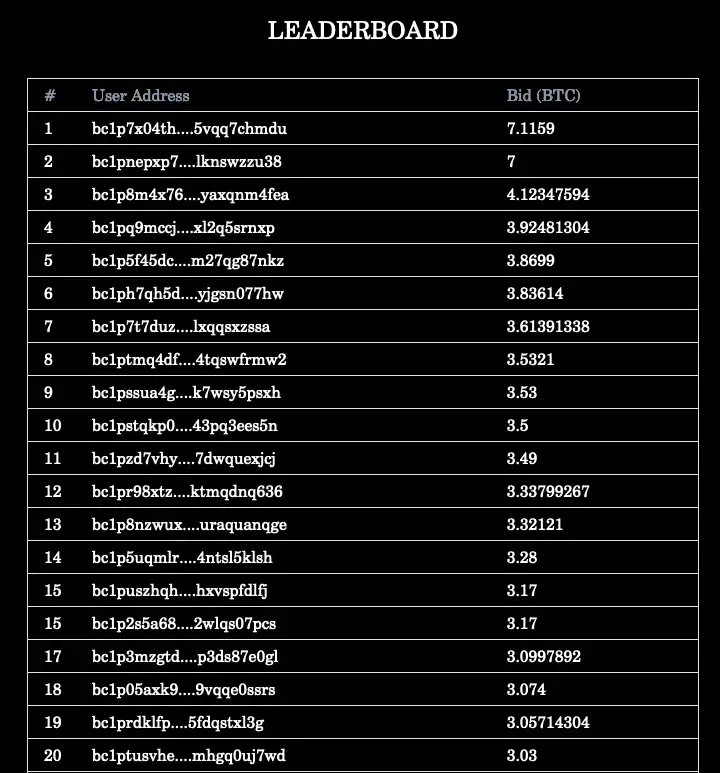
The TwelveFold sale features 300 NFT, all of which have been launched through Oedinals, 288 of which are for sale and 12 set aside for donations, donations and charitable causes. This is the first time Yuga Labs has turned its attention to Bitcoin NFT and the TwelveFold line is the first major Yuga NFT line outside the ETH chain. (BlockBeats note, read more about the Twelvefold sale atYuga Labs sent bitcoin NFT, will Ordinals ecological "singularity"?, and read more about the Ordinals Agreement atOrdinals protocol controversy: Is it OK to post an NFT on the Bitcoin blockchain?".
Make no mistake, Twelvefold can be another big Yuga win. Open Twitter, the community is full of praise for Yuga Labs: "Yuga chose Bitcoin as the first stop to expand out, injected a strong catalyst for the Bitcoin NFT ecosystem", "Yuga's Web3 top IP will be warmly welcomed anywhere, especially the world's oldest and most consensus blockchain". Others say the TwelveFold line "is a financial success that exceeds expectations. It is new and conceptual, beautiful and technical."
But amid all the adulation, we can also hear some doubts. One of the disappointments of this TwelveFold sale is that Yuga did not announce the artists at the outset, and only scroll down to the FAQ section to see them. In the world of Web3 and NFT, this is considered a lack of respect for creator rights.
Some even believe that starting with apes and mutant, Yuga never cared about artists and only cared about making money. Almost everyone knows about BAYC, but few know about the artist who created it, allseeingseneca. What is more, the Twelvefold collection has no artistic value, only the brand value of Yuga, brand value is not art, and when the brand is gone, its value decreases significantly, but when the artist is gone, his work increases significantly.
"Ignorance and incompetence! , from Ordinals
The biggest surprise, however, was not the occasional criticism but the scathing criticism from the founder of Ordinals and his team. The TwelveFold series was originally launched as a Bitcoin NFT based on the Ordinals protocol, but Casey Rodarmor, founder of Ordinals, has posted and retweeted a number of posts since March 5th, Lambasting the Yuga Labs team for setting a terrible precedent for the Bitcoin NFT auction process.
In a tweet, Casey Rodarmor wrote: "Yuga Labs team lacks integrity, ignorance, incompetence, no empathy, immaturity and insensitivity", he believes that the auction of Yuga Labs is a profound negative signal that cannot be ignored. If we see Yuga Labs behaving like this again, He will encourage everyone to boycott Yuga Labs forever. Casey went so far as to suggest that the employees of Yuga Labs were literally and figuratively a bunch of liars and should resign and repent by doing an honest job.
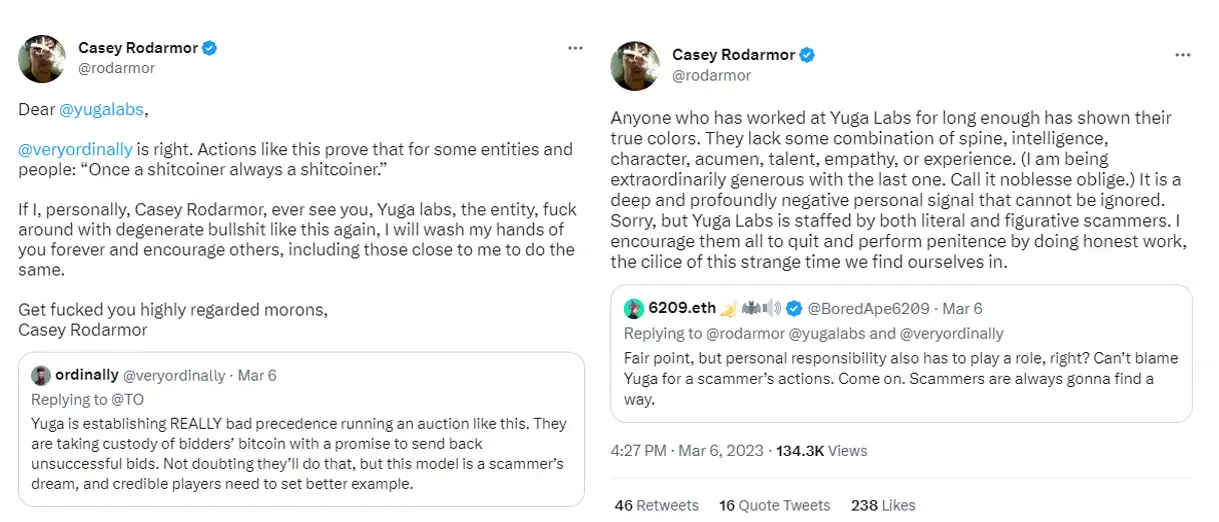
What makes Casey so excited? This is where we need to know a little bit about the flow of this TwelveFold auction. To host the biggest auction ever on the Bitcoin network, Yuga Labs simply adopted a hosted auction model. During the auction, all auction funds were required to be placed in custody at Yuga's address, and Yuga was required to return the unsuccessful funds to the receiving address within 24 hours after the auction ended, which was a big taboo among bitcoin fundamentalists and the entire Bitcoin community.
We know that after events like MtGox and QuadrigaCX, self-hosting has become the most valued technical value in the Bitcoin community, because when it comes to hosting, trust is required. In the crypto world, it is obviously an extravagant hope to rely on the moral bottom line of the project side, and there is a very high risk. Since the custodial risk can only depend on the moral bottom line of the custodian, the project side should use blockchain technology to reduce the risk of asset custody. Casey also said that auction models like Yuga Labs are breeding ground for scams, and that Yuga Labs, as the leader and pioneer of the NFT movement, could have waited for a more mature time or helped build the infrastructure to organize a safer, more sophisticated transaction method, rather than being irresponsible.
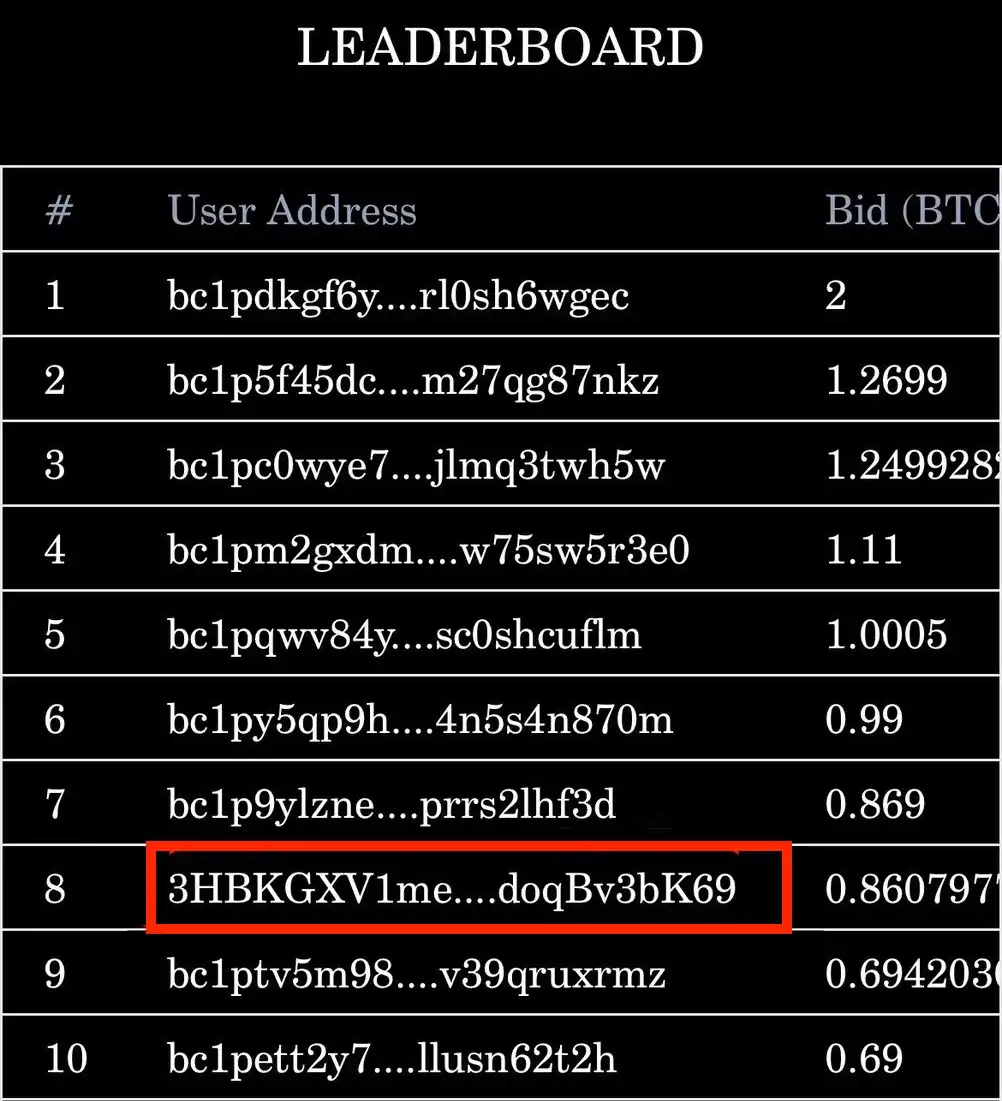
It was also discovered that Yuga Labs had neglected the most basic pre-step of filtering auction addresses. In the auction process, there were even bitcoin addresses incompatible with Taproots. Until the auction was completed, there were still 14 incompatible addresses in the top 288. Yuga Labs did not do a simple screening of these addresses from the beginning to the end. It is reported that the successful bidder will receive the inscription within a week, while the incompatible successful address will not receive the inscription. The authorities have not yet given a response and plan on how to deal with the 14 NFT. Many people believe that Yuga released NFT on the Bitcoin network without cooperation with bitcoin developers, which to some extent reflects Yuga Labs' poor preparation for the auction, unprofessional technology and bad attitude.
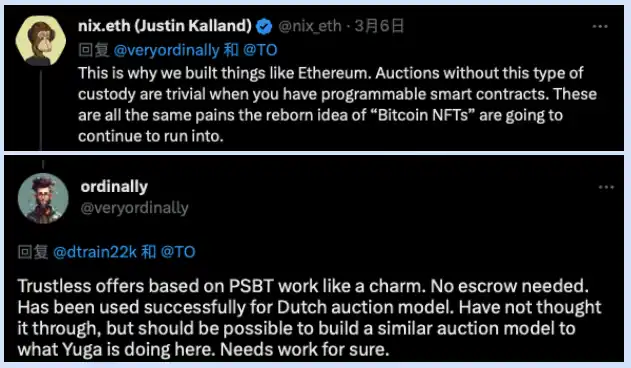
In response to such doubts, some Ethereum eco-users pointed out that the Yuga auction just demonstrates the importance of ETH smart contracts. Having a programmable smart contract, without the need for trust, and avoiding the risk of centralized custody so that auctions of this type of custody do not take place, are "painful and unwinding paths that the rebirth of Bitcoin NFT must take".
This brings us to the main character of today's discussion -- PSBT. In response to the claim that smart contracts are the answer, the developers at Ordinals also responded: The PSBt-based untrusted bid is very useful, does not require hosting at all, and has been successfully used in the Dutch auction model. It should be possible to build an auction model similar to the one Yuga has done here, although the technology is still not mature enough and will certainly need to be studied.
As soon as this response was posted, what was originally a war of insults against Yuga Labs turned into a discussion on "How PSBT solves Bitcoin NFT transactions", with people leaving comments below: What technology is PSBT?
What is a PSBT? How does it solve the Bitcoin NFT transaction problem?
At first glance, the PSBT concept looks a lot like Vitalik's recent soul-bound Token "SBT" concept, but the two are quite different.
"PSBT is actually a very basic technology, and of course now that Bitcoin has NFT, there are applications for these things that were originally conceived," said A Jian, a contributor to BTCStudy, in an interview. In fact, PSBT has a long history in the history of bitcoin. It is one of the most fundamental and important protocols in the Bitcoin network.
History of PSBT
The PSBT, which stands for Partially Signed Bitcoin Transactions, was designed by BTC core developer Andrew Chow. Andrew originally set out to develop the PSBT protocol because he found that different Bitcoin wallets were not compatible with each other and needed a standard to solve this problem.
In the ecosystem of Bitcoin, each hardware and software wallet seems to have its own unique serialization standard paradigm. The inconsistency of this standard makes the serialization between wallet and software incompatible, which becomes a big nightmare for Bitcoin transactions. The PSBT's role is to separate the complex transaction structure from the actual signature of the transaction, allowing non-interactive signatures to be implemented using transactions between different software. Anyone who collects enough PSBTS can merge the generated partial signed transaction into a fully signed transaction.
PSBT was introduced to the Bitcoin network in July 2017 with BIP-174, and the specification of the protocol was described in the original version called "0 PSBT". Since then, PSBT has been gradually improved with the support of other developers.
In October 2018, Bitcoin wallet Bitcoin Core v0.17 was released, and the team added PSBT support among the new features in this version. In March 2020, at an OG roundtable for the Bitcoin community, core Bitcoin developers brought up the topic of PSBTS again. Developers believe that PSBT technology is particularly important for the development of bitcoin multi-signature wallets, and allows the Bitcoin network to support the unique functions of various wallets and enhance scalability, so it is hoped that more Bitcoin hardware device manufacturers will add PSBT support.
In January 2021, in the new BIP-370, PSBT update 2nd edition "2 PSBT", interestingly, PSBT is directly from "version 0" to "version 2", there is no "version 1".
How PSBT works
At present, one of the problems with Bitcoin NFT is that the transaction barrier is very high. If you don't bridge to Ethereum network through Ordinals and trade on OpenSea, you can only buy and sell through OTC channels. However, the biggest problem with OTC transactions is that they need trust. When money is sent, NFT may not come, and vice versa. Many people have lost their assets because of this reason. On the other hand, without a mature and effective exchange channel to trust, it is difficult for Bitcoin NFT to create the same thriving situation as Ethereum NFT.
The PSBT's role in the development of Bitcoin NFT is to de-trust transactions without smart contracts. The core of this standard is to create an incomplete signed transaction and some data related to it, to assist the transmission of unsigned transactions, and promote the portability of unsigned transactions, so that multiple parties can sign the same transaction more easily. (BlockBeats note, read more about PSBT atWhat is a partial Signed Bitcoin Transaction (PSBT)?")
For example, if a hardware wallet user wants to initiate a Coin Join transaction, before the PSBT, the operation process would be very complicated, because the Bitcoin software wallet is not compatible with the input/output sequence sent by the hardware wallet. The purpose of PSBT is to let the software wallet first construct the input/output of the transaction and the UXTO (capital set) and other transaction contents into an unsigned transaction, and then send it to the hardware wallet. When the hardware wallet receives the PSBT, it signs the transaction and the transaction is officially executed.
In cases where multiple parties need to sign the same transaction, a PSBT can be created to identify the UTXOs to be spent and to receive the output of the UTXOs, then this PSBT can be copied into a program that can be signed, and then multiple PSBTS can be integrated into one PSBT through the coordinator and sent to each participant. The full signatures of the parties will be converted into a full transaction in preparation for broadcasting.
At present, the PSBT standard has been widely adopted by Bitcoin hardware wallet, software wallet and node software. Although the standard still has some flaws, as it stands today, it has greatly enhanced the interoperability between Bitcoin's software and hardware, allowing the process of entrusting transactions to be completely de-trusted. PSBT greatly facilitates CoinJoin and other cooperative transactions, and makes multi-signature easier to use. It will be a fundamental but key technology in the Bitcoin NFT application scenario.
How does PSBT implement de-trusted Bitcoin NFT transactions?
In an interview with BlockBeats, Achem offered his own scenario: Suppose there is a pair of Bitcoin NFT traders, and the public key of the NFT seller is known to both parties. To initiate an NFT transaction, the buyer writes its UTXO input and an output that accepts the NFT in the transaction. After the buyer constructs the transaction and signs it, it is converted into PSBT and sent to the seller. The seller receives the message through the intermediary service provider and signs it. Then the Bitcoin NFT transaction is concluded.
The whole process is completely distrusting for both buyer and seller. For the buyer, information such as the offer, acceptance address, etc. is built into the transaction in advance, and if it is changed, the signature becomes invalid. For the seller, the NFT will not be sold until the seller completes the signature, and the price is determined by the seller. According to Jian, this simple transaction structure also largely eliminates the need for intermediaries such as OpenSea and Blur. "As long as there is a clear channel of information for the seller, there is no need for intermediaries, because the signed transaction is directly a bid."
At this point you may be thinking that PSBT solves P2P NFT transactions, but how does a project auction like Yuga Labs achieve de-trust?
First of all, the Ordinals team questioned the NFT auction precisely because they believed that transactions made on Bitcoin should not have trusted intermediaries. However, in the future development of the Bitcoin ecosystem, the role of intermediary coordinator will inevitably be needed, and what we need to do is to achieve as much as possible between the coordinator and the participants.
Ajian told BlockBeats that in the case of Yuga Labs, it is not just PSBT technology that is needed to fully distrust auctions, but other technologies such as Sighash's implementation of delegated signatures. "Let's say Yuga Las wants to buy an NFT for you, you can set up a delegate signature transaction structure and set some additional conditions within the Sighash of the transaction itself, and then send the PSBT to Yuga Labs to submit the transaction for you and implement the delegate purchase in this way. "
The above process can be regarded as the user's participation in the process of NFT auction, setting the conditions of casting auction NFT. As an agent, Yuga Labs cannot modify the transaction content submitted by users, but can only help users send money to the target address determined in advance. In this process, PSBT solves the problem of how the user sends the entrusted transaction to the agent.
"This is Not What Bitcoin is Built For?"
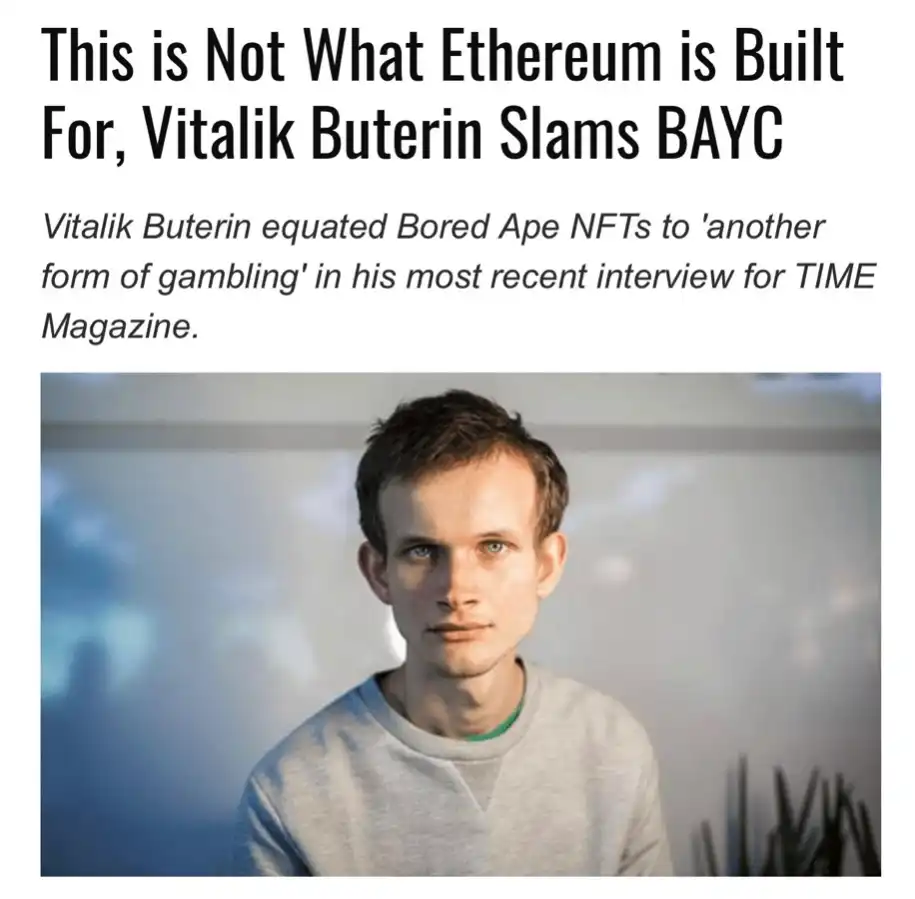
"This is Not What Ethereum is Built For!" This is what Vitalik said about BAYC in an interview with Time in March 2022. Even in the Ethereum ecosystem, the growth of NFT "IP giants" such as Yuga Las was not recognized by OG developers. When it comes to bitcoin ecology, this "revolt against industrial culture" seems even stronger, as evidenced by the Ordinals team's attack on Yuga Labs. Many Bitcoin OG's have even completely denied the rationale For NFT's existence on the bitcoin network, throwing out the "This is Not What Bitcoin is Built For" line.
而作为一个比特币爱好者,阿剑对此给出了自己的看法:人们想以什么样的方式使用比特币网络,是无法被阻挡的,比特币 NFT 也一样。到最后,还是要由大家的 Incentive 决定。「至少比特币 NFT 的出现有一个非常有趣的地方,就是原本大家在比特币网络上几乎买不到除了比特币以外的东西,但现在它提供了一种可以用比特币直接在其网络上买另一个东西的方式,这是一个很大的区别」,阿剑说道。
Whether or not Bitcoin NFT will flourish in the future, and whether or not it will be monopolized by "IP giants" when it does develop, the underlying technology supporting its development deserves more attention. While technologies such as PSBT and Sighash are not complex to understand or even implement in their own right, they play an important role in the development of the Bitcoin ecology, becoming critical where the construction of transactions and signatures do not occur in the same place.
As Jian says, "The technology has always been there, but people didn't know where to use it, but now there is a place to use it." With Bitcoin NFT, the underlying technology becomes even more important. We wonder what kind of ecosystem Bitcoin NFT developers will build with these technologies in the future.
Welcome to join the official BlockBeats community:
Telegram Subscription Group: https://t.me/theblockbeats
Telegram Discussion Group: https://t.me/BlockBeats_App
Official Twitter Account: https://twitter.com/BlockBeatsAsia

 Related Articles